
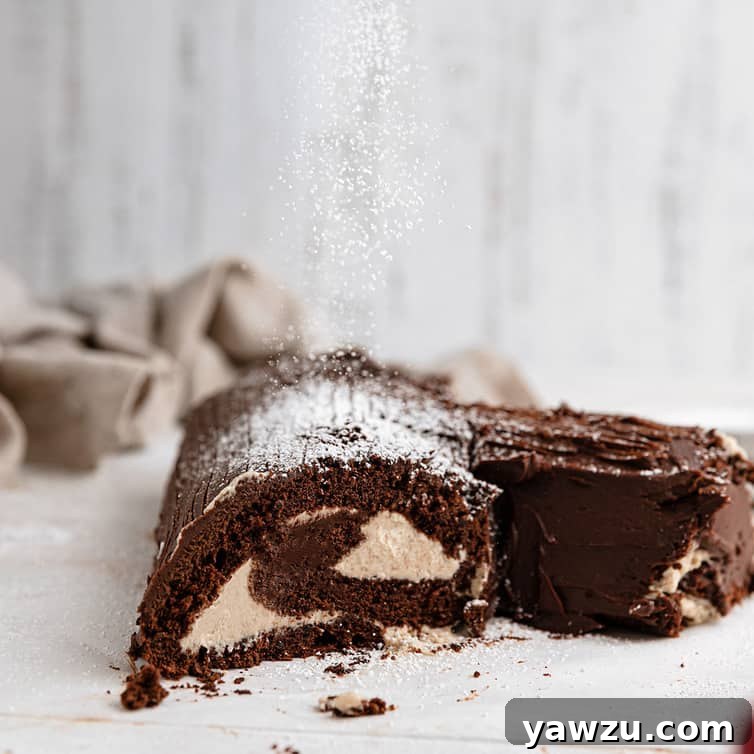
Welcome to the ultimate guide for crafting a showstopping Bûche de Noël, also lovingly known as a Yule Log! This traditional French holiday dessert isn’t just a treat for the palate; it’s a magnificent centerpiece designed to enchant your festive gatherings. Our version elevates the classic with a rich chocolate sponge cake, an invigorating espresso-mascarpone filling, and a decadent chocolate ganache icing, all culminating in a dessert that’s as beautiful as it is delicious. Imagine a delicate dusting of powdered sugar mimicking fresh fallen snow, adorned with charming meringue mushrooms and glistening sugared cranberries – a truly spectacular Christmas creation!
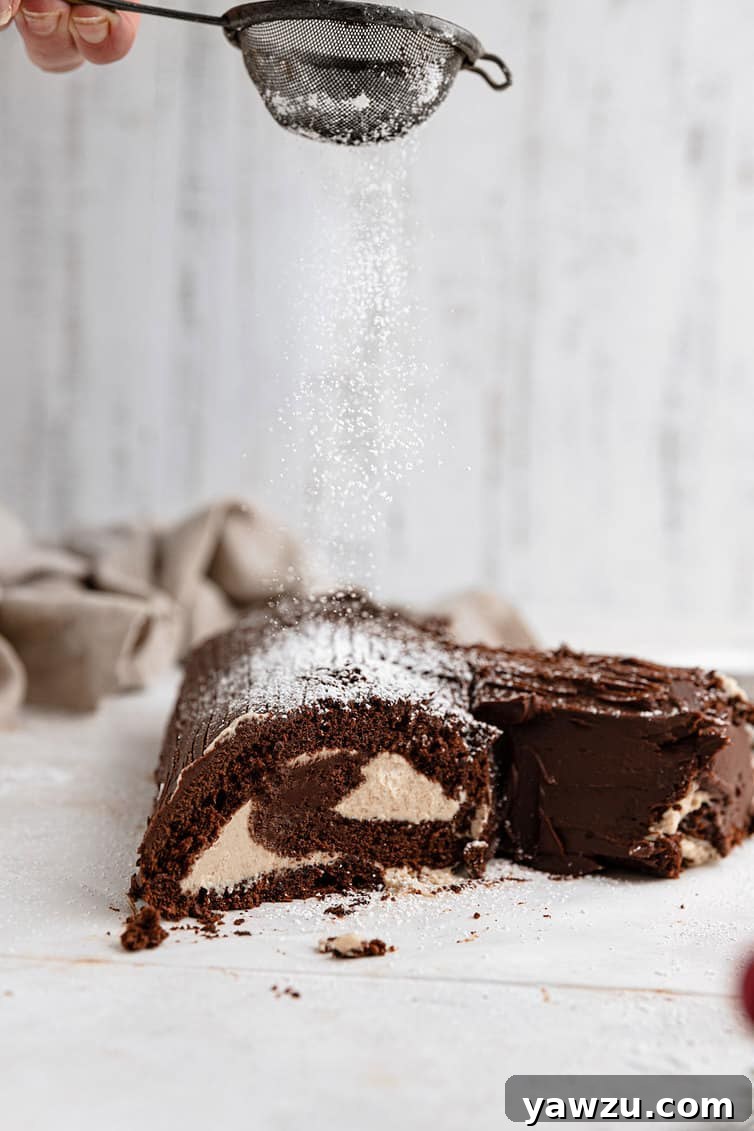
As the holiday season draws near, the allure of baking something truly special becomes irresistible. For many, the Bûche de Noël stands out as an iconic symbol of festive indulgence. Its elegant presentation, mimicking a log from the traditional Yule celebrations, has graced tables for centuries, captivating diners with its intricate details and rich flavors. While it may appear daunting at first glance, I assure you that crafting this impressive dessert at home is not only achievable but immensely rewarding. This detailed guide will break down each step, making the process smooth and enjoyable, even for novice bakers.
Prepare to impress your family and friends with a dessert that perfectly balances the deep, comforting notes of chocolate with the sophisticated zest of espresso and the creamy richness of mascarpone. This Bûche de Noël is more than just a cake; it’s an experience, a celebration of holiday baking traditions infused with a modern twist.
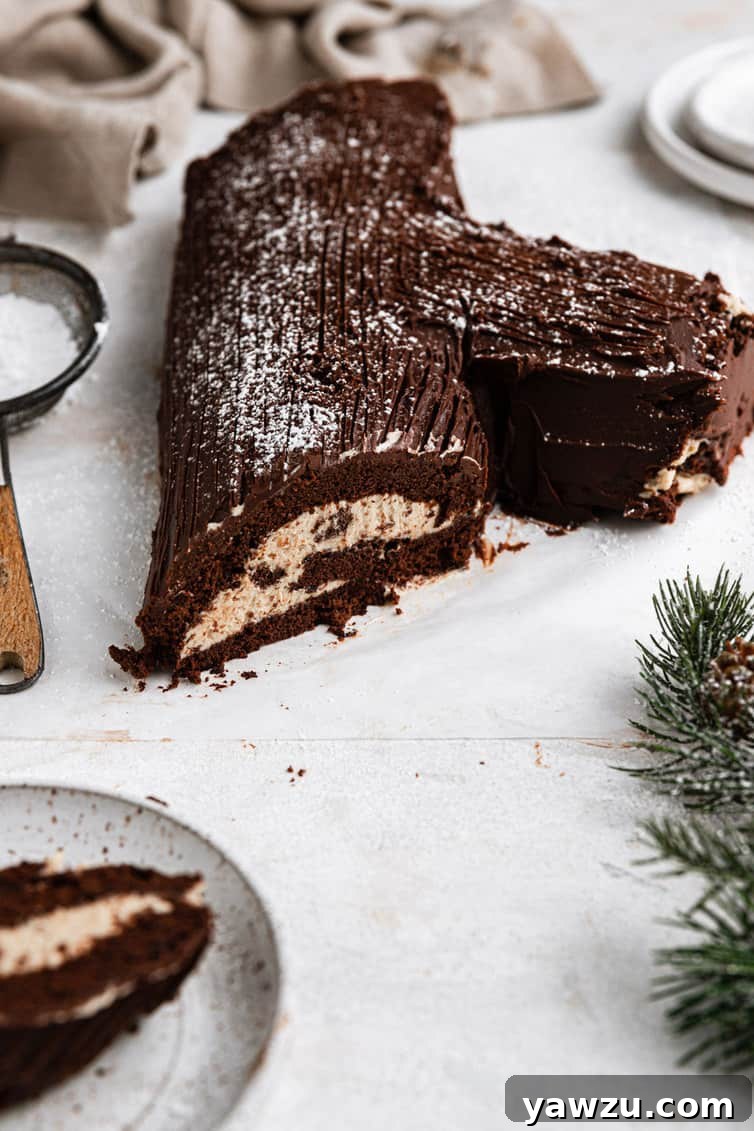
Unveiling the Legacy: What is a Bûche de Noël?
The Bûche de Noël, translating literally to “Christmas Log,” is a culinary tradition steeped in history, originating in France during the early 19th century. Its roots trace back to ancient European pagan rituals where families would burn a specially chosen log during the winter solstice to bring good luck and ward off evil spirits for the coming year. As Christianity spread, this pagan custom merged with Christmas celebrations, and the burning of the Yule log became a cherished part of the festive season. Over time, as fireplaces became less common in homes, the tradition evolved, transforming the actual log into a symbolic cake. This ingenious culinary adaptation allowed families to maintain the beloved ritual in a new, delicious form.
The earliest Bûche de Noël recipes featured simple yellow sponge cake rolled with chocolate buttercream, decorated to mimic a tree log. This delightful dessert quickly gained popularity, not just in France but also in Belgium, Switzerland, Canada, and other French-speaking regions, becoming a staple of holiday tables. Its characteristic shape and decorative elements, such as edible branches, leaves, and whimsical meringue mushrooms, evoke a magical woodland scene, making it a true showstopper. The arrangement of cutting the “log” and repositioning pieces to resemble branches adds to its authentic, rustic charm, offering endless creative possibilities for decoration.
Essential Ingredients and Kitchen Tools for Your Yule Log
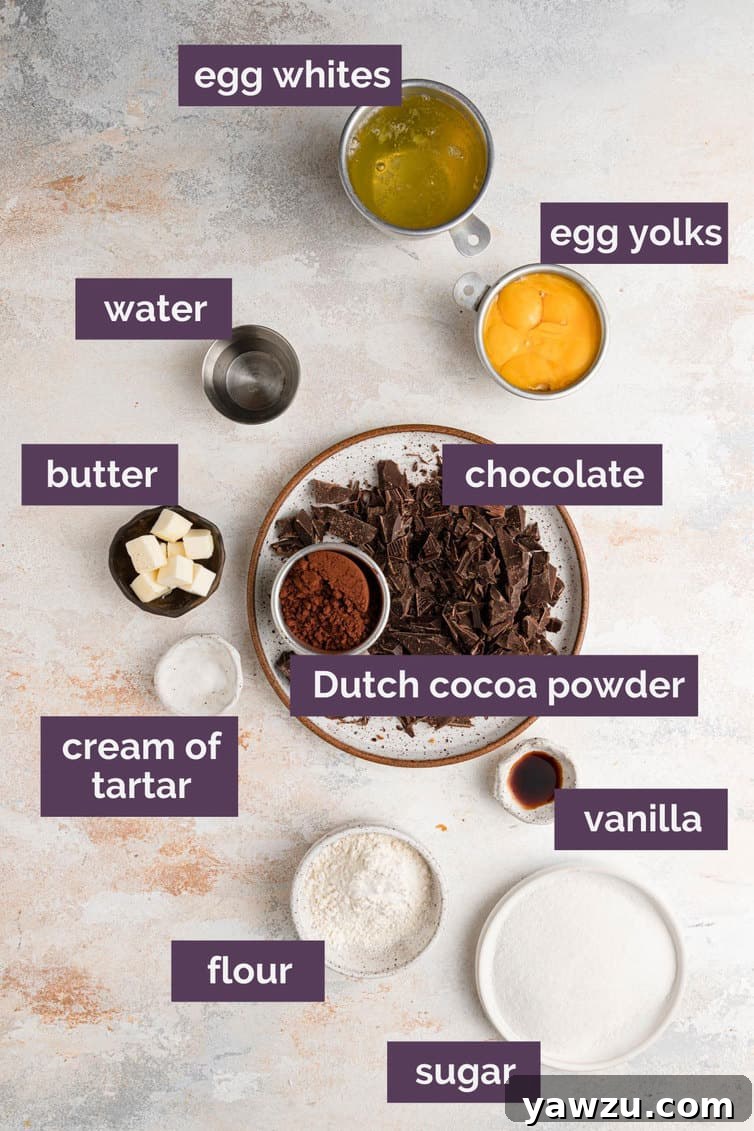
Creating this magnificent Bûche de Noël involves three distinct, yet harmonious, components: the velvety espresso-mascarpone filling, the rich chocolate ganache frosting, and the light, airy chocolate sponge cake. Each element demands specific ingredients and tools to achieve its perfect texture and flavor. Understanding these nuances is key to a successful and delicious outcome.
- Dutch-Processed Cocoa Powder: This is a non-negotiable ingredient for our chocolate cake. Unlike natural cocoa powder, Dutch-processed cocoa has been treated with an alkali to neutralize its acidity, resulting in a darker color, mellower flavor, and softer texture. This processing also means it doesn’t react with baking soda (which requires acid), so it’s typically paired with baking powder. Using it ensures a deep, rich chocolate flavor without any bitterness and contributes to the cake’s beautiful dark hue. Always check your packaging to confirm you’re using Dutch-processed cocoa for the best results. Many bakers, myself included, highly recommend Rodelle cocoa for its superior quality.
- Espresso Powder: This isn’t just for adding a coffee flavor; espresso powder acts as a secret weapon to intensify the chocolate notes in baking. It deepens the richness of chocolate without making the dessert taste overtly like coffee. For convenience, a high-quality baking espresso powder that dissolves easily is ideal. If you prefer to omit the espresso, you can substitute it with an equal amount of vanilla extract to maintain a pleasant aromatic balance.
- High-Quality Chopped Chocolate: Both the ganache and the cake depend heavily on the quality of your chocolate. Since chocolate is a star flavor here, invest in baking bars of either bittersweet or semisweet chocolate that you genuinely enjoy eating. Premium brands like Ghirardelli or Guittard, readily available in most grocery store baking aisles, offer superior flavor and melt smoothly for a luxurious texture.
- Mascarpone Cheese: The star of our filling, mascarpone is an Italian cream cheese, known for its exceptionally rich, buttery, and slightly sweet flavor with a silky-smooth texture. It provides a luxurious mouthfeel and a delicate tang that perfectly complements the robust chocolate and espresso. Ensure it’s at a workable room temperature for easy beating.
- Essential Kitchen Tools: You’ll need standard baking equipment, including a reliable stand mixer for beating egg yolks and whites to perfection, a food processor to achieve a silky-smooth ganache, a rimmed baking sheet (12×18 inches is ideal for a thin, pliable cake layer), parchment paper for easy release, and clean kitchen towels for the crucial rolling step. Having several mixing bowls ready will streamline your preparation process, as different components are made in stages.
- Begin by combining heavy cream and unsalted butter in a microwave-safe measuring cup. Heat on high for approximately 90 seconds, or until the mixture is simmering and the butter is fully melted.
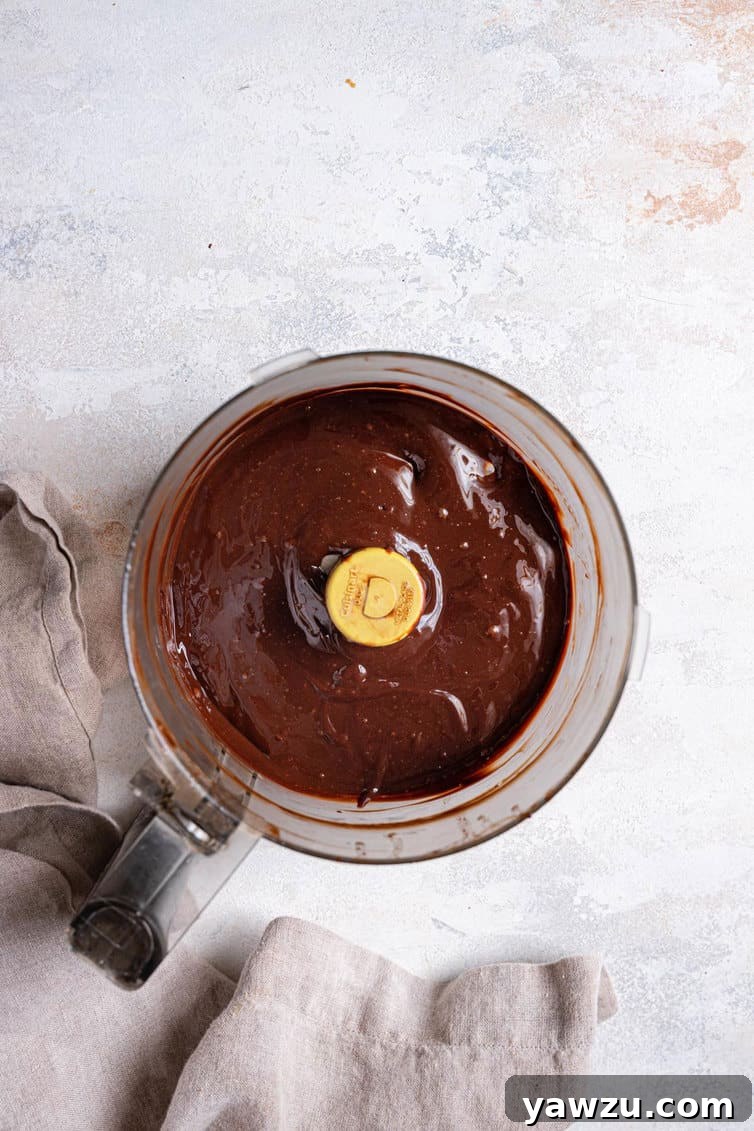
- Place 6 ounces of finely chopped bittersweet or semisweet chocolate into the bowl of a food processor. With the machine running, slowly pour the hot cream and butter mixture through the feed tube. Process continuously for about three minutes. This slow emulsification ensures an incredibly smooth, glossy, and beautifully thickened ganache.
- Transfer the ganache from the food processor to a medium-sized bowl. Allow it to cool at room temperature for at least one hour. The key is to achieve a spreadable consistency, similar to a soft, rich icing. If it’s too warm, it will be too runny; if too cold, it will be too firm. Patience is crucial here.
- In a small saucepan, bring ½ cup of heavy cream to a gentle simmer over high heat.
- Remove the saucepan from the heat. Whisk in the espresso powder and powdered sugar until both are completely dissolved. Allow this mixture to cool slightly to a warm temperature.
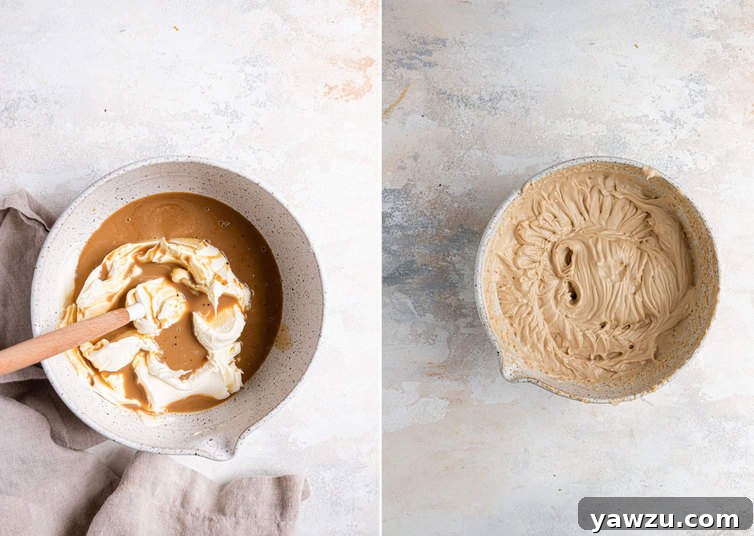
- In a separate medium bowl, gently beat the mascarpone cheese with a rubber spatula until it is soft and creamy. Over-beating mascarpone can make it grainy, so be gentle.
- Once the mascarpone is softened, gradually add the cooled cream mixture, whisking gently until thoroughly combined and smooth.
- Cover the bowl tightly with plastic wrap and refrigerate until you are ready to assemble your Yule Log. Chilling allows the flavors to meld and the filling to firm up to a perfect spreadable consistency.
- Preheat your oven to 400°F (200°C) and position an oven rack in the upper-middle section.
- Prepare a 12×18-inch rimmed baking sheet. Lightly spray it with non-stick cooking spray, then line the bottom with parchment paper. Spray the parchment paper again and dust the entire surface with a thin layer of flour, tapping off any excess. This ensures the cake won’t stick.
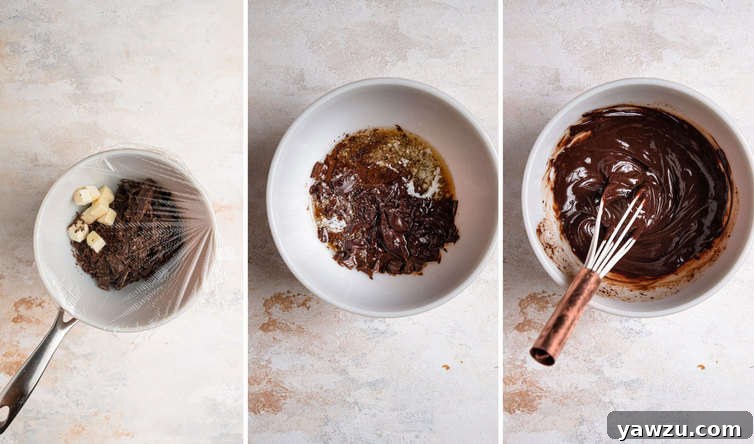
- For the chocolate base: In a small saucepan, bring about 2 inches of water to a simmer over medium heat. In a small heatproof bowl, combine 6 ounces of finely chopped bittersweet or semisweet chocolate, 2 tablespoons of cold unsalted butter (cut into two pieces), and 2 tablespoons of cold water. Cover the bowl tightly with plastic wrap and set it over the simmering water (creating a bain-marie). Reduce the heat to medium-low and allow it to heat for about 15 minutes, or until the butter is mostly melted, and the chocolate pieces appear glossy and have softened around the edges. Crucially, do not stir the mixture during this time, and ensure the water in the saucepan does not boil, as this could cause the chocolate to seize or cook. Remove the bowl from heat, unwrap, and stir until the mixture is completely smooth and glossy.
- In a separate small bowl, whisk together the ¼ cup Dutch-processed cocoa powder (sifted), ¼ cup all-purpose flour, and ⅛ teaspoon salt. Set aside.
- In the bowl of a stand mixer fitted with the whisk attachment, beat the 6 egg yolks at medium-high speed for about 15 seconds until combined. With the mixer running, gradually add half of the ⅓ cup granulated sugar, scraping down the sides of the bowl as needed. Continue beating for about 8 minutes, until the yolks are pale yellow and the mixture forms a thick ribbon when the beaters are lifted. Beat in 1 teaspoon of vanilla extract for about 30 seconds.
- In a meticulously clean bowl with clean beaters, beat the 6 egg whites and ⅛ teaspoon cream of tartar at medium speed until foamy, about 30 seconds. With the mixer running, slowly add about 1 teaspoon of the remaining sugar and continue beating until soft peaks form (about 40 seconds). Gradually add the rest of the sugar and beat until the whites are glossy and hold stiff peaks, about 1 minute longer. Be careful not to overbeat, as this can dry out the meringue.
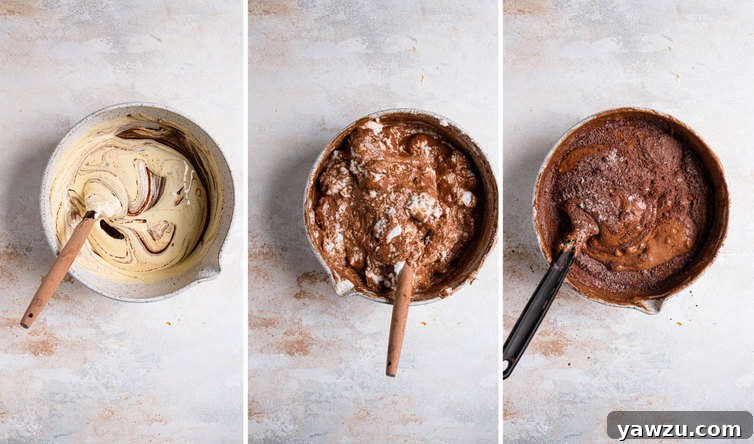
- Gently fold the cooled chocolate mixture into the egg yolk mixture until just combined. To lighten the chocolate batter, stir in about a quarter of the beaten egg whites. Then, very gently fold in the remaining egg whites until almost no white streaks remain. Finally, sprinkle the sifted dry ingredients (cocoa, flour, salt) over the egg and chocolate mixture and fold them in quickly but gently, being careful not to deflate the batter.
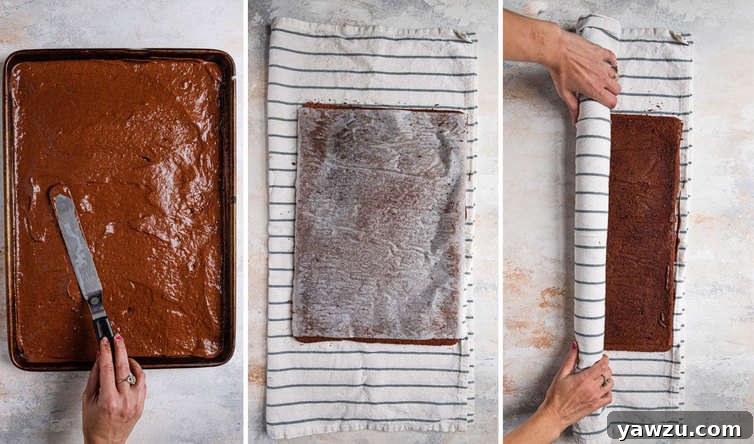
- Pour the batter into your prepared baking pan. Using an offset spatula, quickly and evenly spread the batter into the pan’s corners, smoothing the surface.
- Bake for 8 to 10 minutes, rotating the pan halfway through. The cake is done when its center springs back lightly when touched. Do not overbake, as this will make it dry and difficult to roll. Allow the cake to cool in the pan on a wire rack for precisely 5 minutes.
- Prepare your work surface by laying down a clean kitchen towel. Evenly sift 1 tablespoon of cocoa powder over the towel; this prevents sticking and adds a nice “bark” effect.
- Using a small paring knife, carefully run it around the edges of the baking sheet to loosen the cake. Invert the cake onto the cocoa-dusted towel, then gently peel off the parchment paper.
- Starting from one of the long sides, carefully roll the cake and the towel together into a tight jelly-roll shape. This initial roll helps the cake “remember” its shape. Once rolled, leave it in this position to cool for approximately 15 minutes.
- After cooling, gently unroll the cake and the towel. Immediately and evenly spread the chilled espresso-mascarpone filling over the entire surface of the cake, almost reaching the edges.
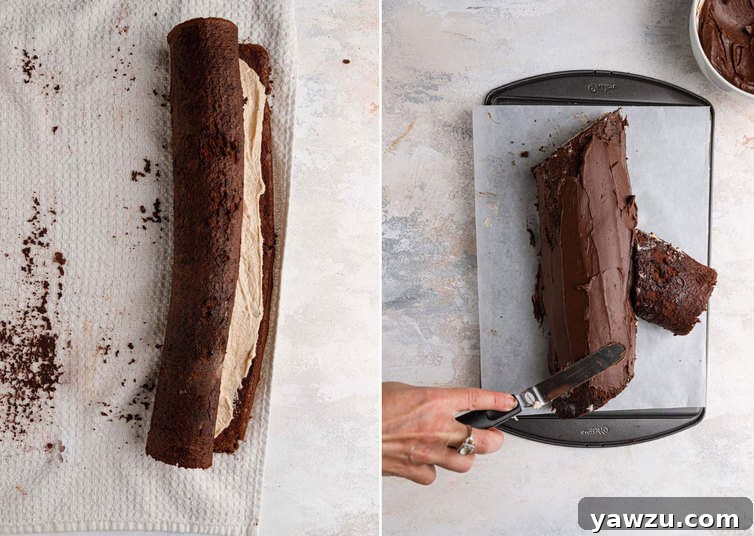
- Starting from the same long side, reroll the cake, this time without the towel, ensuring it’s firm but not squeezed. The mascarpone filling will be snugly encased. Trim both ends of the rolled cake on a diagonal; these pieces will become your “stumps” for decoration.
- Place your rolled cake, seam-side down, onto your chosen serving platter.
- Using a small icing spatula or offset spatula, generously spread the prepared chocolate ganache over the entire surface of the cake, ensuring it’s fully coated.
- Attach the reserved trimmed “stump” ends to the main log, using extra ganache as a “glue.” Position them artistically to mimic natural tree branches or newly cut stumps. Use any remaining ganache to fill gaps or mend any small cracks, embracing the rustic, natural look.
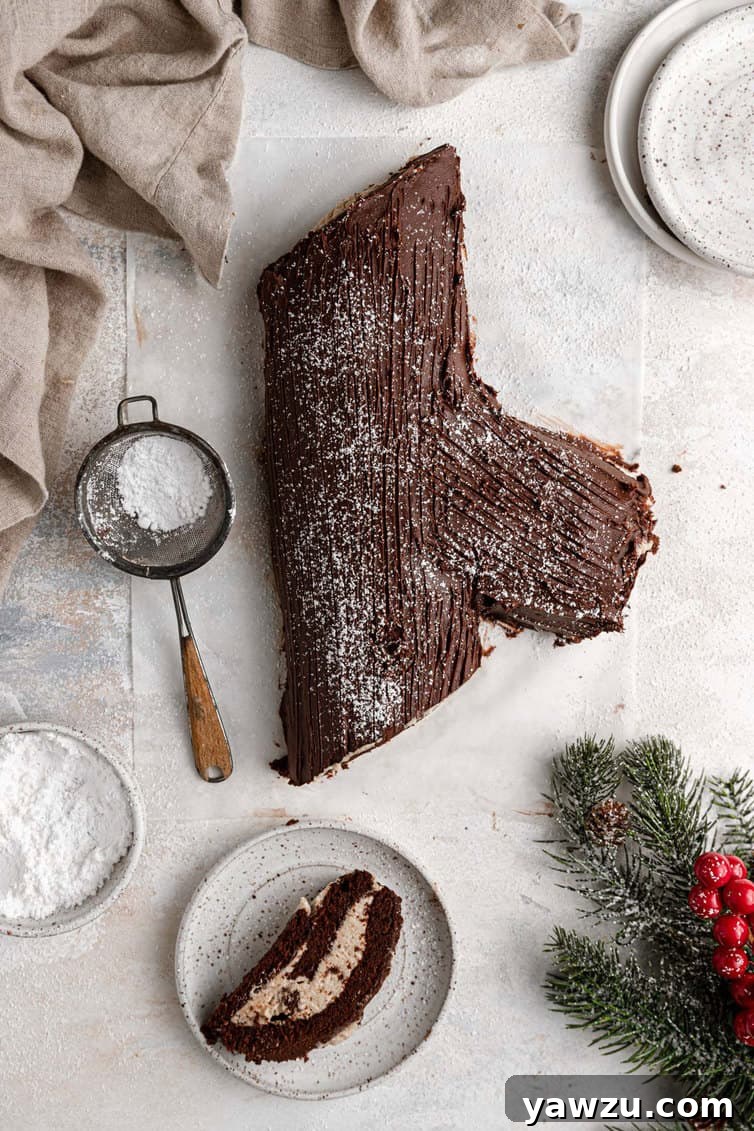
- Before the ganache sets, use the tines of a fork, a small comb, or a textured spatula to create realistic wood-grain marks along the surface of the log, giving it an authentic bark appearance.
- Refrigerate the cake, uncovered, for about 20 minutes to allow the ganache to firm up slightly.
- Once the ganache is set, remove the cake from the refrigerator and generously sift powdered sugar over it, creating a beautiful “snow-covered” effect. This is also the perfect time to add your chosen woodland decorations, such as meringue mushrooms, sugared cranberries, fresh rosemary sprigs (for pine needles), or even small edible figurines.
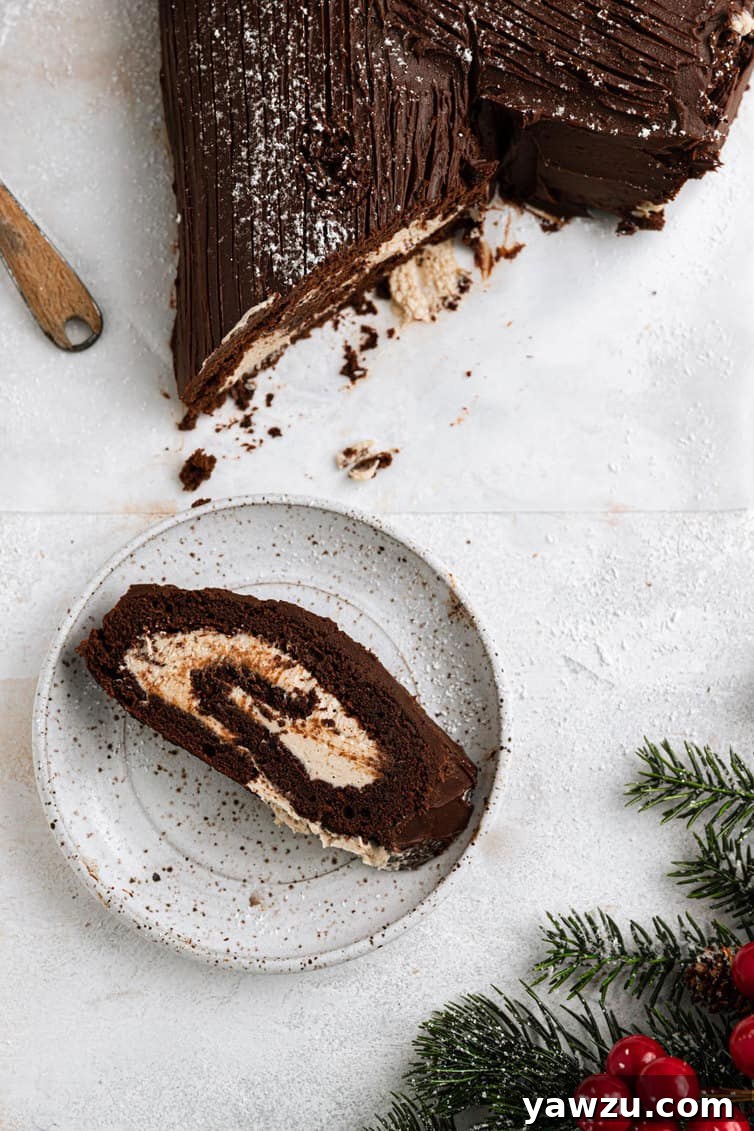
- While the Bûche de Noël is best enjoyed on the day it’s made for optimal freshness and texture, it can be stored in the refrigerator. Wrap it tightly in plastic wrap to prevent it from drying out, and it will remain delicious for up to three days. Note: Freezing this cake with the mascarpone filling is not recommended, as the mascarpone can become watery upon thawing, affecting the texture.
- Chocolate and Peanut Butter: A beloved combination! Pair a rich chocolate cake with a creamy, dreamy peanut butter filling for a sweet and salty delight that appeals to all ages.
- Chocolate and Peppermint Bark: For a refreshing, festive twist, complement the chocolate cake with a peppermint bark filling, incorporating crushed candy canes for crunch and a burst of mint.
- Red Velvet with White Chocolate Cream Cheese Filling: Swap the chocolate sponge for a vibrant red velvet cake, filled with a tangy yet sweet white chocolate cream cheese frosting for a truly luxurious and visually stunning option.
- Bailey’s and White Chocolate: Infuse your filling with the comforting warmth of Bailey’s Irish Cream, paired with a smooth white chocolate ganache or cream cheese filling for an adult-friendly indulgence.
- Caramel with Chocolate Cake: A classic pairing, a gooey caramel filling encased in chocolate sponge offers a comforting, rich, and intensely satisfying experience.
- Yellow Cake with Cherry Cream Cheese Filling: For a lighter, fruitier option, a delicate yellow sponge cake can be filled with a vibrant cherry-infused cream cheese, offering a lovely contrast in colors and flavors.
- Citrus Burst: Consider a lemon or orange-flavored sponge with a zesty mascarpone or curd filling for a brighter, more refreshing take on the Yule Log.
- Nutty Indulgence: Incorporate toasted nuts like hazelnuts or pecans into your filling or as a garnish for added texture and a rich, earthy flavor.
- Panettone Recipe: This classic Italian sweet bread, studded with candied fruits and raisins, is a light and airy delight, perfect for holiday breakfasts or after-dinner treats.
- Lebkuchen German Christmas Cookies: These traditional German gingerbread cookies, often spiced with cinnamon, cloves, and cardamom, offer a rich, aromatic flavor that truly captures the essence of Christmas.
- Reindeer Chow: A fun, no-bake snack mix that’s incredibly addictive and perfect for sharing (or not!). It’s a sweet, salty, and crunchy treat that kids and adults alike will adore.
- Make the Bûche de Noël! Follow this recipe and enjoy the process of creating this holiday masterpiece.
- Share Your Creation: Once your stunning Yule Log is complete, snap a picture! You can share it on social media using the hashtag #BEBbakealong on Instagram or Twitter, upload it directly to our friendly BEB Facebook group, or simply email your photo to me. I love seeing your beautiful results!
- Connect and Cheer: Throughout the month, check in on Instagram and Facebook to see what everyone else is baking. It’s a wonderful opportunity to inspire and support each other’s culinary journeys.
- Explore Past Bake-Alongs: Curious about previous challenges? You can view all past bake-along recipes here.
- ¾ cup (178.5 ml) heavy cream
- 2 tablespoons unsalted butter
- 6 ounces (170.1 g) semisweet chocolate or bittersweet chocolate, chopped
- ½ cup (119 ml) heavy cream
- 2 teaspoons espresso powder
- 6 tablespoons powdered sugar
- 16 ounces (453.59 g) mascarpone cheese, (2 cups)
- ¼ cup (31.25 g) all-purpose flour, plus more for dusting baking sheet
- 6 ounces (170.1 g) bittersweet chocolate or semisweet chocolate, finely chopped
- 2 tablespoons cold unsalted butter, cut into two pieces
- 2 tablespoons cold water
- ¼ cup (21.5 g) Dutch-processed cocoa powder, sifted, plus more for unmolding
- ⅛ teaspoon (0.13 teaspoon) salt
- 6 eggs, separated, at room temperature
- ⅓ cup (66.67 g) granulated sugar
- 1 teaspoon vanilla extract
- ⅛ teaspoon (0.13 teaspoon) cream of tartar
-
Make the Dark Chocolate Ganache: Microwave the heavy cream and butter in measuring cup on high for 1½ minutes. Place the chopped chocolate in the bowl of food processor. With the machine running, gradually add the hot cream mixture through the feed tube and process until smooth and thickened, about 3 minutes. Transfer the ganache to medium bowl and let stand at room temperature for 1 hour, or until spreadable (the ganache should have the consistency of soft icing).
-
Make the Espresso-Mascarpone Cream Filling: Bring the heavy cream to a simmer in a small saucepan over high heat. Remove from the heat and whisk in the espresso and powdered sugar until dissolved; cool slightly. With a rubber spatula, beat the mascarpone in a medium bowl until softened. Gently whisk in the cooled cream mixture until combined. Cover with plastic wrap and refrigerate until ready to use.
-
Make the Cake: Adjust oven rack to upper-middle position and heat oven to 400 degrees F. Spray a 12×18-inch rimmed baking sheet with nonstick cooking spray, cover pan bottom with parchment paper and spray parchment with nonstick cooking spray; dust baking sheet with flour, tapping out excess.
-
Bring 2 inches of water to a simmer in a small saucepan over medium heat. Combine the chocolate, butter, and water in a small heatproof bowl and cover tightly with plastic wrap. Set the bowl over the pan of simmering water, reduce the heat to medium-low, and heat until the butter is almost completely melted and chocolate pieces are glossy, have lost definition, and are fully melted around edges, about 15 minutes. (Do not stir or let the water in the saucepan come to boil.) Remove the bowl from heat, unwrap, and stir until smooth and glossy. While the chocolate is melting, sift the cocoa powder, flour, and salt together in a small bowl and set aside.
-
In the bowl of a standing mixer, beat the egg yolks at medium-high speed until combined, about 15 seconds. With mixer running, add half of the sugar. Continue to beat, scraping down the sides of bowl as necessary until the yolks are pale yellow and the mixture falls in a thick ribbon when the beaters are lifted, about 8 minutes. Add the vanilla extract and beat to combine, scraping down the bowl once, about 30 seconds.
-
In a clean bowl with clean beaters, beat the egg whites and cream of tartar at medium speed until foamy, about 30 seconds. With the mixer running, add about 1 teaspoon of the remaining sugar; continue beating until soft peaks form, about 40 seconds. Gradually add remaining sugar and beat until whites are glossy and hold stiff peaks, about 1 minute longer. Do not overbeat. While the egg whites are beating, stir the chocolate mixture into the egg yolk mixture. With a rubber spatula, stir a quarter of the egg whites into the chocolate mixture to lighten it. Gently fold in the remaining egg whites until almost no streaks remain. Sprinkle the dry ingredients over the egg and chocolate mixture and fold in quickly but gently.
-
Pour the batter into the prepared pan; using an offset spatula and working quickly, smooth the surface and spread batter into pan corners. Bake until center of cake springs back when touched with finger, 8 to 10 minutes, rotating pan halfway through baking time. Cool the cake in pan on a wire rack for 5 minutes.
-
While cake is cooling, lay a clean kitchen towel over a work surface and sift 1 tablespoon cocoa powder all over towel. Run a paring knife around the edges of the baking sheet to loosen the cake. Invert the cake onto the prepared towel and peel off the parchment.
-
Assemble the Yule Log: Starting at a long side, roll the cake and towel together into a jelly roll shape. Cool for 15 minutes, then unroll the cake and towel. Using an offset spatula, immediately spread mascarpone cream filling evenly over surface of cake, almost to edges. Reroll the cake gently but snugly around filling. Trim both ends of cake on diagonal and reserve.
-
Set the cake seam-side down on on a serving platter. Spread the ganache over roulade with a small icing spatula. Attach the reserved “stump” ends to the yule log using the ganache and spread ganache over them, as well. Use a fork to make wood-grain marks on the surface of the ganache before it has set. Refrigerate cake, uncovered, to slightly set the icing, about 20 minutes. Sift yule log with powdered sugar. The cake is best served the day it is made, but can be stored in the refrigerator, wrapped tightly in plastic wrap, for up to 3 days.
- Equipment: Stand mixer / Food processor / Rimmed baking sheet
- Dutch-Processed Cocoa: I do not recommend substituting natural cocoa powder. I use Rodelle Dutch cocoa (Costco sells it in a larger bag!).
- Espresso powder: If you don’t keep espresso powder on hand for brewing, this baking espresso is a great option to keep on hand for baking (dissolves easily!). If you’d like to make an espresso-free dessert, you can eliminate the espresso powder and add 1 teaspoon of vanilla extract instead.
- Chopped chocolate: You can use either bittersweet or semisweet chocolate. I recommend Ghiradelli or Guittard baking bars (both can be found in the baking aisle at most grocery stores).
- Storage: The cake can be kept, covered in plastic wrap, in the refrigerator for up to 3 days. I don’t recommend freezing this cake with the mascarpone filling, as it could be runny when thawed.
- Recipe adapted from Cook’s Illustrated
Mastering the Bûche de Noël: A Step-by-Step Guide
Step 1: Crafting the Silky Dark Chocolate Ganache
The ganache serves as the rich, decadent “bark” of our Yule Log. Its smooth texture and deep chocolate flavor are essential.
Step 2: Preparing the Aromatic Espresso-Mascarpone Filling
This filling provides a delightful contrast to the rich chocolate, adding a subtle coffee kick and a creamy, tangy element.
Step 3: Baking the Delicate Chocolate Sponge Cake
The foundation of our Bûche de Noël is a light, pliable chocolate sponge cake that can be easily rolled without cracking.
The Art of Rolling Your Yule Log
Rolling the cake is a critical step that must be performed while the cake is still warm and pliable to prevent cracking. Speed and gentle handling are key.
Serving Your Festive Yule Log and Storage Tips
Once your Bûche de Noël is assembled, the final decorative touches and proper storage will ensure it’s ready to dazzle.
Creative Bûche de Noël Flavor Variations to Explore
While our espresso-mascarpone and chocolate ganache version is a triumph, the beauty of the Bûche de Noël lies in its versatility. If you’ve fallen in love with this festive dessert, you’ll be thrilled to discover a world of flavor combinations that can transform this classic into a new culinary adventure. Don’t be afraid to experiment and personalize your Yule Log!
These variations are just the beginning! Let your imagination guide you in creating a Bûche de Noël that perfectly suits your taste and holiday spirit.
Discover More Holiday Dessert Inspiration!
The holiday season is a wonderful time to explore new baking adventures and revisit cherished family recipes. If you’re looking to expand your festive dessert repertoire beyond this spectacular Bûche de Noël, here are some of my personal favorites that are sure to bring joy to your holiday table:
Join the BEB Bake-Along Community!
Baking is even more fun when shared! If you’re feeling inspired to tackle this impressive Bûche de Noël this month, I invite you to join our vibrant BEB Bake-Along community. It’s a fantastic way to connect with fellow baking enthusiasts, share your creations, and draw inspiration from others.
I genuinely hope you decide to make this exquisite Bûche de Noël. If you do, please take a moment to come back, leave a rating, and let me know how much you enjoyed it! Your feedback means the world. ENJOY! 😍
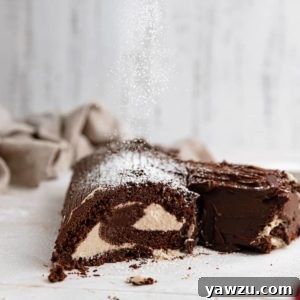
Bûche de Noël (Yule Log)
Pin
Rate
Ingredients
For the Dark Chocolate Ganache:
For the Espresso-Mascarpone Cream Filling:
For the Cake:
Instructions
Notes
Nutritional values are based on one serving
Did you make this recipe?
Leave a review below, then snap a picture and tag @thebrowneyedbaker on Instagram so I can see it!
[Photography by Dee Frances]