

Dive into a culinary masterpiece: the authentic Chicago-style deep-dish pizza. This isn’t just any pizza; it’s a towering triumph of flavor and texture, featuring a remarkably flaky, buttery crust, generous layers of rich, melty cheese, and a vibrant, chunky homemade tomato sauce. Forget delivery—this deep-dish pizza is designed to be the ultimate at-home pizza experience, bringing a slice of the Windy City right to your kitchen.
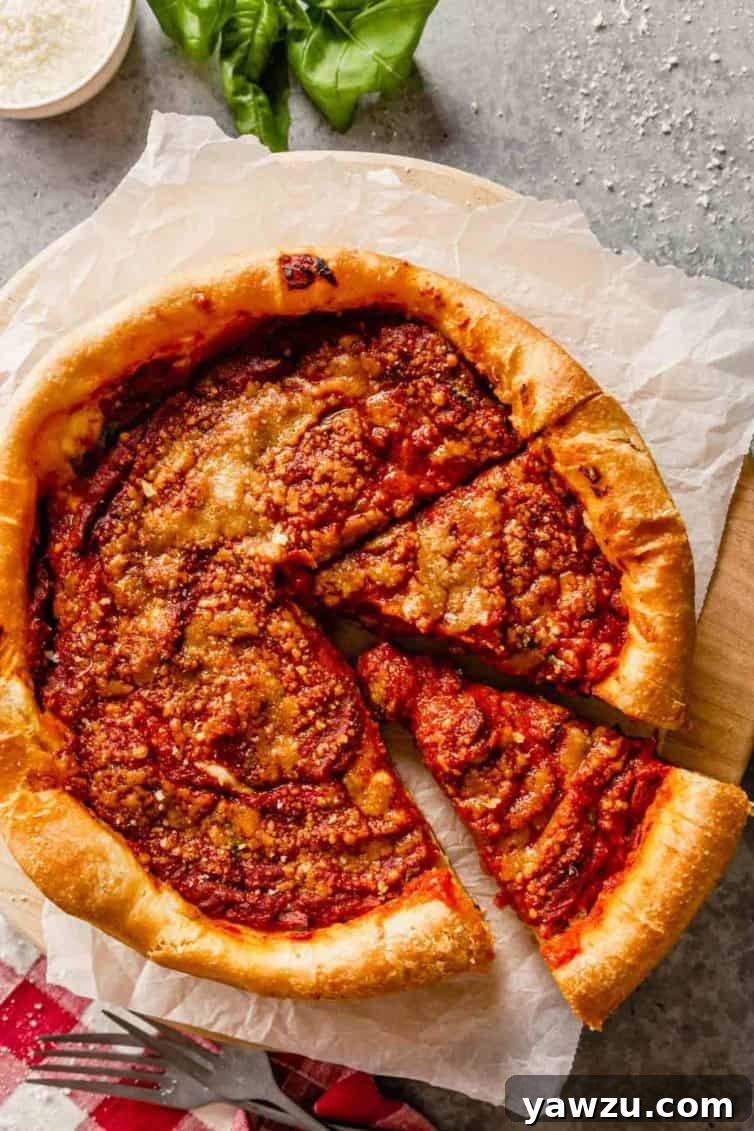
The legendary deep-dish pizza, often synonymous with “Chicago-style pizza,” has a rich history deeply rooted in the bustling culinary scene of Chicago. While several iconic pizzerias lay claim to its invention, most culinary historians credit Pizzeria Uno, established in 1943 by Ike Sewell, as the birthplace of this distinctive pie. Sewell envisioned a pizza that was more robust and fulfilling than the thin-crust varieties prevalent at the time, creating a dish that could truly stand as a hearty meal on its own. It’s a culinary icon characterized by its high-edged, almost pie-like crust, a generous foundation of melted cheese, often adorned with robust toppings like spicy pepperoni or savory Italian sausage, and famously crowned with a thick, chunky tomato sauce. This unique construction isn’t just for aesthetics; it’s a deliberate design that allows the pizza to cook perfectly, creating a truly one-of-a-kind gastronomic delight.
Traditional Pan Pizza vs. Chicago-Style Deep-Dish: Understanding the Unique Differences
Many people often confuse deep-dish pizza with a mere “thick crust” pizza, but the truth is, a Chicago-style deep-dish pizza stands in a league of its own. There are several fundamental differences that set it apart from a traditional pan pizza or any other pizza style. Understanding these distinctions is key to appreciating and mastering the art of deep-dish at home.
- Pan & Structure: Traditional pizzas are typically baked on a flat pizza stone or a shallow pan, resulting in a relatively flat profile. In contrast, deep-dish pizzas are baked in specialty high-edged pans, such as a standard cake pan or a sturdy cast-iron skillet. This tall pan creates the signature “deep” well that holds the abundant layers of cheese, toppings, and sauce, allowing the crust to climb to impressive, towering heights.
- Dough & Texture: While traditional pizza dough is often simple and chewy, deep-dish pizza dough features a distinctive laminated crust. This process, similar to making delicate croissants, involves folding cold butter into the dough in multiple layers. The lamination technique creates an incredibly flaky, tender, and buttery crust that truly melts in your mouth, offering a luxurious contrast to the hearty fillings. The addition of cornmeal often contributes to its signature golden hue and a subtle crispness.
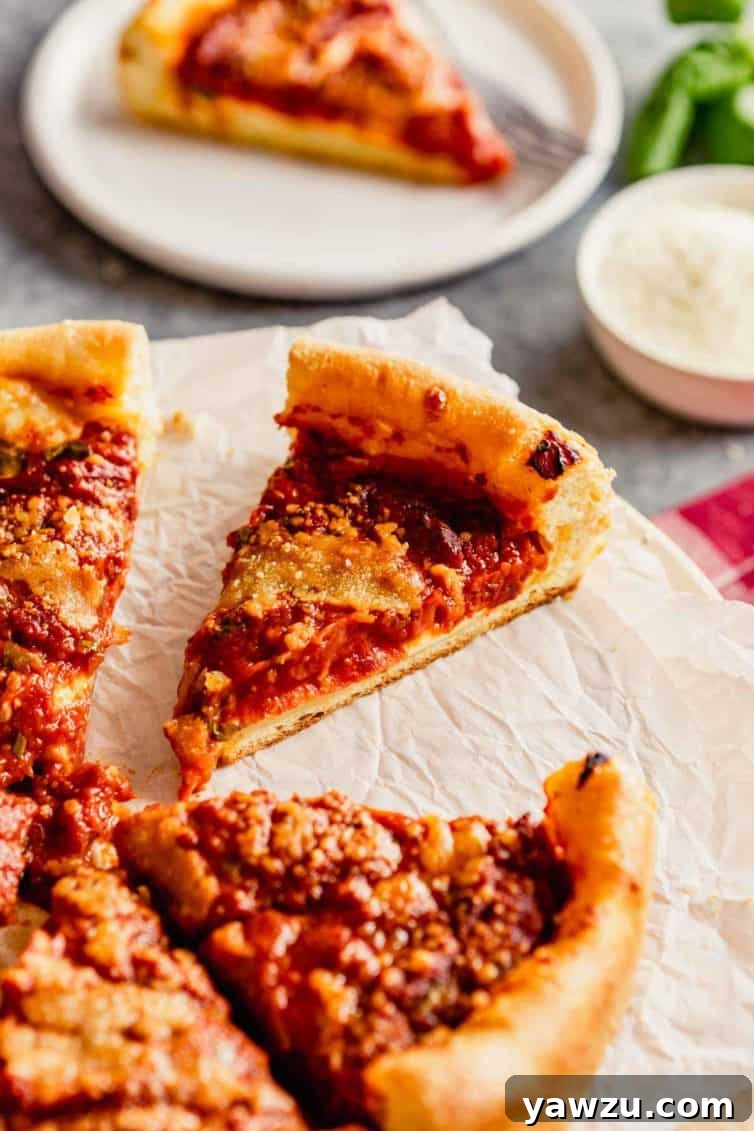
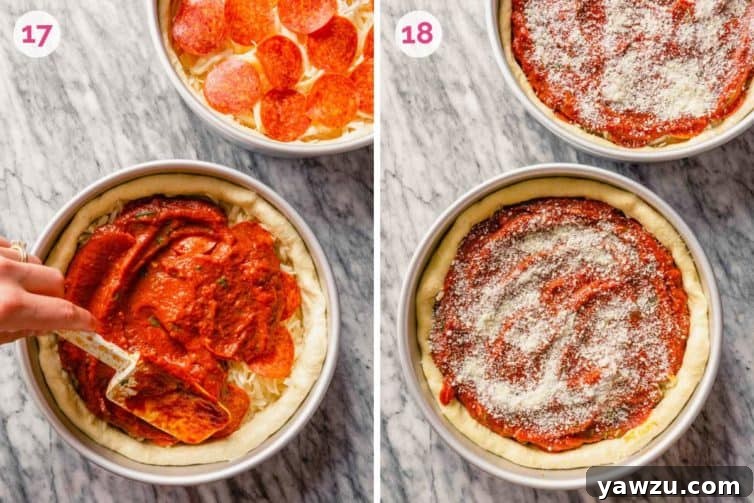
- Assembly Order: This is perhaps the most iconic and surprising difference. Traditional pizza pies follow a familiar assembly: crust, then sauce, followed by cheese, and finally toppings. Chicago-style deep-dish pizza, however, reverses this order to perfection. The crust is first lined with generous amounts of cheese, then the chosen toppings, and finally, a thick layer of tomato sauce blankets the top. This inverted layering prevents the cheese and toppings from burning during the extended bake time required for a deep-dish, ensuring they remain perfectly gooey and delicious.
Mastering the Art of Homemade Chicago Deep-Dish Pizza
Creating this cheesy, mouth-watering deep-dish pizza from scratch might seem daunting, but by breaking it down into its core components, you’ll find it an incredibly rewarding culinary adventure. We’ll guide you through each essential part: crafting the perfect flaky pizza dough, simmering a rich and chunky homemade tomato sauce, and meticulously assembling your ultimate deep-dish pizza masterpiece.
Crafting the Signature Flaky Deep-Dish Dough
The foundation of an exceptional Chicago-style deep-dish pizza lies in its unique crust. While many of the ingredients are standard for bread making, a few key additions and techniques elevate this dough to its signature buttery, flaky status. Pay close attention to the details to achieve that perfect melt-in-your-mouth texture.
- Dry Ingredients: Your base includes essential baking staples: all-purpose flour for structure, salt for flavor, sugar to activate the yeast and aid browning, and instant yeast for a reliable rise. These form the fundamental framework of a robust dough.
- Cornmeal: This is a crucial and unique ingredient for deep-dish. Fine yellow cornmeal not only imparts a beautiful golden color to the crust but also contributes a subtle grainy texture and a desirable crispiness, especially at the base of the pizza. It’s what gives the crust its characteristic bite.
- Wet Ingredients: Room temperature water helps activate the yeast and bring the dough together. Melted butter and olive oil are incorporated directly into the dough to add richness, moisture, and contribute to the initial tenderness before the lamination process begins.
- Additional Butter for Lamination: This is the “secret weapon” for that renowned flakiness. Cold, softened unsalted butter is spread and folded into the dough layers during the lamination process, creating distinct layers that separate and crisp beautifully when baked, yielding an unparalleled buttery aroma and texture.
Step-by-Step Dough Preparation:
- Combine Dry Ingredients: In a large mixing bowl, whisk together the flour, cornmeal, salt, sugar, and instant yeast. Ensure they are thoroughly combined to distribute the yeast evenly.
- Incorporate Wet Ingredients: Gradually add the room temperature water and the three tablespoons of melted butter. Using a dough hook on a stand mixer (or a sturdy spatula for hand mixing), mix on low speed until all ingredients are fully combined and a shaggy dough forms, typically 1 to 2 minutes. Remember to scrape down the bottom and sides of the bowl periodically to ensure even mixing.
- Knead to Perfection: Increase the mixer speed to medium and continue kneading. The dough should transform into a glossy, smooth ball that pulls away cleanly from the sides of the bowl. This process usually takes 4 to 5 minutes, developing the gluten necessary for a great crust. If kneading by hand, continue until the dough is elastic and smooth.
- First Rise: Lightly coat a separate large bowl with 1 teaspoon of olive oil. Using a greased spatula or your hands, transfer the dough to this oiled bowl, turning it once to ensure it’s fully coated. Cover the bowl tightly with plastic wrap and let it rise at room temperature. The dough should nearly double in volume, which typically takes about 45 to 60 minutes, depending on your kitchen’s temperature.
The Art of Laminated Dough: Achieving that Signature Flaky Crust
The lamination process is what truly elevates this deep-dish crust, making it stand head and shoulders above other pizza doughs. It’s the secret to its wonderfully flaky, buttery texture, akin to a delicate pastry, though significantly less involved than making traditional croissants. This step is crucial for achieving one of the key components of an outstanding deep-dish pizza.
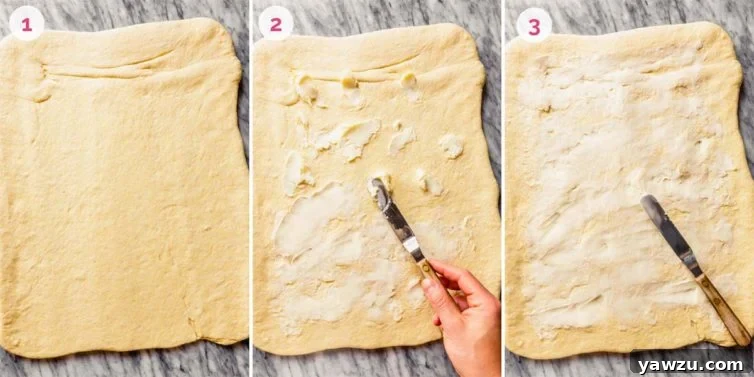
- Roll into a Rectangle: Once your dough has completed its first rise, turn it out onto a clean, dry work surface. Gently roll the dough into an approximate 15×12-inch rectangle. Strive for an even thickness across the entire surface.
- Spread Softened Butter: Using an offset spatula or the back of a spoon, evenly spread the 4 tablespoons of softened unsalted butter over the entire surface of the rolled-out dough. Be sure to leave a ½-inch border along all edges of the rectangle; this prevents butter from squeezing out during rolling.
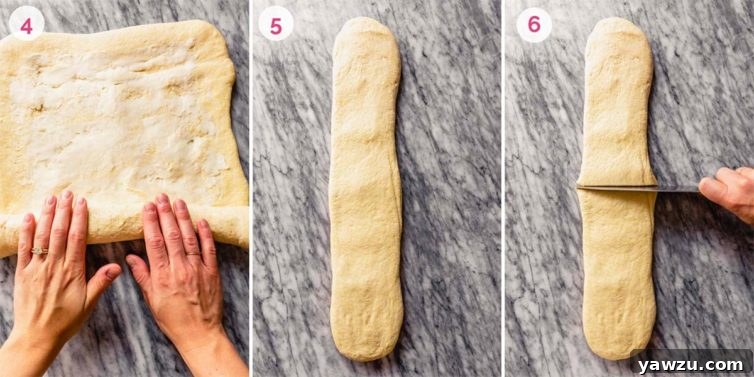
- Roll into a Cylinder: Starting from one of the shorter ends of the buttered rectangle, carefully and tightly roll the dough into a compact cylinder. This creates the first set of layers.
- Flatten the Cylinder: Place the dough cylinder seam-side down on your work surface. Gently flatten it into a longer, narrower 18×4-inch rectangle. This second rolling further distributes the butter and creates more delicate layers.
- Divide the Dough: Using a sharp knife or bench scraper, cut the elongated rectangle cleanly in half crosswise, yielding two equal portions of dough.
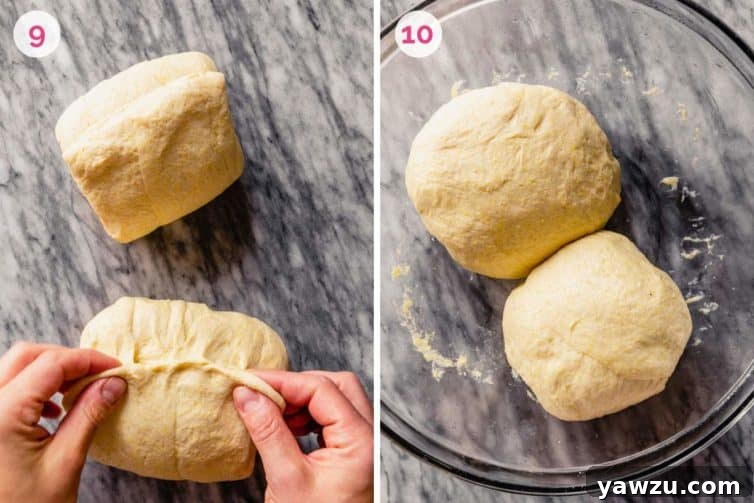
- Form Dough Balls: Take one half of the dough. Fold it into thirds, much like you would fold a business letter or a tri-fold brochure. This creates even more layers. Then, firmly pinch the seams together to seal the folds and gently form the dough into a smooth ball. Repeat this process with the remaining half of the dough to create a second ball.
- Second Rise (Cold Fermentation): Return both dough balls to the lightly oiled bowl. Cover them tightly with plastic wrap and transfer the bowl to the refrigerator. Allow the dough to rise again until it has nearly doubled in volume, which will take approximately 40 to 50 minutes. The cold environment slows the fermentation, enhancing flavor and making the dough easier to handle.
Crafting Your Rich, Chunky Homemade Deep-Dish Pizza Sauce
A truly authentic Chicago-style deep-dish pizza demands a sauce that is as robust and flavorful as its crust. While your dough is undergoing its second rise, this is the perfect time to prepare a vibrant, chunky homemade pizza sauce. Its fresh, bright flavors will perfectly complement the rich cheese and savory toppings.
- Butter: Used as the base for sautéing aromatics, butter adds a luxurious richness to the sauce and helps to mellow the acidity of the tomatoes, creating a more balanced flavor profile.
- Crushed Tomatoes: The heart of this sauce, canned crushed tomatoes, are ideal for achieving that desired chunky texture. Their natural sweetness and acidity provide a perfect foundation.
- Aromatics: Grated onion and minced garlic are sautéed to release their fragrant oils and sweeten, adding essential depth and complexity to the sauce’s overall flavor.
- Seasonings: Salt, pepper, dried oregano, and a touch of sugar are carefully balanced to enhance the natural flavors of the tomatoes. The sugar helps to cut through and balance the acidity, making the sauce incredibly palatable.
- Fresh Basil & Olive Oil: Stirred in at the very end, fresh basil provides a bright, herbaceous finish, while a drizzle of high-quality olive oil adds a silky texture and another layer of fruity flavor, tying all the components together beautifully.
Step-by-Step Sauce Preparation:
- Melt Butter: In a medium saucepan, melt the 2 tablespoons of unsalted butter over medium heat.
- Sauté Aromatics and Seasonings: Once the butter is melted and shimmering, add the grated onion, dried oregano, and ½ teaspoon of salt. Cook, stirring occasionally, until the liquid from the onion has evaporated and the onion itself turns a lovely golden brown, which should take about 5 minutes. This caramelization adds significant depth.
- Add Garlic: Stir in the minced garlic and cook for an additional 30 seconds, or until it becomes fragrant. Be careful not to burn the garlic, as it can turn bitter.
- Introduce Tomatoes and Sugar: Pour in the canned crushed tomatoes and add ¼ teaspoon of sugar. Increase the heat to high and bring the sauce to a gentle simmer, stirring frequently to prevent sticking.
- Simmer and Reduce: Once simmering, reduce the heat to medium-low and allow the sauce to gently simmer. Continue cooking for 25 to 30 minutes, or until the sauce has reduced to approximately 2½ cups. This reduction process concentrates the flavors, creating a richer, more intense sauce.
- Finish with Freshness: Remove the saucepan from the heat. Stir in the coarsely chopped fresh basil and 1 tablespoon of olive oil. Taste and adjust seasoning with additional salt and freshly ground black pepper as needed.
Assembling Your Epic Chicago-Style Deep-Dish Pizza
With your flaky dough perfectly rested and your rich tomato sauce simmering, it’s time for the exciting part: assembling your magnificent deep-dish pizzas! Before you begin, gather all your chosen toppings and have them ready. The unique layering of a Chicago deep-dish is crucial for its success and signature character. While customization is encouraged, here are the classic toppings typically used for an authentic Chicago-style pie:
- Cheese (The Foundation): Shredded low-moisture mozzarella is the traditional go-to for its exceptional melting qualities and gooey texture. However, feel free to experiment with other melty cheeses like fresh mozzarella (drained well), provolone, or fontina for a unique flavor profile. Remember, a generous layer of cheese goes directly on the crust!
- Pepperoni (Optional but Classic): A family favorite for a reason! Slices of pepperoni add a delightful savory, slightly spicy kick and crisp up beautifully within the layers. If using, place it directly on top of the cheese.
- Sauce (The Crown): You’ve just created a phenomenal homemade sauce, so it’s highly recommended! Its chunky texture and rich flavor are ideal. If pressed for time, a high-quality store-bought pizza sauce can be a convenient alternative, but ensure it’s thick enough for deep-dish.
- Parmesan (Finishing Touch): A final sprinkle of grated Parmesan cheese over the sauce before baking adds a salty, umami depth and a beautiful golden crust to the top layer. While optional, it’s highly encouraged for that authentic finish.
Step-by-Step Baking Instructions
Now, let’s bring all the components together and bake your masterpiece!
- Prepare for Baking: Begin by adjusting your oven rack to the lower position; this ensures the crust cooks thoroughly without burning the top. Preheat your oven to a robust 425°F (220°C). Generously coat two 9-inch round cake pans (or 10-inch cast iron skillets) with 2 tablespoons of olive oil each. Don’t skimp on the oil, as it helps create a crisp, golden crust.
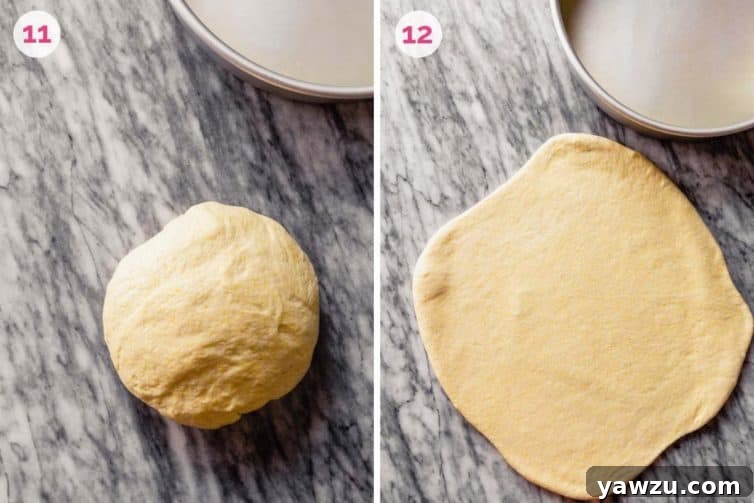
- Roll Out the Dough: Transfer one of your perfectly laminated dough balls to a lightly floured, dry work surface. Using a rolling pin, roll the dough out into a roughly 13-inch circle. Aim for an even thickness.
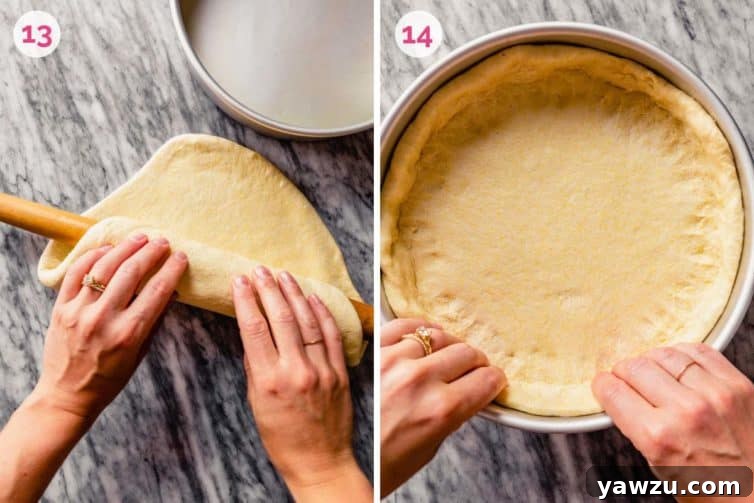
- Transfer to Pan: Carefully transfer the rolled dough into one of the prepared pans. A good technique is to loosely roll the dough around your rolling pin, then unroll it directly into the pan. This helps prevent stretching and tearing.
- Press into the Pan: Gently press the dough into the bottom of the pan, working it into all the corners and about 1 inch up the sides. Ensure there are no air bubbles. If the dough seems to resist stretching back, let it relax for 5 minutes before trying again; this allows the gluten to relax, making it more pliable. Repeat this entire process with the remaining dough ball and second pan.
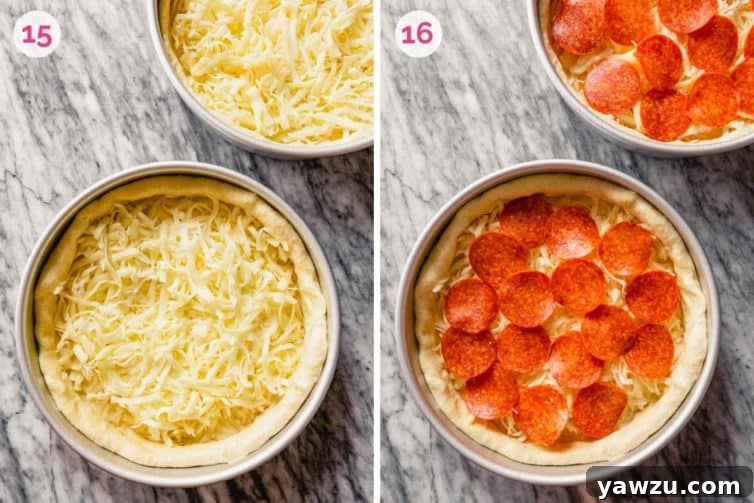
- Add Cheese: Distribute 2 cups of shredded mozzarella cheese evenly over the surface of each pizza dough, directly on top of the crust. This is the first essential layer of a deep-dish.
- Sprinkle on Toppings: If you’re incorporating any meat (like pepperoni or sausage) or vegetable toppings, now is the time to add them. Sprinkle them generously over the layer of mozzarella cheese. This unique order ensures your toppings cook perfectly and don’t burn.
- Crown with Sauce: Carefully spread 1¼ cups of your homemade (or preferred) tomato sauce over the cheese and toppings on each pizza. This thick, flavorful layer will form the top of your deep-dish. Finally, sprinkle 2 tablespoons of grated Parmesan cheese over the sauce for an extra burst of flavor and a beautiful golden finish.
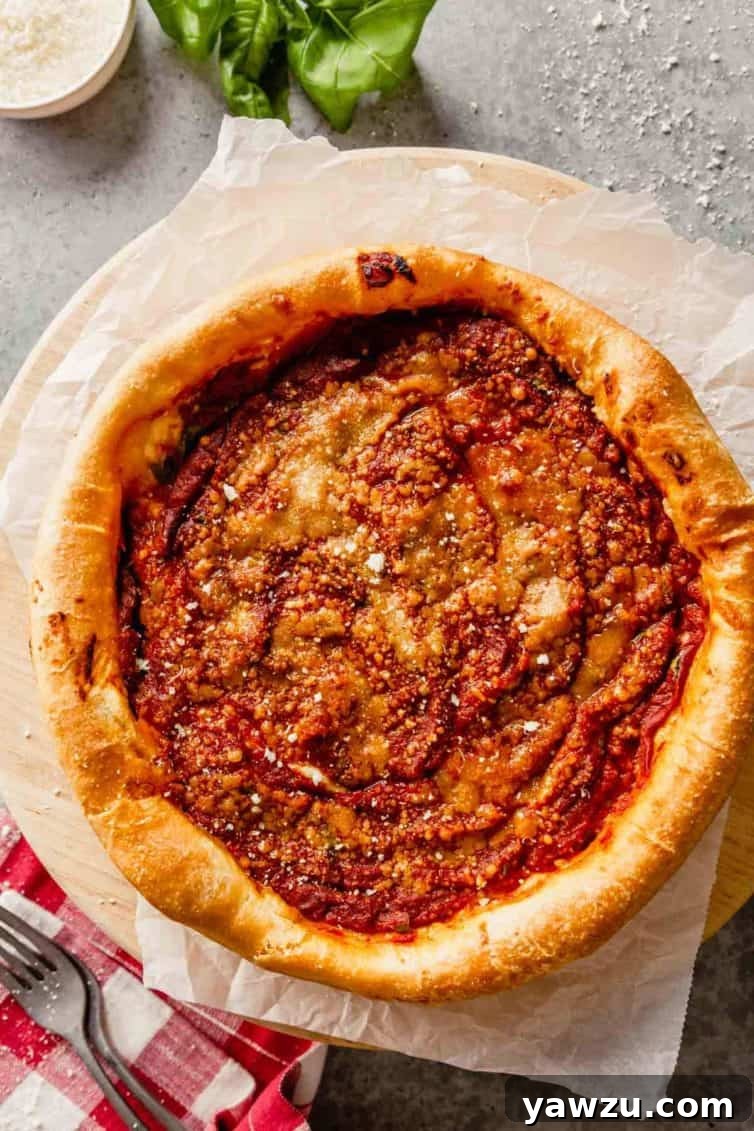
- Bake to Perfection: Transfer the pans to your preheated oven. Bake for approximately 20 to 30 minutes, or until the crust achieves a beautiful golden-brown color and the sauce is bubbling invitingly.
- Rest Before Serving: This step is critical! Once baked, remove the pizzas from the oven and allow them to rest in their pans for at least 10 minutes before attempting to slice and serve. This crucial time allows the intensely hot, molten cheese and juicy toppings to settle and firm up slightly. Skipping this step often results in a messy, frustrating experience where cheese and sauce spill out when you attempt to cut that first glorious slice.
Explore More Delicious Deep-Dish Pizza Toppings
While pepperoni holds the crown as the most popular pizza topping across the U.S., in Chicago, the king of deep-dish toppings is undeniably Italian sausage. Its rich, spiced flavor pairs perfectly with the hearty crust and abundant cheese. However, the beauty of homemade deep-dish is the freedom to customize! Expand your culinary horizons and try these other fantastic additions to your next deep-dish creation:
- Meats: Beyond classic Italian sausage and pepperoni, consider crumbled bacon for a smoky crunch, tender meatballs (sliced thin or crumbled) for a hearty addition, or shredded cooked chicken for a milder, leaner option. Each adds a unique depth of flavor and texture.
- Vegetables: Fresh vegetables add color, freshness, and a delightful textural contrast. Bell peppers (green, red, or yellow) offer a sweet crunch, sautéed onions bring a savory undertone, mushrooms provide an earthy umami, and fresh spinach or artichokes can add a vibrant, slightly tangy note. Diced tomatoes can be added directly with other toppings for an extra burst of fresh flavor. Remember to slice vegetables thinly or pre-cook watery ones to prevent a soggy pizza.
- After Baking Toppings: Some ingredients are best added fresh after the pizza comes out of the oven. Briny black or green olives, peppery fresh arugula, fragrant fresh basil leaves (in addition to the sauce), or a sprinkle of zesty red pepper flakes can provide a burst of fresh flavor, a pop of color, or a delightful heat that awakens the palate.
Expert Serving Suggestions for Your Deep-Dish Masterpiece
You’ve put in the effort to create this magnificent Chicago-style deep-dish pizza, so ensure you serve it perfectly to maximize enjoyment. The most crucial step before slicing into your deep-dish creation is to allow it a vital resting period. This isn’t merely a suggestion; it’s a golden rule for deep-dish. Let it rest for at least 10 minutes (and ideally up to 15) after removing it from the oven. This crucial time allows the intensely hot, molten cheese and juicy toppings to settle and firm up slightly. Skipping this step often results in a messy, frustrating experience where cheese and sauce spill out when you attempt to cut that first glorious slice.
To transform your deep-dish Chicago-style pizza into a truly complete and satisfying meal, consider pairing it with some complementary side dishes that cut through the richness or offer a refreshing contrast. Here are some delicious ideas:
- Italian Pasta Salad: A light, tangy pasta salad with fresh vegetables and a zesty vinaigrette provides a refreshing counterpoint to the rich pizza.
- Caesar Salad: The crisp romaine, creamy dressing, and savory Parmesan of a classic Caesar salad offer a wonderful balance and textural contrast.
- Cheesy Homemade Garlic Bread: If you’re in the mood for more indulgence, a side of warm, cheesy garlic bread is always a crowd-pleaser and a perfect companion.
- Shaved Brussels Sprouts Salad: A vibrant salad with thinly shaved Brussels sprouts often features a bright dressing and nuts, offering a delightful crunch and a hint of bitterness to cleanse the palate.
Deep-Dish Pizza: Frequently Asked Questions
The unique layering of sauce on top in Chicago-style deep-dish pizza is a brilliant design choice directly related to its extended baking time. Most deep-dish pizzas require anywhere from 20 to 40 minutes in the oven. If the cheese and other delicate toppings were exposed on top for such a long duration, they would likely burn or dry out. Placing the sauce on the top acts as a protective layer, allowing the cheese underneath to melt into a perfectly gooey, luscious state while the toppings cook through without charring, ensuring every bite is the melty, delicious experience you crave.
Absolutely! A cast-iron skillet is an excellent choice for baking deep-dish pizza. Its superior heat retention and distribution properties help achieve a wonderfully crisp and evenly cooked crust. For this particular recipe, a 10-inch pre-seasoned cast-iron skillet is highly recommended. Ensure you generously coat the pan with butter in addition to olive oil—a little extra butter can only enhance the flavor and crispness of your crust! Follow the same assembly and baking instructions, typically baking for 20-30 minutes at 425°F (220°C).
No, there is no need to preheat your cast-iron skillet before assembling and baking deep-dish pizza. The dough is placed into a cold pan, and as the oven heats up, the cast iron gradually heats along with it. This gentle, even heating helps the crust to cook perfectly from the bottom up, contributing to its desired texture without overcooking the toppings.
Determining the perfect doneness for deep-dish pizza, especially with its thick layers, can be tricky. Visually, you’re looking for a beautifully golden-brown crust and a bubbling, reduced sauce on top. However, the most accurate way to ensure it’s cooked all the way through, particularly at the base of the crust, is to use an instant-read thermometer. Insert the thermometer all the way to the base of the crust in the center of the pizza. You’re aiming for an internal temperature of 190°F (88°C). This guarantees a fully cooked crust and safely heated ingredients.
Continue Your Pizza Journey: More Delicious Recipes to Explore
Loved making this Chicago-style deep-dish pizza? Expand your homemade pizza repertoire with these other fantastic recipes, offering diverse flavors and textures for every pizza enthusiast:
- Thick Crust Sicilian Pizza: A rectangular, focaccia-like crust, perfect for soaking up rich flavors.
- White Sicilian Pizza: A delightful variation with a flaky, pastry-style crust and no red sauce.
- Pizza Burgers: A fun, fusion dish that combines two comfort food favorites.
- Polenta Pizza: An intriguing gluten-free alternative featuring a crispy polenta crust.
- Deep Dish Biscuit Pizza: A quicker, easier deep-dish option using ready-made biscuit dough.
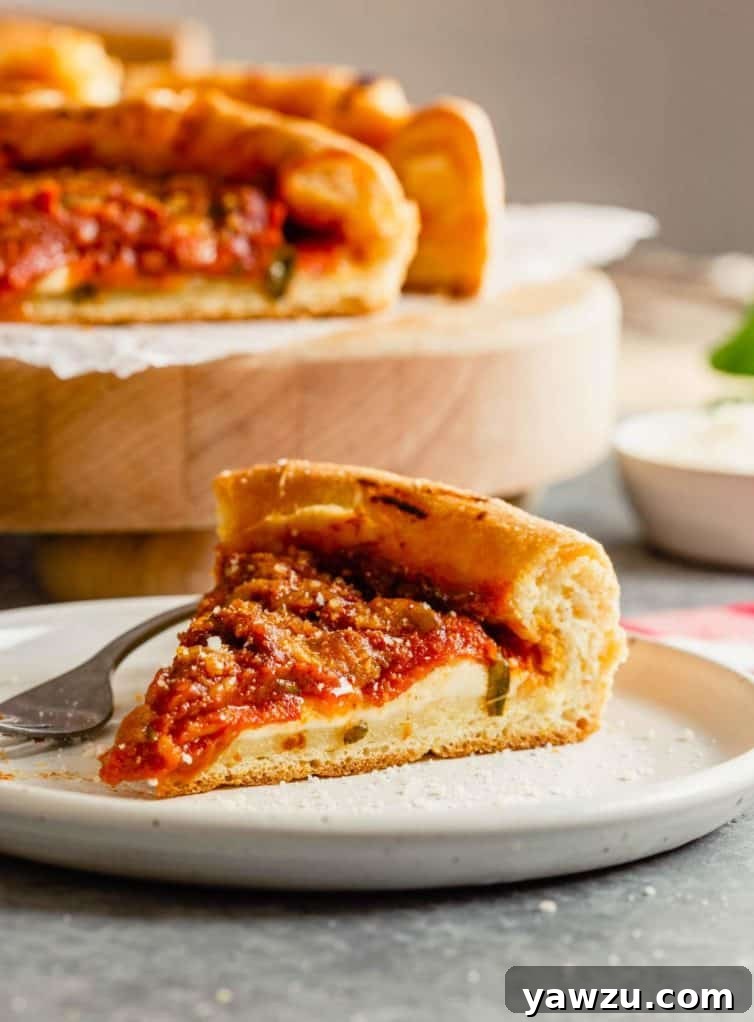
Why settle for overpriced, restaurant deep-dish when you can craft an even more authentic and incredibly satisfying Chicago-style deep-dish pizza right in your own kitchen? This recipe promises a perfectly flaky, buttery crust, generously loaded with layers of gooey mozzarella cheese, savory pepperoni (or your preferred toppings), and a rich, chunky homemade tomato sauce. Elevate your home cooking and impress your family and friends with this show-stopping, next-level deep-dish pizza that truly captures the spirit of Chicago’s culinary heritage!
Watch the Recipe Video Below:
If you make this recipe and love it, remember to stop back and give it a 5-star rating – it helps others find the recipe! ❤️️

Chicago Deep Dish Pizza
Ingredients
For the Dough:
- 3¼ cups (406.25 g) all-purpose flour
- ½ cup (79.5 g) yellow cornmeal
- 1½ teaspoons salt
- 2 teaspoons sugar
- 2¼ teaspoons instant yeast
- 1¼ cups (312.5 ml) water, room temperature
- 3 tablespoons unsalted butter, melted
- 4 tablespoons unsalted butter, softened
- 1 teaspoon + 4 tablespoons olive oil, divided
For the Sauce:
- 2 tablespoons unsalted butter
- ¼ cup (40 g) grated onion
- ¼ teaspoon dried oregano
- ½ teaspoon salt
- 2 garlic cloves, minced
- 28 ounces (793.79 g) canned crushed tomatoes
- ¼ teaspoon sugar
- 2 tablespoons coarsely chopped fresh basil
- 1 tablespoon olive oil
- Freshly ground black pepper
For the Toppings:
- 1 pound (453.59 g) mozzarella cheese, shredded (about 4 cups)
- Pepperoni (optional)
- ¼ cup (25 g) grated Parmesan cheese
Instructions
-
Make the Dough: Whisk together the flour, cornmeal, salt, sugar, and yeast in a large bowl. Add water and melted butter and mix on low speed, using a dough hook, until fully combined, 1 to 2 minutes, scraping sides and bottom of bowl occasionally. Increase speed to medium and knead until dough is glossy and smooth and pulls away from sides of bowl, 4 to 5 minutes. (You can easily make this by hand, mixing in the water and butter with a spatula and then kneading by hand.)
-
Coat a large bowl with 1 teaspoon olive oil. Using greased spatula, transfer dough to bowl, turning to coat the dough in oil; cover tightly with plastic wrap. Let rise at room temperature until nearly doubled in volume, 45 to 60 minutes.
-
Make the Sauce: While dough rises, heat the butter in a medium saucepan over medium heat until melted. Add onion, oregano, and salt; cook, stirring occasionally, until liquid has evaporated and onion is golden brown, about 5 minutes. Add garlic and cook until fragrant, about 30 seconds. Stir in tomatoes and sugar, increase heat to high, and bring to a simmer. Lower heat to medium-low and simmer until reduced to about 2½ cups, 25 to 30 minutes. Off the heat, stir in the basil and olive oil, then season with salt and pepper.
-
Laminate the Dough: Turn the dough out onto dry work surface and roll into a 15×12-inch rectangle. Using an offset spatula, spread the softened butter over the surface of the dough, leaving a ½-inch border along the edges. Starting at the short end, roll the dough into a tight cylinder. With seam side down, flatten the cylinder into an 18×4-inch rectangle. Cut rectangle in half crosswise. Working with one half, fold into thirds like a business letter; pinch seams together to form ball. Repeat with remaining half. Return balls to oiled bowl, cover tightly with plastic wrap, and let rise in refrigerator until nearly doubled in volume, 40 to 50 minutes. Meanwhile, adjust oven rack to lower position and preheat oven to 425 degrees F.
-
Bake the Pizzas: Coat two 9-inch round cake pans with 2 tablespoons olive oil each. Transfer 1 dough ball to dry work surface and roll out into a 13-inch circle. Transfer dough to the pan by rolling the dough loosely around a rolling pin and unrolling into pan. Lightly press dough into pan, working into corners and 1 inch up sides. If dough resists stretching, let it relax for 5 minutes before trying again. Repeat with remaining dough ball.
-
For each pizza, sprinkle 2 cups mozzarella evenly over surface of dough. (If you’re using any meat or veggie toppings, add them now, on top of the cheese.) Spread 1¼ cups tomato sauce over the cheese (or toppings) and sprinkle 2 tablespoons Parmesan over sauce. Bake until crust is golden brown, 20 to 30 minutes. Remove pizza from oven and let rest 10 minutes before slicing and serving.
Notes
- Equipment: Two 9-inch round cake pans (or 10-inch cast-iron skillets)
- Topping Options: See post above for topping substitutes or additions.
- Serving suggestions: Stretch the meal for guests by adding one of the following: Italian pasta salad / Caesar salad / Garlic bread / Shaved Brussels sprouts salad
- Freezing the Dough: You can freeze the dough during step #4. After shaping the dough into balls, instead of allowing them to rise, wrap in plastic wrap, place in a freezer-safe bag, and freeze for up to 2 months. Thaw in the refrigerator overnight, then rise at room temperature before proceeding with step #5.
- Leftovers: Store any leftover pizza in the refrigerator for up to 4 days.
- Reheating: Pizza can be reheated in the microwave, toaster oven, on a griddle, or in a skillet on the stove.
- Recipe from Cook’s Illustrated
Nutrition Information (per serving)
Calories: 941kcal, Carbohydrates: 115g, Protein: 49g, Fat: 65g, Saturated Fat: 35g, Cholesterol: 175mg, Sodium: 2065mg, Potassium: 954mg, Fiber: 10g, Sugar: 13g, Vitamin A: 2085IU, Vitamin C: 19.5mg, Calcium: 736mg, Iron: 8.8mg
Did you make this recipe?
Leave a review below, then snap a picture and tag @thebrowneyedbaker on Instagram so I can see it!
Photography by Lauren Grant.