
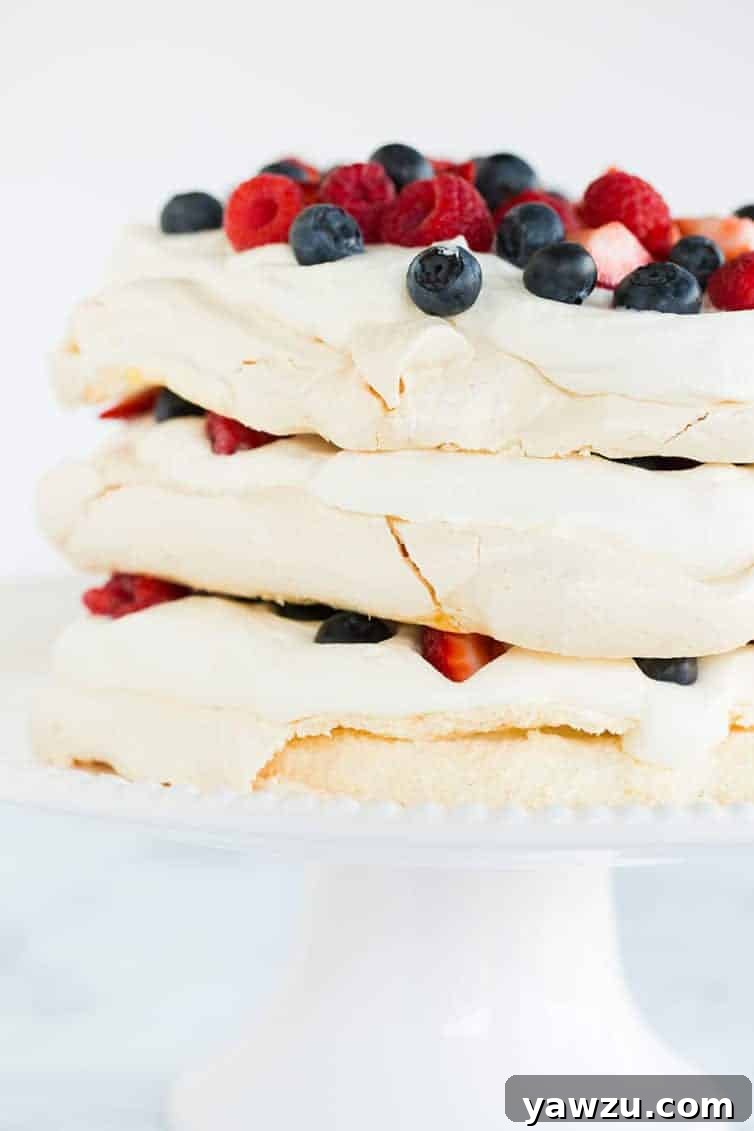
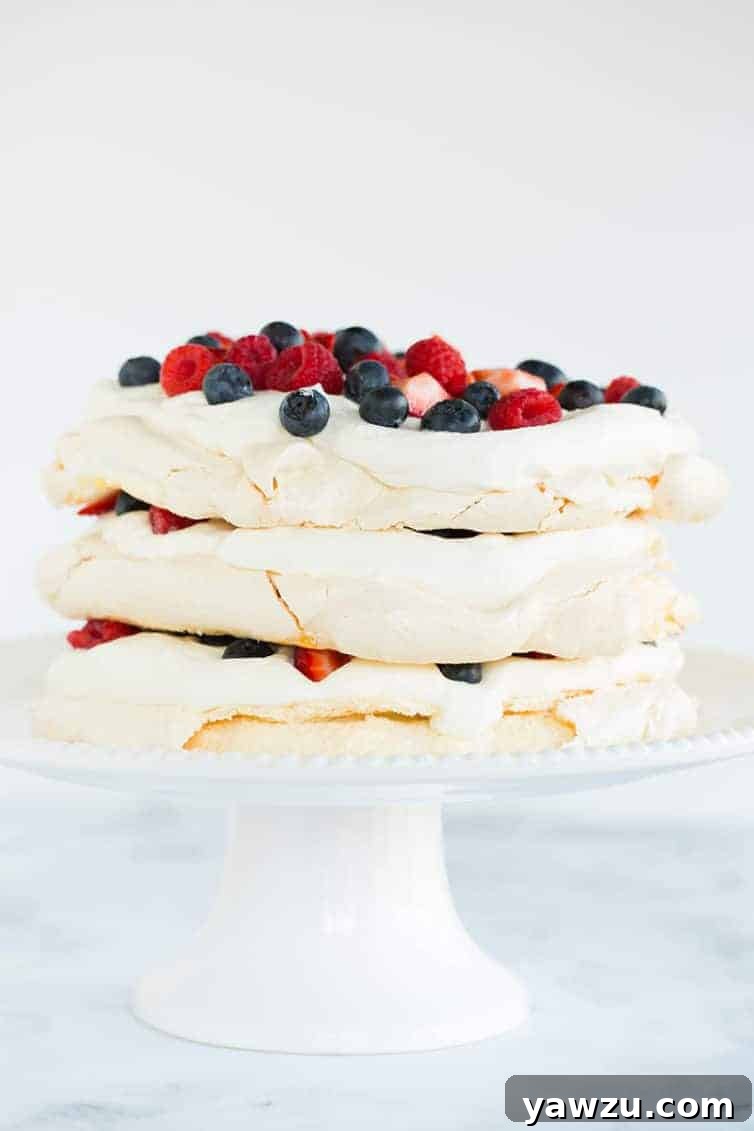
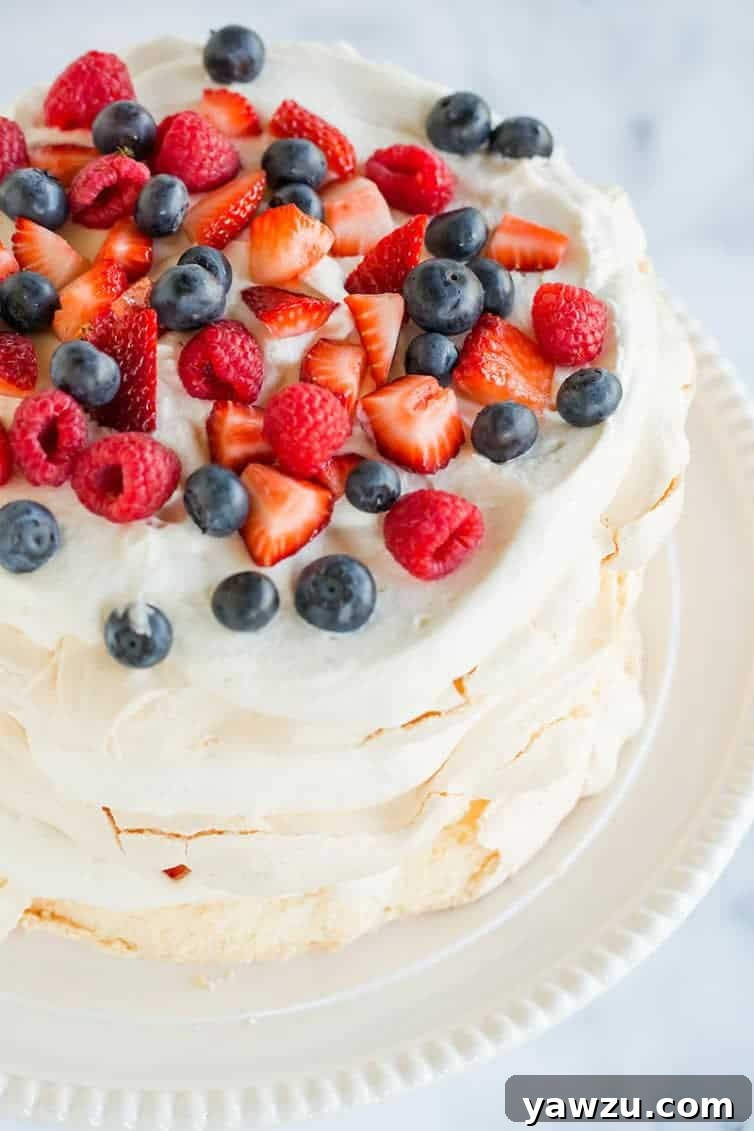
This magnificent pavlova cake is a true showstopper, featuring three ethereal layers of delicate meringue, generously filled and lavishly topped with incredibly freshly whipped cream and a vibrant medley of seasonal berries. It’s the epitome of a light, elegant, and utterly delightful summer dessert, perfect for any special gathering or simply to brighten an ordinary day.
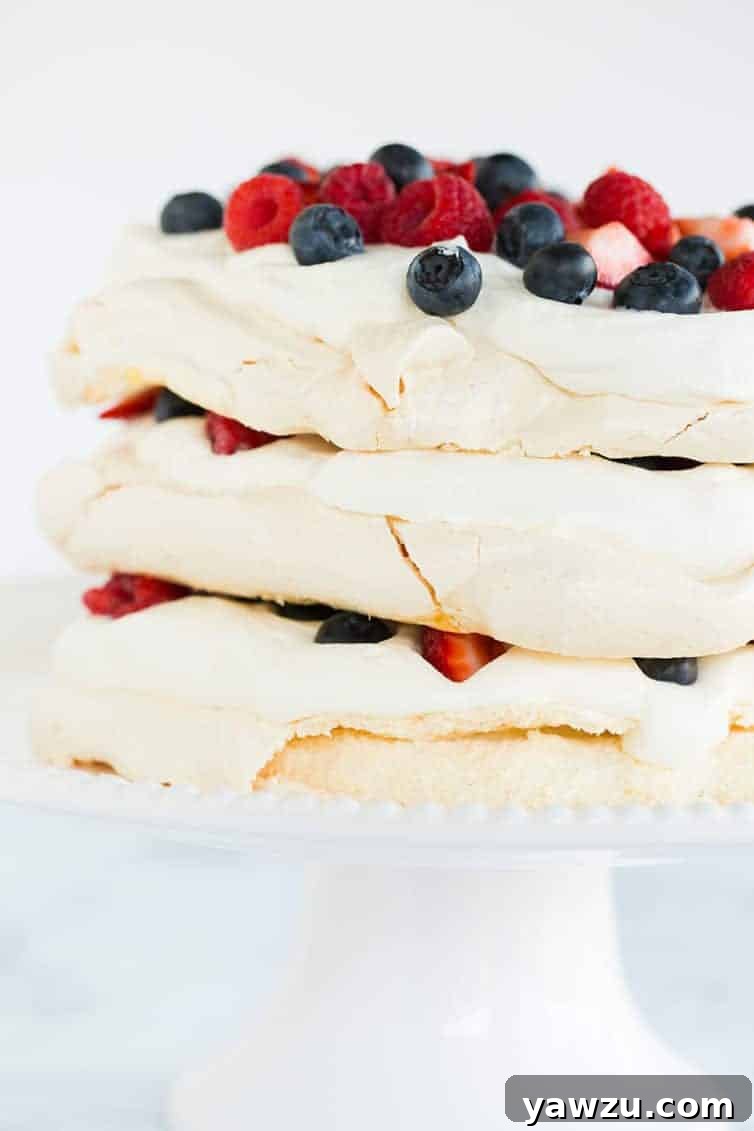
Have you ever had the pleasure of tasting pavlova? This iconic meringue dessert, a culinary marvel hotly contested between Australia and New Zealand for its origin, is nothing short of fabulous. Beyond its impressive appearance and delightful taste, what truly makes pavlova a beloved dessert is its surprising ease of preparation. Don’t let its sophisticated layers fool you; this dessert is remarkably accessible for home bakers of all skill levels.
Recently, my sister celebrated her birthday, and when I inquired about her dessert wish, she surprised me with a request far removed from traditional birthday cakes. She shared a video—a captivating montage of what looked like shimmering layers of meringue, adorned with rich whipped cream and colorful berries (though the commentary was not in English). She was drawn to its light, airy quality and the refreshing departure from heavier options. The thought of creating such an elaborate-looking dessert might seem daunting at first glance, but I assure you, it can be effortlessly whipped up with just a hand mixer – or even a bit of elbow grease and a couple of bowls. For me, that’s the definition of a low-maintenance, high-reward dessert!
Discover the Enchanting World of Pavlova: A Meringue Masterpiece
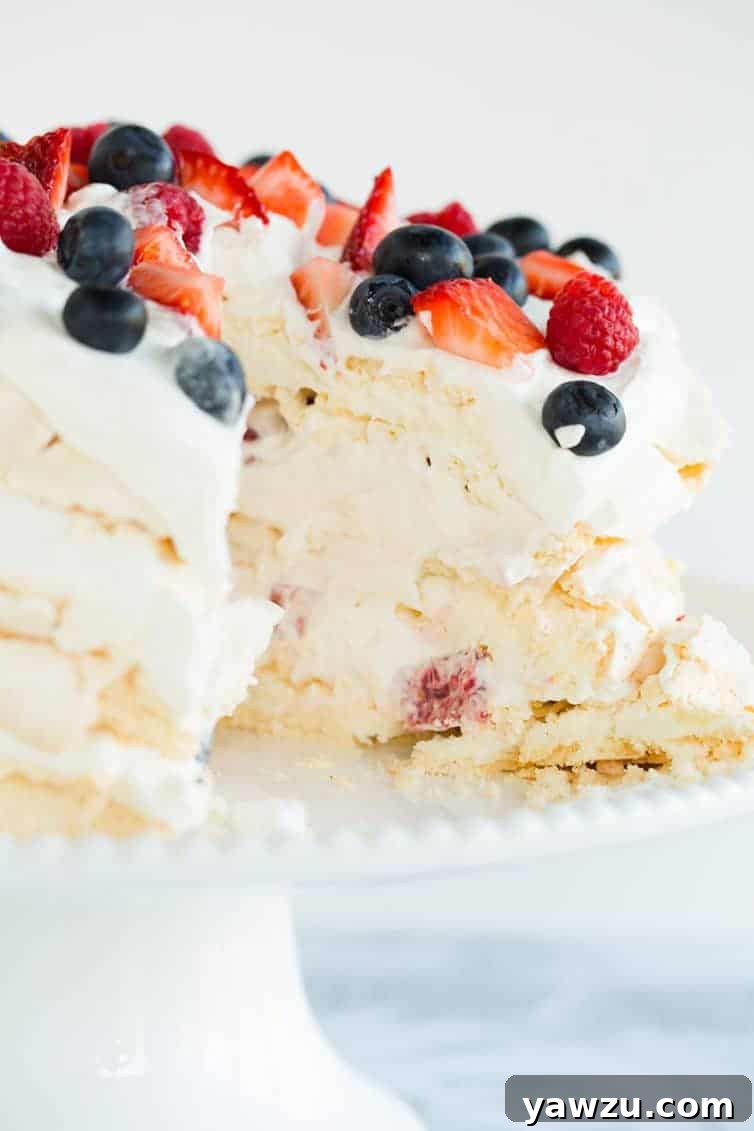
My first encounter with a traditional pavlova was years ago, and it was love at first bite. The texture is what truly sets pavlova apart: a wonderfully crisp and delicate shell on the outside, yielding to a divinely soft and light interior that melts in your mouth, almost like a whipped marshmallow. This unique contrast in textures is a signature characteristic of a perfectly made pavlova. Traditionally, it’s served simply with fresh whipped cream and a generous assortment of fruit, making it the ideal dessert when you crave something subtly sweet, refreshing, and incredibly light. These qualities make it an absolutely phenomenal choice for warmer months, providing a delightful end to any summer meal.
The recipe I’m sharing with you today is a refined adaptation of that very first pavlova recipe I posted all those years ago. Over time, some readers reported difficulties achieving those crucial stiff peaks with their egg whites, a common challenge often related to the method of adding sugar. I discovered the issue lay in adding all the sugar at once, rather than gradually. This simple adjustment has been incorporated and perfected in this updated recipe, ensuring your meringue reaches that beautiful, glossy, and stable consistency every time. We’ll delve deeper into the science of meringue and provide tips for mastering this essential step.
The Authentic Touch: A Family Recipe
What makes this particular recipe even more special is its authentic heritage. It comes from the mother of one of my best friends from high school, who happens to be originally from Australia. Hearing that this was an authentic regional family recipe from the land where pavlova holds such culinary significance truly made my heart skip a beat! There’s something inherently comforting and reliable about a recipe passed down through generations, promising a taste that truly honors its origins.
Choosing Your Perfect Berry Medley (or Beyond!)
For this pavlova, I opted for a vibrant mix of fresh strawberries, raspberries, and blueberries, as they are all at their peak of flavor and sweetness right now, bursting with juicy goodness. However, the beauty of pavlova lies in its versatility. You are absolutely free to customize the fruit toppings to your heart’s content, selecting whatever seasonal fruits you love most or have on hand. In the past, I’ve experimented with topping pavlovas with slices of tangy kiwi, plump blackberries, exotic mango, and even more diverse berry combinations. Each fruit brings its own unique flavor profile and aesthetic appeal, ensuring that every pavlova you make can be a fresh and exciting experience.
A Full Circle Moment: From Idea to Reality
It’s funny how life comes full circle sometimes! I recall revisiting an old post of mine from years ago, where I had mentioned that my sister had tried a pavlova I made and liked it so much that she suggested it might be her ideal birthday cake. I don’t think she actually requested it that particular year, but now, years later, her wish has finally come to fruition! It just goes to show that some great ideas, like a truly delicious dessert, are worth revisiting. This layered pavlova, with its elegant presentation and delightful flavors, is a testament to timeless appeal.
Mastering the Art of Pavlova: Tips for Success
Creating a perfect pavlova is a delightful baking adventure. Here are some key tips to ensure your meringue layers are crisp, chewy, and utterly delicious:
- Room Temperature Egg Whites: This is crucial. Egg whites at room temperature whip up faster and achieve greater volume and stability than cold ones. Plan ahead by separating your eggs and letting the whites sit on the counter for 30 minutes to an hour.
- Clean Equipment: Any trace of grease or fat can prevent egg whites from whipping properly. Ensure your mixing bowl (preferably glass or metal) and whisk attachment are impeccably clean and dry.
- Gradual Sugar Addition: As highlighted in the recipe adaptation, adding sugar slowly and gradually is paramount. This allows the sugar to fully dissolve into the egg whites, resulting in a stable, glossy, and strong meringue that holds its shape beautifully and prevents a gritty texture.
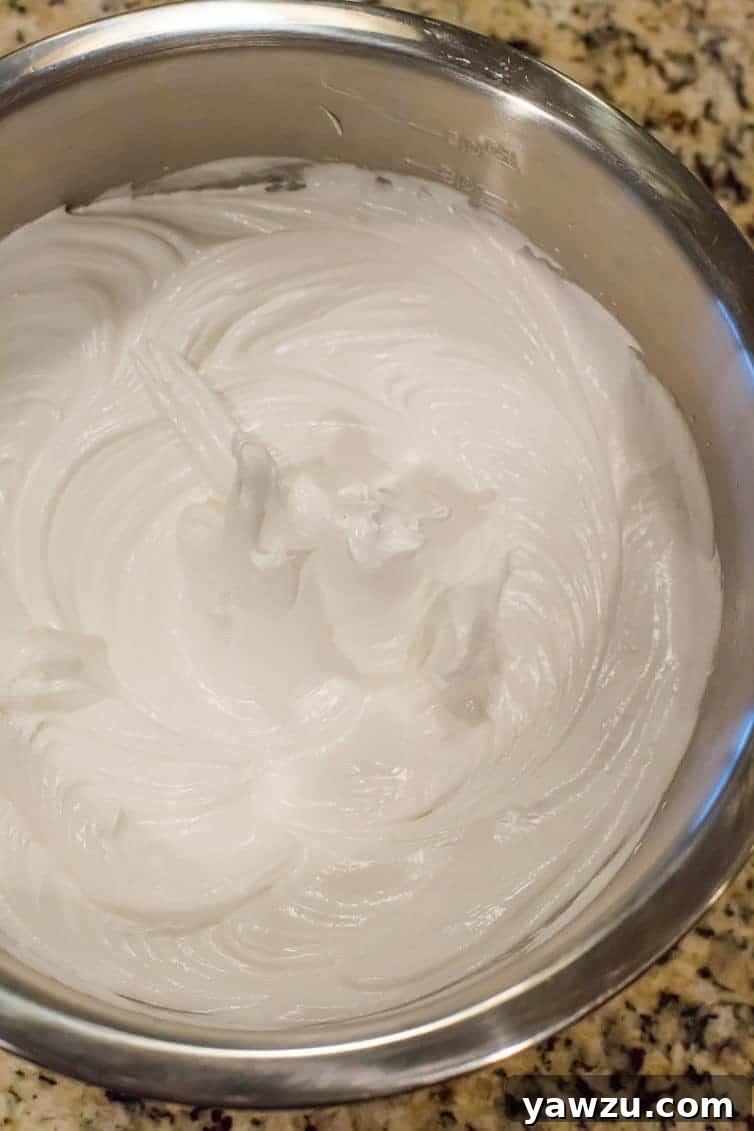
- Achieving Stiff Peaks: Continue beating until the meringue is shiny, smooth, and forms stiff, upright peaks when the whisk is lifted. You should be able to turn the bowl upside down without the meringue sliding out.
- Low and Slow Baking: Pavlova bakes at a very low temperature for an extended period, which allows it to dry out and develop its signature crisp shell. Resist the urge to open the oven door during baking.
- Cooling in the Oven: This step is just as important as the baking. Turning off the oven and allowing the pavlova to cool completely inside with the door slightly ajar helps prevent cracking and ensures the interior remains soft and marshmallowy.
Assembling Your Layered Pavlova
Layering your pavlova is where you bring all the components together to create a stunning visual and culinary experience. Be gentle when handling the delicate meringue layers; they can be fragile. A thin offset spatula is your best friend for carefully lifting and placing them. Don’t be afraid to be generous with the whipped cream and berries between each layer. The contrast of the sweet, tangy fruit and the rich cream against the crisp and soft meringue is what makes this dessert so irresistible. For an extra touch of elegance, dust the top with a little powdered sugar just before serving.
Why This Pavlova is a Must-Try
Whether you’re planning a celebratory meal for Mother’s Day, a charming summer soirée, or simply seeking an excuse to indulge in something truly special, this pavlova cake is an absolute must-try. It’s light, refreshing, visually stunning, and delivers on flavor every single time. Give it a whirl – I promise you (and your guests) will absolutely adore it!
(P.S. If you’re a devoted chocoholic, don’t despair! I also have a decadent chocolate pavlova recipe that offers a rich twist on this classic favorite!)
One year ago: Better-Than-Box-Mix Brownies
Five years ago: Strawberry Cream Cheese Crumble Tart
Pavlova Layer Cake with Whipped Cream & Berries
Pin
Rate
Ingredients
For the Pavlova
- 6 egg whites, at room temperature (essential for optimal volume and stability)
- Pinch cream of tartar
- 1½ cups (300 g) granulated sugar
For the Whipped Cream
- 2 cups (476 ml) heavy cream, chilled
- 2 tablespoons granulated sugar
- 1 teaspoon vanilla extract
For the Berries
- Fresh strawberries, coarsely chopped (or sliced, depending on preference)
- Fresh blueberries
- Fresh raspberries
Instructions
-
Prepare the Pavlova Layers: Begin by preheating your oven to 250 degrees F (120 degrees C). Line a large baking sheet with a sheet of parchment paper. On the parchment, carefully draw three distinct 8-inch circles. You can achieve this by tracing around an 8-inch cake pan, an 8-inch parchment round, or any other circular object of similar diameter. Lightly spray the marked circles with a non-stick cooking spray to help prevent sticking and ensure easy removal later.
-
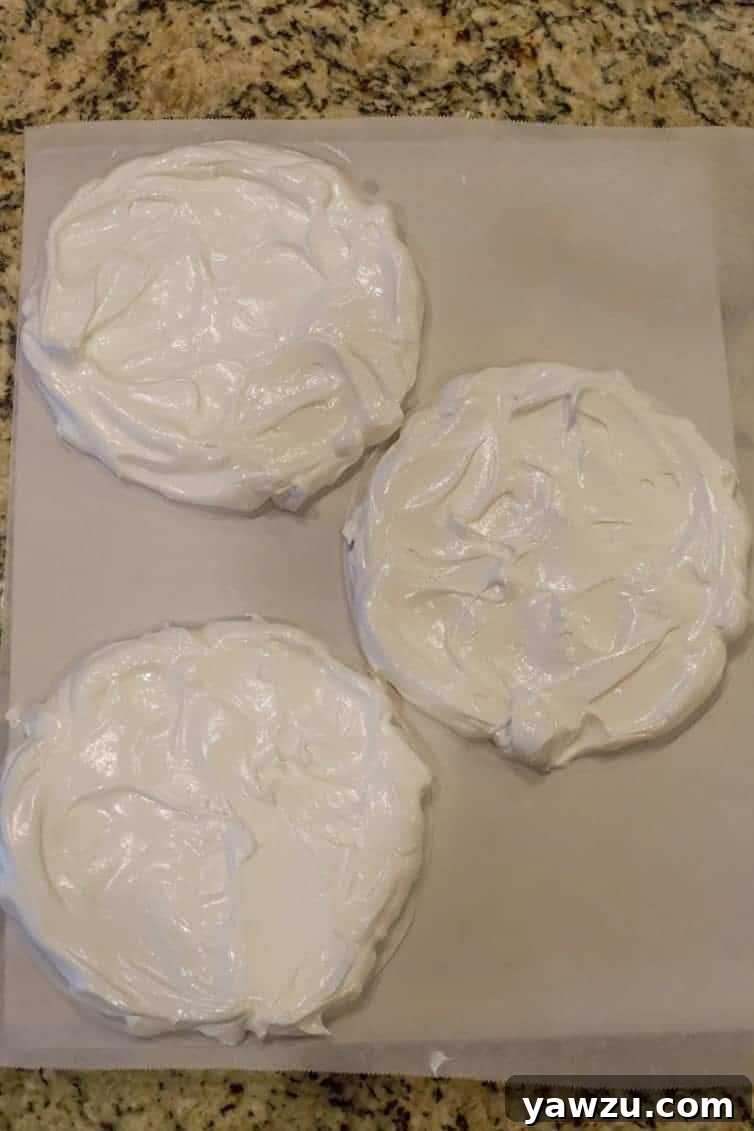
In a very clean, large mixing bowl, using an electric mixer fitted with the whisk attachment, beat the room temperature egg whites on medium speed until they become frothy and slightly opaque. At this point, add the pinch of cream of tartar. Increase the mixer speed to medium-high and continue beating until the egg whites form soft peaks. With the mixer still running, gradually add the granulated sugar, approximately 3 tablespoons at a time, allowing each addition to fully incorporate before adding the next. Continue beating until the meringue is incredibly glossy, smooth, and forms stiff, upright peaks that hold their shape firmly. Divide the glossy meringue evenly among the three prepared circles on the parchment paper. Use an offset spatula or the back of a spoon to gently spread and shape the meringue into neat, circular layers, creating a slight well in the center if desired for holding toppings.
-
Carefully transfer the baking sheet to the preheated oven. Bake for 30 to 45 minutes, or until the pavlova layers feel firm and dry to the touch on the outside. Once baked, turn off the oven completely. Prop the oven door open slightly with a wooden spoon or heat-proof utensil, and allow the pavlova to cool completely inside the oven. This slow cooling process is crucial for preventing cracks and maintaining the signature crisp exterior and soft, marshmallowy interior. Do not rush this step.
-
Prepare the Fresh Whipped Cream: While the pavlova cools, prepare your whipped cream. In a large, chilled bowl, combine the cold heavy cream, granulated sugar, and vanilla extract. Using an electric mixer on medium-high speed, beat the mixture until it thickens and holds soft peaks. Be careful not to overbeat, or you’ll end up with butter! The cream should be light, fluffy, and spreadable.
-
Assemble Your Pavlova Layer Cake: Once the pavlova layers are completely cool, very gently lift one of the pavlova layers off the parchment paper and place it onto your chosen serving plate or cake stand. Spread one-third of the prepared whipped cream evenly over this first layer. Generously sprinkle with a colorful mixture of fresh raspberries, blueberries, and chopped strawberries. Feel free to use as much or as little fruit as your heart desires! Carefully place the second pavlova layer on top of the fruit. Repeat the process: spread another one-third of the whipped cream, then add another layer of mixed fresh fruit. Finally, crown your creation with the last pavlova layer, spread the remaining whipped cream on top, and adorn it with a final flourish of fresh berries. Serve the pavlova immediately for the best texture, or refrigerate it for up to 4 hours.
Notes
- This recipe is incredibly versatile! Feel free to experiment with any fresh, seasonal fruit you enjoy most. Other delicious options include sliced kiwi, mango chunks, peaches, plums, or even a drizzle of passionfruit pulp.
- For the most stable meringue, ensure your egg whites are free of any yolk. Even a tiny speck of fat can prevent them from whipping up properly.
- Pavlova is best enjoyed the day it’s made, as the meringue can soften over time when exposed to moisture from the cream and fruit. If storing, keep refrigerated and assemble just before serving for optimal freshness and texture.
Nutritional values are based on one serving
Did you make this recipe?
Leave a review below and share your creation! Snap a picture and tag @thebrowneyedbaker on Instagram so I can admire your beautiful pavlova masterpiece!