
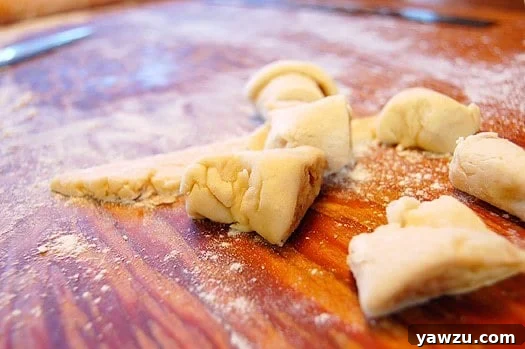
In the vibrant tapestry of my childhood memories, the most cherished scenes unfurl in my grandmother’s kitchen. This was her sanctuary, a bustling hub where the aroma of garden-fresh green beans simmering on the stove mingled with the sweet scent of rising biscotti dough. Whether her hands were immersed in suds at the sink, stirring a big pot of sauce, or expertly shaping dough at her large wooden table, she exuded a profound sense of belonging within those four walls. Every Sunday, a grand feast materialized from her tireless efforts, a culinary spectacle for what she affectionately called “Sunday dinner” – though it always occurred at lunchtime. After hours of non-stop cooking, she would settle at the head of the table, declare herself “not hungry,” and simply beam, watching her children and grandchildren savor every bite. It was never truly about the food itself; rather, it was the magnet that drew us all together. The casual chatter, the playful banter, the ebb and flow of friends and family – these were the moments she lived for. Seeing everyone joyful and content was, in turn, her deepest source of happiness and fulfillment.
At the very heart of this cherished kitchen, a silent sentinel, resided her expansive wooden dough board. Many might have mistaken it for a permanent fixture, an extension of her kitchen table, given how frequently it rested there. My grandfather, with loving hands, crafted this beautiful piece for her shortly after their wedding, over seven decades ago. For her entire life, this board was her constant companion in countless culinary endeavors. It bore witness to endless kneading sessions, the graceful dance of rolling out delicate ravioli, the precise art of cutting gnocchi, and the meticulous shaping of biscotti. It was, quite simply, indispensable for nearly every kitchen task imaginable. A few years ago, as the demands of cooking became too much for her, she thoughtfully passed this heirloom to me, knowing I would treasure it and put it to good use. I eagerly embraced it, employing it for various baking projects. However, during a particular session while kneading a batch of blueberry bagel dough, I noticed disconcerting tiny wood splinters flaking off the board and embedding themselves into the dough. Regrettably, the entire batch had to be discarded. The board, clearly, was in desperate need of refinishing, a task that, unfortunately, was relegated to the back burner amidst life’s daily demands.
Then, last October, when my beloved grandmother passed away, the dough board transcended its utilitarian purpose to become a profound symbol of her enduring legacy. Restoring it was no longer merely a project; it became a heartfelt priority, a way to honor her memory and keep her spirit alive in my own kitchen. I delved into extensive research, determined to uncover the best methods for reviving such an important piece of family history. Armed with knowledge and the necessary supplies, my mother and I dedicated a recent Saturday to this meaningful task. Together, we meticulously worked to transform the aged board, breathing new life into it until it looked virtually brand new. I carefully documented each step, taking photographs along the way, eager to share this journey with you. The techniques we employed are not just for heirloom dough boards; they are universally applicable to any old wooden butcher blocks, cutting boards, or similar kitchen tools you might possess that are yearning for a little tender loving care and a new lease on life. This guide will empower you to restore your own treasured wooden kitchen items, preserving their beauty and functionality for years to come.
Revitalizing Your Heirloom: Essential Supplies for Dough Board and Butcher Block Restoration

Embarking on the rewarding journey of restoring a cherished wooden dough board or butcher block requires a surprisingly concise list of supplies. Focusing on food-safe and effective products is paramount to ensure your board remains a healthy, hygienic, and functional centerpiece in your kitchen. Here’s what you’ll need to gather before you begin:
- Food-Grade Mineral Oil: Often referred to as “mystery oil” in kitchenware circles, this is the lifeblood for dry wood. Its primary function is to deeply penetrate the wood fibers, replenishing their natural oils and preventing them from drying out. When wood loses moisture, it becomes brittle, prone to shrinking, cracking, and ultimately splintering. This also creates tiny fissures where bacteria can harbor, compromising food safety. Regular application of mineral oil keeps the wood supple, resilient, and hygienic, extending its lifespan. It’s absolutely crucial to select a food-grade variety, as your board will be in direct contact with food and you want to avoid any harmful chemicals.
- Beeswax Cream (or Board Conditioner with Beeswax): This remarkable product serves a critical dual purpose. After the wood has been thoroughly nourished with mineral oil, the beeswax acts as a protective sealant. It creates a smooth, almost velvety finish on the surface, filling in any remaining microscopic gaps and pores. More importantly, beeswax is naturally water-repellent, forming a robust barrier that safeguards the wood from moisture penetration. This protection is vital in preventing rotting, warping, and the unsightly growth of mold or mildew – common adversaries of wooden kitchen tools that are frequently exposed to liquids. The beeswax also contributes to a beautiful, subtle sheen.
- Sandpaper, Varying Grades of Coarseness: The quality of your sanding will directly dictate the final smoothness and overall feel of your restored board. We found a sequence of three different grit levels to be ideal for achieving a professional finish:
- 80 Grit (Coarse): This is your initial heavy-hitter. Use it to aggressively remove deep scratches, stubborn stains, significant splinters, and any noticeable unevenness or deep gouges on the wood surface. Its primary role is to create a clean, uniform foundation by stripping away years of wear and tear.
- 120 Grit (Medium): Following the coarse grit, the 120-grit sandpaper refines the surface, meticulously smoothing out the deeper sanding marks left by the 80-grit. It continues to remove minor imperfections and prepares the wood for a finer finish, gradually improving the texture.
- 320 Grit (Fine): This is the crucial finishing touch. The 320-grit sandpaper polishes the wood to an incredibly smooth, almost silky texture, eliminating any remaining fine scratches and leaving the surface perfectly prepared for the oil and wax treatments. While I initially purchased 220-grit sandpaper as an intermediate step, we ultimately found that jumping directly from 120 to 320 provided excellent results, saving a step without compromising quality.
While specialized kitchen supply stores like Sur la Table or Williams Sonoma often stock high-quality versions of these items, I’ve found that ordering them online, particularly through platforms like Amazon.com, can often be a more economical choice without sacrificing quality. For this specific restoration project, I successfully used Boos Block Mystery Oil and Boos Block Board Cream with Beeswax, both of which delivered exceptional results and are widely trusted brands in wood care.
Preparing Your Workspace for Optimal Wooden Board Restoration
Before diving into the sanding process, a well-organized and protected workspace is crucial for ensuring efficiency, cleanliness, and your personal safety. Choose an area that is spacious and well-ventilated, ideally outdoors or in a garage if weather permits, to minimize dust accumulation indoors. If working inside, ensure good airflow by opening windows and consider using a fan directed away from your main living areas. This meticulous preparation isn’t just about convenience; it’s about creating a safe and effective environment for your restoration project.
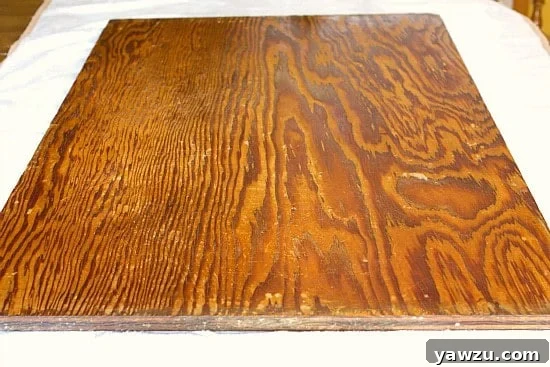
Begin by laying down several layers of old towels, newspaper, or even a plastic drop cloth beneath the board or butcher block you intend to refinish. Extend this protective layer well beyond the edges of your workpiece, creating a generous perimeter to effectively catch all the sawdust and debris that will accumulate during the sanding process. This simple yet critical step will make cleanup significantly easier once your work is complete. You might also consider wearing a dust mask, especially when working with coarser grits, to protect your respiratory system from inhaling fine wood particles, and safety glasses to shield your eyes.
Next, take your chosen sandpapers and cut them into manageable squares or smaller pieces. This thoughtful preparation makes them much easier to grip and manipulate, allowing you to apply even pressure and work precisely into corners or along edges without fatiguing your hands as quickly. While you can use sanding blocks, working by hand offers better control for detailed work on an irregularly worn board. This small preparatory step makes a big difference in the comfort and quality of your sanding experience.
Finally, perform an initial inspection of your board for any obvious caked-on food residue, stubborn grime, or hardened debris. If present, use a bench scraper, a stiff spatula, or even the blunt edge of a knife to gently scrape off any easily detachable pieces. Be careful not to gouge or damage the wood surface during this step. Once you’ve removed the larger bits, give the entire board a thorough wipe-down with a dry rag to remove any loose dust or particles. This initial cleaning ensures that you start your sanding process on a relatively clean surface, preventing any embedded debris from scratching the wood further during the restoration, which could create new imperfections.
Step 1: The Art of Sanding – Unveiling the Wood’s True Beauty and Smoothness
Prepare yourself for the most physically demanding, yet incredibly rewarding, phase of this restoration: sanding. This is where the magic truly happens, transforming a rough, damaged surface into a smooth, inviting canvas that’s both beautiful and functional. Grab your enthusiasm and let’s get started on bringing your board back to life!
Begin with your coarsest sandpaper – in our case, the 80-grit paper. Remember, the lower the number, the coarser the grit, meaning it’s designed for more aggressive material removal. Position yourself comfortably and, working exclusively along the grain of the wood, apply steady, even pressure with long, consistent strokes. Avoid sanding against the grain at all costs, as this can create unsightly cross-grain scratches that are notoriously difficult to remove later and can permanently mar the wood’s appearance. The primary goal of this initial pass is to systematically eliminate any raised splinters, rub out deep-set stains or residues, and smooth over any significant holes, divots, or uneven areas that have accumulated over years of loving use. You’ll be amazed at how quickly this coarse grit removes surface imperfections and begins to reveal the wood’s underlying integrity and natural beauty.
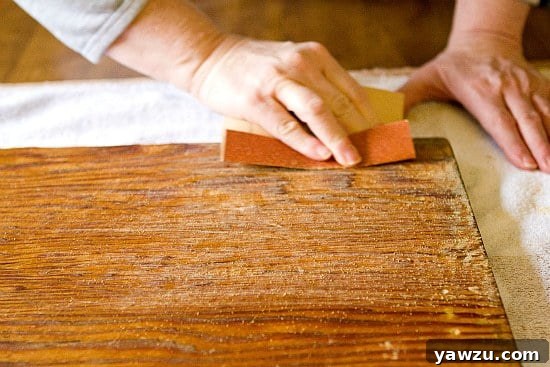
Watching my mom during this stage was an experience in itself! Her technique was flawless, a testament to years of experience and incredible patience. I quickly realized my own sanding skills were rudimentary compared to her masterful touch. She attributes her proficiency to the monumental task she and my dad undertook when building our family home: sanding and staining every single piece of woodwork – from intricate trim to all the doors and window frames. I can barely fathom the immense patience and dedication required for such an endeavor! It truly shows in her ability to make the surface incredibly smooth even after the first pass with the coarse sandpaper. I was genuinely astonished by the immediate transformation, feeling a renewed sense of hope for our heirloom board.
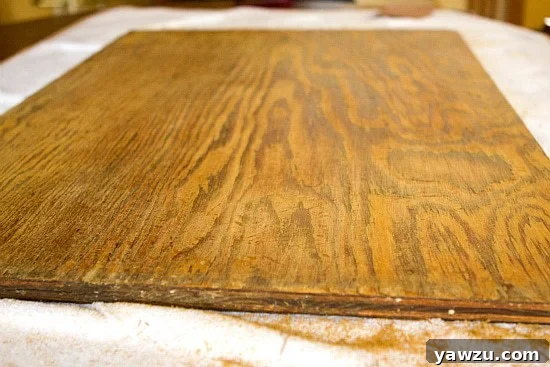
Once you’ve completed the first pass with the coarse sandpaper and feel that the major imperfections have been addressed, it’s crucial to thoroughly clean the board. Use a slightly damp towel to wipe away all the accumulated sawdust. This allows you to clearly assess your progress and, more importantly, ensures that no stray grit or particles from the coarse sandpaper interfere with the subsequent, finer sanding stages, which could lead to new scratches. After wiping, let the wood dry completely. For us, this took about 20 minutes, with the board resting on the kitchen table under a warm light, aiding evaporation. Adequate drying time is absolutely essential because sanding wet or damp wood can cause the fibers to swell unevenly, leading to an imperfect and fuzzy finish.
With the board completely dry, move on to the medium-grit sandpaper – in our case, 120-grit. Repeat the sanding process, again using long, even strokes along the wood grain. This stage refines the surface, progressively removing the deeper scratches left by the 80-grit paper and further smoothing out any remaining minor imperfections. You’ll notice the wood becoming increasingly silky to the touch, and the grain starting to stand out more clearly. This iterative process is vital for achieving a truly professional and flawless finish, preparing the wood for the final polish.
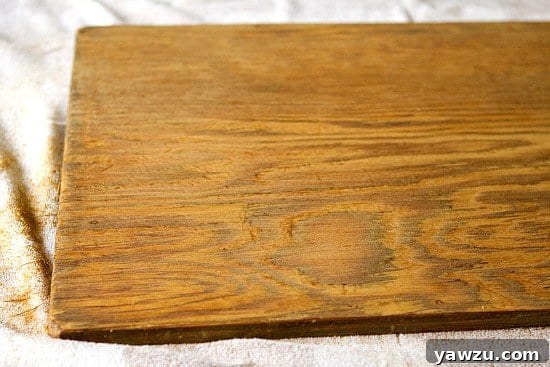
Upon completing the medium-grit sanding, once again wipe the board clean with a damp towel and allow it to dry fully. Finally, repeat the entire sanding process one last time with your finest grit sandpaper, the 320-grit. This final pass is the polishing stage, where you achieve that supremely smooth, almost glass-like finish. The difference in texture will be remarkable; you’ll absolutely love sliding your hand across the surface and feeling its renewed smoothness! This meticulous sanding, transitioning from coarse to fine, ensures that all the previous bubbles, cracks, divots, and valleys have been painstakingly smoothed out, creating a perfect, unblemished foundation for the subsequent nourishing steps. Once this final sanding is complete, wipe the board completely clean of any dust – a tack cloth can be very effective here – and allow it to dry thoroughly one last time.
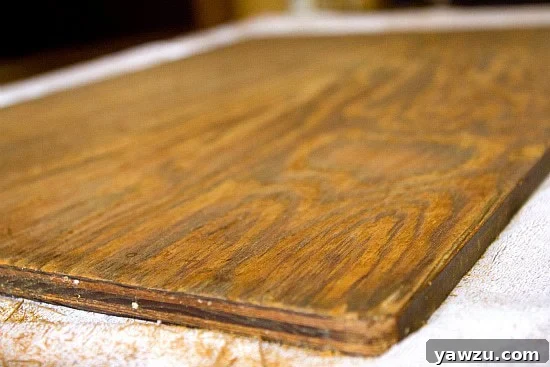
Step 2: Nourishing the Wood – The Essential Mineral Oil Treatment
Once your beautifully sanded board has completely dried and is meticulously free of any lingering dust particles, it’s time to deeply nourish the wood with food-grade mineral oil. Think of this critical step as giving your board a much-needed, restorative drink, replenishing the moisture and natural oils that have been lost over decades of use and during the intensive sanding process. This crucial step prevents the wood from drying out, which can lead to shrinking, cracking, and the development of future splinters, ultimately extending its lifespan and maintaining its structural integrity and hygienic properties.
Using a clean, soft rag or a dedicated sponge applicator, apply a liberal and even coat of the mineral oil to the entire wooden surface. Do not be shy with the application; the goal here is to thoroughly saturate the wood. You’ll likely notice that very dry wood will absorb the oil almost immediately, often leaving certain patches looking dry. This indicates the wood is thirsty! Continue applying oil generously, working it into the grain, until the board appears to be fully saturated and will no longer visibly absorb any more. This saturation process ensures the oil penetrates deep into the wood fibers, offering maximum protection, rejuvenation, and resilience against environmental stressors.
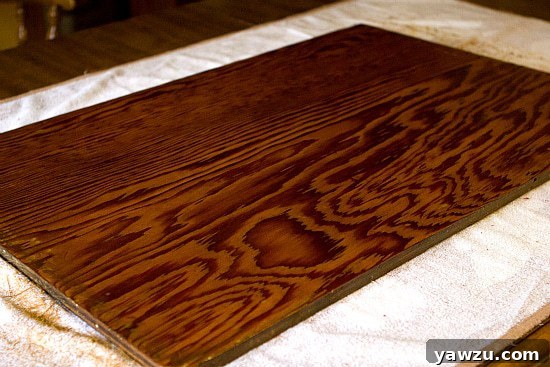
After achieving complete saturation, allow the board to sit for approximately 10 to 15 minutes. This vital resting period gives the oil ample time to soak into the deepest layers of the wood, allowing it to fully penetrate and condition the fibers. Following this initial absorption time, gently wipe away any excess oil that hasn’t been absorbed with a clean, dry cloth. The surface should feel deeply nourished but not greasy or tacky; it should have a smooth, almost velvety touch. While some sources suggest letting the board sit overnight to absorb even more oil for extremely dry pieces, we found waiting about an hour before proceeding to the next step yielded excellent results and a perfectly conditioned surface. This waiting period ensures the mineral oil has fully integrated with the wood, preparing it optimally for the final protective beeswax layer.
Step 3: Sealing and Protecting – The Beeswax Cream Application
With the mineral oil deeply absorbed and the wood thoroughly nourished, the final and perhaps most satisfying step in this comprehensive restoration process is to apply a protective layer of beeswax cream. This step is absolutely vital for sealing the wood, locking in the essential moisture from the mineral oil, and providing a durable, water-repellent barrier that will keep your board looking beautiful and performing optimally for many years to come. The beeswax not only protects but also imparts a wonderfully smooth finish and a subtle, natural sheen, significantly enhancing the wood’s inherent beauty and highlighting its rejuvenated grain.
Using your clean fingers, or a clean, soft cloth dedicated to this purpose, scoop a small amount of the beeswax cream. Begin to massage it into the board using small, diligent, circular motions. Work on one small section at a time, ensuring thorough and even coverage across the entire surface. The natural warmth from your hands will help the beeswax melt slightly, allowing it to penetrate the wood’s pores and fill in any microscopic gaps that might still be present even after the oiling process. This methodical application ensures that every part of the board receives the protective coating, creating a robust, continuous shield against moisture, stains, and general wear and tear from kitchen use.
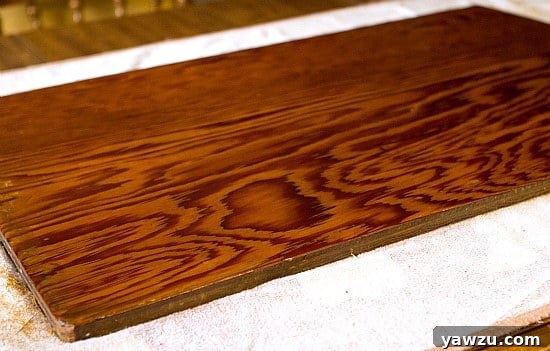
Once you have completely covered the entire surface of the board with the beeswax cream, allow it to sit and cure. A resting period of at least an hour is recommended for the cream to properly set and bond with the wood, though letting it sit overnight can often provide an even more robust and durable seal, particularly for older or heavily used boards. After the appropriate curing time, take a fresh, clean cloth (a soft microfiber cloth works wonders) and gently buff off any excess cream. The goal is for the surface to feel smooth and dry to the touch, not sticky or greasy. A gentle yet thorough buffing will reveal a beautiful, lustrous finish that truly highlights the rejuvenated wood grain and its natural character.
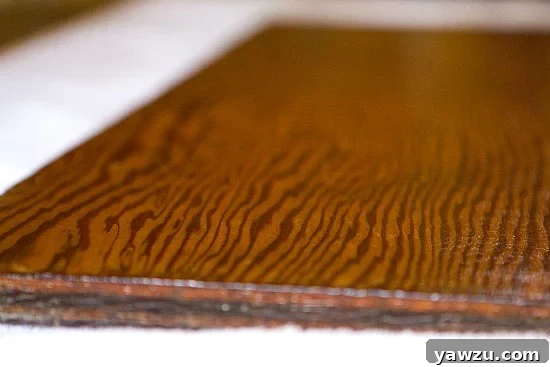
Congratulations! Your cherished dough board is now fully restored, deeply nourished, and meticulously protected, ready to be a functional and beautiful centerpiece in your kitchen once more. Witness the remarkable transformation: the wood now radiates health and vitality, boasting an awesome, perfectly sealed surface that’s both inviting to the touch and incredibly resilient to the rigors of daily culinary tasks.
Step 4: Ongoing Care and Maintenance for Lasting Beauty and Durability
The meticulous restoration process has given your cherished dough board a magnificent new lease on life, but ongoing maintenance is absolutely key to preserving its renewed beauty, hygiene, and functionality for generations to come. Just like any fine wooden piece, your board thrives and lasts longer with regular, mindful care. If you find yourself using your board frequently – perhaps on an almost daily basis, as I now do with my grandmother’s treasured heirloom – it is highly recommended that you reapply both the food-grade mineral oil and the beeswax coating about once a month. This consistent regimen will prevent the wood from drying out, which can lead to unsightly cracking, splintering, and ultimately becoming susceptible to bacterial infiltration, compromising food safety. Regular conditioning keeps the wood supple, strong, and beautiful.
Beyond these monthly treatments, always adhere to proper cleaning practices immediately after each use. A golden rule for wooden boards is: Never submerge your wooden board in water or put it in a dishwasher. Prolonged exposure to excessive moisture is the arch-nemesis of wood, as it can cause warping, cracking, and irreparable damage to the wood fibers. Instead, simply wipe it clean with a damp cloth and a mild, food-safe soap (such as dish soap diluted with water). Promptly rinse any soap residue with another damp cloth, then immediately dry it thoroughly with a clean towel. For optimal drying and to prevent warping, allow it to air dry completely upright or on its side before storing it away. You’ll know it’s time for a reapplication of oil and wax when the wood starts to look dull, feels noticeably dry to the touch, or if water no longer beads on its surface, indicating that the protective barrier is diminishing. By integrating these simple, yet effective, maintenance steps into your routine, your beautifully restored dough board will remain a healthy, hygienic, and stunning piece of kitchen equipment, ready for many more years of culinary adventures and cherished memories.
A Stunning Transformation: Before & After Restoration
The true impact of this dedicated restoration project is most powerfully captured through a visual comparison. These official before and after photographs of the dough board vividly illustrate the incredible transformation achieved through careful sanding, deep nourishment, and protective sealing. Prepare to be amazed by the dramatic improvement!
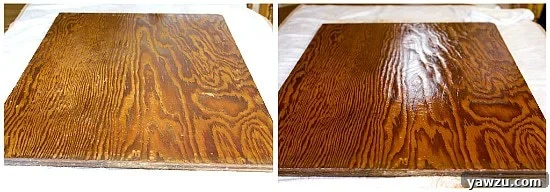
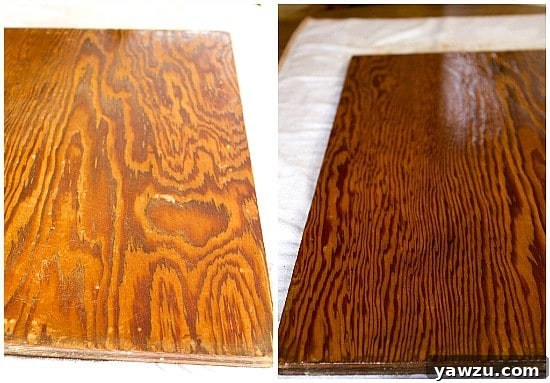
My mother and I were truly astonished by the extent of the transformation. It’s almost impossible to believe that this beautifully rejuvenated board was hand-crafted over 70 years ago and endured decades of rigorous kitchen use! The deep scratches, the dry, dull appearance, the rough, splintering texture – all have vanished, replaced by a smooth, vibrant, and perfectly protected surface that feels as good as it looks. I am profoundly happy to now be able to use my grandmother’s dough board, not just as a utilitarian tool, but as a tangible, living connection to her. Each time I step into the kitchen and lay my hands on its smooth surface, I feel her presence with me, guiding my culinary endeavors.
She was, without a doubt, my biggest fan. Even as her appetite waned in her later years and she would often declare she wasn’t hungry, she would never, ever refuse something she knew I had lovingly made for her. I know she would be absolutely thrilled and immensely proud to see her cherished dough board being used on an almost-daily basis, just as she did throughout her entire life. It’s a beautiful continuation of her legacy, a testament to family bonds, enduring traditions, and the profound, comforting power of a well-loved kitchen heirloom. This board is now ready to witness countless more generations of baking, laughter, and shared meals.
My grandma famously disliked having her picture taken, which is why finding one of her actually sitting at her beloved dough board has proven to be a delightful challenge I’m still actively pursuing. However, I’m incredibly happy to share this precious memory of us together from Christmas 2005, a moment that perfectly captures our bond.