
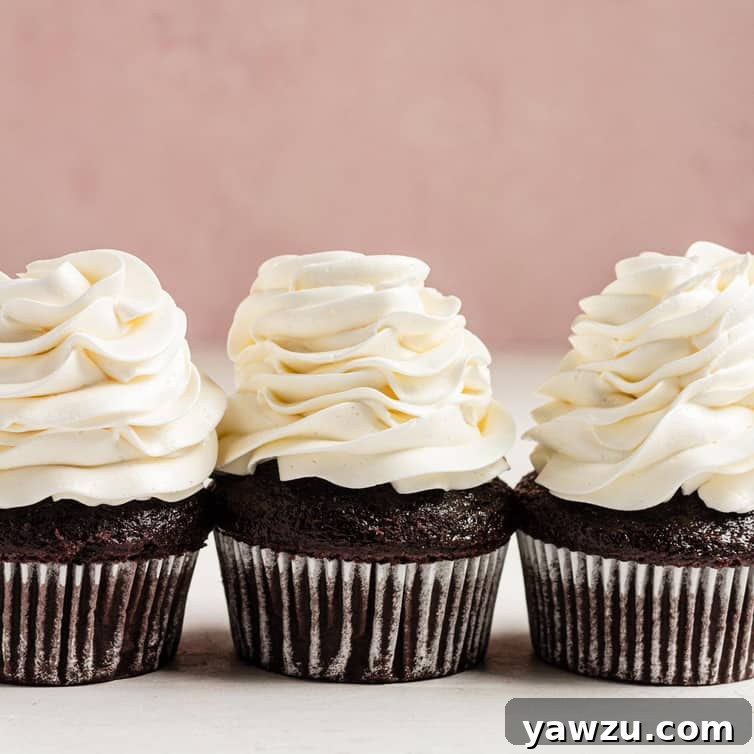
Welcome to the ultimate guide to mastering **Swiss Meringue Buttercream (SMBC)**, a truly exceptional frosting that stands apart from its counterparts. If you’ve ever dreamt of creating desserts adorned with a topping that’s luxuriously creamy, impeccably smooth, wonderfully light, and not overpoweringly sweet, then this is the recipe for you. This comprehensive guide will demystify the process, turning intimidation into pure baking delight. Prepare to elevate your cakes, cupcakes, and other confections with this luscious, ethereal frosting that’s as delightful to make as it is to eat!
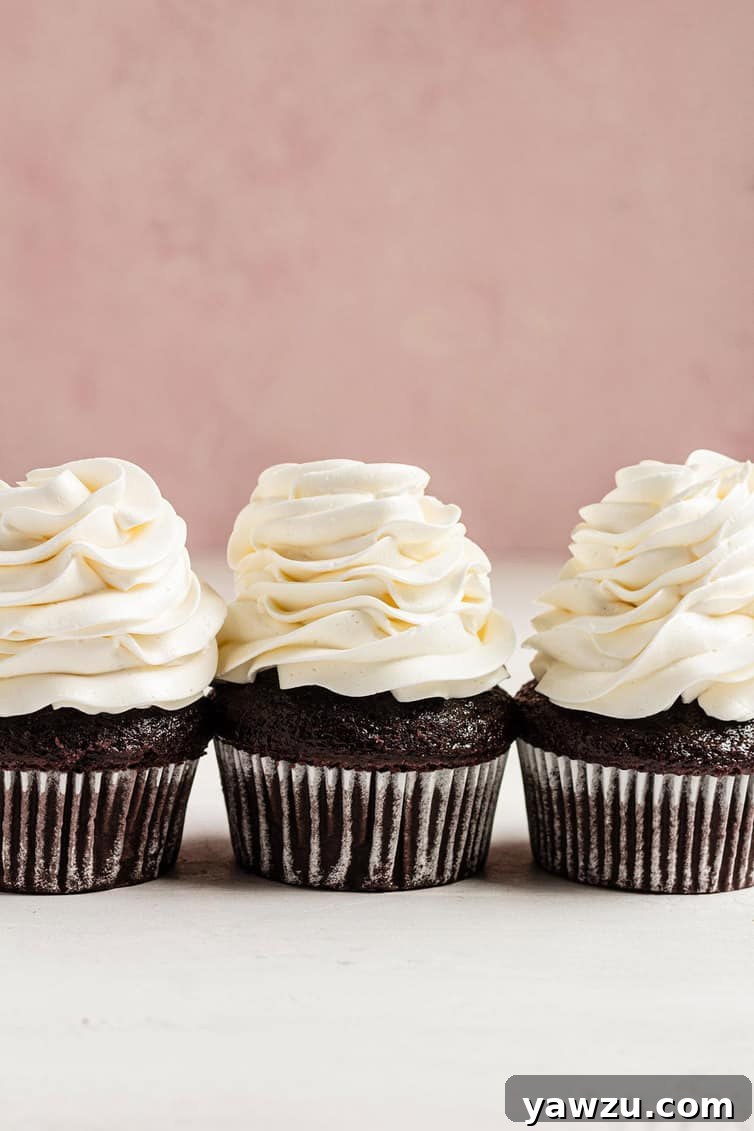
Often hailed as the “queen of buttercreams,” Swiss Meringue Buttercream is a revelation for anyone accustomed to the sugary intensity of traditional American frostings. It’s meticulously crafted from a meringue base, culminating in an ultra-creamy, silky-smooth, and remarkably light frosting that is a joy to work with. Unlike its American cousin, SMBC strikes a perfect balance, offering just the right amount of sweetness, which is why it has garnered such a loyal following among home bakers and professional pastry chefs alike.
Don’t let the elegant name or perceived complexity deter you. While some bakers find the idea of making meringue-based buttercreams intimidating, this guide is designed to break down every step, offering clear instructions and invaluable tips. You only need five simple, accessible ingredients, most of which you likely already have in your pantry. By the end of this journey, you’ll be confidently whipping up perfect Swiss Meringue Buttercream, transforming your baked goods into masterpieces.
What Exactly is Swiss Meringue Buttercream (SMBC)?
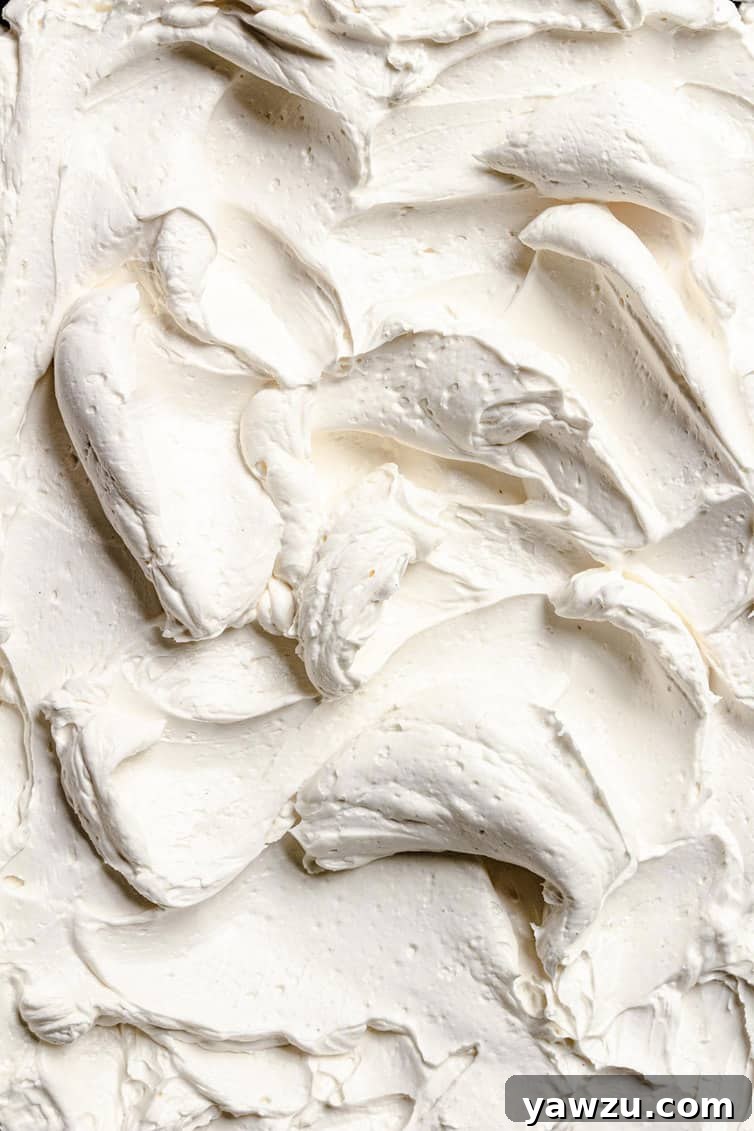
Swiss Meringue Buttercream, affectionately known as SMBC, is a confectionery marvel renowned for its refined texture and balanced flavor. At its heart, SMBC is a stable, emulsified frosting made by first creating a Swiss meringue. This involves gently heating egg whites and granulated sugar over a double boiler until the sugar fully dissolves and the mixture reaches a safe temperature. This warm egg white and sugar mixture is then whipped into a voluminous, glossy, and stiff-peaked meringue.
The magic truly happens when softened butter is gradually incorporated into this cooled meringue. As you beat the mixture, it transforms into an incredibly light, airy, and undeniably silky-smooth frosting. This process not only creates an exceptionally stable buttercream but also one that is significantly less sweet than traditional American buttercream, allowing other flavors to shine through beautifully. Its luxurious consistency makes it ideal for delicate piping, elegant cake decorating, and smooth fillings, providing a sophisticated finish to any dessert.
Swiss Meringue vs. Italian Meringue vs. American Buttercream: A Comparison
Understanding the nuances between different types of buttercream is key to choosing the right frosting for your baking projects. While all are delicious, Swiss Meringue Buttercream offers distinct advantages:
American Buttercream (ABC)
American buttercream is perhaps the most common and easiest to make. It’s prepared by simply creaming softened butter with powdered sugar, often with a splash of milk or cream and vanilla extract. Its primary characteristics include a very sweet flavor and a dense, rich texture. ABC is quick to whip up and holds its shape well, making it popular for simple decorating. However, its high sugar content can be overwhelming for some palates, and it can feel heavy or greasy if not made correctly. It also forms a crust when exposed to air, which can be desirable for certain applications but not for others.
Italian Meringue Buttercream (IMBC)
Italian Meringue Buttercream is quite similar to SMBC in its light, silky texture and reduced sweetness, as both are meringue-based. The key difference lies in the method of preparing the meringue. For IMBC, a hot sugar syrup (boiled to a specific temperature, usually 240-245°F or 115-118°C) is slowly drizzled into whipping egg whites. This method cooks the egg whites as they whip, resulting in an incredibly stable and durable meringue. The stability of IMBC makes it particularly well-suited for intricate piping work and for use in warmer climates, as it tends to hold up better against heat than SMBC. However, it requires handling hot sugar syrup, which can be intimidating for novice bakers and demands a candy thermometer for precision.
Swiss Meringue Buttercream (SMBC)
SMBC strikes a beautiful balance between ease of preparation and superior quality. Like IMBC, it’s light, airy, and much less sweet than American buttercream. The egg whites and sugar are heated together over a double boiler, eliminating the need for a candy thermometer (though one is recommended for accuracy and safety). This gentle heating process creates a stable meringue base that, when combined with butter, yields a velvety-smooth, pipeable, and wonderfully palatable frosting. SMBC is more stable than whipped cream and offers a luxurious mouthfeel that melts delicately on the tongue. It’s versatile, perfect for filling, frosting, and decorating, making it a favorite for elegant desserts without the complexity of hot sugar syrup.
The Essential Ingredients for Perfect SMBC
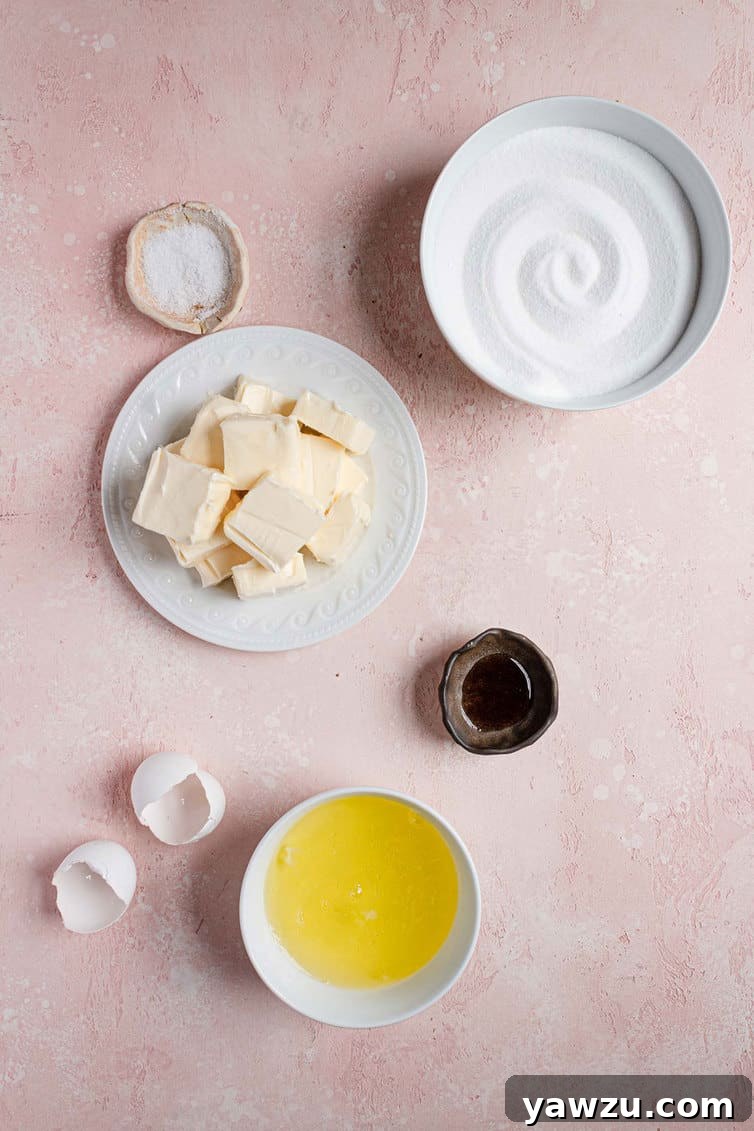
Crafting this phenomenal buttercream requires just a few basic ingredients. The quality and preparation of each component play a significant role in the final texture and flavor of your Swiss Meringue Buttercream. Let’s dive into what you’ll need:
- Egg Whites – These are the foundation of your meringue. For best results, use fresh, large egg whites. The heating process ensures they are safe to consume, so there’s no need to worry about raw eggs. Crucially, ensure not a single speck of egg yolk or any grease contaminates your egg whites or mixing bowl, as this can prevent the meringue from whipping up properly. Separating eggs while they are cold makes it easier to avoid yolk breakage; then, allow the whites to come to room temperature before heating for optimal volume.
- Granulated Sugar – Regular white granulated sugar is all you need. When heated with the egg whites, the sugar fully dissolves, creating a smooth meringue without any grittiness. It also contributes to the stability and sweetness of the meringue.
- Unsalted Butter – Use high-quality unsalted butter, as it’s a prominent flavor in the final product. It’s absolutely critical that your butter is at a cool room temperature – soft enough to leave an indentation when pressed, but still slightly firm. If your butter is too cold, it won’t incorporate smoothly, leading to a lumpy or broken buttercream. If it’s too warm, your buttercream might become runny and fail to thicken. Cut it into tablespoon-sized pieces for easier incorporation.
- Vanilla Extract – For the purest and most vibrant flavor, always opt for real vanilla extract, not imitation. A good quality vanilla enhances the richness of the buttercream without overpowering it. You can also experiment with other extracts, but vanilla is the classic choice.
- Salt – Just a pinch of salt is essential. It doesn’t make the buttercream salty, but rather acts as a flavor enhancer, balancing the sweetness and enriching the overall taste profile. Don’t skip this small but mighty ingredient!
A Step-by-Step Guide: How to Master Swiss Meringue Buttercream
While making Swiss Meringue Buttercream requires a bit more time and technique than a simple American buttercream, the process is incredibly rewarding and achievable for any home baker. Dedicate about 30 to 40 minutes, and follow these steps carefully to achieve a perfect, silky-smooth frosting.
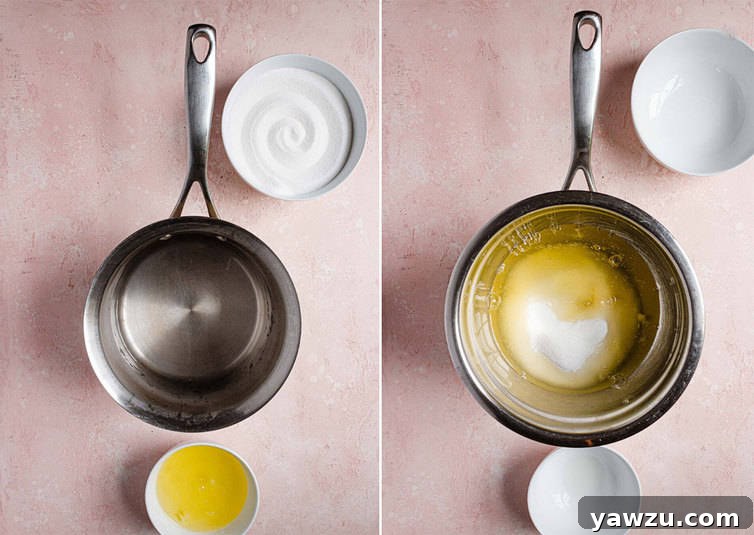
- Prepare the Double Boiler and Heat Egg Whites and Sugar: Begin by placing your egg whites and granulated sugar into a clean, heatproof mixing bowl. A metal bowl is ideal for conducting heat evenly. If you have a stand mixer, using its bowl can save you an extra dish to wash. Fill a medium saucepan with about 1 to 2 inches of water, ensuring the water level is low enough so that the bottom of your mixing bowl does not touch the simmering water when placed on top. Bring the water to a slow simmer over medium-low heat. Place the bowl with the egg whites and sugar over the simmering saucepan (creating a double boiler). Whisk the mixture constantly to prevent the egg whites from scrambling. Continue whisking until the sugar is completely dissolved – you can test this by rubbing a small amount of the mixture between your fingers; it should feel smooth, not grainy. Crucially, use an instant-read thermometer to heat the mixture to 160°F (71°C). This temperature ensures the egg whites are safely pasteurized. This step typically takes 5-10 minutes.
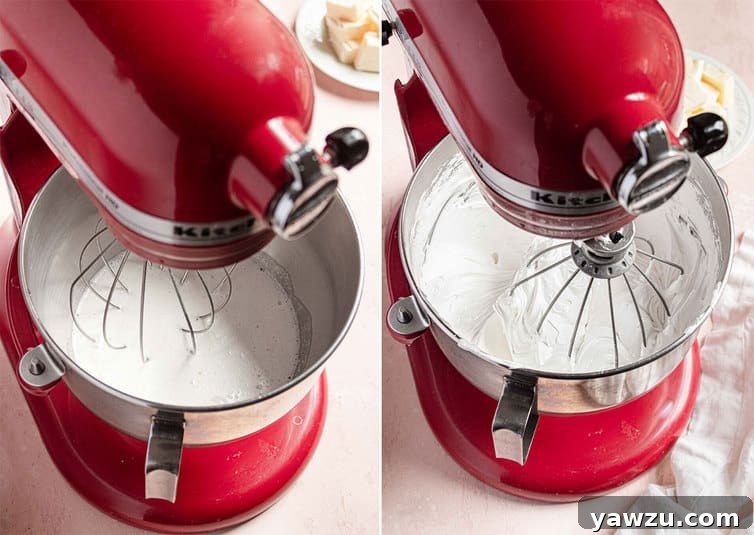
- Whip the Meringue to Stiff Peaks: Once the egg white and sugar mixture reaches 160°F and the sugar is dissolved, immediately remove the bowl from the heat. Place it on your stand mixer fitted with the whisk attachment (a powerful hand mixer can also work, though it will take longer). Begin whipping the mixture on medium-high speed. Continue whipping until the meringue forms stiff, glossy peaks. The bowl should also be cool to the touch – this is vital before adding the butter. This whipping process usually takes 10 to 15 minutes, depending on your mixer’s power. Patience here is key; do not rush the cooling process, as a warm meringue will melt the butter. If your meringue has stiff peaks but the bowl is still warm, place the bowl in the refrigerator for 10-15 minutes to cool down, then continue whipping for a minute before adding butter.
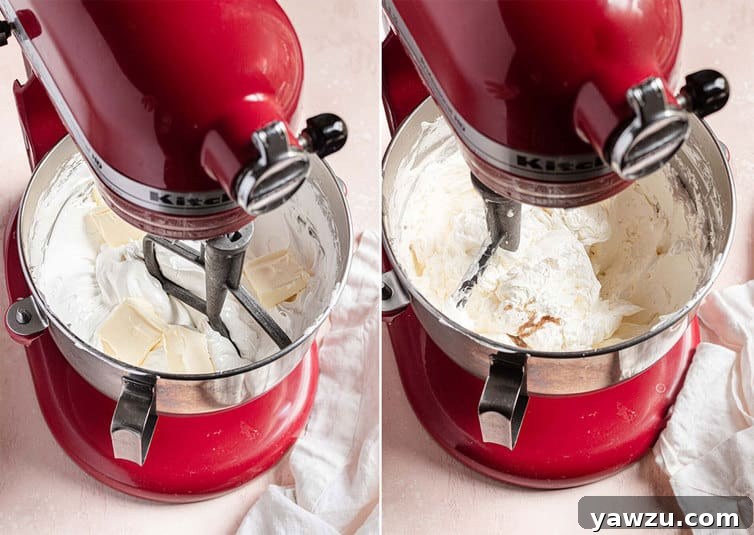
- Gradually Add the Butter: Once you have a beautiful, cool, stiff-peaked meringue, switch from the whisk attachment to the paddle attachment on your stand mixer. With the mixer running on medium-low speed, begin adding the cool room-temperature unsalted butter, one tablespoon-sized piece at a time. Wait until each piece is fully incorporated into the meringue before adding the next. This slow, steady addition allows the butter to emulsify properly.
- Continue Mixing to Achieve a Light and Fluffy Buttercream: As you add the butter, the mixture might look a bit strange – it might appear curdled, soupy, or even like cottage cheese. Do not panic! This is a normal stage in the process. Keep mixing on medium-high speed. The buttercream will eventually come together, transforming into a smooth, light, and fluffy consistency. Once all the butter is incorporated and the mixture is smooth, add the vanilla extract and salt. If you’re adding any other flavorings or gel food coloring, now is the time. Continue beating for another 3-5 minutes on medium-high speed. Swiss Meringue Buttercream is quite forgiving; you cannot easily overbeat it once the butter is incorporated. Keep going until it reaches that characteristic light, airy, and fluffy texture.
Essential Tools for Making Swiss Meringue Buttercream
While mastering Swiss Meringue Buttercream might sound like a task for professional bakers, it requires a fairly standard set of kitchen tools. Having the right equipment makes the process significantly smoother and more efficient. Here’s a breakdown of what you’ll need:
- Small Saucepan: This is crucial for creating your double boiler. You’ll fill it with an inch or two of water and bring it to a gentle simmer. This indirect heat source will safely and gradually warm your egg whites and sugar, dissolving the sugar crystals without cooking the eggs directly. Choose a saucepan that can comfortably hold your mixing bowl without the bottom of the bowl touching the water.
- Heatproof Mixing Bowl: A sturdy metal mixing bowl (stainless steel or glass) is essential for the double boiler step. Metal is preferred as it conducts heat well, helping the sugar dissolve faster and cool down quicker after heating. If you own a stand mixer, using its mixing bowl directly for this step can save you from washing an extra dish, making the entire process more streamlined.
- Instant-Read Thermometer: While an experienced baker might test the sugar dissolution by feel, an instant-read thermometer is highly recommended for accuracy and safety. It ensures your egg white and sugar mixture reaches precisely 160°F (71°C), guaranteeing that the eggs are pasteurized and safe to consume, while also preventing overcooking. This small investment provides peace of mind and consistent results.
- Electric Mixer: This is arguably the most critical piece of equipment. Whipping the meringue by hand to stiff peaks and then incorporating the butter would require an immense amount of “elbow grease” and time, likely resulting in arm fatigue before perfection is achieved.
- Stand Mixer: A stand mixer with both a whisk attachment (for the meringue) and a paddle attachment (for incorporating butter) is the ideal tool. It provides consistent power and allows you to attend to other tasks while the meringue whips.
- Hand Mixer: If a stand mixer isn’t available, a powerful hand mixer will also work. Be prepared for a slightly longer mixing time and some arm exercise, but it’s entirely doable. Ensure your hand mixer is capable of sustained mixing at high speeds.
- Rubber Spatula: Essential for scraping down the sides of the bowl during mixing, ensuring all ingredients are thoroughly incorporated and preventing any unmixed pockets.
Troubleshooting Common Swiss Meringue Buttercream Issues
Even experienced bakers can encounter hiccups when making Swiss Meringue Buttercream. The good news is that most common problems are easily fixable, often requiring just a bit more patience or a minor temperature adjustment. Here’s how to identify and resolve them:
- Issue: No Stiff Peaks in Meringue
- Reason: This is almost always due to fat contamination. Even a tiny drop of egg yolk or grease from a dirty bowl or whisk can prevent egg whites from whipping into a stable meringue. Humidity can also play a small role, making it harder to achieve stiff peaks.
- Solution: Prevention is the best medicine. Ensure your mixing bowl and whisk attachment are impeccably clean and completely grease-free. Separate your eggs carefully, ideally when they are cold, and use a separate small bowl for each egg white to avoid contaminating the whole batch if a yolk breaks. If you’re certain there’s no fat contamination but the meringue still won’t stiffen, try chilling the bowl in the refrigerator for 10-15 minutes. A slight cool-down can sometimes help the proteins firm up.
- Issue: Frosting is Runny, Soupy, or Won’t Thicken
- Reason: This problem is universally linked to excess heat. The meringue might still have been too warm when you started adding the butter, your butter might have been too soft (over room temperature), or the ambient temperature in your kitchen is simply too warm. Heat melts the butter, preventing it from emulsifying properly.
- Solution: Don’t despair! Place the entire mixing bowl (with the runny buttercream) into the refrigerator for 15 to 25 minutes. The goal is to chill the mixture sufficiently to firm up the butter. After chilling, return the bowl to the mixer and whip again on medium-high speed for 3 to 5 minutes. It should magically come together into a thick, luscious buttercream. If it’s still too soft, repeat the chilling and whipping process until the desired consistency is achieved.
- Issue: Frosting “Breaks,” Looks Curdled, or Like Cottage Cheese
- Reason: Conversely, a broken or curdled appearance indicates the mixture is too cold. This can happen if the meringue cooled down too much before the butter was added, if the butter itself was too cold (straight from the fridge or not adequately softened), or if your kitchen is particularly chilly. The cold butter solidifies before it can properly emulsify with the meringue.
- Solution: The fix involves gently warming the mixture. Take a small amount of the curdled buttercream (about a cup) and gently heat it in the microwave for 10-15 seconds until it’s just barely melted at the edges, or place the mixing bowl back over your saucepan with a few inches of simmering water for 30-60 seconds, stirring constantly, until you see the edges of the buttercream start to melt. Immediately return the bowl to the mixer. Using the paddle attachment, start on low speed, then gradually increase to medium-high. Beat for 3 to 5 minutes. The mixture will likely look worse before it gets better, but it should smooth out into a perfect buttercream. Repeat this gentle warming and whipping if necessary.
The biggest takeaway for all troubleshooting is: be patient! Swiss Meringue Buttercream is incredibly resilient. Most issues, whether due to temperature or mixing time, can be resolved by simply adjusting the temperature (chilling or gently warming) and continuing to mix a little longer. It will come together and reward you with its delightful texture! 🙂
Advanced Recipe Tips & Notes for Swiss Meringue Buttercream
Once you’ve mastered the basic technique, you can explore various ways to enhance and customize your Swiss Meringue Buttercream. These tips and notes will help you get the most out of your frosting and adapt it to your specific needs.
- Does SMBC Harden or Form a “Crust”? No, one of the delightful characteristics of Swiss Meringue Buttercream is that it does not form a hard crust like traditional American buttercream. Its soft, supple texture remains consistent, making it incredibly pleasant to eat. This quality also makes it perfect for intricate piping details, smoothly filling cakes or cookies, and it’s a fantastic, stable base to use underneath rolled fondant, providing a smooth canvas.
- Heat Stability of SMBC: Like most butter-based frostings, Swiss Meringue Buttercream performs best at cool room temperature. It can hold up well for several hours in a moderately cool environment. However, once temperatures climb towards 80°F (27°C) or higher, the butter within the buttercream will begin to soften significantly, and the frosting can become very soft or even melt. For outdoor events or very warm climates, consider using Italian Meringue Buttercream, which is generally more stable, or keeping your SMBC-decorated desserts in a cool, air-conditioned space until serving.
- Enhancing Flavors in SMBC: While vanilla is a classic and highly recommended base, Swiss Meringue Buttercream is incredibly versatile when it comes to flavor additions. For a balanced flavor profile, consider keeping at least 1 teaspoon of vanilla extract and then swapping out the other teaspoon for another extract. Popular choices include almond, lemon, coffee, peppermint, or even a dash of high-quality rum or bourbon for adult desserts. You can also incorporate citrus zests (lemon, orange, lime) for a brighter flavor, or a teaspoon of freeze-dried fruit powder for natural fruit essence.
- Creating Chocolate Swiss Meringue Buttercream: Transforming your vanilla SMBC into a rich chocolate version is simple and incredibly delicious. The key is to use a good quality semisweet or dark chocolate. Melt 8 ounces (about 225g) of your chosen chocolate chips or chopped chocolate gently (either in a microwave at 30-second intervals or over a double boiler). Allow the melted chocolate to cool to just above room temperature – it should still be liquid but not hot. Once your vanilla buttercream is fully prepared and fluffy, slowly beat the cooled melted chocolate into it on low speed, along with the vanilla and salt. Continue mixing until fully incorporated and smooth. This yields a wonderfully rich and decadent chocolate frosting.
- Coloring Your Swiss Meringue Buttercream: Tinting SMBC is a straightforward process, but the type of coloring makes a difference. I highly recommend using gel food coloring over liquid food coloring. Gel colors are concentrated, vibrant, and introduce minimal liquid into the buttercream, preventing it from thinning out. Brands like AmeriColor soft gel colors are excellent. Add your desired amount of gel coloring on low speed after you’ve beaten in the vanilla and salt, mixing until the color is evenly distributed. Start with a small amount and gradually add more to achieve your desired shade.
- Make-Ahead and Storage Instructions: Swiss Meringue Buttercream is fantastic for make-ahead convenience.
- Room Temperature: Freshly made buttercream can be kept at room temperature, covered tightly, for a few hours before use, especially if your kitchen isn’t too warm.
- Refrigeration: For longer storage, transfer the buttercream to an airtight container and refrigerate for up to 1 week. When ready to use, allow it to come back to cool room temperature (this can take several hours). Then, re-whip it on medium speed with the paddle attachment for 5-10 minutes until it’s light, fluffy, and silky-smooth again.
- Baked Goods: Cakes or cupcakes frosted with SMBC can be left at room temperature, covered, for up to 2 days without issues, provided the environment is cool.
- Freezing Instructions: For extended storage, Swiss Meringue Buttercream freezes beautifully. Place it in an airtight, freezer-safe container and freeze for up to 3 to 6 months. To use, thaw the buttercream overnight in the refrigerator. Once thawed, let it come to cool room temperature, then re-whip it with the paddle attachment until it’s perfectly smooth and fluffy, just like fresh.
- Creative Uses for Leftover Egg Yolks: Since this recipe uses only egg whites, you’ll likely have some leftover egg yolks. Don’t let them go to waste! They are fantastic in many recipes. Might I suggest delightful options like creamy homemade ice cream, classic crème brûlée, silky butterscotch pudding, or rich challah French toast?
Versatile Applications: How to Use Swiss Meringue Buttercream
The smooth, stable, and less-sweet nature of Swiss Meringue Buttercream makes it an incredibly versatile frosting for almost any dessert. Its elegant texture and delightful mouthfeel elevate ordinary baked goods to extraordinary treats. Here are numerous ideas to inspire your culinary creations:
- Elegant Cakes: SMBC is the perfect companion for a wide variety of cakes. Use it to fill and flawlessly frost classic birthday cakes like a fluffy yellow cake, a light and airy angel food cake, a rich chocolate cake, or an indulgent devil’s food cake. Its stability allows for sharp edges and smooth finishes, making it ideal for multi-layered masterpieces.
- Perfect Cupcakes: Pipe generous swirls (or simply slather it on!) onto your favorite cupcakes. While chocolate cupcakes are a personal favorite pairing, SMBC complements any of your beloved cupcake recipes beautifully, adding a touch of sophistication without overwhelming the cake’s flavor.
- Whoopie Pies and Gobs: This creamy frosting is an absolutely divine filling for gobs (also known as whoopie pies). The lightness of the buttercream perfectly balances the dense, cake-like cookies, creating a delightful textural contrast.
- Macaron Filling: For those who venture into the art of making French macarons, Swiss Meringue Buttercream is an excellent choice for a filling. Its smooth, non-gritty texture and balanced sweetness highlight the delicate crunch of the macaron shells beautifully.
- Dessert Bar Topping: Spread a layer of SMBC over brownies, blondies, or other dessert bars for an extra touch of decadence. Its smooth surface also allows for easy slicing.
- Tart and Pie Accents: While not a primary filling, small piped details or a dollop of SMBC can beautifully garnish fruit tarts, chocolate pies, or lemon meringue pies, adding both visual appeal and a creamy contrast.
- Filling for Cream Puffs and Eclairs: For a lighter alternative to traditional pastry cream, a flavored Swiss Meringue Buttercream can be piped into cream puffs or éclairs, offering a sophisticated and less heavy filling.
- Cookie Sandwiches: Create gourmet cookie sandwiches by piping a generous amount of SMBC between two homemade cookies. Chocolate chip, shortbread, or gingerbread cookies are all excellent candidates.
- Cake Pops and Cake Balls Coating: SMBC can be used as a binding agent and outer coating for cake pops or cake balls, providing a smooth, delicious layer before dipping in chocolate or sprinkles.
- Piping Practice: Because of its smooth consistency and stability, SMBC is a dream for practicing various piping techniques. Its forgiving nature makes it ideal for honing your skills with different nozzles.
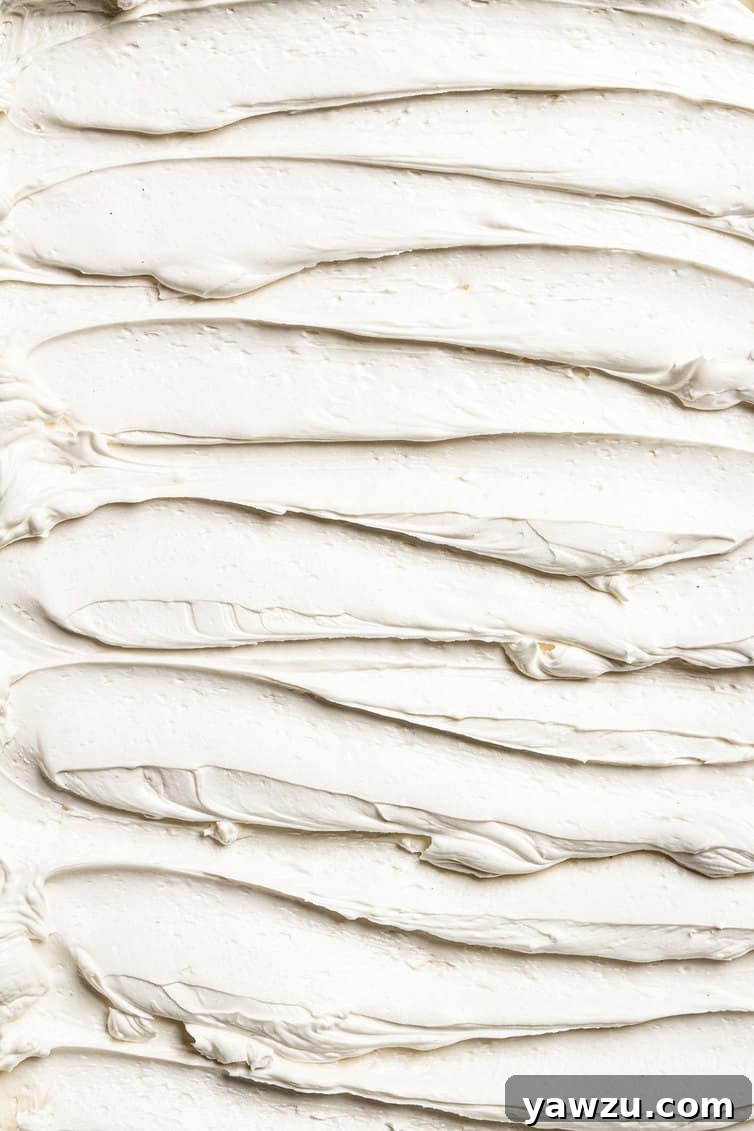
If you make this recipe and love it, I would so appreciate it if you would take a moment to leave a rating below. Thank you so much! ❤️️

Swiss Meringue Buttercream
Pin
Rate
Ingredients
- 6 egg whites
- 2 cups granulated sugar
- 2 cups unsalted butter, at cool room temperature and cut into tablespoon-size pieces
- 2 teaspoons vanilla extract
- Pinch salt
Instructions
-
Place the egg whites in a heatproof mixing bowl (the bowl of your stand mixer would be ideal, but another heatproof bowl will work). Fill a medium saucepan with 1 to 2 inches of water and place over medium-low heat for a slow simmer.
-
Add the sugar and whisk together. Place the bowl over the saucepan and whisk constantly until the sugar is completely dissolved and the mixture reaches 160 degrees F on an instant-read thermometer. This can take anywhere from a few minutes up to 10 minutes.
-
Remove the bowl from the saucepan and place on your stand mixer fitted with a whisk attachment (you can also use a hand mixer if that’s all you have). Whip on medium-high speed until stiff, glossy peaks form, about 10 to 15 minutes. (If you have stiff peaks but your bowl or the meringue is still warm to the touch, place the bowl in the refrigerator for 10 minutes or so to cool down before you add the butter.)
-
Switch to the paddle attachment and beat on medium-high speed while adding the butter one piece at a time, waiting for each piece to fully incorporate before adding the next.
-
Once all of the butter has been incorporated, reduce the mixer speed to medium and add the vanilla extract and salt. Beat for 30 seconds, stop and scrape down the sides and bottom, then beat for a final 30 seconds.
-
The Swiss meringue buttercream can keep at room temperature, covered, for up to 2 days, or in the refrigerator for up to 5 days.
Notes
- Yield: This recipe makes approximately 5 cups of frosting. This is enough to fill and frost a 9-inch layer cake, to frost a 9×13-inch cake, to lightly frost 24 cupcakes, or generously frost 12 cupcakes.
- Does SMBC harden? No, this type of buttercream will not form a “crust” as traditional American buttercream does. You can use this frosting for piping detail, filling cakes or cookies, and can even be used underneath fondant.
- How does it hold up in the heat? Like most butter-based frostings, this is fine at room temperature but will begin to get quite soft once you hit 80 degrees or so, and once you get much warmer than that, it can melt.
- Chocolate Swiss Meringue Buttercream – To make a chocolate version, I use the same method from my favorite chocolate frosting – melt and cool 8 ounces of semisweet chocolate, then beat it into the buttercream when you add the vanilla and salt.
- More Flavors – I recommend keeping 1 teaspoon of the vanilla and then swapping out the other teaspoon for another extract flavor, if you desire.
- Coloring the Frosting – Tinting this buttercream is easy! I recommend gel food coloring always so as not to introduce too much extra liquid (I use and recommend this AmeriColor soft gel color set); add it on low speed after you beat in the vanilla and salt.
- Make-Ahead and Storage Instructions – You can keep the frosting at room temperature for a few. hours after making it before using it. After that, it can be refrigerated in an airtight container for up to 1 week; be sure to re-whip before using it to get it back to that silky consistency. Baked goods with Swiss meringue buttercream can be left at room temperature, covered, for up to 2 days.
- Freezing Instructions – Swiss meringue buttercream can be frozen in an airtight container for up to 6 months. Thaw overnight in the refrigerator then re-whip to achieve a smooth consistency.
- Leftover Egg Yolks – If you’re wondering how to use up all of those leftover egg yolks, might I suggest some homemade ice cream, creme brulee, butterscotch pudding, or challah French toast?
Did you make this recipe?
Leave a review below, then snap a picture and tag @thebrowneyedbaker on Instagram so I can see it!
[Photography by Dee of One Sarcastic Baker]