
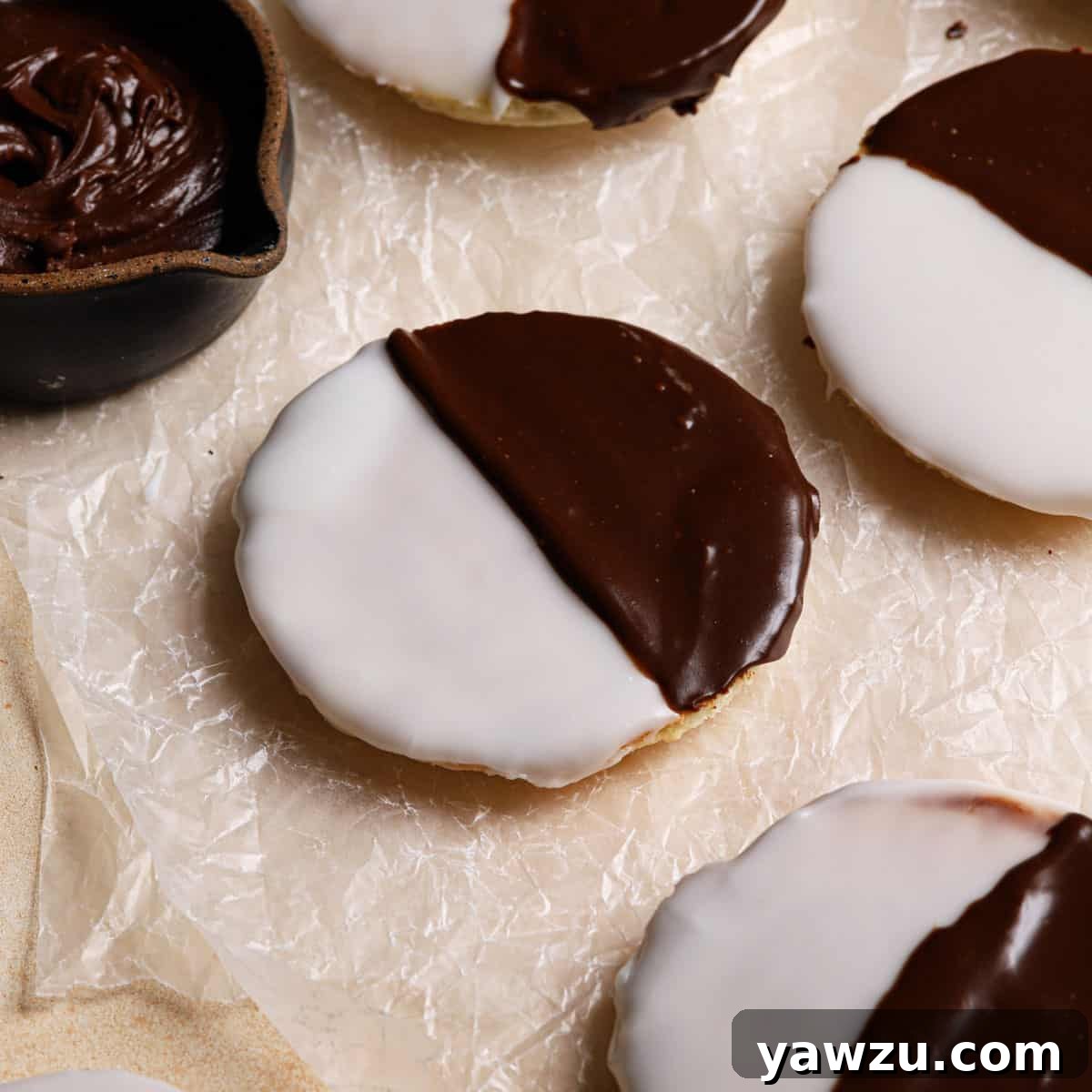
Indulge in a taste of the Big Apple right from your kitchen with these delightful homemade Black and White Cookies. These iconic treats offer the best of both worlds: a tender, cake-like cookie base perfectly complemented by a smooth, contrasting swirl of vanilla and chocolate icing. They’re a truly unique dessert, balancing the rich flavor of chocolate with the sweet simplicity of vanilla, all in one perfect bite.
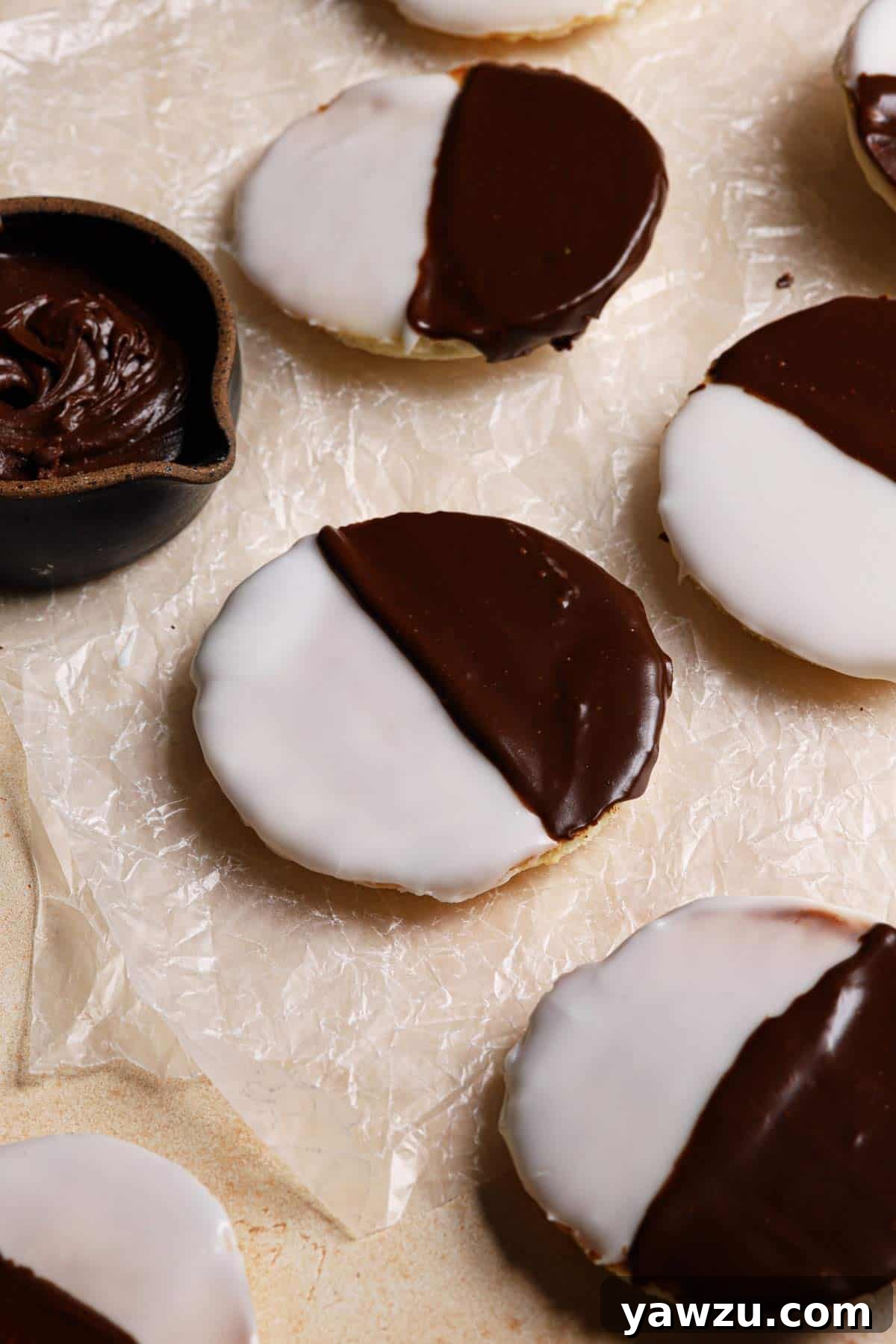
Unveiling the Magic of Black and White Cookies: A New York Classic
For those unfamiliar, Black and White Cookies are an undisputed culinary icon of New York City, almost as emblematic of its bakeries and delis as a classic New York-style cheesecake. Their distinctive appearance and unique texture have made them a beloved staple, often evoking fond memories and pop culture references, such as the famous Seinfeld episode where the cookie becomes a symbol of racial harmony.
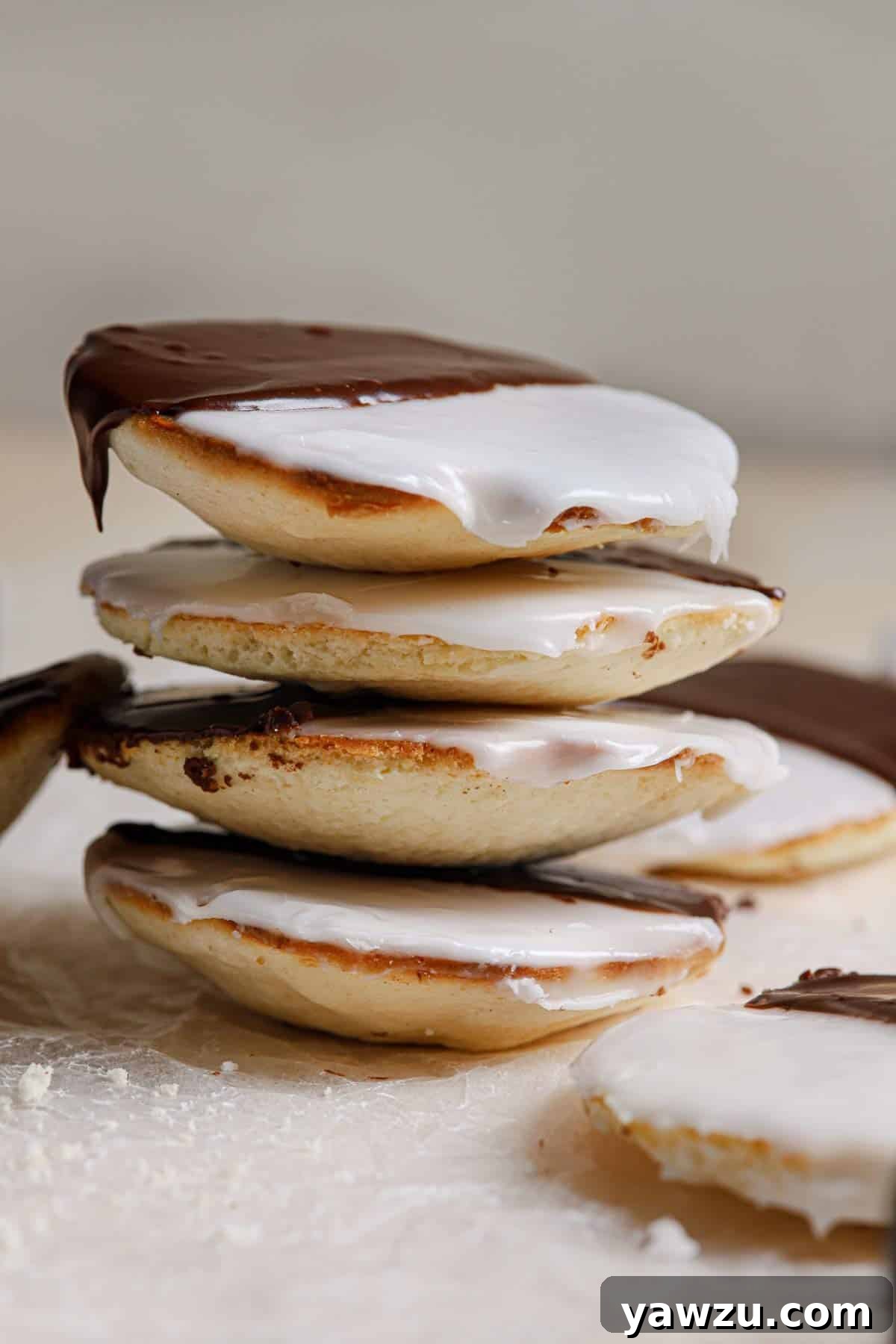
These aren’t your typical crisp or chewy cookies. Instead, they boast a wonderfully soft, sponge-like, and slightly domed cake-like texture. This characteristic has earned them various affectionate nicknames, including “half and half cookies” and “half-moon cookies.” Interestingly, in Germany, a similar treat is known as “Amerikaner,” highlighting their transatlantic appeal. The precise origin of these delightful confections is debated, with two New York bakeries laying claim to their creation in the early 1900s: Glaser’s Bake Shop in New York City and Hemstrought’s Bakery in Utica, NY. Regardless of who first conceived them, Black and White Cookies have firmly cemented their place in American dessert culture for generations.
What truly sets them apart, beyond their appealing monochrome aesthetic, is their subtle flavor profile. The cookie base typically features a delicate hint of lemon, which provides a bright counterpoint to the sweet icings. Each half is generously coated with a contrasting vanilla and chocolate icing, ensuring every bite delivers a harmonious blend of these two beloved flavors. They offer a refreshing change of pace from more conventional treats like chocolate chip or oatmeal cookies, making them a standout choice in any bakery display.
Why Bake Homemade Black and White Cookies?
While you might be tempted to grab these iconic cookies from a local bakery, there’s immense satisfaction in creating them from scratch at home. Homemade Black and White Cookies allow you to control the quality of ingredients, ensuring freshness and the perfect balance of flavors. You can adjust the sweetness, the intensity of the lemon zest, or even the thickness of the icing to suit your preference. Plus, the aroma of fresh-baked cookies filling your kitchen is an experience unto itself! It’s a rewarding baking project that culminates in a batch of impressive, delicious treats that will surely impress friends and family. This recipe breaks down the process into manageable steps, making this New York classic accessible to home bakers of all skill levels.
Essential Ingredients for Your Black and White Masterpiece
Crafting the perfect Black and White Cookie involves two distinct stages: baking the tender cookie base and then preparing the glossy vanilla and chocolate icings. Here’s a detailed look at the key ingredients you’ll need to master both components:
For the Cookies: Achieving that Signature Cake-Like Texture
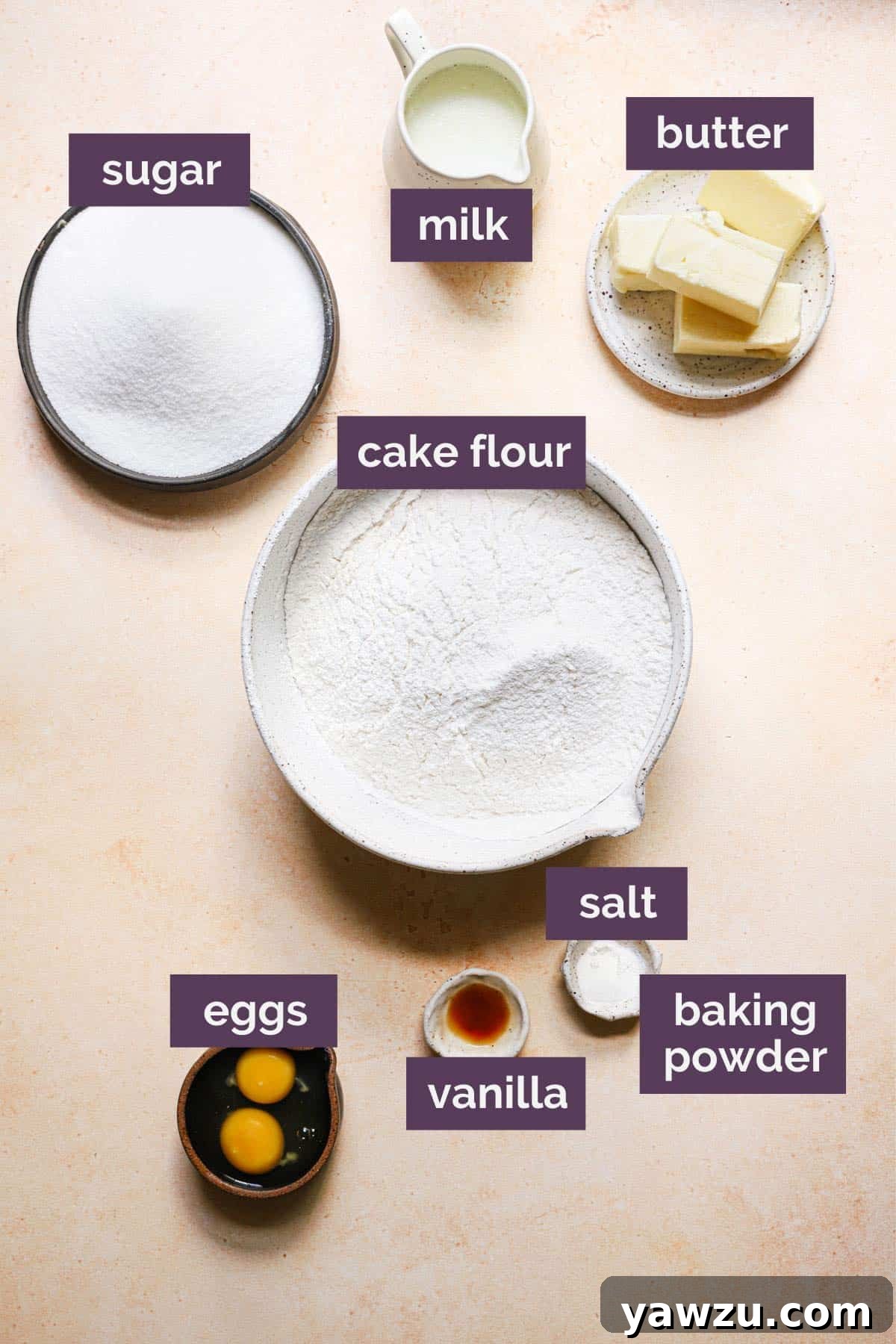
- Cake Flour: This is a non-negotiable ingredient for achieving the signature light and spongy texture of Black and White Cookies. Cake flour has a significantly lower protein content compared to all-purpose flour, which results in less gluten development. This reduced gluten is what prevents the cookies from becoming tough and instead gives them that delicate, tender crumb reminiscent of a cake. Do not substitute with all-purpose flour if you want an authentic result.
- Unsalted Butter: Using unsalted butter at a cool room temperature is crucial. It allows for better creaming with sugar, incorporating air that contributes to the cookie’s lightness. Unsalted butter also gives you precise control over the overall saltiness of your baked goods.
- Granulated Sugar: Provides sweetness and helps create a tender crumb by interfering with gluten development. When creamed with butter, it also helps aerate the mixture, contributing to the cookie’s light structure.
- Eggs: Act as a binder, adding structure, moisture, and richness to the dough. Using room temperature eggs helps them incorporate more evenly into the batter.
- Vanilla Extract: A staple in most baked goods, vanilla extract enhances the overall flavor profile, adding warmth and depth to the cookie base.
- Lemon Extract: This is the secret ingredient for that subtle, yet distinctive, flavor found in traditional Black and White Cookies. It’s not meant to be overpowering, but rather a delicate hint that brightens the taste. While optional, it’s highly recommended for authenticity.
- Milk: Adds necessary moisture to the dough, contributing to its tender consistency. Any type of milk you have on hand – 1%, 2%, or whole milk – will work perfectly.
- Baking Powder and Salt: Baking powder is the leavening agent that helps the cookies rise and achieve their characteristic dome shape and soft interior. Salt balances the sweetness and enhances all the other flavors in the cookie.
For the Icing: The Perfect Contrast
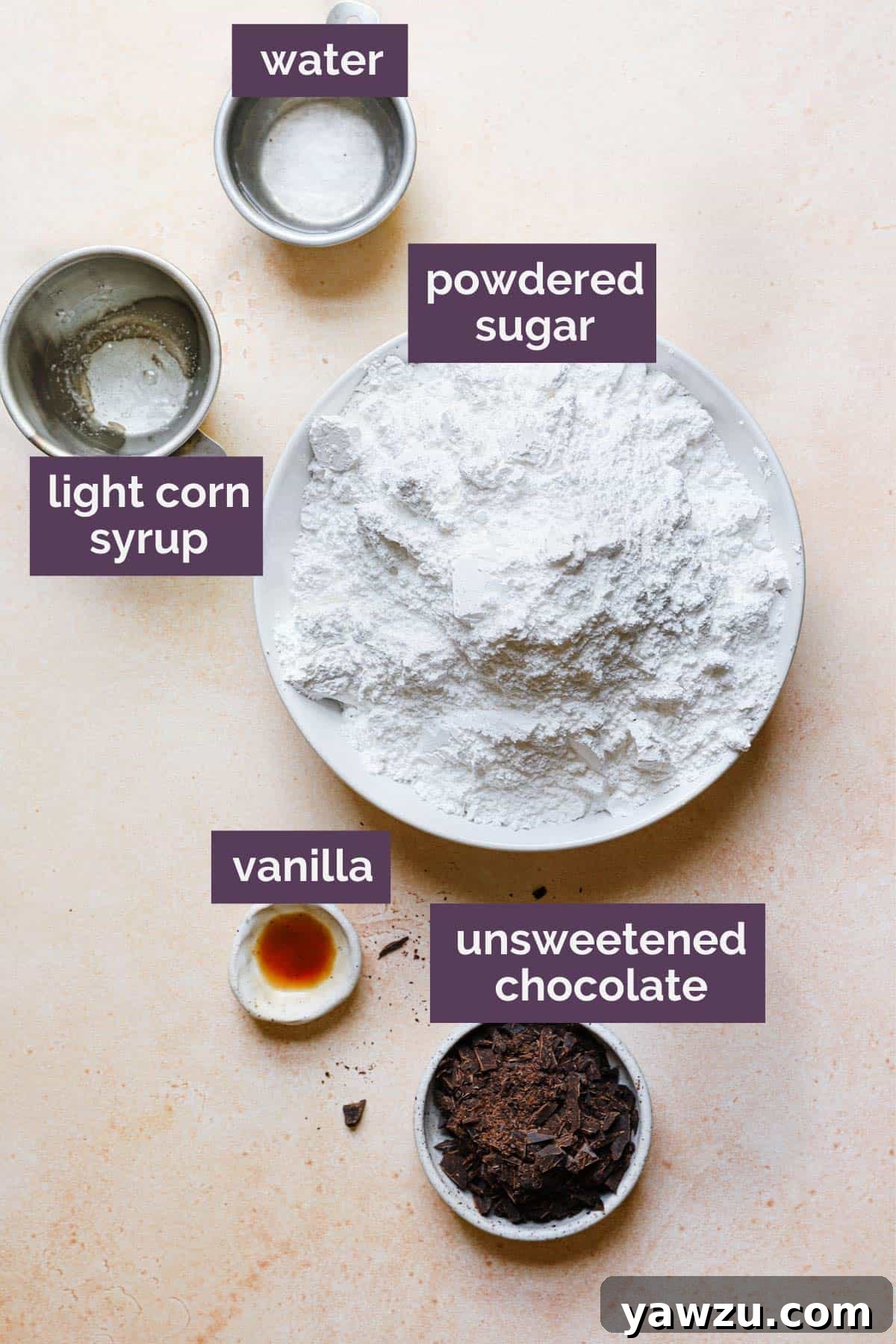
- Unsweetened Chocolate: Finely chopped unsweetened chocolate is essential for creating the rich, dark half of the iconic icing. Its deep cocoa flavor contrasts beautifully with the sweet vanilla side.
- Water: Used to thin out the icing to the perfect pouring and spreading consistency. The right amount ensures a smooth, even coating.
- Light Corn Syrup: A crucial ingredient for giving the icing its characteristic shiny, professional-looking sheen and smooth texture. It also helps prevent crystallization of the sugar, keeping the icing smooth.
- Powdered Sugar: The base of the icing, powdered sugar (confectioners’ sugar) sweetens and thickens the mixture, creating a smooth and pliable frosting.
- Vanilla Extract: Essential for flavoring the vanilla half of the icing and enhancing the overall sweetness.
Step-By-Step Guide to Baking Black and White Cookies
While the final product might look intricate, the process of making Black and White Cookies can be broken down into four straightforward stages: preparing the cookie dough, baking them to perfection, whipping up the dual icings, and finally, frosting the cooled cookies with precision. Follow these detailed steps for a successful batch every time.
Step 1: Preparing the Light and Fluffy Cookie Dough
- Preheat and Prepare: Begin by adjusting your oven racks to the lower-middle and upper-middle positions to ensure even baking. Then, preheat your oven to 375°F (190°C). Line two large baking sheets with parchment paper or silicone baking mats; this prevents sticking and helps the cookies bake evenly.
- Combine Dry Ingredients: In a large bowl, thoroughly whisk together the cake flour, baking powder, and salt. This step ensures that the leavening agent and salt are evenly distributed throughout the flour, which is vital for uniform rising. Set this mixture aside.
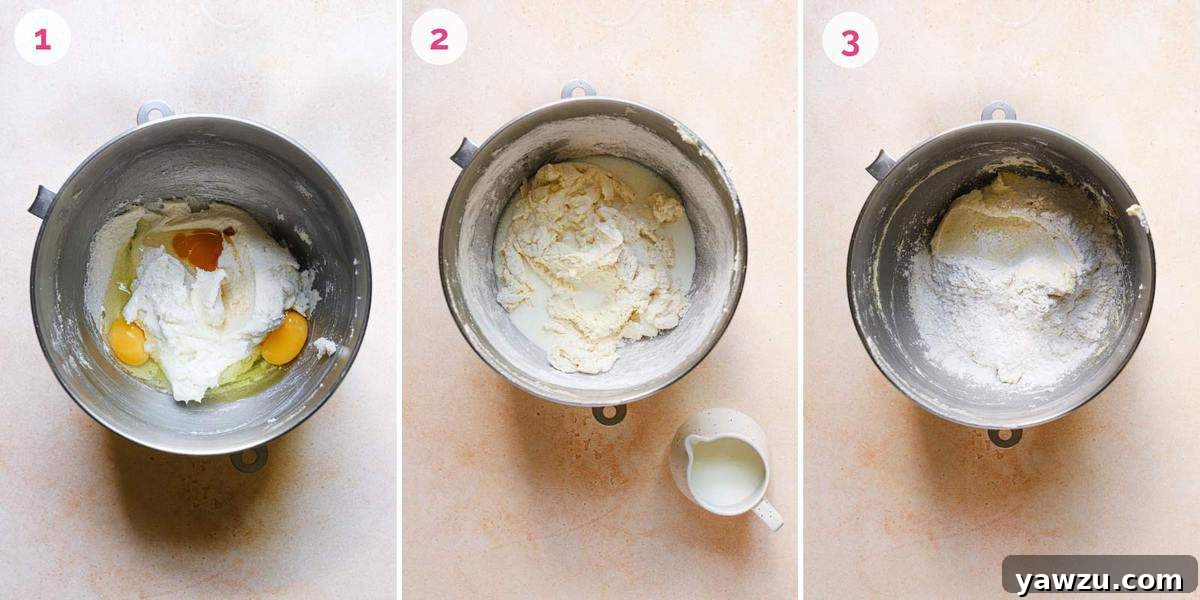
- Cream Butter and Sugar: In the bowl of a stand mixer fitted with a paddle attachment (or using a hand mixer), beat the cool room-temperature unsalted butter at medium speed for about 30 seconds until it’s softened and smooth. With the mixer still running on medium, gradually add the granulated sugar. Increase the speed to medium-high and continue beating for approximately 3 minutes, or until the mixture becomes notably light, fluffy, and pale in color. This creaming process incorporates air, essential for the cake-like texture.
- Incorporate Eggs and Extracts: Stop the mixer and scrape down the sides of the bowl with a rubber spatula to ensure all ingredients are well combined. Add the room-temperature eggs, vanilla extract, and lemon extract (if using). Beat at medium speed for about 30 seconds, until just combined. Scrape the sides and bottom of the bowl once more to catch any unmixed ingredients.
- Alternate Wet and Dry: With the mixer set to its lowest speed, gradually add the dry flour mixture in four additions, alternating with the milk in three additions. Always begin and end with the flour mixture. Mix only until just combined after each addition. Be careful not to overmix, as this can develop the gluten in the cake flour, leading to a tougher cookie.
- Final Stir: Remove the bowl from the mixer and give the dough a few final gentle stirs with a rubber spatula. This ensures that any pockets of unmixed flour at the bottom of the bowl are fully incorporated, resulting in a homogenous dough.
Step 2: Baking the Cookies to Golden Perfection
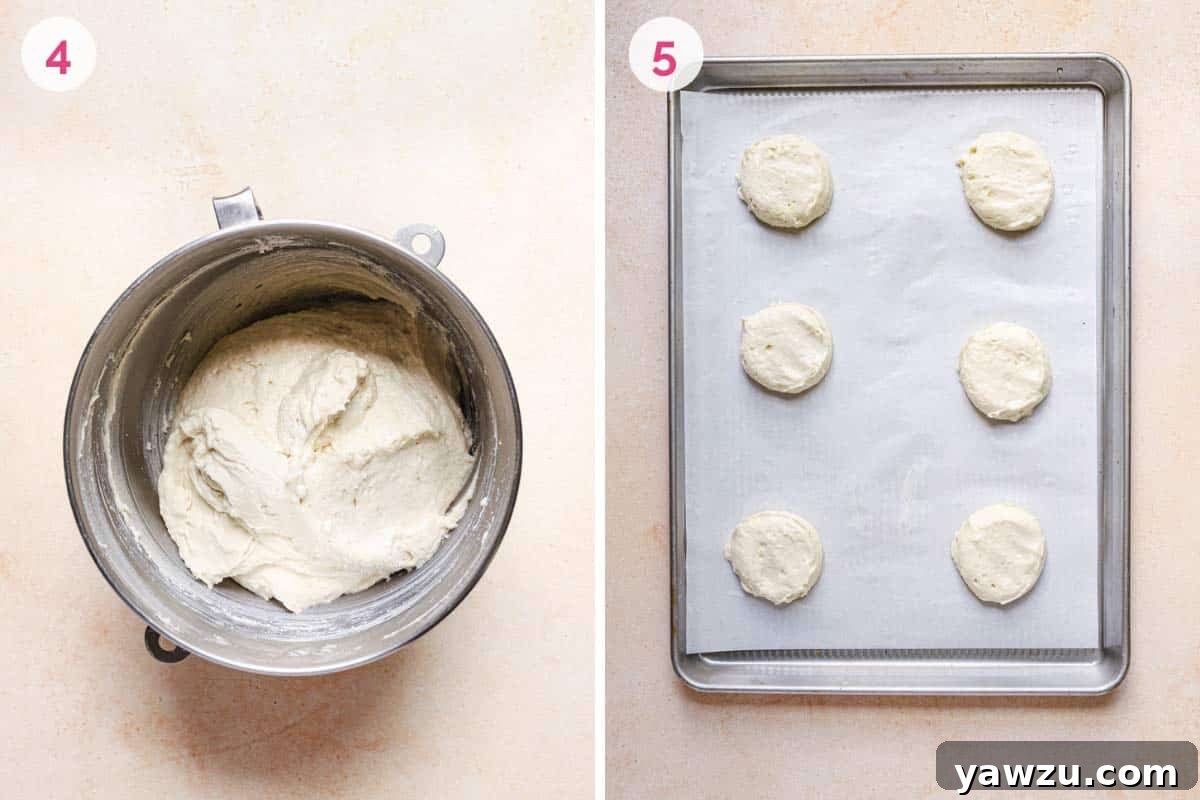
- Scoop the Dough: Using a ¼-cup measuring cup or a large cookie scoop, drop mounds of the prepared dough onto your lined baking sheets. Space them approximately 2 inches apart to allow for slight spreading during baking.
- Shape into Circles: Lightly moisten your fingertips with water. Gently press each mound of dough into a neat 2½-inch circle. This ensures a uniform shape and helps achieve that classic flat-bottomed, slightly domed cookie.
- Bake: Transfer the baking sheets to the preheated oven. Bake for approximately 20 minutes, or until the edges of the cookies are set and turn a very light golden brown. The centers should still be soft and spring back slightly when gently touched. Avoid overbaking, as this can dry out the cake-like texture.
- Cool Completely: Allow the freshly baked cookies to cool on the baking sheets for about 2 minutes. This brief resting period helps them firm up slightly before you move them. Then, carefully transfer the cookies to a wire rack to cool completely. It’s crucial that the cookies are entirely cool before icing to prevent the frosting from melting or sliding off.
Step 3: Crafting the Silky Vanilla and Chocolate Icings
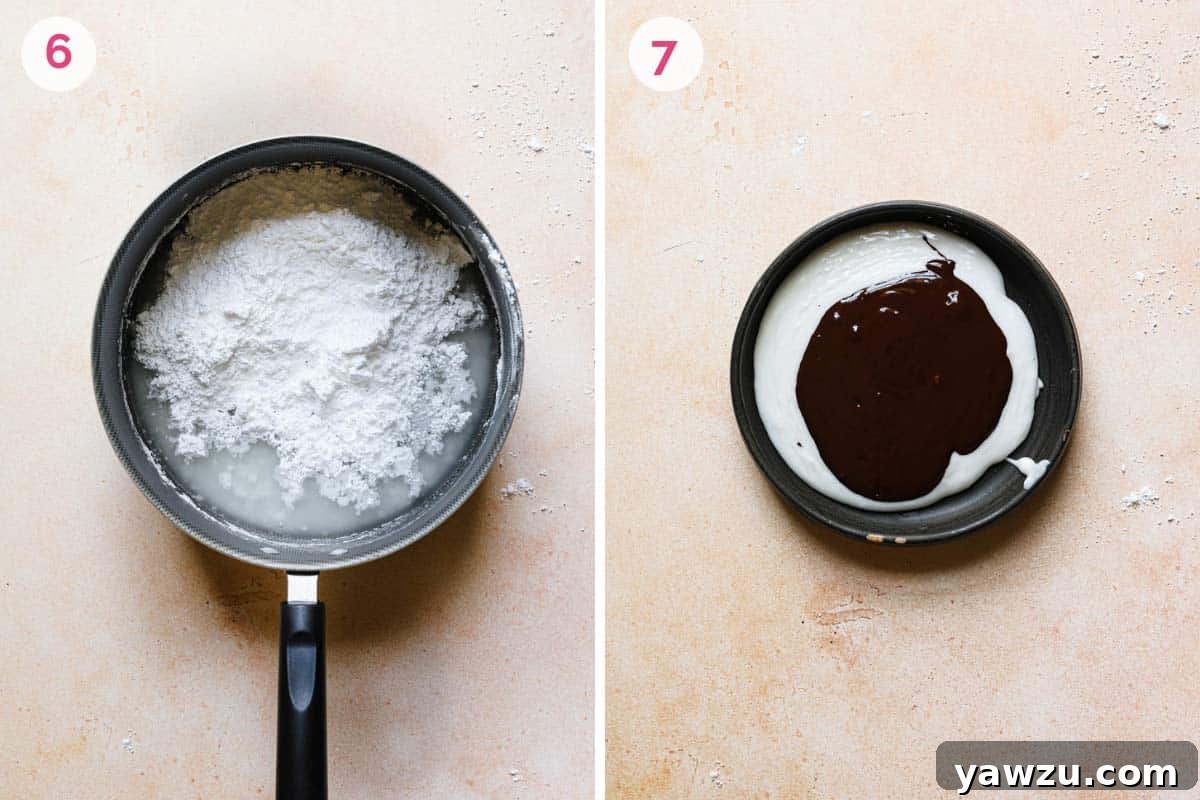
- Melt the Chocolate: Place the finely chopped unsweetened chocolate in a medium heatproof bowl. You can melt it using a double boiler method (set the bowl over a small saucepan of barely simmering water, ensuring the bottom of the bowl doesn’t touch the water) or in the microwave (heat on 50% power in 30-second increments, stirring after each, until smooth). Once melted, set the chocolate aside to cool slightly.
- Prepare the Icing Base: In a medium saucepan over medium heat, bring the water and light corn syrup to a gentle boil. Remove the saucepan from the heat immediately.
- Whisk in Sugar and Vanilla: Gradually whisk in the powdered sugar and vanilla extract until the mixture is completely smooth and free of lumps. This creates your base vanilla icing.
- Create Chocolate Icing: Transfer ¾ cup of the freshly made vanilla icing into the bowl with the melted chocolate. Whisk thoroughly until the chocolate is fully incorporated and the mixture is smooth and glossy. You now have your two distinct icings, ready for the next step.
Step 4: Icing the Black and White Cookies with Precision
- Set Up Your Icing Station: To minimize mess and catch any drips, place wire cooling racks over sheets of wax paper or parchment paper. This allows excess icing to drip away and makes cleanup easier.
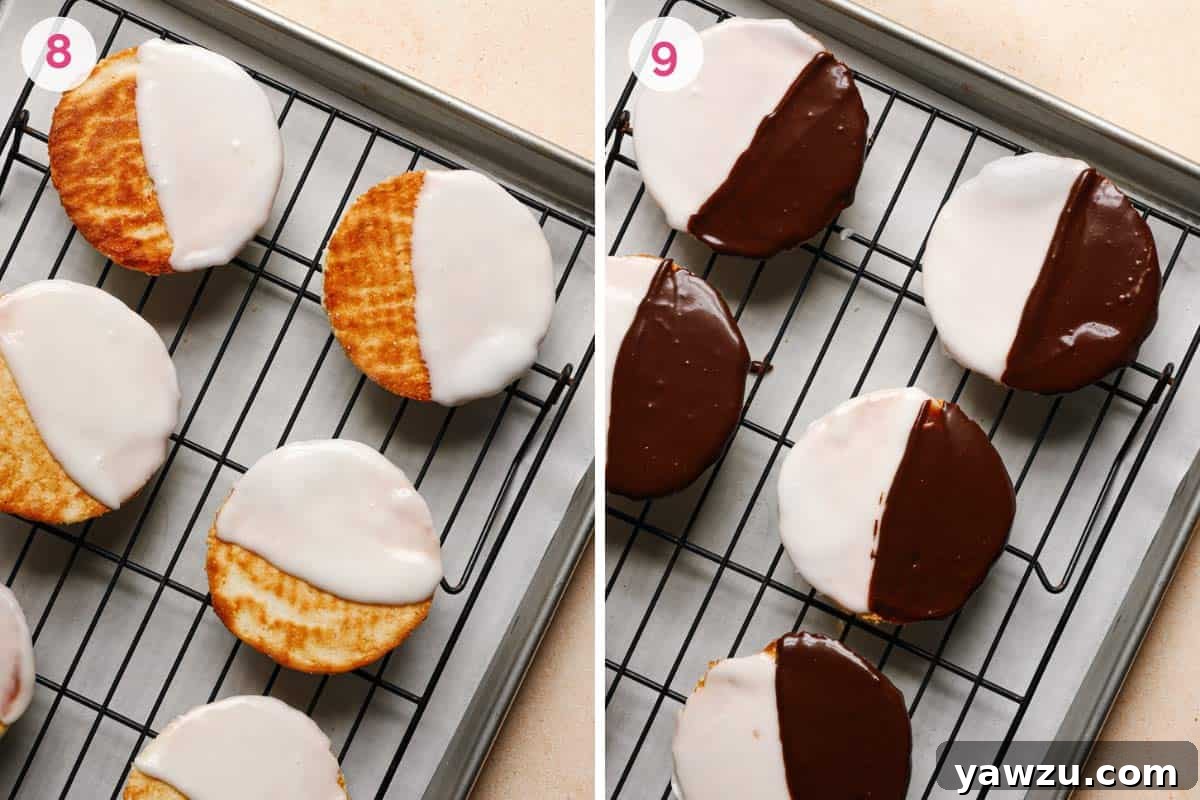
- Apply Vanilla Icing: Take a fully cooled cookie and turn it flat-side up. Using a small offset spatula, spread about 2 tablespoons of the vanilla icing onto exactly half of the flat underside of the cookie. The icing should be thin enough to spread fairly easily; you can gently tilt the cookie to help it settle. Use the spatula to carefully scrape any excess icing from the edges, creating a neat line down the middle.
- Allow Vanilla to Set: Place the half-iced cookies back on the wire racks. Let the vanilla icing set for at least 15 minutes. This prevents the chocolate icing from bleeding into the vanilla when applied.
- Apply Chocolate Icing: Once the vanilla side has set, use the small offset spatula to spread the chocolate icing onto the remaining bare half of each cookie. Again, use the spatula to scrape any excess from the edges, aiming for a clean, straight line between the two colors.
- Full Setting Time: Carefully place the fully iced cookies back on the wire racks. Allow them to set completely for at least 1 hour. This allows both icings to firm up and develop their characteristic glossy finish.
Essential Tips for Black and White Cookie Success
Even with a clear recipe, a few expert tips can elevate your Black and White Cookies from good to extraordinary. Keep these in mind to ensure a perfect batch every time:
- Achieving Perfect Cookie Temperature: This is paramount! Ensure your cookies are absolutely, completely cooled to room temperature before you even think about applying the icing. If the cookies are even slightly warm, the icing will melt, run, and fail to set properly, ruining the iconic dual-color design and glossy finish. Patience is key here.
- Managing Vanilla Icing Consistency: The vanilla icing should be smooth and spreadable, but not too thin. If you notice the vanilla icing beginning to thicken too much while you’re working, don’t despair. Simply stir in a very small amount of warm water, about a teaspoon at a time, until it returns to a perfectly smooth and looser consistency that spreads easily.
- Adjusting Chocolate Icing Consistency: Similar to the vanilla, the chocolate icing needs to be just right. If your chocolate icing becomes too thick and difficult to spread, gently warm it. Place the bowl over a small saucepan of barely simmering water (creating a makeshift double boiler) to allow the chocolate to re-melt and become fluid again. If it’s still too thick after warming, add warm water, a teaspoon at a time, and stir until it reaches the desired smooth, spreadable consistency.
- Do Not Overmix the Dough: When combining the wet and dry ingredients, mix only until just combined. Overmixing will develop the gluten in the cake flour, resulting in a tougher cookie instead of the desired tender, cake-like crumb.
- Accurate Measurements: Baking is a science. Use a kitchen scale for flour and sugar measurements for the most accurate results. This minimizes variation and ensures consistent texture.
- Quality Ingredients: Since these cookies have relatively few ingredients, the quality of each really shines through. Use good quality butter, vanilla extract, and unsweetened chocolate for the best flavor.
Storing, Freezing, and Making Ahead: Preserve Your Deliciousness
Whether you’re planning to enjoy them over a few days, want to stock up for future cravings, or prepare them for an event, knowing how to properly store and freeze Black and White Cookies is invaluable. These simple steps will help maintain their freshness and deliciousness:
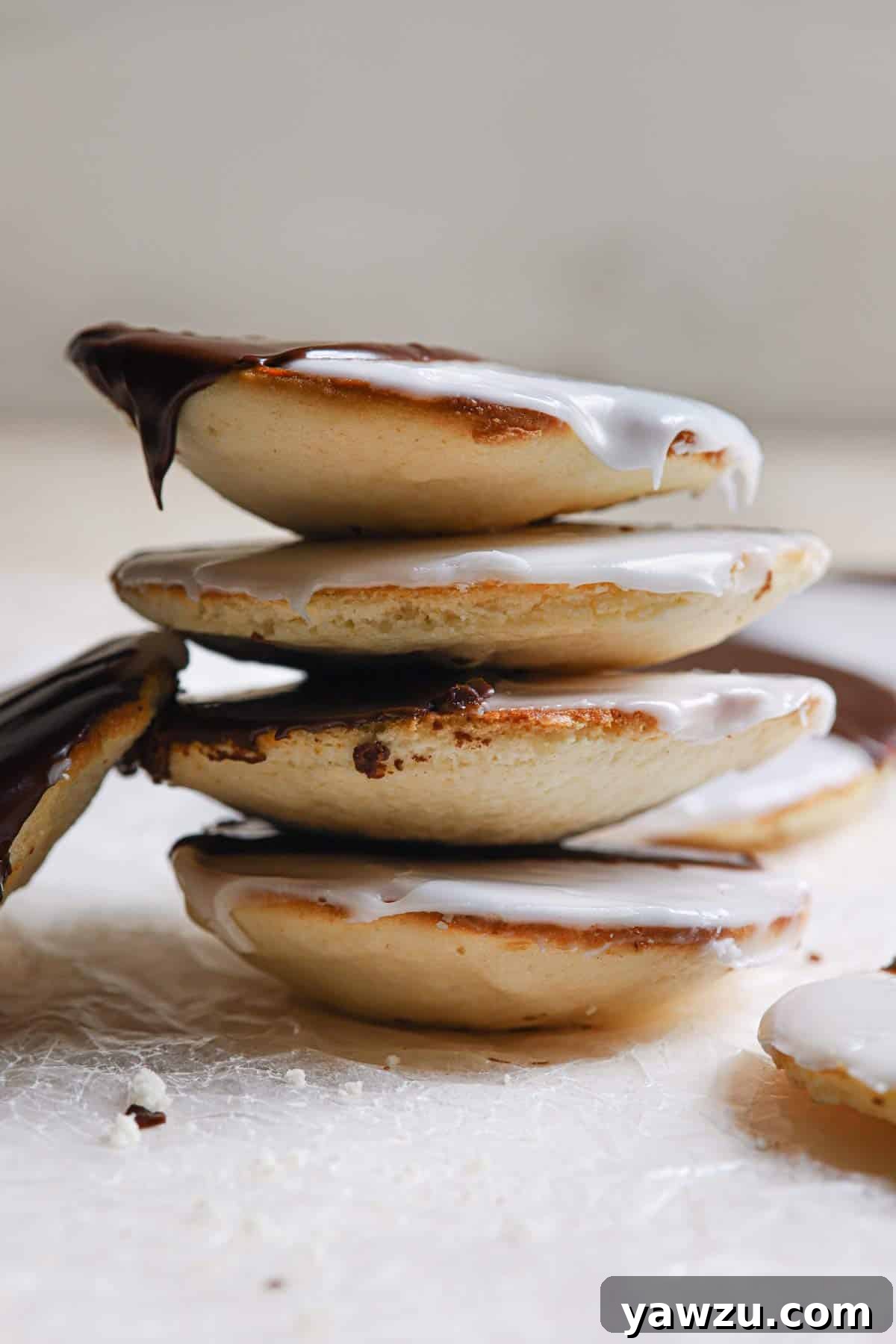
- Storing Frosted Cookies: To keep your frosted Black and White Cookies fresh, store them in an airtight container at room temperature. They will remain delicious for up to 3 days. If you need to stack the cookies to save space, place a piece of wax paper or parchment paper between each layer. This prevents the delicate frosting from sticking together or getting damaged, preserving their pristine appearance.
- Freezing Cookies (Frosted or Unfrosted): Black and White Cookies freeze beautifully, making them excellent for meal prep or enjoying later. Whether they are frosted or unfrosted, wrap each cookie individually in plastic wrap. Then, place the wrapped cookies in a freezer-safe container or a heavy-duty freezer bag. They can be stored in the freezer for up to 3 months without compromising quality.
- Thawing Frozen Cookies: To thaw frozen cookies, transfer them from the freezer to the refrigerator and let them sit overnight. Once thawed, bring them to room temperature before serving. If you froze unfrosted cookies, you can frost them after they’ve come to room temperature.
- Making Ahead for Events: If you’re planning to make these cookies a few days in advance of an event, simply bake, cool, frost, and store them in an airtight container at room temperature. For longer-term planning, follow the freezing instructions, and then thaw and frost just before serving to ensure maximum freshness and presentation.
Black and White Cookie FAQs
A classic Black and White Cookie boasts a delightful vanilla cookie base with a subtle, yet distinct, hint of lemon. This bright citrus note prevents the cookie from being overly sweet. It’s then crowned with two contrasting glazes: one half with a smooth, sweet vanilla icing and the other with a rich, decadent chocolate icing. This combination means you never have to choose between vanilla and chocolate; you get the best of both worlds in every bite!
Black and White Cookies are unique in the cookie world due to their signature texture. They are often described as having a cake-like, soft, and slightly spongy texture, leading many to consider them more akin to miniature cakes or “cookie-cakes” rather than traditional cookies. They fall into the broad category of a “drop cookie” because the dough is dropped onto a baking sheet and doesn’t spread as much as a typical chewy cookie. Their distinctive domed top and flat bottom further emphasize their cake-like nature.
While lemon extract adds an authentic, traditional flavor that brightens the cookie, it is technically optional. If you prefer, you can omit it entirely, and the cookies will still be delicious vanilla-flavored treats. However, for that classic New York deli taste, the hint of lemon is highly recommended.
Achieving a crisp dividing line requires a few tricks. First, ensure the cookie is completely cool. Second, use a small offset spatula for precise application. Apply one color first, carefully defining the straight edge. Let that icing set for at least 15 minutes before applying the second color. This prevents bleeding and helps maintain the distinct black and white appearance.
More Creative Cookies to Bake Next
If you enjoyed making these iconic Black and White Cookies, you might be ready to explore other delightful cookie recipes. Here are some fantastic options to add to your baking repertoire, offering a range of flavors and textures:
- Zesty Orange Cookies
- Irresistibly Thick and Chewy Chocolate Chip Cookies
- Soft Lofthouse Cookies with Fluffy Buttercream Frosting
- Hearty Cowboy Cookies
- Classic Soft Chewy Sugar Cookies
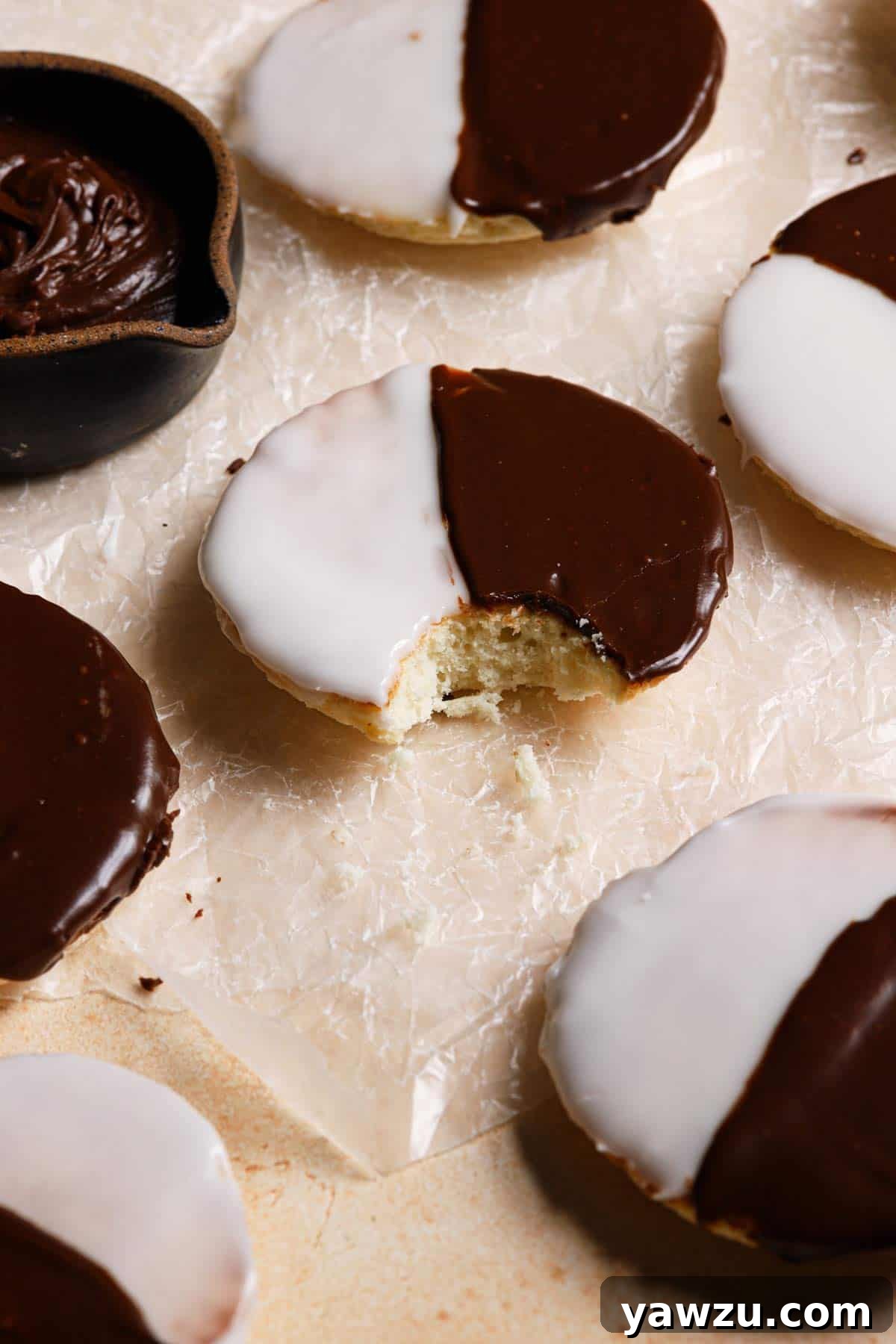
Bringing the vibrant flavors of New York City into your home kitchen has never been easier or more delicious than with these homemade Black and White Cookies. Their tender, cake-like base, perfectly divided by rich vanilla and decadent chocolate icing, creates a truly unique and unforgettable treat that’s sure to become a cherished favorite.
Watch the Recipe Video Below:
If you make this recipe and love it, remember to stop back and give it a 5-star rating – it helps others find the recipe! ❤️️
Black and White Cookies
⭐⭐⭐⭐⭒
Pin
Rate
Ingredients
For the Cookies:
- 4 cups (500 g) cake flour
- ½ teaspoon (0.5 teaspoon) baking powder
- ½ teaspoon (0.5 teaspoon) salt
- 1 cup (227 g) unsalted butter, at cool room temperature
- 1¾ cups (350 g) granulated sugar
- 2 eggs, at room temperature
- ½ teaspoon (0.5 teaspoon) vanilla extract
- ¼ teaspoon (0.25 teaspoon) lemon extract
- 1 cup (244 ml) milk
For the Icing:
- 2 ounces (56.7 g) unsweetened chocolate, finely chopped
- ⅓ cup (83.33 ml) water
- ¼ cup (85.25 g) light corn syrup
- 5 cups (600 g) powdered sugar
- ½ teaspoon (0.5 teaspoon) vanilla extract
Instructions
-
Make the Cookies: Adjust the oven racks to lower-middle and upper-middle positions and preheat the oven to 375 degrees F (190°C). Line two baking sheets with parchment paper or a silicone baking mat.
-
In a large bowl, whisk together the flour, baking powder and salt; set aside.
-
Beat the butter at medium speed for 30 seconds to loosen it up. Keeping the mixer running, gradually add in the sugar and then gradually increase the speed to medium-high and beat until the mixture is light and fluffy, about 3 minutes. Scrape down the sides of the bowl and add the eggs, vanilla and lemon extract. Beat at medium speed until combined, about 30 seconds. Scrape down the sides and bottom of the bowl again. With mixer on low speed, alternately add the flour in four additions and the milk in three additions (beginning and ending with flour), and mix until just combined. Give the mixture a few final stirs with a rubber spatula to ensure all of the flour has been incorporated.
-
Use a ¼-cup measuring cup to scoop mounds of dough onto the prepared baking sheets about two inches apart. Using moistened fingers, gently press each mound of dough into a 2½-inch circle. Bake until the edges of the cookies are set and light golden brown, about 20 minutes. Allow the cookies to cool for 2 minutes on the baking sheets, then remove to a wire rack to cool completely.
-
Making the Icings: Melt the chocolate either in a medium bowl set over a small saucepan over barely-simmering water, or using the microwave on 50% power in 30-second increments; set aside.
-
In a medium saucepan over medium heat, bring the water and corn syrup to a boil. Remove from the heat and whisk in the powdered sugar and vanilla extract. Transfer ¾ cup of the icing to the bowl with the melted chocolate and whisk to combine.
-
Ice the Cookies: Place wire racks over wax paper to catch any drips. Use a small offset spatula to spread about 2 tablespoons of the vanilla icing onto half of the flat underside of each cookie. The icing should move on its own when the cookie is tilted; use the spatula to scrape any excess from around the edges. If the vanilla begins to thicken too much, stir in a teaspoon of warm water at a time until the icing goes back to a smoother, looser consistency. Place the finished cookies on the wire racks and allow to set for at least 15 minutes.
-
Again using a small offset spatula, spread the chocolate icing on the other half of each cookie, scraping any excess icing from around the edge of the cookies. If the chocolate icing thickens too much, place the bowl on a small saucepan of barely simmering water so that it can re-melt. If it’s still too thick, you can add warm water, a teaspoon at a time, until it returns to the correct consistency. Place the finished cookies on the wire racks and allow to set for at least 1 hour.
-
The cookies can be stored in an airtight container at room temperature for up to 3 days. If you stack the cookies, be sure to place a piece of wax paper between layers.
Notes
- Cake Flour: Has a lower gluten content than all-purpose flour leaving these cookies light and spongy. I do not recommend substituting all-purpose flour. You can find cake flour in any grocery store, online, or use this substitution.
- Lemon Extract: This is optional and not overpowering, but gives the cookies that familiar flavor.
- Milk: Use whatever you have on hand; 1%, 2%, or whole milk.
- Cookie Temperature: Be sure the cookies are fully cooled before beginning to frost. If the cookie is too warm the icing will melt and not set on the cookie properly.
- Vanilla Icing: If the vanilla icing begins to thicken too much, stir in a teaspoon of warm water at a time until the icing goes back to a smoother, looser consistency.
- Chocolate Icing: If the chocolate icing thickens too much, place the bowl on a small saucepan of barely simmering water so that it can re-melt. If it is still too thick, you can add warm water, a teaspoon at a time, until it returns to the correct consistency.
- Storing: Keep frosted black and white cookies in an airtight container for up to 3 days. Separate the layers of cookies with wax paper to prevent the frosting from sticking.
- Freezing: Wrap black and white cookies (frosted or un-frosted) in plastic wrap and store in a freezer-safe container for up to 3 months.
- Thawing: To thaw, refrigerate overnight and then bring to room temperature before serving or frosting.
- Recipe adapted from Baking Illustrated.
Nutritional values are based on one serving.
Did you make this recipe?
Leave a review below, then snap a picture and tag @thebrowneyedbaker on Instagram so I can see it!
Photography by Dee Frances.