
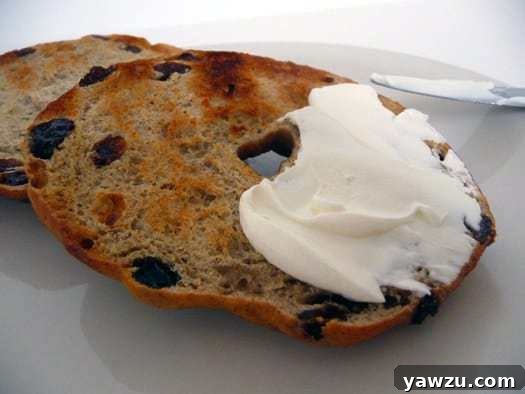
Mastering Homemade Cinnamon Raisin Bagels: A Chewy, Sweet Delight
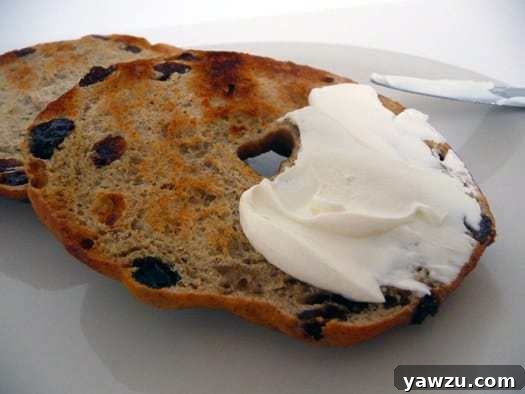
There’s an undeniable joy in baking, especially when the result is a warm, fragrant treat like a freshly baked bagel. As a passionate home baker, I recently embarked on a culinary adventure to create the perfect homemade cinnamon raisin bagels. Having already experienced the satisfaction of making Peter Reinhart’s classic bagel recipe from The Bread Baker’s Apprentice, I was eager to explore his delightful cinnamon raisin variation. This recipe truly elevates the humble bagel, transforming it into an irresistible blend of chewy texture and aromatic sweetness that has quickly become a household favorite.
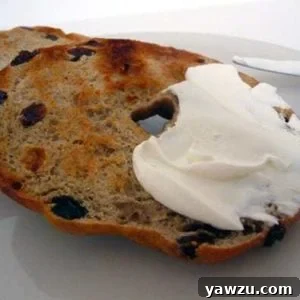
The beauty of this cinnamon raisin bagel recipe lies in its subtle yet impactful adaptations from the original. A slight increase in yeast, combined with the harmonious addition of sugar, cinnamon, and plump raisins, imbues the dough with an incredible depth of flavor. The outcome was nothing short of spectacular – each bagel boasted a perfectly chewy interior, a slightly crisp exterior, and a balanced sweetness that wonderfully complemented the warm spice of cinnamon and the fruity bursts of raisins. Every person who sampled these bagels instantly fell in love, eagerly requesting more. They’ve been enjoyed with a variety of toppings, from classic cream cheese to rich butter and creamy peanut butter, consistently earning rave reviews.
Baking Bagels: An Approachable Journey for Every Skill Level

For those new to the world of bagel making, the process might seem intricate or intimidating at first glance. It’s true that making bagels involves several distinct steps and a bit of time commitment, but I assure you, it is far from difficult. The techniques are straightforward, and the satisfaction of pulling your own chewy, perfectly shaped bagels from the oven is immense. The most crucial element, and one that absolutely should not be overlooked, is the overnight rest in the refrigerator.
This extended cold fermentation, which Peter Reinhart aptly calls “retardation,” is the secret weapon behind truly exceptional bagels. During this period, the dough slowly develops its characteristic complex flavor and distinct chewy texture. Rushing this step or skipping it altogether would compromise the very essence of what makes a great bagel. It allows the yeast to work slowly, enhancing the gluten structure and deepening the flavor profile in a way that quick proofing simply cannot achieve. Think of it as a flavor-building exercise – the longer and slower, the better the final taste and texture.
Essential Tips for Baking Your Best Cinnamon Raisin Bagels
Embarking on the journey of homemade bagels is incredibly rewarding, but a few insights can ensure a smoother and more successful baking experience. Here are some key notes and tips derived from my own kitchen adventures with this fantastic recipe:
Understanding Your Dough and Mixer
Making bagels involves a very stiff dough, which is essential for achieving that iconic chewy texture. This dense consistency can put a strain on stand mixers, especially if you’re using a lighter-duty model. I’ve personally experienced my mixer’s motor heating up and even detected a faint burning smell during the kneading process – definitely a sign to pay attention! If your mixer begins to struggle, or if you notice any unusual smells or sounds, do not hesitate to switch to hand kneading. Kneading by hand can be a wonderful, tactile experience, allowing you to truly feel the dough’s development. It might take a bit more elbow grease, but it ensures your mixer stays healthy and your dough develops properly without overworking the machine. Plus, it connects you more intimately with the baking process, which is incredibly satisfying.
Bagel Yield Variation: What to Expect
The recipe typically suggests a yield of 12 bagels when dividing the dough into 4½-ounce pieces. However, I often find myself with 15 bagels instead. This discrepancy can arise from several factors, including the precise hydration of your dough, how accurately you measure each piece, or even slight variations in your flour’s absorption rate. Don’t be concerned if your yield differs slightly from the recipe’s estimate; it simply means you might have a few extra delicious bagels to enjoy, which is rarely a bad thing! The important thing is to ensure each bagel piece is roughly consistent in size for even baking.
Troubleshooting Flat Bagels: Achieving the Perfect Puff
One challenge I’ve encountered is some bagels plumping up beautifully while others remain a bit flatter. This can be puzzling, but several factors might contribute. Here are some potential insights and solutions:
- Proofing Environment: The way bagels are covered during their overnight refrigeration is crucial. If the plastic wrap is too tight, it might inhibit proper air circulation and expansion, preventing the bagels from achieving their full potential puffiness. Try covering them loosely or placing them in a food-grade plastic bag that allows a little room for them to breathe and rise.
- Temperature Fluctuations: Inconsistent refrigerator temperatures or sudden changes in room temperature during the initial proofing phase can impact how uniformly the bagels proof. Ensure they are placed in a stable, cool environment.
- Shaping Technique: Inconsistent shaping can lead to uneven rising. Ensure the holes are evenly widened and the dough is stretched uniformly, avoiding thick and thin spots. The sealing of the seam, if you’re using the rope method, should also be secure but not overly compressed.
- Boiling Time: The boiling step is vital for the bagel’s crust and chew. If bagels are under-boiled, they might not fully set their structure, leading to a flatter appearance. Conversely, over-boiling can sometimes relax the dough too much. Adhering to the recommended boiling times (or extending slightly for extra chewiness) is key.
- Flour Quality: The type and quality of high-gluten or bread flour can influence gluten development and how well the bagels hold their shape. Using a consistent, high-quality flour is recommended.
- Yeast Activity: Ensure your yeast is fresh and active. If the sponge or dough doesn’t appear sufficiently foamy or bubbly during its initial rises, it could indicate sluggish yeast, leading to flatter bagels.
Experimenting with these variables can help you achieve that desirable plump, rounded bagel shape. Don’t get discouraged if your first batch isn’t perfect; every bake is a learning experience!
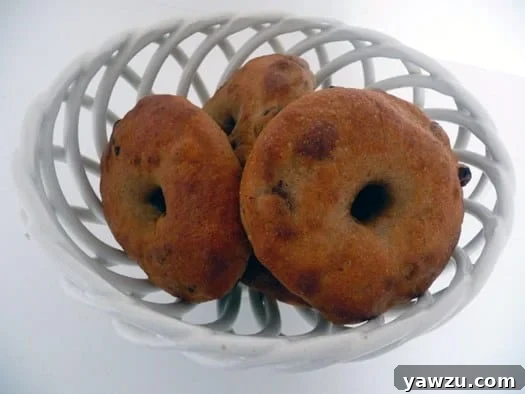
The Irresistible Appeal of Cinnamon Raisin Bagels
What makes a cinnamon raisin bagel truly special? It’s the delightful marriage of textures and flavors. The initial bite offers a satisfying crispness from the boiled and baked crust, quickly followed by the dense, chewy interior that is the hallmark of a great bagel. Then, the sweetness of the raisins, softened and plumped during the baking process, bursts through, perfectly harmonized by the warm, earthy spice of cinnamon. It’s a comforting and indulgent experience, making them perfect for breakfast, brunch, or a satisfying snack.
These bagels are incredibly versatile. While a smear of cream cheese is a classic pairing, don’t limit yourself! Try them toasted with butter, slathered with your favorite nut butter, or even alongside a fresh fruit salad for a balanced meal. Their inherent sweetness means they can also be enjoyed plain, allowing the subtle spice and fruit flavors to shine through.
Classic Cinnamon-Raisin Bagels Recipe
Cinnamon-Raisin Bagels
12 large bagels
1 hr
10 mins
10 hrs
11 hrs 10 mins
Pin Recipe
Ingredients
Sponge:
- 1 teaspoon instant yeast (0.11 ounces)
- 4 cups (500 g) unbleached high-gluten or bread flour (18 ounces)
- 2½ cups (625 ml) water, at room temperature (20 ounces)
Dough:
- 1 teaspoon instant yeast (0.11 ounces)
- 3¾ cups (468.75 g) unbleached high-gluten or bread flour (17 ounces)
- 2¾ teaspoons salt
- 1 tablespoon ground cinnamon
- 5 tablespoons granulated sugar
- 2 cups (290 g) loosely packed raisins, rinsed in warm water
- 2 teaspoons malt powder (or 1 tbsp dark or light malt syrup, honey, or brown sugar)
To Finish:
- 1 tablespoon baking soda
- Cornmeal or semolina flour for dusting
Instructions
-
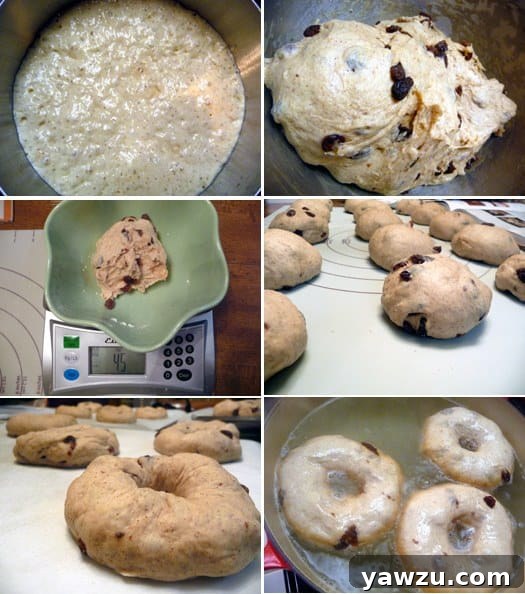
1. To make the sponge, stir the yeast into the flour in a 4-quart mixing bowl. Add the water, whisking or stirring only until it forms a smooth, sticky batter (like pancake batter). Cover the bowl with plastic wrap and leave at room temperature for approximately 2 hours, or until the mixture becomes very foamy and bubbly. It should swell to nearly double in size and collapse when the bowl is tapped on the countertop.
-
2. To make the dough, in the same mixing bowl, add the additional yeast to the sponge and stir. Then add 3 cups of the flour and all of the salt, malt, sugar and cinnamon. Stir (or mix on low speed with the dough hook) until the ingredients form a ball, slowly working in the remaining ¾ cup flour to stiffen the dough.
-
3. Transfer the dough to the counter and knead for at least 10 minutes (or for 6 minutes by machine), adding the raisins during the final 2 minutes. The dough should be firm, stiffer than French bread dough, but still pliable and smooth. There should be no raw flour – all the ingredients should be hydrated. The dough should pass the windowpane test and register 77° to 81°F. If the dough seems too dry and rips, add a few drops of water and continue kneading. If the dough seems tacky or sticky, add more flour to achieve the stiffness required. The kneaded dough should feel satiny and pliable but not be tacky.
-
4. Immediately divide the dough into 4½-ounce pieces for standard bagels. Form the pieces into rolls. Cover the rolls with a damp towel and allow them to rest for approximately 20 minutes.
-
5. Line 2 sheet pans with parchment paper and mist lightly with spray oil. Shape the bagels in one of the following two ways:
-
5a. Poke a hole in a ball of bagel dough and gently rotate your thumb around the inside of the hole to widen it to approximately 2½ inches in diameter. The dough should be as evenly stretched as possible (try to avoid thick and thin spots).
-
5b. Roll out the dough into an 8-inch-long rope. Wrap the dough around the palm and back of your hand, between the thumb and forefinger, overlapping the ends by several inches. Press the overlapping ends on the counter with the palm of your hand, rocking back and forth to seal.
-
6. Place each of the shaped pieces 2 inches apart on the pans. Mist the bagels very lightly with the spray oil and slip each pan into a food-grade plastic bag, or cover loosely with plastic wrap. Let the pans sit at room temperature for about 20 minutes.
-
7. Check to see if the bagels are ready to be retarded in the refrigerator by using the “float test”. Fill a small bowl with cool or room-temperature water. The bagels are ready to be retarded when they float within 10 seconds of being dropped into the water. Take one bagel and test it. If it floats, immediately return the tester bagel to the pan, pat it dry, cover the pan, and place it in the refrigerator overnight (it can stay in the refrigerator for up to 2 days). If the bagel does not float, return it to the pan and continue to proof the dough at room temperature, checking back every 10 to 20 minutes or so until a tester floats. The time needed to accomplish the float will vary, depending on the ambient temperature and the stiffness of the dough.
-
8. The following day (or when you are ready to bake the bagels), preheat the oven to 500°F with the two racks set in the middle of the oven. Bring a large pot of water to a boil (the wider the pot the better), and add the baking soda. Have a slotted spoon or skimmer nearby.
-
9. Remove the bagels from the refrigerator and gently drop them into the water, boiling only as many as comfortably fit (they should float within 10 seconds). After 1 minute flip them over and boil for another minute. If you like very chewy bagels, you can extend the boiling to 2 minutes per side. While the bagels are boiling, sprinkle the same parchment-lined sheet pans with cornmeal or semolina flour.
-
10. When all the bagels have been boiled, place the pans on the 2 middle shelves in the oven. Bake for approximately 5 minutes, then rotate the pans, switching shelves and giving the pans a 180-degree rotation. (If you are baking only 1 pan, keep it on the center shelf but still rotate 180 degrees.) After the rotation, lower the oven setting to 450°F and continue baking for about 5 minutes, or until the bagels turn light golden brown. You may bake them darker if you prefer.
-
11. Remove the pans from the oven and let the bagels cool on a rack for 15 minutes or longer before serving.
Calories:
406
kcal
,
Carbohydrates:
86
g
,
Protein:
11
g
,
Fat:
1
g
,
Sodium:
832
mg
,
Potassium:
325
mg
,
Fiber:
4
g
,
Sugar:
6
g
,
Vitamin A:
10
IU
,
Vitamin C:
1.4
mg
,
Calcium:
38
mg
,
Iron:
1.5
mg
Did you make this recipe?
We’d love to hear about your experience! Share your thoughts in the comments below, and don’t forget to snap a picture and tag @thebrowneyedbaker on Instagram so we can see your delicious creations!
Michelle Lettrich
Bread
American
Explore More Delicious Breakfast & Brunch Options:
- Classic Plain Bagel Recipe from Peter Reinhart
- Savory Bacon, Cheddar, and Green Onion Scones
- Omelet for Two (Perfect for a cozy morning!)
- Fluffy Buttermilk Pancakes
- Indulgent French Toast
- Hearty Baked Oatmeal