
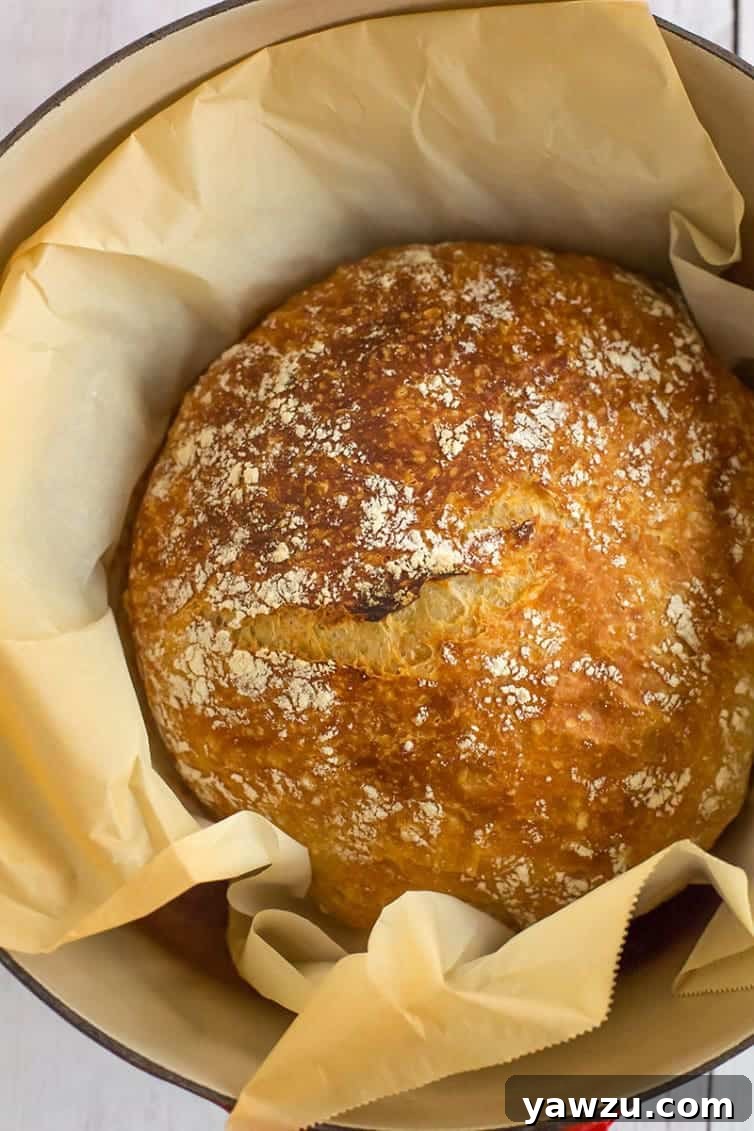
Mastering Artisan-Style Bread at Home: The Effortless Jim Lahey No-Knead Method
Craving the rich aroma and satisfying crunch of a perfectly baked loaf, but intimidated by traditional bread-making? Look no further than the revolutionary no-knead bread recipe, a culinary revelation popularized by Jim Lahey. This classic method simplifies the art of baking, requiring minimal hands-on effort while delivering an artisan-quality loaf that will impress even the most discerning palates. It’s an ideal starting point for beginner bakers, transforming what many consider a complex process into an enjoyable and accessible kitchen adventure.
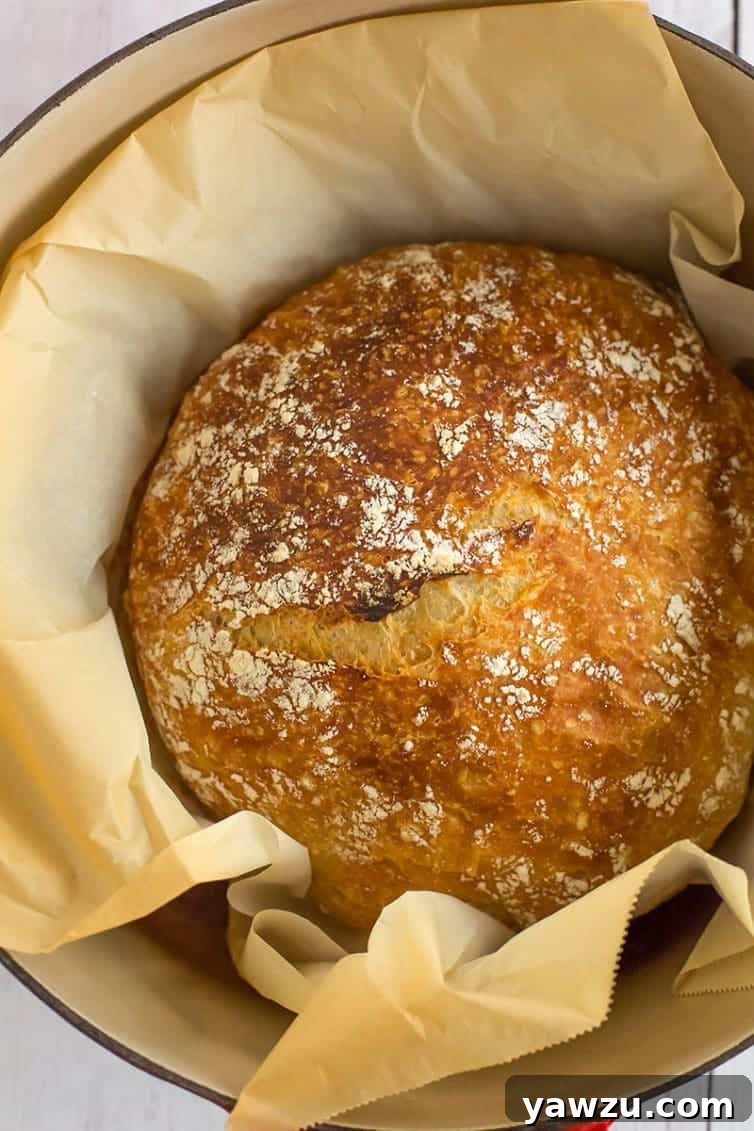
The concept of “no-knead” might sound too good to be true for anyone familiar with the laborious kneading process often associated with bread making. Yet, this ingenious approach leverages time and moisture to develop gluten, the protein network that gives bread its structure and chewiness. Instead of physical manipulation, a long fermentation period does all the heavy lifting, allowing the dough to slowly develop flavor and texture. This makes it a perfect fit for busy schedules, as most of the work happens while you’re away, sleeping, or tending to other tasks.
The Jim Lahey Phenomenon: A Recipe that Changed Baking
For years, home bakers and culinary enthusiasts have been captivated by the no-knead bread trend. At its heart lies the groundbreaking recipe developed by Jim Lahey of Sullivan Street Bakery in New York City. First published in The New York Times by food writer Mark Bittman, Lahey’s method quickly gained viral fame, transforming countless kitchens into artisanal bakeries. The recipe’s success lies in its elegant simplicity: just four basic ingredients—flour, yeast, salt, and water—combined with a generous amount of time for a slow, hands-off fermentation. This approach not only eliminates the need for kneading but also creates a rustic, deeply flavorful loaf with an incredibly crisp crust and an airy, open crumb, mirroring the characteristics of high-end bakery bread.
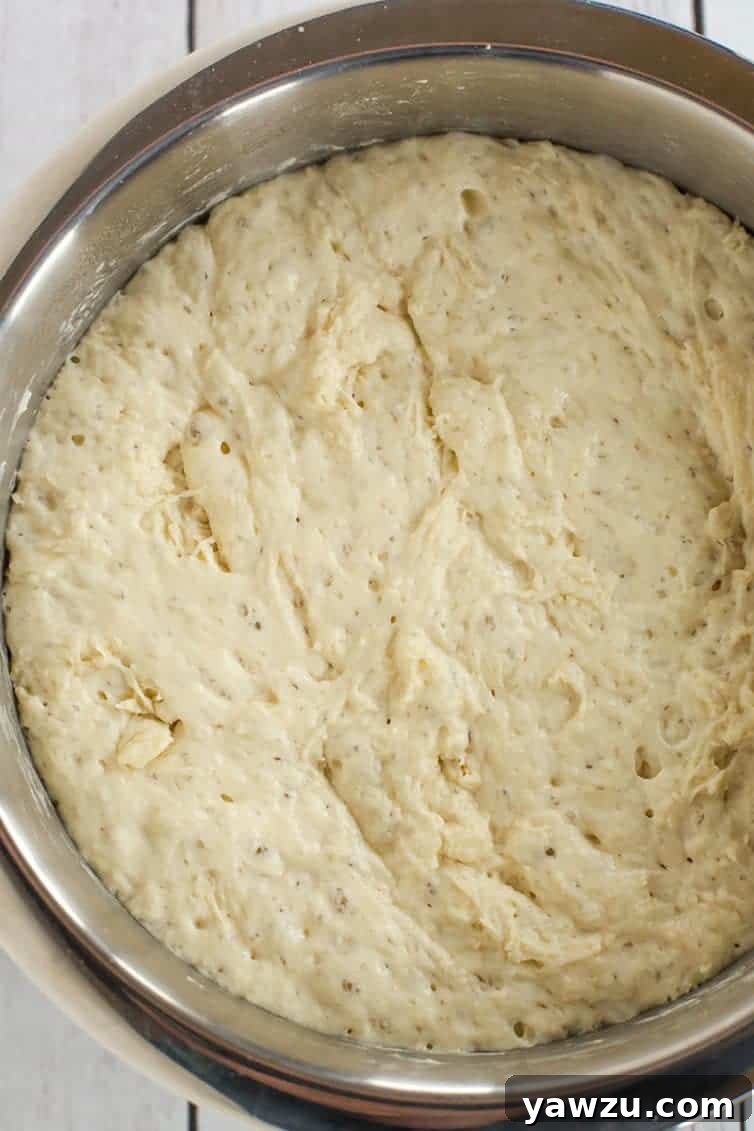
My own journey into the world of no-knead bread began recently, intrigued by the countless glowing reviews and the promise of minimal hands-on time. As a busy individual balancing various commitments, a recipe that fits seamlessly into existing routines – like after putting children to bed or during nap times – was incredibly appealing. The sheer simplicity of mixing ingredients in under 10 minutes and letting time do the rest felt revolutionary. I combined the dough around 7:30 PM, after the kids were settled, and let it rest overnight, until approximately 10:30 AM the following morning. This extended fermentation, lasting between 12 to 18 hours, is crucial. It’s during this period that the magic truly happens, as the yeast slowly works its wonders, developing complex flavors and a unique texture that simply cannot be rushed.
The Science of Slow Fermentation: Why Time is Your Best Ingredient
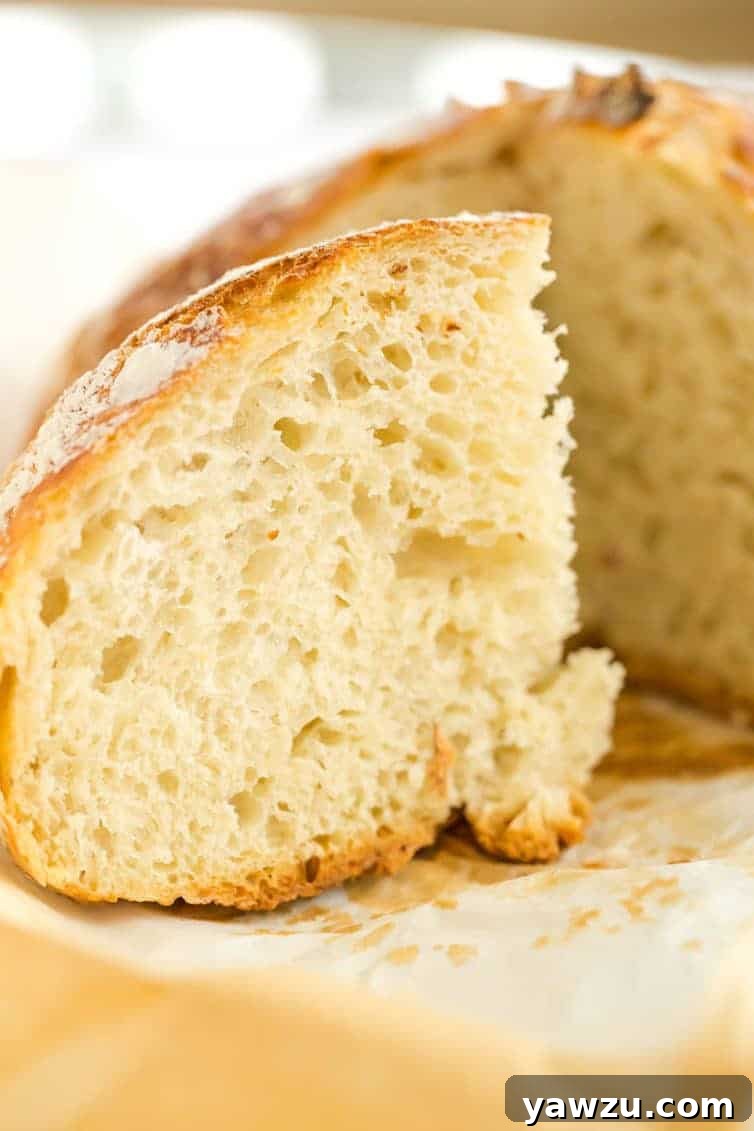
The lengthy first rise, typically 12 to 18 hours, is the cornerstone of the no-knead method. Unlike traditional bread recipes that demand vigorous kneading to develop gluten, this technique relies on a concept called autolysis, where flour and water mix and begin to form gluten bonds on their own, aided by the yeast and salt. The slow fermentation allows the yeast to produce more complex organic acids and alcohols, contributing to a deeper, more nuanced flavor profile. It also helps to create those characteristic large, irregular holes (alveoli) in the crumb, giving the bread an authentic, rustic appearance and a delightful chew. The dough’s surface will be alive with small bubbles, a clear indicator that the fermentation process is thriving and your dough is ready for the next step.
Once the initial long rise is complete, the remaining steps are surprisingly straightforward. You’ll gently turn the bubbly, shaggy dough out onto a lightly floured surface. A few simple folds—just enough to help organize the gluten structure without deflating the precious air pockets—and a brief 15-minute rest are all that’s required. This brief pause allows the gluten to relax, making the dough easier to handle. Following this, a quick shaping into a loose ball prepares it for its final rise, or “proof,” which typically takes around two hours. This final rise refines the dough’s structure and ensures a light, airy texture in the finished loaf.
Baking Brilliance: The Dutch Oven Advantage
The secret to achieving that irresistible, crackly crust and perfectly baked interior lies in a heated Dutch oven. The original Jim Lahey recipe suggests placing the dough on a floured towel for its final rise, then somewhat awkwardly flipping it into the preheated pot. However, through my own research and a consensus among many experienced no-knead bakers, a simpler and safer approach emerged: using parchment paper. By lining a bowl with parchment paper for the final proof, you can easily lift the dough directly into the scorching hot Dutch oven, significantly reducing the risk of burns and ensuring a smooth transfer. This minor modification makes the baking process much more manageable, especially for those new to working with hot cookware.
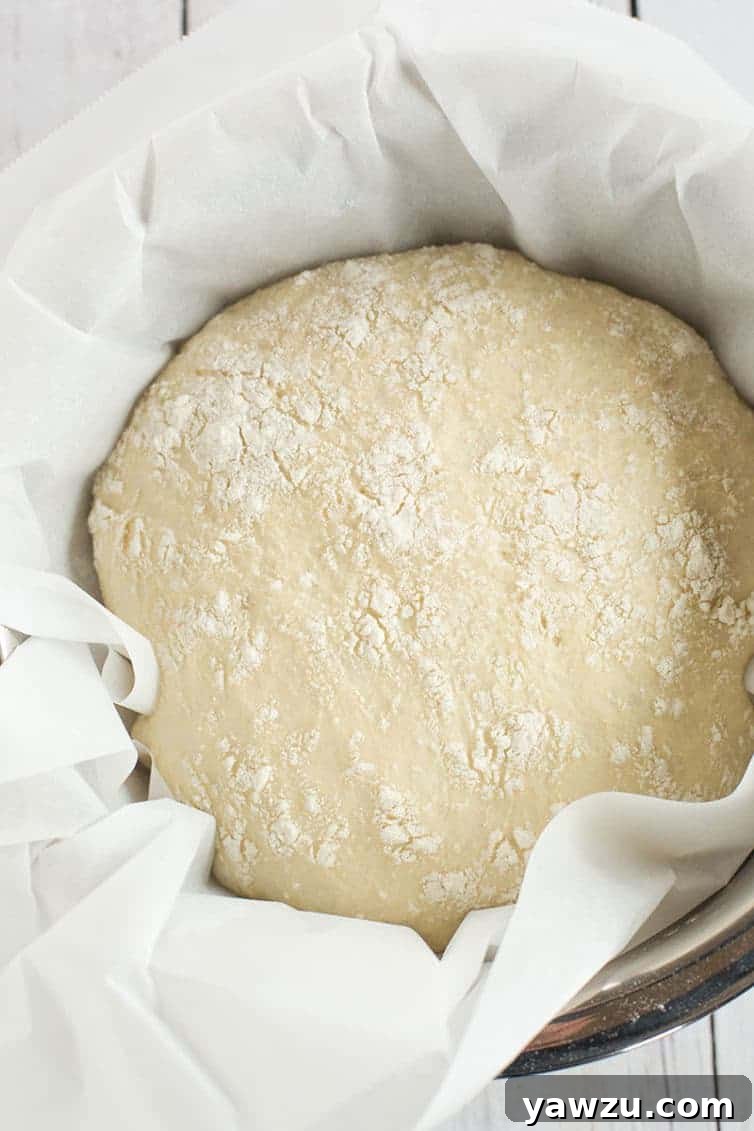
The Dutch oven plays a pivotal role in this recipe’s success. Preheating the pot to a high temperature, typically 450 degrees Fahrenheit, creates an incredibly hot environment that immediately sets the crust, promoting a dramatic “oven spring.” The sealed lid traps steam released by the dough as it bakes. This moist environment prevents the crust from forming too quickly, allowing the bread to fully expand and develop a thin, chewy crust rather than a thick, tough one. After an initial covered bake, removing the lid allows the steam to escape, enabling the crust to crisp up and achieve that beautiful, deep golden-brown hue. This two-stage baking process is what gives no-knead bread its signature artisan qualities.
The Irresistible Result: A Loaf to Savor
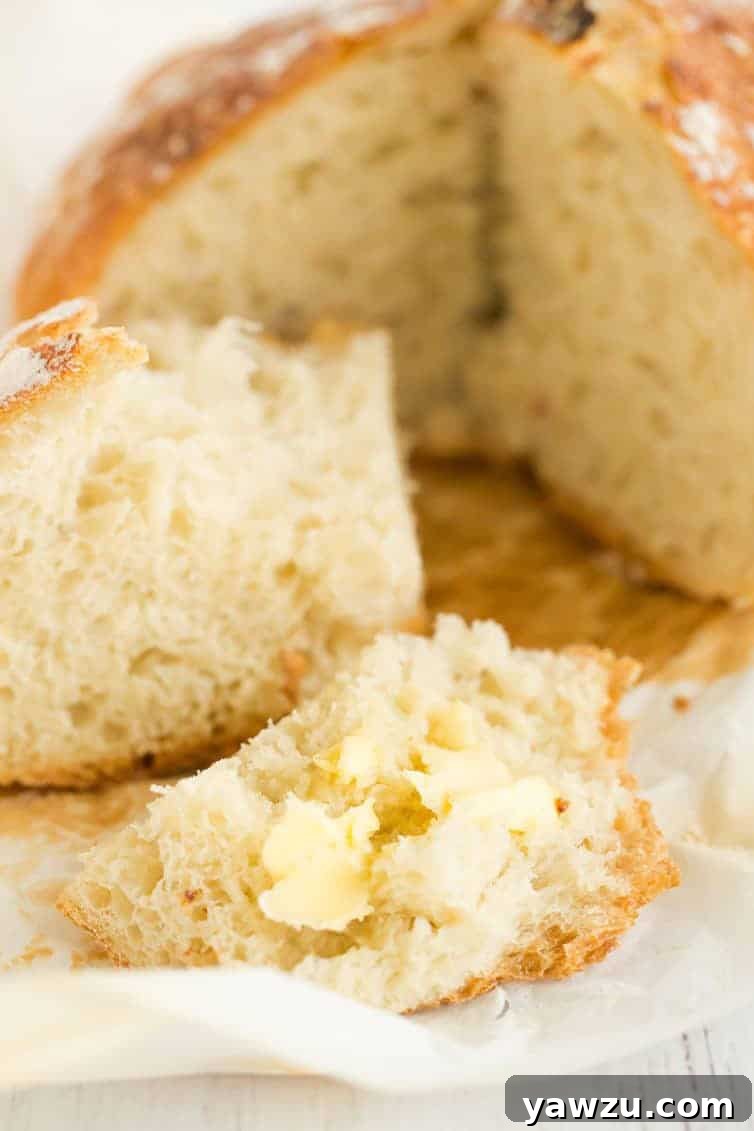
The outcome of this minimal-effort process is nothing short of spectacular: a magnificent, artisan-style loaf that required perhaps 15 minutes of active, hands-on time from start to finish. The exterior boasts a deep, golden-brown crust that shatters delightfully with each bite, giving way to a soft, airy, and wonderfully chewy interior. This texture, combined with the complex, slightly tangy flavor developed during the long fermentation, elevates it far beyond a simple everyday bread.
While I cherish my go-to classic white bread recipe (a staple in our freezer), Jim Lahey’s no-knead bread occupies a special place for its unique characteristics. Its robust structure and satisfying texture make it the quintessential bread for sopping up rich soups, hearty stews, or spicy chili. It’s equally divine simply slathered with butter for an indulgent afternoon treat or alongside a cheese board for a sophisticated appetizer. After years of admiring from afar, this no-knead sensation has undeniably earned a permanent spot on my list of favorite bread recipes. Its ease, versatility, and exceptional quality make it a must-try for anyone seeking the joy of homemade bread without the traditional fuss.
Watch How to Make No Knead Bread
For a visual guide to this incredible recipe, watch the step-by-step video tutorial:
If the video does not load, you can often find tutorials by searching for “Jim Lahey No Knead Bread” on YouTube.
No Knead Bread Recipe
No Knead Bread
Yield: 12 servings (1 loaf)
Prep Time: 30 mins
Cook Time: 45 mins
Resting time: 20 hrs
Total Time: 1 hr 15 mins (excluding resting time)
This classic recipe from Jim Lahey is easy, requires minimal handling, and is a great recipe for beginner bread bakers.
Average Rating: 4.53 (based on 17 ratings)
Pin Recipe
Ingredients
- 3 cups (375 g) all-purpose flour
- ¼ teaspoon (0.25 teaspoon) instant yeast
- 1½ teaspoons (1.5 teaspoons) salt
- 1½ cup (350 ml) + 2 tablespoons water
Instructions
- In a large bowl, stir together the flour, yeast, and salt until well combined. Add the water and stir with a wooden spoon until all of the flour is moistened. The dough will be quite shaggy and sticky. Cover the bowl tightly with plastic wrap and let it rest at warm room temperature for 12 to 18 hours.
- The dough is ready when its surface is visibly covered in numerous small bubbles. Lightly flour a clean work surface and gently turn the dough out onto it. Sprinkle a little more flour over the dough and carefully fold the edges over onto itself twice, forming a loose, round shape. Cover the dough loosely with plastic wrap or a clean kitchen towel and let it rest for 15 minutes. This allows the gluten to relax.
- Using just enough flour to prevent sticking, quickly shape the dough into a cohesive ball. Place a sheet of parchment paper in a large bowl, then carefully transfer the shaped dough onto the parchment paper. Lightly dust the top of the bread with additional flour and cover it with a clean kitchen towel. Allow the dough to rise for its final proof until it has more than doubled in size and does not immediately spring back when gently poked with a finger, typically about 2 hours.
- At least 30 minutes before the dough is ready for baking, place a large 6 to 8-quart Dutch oven (with its lid) in the oven and preheat it to 450 degrees F (232 degrees C). This ensures the pot is extremely hot, creating the perfect environment for baking.
- Once the dough is fully proofed and the Dutch oven is preheated, carefully lift the edges of the parchment paper (with the dough) from the bowl and gently transfer it into the scorching hot Dutch oven. Cover the Dutch oven with its lid and bake for 30 minutes. After 30 minutes, remove the lid and continue to bake for an additional 15 to 30 minutes, or until the crust achieves a beautiful deep golden brown color. Carefully remove the bread from the Dutch oven using the parchment paper and transfer it to a wire rack to cool completely before slicing and serving. Serve warm or at room temperature.
Notes
- For a denser, chewier loaf of bread with a more robust structure, you can substitute bread flour for all-purpose flour.
- Ensuring your water is at a consistent, warm room temperature (around 70-75°F or 21-24°C) can help the yeast activate effectively without being too hot or cold.
- The longer fermentation time (closer to 18 hours) often results in a more complex flavor and a more open crumb structure.
- Cooling the bread completely before slicing is crucial. Slicing warm bread can lead to a gummy texture inside.
Nutrition Information (per serving)
Calories: 114kcal
Carbohydrates: 23g
Protein: 3g
Sodium: 293mg
Potassium: 33mg
Calcium: 6mg
Iron: 1.5mg
Nutritional values are approximate and based on one serving (1/12 of the loaf).
Did you make this recipe?
Leave a review below and share your creation! Tag @thebrowneyedbaker on Instagram so I can see your delicious bread!
Author: Michelle Lettrich
Course: Bread
Cuisine: American
More Favorite Bread Recipes to Explore
If you’ve fallen in love with homemade bread after trying the no-knead method, you’ll be thrilled to discover more delightful recipes to expand your baking repertoire. From cheesy delights to classic staples, there’s a world of bread waiting to be baked:
- Spicy Cheese Bread
- Milk Bread Recipe
- Ciabatta Bread
- Easy White Bread Recipe
- Italian Bread