
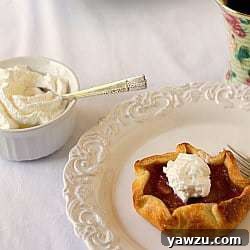
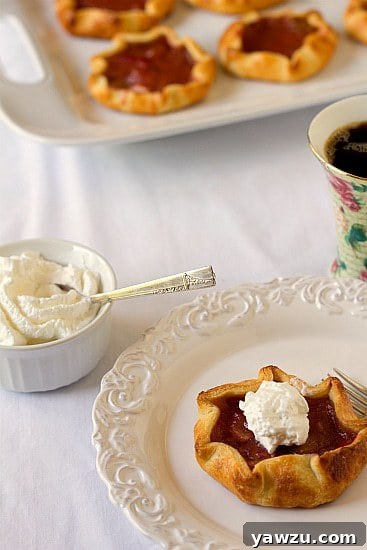
Discovering Rhubarb: A Journey to Irresistible Cornmeal Pie-Tartlets
Are you ready for a truly honest foodie confession? My first encounter with the delightful world of rhubarb, both as an ingredient to eat and to bake with, happened just last year. Yes, you read that right – only recently did this vibrant, sweet-tart stalk cross my culinary path!
It sounds almost unbelievable, doesn’t it? For so long, rhubarb remained completely off my radar. Growing up, our family kitchen wasn’t a hub for elaborate pie baking. My mom and grandma, while incredible cooks, never ventured into the realm of rhubarb or classic strawberry-rhubarb pies. As someone with a wholly Italian heritage, my grandfather’s expansive garden overflowed with robust tomatoes, crisp green beans, vibrant peppers, and fresh lettuce, but never a single stalk of rhubarb.
Fortunately, my Chief Culinary Consultant, a true connoisseur of all things delicious, became my guide. He enchanted me with vivid tales of the ethereal strawberry-rhubarb pies his grandmother used to lovingly prepare. These stories sparked a newfound curiosity within me. I immersed myself in recipes, and before I knew it, I was holding beautiful pink stalks, ready to embark on my very first strawberry-rhubarb pie. The experience was a resounding success! I absolutely fell in love with its unique flavor profile, and from that moment, I knew I had to spread my rhubarb wings and explore its full potential.
The Secret to a Superior Crust: Cornmeal Pâte Brisée
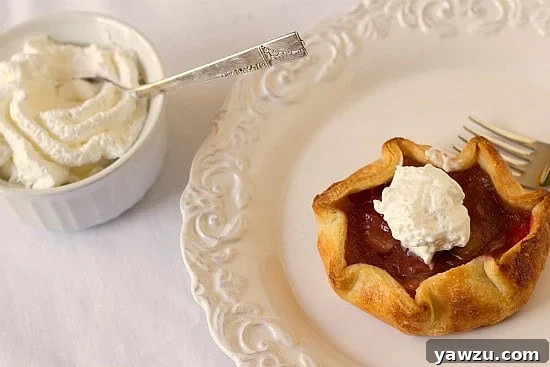
In my quest for innovative rhubarb creations, I stumbled upon a truly unique pastry crust recipe in my beloved Martha Stewart Baking Handbook. What caught my eye immediately was the inclusion of cornmeal. This simple addition promised a distinctive texture and depth of flavor that intrigued me. Martha had originally designed this crust for a mixed fruit galette, but I instantly envisioned it as the perfect foundation for our beloved rhubarb, especially in charming, rustic mini tartlets. It was an opportunity to create something truly different, yet undeniably delicious.
Traditional pie crusts, while wonderful, often rely solely on flour for their structure. The cornmeal, however, introduces a subtle, earthy sweetness and a delightful grittiness that elevates the entire experience. It creates a remarkably flaky and buttery base, offering a faint but satisfying crunch with every bite. This unique characteristic makes it an ideal counterpart to the vibrant tang of rhubarb, providing a textural contrast that makes these tartlets truly stand out. The process of making this pâte brisée, while requiring a bit of patience to keep the butter cold, is well worth the effort for the exceptional results it yields. The delicate balance of ingredients ensures a crust that is robust enough to hold the juicy filling yet melts in your mouth.
Crafting the Perfect Rhubarb Filling: Sweet-Tart Harmony in Every Bite
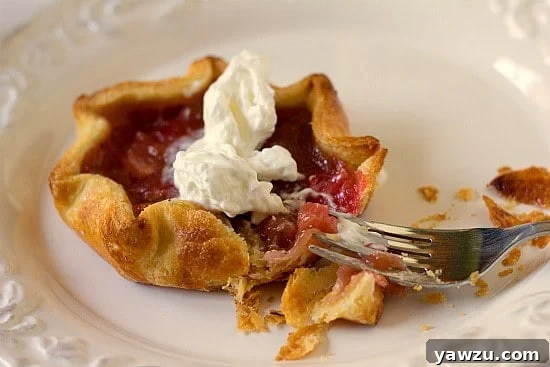
Developing the ideal rhubarb filling for these mini tartlets was a journey of careful testing and a few delightful errors. My primary challenge was finding that sweet spot in consistency. I knew from the outset that simply using raw rhubarb, as one might for a larger pie, wouldn’t work. The smaller tartlets wouldn’t allow enough cooking time for the rhubarb to soften adequately and release its juices into a luscious filling. On the other hand, I didn’t want to create a compote where the rhubarb was completely broken down and indistinguishable. The goal was a filling that maintained some texture, offering tender pieces of rhubarb suspended in a rich, flavorful sauce.
After several attempts, I found the perfect compromise. The solution involved pre-cooking the rhubarb slightly, similar to how one might begin a pie filling, but just enough to encourage it to soften and release its natural liquids. This gentle cooking process allowed the rhubarb to break down partially, creating a thick, chunky sauce that retained its integrity without becoming mushy. The vibrant pink hue of the rhubarb also intensified beautifully during this process, promising a visually appealing and delicious interior for our tartlets. This method ensured that the filling would be perfectly cooked and beautifully set once baked inside the individual crusts, striking that impeccable balance between tart and sweet that makes rhubarb so uniquely appealing.
Assembling Your Mini Rhubarb Masterpieces
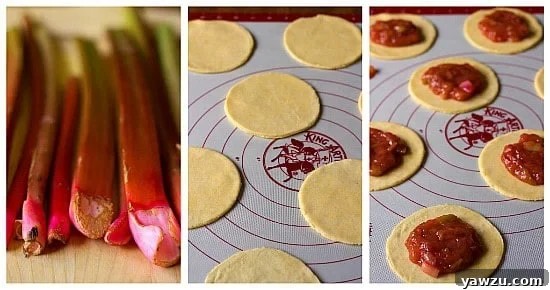
Once you have both your flaky cornmeal crust and your perfectly balanced rhubarb filling prepared, the assembly of these mini pie-tartlets is a simple and rewarding process. The chilled dough is crucial for easy handling and achieving that desired flaky texture. Rolling it out into even, thin circles requires a light hand and a lightly floured surface. Using a 5-inch cutter or even an upside-down bowl ensures uniform tartlet bases, which are then carefully transferred to a parchment-lined baking sheet. This chilling step for the cut dough is important; it helps the crust maintain its shape during baking and prevents excessive shrinkage.
Filling the tartlets is where the magic truly comes alive. Each dough round receives a generous spoonful of the cooled rhubarb mixture, ensuring a delightful burst of flavor in every bite. It’s important to leave a small border around the edge of the dough, about an inch, to allow for the rustic folding. This creates the signature open-faced, free-form look of these tartlets, distinct from traditional pies. The edges are then gently folded over the filling, creating charming overlaps that are pressed together to seal. A brush of egg wash and a sprinkle of sanding sugar before baking add a beautiful golden sheen and an extra touch of sweetness and sparkle to the finished crust, making them as visually appealing as they are delicious.
Baking Tips for Golden Perfection
Baking these rhubarb pie-tartlets is relatively quick, but a few pointers can ensure stellar results. Preheat your oven to 375 degrees Fahrenheit (190 degrees Celsius) to ensure a hot baking environment that will quickly set the crust and help it achieve that desirable golden brown. Keep a close eye on the tartlets as they bake; ovens can vary, and you want to catch them just as the crust turns a beautiful golden hue and the rhubarb filling starts to bubble enticingly. This bubbling indicates that the filling is thoroughly heated and thickened. Typically, this takes between 20 to 25 minutes. Avoid overbaking, as it can lead to a dry crust or an overly firm filling.
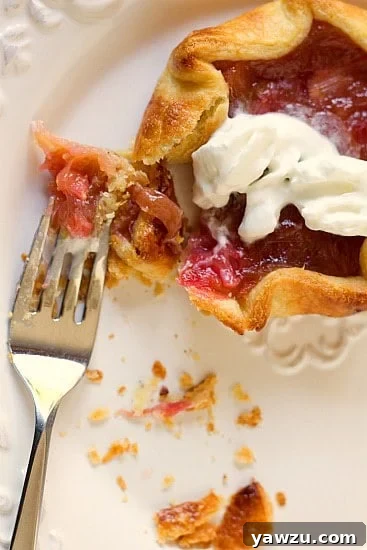
Once baked, allow the tartlets to cool slightly on the baking sheet before transferring them to a wire rack. They are absolutely delightful served warm, allowing the buttery crust and warm, tangy filling to shine. However, they are equally enchanting at room temperature, making them a perfect make-ahead dessert for entertaining or a lovely afternoon treat. The subtle crunch from the cornmeal in the crust and the vibrant, sweet-tart rhubarb filling create a harmonious symphony of textures and flavors that will undoubtedly captivate your taste buds.
Serving Suggestions and Storage
These rhubarb pie-tartlets are wonderfully versatile when it comes to serving. For an ultimate dessert experience, pair them with a dollop of freshly whipped cream, its cool, airy sweetness providing a perfect counterpoint to the tart rhubarb. A scoop of rich vanilla bean ice cream melting slightly over a warm tartlet is another heavenly combination. For a more sophisticated touch, consider a light dusting of powdered sugar or a sprinkle of toasted almonds for added crunch.
Leftover tartlets, if there are any, can be stored at room temperature in an airtight container for up to 2 days, or refrigerated for up to 4 days. They are delicious cold, but can also be gently reheated in a low oven for a few minutes to bring back that freshly baked warmth. The dough itself is also incredibly forgiving and suitable for making ahead. The recipe notes that the dough can be wrapped tightly in plastic and frozen for up to three weeks, offering a convenient option for future baking endeavors. This makes these rhubarb pie-tartlets an excellent choice for batch baking or when you simply want to enjoy a seasonal treat without extensive prep on the day of serving.
Every time I lay my eyes on a beautifully baked rhubarb creation, my mind instantly conjures images of “pretty in pink” – a hue that is as inviting as the flavor itself. I simply adore the color that rhubarb lends to any dessert, and these tartlets are no exception. They are a celebration of spring and early summer, capturing the essence of the season in every delightful bite. Enjoy this wonderful recipe, and let the vibrant taste of rhubarb brighten your day!
One year ago: Best Guacamole Recipe
Two years ago: Coconut Chocolate Chunk Blondies
Three years ago: Lighter Chicken Parmesan
Rhubarb Pie-Tartlets
8 tartlets
1 hr
20 mins
2 hrs
3 hrs 20 mins
Delicious mini tarts filled with a sweet-tart rhubarb mixture, nestled in a unique cornmeal crust.
Pin Recipe
Ingredients
For the Cornmeal Pâte Brisée Crust:
- 2 cups (250 g) all-purpose flour
- ½ cup (79.5 g) cornmeal
- 1 teaspoon salt
- 1 teaspoon granulated sugar
- 1 cup (227 g) unsalted butter, cold, cut into small pieces (8 ounces)
- ¼ to ½ cup (60 to 120 ml) ice water
For the Rhubarb Filling:
- 1 to 1½ pounds (450 to 680 g) rhubarb, about 5 cups ½-inch diced
- ½ cup (100 g) granulated sugar
- ¼ cup (55 g) light brown sugar
- ¼ cup (32 g) cornstarch
- ¼ teaspoon (0.25 teaspoon) salt
- ½ teaspoon (0.5 teaspoon) vanilla extract
- 1 egg, lightly beaten (for the egg wash)
- Sanding sugar or granulated sugar, for sprinkling
Instructions
- Prepare the Crust: In the bowl of a food processor, combine the flour, cornmeal, salt, and granulated sugar. Pulse several times until well combined. Add the cold, cubed butter and process until the mixture resembles coarse meal, which usually takes about 10 seconds. With the machine running, slowly pour the ice water through the feed tube in a steady stream until the dough just begins to come together. Be careful not to over-process, ideally no more than 30 seconds. Turn the dough out onto a clean work surface, divide it in half, and flatten each half into a disk. Wrap each disk tightly in plastic wrap and refrigerate for at least 1 hour, or until firm.
- Make the Rhubarb Filling: While the crust is chilling, prepare the rhubarb filling. In a medium saucepan, combine the diced rhubarb, both granulated and light brown sugars, cornstarch, and salt. Place the saucepan over medium-low heat. Cook, stirring occasionally, until the rhubarb releases its liquid and begins to soften and break down, forming a thick, chunky sauce. This process typically takes about 10 minutes. Remove the pan from the heat and stir in the vanilla extract. Set the filling aside to cool completely to room temperature.
- Roll and Cut Dough: Once the dough is thoroughly chilled, take one disk at a time and roll it out on a lightly floured surface into a 14-inch circle. Using a 5-inch round cutter or an inverted bowl as a guide, cut out circles from the dough. Carefully transfer these dough circles to a large, parchment-lined baking sheet. Repeat with the second dough disk. Refrigerate the cut dough circles for at least 1 hour. Meanwhile, preheat your oven to 375°F (190°C).
- Assemble the Tartlets: Spoon the cooled rhubarb filling into the center of each chilled dough round. Use approximately 2 generous spoonfuls, ensuring you leave about a 1-inch border around the edge of the dough. Gently fold the border of the dough over the rhubarb mixture, overlapping the edges as needed and pressing lightly to help them adhere.
- Bake to Perfection: Brush the folded edges of the dough with the lightly beaten egg wash, then generously sprinkle with sanding sugar or granulated sugar for a beautiful sparkle and a touch of sweetness. Bake the tartlets in the preheated oven for 20 to 25 minutes, or until the crust is golden brown and the rhubarb filling is bubbly and tender.
- Serve and Enjoy: Remove the tartlets from the oven and let them cool slightly on the baking sheet before transferring them to a wire rack. Serve them warm or at room temperature. For an extra special treat, top with a dollop of whipped cream or a scoop of vanilla ice cream.
*Note: The prepared dough disks can be frozen, wrapped well in plastic wrap, for up to three weeks before use. Thaw overnight in the refrigerator before rolling.
Nutrition Information (per serving)
- Calories: 458kcal
- Carbohydrates: 55g
- Protein: 5g
- Fat: 24g
- Saturated Fat: 14g
- Cholesterol: 81mg
- Sodium: 379mg
- Potassium: 129mg
- Fiber: 2g
- Sugar: 20g
- Vitamin A: 755IU
- Vitamin C: 1.2mg
- Calcium: 32mg
- Iron: 1.9mg
Did you make this recipe?
Leave a review below, then snap a picture and tag @thebrowneyedbaker on Instagram so I can see it!
Michelle Lettrich
Dessert
American