
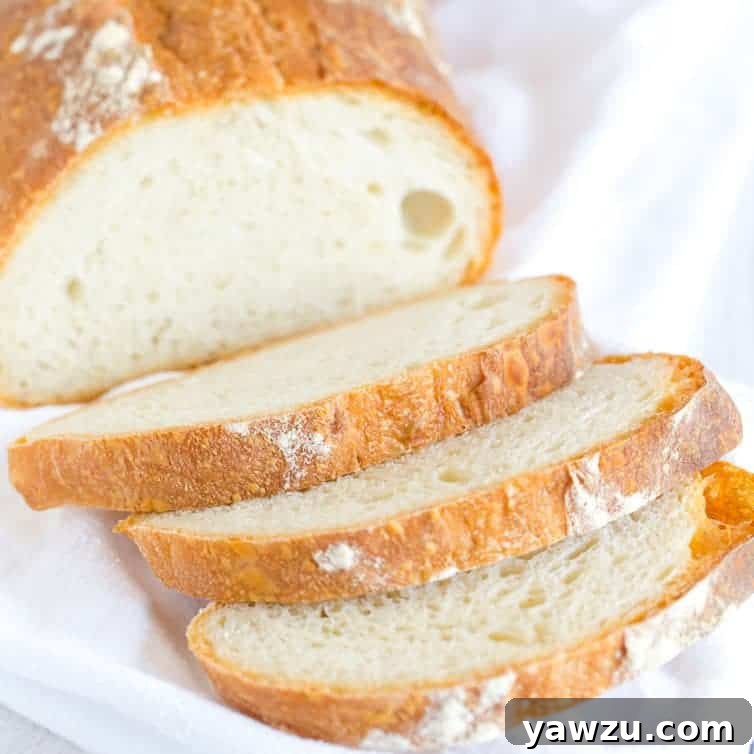
There’s an undeniable joy that comes from baking bread at home. The intoxicating aroma that fills your kitchen, the comforting warmth of a fresh loaf, and the unparalleled taste of perfectly crafted crusty bread are simply irresistible. For any true carb enthusiast, a good loaf of bread, especially when paired with creamy, unsalted butter, isn’t just a side dish; it’s a sublime meal in itself. And when it comes to classic Italian comfort, few things can match the experience of tearing into a slice of authentic, rustic Italian bread.
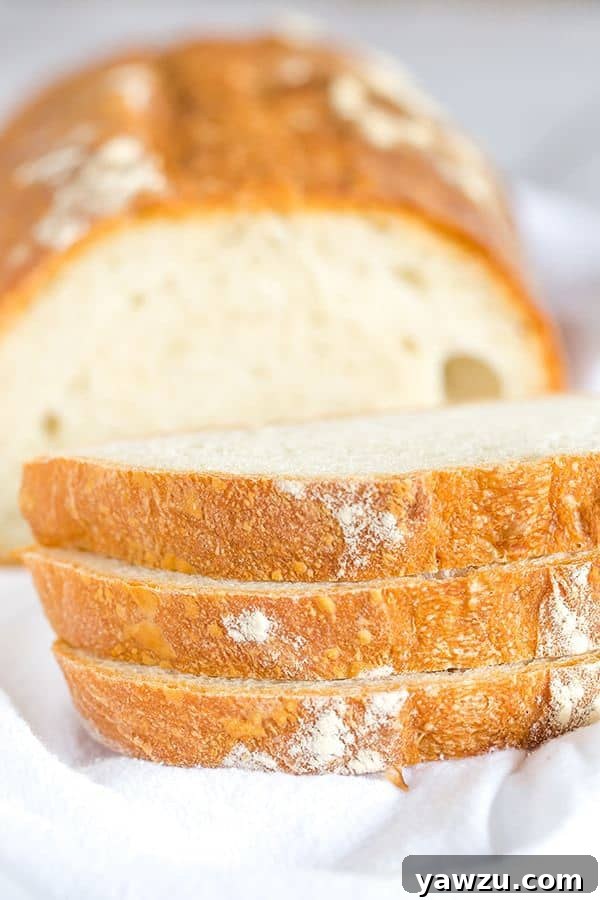
For me, the cherished memories of Sunday dinners always include a generous slice of crusty Italian bread, strategically placed to soak up every last drop of rich spaghetti sauce. It’s a tradition that evokes deep warmth and satisfaction, a simple pleasure that defines comfort food. While I often find myself baking my reliable white bread recipe every couple of weeks, there are specific moments when only a truly authentic, rustic Italian loaf will do. This particular recipe, drawing on time-honored techniques, absolutely hit the spot, delivering a bread that’s both wonderfully chewy on the inside and satisfyingly crisp on the outside.
Authentic Rustic Italian Bread: The Secret to a Perfect Crust and Chewy Crumb
Unlocking Deep Flavor: The Magic of the Overnight Sponge
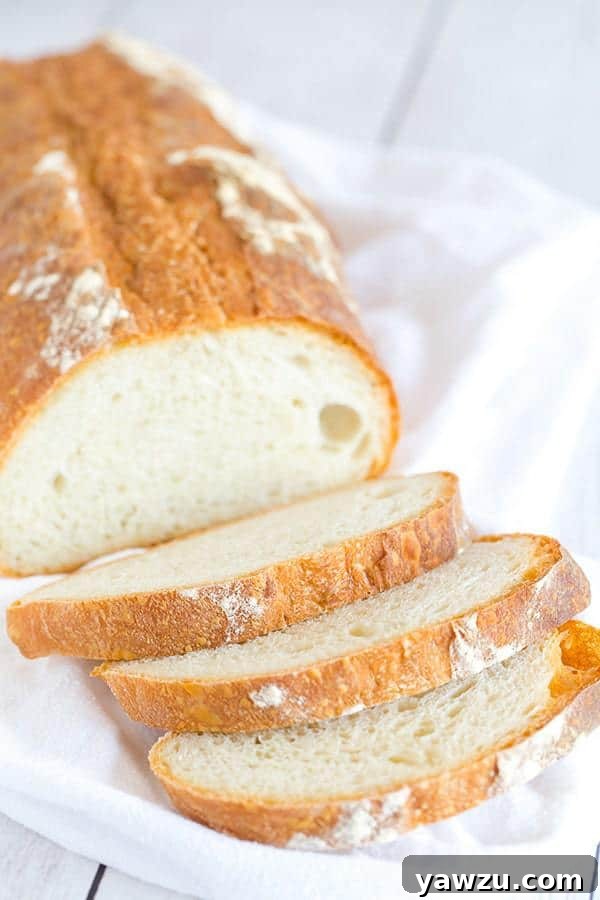
Crafting exceptional Italian bread isn’t merely about combining flour, water, and yeast; it’s a meticulous process deeply rooted in time and specific techniques. While I’ve previously shared a delightful quicker Italian bread recipe, this particular approach ventures into the realm of traditional baking, prioritizing flavor development and an exquisite texture through the essential use of an overnight sponge. This method, often referred to as a pre-ferment or ‘biga’ in classic Italian baking, stands as the secret weapon for achieving the characteristic open crumb and the wonderfully shatteringly crisp crust synonymous with the very best artisanal Italian loaves.
The sponge is essentially a small, wet starter dough that you prepare a full day before you intend to bake the final loaf. By allowing this initial mixture of flour, water, and a tiny amount of yeast to ferment slowly over many hours, typically in the cool environment of a refrigerator, you encourage the yeast to develop a remarkable spectrum of complex flavors and aromatic compounds that simply cannot be replicated by rushing the process. This extended, cold fermentation process diligently breaks down starches into more intricate sugars, providing a sustained food source for the yeast and leading to a richer, more nuanced taste profile. Simultaneously, it significantly strengthens the gluten network, which is vital for that signature tender, airy, and open crumb structure. The collective result is a bread with an incredibly tender interior and a distinctive depth of flavor that unequivocally sets it apart from any quickly prepared loaf.
My quest for this rustic Italian bread masterpiece ultimately led me back to a trusted culinary companion that has never failed me: my cherished Baking Illustrated book. Renowned for its meticulous testing, scientific insights, and detailed explanations of baking principles, it offered a superb recipe for rustic Italian bread that promised to deliver on all fronts: texture, flavor, and appearance. Embracing this method, though requiring a degree of patience and foresight, truly transforms not only the baking experience itself but also the exceptional quality of the final product.
Patience Rewarded: Planning for Your Perfect Loaf
Let’s be completely transparent: this isn’t a spontaneous, whip-it-up-in-an-hour kind of baking project. This rustic Italian bread recipe is a commitment that genuinely demands a bit of planning and forethought, but I assure you, every moment of anticipation and effort is richly rewarded with a loaf of unparalleled quality. You will need to initiate the sponge preparation the day before you intend to bake, as it requires a significant period of fermentation and chilling. Then, on the actual baking day, you’ll need to allocate approximately 7 hours from the moment you begin mixing the main dough to the glorious instant your magnificent, aromatic loaf is ready to be sliced and enthusiastically devoured.
If your current schedule demands a quicker bread solution, perhaps for an impromptu dinner or a sudden craving, you might find my other Italian bread recipe, which delivers a delicious result in just a couple of hours, more suitable. However, for those special occasions, for a weekend baking project, or simply for the pure satisfaction of mastering a truly exceptional bread, this recipe offers an incredibly gratifying culinary adventure. It’s more than just baking; it’s a profound connection to the timeless art of bread making, transforming simple, humble ingredients into something truly extraordinary through patience and skill. The effort involved is not just in the active steps of mixing and kneading, but crucially in the waiting – allowing nature, time, and fermentation to collaboratively work their magic, meticulously building layers of complex flavor and desirable texture that unequivocally define truly great, artisanal bread.
The Mark of a Masterpiece: Unrivaled Crust, Crumb, and Versatility
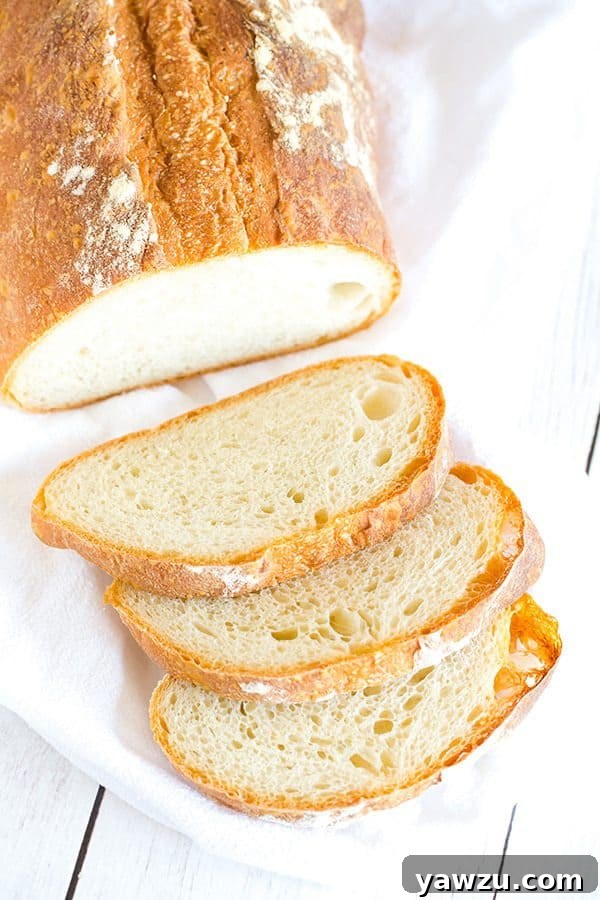
The culmination of your patience, meticulous effort, and dedication will be a single, impressive loaf of rustic Italian bread that proudly boasts all the hallmarks of a professional, artisanal bake. Imagine a crust that audibly shatters and crackles with each bite, a testament to its perfect crispness, giving way to an interior that is wonderfully airy, delicately soft, and yet satisfyingly chewy. This isn’t just bread; it’s a sensory experience, a celebration of texture and taste that will elevate any meal.
This exquisite texture and robust flavor make this bread incredibly versatile and an indispensable companion in your kitchen. It is, without a doubt, the ultimate partner for a rich, slow-simmered marinara sauce, eagerly soaking up every delectable drop left on your plate after a hearty pasta dish. It’s equally at home nestled beside a steaming bowl of nourishing minestrone, a robust lentil soup, or a creamy tomato bisque, ensuring no flavorful remnant is left behind in your bowl. Beyond its impeccable role as a mop for delicious sauces and hearty soups, this bread stands majestically strong entirely on its own. Slice it generously thick, slather it with your favorite creamy, perfectly salted butter, and you have a simple yet profoundly satisfying lunch that requires no further embellishment. Don’t worry, I certainly won’t judge you – some culinary pleasures are truly best enjoyed in their purest, most unadulterated form.
But the culinary possibilities for this remarkable bread extend far beyond these classic pairings. Consider transforming any leftover slices into delectable bruschetta, adorned with fresh, ripe tomatoes, fragrant basil, and pungent garlic. Or utilize its sturdy, yet tender structure as the ideal base for gourmet sandwiches, where its robust flavor can beautifully complement premium deli meats, artisan cheeses, and crisp vegetables. Its impressive structure also makes it an excellent candidate for a vibrant panzanella salad, or simply for tearing and dipping into a high-quality olive oil infused with a medley of aromatic herbs. This bread is meticulously designed to be savored in a myriad of imaginative ways, guaranteeing its place as a cherished staple in your home baking repertoire. Each bite tells a story of tradition, patience, and passion, making the long wait absolutely worth it.
Recipe: Authentic Rustic Italian Bread
Rustic Italian Bread
Yield: 12 servings (1 large loaf)
Prep Time: 45 minutes
Cook Time: 45 minutes
Resting Time: 15 hours (includes sponge fermentation and dough rises)
Total Time: Approximately 16 hours 30 minutes
This Italian bread recipe is a true labor of love that generously rewards your patience with an exceptionally flavorful loaf, featuring a perfectly hard, crackling crust and a delightfully airy, chewy interior. It’s an authentic experience, 100% worth every bit of the effort for a truly superior homemade bread.
Pin Recipe
Ingredients
For the Sponge:
- 2 cups (250 g) bread flour
- ¼ teaspoon instant yeast
- 1 cup (250 ml) water, at room temperature
For the Dough:
- 3 cups (375 g) bread flour
- 1 teaspoon instant yeast
- 1⅓ cups (333.33 ml) water, at room temperature
- 2 teaspoons salt
Instructions
- Make the Sponge: In the bowl of a stand mixer fitted with the dough hook, combine the bread flour, instant yeast, and room temperature water. Knead on the lowest speed for 2 to 3 minutes until a shaggy, rough dough forms. This initial dough will appear quite wet and sticky. Transfer this mixture to a medium-sized bowl, cover it tightly with plastic wrap to prevent any skin from forming, and let it stand at room temperature for approximately 3 hours. During this initial room temperature rest, you will observe the sponge beginning to bubble and rise slightly, which is a clear indication that the yeast is actively fermenting. After this period, transfer the covered bowl to the refrigerator and allow it to ferment slowly for at least 8 hours, and ideally up to 24 hours. This extended, slow, and cold fermentation is absolutely crucial for developing the deep, complex flavors that characterize authentic Italian bread.
- Prepare the Dough (Day 2): The following day, remove the sponge from the refrigerator and allow it to come to room temperature while you begin preparing the main dough ingredients. In a separate, clean bowl of a stand mixer fitted with the dough hook, combine the 3 cups of bread flour, the remaining 1 teaspoon of instant yeast, and 1⅓ cups of room temperature water. Knead on the lowest speed for about 3 minutes until a rough, somewhat cohesive dough forms. It will likely still look a bit shaggy and unrefined at this stage. Cover the bowl loosely with plastic wrap and let the dough rest undisturbed for 20 minutes. This important resting period, often referred to as an autolyse, allows the flour to fully hydrate and kick-starts gluten development, making the dough much more pliable and easier to knead in subsequent steps.
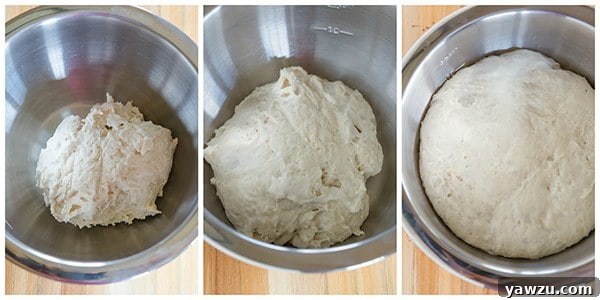
- Combine and Knead: Remove the plastic wrap from the main dough. Now, add the completely room-temperature sponge and the 2 teaspoons of salt to the main dough mixture in the stand mixer. Knead on the lowest speed for approximately 4 minutes. Continue kneading until all the ingredients are thoroughly incorporated and the dough visibly begins to clear the sides of the bowl, though it may still retain a slight stickiness to the bottom. Increase the mixer speed to medium-low and continue to knead for an additional 1 minute. At this point, the dough should have transformed into a more cohesive, smoother, and elastic ball. Carefully transfer the kneaded dough to a large bowl that has been lightly greased with a touch of olive oil or cooking spray. Cover the bowl tightly with plastic wrap and place it in a cool, draft-free spot. Allow the dough to rise until it has noticeably increased in volume and appears puffy, which typically takes about 1 hour, depending on your kitchen’s temperature.
- First Fold: Gently remove the plastic wrap from the risen dough. To further strengthen the gluten structure and develop the airy crumb, you will now perform a series of gentle folds. Slide a plastic bench scraper or a well-floured hand under one side of the dough, gently lift it, and carefully fold approximately one-third of the dough toward the center. Repeat this precise action with the opposite side of the dough. Finally, fold the dough in half, perpendicular to your first two folds, to create a rough square shape. This folding technique builds internal structure without the need for aggressive kneading. Replace the plastic wrap tightly and let the dough rise again for another 1 hour.
- Second Fold: After the second rise, repeat the entire folding process exactly as described in step 4. Gently turn the dough over after completing the folds to ensure even development. Replace the plastic wrap and allow the dough to rest and rise for one more hour. These repeated folds are key to creating the desirable layers and enhancing the signature airy and open texture of the final bread.
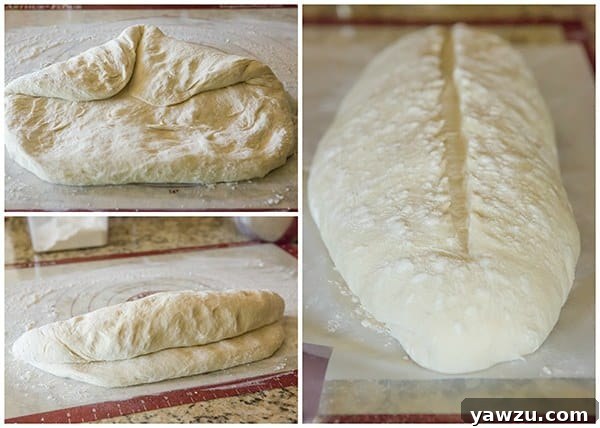
- Shape the Dough: Generously flour your clean work surface. Carefully scrape the fully risen dough from its bowl onto the well-floured surface. Liberally dust the top of the dough and your hands with additional flour to prevent any sticking. Using gentle pressure and your fingertips, carefully push and pat the dough into a rough 8- to 10-inch square. Be mindful not to deflate the dough too much during this process, preserving the air pockets.
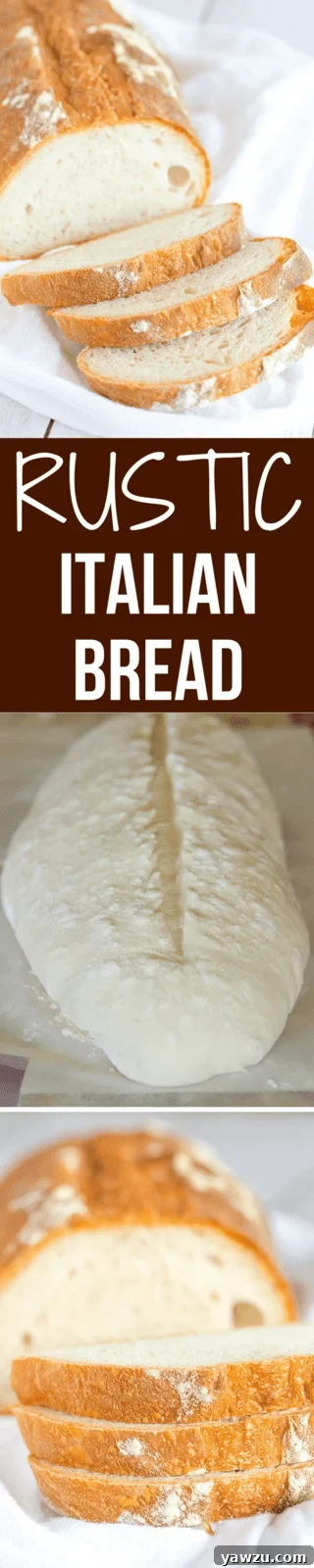
- Form the Loaf: Take the top-right corner of the dough and gently fold it diagonally towards the middle of the square. Repeat this with the top-left corner, folding it diagonally towards the middle. This initial shaping helps to create a more rounded top for the loaf. Now, gently begin to roll the dough tightly from the top (the pointed end) down towards the bottom, continuing to roll until the dough forms a rough log shape. Ensure the seam is underneath the loaf. Carefully slide your well-floured hands under each end of the shaped dough and transfer it to a sheet of parchment paper, which will be used directly for baking. Gently refine the shape of the dough into a classic 16-inch football or oval form by carefully tucking the bottom edges underneath the loaf. Dust the shaped loaf generously with flour. Loosely cover it with plastic wrap and let it undergo its final rise in a warm, draft-free place until it has visibly doubled in size, which should take approximately 1 hour. This is a critical stage known as the final proof.
- Preheat Oven & Baking Stone: While the dough is completing its final proof, adjust an oven rack to the lower-middle position in your oven. Place a sturdy baking stone (or an inverted heavy baking sheet) directly on this rack. Preheat your oven to a very high temperature of 500 degrees F (260 degrees C). It is essential to allow the oven and, more importantly, the baking stone to preheat for at least 30-45 minutes to ensure the stone is thoroughly and evenly hot. This intense initial heat is fundamental for achieving that coveted crispy, golden crust on your Italian bread.
- Score and Bake: Once the loaf has fully doubled in size during its final proof, retrieve a single-edge razor blade or a very sharp, thin knife. Carefully cut one long, ½-inch deep lengthwise slit along the top center of the loaf. Ensure you start and stop the slit about 1½ inches from each end of the loaf. This strategic scoring allows the bread to expand predictably and beautifully in the intense heat of the oven. Lightly spray the entire surface of the loaf with water using a fine mister; this action helps to create essential steam in the oven, contributing significantly to a wonderfully crispier crust. Carefully slide the parchment sheet, with your beautifully risen loaf still on it, onto a pizza peel or an inverted rimmed baking sheet. Then, with a swift and confident motion, carefully slide the parchment with the loaf directly onto the preheated baking stone in the oven.
- Finish Baking and Cool: Bake the bread at the initial high temperature of 500 degrees F (260 degrees C) for exactly 10 minutes. After this initial intense baking period, reduce the oven temperature to 400 degrees F (200 degrees C) and carefully rotate the loaf from front to back to ensure even baking and browning on all sides. Continue to bake for an additional 35 to 45 minutes, or until the crust has developed a rich, deep golden-brown color and an instant-read thermometer inserted directly into the center of the loaf registers 210 degrees F (99 degrees C). Once baked to perfection, carefully transfer the hot loaf (still on its parchment) to a wire rack. Discard the parchment paper. It is absolutely crucial to allow the loaf to cool completely to room temperature, which typically takes about 2 hours, before attempting to slice it. This vital cooling period allows the internal structure of the bread to fully set and prevents a gummy texture, ensuring a perfect eating experience.
Notes
Nutritional values provided are approximate and based on one serving of this recipe (calculated as 1/12th of the entire loaf). Actual values may vary slightly depending on the specific brands of ingredients used and minor variations in preparation methods.
Nutrition Information (per serving)
Calories: 192 kcal
Carbohydrates: 38 g
Protein: 6 g
Sodium: 391 mg
Potassium: 61 mg
Fiber: 1 g
Calcium: 8 mg
Iron: 0.5 mg
Share Your Culinary Creation!
Did you try your hand at baking this rustic Italian bread? We are absolutely thrilled to hear about your experience and eager to see your beautiful homemade loaf! Please leave a review below to share your valuable insights, tips, and any variations you tried. Then, don’t forget to snap a fantastic picture of your masterpiece and tag @thebrowneyedbaker on Instagram so we can admire your impressive culinary skills!
Author: Michelle Lettrich
Course: Bread
Cuisine: American, Italian