
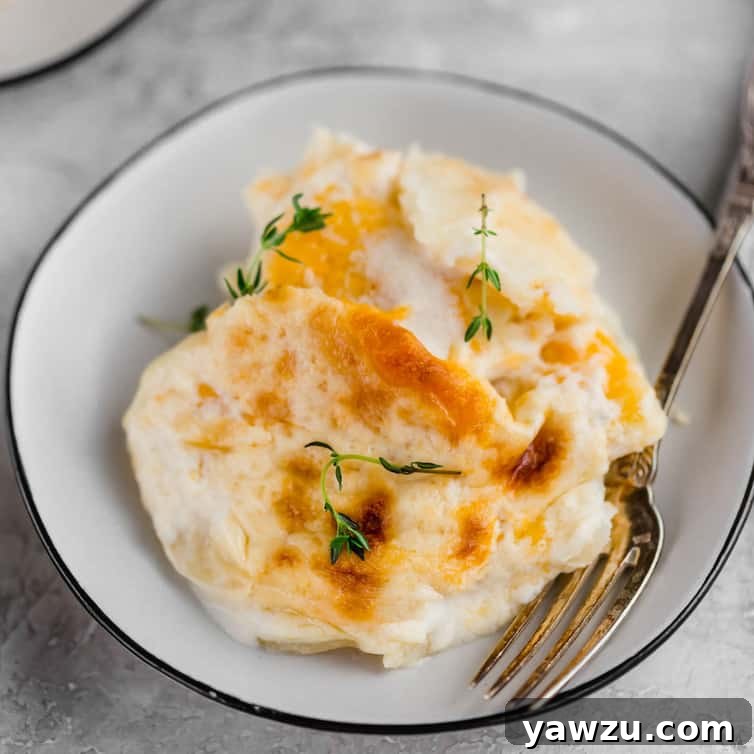
This comprehensive guide and recipe for homemade scalloped potatoes promises a side dish that’s rich, creamy, and undeniably comforting. Whether gracing your holiday table or elevating a simple weeknight dinner, these potatoes are destined to become a family favorite.
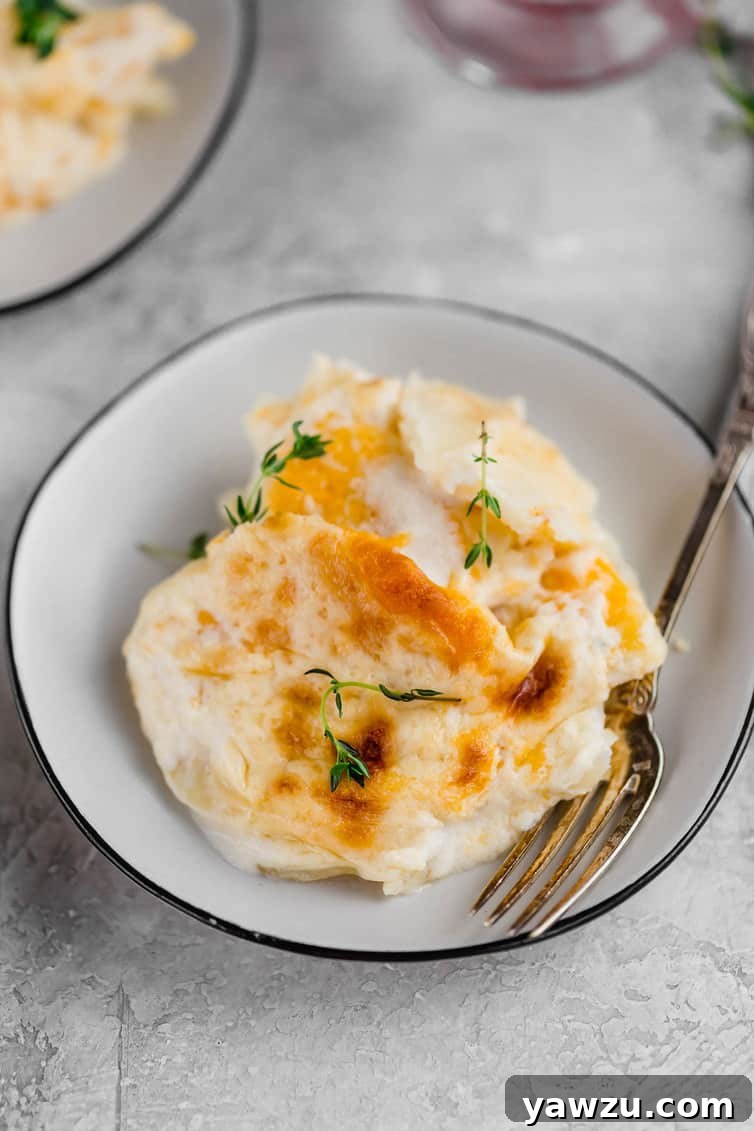
There are some dishes that simply define comfort, and for many, scalloped potatoes sit proudly at the top of that list. For me, the mention of scalloped potatoes instantly transports me back to my grandma’s kitchen, a place filled with warmth, laughter, and the irresistible aroma of Sunday dinner. Whenever a pan of her famously creamy, cheesy scalloped potatoes appeared on the table, it was a moment of pure culinary delight. My cousins and I would strategically vie for the closest seats, ensuring we could sneak in extra servings without too much sharing. It’s an understatement to say these potatoes hold a special place in my heart as the ultimate comfort food.
While my grandma’s secret was often a trusty box mix, delivering perfectly delicious results every time, I’ve grown to appreciate the satisfaction of crafting them from scratch. This particular recipe captures all that nostalgic goodness, transforming tender potato slices, rich bubbly cheese, and a velvety cream sauce into a dish that truly tastes like home. It’s elegant enough for special occasions, yet simple enough to whip up for an everyday meal. The rich flavors and comforting texture make it an ideal companion for a wide variety of main courses.
Imagine serving these luxurious potatoes alongside a perfectly seared steak, a succulent holiday ham, a roasted chicken, or even a hearty meatloaf. They pair beautifully with grilled burgers, or complement the robust flavors of roast lamb. The versatility of scalloped potatoes is truly remarkable, making them a go-to side dish for almost any protein you can think of. You can even create a delightful vegetarian meal by pairing them with a vibrant green salad or a medley of roasted seasonal vegetables, allowing the potatoes to truly shine as the star of the plate.
Despite their gourmet appeal, this scalloped potato recipe is surprisingly straightforward to prepare. There’s no need to reserve it solely for festive gatherings; once you taste the exquisite blend of flavors and textures, you’ll find yourself wanting to make them all year round. It’s a recipe that promises to impress with minimal fuss, delivering maximum flavor and comfort in every single bite.
Au Gratin vs. Scalloped: Understanding the Distinction
Often used interchangeably, the terms “au gratin” and “scalloped” actually refer to two distinct, albeit similar, potato dishes. Both are beloved baked potato casseroles made with a creamy sauce, but their subtle differences are what define their traditional identities.
Scalloped potatoes typically feature thinly sliced potatoes baked in a simple, savory cream sauce. The focus is on the tender potatoes and the rich, unadorned dairy component, which creates a silky smooth texture. Historically, the term “scalloped” refers to the way the potatoes are often arranged in overlapping layers, resembling the scales of a scallop shell, though this isn’t a strict rule for the dish’s identity. The beauty of classic scalloped potatoes lies in their elegant simplicity, allowing the natural flavor of the potatoes to meld with the creamy base.
Potatoes au gratin, on the other hand, take the concept a step further by incorporating cheese between the layers of potatoes and, crucially, as a browned, bubbling crust on top. The French term “gratin” literally means “crust” or “grating,” referring to the golden-brown topping that is a hallmark of this dish. Sometimes, breadcrumbs are also added to the cheese topping to enhance texture and achieve an even crispier finish. This cheesy element introduces a sharper, more complex flavor profile and an inviting texture contrast to the tender potatoes.
While this particular recipe for “scalloped potatoes” harmoniously combines the best elements of both traditions – featuring a luscious cream sauce and a generous, golden-brown cheese topping – we choose to stick with the more universally recognized and comforting name of “scalloped potatoes.” It’s a testament to how these dishes have evolved and intertwined over time, ultimately delivering a side dish that offers the best of both worlds: creamy, tender potatoes with an irresistible cheesy crust.
Essential Ingredients for Perfect Scalloped Potatoes
Crafting truly exceptional scalloped potatoes begins with selecting quality ingredients. This recipe calls for a thoughtful blend of dairy, aromatics, and, of course, the star of the show: potatoes. Here’s a detailed look at what you’ll need to create this rich and creamy side dish:
- Russet Potatoes: These starchy potatoes are ideal for scalloped potatoes because they soften beautifully while maintaining their shape. Their starchy nature also helps to thicken the sauce, resulting in a wonderfully creamy consistency. Always peel and slice them thinly and uniformly for even cooking.
- Cheddar Cheese: Shredded cheddar cheese provides a sharp, savory flavor and creates that iconic bubbly, golden-brown crust. While cheddar is traditional and highly recommended, you can experiment with other meltable cheeses or a blend to customize the flavor.
- Onion: Minced onion adds a foundational layer of aromatic flavor, lending a subtle sweetness and depth to the cream sauce.
- Whole Milk & Heavy Cream: The combination of whole milk and heavy cream is crucial for achieving the perfect rich and luxurious sauce. The whole milk provides a lighter base, while the heavy cream delivers unparalleled richness and body, ensuring a truly decadent texture.
- Unsalted Butter: Used for sautéing the aromatics, unsalted butter adds a rich, foundational flavor to the sauce without making the dish overly salty.
- Garlic: Fresh minced garlic infuses the sauce with a pungent, irresistible aroma and flavor that complements the potatoes and dairy beautifully.
- Fresh Thyme: Sprigs of fresh thyme add an earthy, herbaceous note that elevates the overall flavor profile of the dish. Its subtle peppery and minty undertones perfectly balance the richness of the cream and cheese.
- Bay Leaves: Bay leaves are an essential, often overlooked, ingredient in cream-based dishes. They impart a delicate, almost floral, and slightly bitter note that deepens the savory flavors of the sauce. Remember to remove them before baking.
- Salt and Pepper: Simple seasonings are all you need to enhance the natural flavors of the potatoes and cream. Adjust to your taste preferences.
Each ingredient plays a vital role in creating the harmonious balance of flavors and textures that make these scalloped potatoes so utterly delicious. Using fresh, high-quality components will undoubtedly yield the most satisfying results.
Mastering the Art of Scalloped Potatoes: Step-by-Step Guide
Creating this magnificent dish is simpler than you might think. Follow these detailed steps to achieve perfectly tender potatoes bathed in a rich, cheesy, and aromatic cream sauce.
-
Prepare Your Baking Dish: Begin by preheating your oven to 400 degrees F (200 degrees C). Lightly grease a 9×13-inch baking dish. This ensures that your potatoes won’t stick and makes for easier cleanup.
-
Sauté the Aromatics: In a large Dutch oven or a heavy-bottomed saucepan, melt two tablespoons of unsalted butter over medium-high heat. Once the butter is foaming (this usually takes about 1 minute), add the minced onion. Sauté the onion, stirring occasionally, until it becomes soft, translucent, and just begins to brown around the edges, which typically takes about 4 minutes. Next, add the minced garlic and continue to sauté for another 30 seconds until it becomes fragrant. Be careful not to burn the garlic, as this can turn bitter.
-
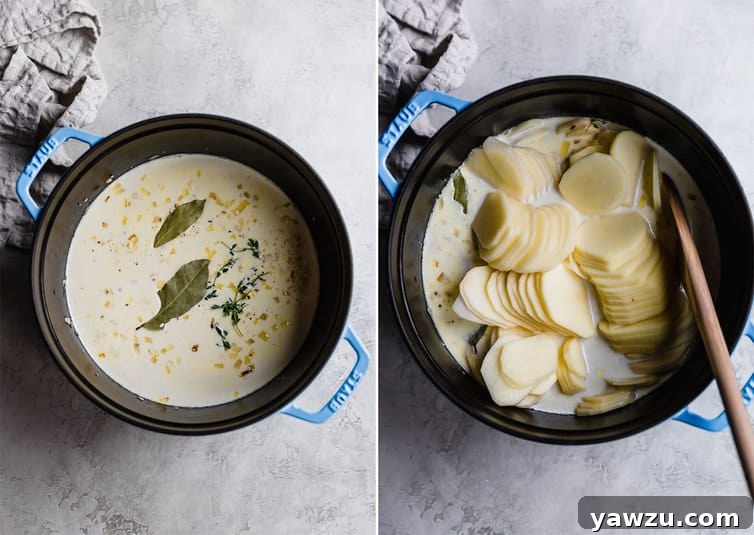
Build the Cream Sauce: Pour in the heavy cream and whole milk, then add the fresh thyme sprigs, bay leaves, salt, and ground black pepper. Stir all the ingredients together to combine them thoroughly. This mixture will form the luscious base of your scalloped potatoes.
-
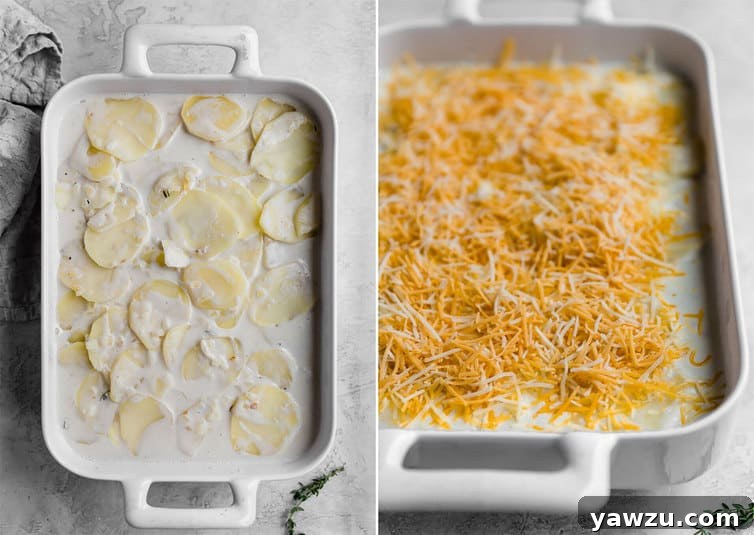
Add and Simmer the Potatoes: Carefully place the thinly sliced russet potatoes into the Dutch oven with the cream sauce. Stir gently to ensure all the potato slices are well-coated. Bring the mixture to a gentle simmer over medium-high heat. Once simmering, reduce the heat to low, cover the pot, and continue to simmer. Adjust the heat as needed to maintain a light, consistent simmer, avoiding a rolling boil which can cause the milk to curdle or scorch. Cook until the potatoes are almost tender; you should be able to slide a paring knife into the center of a potato slice with some slight resistance (this usually takes about 15 minutes). Remember to stir gently and occasionally to prevent the potatoes from sticking to the bottom of the pot.
-
Prepare for Baking: Once the potatoes reach the desired tenderness, remove the Dutch oven from the heat. Carefully retrieve and discard the thyme sprigs and bay leaves from the mixture. These aromatics have imparted their full flavor and are no longer needed.
-
Transfer and Top with Cheese: Carefully pour the entire potato mixture, including the rich cream sauce, into your prepared 9×13-inch baking dish. Spread the mixture evenly. Then, generously sprinkle the shredded cheddar cheese over the top of the potatoes, creating an even layer from edge to edge.

-
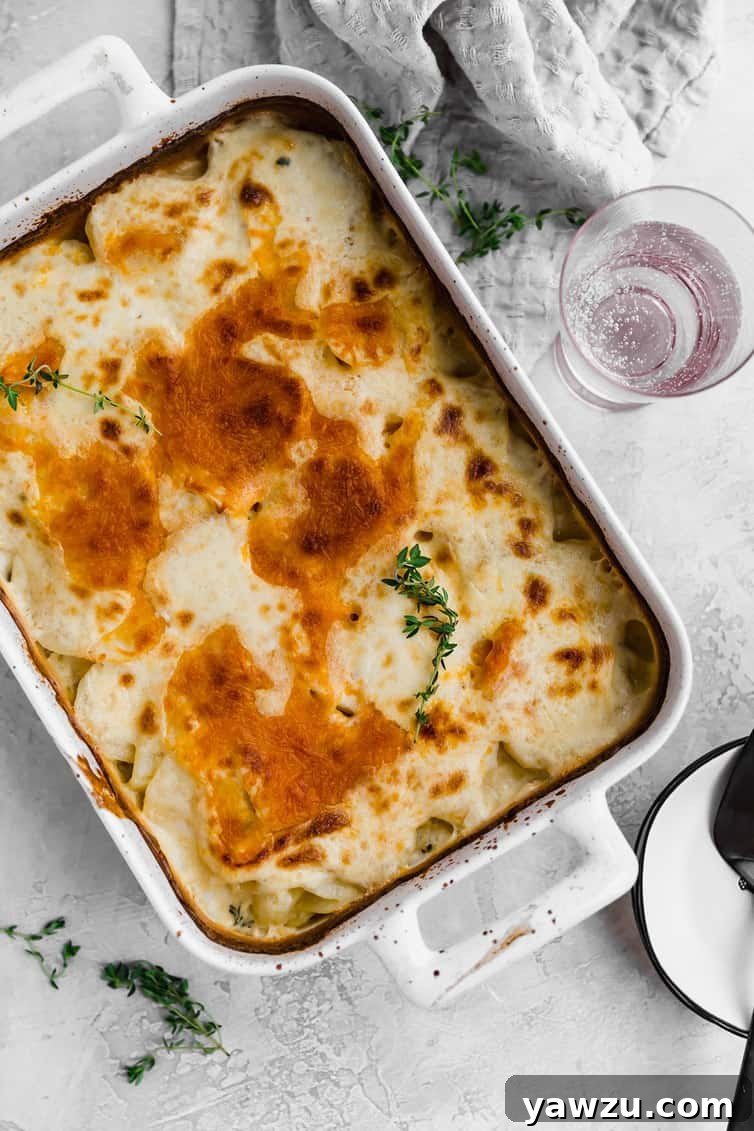
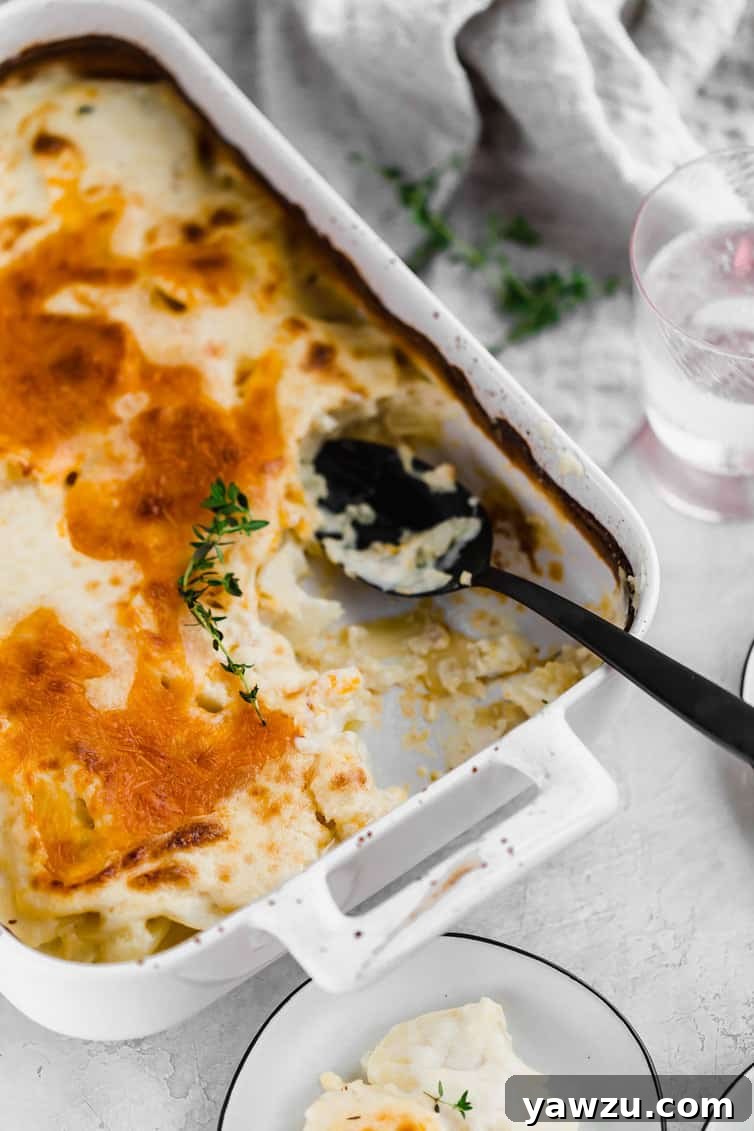
Bake to Golden Perfection: Place the baking dish in the preheated oven and bake for approximately 30 minutes. You’ll know it’s ready when the cream sauce is thick and bubbly around the edges, and the cheese topping has melted into a beautiful golden-brown crust. The aroma filling your kitchen will be incredible!
-
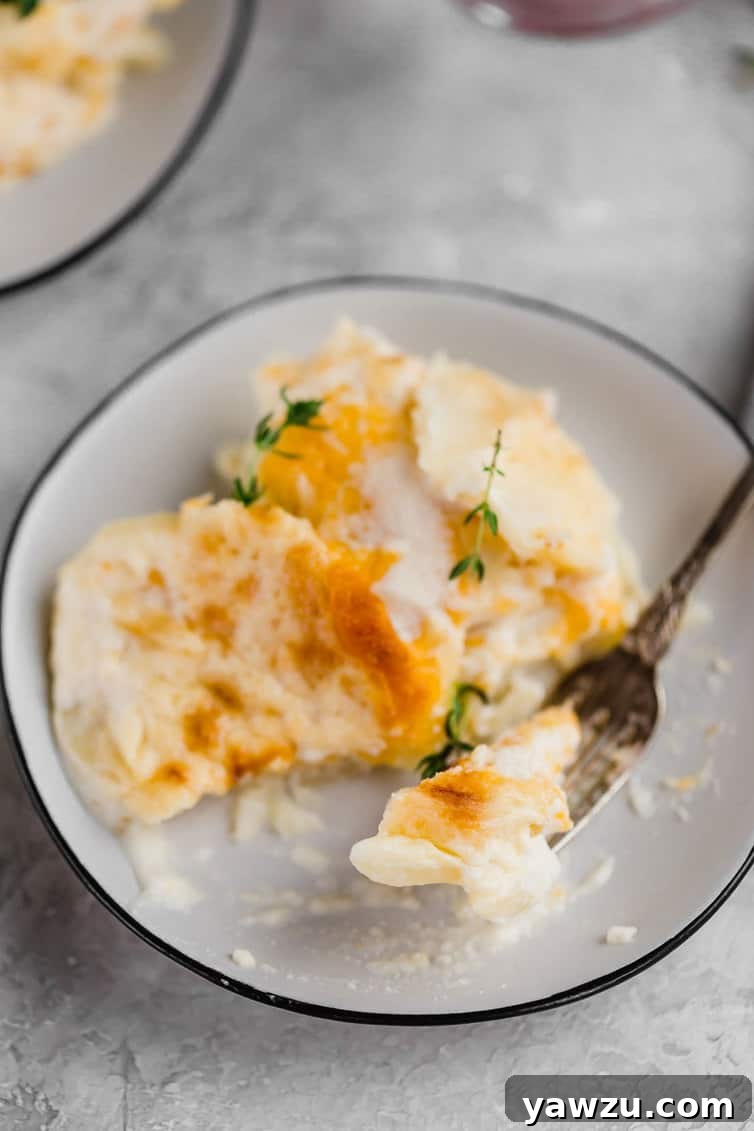
Rest and Serve: Once baked, remove the scalloped potatoes from the oven. It’s crucial to let them cool and rest for at least 10 minutes before serving. This resting period allows the sauce to set properly, preventing it from being too runny when you scoop it out. If desired, garnish with a few more fresh thyme leaves for an extra touch of freshness and elegance. Then, dive right in and savor every wonderfully creamy, cheesy bite!
Frequently Asked Questions & Expert Tips
To help you achieve perfect scalloped potatoes every time, here are answers to some common questions and essential tips:
What’s the best way to slice potatoes for scalloped potatoes?
Achieving uniformly thin potato slices is key to ensuring even cooking and a consistent, tender texture throughout your dish. While a sharp chef’s knife can certainly do the trick with careful precision, there are kitchen tools that can make this task much faster and yield perfectly even slices:
- Mandoline Slicer: This is arguably the most common and efficient tool for slicing potatoes thinly and consistently. It allows you to adjust the thickness, typically to 1/8-inch, which is ideal for scalloped potatoes. If you’re new to using a mandoline, always use the provided hand guard to protect your fingers from the extremely sharp blade. Safety first!
- Food Processor with Slicing Disc: For an even faster approach, especially when preparing a large batch, your food processor with a slicing disc attachment is a fantastic option. It can slice a large quantity of potatoes in mere seconds. While it might mean a few extra dishes to wash, the time saved and the precision of the slices are often well worth it.
Can I use pre-shredded cheese?
While pre-shredded cheese offers convenience, it often contains anti-caking agents like cellulose or potato starch. These agents are added to prevent the cheese from clumping in the bag, but they can also interfere with the melting process. As a result, pre-shredded cheese tends to melt less smoothly and can sometimes give your sauce a slightly grainy texture compared to freshly shredded cheese.
For the creamiest sauce and the most luscious, bubbly topping, we highly recommend buying a block of cheese and shredding it yourself. It takes only a few extra minutes, especially if you use the shredding disc on your food processor after slicing the potatoes, and the superior melt and flavor will absolutely be worth the effort.
Can I use less cheese?
This scalloped potato recipe is designed to feature a generous, thick layer of bubbly, browned cheddar cheese on top, contributing significantly to its rich flavor and appealing texture. However, taste preferences vary, and if you find this amount of cheese to be too much for your liking, you can absolutely reduce the quantity. Feel free to use 1 cup (about 4 ounces) instead of 1.5 cups, or adjust to any amount that suits your palate. The dish will still be delicious and comforting!
Can I make scalloped potatoes ahead of time?
Yes, scalloped potatoes are an excellent make-ahead dish, which makes them perfect for holidays or busy weeknights. There are a couple of convenient ways to prepare them in advance:
-
Option 1 (Partial Prep): Prepare the sauce and potatoes as directed in the recipe, simmering them until the potatoes are almost tender. Transfer the potato mixture to your casserole dish. At this point, do NOT add the cheese. Cover the dish tightly with plastic wrap or aluminum foil and refrigerate for up to two days. When you’re ready to bake, sprinkle the shredded cheese over the top and bake as instructed in the recipe. You may need to add an extra 10-15 minutes to the baking time if the dish is going into the oven straight from the refrigerator to ensure it heats through completely.
-
Option 2 (Full Prep & Reheat): You can completely assemble and bake the entire scalloped potatoes recipe the day before serving. Once baked, allow the dish to cool completely at room temperature, then cover it tightly with a lid or aluminum foil and refrigerate. To reheat, bake the covered dish at 350 degrees F (175 degrees C) for 25-30 minutes, or until the sauce is bubbling and the potatoes are heated through to the center. If you’re reheating the pan directly from the refrigerator, it might take up to 45 minutes to reach optimal temperature and consistency.
Can I freeze scalloped potatoes?
Yes, you can freeze scalloped potatoes, making them a fantastic option for meal prep or future gatherings. Here’s how:
- For Freezing: Prepare the dish as instructed, but omit the cheese topping. Bake the potatoes for less than the recommended time, only until they are “al dente” or slightly firm, as they will cook further upon reheating. Allow the dish to cool completely. Once cooled, cover the pan tightly with plastic wrap, then an additional layer of aluminum foil, and freeze for up to 1 month.
- For Reheating from Frozen: Thaw the frozen scalloped potatoes overnight in the refrigerator. Once thawed, remove the plastic wrap, sprinkle the shredded cheese over the top, and bake at 400 degrees F (200 degrees C) for 15 to 20 minutes, or until golden brown, bubbly, and heated through.
Watch the Recipe Video:
For a visual guide to making these delectable scalloped potatoes, consider watching a video tutorial. Seeing each step in action, from slicing the potatoes to achieving that perfect golden-brown crust, can be incredibly helpful for both novice and experienced cooks. (Please note: A video player requires JavaScript to function. For this static HTML output, imagine a helpful video demonstrating the recipe here.)
More Delicious Potato Recipes to Explore:
If you’re a potato lover, there’s a whole world of delicious dishes beyond scalloped potatoes to discover. Here are some other fantastic potato recipes that promise to tantalize your taste buds and expand your culinary repertoire:
- Grandma’s Crispy Roasted Potatoes: A classic side that’s always a crowd-pleaser, featuring perfectly crispy exteriors and fluffy interiors.
- Twice Baked Potato Recipe: Individual potato boats filled with a creamy, cheesy, and savory potato mixture – an impressive side or light meal.
- Roasted Red Potatoes with Garlic and Herbs: Simple yet flavorful, these roasted potatoes are seasoned with aromatic garlic and fresh herbs for a quick and easy side.
- Creamy Mashed Potatoes: The ultimate comfort food, these silky smooth mashed potatoes are a staple for any meal.
I genuinely hope this detailed guide encourages you to place these incredible scalloped potatoes high on your menu, whether for upcoming holidays or simply for your next family dinner. The blend of tender potatoes, rich cream, and savory cheese creates an unparalleled taste of home and comfort that you and your loved ones will adore. If you do make this recipe, I would be absolutely thrilled if you’d take a moment to come back and share your review below. Your feedback means the world!
Scalloped Potatoes Recipe
Yield: 10 servings
Prep Time: 40 mins
Cook Time: 30 mins
Total Time: 1 hr 10 mins
This scalloped potatoes recipe makes a rich and creamy side dish. Make them to serve on holidays or with a weeknight dinner.
Print Recipe | Pin Recipe
Ingredients
- 2 tablespoons unsalted butter
- 1 small onion, minced
- 2 cloves garlic, minced
- 3 cups (720 ml) heavy cream
- 1 cup (240 ml) whole milk
- 4 sprigs fresh thyme
- 2 bay leaves
- 2 teaspoons salt
- ½ teaspoon ground black pepper
- 4 pounds (1814 grams) russet potatoes, peeled and cut into 1/8-inch-thick slices
- 1½ cups (170 grams) shredded cheddar cheese, about 6 ounces
Instructions
- Heat oven to 400 degrees F. Grease a 9×13-inch baking dish.
- Meanwhile, melt butter in large Dutch oven (or large, heavy-bottomed saucepan) over medium-high heat until foaming subsides, about 1 minute. Add onion and saute until it turns soft and begins to brown, about 4 minutes. Add garlic and saute until fragrant, about 30 seconds. Add cream, milk, thyme, bay leaves, salt, pepper, and potatoes and bring to a simmer. Cover, adjusting heat as necessary to maintain a light simmer, and cook until potatoes are almost tender (paring knife can be slipped into and out of center of potato slice with some resistance), about 15 minutes, gently stirring occasionally to ensure the potatoes don’t stick to the bottom of the pot.
- Remove and discard thyme sprigs and bay leaves. Transfer potato mixture to the prepared baking dish and sprinkle with cheese. Bake until the cream has thickened and is bubbling around sides and the top is golden brown, about 30 minutes. Allow to sit for 10 minutes before serving. Leftovers can be stored in an airtight container in the refrigerator for up to 4 days.
Notes
- Slicing the potatoes quickly and uniformly can be done using a mandoline or food processor.
- While I recommend russet potatoes as the best choice because they hold up well to all of that liquid, yellow or Yukon gold could be substituted if necessary, just be aware that the potatoes may break down a bit during cooking.
- Other cheese, or a combination of others, can be used in place of the cheddar. Use what you love!
- Make-Ahead Option #1: Prepare the sauce and potatoes, add to the casserole dish, then wrap tightly with plastic wrap or foil and refrigerate. This can be done up to two days in advance. When you’re ready to cook, sprinkle the cheese on top and bake as directed.
- Make-Ahead Option #2: You can also follow the entire scalloped potatoes recipe the day before, then cool and refrigerate. Cover with a lid or wrap tightly with foil. Reheat by baking at 350 degrees for 25-30 minutes, or until sauce is bubbling and the dish is heated through. If you’re putting the pan in the oven straight from the fridge, it may take up to 45 minutes to reheat.
- Freezing Instructions: Leave the cheese off of the top and bake for less than the recommended time, until the potatoes are al dente. Cool completely, then cover and refrigerate for at least 2 hours. Cover the pan with plastic wrap and aluminum foil and freeze for up to 1 month. Thaw in the refrigerator overnight, remove the plastic wrap, add the cheese, and bake at 400 degrees for 15 to 20 minutes.
Nutritional values are based on one serving
Calories: 497kcal, Carbohydrates: 37g, Protein: 11g, Fat: 35g, Saturated Fat: 22g, Cholesterol: 124mg, Sodium: 618mg, Potassium: 869mg, Fiber: 3g, Sugar: 3g, Vitamin A: 1348IU, Vitamin C: 12mg, Calcium: 224mg, Iron: 2mg
Did you make this recipe?
Leave a review below, then snap a picture and tag @thebrowneyedbaker on Instagram so I can see it!
Author: Michelle Lettrich
Course: Side Dish
Cuisine: American
Originally published in 2011, this content has been thoroughly updated to include new photos, helpful video guidance, and more in-depth recipe tips to enhance your cooking experience.
[photos by Ari of Well Seasoned]