
Crafting the Perfect Rustic Loaf: My Journey with Royal Crown’s Tortano
There’s a unique satisfaction that comes with baking your own bread, a primal joy in transforming simple ingredients into something truly extraordinary. Recently, my baking adventures led me to a vibrant community known as the Bread Baking Babes (BBB). This enthusiastic group embarks on a new bread-baking challenge each month, sharing their experiences and inviting fellow enthusiasts to join in the fun and become a “Bread Baking Buddy” by tackling the recipe within a specific timeframe. It’s a fantastic way to expand one’s baking repertoire and connect with other passionate home bakers.
The inaugural challenge from the BBB was particularly enticing: Maggie Glazer’s Royal Crown’s Tortano. This rustic bread, a beloved signature of the renowned Royal Crown Bakery in Brooklyn, NY, promised a delve into authentic Italian-American baking traditions. The first monthly bake was expertly hosted by Baking Soda over at Bake My Day!, providing a wonderful introduction to this flavorful loaf. While I might have stretched the definition of a “Buddy” a bit by taking more than a week to complete my bake, the experience was invaluable. I owe a tremendous debt of gratitude to Mary from The Sour Dough for her incredible patience and detailed guidance. Her willingness to answer my countless email queries and, more importantly, her comprehensive photographic documentation of the process were lifesavers. Her visuals provided crucial benchmarks for what the dough should look like at each stage, a resource I highly recommend to anyone attempting this recipe.
The Unforeseen Restart: A Lesson in Yeast Vitality
My journey with the Tortano began with a slight hiccup. The recipe, like many artisan breads, calls for a preferment, a mixture of flour, water, and a small amount of yeast that’s allowed to ferment for several hours or overnight. This initial step is crucial for developing flavor and strength in the dough. However, after patiently waiting through the night, I awoke to find absolutely no activity in my preferment. It was as still and lifeless as when I’d first mixed it. A quick inspection revealed the culprit: my jar of yeast, which had been residing in the back of my fridge for an embarrassingly long time, had likely lost its potency.
There’s nothing quite as disheartening as a failed first step, especially when you’re eager to begin a new baking project. But in baking, as in life, sometimes you just have to start over. I made a quick trip to the grocery store for a fresh supply of active dry yeast, returned to my kitchen, and began the preferment process anew. I can’t emphasize enough how glad I am that I persevered. Beyond the sheer delight of producing an incredibly delicious loaf of bread, this project offered me a fantastic opportunity to experiment with an entirely new type of dough and to refine my baking techniques. It was a powerful reminder that fresh ingredients, especially fresh yeast, are paramount to successful bread baking.
Embracing the Challenge: Working with a High-Hydration Dough
From the moment I started mixing, it became clear that this was no ordinary bread dough. To say it was a wet dough would be an understatement – it was almost like a liquid mass before it began to coalesce! I had never encountered a dough with such a high hydration level, and initially, it was quite a challenge to handle. My previous experiences were mostly with more traditional, stiffer doughs that were easier to knead and shape. This Tortano dough, however, demanded a different approach, relying more on stretch-and-fold techniques rather than vigorous kneading. With each gentle fold and turn, I found myself crossing my fingers, hoping I was on the right track. The excitement grew with every stage as I realized that what was supposed to happen, indeed, was happening.
Working with such a sticky, high-hydration dough was a profound learning experience. It taught me patience and the importance of trusting the process, even when the dough feels completely alien. This type of dough is key to achieving the distinctive open, airy crumb structure that defines rustic breads like Tortano. Throughout the recipe, I found myself making mental notes, observations, and tips that I wish I had known beforehand. These insights, I believe, are best shared within the context of the recipe itself, offering practical advice as you navigate each step. One particular area that consistently presents a challenge for me, and which this bread highlighted, is slashing or scoring the dough. My attempts often result in barely noticeable slits that don’t open up beautifully during baking. I suspect my knives might not be sharp enough, and I’m considering investing in a razor blade or ‘lame’ specifically designed for scoring. This issue also surfaced when I attempted to bake French bread, leading to a similar lack of dramatic oven spring. Are there any seasoned bread geniuses out there with expert tips on achieving that perfect, deep, and artistic score? Your advice would be invaluable!
The Grand Reveal: A Triumph of Texture and Taste
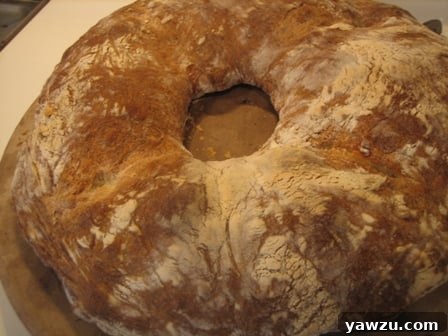
The anticipation as the Tortano baked in the oven was almost unbearable. The aroma filling my kitchen was a delightful blend of yeasty warmth and subtle sweetness, a promise of the deliciousness to come. And when I finally pulled it out, golden brown and magnificent, I knew the journey, with all its restarts and challenges, had been absolutely worth it. My overall thoughts on this bread can be summarized in one word: FABULOUS!
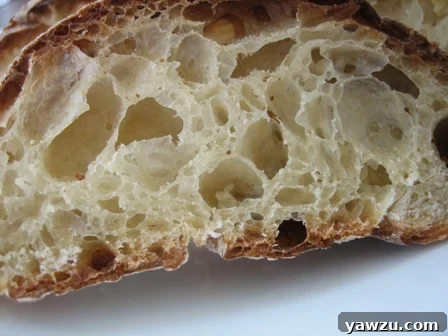
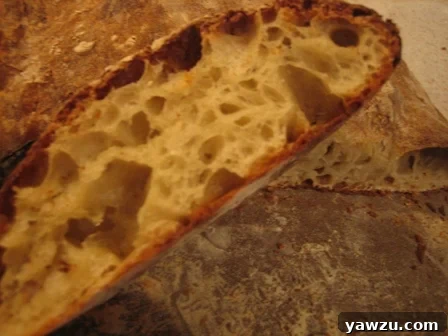
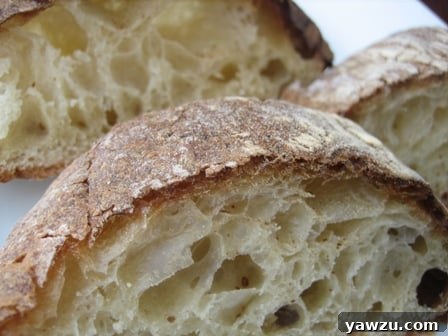
It turned out exactly as I had envisioned, and frankly, even better than I had hoped for a first attempt with such a unique dough. The crust was everything a rustic bread crust should be: wonderfully crisp and crunchy, offering a delightful resistance with every bite. But it was the interior that truly stole the show. Warm, incredibly chewy, and permeated with an abundance of large, irregular air holes – the hallmark of a perfectly fermented and baked high-hydration dough. Each slice was a testament to the power of a good preferment and the magic of slow fermentation. The flavor profile was rich and satisfying, with a subtle tang that spoke of its artisanal origins.
I cannot adequately express the immense pride I felt holding this beautiful loaf. It wasn’t just about baking a fantastic bread; it was about the journey of learning new techniques, understanding dough at a deeper level, and overcoming initial setbacks. This Tortano experience significantly broadened my baking horizons, leaving me with a profound sense of accomplishment and a renewed passion for the art of bread making. It’s a bread that’s perfect simply sliced with butter, dipped in olive oil, or used for hearty sandwiches. For any aspiring baker, tackling a rustic bread like Maggie Glazer’s Royal Crown’s Tortano is an immensely rewarding experience that I wholeheartedly recommend. Don’t be deterred by the “wet dough” or any initial challenges; the reward is a truly magnificent loaf that will make you incredibly proud.