

Welcome, fellow bakers! Today, we’re diving deep into the essential world of chemical leaveners – specifically, the often-confused duo: baking soda and baking powder. These odorless white powders are fundamental to achieving light, airy, and perfectly risen baked goods, from fluffy muffins to tender cakes and chewy cookies. Understanding their unique properties, how they react, and when to use each is a cornerstone of successful baking. Get ready to demystify these pantry staples, learn about their key differences, explore ideal applications, and even uncover smart substitution strategies. Let’s sharpen our baking skills together!

Baking Soda vs. Baking Powder: The Essential Guide to Leavening Agents
In the intricate art of baking, precision is paramount. Among the most crucial ingredients, yet often misunderstood, are chemical leavening agents. Baking soda and baking powder are two such powerhouses that dictate the texture and rise of countless recipes. While both serve the common goal of introducing air pockets into your dough or batter, their chemical compositions and activation methods are distinct, leading to different applications and outcomes. This comprehensive guide will equip you with the knowledge to confidently choose and use these vital ingredients, transforming your baking from good to consistently great.
What is Baking Soda? Unveiling Sodium Bicarbonate
Baking soda, scientifically known as sodium bicarbonate (or bicarbonate of soda), is a pure chemical compound. Its fundamental characteristic is that it is a base, meaning it requires an acidic ingredient to activate its leavening power. When baking soda comes into contact with an acid and a liquid, it triggers an immediate chemical reaction, producing carbon dioxide gas. These tiny gas bubbles are what get trapped within the batter or dough, causing it to expand and rise, resulting in a light and tender crumb.
Without an acidic component, baking soda will still produce some carbon dioxide when heated in the oven. However, this reaction also yields sodium carbonate, which can impart an unpleasant, slightly metallic or soapy taste to your baked goods. The presence of an acid not only ensures a vigorous leavening reaction but also effectively neutralizes these undesirable flavors, leading to a perfectly balanced taste profile.
Common Acids That Activate Baking Soda:
Recipes that call for baking soda typically include one or more of these acidic ingredients to ensure proper activation and flavor balance:
- Buttermilk: Its lactic acid is a classic activator, contributing to both rise and a tender texture.
- Yogurt & Sour Cream: Similar to buttermilk, their lactic acid content makes them excellent partners for baking soda.
- Lemon Juice & Vinegar: These strong acids provide a quick and potent reaction.
- Molasses & Honey: Their inherent acidity, though milder, is sufficient to react with baking soda, often contributing to a richer flavor and darker color.
- Brown Sugar: The molasses content in brown sugar makes it slightly acidic.
- Cream of Tartar: A common dry acid frequently paired with baking soda, notably in snickerdoodles.
- Applesauce: Its natural fruit acids can help activate baking soda.
- Natural Cocoa Powder (NOT Dutch-process): Natural cocoa is acidic, making it a perfect match for recipes using baking soda. Dutch-process cocoa, however, has been alkalized and is therefore not acidic enough.
How Much Baking Soda to Use?
As a general guideline, aim for approximately ¼ teaspoon of baking soda for every 1 cup of flour in your recipe. Using the correct ratio is crucial. Too little baking soda, and your baked goods will be dense and fail to rise adequately. Too much, and while you might get a good rise, you risk that metallic or soapy aftertaste due to unneutralized sodium carbonate.
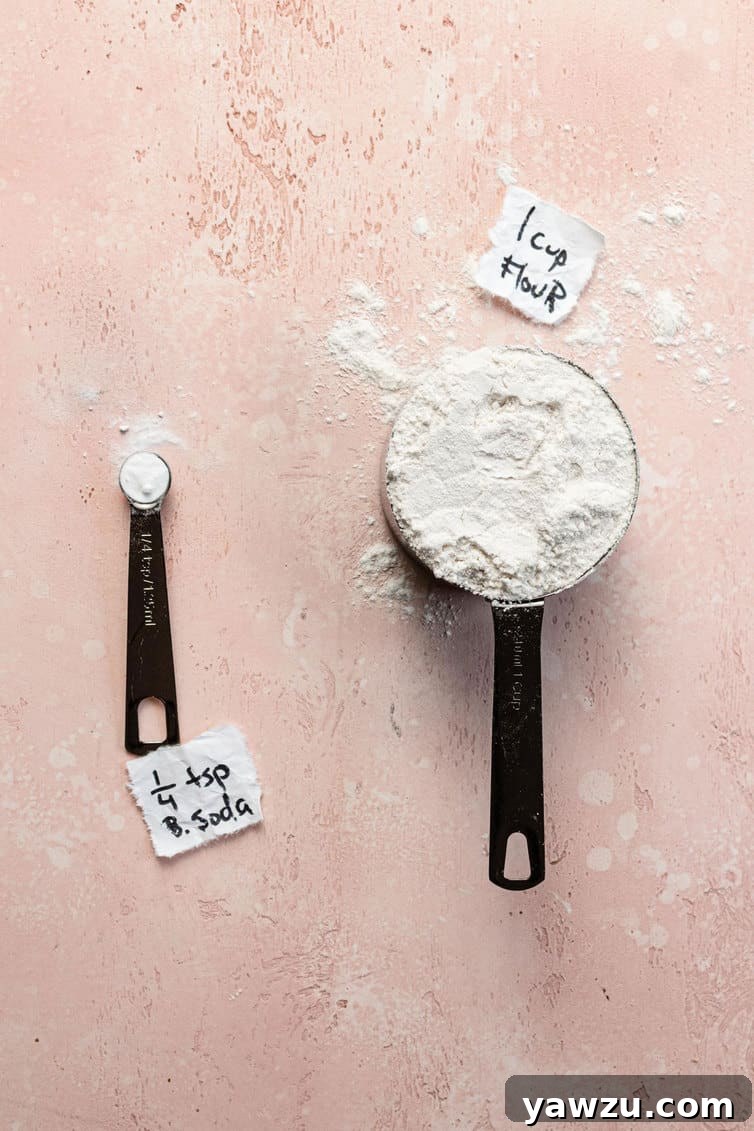
Baking Soda in Action: Recipe Examples
Many beloved recipes rely solely on baking soda for their lift, harnessing the power of an acidic component:
- Snickerdoodle Cookies (Acid: Cream of Tartar)
- Texas Sheet Cake (Acids: Sour Cream and Natural Cocoa Powder)
- Irish Soda Bread (Acids: Buttermilk and Cream of Tartar)
- Soft and Chewy Gingersnap Cookies (Acid: Molasses)
In these recipes, the acidic ingredients not only provide the necessary chemical reaction for leavening but also contribute significantly to the overall flavor and texture, creating a distinct character that baking powder alone cannot replicate.
The “Make-Ahead” Caveat with Baking Soda
Because baking soda reacts immediately upon contact with liquid and acid, the leavening process begins as soon as the wet and dry ingredients are combined. For optimal rise and texture, it is imperative to bake items leavened primarily with baking soda almost immediately after mixing the batter or dough. Allowing the mixture to sit for too long will result in the carbon dioxide gas escaping, leading to a noticeably diminished rise and a denser final product. Time is of the essence when baking with baking soda!
What is Baking Powder? A Self-Contained Leavener
Unlike pure baking soda, baking powder is a complete leavening system in itself. It is a carefully formulated mixture that typically includes three main components: baking soda (the base), one or more dry acids (like cream of tartar or sodium aluminum sulfate), and a starch (such as cornstarch or potato starch) to absorb moisture and prevent premature reaction, as well as to standardize the mixture.
Most baking powder sold today is “double-acting.” This means it releases carbon dioxide in two distinct stages: first, a small amount when it comes into contact with liquid ingredients at room temperature, and then a more significant, powerful release when it is exposed to heat in the oven. This two-stage activation provides a more reliable and sustained rise, making it a favorite for bakers seeking consistent results. This dual action gives your baked goods a sustained lift, ensuring a light and airy texture.
Since baking powder already contains its own acidic component, it is perfectly suited for recipes that do not inherently include acidic ingredients. Common partners for baking powder include non-acidic liquids like whole milk, water, and non-alkalized (Dutch-process) cocoa powder, allowing the baking powder to do all the work of leavening without external acidic activation.
How Much Baking Powder to Use?
A good rule of thumb for recipes using baking powder is to use approximately 1 teaspoon of baking powder for every 1 cup of flour. This ratio typically provides ample lift for most baked goods. Using too little will result in a flat, dense product, while excessive amounts can lead to a bitter aftertaste due to unreacted acidic salts and a crumbly texture.
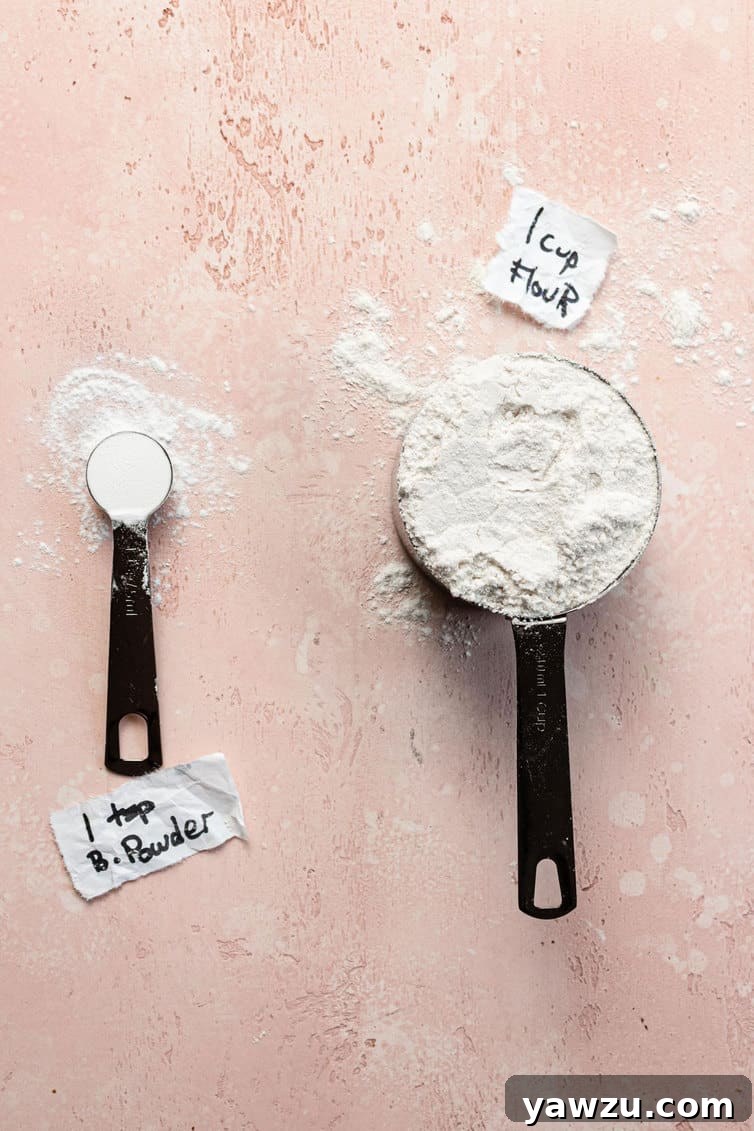
Baking Powder in Action: Recipe Examples
Recipes that call for baking powder as their sole leavening agent often feature non-acidic liquids or other neutral ingredients:
- Blueberry Muffins (often uses milk and relies on double-acting powder for height)
- Easy Buttermilk Biscuits (if using regular milk, otherwise buttermilk would activate soda)
- Chocolate Chip Scones
- Cut-Out Sugar Cookies
These recipes benefit from the consistent, sustained rise that double-acting baking powder provides, resulting in classic textures that are light and uniformly risen.
The “Make-Ahead” Advantage with Baking Powder
One of the significant advantages of double-acting baking powder is its forgiving nature when it comes to timing. Since a substantial portion of its leavening power is activated by heat, batters or doughs made with baking powder can often be prepared a bit in advance without a significant loss of rise. This makes it ideal for preparing pancake batter the night before or allowing muffin batter to rest briefly before baking, offering greater flexibility in your kitchen schedule.
Baking Soda vs. Baking Powder: Key Differences at a Glance
To summarize the fundamental distinction between these two vital leavening agents:
- Baking Soda: Is a single ingredient (sodium bicarbonate) and requires an external acidic component (plus liquid) to produce carbon dioxide for leavening. Its reaction is immediate and vigorous once wet.
- Baking Powder: Is a complete mixture containing baking soda, an acid, and a starch. It is typically “double-acting,” meaning it reacts once with liquid and again more powerfully with heat, making it suitable for recipes without additional acids.
When deciding which to use, consider the other ingredients in your recipe. If your recipe includes acidic components like buttermilk, yogurt, or natural cocoa, baking soda is likely the correct choice. For recipes with neutral ingredients like milk or water, baking powder will provide the necessary lift without relying on external acids. Choosing the right leavener ensures optimal rise, texture, and flavor, making it a critical decision in any baking endeavor.
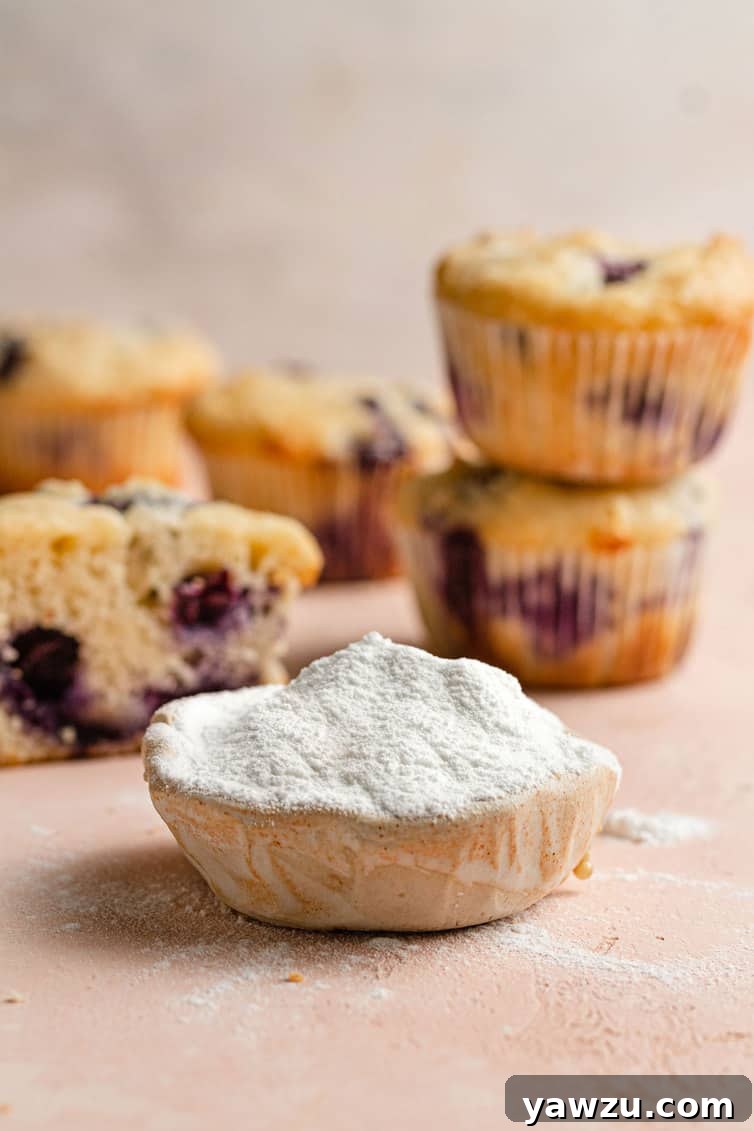
The Dynamic Duo: When Recipes Call for Both Baking Soda and Baking Powder
You might encounter recipes that ingeniously combine both baking soda and baking powder. This dual approach is not a redundancy but a strategic choice by savvy bakers and recipe developers to achieve specific results in flavor, texture, and rise.
The most common reason for using both is when a recipe contains a significant amount of an acidic ingredient (like buttermilk or lemon juice), but the amount of baking soda needed to neutralize that acid and prevent a metallic taste would not produce enough carbon dioxide for the desired lift. In such cases, baking soda is added to react with and neutralize the acid, while baking powder is included to provide the additional leavening power for a light, airy structure without contributing to an off-flavor.
Beyond optimizing leavening and acid neutralization, there are two other compelling reasons to employ both:
- Flavor Enhancement: If a recipe relies on an acidic ingredient for its distinct flavor profile (e.g., the tang of buttermilk in pancakes or the zest of lemon in a cake), adding too much baking soda to fully leaven it would completely neutralize that beloved flavor. Using a balance of both leaveners ensures both optimal rise and the preservation of those crucial flavor notes.
- Aiding Browning: Baking soda helps promote browning in baked goods. It raises the pH of the batter, which can enhance the Maillard reaction (the chemical reaction responsible for browning and rich flavors). Even if baking powder is the primary leavener for lift, a small amount of baking soda is sometimes added specifically to achieve a more golden-brown crust and a richer color, especially in cookies and certain quick breads.
Popular Recipes Utilizing Both Leaveners:
These recipes masterfully balance the properties of both baking soda and baking powder to achieve their signature texture and taste:
- Buttermilk Waffles and Buttermilk Pancakes
- My Favorite Chocolate Chip Cookies
- Neiman-Marcus Cookies
- Apple Muffins with Cinnamon-Sugar Topping
Understanding the synergy between baking soda and baking powder empowers you to not only follow recipes with greater insight but also to troubleshoot or even adapt recipes with confidence.
Substitutions: A Word of Caution
While understanding the differences between baking soda and baking powder is crucial, it’s equally important to approach substitutions with extreme caution. As a general rule, it’s always best to follow a recipe as written, especially if you’re baking it for the first time. The balance of ingredients, particularly leavening agents and acids, is carefully calculated to achieve specific results. Deviating from these can significantly alter the texture, flavor, and rise of your final product. Changing the leavener often necessitates adjusting other ingredients, turning a simple bake into a chemistry experiment.
Can You Substitute Baking Powder for Baking Soda?
This is often the trickier substitution, and generally, it is not recommended for optimal results. If a recipe calls for baking soda, it means it contains an acidic ingredient that needs to be neutralized. Replacing baking soda with baking powder means you’re adding more acid (from the baking powder’s acidic component) to a recipe that already has acid. Furthermore, you’d need a significantly larger quantity of baking powder – as much as four times the amount – to achieve a similar leavening effect as baking soda. This considerable increase in baking powder can lead to several undesirable outcomes:
- Bitter or Soapy Flavor: The excess acidic salts in the increased baking powder can impart an unpleasant taste.
- Dense Texture: The reaction might not be strong enough or timely, leading to a heavy crumb.
- Salty Taste: Higher quantities of baking powder also mean more sodium, which can make your baked goods too salty.
If you absolutely must make this substitution and have no other choice, here are limited options:
- Make “Homemade” Baking Powder: If you have cream of tartar and baking soda, you can create your own baking powder. Combine 2 parts cream of tartar with 1 part baking soda. For example, if a recipe calls for 1 teaspoon of baking powder, use ½ teaspoon cream of tartar and ¼ teaspoon baking soda. Remember, this homemade version is typically “single-acting” and reacts quickly, so bake immediately.
- Substitute Liquids with Club Soda: In some very specific cases, if a recipe calls for baking soda and a liquid, you might replace the liquid with carbonated club soda. The carbonation can provide some lift, but this will undoubtedly alter the recipe’s intended flavor and texture, especially if the original liquid contained fat or a specific taste profile (like buttermilk). This is a last resort with unpredictable results.
Can You Substitute Baking Soda for Baking Powder?
Substituting baking soda for baking powder is also challenging due to the difference in their activation. Since baking powder already contains an acid, if you replace it with just baking soda, your recipe will lack the necessary acidic component to trigger the leavening reaction, resulting in a flat, dense product. To make this substitution work, you would need to add an acidic ingredient to the recipe, which complicates matters significantly:
- You’d use a much smaller amount of baking soda (typically ¼ teaspoon baking soda for every 1 teaspoon of baking powder).
- You would then need to introduce a complementary acid, such as adding 1 teaspoon of lemon juice or vinegar, or replacing a portion of the liquid with buttermilk or yogurt.
- This alteration can drastically change the taste, moisture, and overall balance of the recipe, making it a high-risk substitution for inexperienced bakers.
Given the complexities and potential for unsatisfactory results, the safest and most highly recommended approach is to always keep both baking soda and baking powder stocked in your pantry. This ensures you’re prepared for any recipe and can achieve the intended delicious outcome without the headache of tricky substitutions!
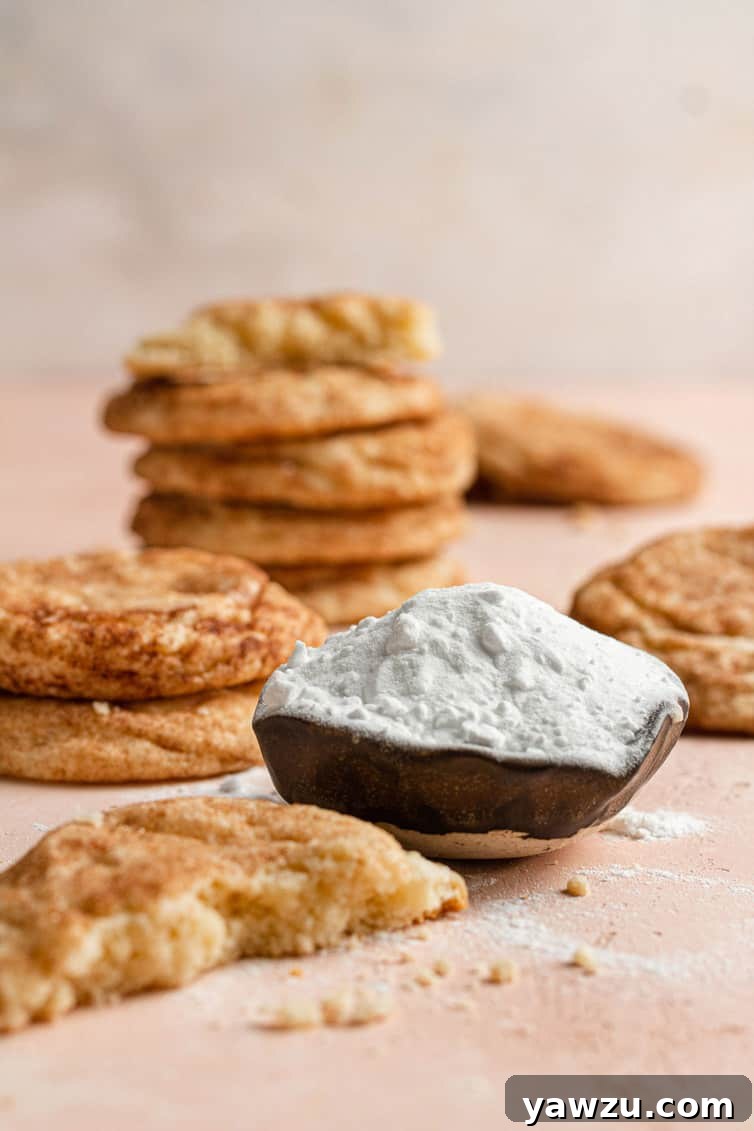
Ensuring Freshness: How to Test Your Leavening Agents
Even with a perfect recipe, stale leavening agents can spell disaster for your baked goods. Both baking soda and baking powder have a limited shelf life; they can lose their potency in as little as three to six months once opened, or even before their printed expiration date if not stored properly (in airtight containers in a cool, dry place). Using an expired or inactive leavener will result in a flat, heavy, and disappointing creation, as the crucial carbon dioxide reaction simply won’t occur. Fortunately, testing their freshness is quick and easy!
How to Test Baking Soda for Freshness:
This simple test determines if your baking soda still has its reactive power:
- Place 2 tablespoons of white vinegar (an acid) into a small bowl.
- Add 1 teaspoon of baking soda to the vinegar.
- Observation: If the baking soda is fresh, it will immediately produce a vigorous fizzing and bubbling reaction. If you see only a weak fizz, or no reaction at all, your baking soda has lost its potency and should be discarded.
How to Test Baking Powder for Freshness:
Testing baking powder involves hot water to activate its double-acting properties:
- Pour ⅓ cup of hot tap water into a small bowl.
- Stir in 1 teaspoon of baking powder.
- Observation: Fresh baking powder will immediately bubble and fizz vigorously. If the reaction is weak or non-existent, it’s time to replace your baking powder.
Make it a habit to perform these quick tests every few months, especially before embarking on a new baking project, to guarantee the success of your culinary endeavors.
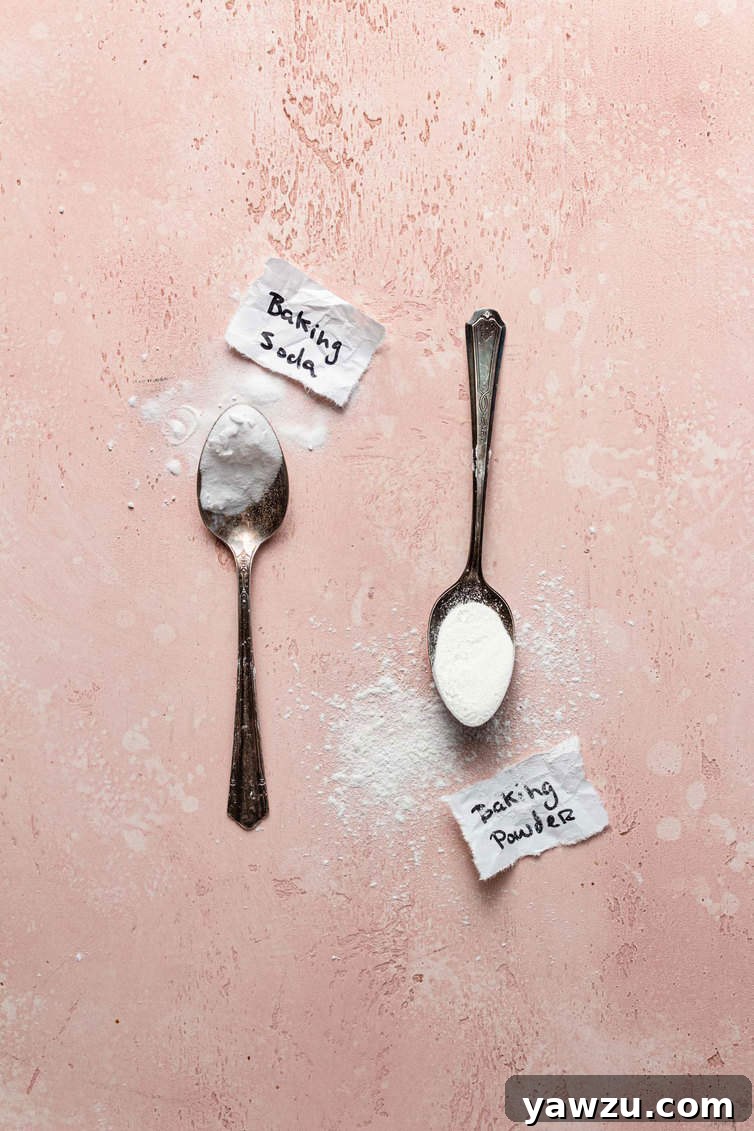
Mastering Your Leaveners: A Final Word
You’ve now armed yourself with invaluable knowledge regarding the distinct characteristics and applications of baking soda and baking powder. Understanding these essential differences is not just about following a recipe; it’s about comprehending the underlying chemistry that makes baking such a magical and delicious process. From deciphering the role of acidic ingredients to appreciating the sustained lift of double-acting powder, you are better equipped to approach any recipe with confidence and an intuitive understanding of how these leavening agents contribute to your final masterpiece.
Whether you’re crafting light-as-air cakes, chewy cookies, or fluffy pancakes, knowing when and why to use baking soda, baking powder, or both, will elevate your baking game. Embrace this knowledge, experiment thoughtfully, and most importantly, enjoy the delightful journey of creating incredible baked goods from scratch. Happy Baking, friends!
Continue Your Baking Journey: Explore More Baking Basics
Ready to delve deeper into the fundamental ingredients and techniques that define successful baking? Check out these related articles to expand your culinary expertise:
- Baking Basics: Cocoa Powder 101
- The Basics of Weighing Ingredients
- Baking Basics: Flour 101
- My Must-Have Ingredients
- Baking Basics: Chocolate 101