
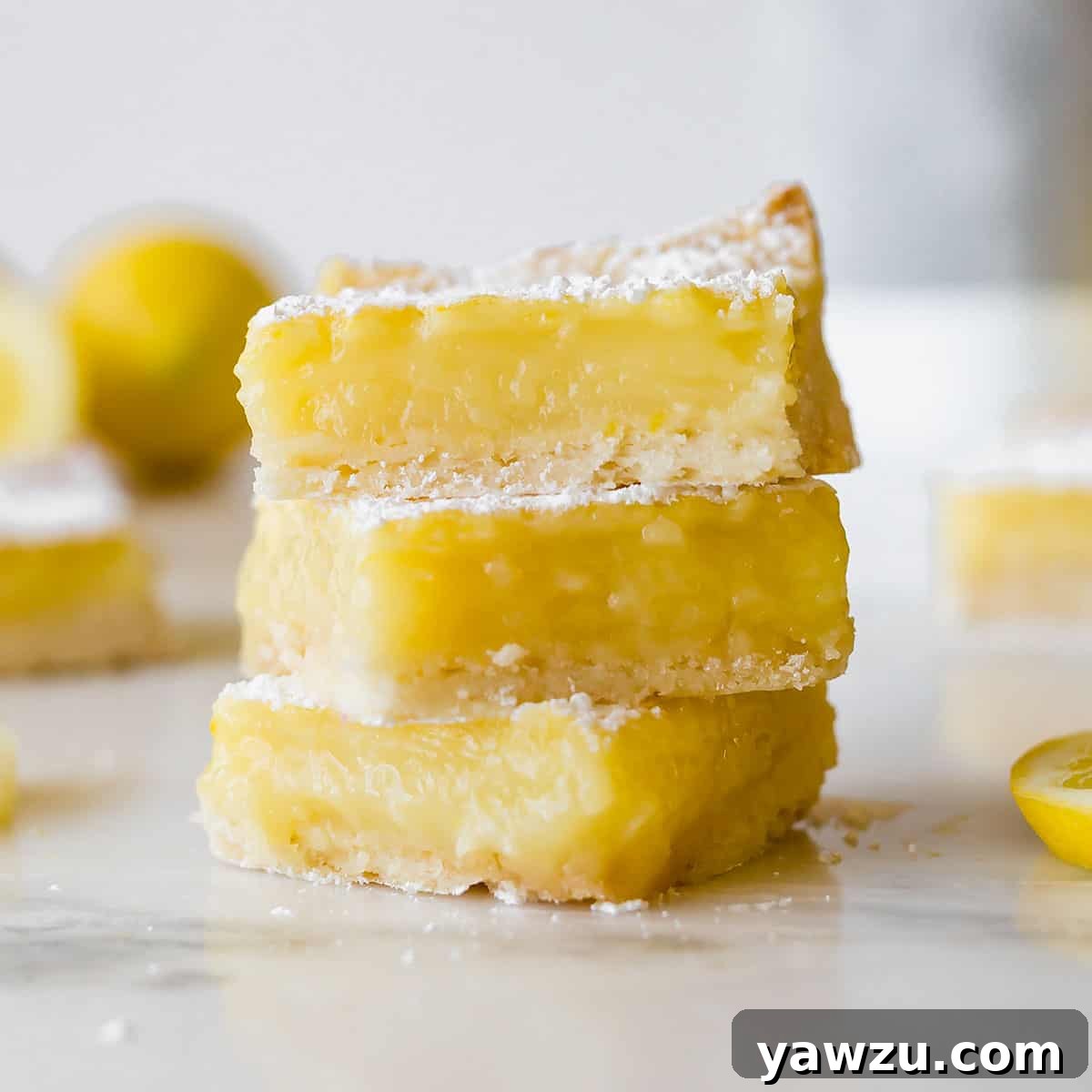
Welcome to the ultimate guide for creating the most exquisite classic lemon bars, a dessert that perfectly captures the essence of summer with its delightful balance of sweet and tart flavors. This easy-to-follow recipe features a rich, creamy, and vibrantly zesty lemon filling generously layered over a tender, buttery shortbread-style crust. Whether you’re planning a casual backyard barbecue, an elegant spring gathering, or simply craving a refreshing treat, these homemade lemon bars are guaranteed to impress. A dusting of powdered sugar or a dollop of freshly whipped cream transforms these bars into an irresistible delight that’s both light and satisfying.
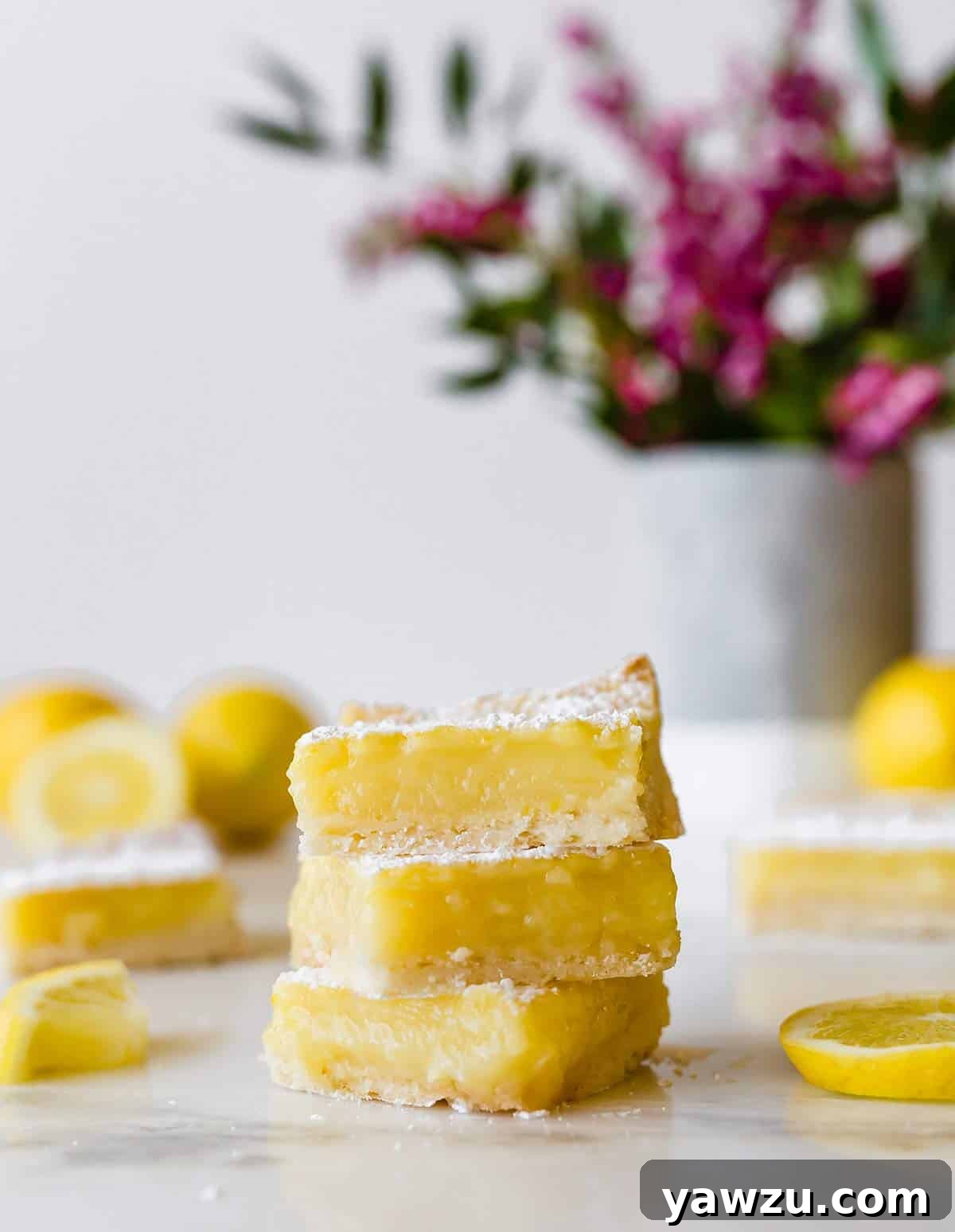
While I admit that lemon isn’t typically my go-to dessert flavor – often finding myself gravitating towards decadent options like rich chocolate cookies or a slice of classic New York-style cheesecake – there are specific moments when nothing else will do. Particularly during the warmer months, when the sun is high and spirits are light, my palate often yearns for something refreshingly bright and considerably less heavy than traditional sweets. It’s in these very moments that these perfect lemon bars step into the spotlight, offering a burst of sunshine in every bite and proving that sometimes, a citrusy dessert is precisely what the occasion calls for.
There’s an undeniable charm to a well-made lemon bar. It’s not just a dessert; it’s an experience. The first bite introduces you to the crumbly, delicate texture of the shortbread, quickly followed by the burst of the tangy, smooth lemon curd. It’s a sensory journey that evokes memories of sun-drenched afternoons and joyful gatherings. This recipe, in particular, aims to deliver that quintessential lemon bar experience with minimal fuss, ensuring that even novice bakers can achieve professional-looking and tasting results.
Why These Lemon Bars Are an Absolute Must-Make
Beyond being the quintessential summer dessert, these lemon bars have garnered a beloved reputation for a multitude of compelling reasons that make them a consistent favorite in any recipe collection. Their unparalleled appeal lies in their perfect execution of flavor, texture, and convenience:
- The Ultimate Harmony of Flavors: These bars strike an exquisite balance between vibrant sweetness and a delightful tartness. The lemon filling is intensely flavorful without being overly sour, and the crust provides just the right amount of sweetness to complement the citrus, ensuring each bite is perfectly harmonious and incredibly satisfying.
- Effortless Make-Ahead Dessert: Hosting a party or simply looking for a convenient sweet treat throughout the week? These lemon bars are a dream come true for meal prep. They can be prepared and baked up to two days in advance, allowing the flavors to meld beautifully and develop even further. This makes them an ideal choice for busy schedules, as you can whip them up ahead of time and simply chill them until ready to serve, freeing up valuable time on the day of your event.
- Surprisingly Simple Preparation: Don’t let their elegant appearance fool you; these lemon bars are unbelievably easy to make. While a food processor can certainly expedite the crust preparation, making it a breeze, the entire recipe can also be successfully executed by hand with just a few basic kitchen tools. This accessibility means that bakers of all skill levels can achieve professional-quality results without intimidation.
- Crowd-Pleasing Versatility: From casual picnics and potlucks to more formal holiday dessert tables, lemon bars are universally adored. Their bright flavor and appealing presentation make them a welcome addition to any gathering, and they easily adapt to various serving styles and garnishes, from a simple dusting of powdered sugar to a more elaborate presentation with fresh berries.
- Perfect Texture Combination: The secret to truly great lemon bars lies in the contrast of textures. This recipe delivers a wonderfully tender, almost sandy shortbread crust that provides a delightful chewiness, perfectly contrasted by the silky-smooth, yet firm, lemon custard filling. The combination creates a luxurious mouthfeel that keeps you coming back for more.
The Essential Ingredients for Perfect Lemon Bars
Crafting these delectable lemon bars requires two distinct yet complementary components: a sturdy, flavorful shortbread crust and a vibrant, creamy lemon filling. Let’s delve into the key ingredients for each, understanding their role in achieving that perfect balance of texture and taste.
The Buttery Shortbread Crust
The foundation of any exceptional lemon bar is its crust. This shortbread-style base is designed to be tender, slightly crumbly, and wonderfully buttery, providing the perfect counterpoint to the tart filling. Here’s what you’ll need:
- All-Purpose Flour: This forms the primary structure of the crust. Using all-purpose flour ensures a sturdy yet tender base that can hold up to the creamy filling without becoming soggy. It’s the backbone of your shortbread.
- Powdered Sugar: Unlike granulated sugar, powdered sugar (confectioners’ sugar) contributes to the crust’s remarkably fine, tender, and almost melt-in-your-mouth texture. It dissolves more readily, preventing a gritty feel and creating that desirable sandy quality that sets a great shortbread apart.
- Cornstarch: This might seem like an unusual addition to a shortbread crust, but it’s a secret ingredient that makes a significant difference. Cornstarch inhibits gluten development in the flour, resulting in an exceptionally soft, delicate, and “short” texture that practically melts in your mouth. It prevents the crust from becoming tough or overly dense.
- Unsalted Butter: The star of any shortbread! Use unsalted butter at a cool room temperature. The butter not only provides rich flavor but also binds the dry ingredients together, creating that iconic buttery texture. Unsalted butter allows you to control the overall salt content of the recipe precisely. Cutting it into 1-inch pieces helps it incorporate evenly and quickly into the dry ingredients.
- Salt: A small amount of salt is crucial for enhancing the flavors of the other ingredients, particularly the butter. It balances the sweetness of the powdered sugar and brings out the richness of the butter.
The Luscious Lemon Filling
The heart of these lemon bars is the vibrant, creamy, and wonderfully tangy filling. I find it most efficient to prepare the filling while the crust is chilling, so it’s perfectly ready to pour into the baked crust straight from the oven. Here are the essential ingredients for this sunny layer:
- Eggs: Eggs are vital for both the structure and richness of the lemon custard. They act as a binder, setting the filling to a firm yet wobbly consistency, and contribute to its creamy mouthfeel and golden color. Beaten lightly, they integrate smoothly into the mixture.
- Granulated Sugar: This provides the necessary sweetness to balance the intense tartness of the lemon juice. It also helps create the desired silky texture of the custard as it dissolves during cooking.
- All-Purpose Flour: A small amount of flour is added to the filling to provide a slight thickening agent, helping the custard set to the perfect consistency – not too runny, not too dense. It ensures a stable, sliceable bar.
- Fresh Lemon Zest: For an intense burst of pure lemon flavor, using fresh lemon zest is absolutely non-negotiable. The zest contains essential oils that carry a profound lemony aroma and taste, far surpassing what juice alone can provide. It adds depth and brightness to the filling.
- Fresh Lemon Juice: This is where the signature tang comes from. Freshly squeezed lemon juice offers a vibrant, bright flavor that bottled juice simply cannot replicate. While bottled can be used in a pinch, be aware that the flavor profile of your bars will be noticeably different and less impactful. For the best results, always opt for fresh.
- Whole Milk: Whole milk is preferred for its fat content, which contributes significantly to the creamy, luscious finish of the filling. It helps to mellow the tartness slightly and creates a smooth, velvety texture that’s incredibly appealing.
- Pinch of Salt: Just like in the crust, a tiny pinch of salt in the filling helps to enhance and balance all the sweet and tart flavors, preventing the filling from tasting flat.
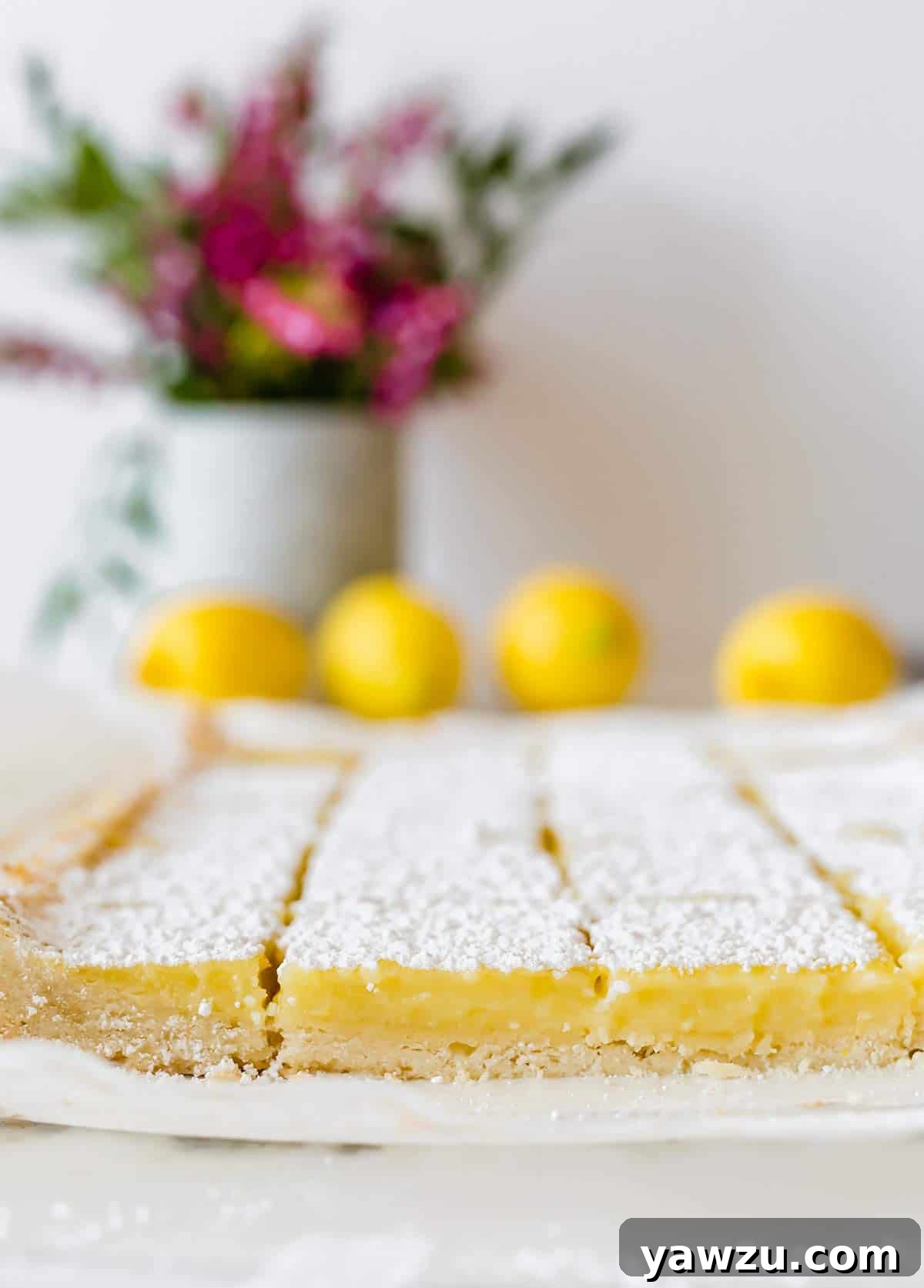
Step-by-Step Guide: Crafting These Exquisite Lemon Bars
This recipe for sweet yet tangy lemon bars is not only celebrated for its incredible flavor but also for its remarkable ease of preparation. The shortbread crust, kept surprisingly soft thanks to the cornstarch, perfectly complements the lemon filling, which masterfully blends creamy richness with firm structure, and tartness with sweetness. Let’s break down the process into two main components: preparing the tender shortbread crust and then creating the silky lemon filling.
Preparing the Shortbread Crust
- Prepare for Baking: Begin by preheating your oven to 350°F (175°C). Lightly butter a 9×13-inch baking pan, ensuring it’s evenly coated. Then, line the pan with parchment paper, leaving an overhang on the longer sides. This overhang will act as a convenient sling to lift the cooled bars out of the pan effortlessly later on.
- Combine Dry Ingredients: In the bowl of a food processor, pulse together the all-purpose flour, powdered sugar, cornstarch, and salt. Process until these ingredients are thoroughly combined and no lumps remain. This ensures an even distribution of flavor and texture throughout the crust.
- Incorporate the Butter: Add the pre-cut, cool room temperature unsalted butter pieces to the dry mixture in the food processor. Pulse for 8 to 10 seconds initially, then continue to pulse in quick 1-second bursts (about three pulses). The mixture should transform into a pale yellow, coarse meal, resembling wet sand. Be careful not to over-process, as this can lead to a tough crust.
- Press into the Pan: Carefully sprinkle the processed crust mixture evenly into your prepared 9×13-inch pan. Using the bottom of a flat glass or your fingers, press the mixture down very firmly and evenly across the entire bottom of the pan and about ½-inch up the sides. A well-compacted crust is essential for a clean, stable base.
- Chill and Bake: Transfer the pan with the pressed crust to the refrigerator and chill for a minimum of 30 minutes. This chilling period is crucial as it prevents the butter from melting too quickly in the oven, ensuring a tender, crumbly crust rather than a greasy one. After chilling, bake the crust in the preheated oven for approximately 20 minutes, or until it achieves a beautiful golden-brown color around the edges.
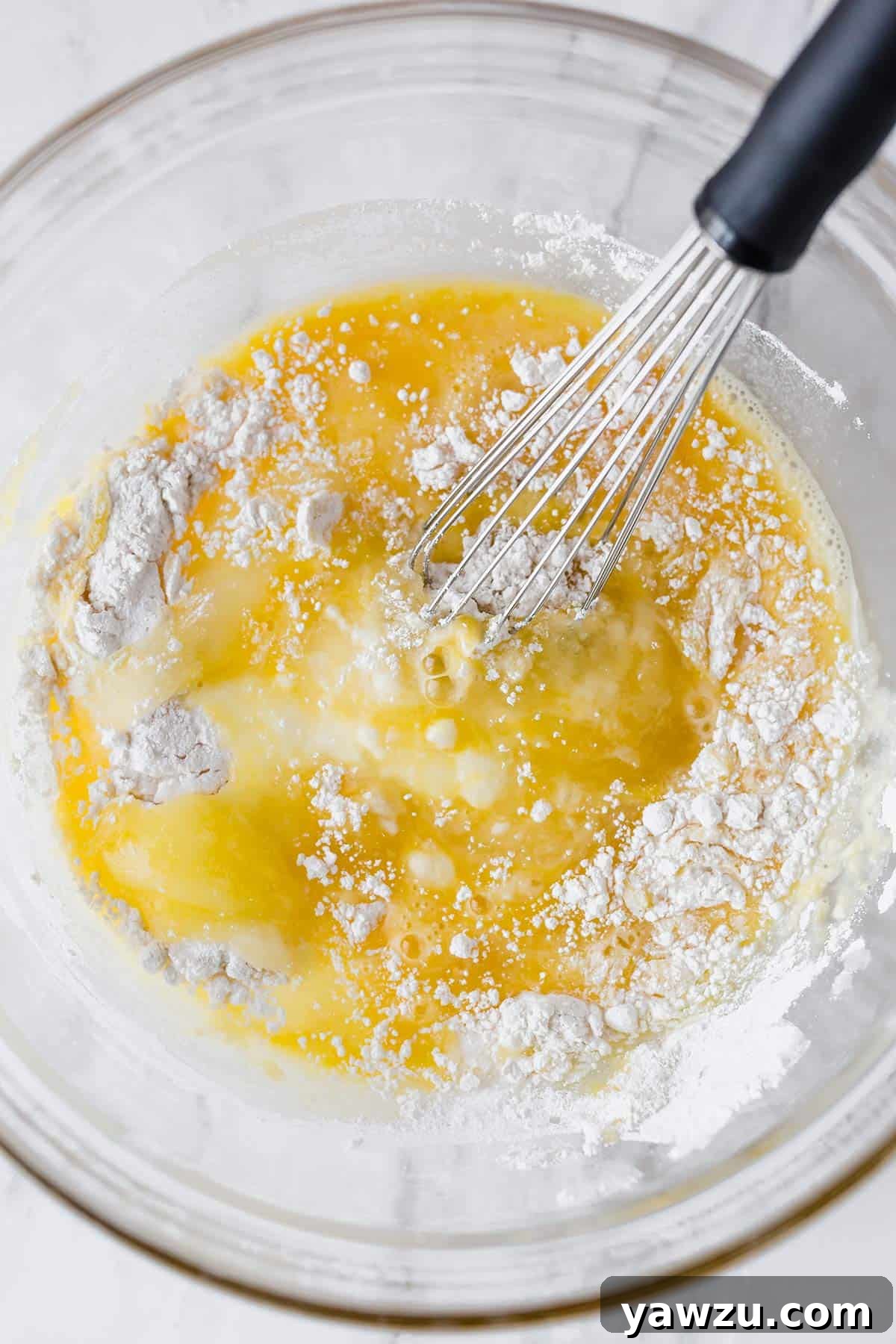
Crafting the Silky Lemon Filling
While your crust is chilling and baking, you can begin preparing the luscious lemon filling, ensuring it’s ready to be poured directly into the warm crust.
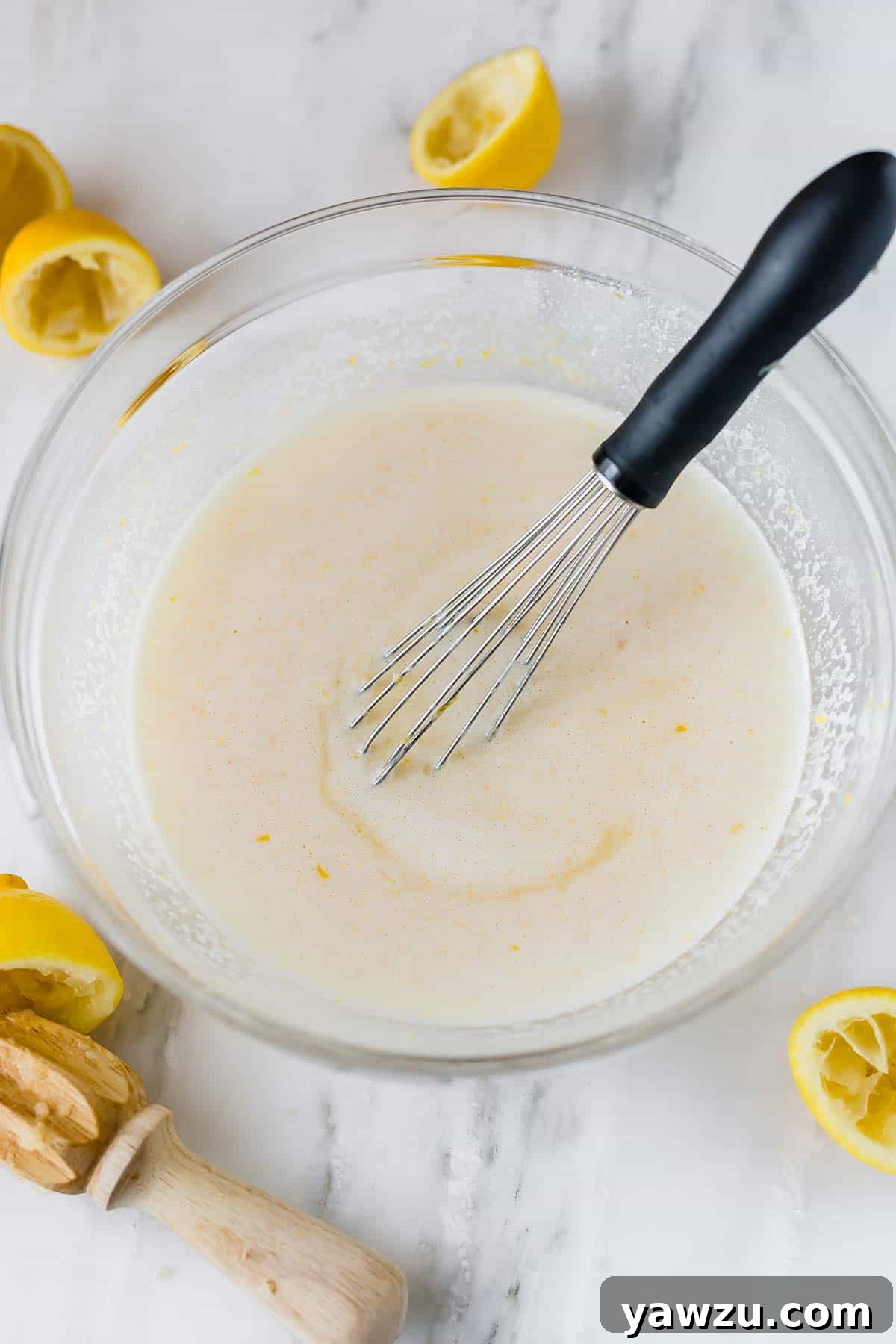
- Combine Eggs and Dry Ingredients: In a medium-sized mixing bowl, whisk together the lightly beaten eggs, granulated sugar, and all-purpose flour until well combined and smooth. Whisk thoroughly to ensure there are no flour lumps.
- Add Remaining Wet Ingredients: Stir in the fresh lemon zest, fresh lemon juice, whole milk, and a pinch of salt. Mix these ingredients thoroughly until everything is fully blended and the mixture appears homogenous. This is a critical step for developing the rich lemon flavor.
- Adjust Oven Temperature: Once the crust has finished baking and is removed from the oven, reduce the oven temperature to 325°F (160°C). This slightly lower temperature will allow the lemon filling to bake gently and set without curdling.
- Pour Filling on Warm Crust: Give the lemon filling mixture another quick stir to re-incorporate any ingredients that may have settled. Immediately pour the vibrant yellow filling over the warm, freshly baked shortbread crust. The warmth of the crust helps the filling begin to set uniformly.
- Bake the Bars: Return the pan to the oven and bake for approximately 20 minutes. The filling is done when it feels firm to the touch in the center, with a slight jiggle, and the edges appear lightly set and perhaps very slightly golden. Avoid overbaking, as this can lead to a dry or rubbery texture.
- Cool Completely: Once baked, carefully transfer the pan to a wire rack. Allow the lemon bars to cool completely to near room temperature, which will take at least 30 minutes. This cooling time is essential for the filling to fully set and firm up.
- Transfer and Slice: Using the parchment paper overhang as a sling, gently lift the entire slab of lemon bars from the pan and transfer it to a clean cutting board. Once completely cooled, slice them into desired squares or rectangles. For the cleanest cuts, ensure the bars are well-chilled.
Expert Baking Tips for Flawless Lemon Bars
Achieving bakery-quality lemon bars is easier than you think with a few professional insights:
- The Magic of Parchment Paper: Never underestimate the power of parchment paper. Ensure your parchment paper lines the entire pan, extending up the sides to create a “sling.” This simple trick makes lifting the cooled, delicate bars out of the pan incredibly easy, preventing breakage and ensuring a perfect presentation. Without it, you risk sticking and frustration.
- Understanding “Set” for Gooey Lemon Bars: When you remove the lemon bars from the oven, the filling should be set but still have a slight, almost imperceptible wobble in the very center. The edges will appear firm and possibly lightly golden. It’s crucial not to overbake them, as they will continue to set and firm up significantly as they cool. This process is key to achieving that desirable gooey, creamy texture in the middle. Resist the urge to cut into them prematurely; patience during cooling is paramount.
- Optimal Ingredient Temperature: For the crust, ensure your butter is at a cool room temperature – firm enough to hold its shape but soft enough to be pressed. For the filling, using room temperature eggs and milk will help them incorporate more smoothly and prevent any shocking of the mixture, contributing to a silkier custard.
- Don’t Skimp on Freshness: The quality of your lemons directly impacts the flavor of your bars. Always use fresh, ripe lemons for both the zest and juice. The difference in taste compared to bottled juice is truly significant.
- Avoid Over-Mixing the Crust: When combining the butter with the dry ingredients for the crust, mix just until a coarse meal forms. Over-mixing can develop too much gluten, resulting in a tough, less tender crust.
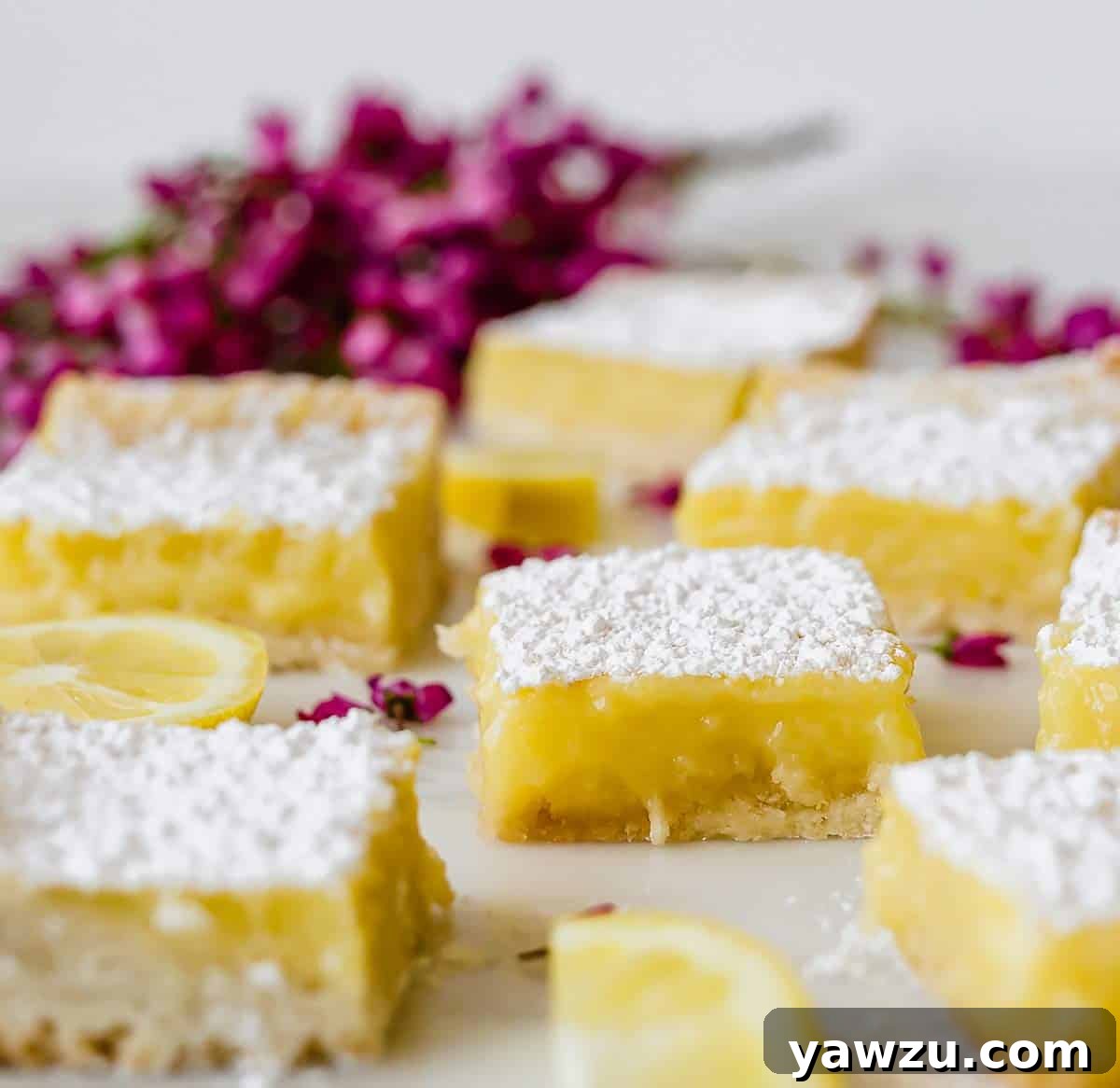
Achieving Perfectly Smooth Cuts on Your Lemon Bars
After all your effort in baking these delicious lemon bars, you’ll want them to look as good as they taste. Here are a few invaluable tips to ensure you get clean, smooth, and professional-looking cuts every single time:
- Allow for Complete Setting: This is arguably the most critical tip. The lemon bars absolutely must be completely set and thoroughly chilled before you even think about slicing them. For the best results, consider refrigerating them overnight. The cold temperature firms up the custard filling, making it much easier to cut without sticking or smearing. Trying to cut warm or insufficiently chilled bars will almost always result in a messy, uneven cut.
- The Warm Knife Technique: For remarkably smooth and clean lines, run a sharp, thin-bladed knife under very warm water for about 10-15 seconds. Wipe the blade completely dry with a clean towel. The warmth of the knife will glide through the chilled lemon filling without dragging or creating crumbs, resulting in pristine edges.
- Clean Your Knife Between Cuts: This step is often overlooked but makes a significant difference. After each cut, wipe the knife blade clean with a damp paper towel or cloth and then re-warm it under hot water (and dry again) before making the next cut. Residual lemon filling stuck to the blade will cause subsequent cuts to be rough, sticky, and less precise. Taking the extra second to clean and warm the knife ensures consistently perfect slices.
- Use a Ruler (Optional but Recommended): For those aiming for absolute perfection and uniform squares, a clean ruler can be your best friend. Lightly score the top of the chilled bars to create a grid before making your final cuts. This ensures all your pieces are the same size and shape, adding to the professional presentation.
- Gentle Pressure: When cutting, use a firm but gentle downward motion. Avoid sawing back and forth, as this can tear the delicate crust and filling. A single, decisive cut is best.
Delightful Serving Suggestions for Your Lemon Bars
Whether you’re preparing these bright lemon bars for a casual summer picnic, an elegant wedding cookie table, or a festive holiday dessert tray, you’ll be thrilled with how effortlessly they come together and, more importantly, how incredibly delicious they are. Their versatile flavor profile makes them suitable for a wide array of occasions. Here are some of my favorite ways to serve these delightful bars, elevating their charm and appeal:
- Classic Powdered Sugar Dusting: The most traditional and elegant presentation. Once the bars are completely cooled and sliced, use a fine-mesh sieve to shower them generously with powdered sugar. This adds a beautiful, delicate finish that contrasts visually with the yellow filling and provides an extra touch of sweetness, melting slightly as it hits the bars for a subtle glaze.
- Fresh Whipped Cream: For an extra layer of creamy decadence, dollop a fresh scoop of homemade whipped cream on top of each bar. The light, airy cream perfectly complements the rich, tangy lemon filling, adding a luxurious texture and mellowing the citrus just slightly for a truly indulgent bite.
- Fresh Berries: Garnish your lemon bars with a scattering of vibrant fresh berries like raspberries, blueberries, or sliced strawberries. The natural sweetness and slight tartness of the berries provide a wonderful contrast to the lemon and add a pop of color and freshness, making them ideal for summer entertaining.
- Mint Sprig: A small sprig of fresh mint placed artfully on top of each bar or plate adds a sophisticated touch of color and a subtle aromatic lift that enhances the bright lemon flavor.
- Alongside Tea or Coffee: Lemon bars make an excellent companion to a cup of hot tea (especially black or green tea) or a fresh brew of coffee. Their refreshing tang cuts through the richness of the drinks, creating a delightful pairing for an afternoon treat.
- With Vanilla Bean Ice Cream: For a truly decadent dessert experience, serve a slightly warm lemon bar with a scoop of premium vanilla bean ice cream. The melting ice cream creates a sauce that merges with the tangy lemon, offering a spectacular hot-and-cold sensation.
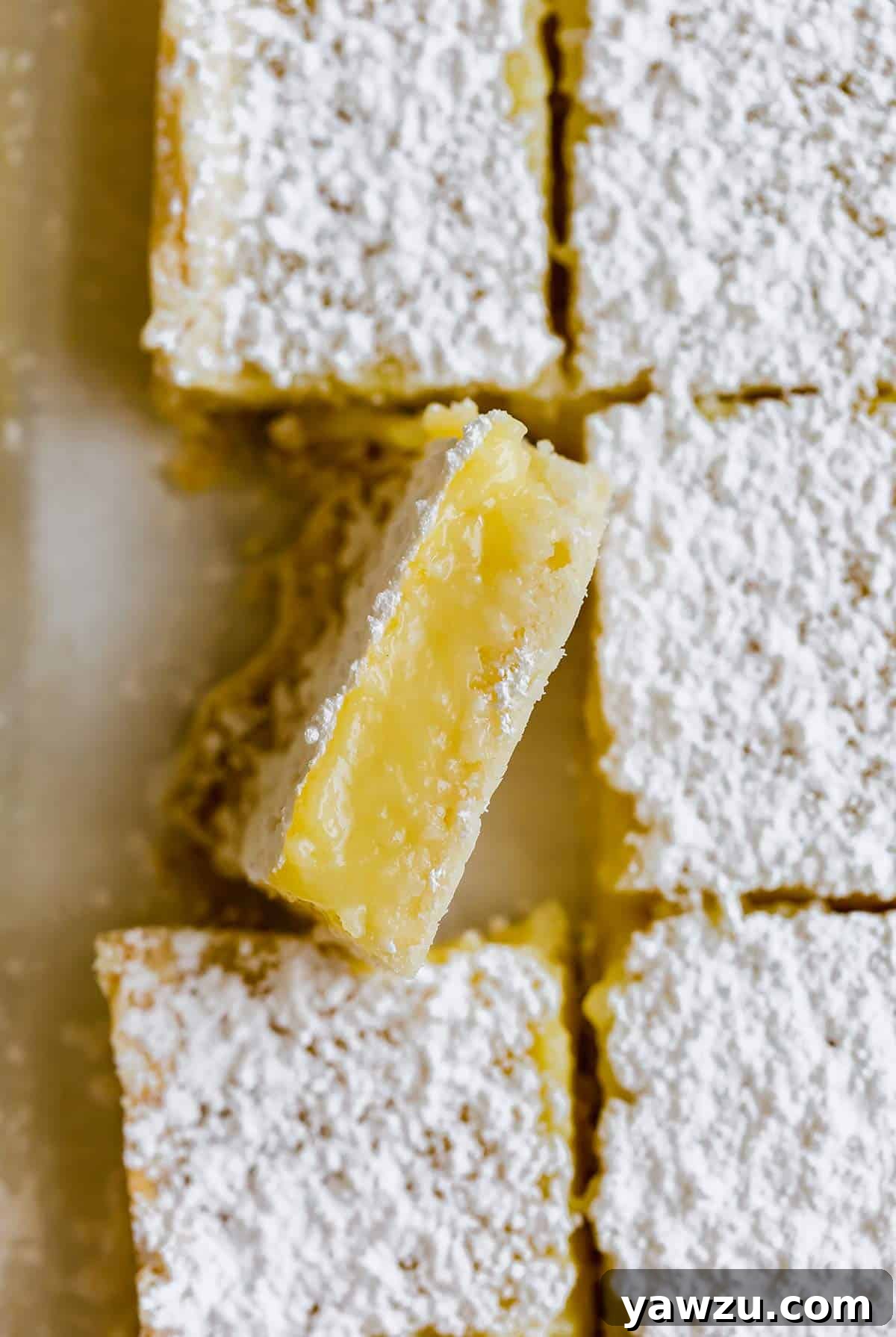
Serving, Storing, and Freezing Your Lemon Bars
Understanding how to properly serve, store, and even freeze your lemon bars ensures you can enjoy their delightful flavor for as long as possible, whether freshly baked or prepared in advance.
- Serving at Room Temperature: Lemon bars are quite resilient and can comfortably be kept out at room temperature for up to 6 hours or so. This makes them an excellent choice for parties, potlucks, and picnics where refrigeration might not always be immediately available. However, for prolonged freshness and safety, especially in warmer climates, chilling is recommended.
- Storing Cooked Bars (Refrigeration): For any leftover lemon bars or those prepared for future enjoyment, refrigeration is key. Tightly cover the bars with plastic wrap or place them in an airtight container to prevent them from drying out or absorbing other food odors. Stored this way, they will remain wonderfully fresh and delicious in the refrigerator for up to 2 days. The cold temperature also helps maintain their firm, sliceable texture.
- Make-Ahead Preparation: These lemon bars are a fantastic make-ahead dessert. You can bake them up to two days in advance without any compromise on flavor or quality. After baking, allow them to cool completely to room temperature on a wire rack. Then, wrap the entire slab (or individual bars) tightly in plastic wrap and refrigerate. When you’re ready to serve, bring them back to room temperature for about 15-20 minutes. If any condensation has formed on top, gently blot it away with a paper towel before dusting with powdered sugar. This prevents the powdered sugar from dissolving quickly and keeps your presentation pristine.
- Freezing the Whole Batch: If you’re looking to extend the shelf life even further, lemon bars freeze beautifully. Once baked, allow the entire batch to cool completely. Before slicing, wrap the slab tightly first in plastic wrap, then in a layer of aluminum foil. This double-layer protection prevents freezer burn. Store in the freezer for up to 1 month. When ready to enjoy, thaw overnight in the refrigerator, then bring to room temperature and slice as desired.
- Freezing Individual Bars: For ultimate convenience, you can freeze individual slices. After the bars are baked, cooled, and sliced, arrange them in a single layer on a baking sheet. Place the baking sheet in the freezer until the bars are completely solid, which usually takes about 2 hours. Once frozen, wrap each individual bar tightly in plastic wrap. Then, place the wrapped bars into a freezer-safe bag or an airtight container. They will keep well in the freezer for up to 2 months. This method allows you to grab a single serving whenever a craving strikes!
If You Adore These Lemon Bars, You’ll Love These Other Citrusy Treats!
If the bright, tangy flavors of these classic lemon bars have captured your heart, then you’re in for a treat with these other incredible lemon and citrus-infused recipes. Each offers a unique spin on everyone’s favorite sunny fruit, promising more delightful baking adventures:
- Sky-High Lemon Meringue Pie Bars: All the spectacular flavors and dramatic presentation of a classic lemon meringue pie, but in a convenient, easy-to-serve bar format. Get ready for towering meringue peaks!
- Blueberry-Lemon Buttermilk Bundt Cake: A moist, tender bundt cake bursting with juicy blueberries and bright lemon zest, all enhanced by the rich tang of buttermilk. Perfect for breakfast, brunch, or dessert.
- Lemon-Limoncello Cupcakes: These sophisticated cupcakes feature a tender lemon cake infused with the sweet, potent flavor of Limoncello, topped with a luscious lemon frosting. An adult-friendly treat!
- Lemon Blueberry Cheesecake Bars: A decadent combination of creamy lemon cheesecake swirled with fresh blueberries, all resting on a graham cracker crust. These bars are a true crowd-pleaser for any occasion.
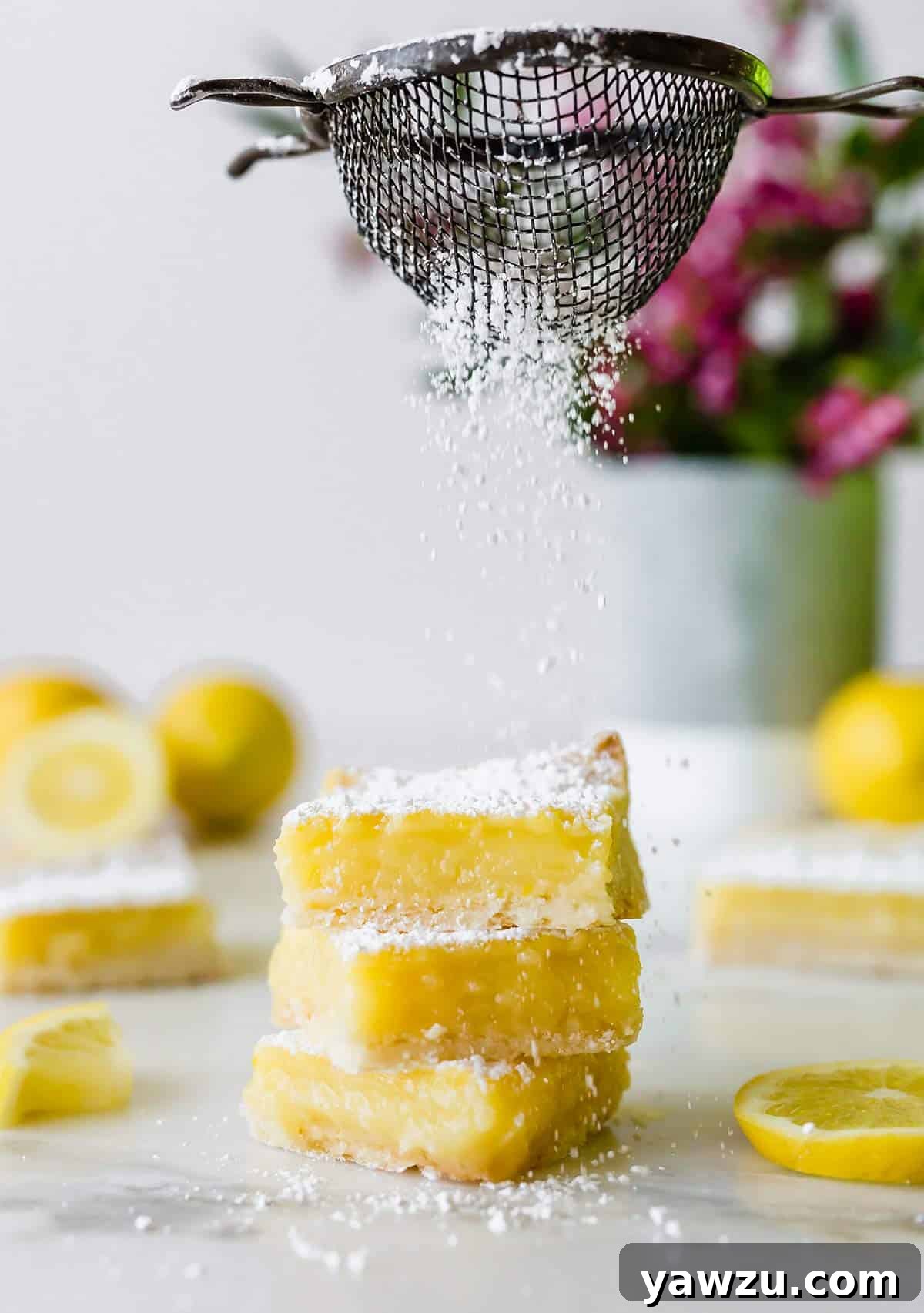
Sweeten your summer, brighten your holidays, or simply indulge your cravings with these irresistible sweet yet tangy lemon bars. Featuring a sumptuously creamy lemon filling atop a perfectly crumbly, buttery shortbread-style crust, this easy lemon bar recipe is an absolute essential for any occasion. From festive cookie tables and joyous backyard BBQs to quiet evenings at home, these bars offer a taste of sunshine that everyone will adore. They are the epitome of simple elegance and refreshing flavor, making them a consistent favorite for bakers and dessert lovers alike. Prepare to fall in love with the classic charm of homemade lemon bars.
If you make this recipe and absolutely love it, please remember to come back and give it a 5-star rating – your feedback genuinely helps other bakers discover and enjoy this wonderful recipe! ❤️️
Lemon Bars Recipe

Classic Lemon Bars featuring a buttery shortbread-style crust and a silky smooth, perfectly balanced slightly tart, sweet lemon custard on top. A simple dusting of powdered sugar is all they need to shine!
Recipe Details
- Yield: 24 bars
- Prep Time: 45 minutes
- Cook Time: 40 minutes
- Total Time: 1 hour 25 minutes
Ingredients
For the Crust
- 1¾ cups (218.75 g) all-purpose flour
- ⅔ cup (80 g) powdered sugar, plus extra for decorating finished bars
- ¼ cup (32 g) cornstarch
- ¾ teaspoon (0.75 teaspoon) salt
- ¾ cup (170.25 g) unsalted butter, at cool room temperature, cut into 1-inch pieces
For the Filling
- 4 large eggs, lightly beaten
- 1⅓ cups (266.67 g) granulated sugar
- 3 tablespoons all-purpose flour
- 2 teaspoons grated lemon zest, from about 2 large lemons
- ⅔ cup (162.67 ml) fresh lemon juice
- ⅓ cup (81.33 ml) whole milk
- Pinch of salt
Instructions
- Prepare Oven and Pan: Preheat oven to 350°F (175°C). Lightly butter a 9×13-inch baking pan and line it with parchment paper, leaving an overhang on the longer sides to create a sling.
- Make the Crust: In a food processor, pulse flour, powdered sugar, cornstarch, and salt until combined. Add the butter and process for 8 to 10 seconds, then pulse about three 1-second times until the mixture is pale yellow and resembles coarse meal. Sprinkle the mixture into the lined pan and press firmly into an even layer over the entire bottom and ½-inch up the sides. Refrigerate for 30 minutes, then bake until golden brown, about 20 minutes.
- Make the Filling: While the crust is chilling and baking, whisk the eggs, granulated sugar, and 3 tablespoons of flour in a medium bowl until smooth. Stir in the lemon zest, lemon juice, whole milk, and a pinch of salt until well blended.
- Bake the Bars: Once the crust is baked, reduce the oven temperature to 325°F (160°C). Stir the filling mixture again to reincorporate ingredients, then pour it over the warm crust. Bake until the filling feels firm when touched lightly (it may have a slight wobble in the center), about 20 minutes.
- Cool and Slice: Transfer the pan to a wire rack and cool completely to near room temperature, at least 30 minutes. Use the parchment paper sling to lift the bars from the pan, then place on a cutting board to slice into squares. Sift powdered sugar over the cooled, sliced bars, if desired.
Notes
- Serving: Lemon bars can be kept at room temperature for up to 6 hours when serving at a party.
- Storing: Store cooked lemon bars or leftovers in an airtight container or covered tightly with plastic wrap in the refrigerator for up to 2 days.
- Freezing the Whole Batch: Bake and cool the lemon bars completely. Before slicing, wrap tightly in plastic wrap, then foil, and freeze for up to 1 month. Thaw in the refrigerator overnight.
- Freezing Individual Bars: Once sliced, place lemon bars on a baking sheet and freeze until solid (about 2 hours). Wrap each bar tightly in plastic wrap and place in a freezer-safe bag for up to 2 months.
- Hand-Prepared Crust: You can make the crust by hand by whisking the dry ingredients, then cutting in cold, diced butter with a pastry blender or rubbing it in with your fingertips until it resembles coarse meal.
- Timing the Filling: Ensure the filling is prepared and ready to be poured into the warm crust immediately after it comes out of the oven for optimal setting.
Nutrition Information (per serving)
- Calories: 162kcal
- Carbohydrates: 24g
- Protein: 2g
- Fat: 6g
- Saturated Fat: 3g
- Cholesterol: 42mg
- Sodium: 85mg
- Potassium: 33mg
- Sugar: 14g
- Vitamin A: 220IU
- Vitamin C: 2.8mg
- Calcium: 11mg
- Iron: 0.6mg
Did you make this recipe?
Leave a review below, then snap a picture and tag @thebrowneyedbaker on Instagram so I can see it!
Michelle Lettrich
Dessert
American
Photography by Whitney Wright