
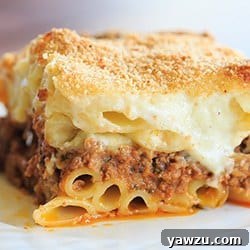
The Ultimate Classic Pastitsio: A Heartwarming Greek Baked Pasta Recipe
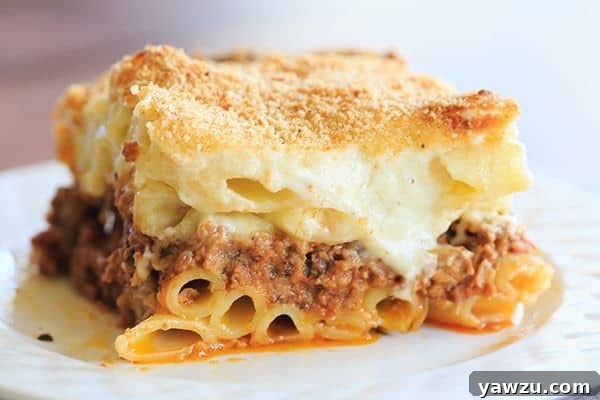
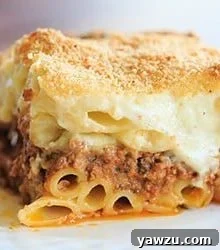
Discover the authentic taste of Greece with this classic pastitsio recipe – a delightful medley of ziti pasta, a savory beef and lamb ragu, creamy béchamel sauce, and a generous topping of melted cheese!
Bringing Greek Flavors to Our Sunday Table
Sunday dinners at our home have become a cherished tradition, a time for family, friends, and, of course, delicious food. Our menus are as diverse as our conversations, ranging from classic Italian pasta dishes to vibrant taco bars, and hearty cookouts featuring BBQ ribs and chili. The inspiration for each week’s meal often strikes unexpectedly. Sometimes, it’s a specific craving that guides my culinary journey, while other times, I delve into my collection of saved recipes, hoping for a dish to capture my imagination.
A few weeks ago, during one of these treasure hunts through my recipe archives, I stumbled upon an entry for pastitsio. The description alone was enough to pique my interest: a traditional Greek baked pasta, boasting tantalizing layers of tubular ziti, a rich and aromatic meat sauce, a velvety smooth béchamel, and an irresistible amount of cheese. It immediately became the star of our next Sunday dinner, and the response was nothing short of phenomenal. Everyone at the table was utterly captivated by its comforting warmth and complex flavors.
My Introduction to Authentic Greek Cuisine
My first true encounter with the wonders of Greek cuisine happened years ago when my husband, then my boyfriend, was living near Washington D.C. There was an incredible Greek restaurant just a short walk from his apartment, and it was there that I experienced a culinary revelation. With my very first bite of moussaka, I was completely smitten with the intricate flavors and textures of Greek food. Since then, pastitsio has always been on my culinary bucket list, a dish I eagerly awaited the perfect opportunity to master.
This particular pastitsio recipe is a harmonious blend of traditional techniques and accessible ingredients, inspired by recipes from both Elly Says Opa and Vefa’s Kitchen cookbook. While these authentic sources often call for specific Greek cheeses, which aren’t always readily available at my local grocery store, I opted for their recommended substitutions: a combination of Parmesan and Romano cheeses. This slight adaptation ensures the dish is achievable for home cooks everywhere without sacrificing its essential Greek character. One of the best aspects of this recipe is its make-ahead potential. I prepared the entire dish, minus the final cheese and breadcrumb topping, the day before our Sunday gathering. This allowed for a stress-free assembly and baking process right before dinner, making hosting a breeze.
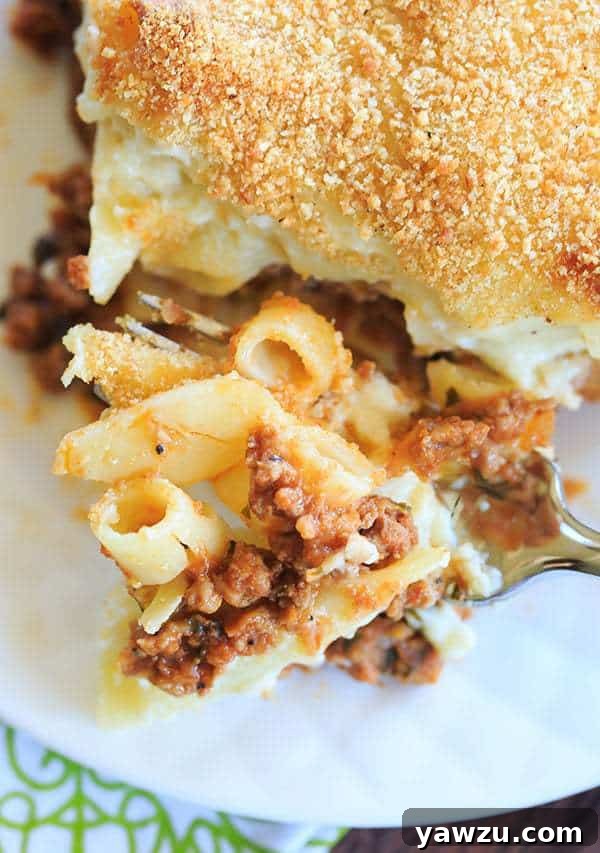
To say that this pastitsio was merely “loved” by everyone would be a significant understatement. Each forkful offered a symphony of textures and tastes: tender pasta, rich and aromatic meat sauce, lusciously creamy béchamel, and the salty tang of melted cheese. It’s a truly magnificent dish that I wholeheartedly encourage you to try at your earliest convenience!
What Makes Pastitsio So Special?
Pastitsio, often hailed as “Greek lasagna,” stands out as a beloved classic in Hellenic cuisine. While it shares some similarities with its Italian counterpart, pastitsio possesses a distinctive identity thanks to its unique blend of spices and its signature creamy béchamel topping. This hearty baked dish is more than just food; it’s a symbol of Greek hospitality and comfort, often gracing tables at family gatherings, holidays, and special occasions. The layers are carefully constructed to create a harmonious balance of flavors and textures in every bite, making it an unforgettable culinary experience.
The Essential Layers of Pastitsio
At its core, pastitsio is defined by three distinct and equally important layers:
- The Pasta Base: Typically made with thick, hollow pasta like ziti or bucatini. These tubes are perfect for capturing the rich flavors of the meat sauce and béchamel. The pasta is usually cooked al dente and often mixed with butter and egg to create a stable, flavorful base.
- The Savory Meat Sauce (Ragu): A deeply flavorful mixture, traditionally combining ground beef and ground lamb. What sets Greek meat sauce apart is the use of warm spices such as cinnamon, nutmeg, and bay leaves, which infuse the sauce with a distinctive aroma and depth not commonly found in Italian ragu. Crushed tomatoes and tomato paste provide a robust foundation, while grated onions and minced garlic add essential aromatics.
- The Creamy Béchamel Topping: The crowning glory of pastitsio. This rich, thick, and perfectly smooth white sauce is made from butter, flour, and milk, seasoned with salt, white pepper, and a hint of nutmeg. Enriched with egg yolks and grated cheese, it bakes into a golden, custardy crust that seals in the flavors and adds an unparalleled richness to the dish.
The combination of these layers creates a dish that is both deeply satisfying and exquisitely refined, a true testament to the artistry of Greek home cooking.
Pastitsio Recipe
Yield: 6 to 8 servings
Prep Time: 1 hour 30 mins
Cook Time: 1 hour
Total Time: 2 hours 30 mins
A classic pastitsio recipe – layers of ziti pasta with a beef and lamb sauce, béchamel and loads of cheese!
Average Rating: 4.41 out of 5 stars (based on 20 ratings)
Ingredients
For the Meat Sauce:
- 3 tablespoons olive oil
- 2 yellow onions, grated
- 1 pound (453.59 g) ground beef
- 1 pound (453.59 g) ground lamb
- 4 cloves garlic, minced
- 15 ounce (425.24 g) can crushed tomatoes
- 2 tablespoons tomato paste
- ⅓ cup (20 g) minced fresh parsley
- 1½ teaspoons salt
- 1 teaspoon ground black pepper
- ½ teaspoon granulated sugar
- 1 cinnamon stick
- 2 bay leaves
- 1 egg white, lightly beaten
For the Pasta:
- 1 pound (453.59 g) ziti pasta
- 4 tablespoons unsalted butter, melted
- 1 egg, slightly beaten
- 1 cup (100 g) Parmesan or Romano cheese, grated
For the White Sauce (Béchamel):
- ½ cup (113.5 g) unsalted butter
- ½ cup (62.5 g) all-purpose flour
- 4 cups (976 ml) whole milk
- 1 teaspoon salt
- 1 teaspoon white pepper
- ¼ teaspoon ground nutmeg
- 3 egg yolks, lightly beaten
- ¾ cup (75 g) Parmesan or Romano cheese, grated
To Assemble the Pastitsio:
- 2 tablespoons + ¼ cup plain breadcrumbs, divided
- ¼ cup (25 g) Parmesan or Romano cheese, grated
Instructions
- Prepare Baking Dish: Grease a 9×13-inch baking dish; set aside.
- Make the Meat Sauce: In a large saucepan or Dutch oven, heat 3 tablespoons of olive oil over medium-low heat. Add the grated onions and cook until they are softened and lightly browned, typically about 5 minutes. Stir in the minced garlic and cook for an additional 30 seconds until fragrant. Increase the heat to medium-high, add the ground beef and lamb, and cook, breaking up the meat with a spoon, until it is thoroughly browned. Drain any excess fat. Stir in the crushed tomatoes, tomato paste, minced fresh parsley, 1½ teaspoons salt, 1 teaspoon black pepper, ½ teaspoon granulated sugar, the cinnamon stick, and bay leaves. Bring the mixture to a boil, then reduce the heat to low. Simmer, uncovered, for about 1 hour, or until most of the liquid has evaporated and the sauce has thickened significantly. Remove from heat and discard the cinnamon stick and bay leaves.
- Prepare the Pasta: While the meat sauce simmers, bring a large pot of salted water to a rolling boil. Add the ziti pasta and cook according to package directions until it is al dente (firm to the bite). Drain the pasta thoroughly and return it to the pot. Immediately toss the hot pasta with the 4 tablespoons of melted unsalted butter to prevent sticking and add flavor. Set aside to cool slightly.
- Make the White Sauce (Béchamel): In a large sauté pan or saucepan, melt ½ cup of unsalted butter over medium heat. Add ½ cup of all-purpose flour and whisk continuously for about 1 minute, forming a light roux until it is slightly browned and smells nutty. Gradually add the 4 cups of whole milk to the roux, whisking constantly to prevent lumps. Continue cooking and whisking until the sauce thickens to a smooth, creamy consistency, which should take approximately 10 to 15 minutes. Remove the béchamel from the heat and whisk in 1 teaspoon of salt, 1 teaspoon of white pepper, and ¼ teaspoon of ground nutmeg. Set aside to cool slightly.
- Preheat Oven: Preheat your oven to 375 degrees F (190 degrees C).
- Assemble the Pastitsio – First Layer: Sprinkle the bottom of the greased 9×13-inch baking dish with 2 tablespoons of plain breadcrumbs. Stir the slightly beaten egg and 1 cup of grated Parmesan or Romano cheese into the slightly cooled pasta. Spread half of this pasta mixture evenly over the breadcrumbs in the bottom of the baking dish, pressing it down gently.
- Assemble the Pastitsio – Meat and Second Pasta Layer: Fold the lightly beaten egg white into the prepared meat sauce. Spread the entire meat sauce mixture evenly on top of the first pasta layer. Top the meat sauce with the remaining half of the pasta mixture.
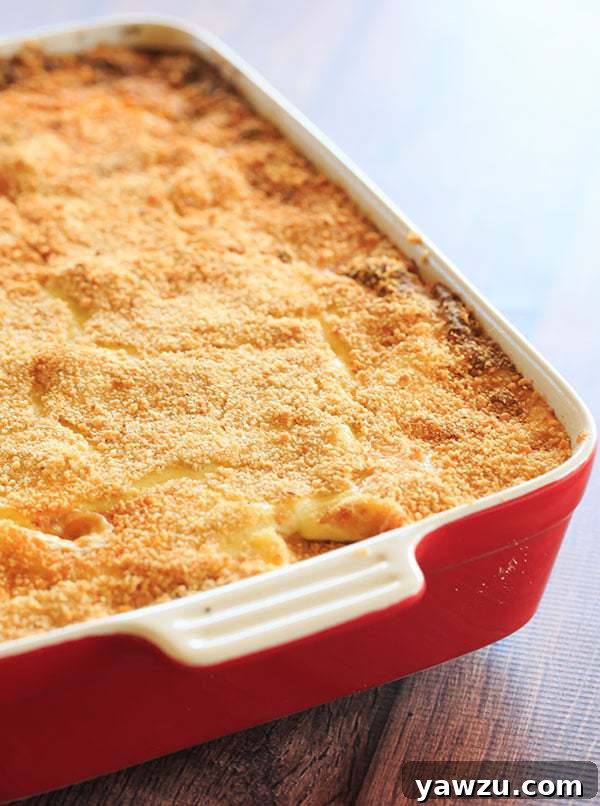
- Assemble the Pastitsio – Béchamel and Final Topping: Whisk the 3 lightly beaten egg yolks and ¾ cup of grated Parmesan or Romano cheese into the slightly cooled white sauce (béchamel). Pour and spread this rich béchamel sauce evenly over the top pasta layer, ensuring it covers the entire surface. In a small bowl, combine the remaining ¼ cup of plain breadcrumbs with ¼ cup of grated Parmesan or Romano cheese. Sprinkle this mixture generously over the béchamel sauce.
- Bake and Serve: Bake the pastitsio in the preheated oven for 45 minutes to 1 hour, or until the surface is beautifully golden brown and the sauce is bubbling around the edges. Once baked, remove from the oven and allow it to rest for at least 15 minutes before slicing and serving. This resting period allows the layers to set, making for cleaner slices. Leftovers should be stored, covered, in the refrigerator for up to 4 days.
Notes
Nutritional values are approximate and based on one serving.
Nutrition Facts (per serving)
- Calories: 789 kcal
- Carbohydrates: 65 g
- Protein: 46 g
- Fat: 52 g
- Saturated Fat: 26 g
- Cholesterol: 244 mg
- Sodium: 1039 mg
- Potassium: 920 mg
- Fiber: 4 g
- Sugar: 12 g
- Vitamin A: 1435 IU
- Vitamin C: 11.6 mg
- Calcium: 518 mg
- Iron: 5.1 mg
Did you make this recipe?
We’d love to hear about your experience! Leave a review below to share your thoughts. Don’t forget to snap a picture and tag @thebrowneyedbaker on Instagram so we can see your beautiful creation!
Author: Michelle Lettrich
Course: Main Course
Cuisine: Greek, Mediterranean
Tips for Perfect Pastitsio Every Time
- Grate Your Onions: Grating the onions rather than dicing them helps them melt into the sauce, creating a smoother texture and distributing their flavor more evenly without noticeable chunks. This is a classic Greek technique for a finer ragu.
- Don’t Skimp on Simmering: Allowing the meat sauce to simmer for the full hour is crucial. This process significantly deepens the flavors, tenderizes the meat, and allows the spices to meld perfectly. The reduction of liquid also ensures the sauce isn’t watery, which could make the pastitsio soggy.
- Al Dente Pasta is Key: Cook your ziti only until al dente. The pasta will continue to cook and absorb liquid in the oven. If it’s overcooked initially, it will turn mushy in the final baked dish.
- Master the Béchamel: A smooth béchamel is essential. Whisk constantly when adding the milk to the roux to prevent lumps. If you find small lumps, use an immersion blender or pass the sauce through a fine-mesh sieve before adding the egg yolks and cheese. Cooling it slightly before adding the egg yolks also prevents them from scrambling.
- Season Generously: Taste your meat sauce and béchamel as you go. Adjust salt and pepper as needed. The cinnamon and nutmeg are subtle but vital for authentic Greek flavor, so don’t omit them.
- Resting Period is a Must: Resist the urge to cut into the pastitsio immediately after it comes out of the oven. Letting it rest for at least 15 minutes allows the layers to set properly, resulting in cleaner, more defined slices and preventing the dish from falling apart.
Pastitsio Variations and Serving Suggestions
Customizing Your Pastitsio
While the classic pastitsio recipe is delicious as is, there’s always room for personal touches and dietary adaptations:
- Meat Alternatives: If you prefer, you can use all ground beef or all ground lamb. For a lighter version, ground turkey or chicken could also be used, though the flavor profile will be different. Some traditional recipes even include a small amount of pork.
- Cheese Choices: While Parmesan and Romano are excellent substitutes, if you have access to traditional Greek cheeses like Kefalotyri or Graviera, they would elevate the authenticity of the dish. Feta cheese can also be crumbled into the meat sauce for a saltier, tangier kick.
- Spice Adjustments: Feel free to adjust the amount of cinnamon and nutmeg to your liking. Some prefer a bolder spice presence, while others like it more subtle. A pinch of allspice can also be a wonderful addition to the meat sauce.
- Vegetarian Pastitsio: For a meatless version, you can create a rich mushroom-based ragu or a lentil-based sauce, maintaining the savory depth while omitting meat.
What to Serve with Pastitsio
Pastitsio is a substantial meal on its own, but it pairs beautifully with simple, fresh sides that complement its richness:
- Greek Salad: A classic Greek salad with fresh tomatoes, cucumbers, red onion, Kalamata olives, and feta cheese, dressed with olive oil and oregano, provides a refreshing contrast.
- Crusty Bread: A warm, crusty loaf of bread is perfect for soaking up any lingering sauce.
- Steamed Green Vegetables: Simple steamed green beans or broccoli with a squeeze of lemon juice offer a light, healthy accompaniment.
- Red Wine: A medium-bodied red wine, such as a Merlot or a Greek Agiorgitiko, would complement the rich flavors of the meat sauce beautifully.
Make-Ahead and Storage Tips
Pastitsio is an ideal dish for meal prepping or entertaining, as it can be prepared in advance:
- Prepare Ahead: As mentioned, you can assemble the entire pastitsio up to the point of adding the final breadcrumb and cheese topping. Cover the dish tightly with plastic wrap and refrigerate for up to 24 hours. Before baking, remove it from the refrigerator and let it sit at room temperature for about 30 minutes while the oven preheats, then add the topping and bake as directed. You might need to add an extra 5-10 minutes to the baking time if it’s still quite cold.
- Freezing Instructions: Pastitsio freezes exceptionally well. For best results, bake the pastitsio completely, then let it cool thoroughly. You can freeze it as a whole dish (covered tightly with foil and then plastic wrap) or slice it into individual portions before freezing. Individual portions can be wrapped in foil and then placed in freezer-safe bags or containers. It can be stored in the freezer for up to 2-3 months.
- Reheating: Thaw frozen pastitsio in the refrigerator overnight. Reheat individual portions in the microwave or a conventional oven until heated through. For a whole dish, cover with foil and bake at 350°F (175°C) until warm, removing the foil for the last 10-15 minutes to crisp up the top if desired.