
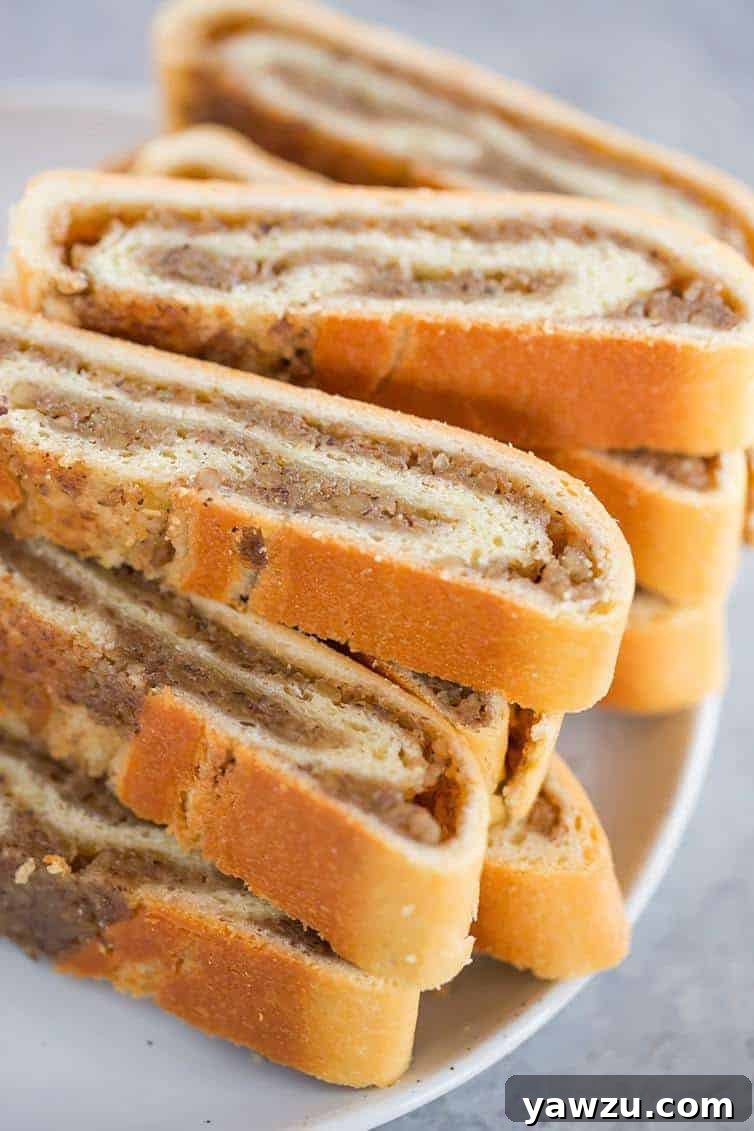
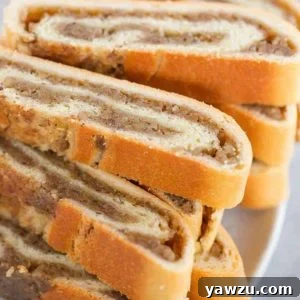
This classic nut roll recipe, lovingly passed down from an old family friend, holds a special place in our holiday traditions. What makes it even more appealing is its simplicity, requiring just one rise, allowing you to effortlessly bake a generous batch of these delightful treats.
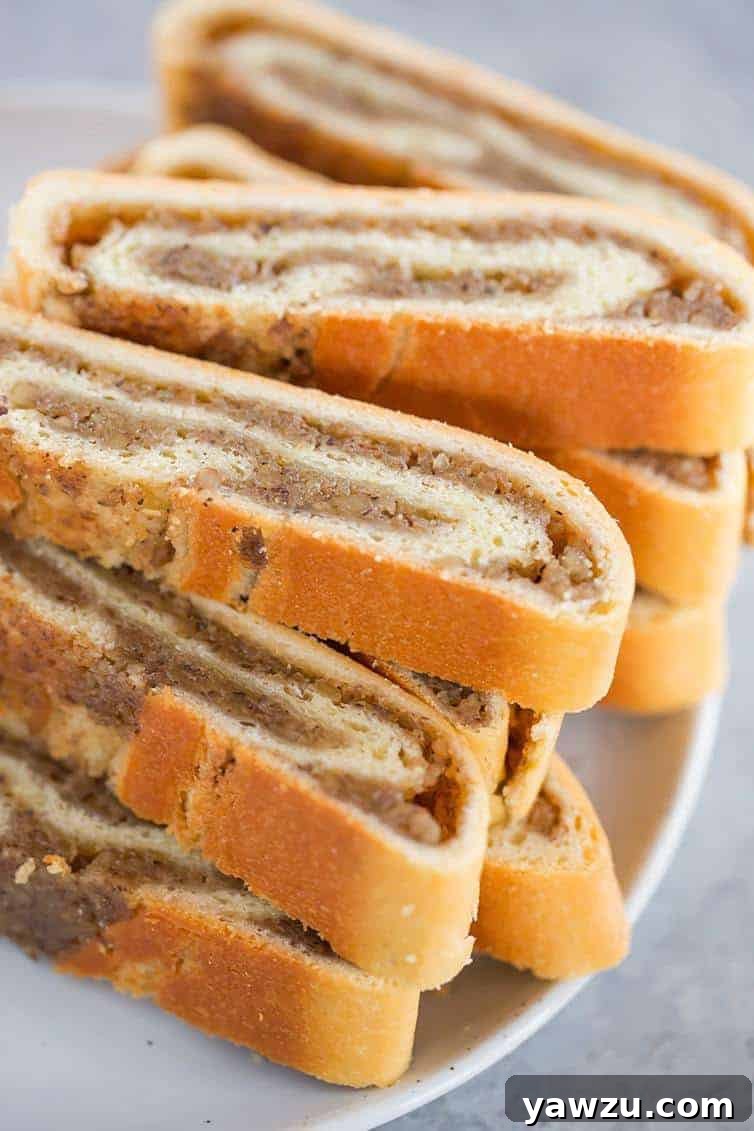
Mastering the Classic Nut Roll: Your Ultimate Guide to Holiday Baking
As the holiday season approaches, there’s one staple that always comes to mind: the irresistible nut roll. Whether you know it as Hungarian Nut Roll, Slovak Nut Roll, Polish Nut Roll, Kolache, or even the locally cherished Pittsburgh Nut Roll – a name that truly delights me – this sweet pastry is more than just a dessert; it’s a taste of tradition, a warm embrace of festive cheer. This soft, sweet dough, generously filled with a rich, sweet walnut mixture, embodies the essence of Christmas, making the holidays incomplete without indulging in a delightful, and perhaps slightly embarrassing, amount of it.
I first shared this beloved nut roll recipe with you nearly six years ago, and I’ve been incredibly touched by how many of you have embraced it, making it a cherished part of your holiday baking year after year. Your continued enthusiasm brings me immense joy. Over these years, two recurring questions have emerged regarding this recipe: the use of cake yeast and troubleshooting issues with the dough splitting during baking. I’ve since revisited and refined the recipe, incorporating valuable insights and adjustments to address these common concerns, ensuring your nut roll baking experience is as smooth and successful as possible.
The Heart of the Home: A Recipe Steeped in Friendship
The origins of this particular nut roll recipe are as heartwarming as the pastry itself. It comes from my mother’s dearest friend, Cheryl, a friendship that spans what feels like a gazillion years. There’s something truly special about an old, handwritten recipe card – it carries not just ingredients and instructions, but also memories, love, and a tangible connection to the past. This recipe, with its dog-eared corners and faded ink, is a testament to enduring friendships and shared culinary joys.

Demystifying the Dough: Yeast and Flour Secrets
Let’s delve into the specifics that make this recipe shine, starting with the foundation of any great yeast-based pastry: the yeast itself.
Understanding Yeast: Cake vs. Active Dry
The original recipe called for cake yeast, a fresh yeast typically found in the refrigerated section of grocery stores, often near the butter. When I first started baking these nut rolls, cake yeast was readily available. However, in recent years, it has become increasingly difficult to find in many regular grocery stores, a sentiment echoed by many of you. This scarcity led me to explore alternatives, and I’m happy to report that active dry yeast works beautifully as a substitute, without any compromise on the final product’s quality.
One block of fresh cake yeast is equivalent to three standard packages of active dry yeast (approximately 6¾ teaspoons). This substitution option is explicitly listed in the recipe below. The crucial difference to remember when swapping yeasts is the water temperature required for activation. Fresh cake yeast prefers a cooler water temperature, typically between 90 to 95 degrees Fahrenheit, to gently awaken its leavening power. Active dry yeast, on the other hand, requires a slightly warmer environment, ideally 120 to 130 degrees Fahrenheit, to properly hydrate and activate its granules. Adhering to these temperature guidelines is key to achieving a perfectly risen, tender dough.
The Art of Dough Consistency: Preventing Splits and Oozes
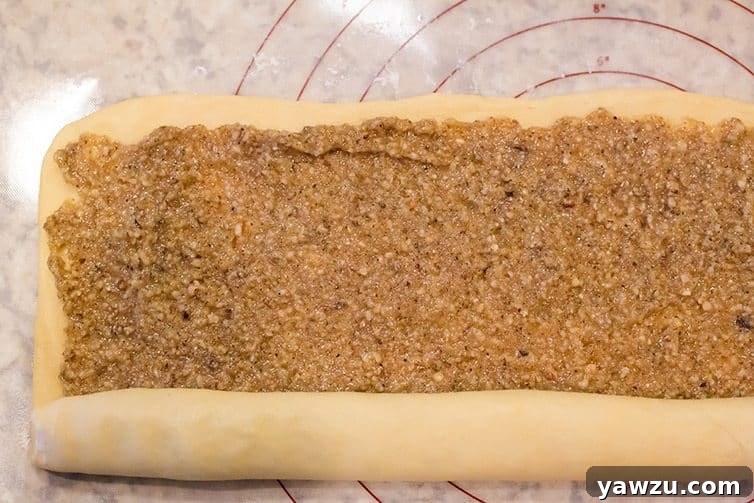
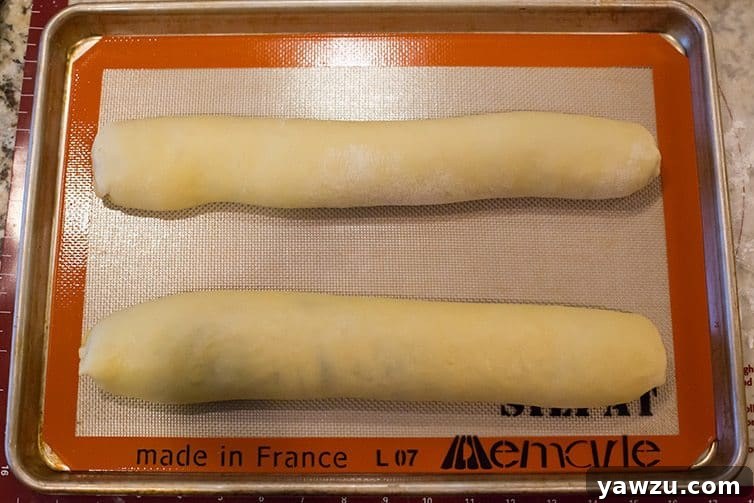
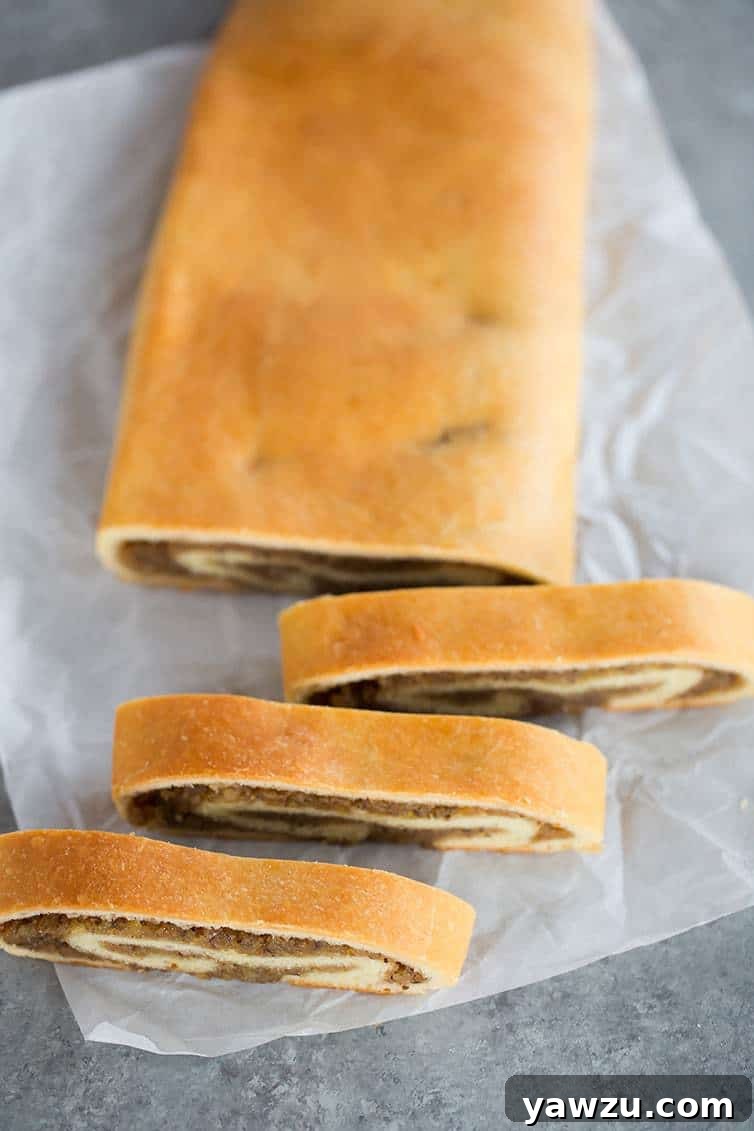
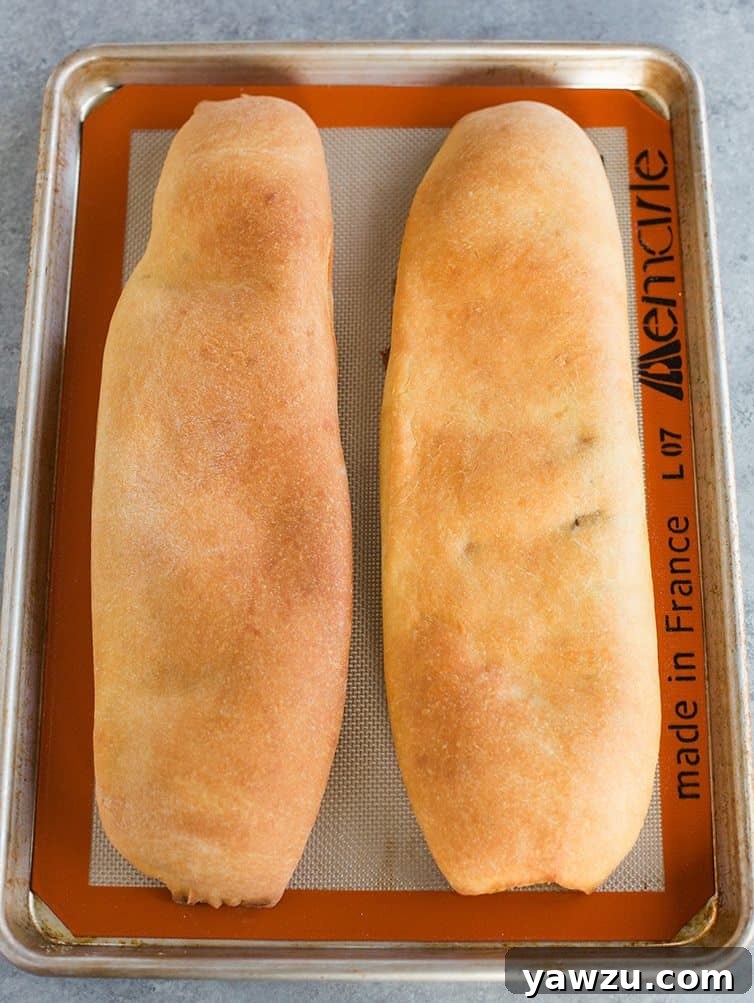
The second most frequently asked question revolves around dough splitting during baking, often leading to the delicious filling oozing out. After much experimentation, I believe I’ve pinpointed the culprit and found a foolproof solution.
During my last baking session, instead of adding the entire recommended amount of flour at once, I incorporated it gradually, stopping as soon as the dough was no longer sticky. To my surprise, I still had a considerable amount of flour left over. The result? Every single roll emerged from the oven with a perfectly smooth, uncracked surface – no splitting, no oozing filling. This revelation strongly suggests that the previous issues stemmed from the dough being too dry. Over-floured dough becomes stiff and less elastic, making it prone to cracking and tearing as it expands during baking, inevitably allowing the moist filling to escape.
The precise amount of flour you’ll need can vary quite a bit, influenced by factors like the season, ambient air temperature, and humidity levels in your kitchen. Therefore, it’s crucial to add flour incrementally. As you near the end of the flour addition, pause periodically to feel the dough. It should be pliable and easy to work with, no longer sticking to your hands or the bowl, yet still notably soft and supple. Trust your touch more than the exact measurement when it comes to the final flour amount.
Simplified Baking: Big Batch, Minimal Effort
So, there you have it – the refined version of my go-to nut roll recipe, perfected over the years. I genuinely hope these adjustments make tackling this holiday classic even easier for you. At first glance, the recipe might seem like a substantial undertaking, especially since it yields eight large nut rolls. However, don’t be intimidated! The hands-on time for this recipe is surprisingly minimal. The magic really happens during the single, long rise, allowing you to attend to other tasks while the dough slowly develops its beautiful texture.
For instance, I prepared my Christmas batch last week, managing to get everything mixed and assembled within an hour while my son Joseph was at preschool and Dominic was napping. I then simply left the rolls to rise, baking them later that afternoon. Done and delicious!
While it’s tempting to buy nut rolls from local bakeries or church sales around the holidays, I’m always amazed by how uncomplicated they are to make once I roll up my sleeves. If you’ve felt intimidated by baking nut rolls in the past, let go of that fear! This recipe is incredibly forgiving, and I’ve even successfully scaled it down. If eight rolls are more than you need, feel free to halve the recipe to make a more manageable four.
The Superior Nut Roll: A Promise of Perfection
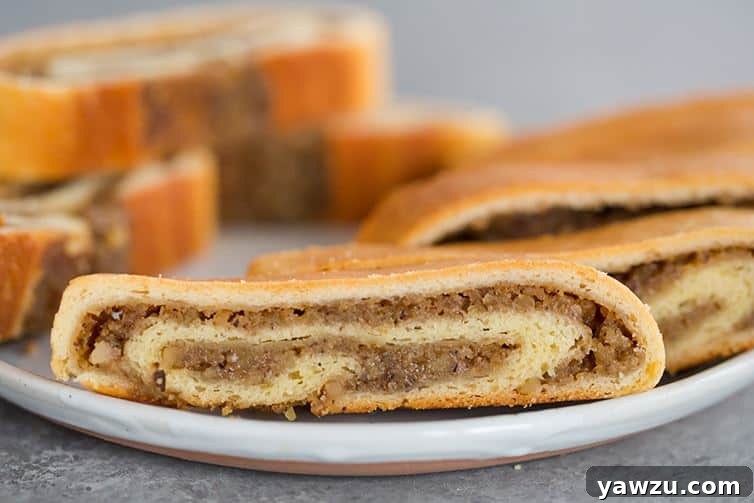
In a single word, this nut roll recipe is truly spectacular. Far too often, I’ve encountered nut rolls that suffer from dry, dense, or overly doughy textures, or worse, skimp on the filling. This recipe, however, delivers on all fronts. The dough is exquisitely soft and tender, providing the perfect contrast to the supremely moist and flavorful filling. Crucially, the filling-to-dough ratio is exceptionally high. This generous amount of filling not only prevents the rolls from drying out but also ensures that every single bite, even from the smallest slice, bursts with an incredible depth of walnut flavor.
I genuinely hope you’ll give these exceptional nut rolls a try this holiday season. They have become an indispensable part of my family’s Christmas traditions, and I believe they will quickly become one of yours too. There’s nothing quite like the aroma of homemade nut rolls wafting through your kitchen to signal the beginning of the festive celebrations.
Looking for more holiday baking inspiration?
- Five years ago, we were baking a delightful Ho Ho Cake.
- Six years ago, it was all about these festive Chocolate Bourbon Balls.
Nut Roll Recipe
8
nut rolls
1 hr
40 mins
4 hrs
20 mins
6 hrs
This nut roll recipe hails from an old family friend and is a Christmas staple. It only requires one rise, so it’s easy to churn out a ton of nut roll! Rated 4.5 out of 5 stars by 341 users.
Ingredients
For the Dough:
- 1 teaspoon sugar
- ½ cup (125 ml) warm water
- 2 ounces (56.7 g) cake yeast or 3 packets (6¾ teaspoons) active dry yeast
- 6 eggs
- 16 ounces (453.59 ml) sour cream
- 2 cups (454 g) unsalted butter, melted and cooled
- 1 cup (200 g) granulated sugar
- 1 teaspoon vanilla extract
- ½ teaspoon salt
- 9 to 10 cups (1.13 kg) all-purpose flour
For the Filling:
- 3 pounds (1.36 kg) walnuts, finely ground
- 3 cups (600 g) granulated sugar
- ¾ cup (170.25 g) unsalted butter, melted and cooled
- ¾ cup (192 ml) evaporated milk
- ½ cup (122 ml) whole milk
- ½ teaspoon vanilla extract
Instructions
-
Make the Dough: Dissolve 1 teaspoon sugar into the ½ cup warm water. If using fresh cake yeast, the water temperature should be between 90 to 95 degrees F (32-35°C). If using active dry yeast, the water temperature should be 120 to 130 degrees F (49-54°C). Crumble the fresh yeast or sprinkle the active dry yeast and stir to combine. Let sit for 5 to 10 minutes, or until foaming.
-
In the bowl of a stand mixer using the paddle attachment, beat the eggs on medium speed until combined, about 1 minute. Add the sour cream, melted butter, sugar, vanilla, salt, and the softened yeast mixture. Mix on medium speed until smooth and well-combined, about 2 to 3 minutes. Switch to the dough hook, reduce the mixer speed to low, and add the flour a little at a time. Continue adding flour until the dough no longer feels sticky but is still soft and supple. Continue kneading until the dough does not stick to the sides of the bowl. Cover with a damp dish towel while you prepare the filling.
-
Make the Filling: In a large bowl, combine all of the ingredients for the filling, stirring well to ensure that it is completely mixed and all of the ingredients are incorporated.
-
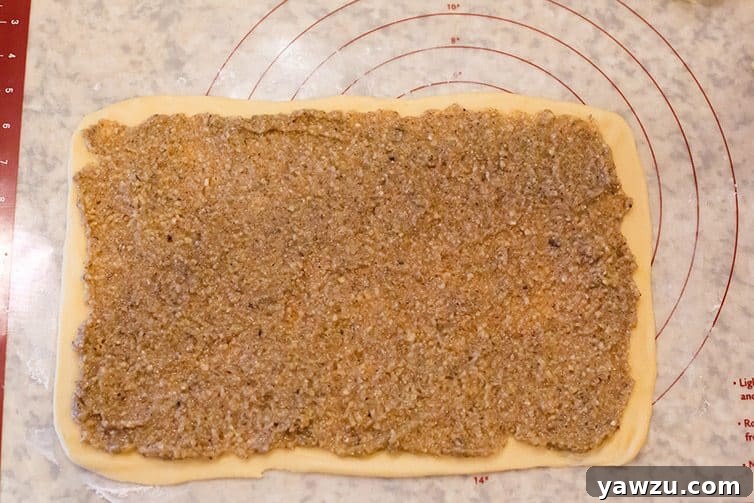
Assemble the Nut Roll: Line four baking sheets with parchment paper or silicone baking mats. Divide the dough into eight equal pieces. On a clean, lightly floured work surface, roll each piece out individually into a 9×14-inch rectangle, using flour sparingly if necessary to prevent sticking. Spread one-eighth of the filling over the dough, leaving a ½-inch border from the edges. With the long side facing you, gently roll up the dough and pinch the seams shut to seal the filling inside. Place the rolled dough seam-side down on the prepared baking sheets, arranging 2 rolls per sheet. Loosely cover the baking sheets with plastic wrap. Place the baking sheets in a draft-free area and allow the rolls to rise for 3 hours (the rolls will puff and swell but will not double in size dramatically).
-
Bake the Nut Roll: Preheat your oven to 350 degrees F (175°C). Bake one pan at a time for 20 to 25 minutes, or until the tops are lightly golden brown. Once baked, cool completely on a wire rack before slicing. Wrap any leftovers tightly in plastic wrap and store at room temperature for up to 1 week. Nut rolls can also be frozen for longer storage: wrap them individually in plastic wrap, then again in aluminum foil, and store in the freezer for up to 2 months. Thaw at room temperature before serving.
Notes
- If you do not have a stand mixer, this dough can be mixed and kneaded successfully by hand.
- This recipe can be cut in half to make only four rolls instead of eight, if a smaller batch is desired.
Nutritional values are based on one nut roll.
Calories:
633kcal
,
Carbohydrates:
220g
,
Protein:
36g
,
Fat:
92g
,
Saturated Fat:
59g
,
Cholesterol:
303mg
,
Sodium:
289mg
,
Potassium:
480mg
,
Fiber:
17g
,
Sugar:
110g
,
Vitamin A:
2600IU
,
Vitamin C:
3.2mg
,
Calcium:
244mg
,
Iron:
7.9mg
Did you make this recipe?
Leave a review below, then snap a picture and tag @thebrowneyedbaker on Instagram so I can see it!
Michelle Lettrich
Dessert
American
This recipe was originally published on January 10, 2011, and has been updated with new insights and troubleshooting tips.