


Experience the unparalleled joy of baking with this straightforward recipe for homemade crescent rolls. These delights are wonderfully flaky, incredibly buttery, and surprisingly simple to prepare, making them an essential addition to any holiday feast or family dinner.

The Ultimate Guide to Baking Flaky & Buttery Homemade Crescent Rolls
For many, the mention of crescent rolls evokes memories of childhood, perhaps a speedy weeknight side or a festive appetizer crafted from a can. While those nostalgic shortcuts hold a special place in our hearts – whether it was a savory veggie pizza appetizer that consistently graced New Year’s Eve gatherings or the much-loved crescent-wrapped hot dogs, ideally stuffed with American cheese – there’s an entirely different level of satisfaction and flavor that comes with baking them from scratch. My own culinary journey began similarly, cherishing those quick-fix options. However, as my passion for baking grew, I felt an undeniable pull to master the art of homemade bread, and when my husband recently requested fresh crescent rolls, I knew it was the perfect opportunity to elevate this humble side dish into something truly extraordinary for the upcoming holidays.
Imagine a basket of warm, pillowy rolls, each tearing away to reveal layers of buttery goodness and a delicate, flaky texture that simply melts in your mouth. These aren’t just rolls; they’re an experience, a centerpiece that will undoubtedly draw compliments and become a new family tradition. Forget the canned versions; these homemade crescent rolls are surprisingly accessible, promising a superior taste and texture that will transform your holiday table, making them an ideal stand-in for traditional dinner rolls at Thanksgiving or any celebratory meal.
Why Choose Homemade Crescent Rolls Over Canned?
The convenience of canned crescent rolls is undeniable, but the difference in flavor and texture when you bake them from scratch is profound. Homemade rolls offer a depth of flavor that simply cannot be replicated by pre-packaged dough. You control every ingredient, ensuring only the freshest butter, the finest flour, and the purest dairy make it into your dough. This results in a roll free from artificial preservatives and additives, offering a clean, rich taste.
Beyond taste, the texture is a game-changer. Our recipe yields a “brioche-light” dough – tender, rich, and incredibly soft, with that signature flakiness that’s a hallmark of well-made pastry. The careful process of proofing and shaping creates an airy interior and a delicate crust, a delightful contrast that elevates the dining experience. Serving homemade crescent rolls isn’t just about food; it’s about sharing love and care, creating lasting memories around the table.
The Art of Crafting Perfect Crescent Rolls: A Step-by-Step Journey
One of the most pleasant surprises about this recipe is its relative ease. Despite their elegant appearance and gourmet taste, these crescent rolls are significantly simpler to prepare than many might expect. The dough itself is incredibly forgiving and straightforward to mix, making it an excellent project for both seasoned bakers and ambitious beginners. There’s no finicky handling required, just a clear process that leads to delicious results.
Dough Preparation: Building the Foundation of Flavor
The magic begins with a perfectly balanced dough. We start by activating the yeast with warm half-and-half and a touch of sugar, creating the ideal environment for it to thrive. Melted butter is incorporated, adding a luxurious richness that defines the “brioche-light” quality of these rolls. Eggs provide structure and moisture, contributing to the dough’s tender crumb. Once these wet ingredients are combined, they are slowly added to a mixture of flour, the remaining sugar, and salt in a stand mixer. The dough hook does most of the heavy lifting, bringing everything together until it forms a smooth, elastic ball that pulls away cleanly from the sides of the bowl. This kneading process develops the gluten, which is essential for that coveted chewy-yet-tender texture.
The First Rise: Patience is a Virtue
After kneading, the dough is transferred to a greased bowl, covered, and left in a warm, draft-free spot to undergo its first proofing. This is where the yeast works its magic, fermenting and producing carbon dioxide, causing the dough to double in size. This process typically takes about an hour, depending on the warmth of your environment. A good first rise is crucial for developing flavor and ensuring a light, airy final product. You’ll know it’s ready when a gentle poke with your finger leaves an indentation that slowly springs back.
Shaping the Iconic Crescent: A Moment of Culinary Creativity
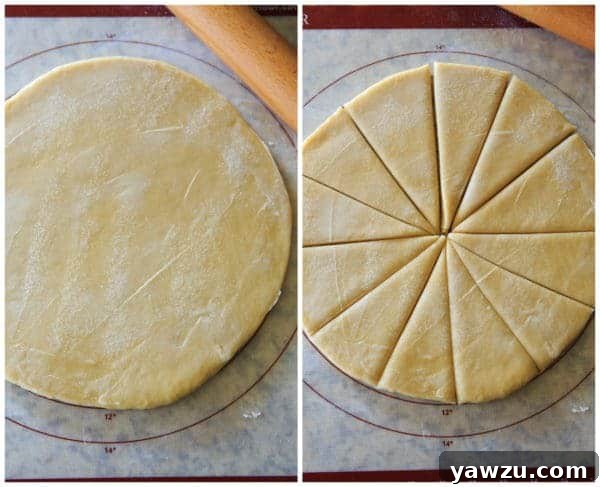
Once the dough has completed its initial rise, it’s time for the fun part: shaping. Turn the dough out onto a lightly floured surface and gently roll it into a large, uniform 12-inch circle. The next step is a key contributor to the rolls’ incredible butteriness: spread a generous, even layer of softened unsalted butter across the entire surface of the dough. This internal layer of butter will create pockets of richness and contribute to the flaky texture as the rolls bake. A sprinkle of salt over the butter adds another layer of flavor, perfectly balancing the sweetness of the dough.
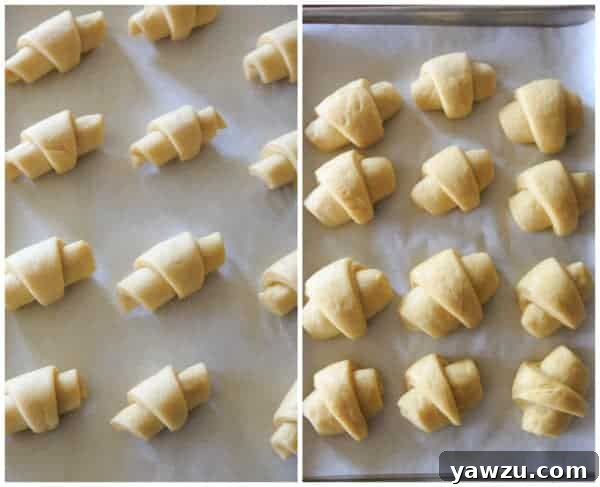
Using a pizza cutter, carefully slice the large circle into 12 equal wedges, much like cutting a pizza. Now, for the signature crescent shape: starting from the wide end of each wedge, gently roll the dough towards the pointed tip. As you roll, ensure the pointed tip is tucked underneath the finished roll; this helps maintain its shape during the second rise and baking. Arrange the shaped rolls on a baking sheet lined with parchment paper, leaving enough space between them for expansion.
The Second Rise & Golden Finish: Anticipating Perfection
The shaped rolls then undergo a second, shorter rise, loosely covered with plastic wrap, again in a warm, draft-free location. This second proofing allows the rolls to become even lighter and more tender. As they approach their doubled size, preheat your oven to 350 degrees F (175 degrees C). Just before baking, prepare an egg wash by whisking an egg white with a teaspoon of water. This simple mixture is brushed twice over each roll, imparting a beautiful golden-brown sheen and a slight crust that perfectly complements the soft interior.
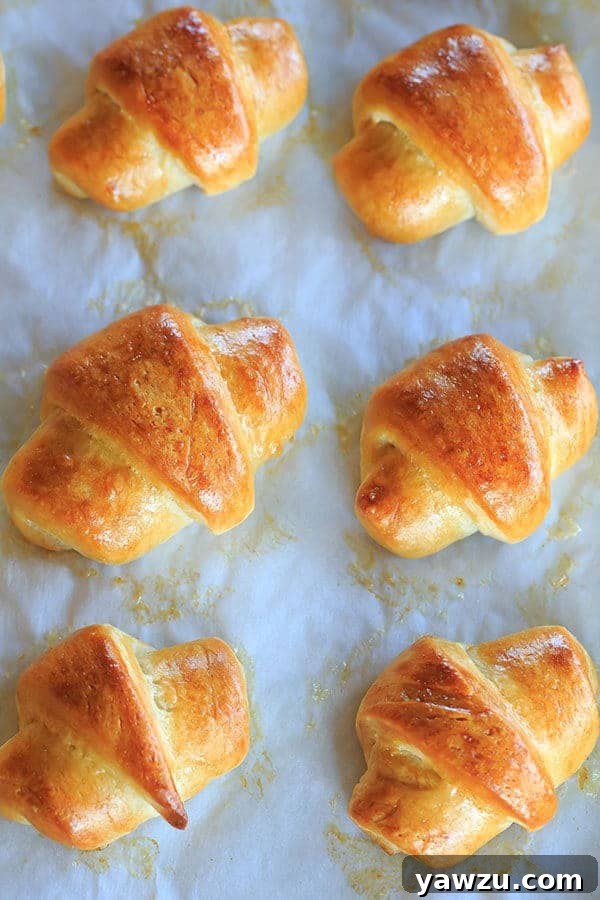
Bake the rolls for approximately 20 minutes, or until they reach a gorgeous golden brown, rotating the baking sheet halfway through to ensure even baking. The aroma alone will be enough to tell you these are going to be spectacular. Once baked, allow them to cool on the baking sheet for about 10 minutes before serving. This brief cooling period helps them set and makes them easier to handle.
The Irresistible Result: Fluffy, Buttery Perfection
The moment you bite into one of these homemade crescent rolls, you’ll understand why the effort is so rewarding. They boast a delightful contrast: a soft, delicate crust on the top and bottom gives way to an incredibly fluffy, light, and intensely buttery interior. Each layer gently pulls apart, showcasing the perfect texture achieved through careful preparation. I guarantee that not a single person at your table will have anything to complain about when a basket of these exquisite rolls is passed around. In fact, be prepared for requests for the recipe!
If you’ve harbored a long-standing love affair with crescent rolls, prepare to fall head over heels for this homemade version. You’ll not only adore the superior taste and texture but also discover that the process is far more approachable than you ever imagined. This recipe transforms a classic into an unforgettable culinary achievement, making you feel like a true baking maestro.

Expert Tips for Homemade Crescent Roll Perfection
- Yeast Activation: Ensure your half-and-half is heated to the correct temperature (105-115°F or 40-46°C). Too hot will kill the yeast, too cold won’t activate it. If your yeast doesn’t become foamy after 5-10 minutes, it might be inactive, and you should start with fresh yeast.
- Measuring Flour Accurately: Over-measuring flour is a common pitfall that can lead to dense, dry rolls. Use the spoon-and-level method: spoon flour into your measuring cup and then level it off with a straight edge, rather than scooping directly from the bag.
- Don’t Over-Knead or Under-Knead: The 6 minutes of mixing in a stand mixer is a good guide. You’re looking for a dough that is smooth, elastic, and pulls away from the sides of the bowl. It should be slightly tacky but not sticky.
- Warm, Draft-Free Spot: For optimal proofing, find a warm spot in your kitchen. This could be near a sunny window, inside a slightly warmed (but turned off) oven, or near a pilot light. Drafts can hinder the yeast’s activity.
- Soften the Butter, Don’t Melt It (for assembly): When spreading butter on the rolled-out dough, it should be soft enough to spread easily but not melted. Melted butter will soak into the dough, while softened butter will create those distinct buttery layers.
- Make-Ahead Option: The beauty of this recipe is its flexibility. After the second rise and before baking, you can loosely cover the rolls with plastic wrap and refrigerate them for up to 24 hours. When ready to bake, remove them from the fridge, let them sit at room temperature for about 30 minutes (or longer if they need to rise a bit more), then proceed with the egg wash and baking instructions. This is perfect for holiday planning!
Serving Suggestions for Your Incredible Rolls
These versatile homemade crescent rolls are much more than just a side dish. Here are some ideas to incorporate them into your meals:
- Holiday Feasts: They are an absolute showstopper for Thanksgiving, Christmas, or Easter dinners, complementing roasted meats, gravies, and stuffing beautifully.
- Everyday Dinners: Serve them alongside stews, soups, pasta dishes, or grilled chicken for an elevated weeknight meal.
- Breakfast & Brunch: Enjoy them plain, with jam, honey, or a savory spread. They’re also fantastic split and used for mini breakfast sandwiches.
- Sandwich Bases: Use larger rolls as a base for gourmet sliders or small sandwiches with deli meats and cheese.
- Sweet Treats: A little extra sprinkle of cinnamon sugar over the butter before rolling can turn these into a delightful sweet roll.
Storage and Reheating Homemade Crescent Rolls
To keep your leftover rolls fresh, store them in an airtight container at room temperature for up to 2 days. For longer storage, they can be frozen for up to 1 month. To reheat, simply warm them gently in the oven at 300°F (150°C) for 5-10 minutes, or until heated through and soft again. If reheating from frozen, allow them to thaw at room temperature first or add a few extra minutes to the reheating time.
With these tips and tricks, you’re well on your way to baking the most talked-about bread at your next gathering!

Homemade Crescent Rolls
Pin
Rate
Ingredients
For the Dough:
- 7 tablespoons unsalted butter, melted and cooled slightly
- ½ cup (118.29 ml) half-and-half, heated to 110 degrees F (43 degrees C)
- 1 tablespoon instant or rapid-rise yeast
- ¼ cup (50 g) sugar, divided
- 1 large egg
- 1 egg yolk
- 2½ cups (312.5 g) all-purpose flour
- 1 teaspoon salt
For the Assembly:
- 1 tablespoon unsalted butter, at room temperature
- ¼ teaspoon (0.25 teaspoon) salt
For the Topping (Egg Wash):
- 1 egg white
- 1 teaspoon water
Instructions
-
In a large liquid measuring cup, whisk together the melted butter, warm half-and-half, yeast, and 1 teaspoon of the sugar until the yeast completely dissolves. Then, whisk in the egg and egg yolk until well combined.
-
In the bowl of a stand mixer fitted with the dough hook attachment, combine the flour, the remaining sugar, and salt. Mix on low speed for about 15 seconds, just until combined. With the mixer still running on low speed, gradually add the half-and-half mixture in a slow, steady stream. Continue mixing until the dough comes together and starts to form a cohesive mass. Increase the mixer speed to medium and continue mixing for approximately 6 minutes, or until the dough becomes smooth, elastic, and pulls away cleanly from the sides of the bowl. Turn the dough out onto a clean, lightly floured surface and knead briefly by hand to form a smooth, round ball. Transfer the dough to a greased bowl, cover it tightly with plastic wrap, and place it in a warm, draft-free location. Allow the dough to rise until it has doubled in size, which typically takes about 1 hour.
-
Once the dough has doubled, turn it out onto a lightly floured surface. Roll the dough into a perfect 12-inch circle. Evenly spread the softened, room-temperature butter over the entire surface of the rolled dough, ensuring a thin, consistent layer. Sprinkle the ¼ teaspoon of salt over the butter. Using a pizza cutter, slice the circle into 12 equal wedges. To shape the crescent rolls, take each wedge and starting from the wide end, roll it tightly towards the pointed tip. Arrange the shaped rolls (with the pointed tip tucked securely underneath each roll to prevent unrolling) on a baking sheet lined with parchment paper, leaving some space between them for expansion. Cover the rolls loosely with plastic wrap and return them to a warm, draft-free spot for their second rise until doubled in size, which will take approximately 1 hour. Make-Ahead Note: At this stage, the unbaked rolls can be covered and refrigerated for up to 24 hours before baking. Simply remove from the fridge and allow them to come to room temperature for about 30 minutes before proceeding to the next step.
-
Preheat your oven to 350 degrees F (175 degrees C). In a small bowl, whisk together the egg white and water to create the egg wash. Carefully remove the plastic wrap from the risen rolls. Using a pastry brush, generously brush each roll twice with the egg white mixture. Bake the rolls for about 20 minutes, or until they are beautifully golden brown and puffed. Rotate the baking sheet halfway through the baking time to ensure even browning. Once baked, remove the baking sheet from the oven and let the rolls cool on the sheet for 10 minutes before transferring them to a wire rack to cool further, or serve warm. Leftover rolls can be stored in an airtight container at room temperature for up to 2 days, or frozen for longer enjoyment.
Notes
Did you make this recipe?
Leave a review below, then snap a picture and tag @thebrowneyedbaker on Instagram so I can see it!