
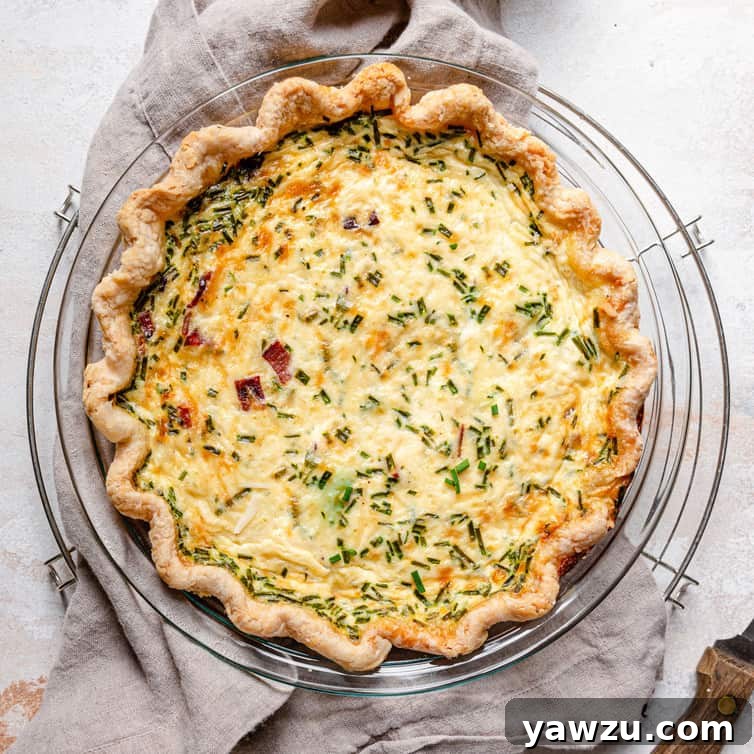
This definitive recipe for the classic French Quiche Lorraine offers an exquisite culinary experience. It features a meticulously prepared, buttery and flaky pie crust that encases a rich, savory custard. Each bite is enhanced by the inclusion of crispy bacon, authentic Gruyère cheese, and fresh chives, creating a harmonious blend of flavors and textures. Whether you’re planning an elegant breakfast, a leisurely brunch, a light lunch, or a satisfying dinner, this Quiche Lorraine is a versatile dish that promises to impress. Its golden-brown crust and creamy, flavorful filling make it a timeless classic, perfect for any occasion.
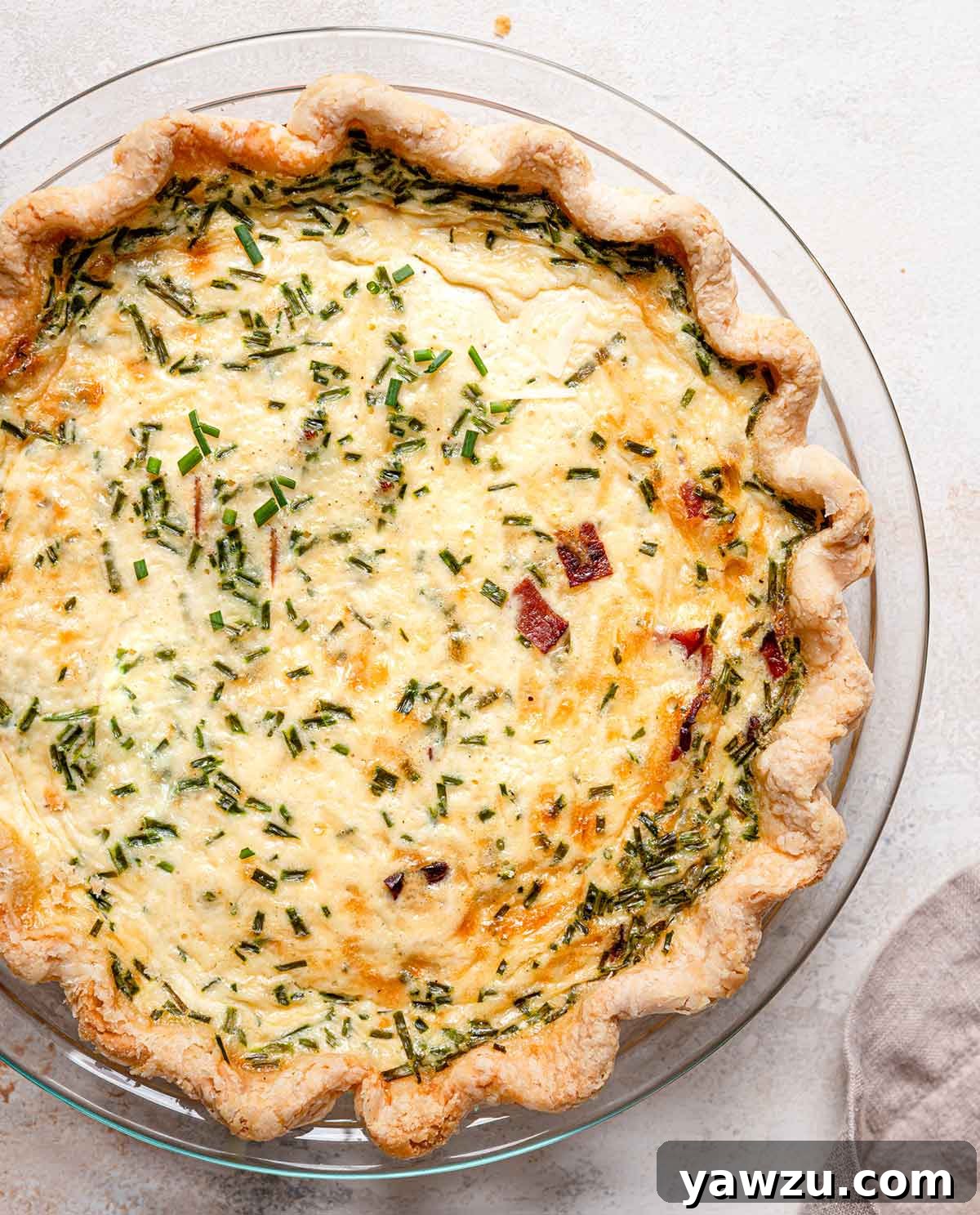
While I’ve previously explored innovative takes on this beloved dish, such as Quiche Lorraine scones and a delightful bacon and cheese quiche tart, the time has come to revisit the original masterpiece: the classic Quiche Lorraine. This guide will walk you through every step to recreate this iconic dish in your own kitchen, ensuring a perfect result every time.
Understanding Quiche Lorraine: A Culinary Journey
The history of quiche is surprisingly ancient, with its roots tracing back to the 13th century in medieval German kitchens, originally called “Kuchen” (meaning cake). By the 15th century, recipes for savory custards baked in pastry shells began appearing in European cookbooks. While widely celebrated today as a quintessential French dish, similar egg and cream custards baked in pastry were also prevalent in English and Italian cuisines during the same period, highlighting a shared culinary heritage across Europe.
Quiche Lorraine stands out as arguably the most renowned variety of quiche, deriving its name from the Lorraine region of northeastern France. Traditionally, the authentic Lorraine recipe featured a simple yet rich filling of eggs, fresh cream, and lardons – small cubes of fatty bacon or cured pork belly. An interesting historical note is that original French Quiche Lorraine recipes did not include cheese. However, as the dish gained popularity and spread to English-speaking countries, cheese, particularly Gruyère, became a standard ingredient. Furthermore, lardons were often replaced with more readily available bacon, adapting the classic recipe to local palates and ingredients. This evolution has given us the beloved version of Quiche Lorraine that many enjoy today, with its characteristic blend of savory bacon and nutty cheese.
Essential Ingredients and Equipment for Your Quiche
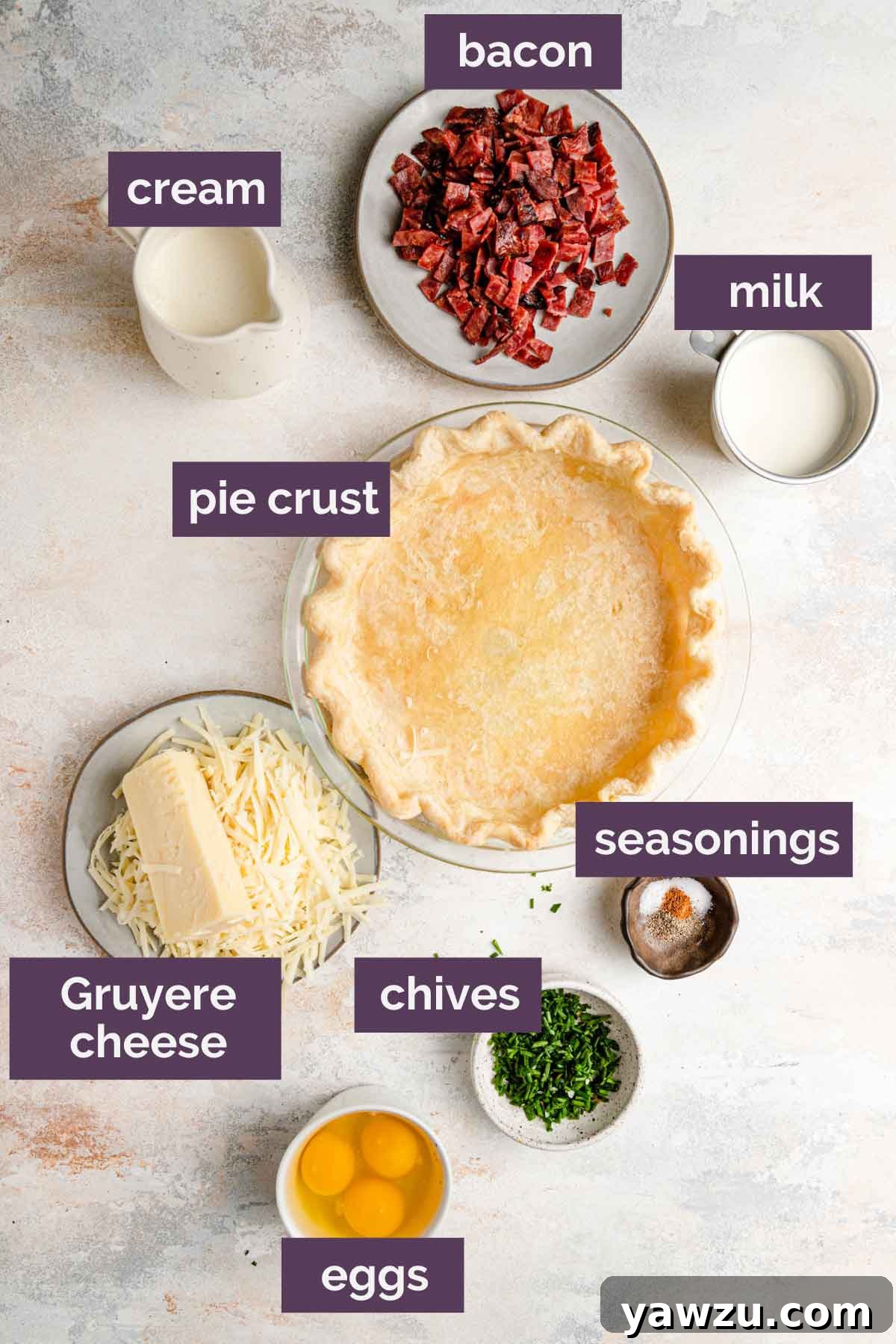
If the thought of making quiche from scratch has seemed daunting in the past, rest assured that it’s a remarkably straightforward process. Crafting a delicious Quiche Lorraine involves two primary steps: first, preparing and par-baking the pastry crust, and then, filling it with the rich custard and baking it to golden perfection. We’ll delve into each component to ensure your quiche is nothing short of magnificent.
The Foundation: A Perfect Quiche Crust
The crust is more than just a holder for the filling; it’s an integral part of the Quiche Lorraine experience, offering a delightful contrast in texture and flavor. Here are several crust options to consider, each with its own merits:
- All-Butter Pie Crust: This is the recommended choice for this recipe and is truly divine. Its rich, buttery flavor and incredibly flaky texture complement the savory custard filling beautifully, elevating the entire dish. Made with pure butter, it delivers unparalleled taste.
- Foolproof Pie Dough Recipe: For years, this has been my go-to pie crust. It combines butter and shortening for optimal flakiness and ease of handling. A touch of vodka, replacing some of the water, helps prevent gluten development, resulting in an exceptionally tender and flaky crust that is consistently easy to work with.
- Store-Bought Crust: For those moments when time is of the essence, a pre-made crust is a perfectly acceptable alternative. While a homemade crust undeniably offers a superior flavor and texture, a good quality store-bought option will still yield a satisfying quiche. It’s a convenient shortcut that doesn’t compromise too much on the final enjoyment.
- Crustless Quiche Option: If you’re looking for a gluten-free alternative or simply prefer a lighter option, quiche can absolutely be made without a crust. When opting for crustless, remember that the quiche will be softer and less structured. It’s best to serve it directly from the baking dish, as it won’t hold its shape well enough to be easily removed for slicing on a platter.
The Art of Par-Baking the Crust
Par-baking, also known as “blind-baking,” is a crucial step to prevent a soggy bottom crust, ensuring it remains wonderfully crisp beneath the moist filling. This process involves partially baking the crust before adding the filling. Over the years, I’ve experimented with various methods and pie weights, from ceramic beads to dry beans and rice. However, the technique perfected by Stella Parks has proven to be truly foolproof, delivering consistently excellent results.
You can find a comprehensive step-by-step tutorial on how to blind bake pie crust here, but for a quick overview, here’s the method:
Line your chilled pie plate, which contains the prepared dough, with aluminum foil. Then, fill the entire crust cavity with granulated sugar. This acts as a highly effective pie weight, conforming perfectly to the crust’s shape. Bake it at 350°F (177°C) for 40 to 45 minutes for a partially-baked crust, or 55 to 60 minutes if you desire a fully baked crust before filling (though partially baked is generally preferred for quiche).
This method consistently yields a perfectly browned crust that doesn’t shrink, and crucially, prevents the dough from sticking to the foil when removed. The sugar can be cooled and reused for future blind-baking projects or in other recipes, making it an efficient and waste-free technique.
The Heart of the Quiche: A Rich and Savory Filling
For a Quiche Lorraine that boasts a truly luxurious and rich custard, I rely on a balanced blend of heavy cream and milk. This combination yields an unparalleled taste and a silky-smooth texture that is both indulgent and comforting. However, you have the flexibility to adjust the proportions to suit your preference—if you favor a slightly lighter quiche, you can increase the amount of milk relative to the cream, or simply use half-and-half for convenience.
Customizing Your Quiche: Exciting Add-Ins!
While the classic Quiche Lorraine filling traditionally features crispy bacon, nutty Gruyère cheese, and often some form of onion, the basic custard recipe is incredibly adaptable. It serves as a fantastic canvas for countless quiche variations, allowing you to mix and match ingredients to your heart’s content. To ensure a balanced filling that sets properly, I recommend limiting your additions to no more than 1 cup of cheese and 2 cups total of any other ingredients you choose to include. Here are some inspiring ideas for your custom quiche:
- Meats: Beyond bacon, consider savory cooked ham or Canadian bacon for a milder pork flavor, crumbled sausage (breakfast or Italian), or even delicate crab meat for a seafood-inspired quiche.
- Cheeses: Explore different cheeses to alter the flavor profile. Swiss cheese offers a similar nuttiness to Gruyère, cheddar provides a sharper, more familiar taste, while goat cheese adds a tangy creaminess. Gouda offers a subtle sweetness, and feta introduces a salty, briny note.
- Vegetables: Incorporate a variety of vegetables for added texture and nutrients. Sautéed spinach or other tender greens (like kale), earthy mushrooms, caramelized onions or shallots, vibrant asparagus spears, sweet bell peppers, juicy diced tomatoes, or tender zucchini slices all make wonderful additions.
- Seasonings: Elevate your quiche with fresh herbs and spices. Finely minced chives provide a delicate oniony flavor, parsley offers freshness, and basil adds an aromatic touch. For a subtle kick, a pinch of cayenne pepper or a dash of hot sauce can be added. Old Bay seasoning is excellent for a seafood quiche. Nutmeg, though often overlooked, is a classic spice for custards and imparts a wonderful warmth to the Quiche Lorraine.
Important Note: When incorporating fresh vegetables or greens into your quiche, it is highly recommended to cook them first. Many vegetables release significant amounts of liquid as they bake. Pre-cooking them (sautéing, roasting, or blanching) will draw out this excess moisture, preventing your quiche from becoming watery or soupy and ensuring a perfectly set, creamy custard.
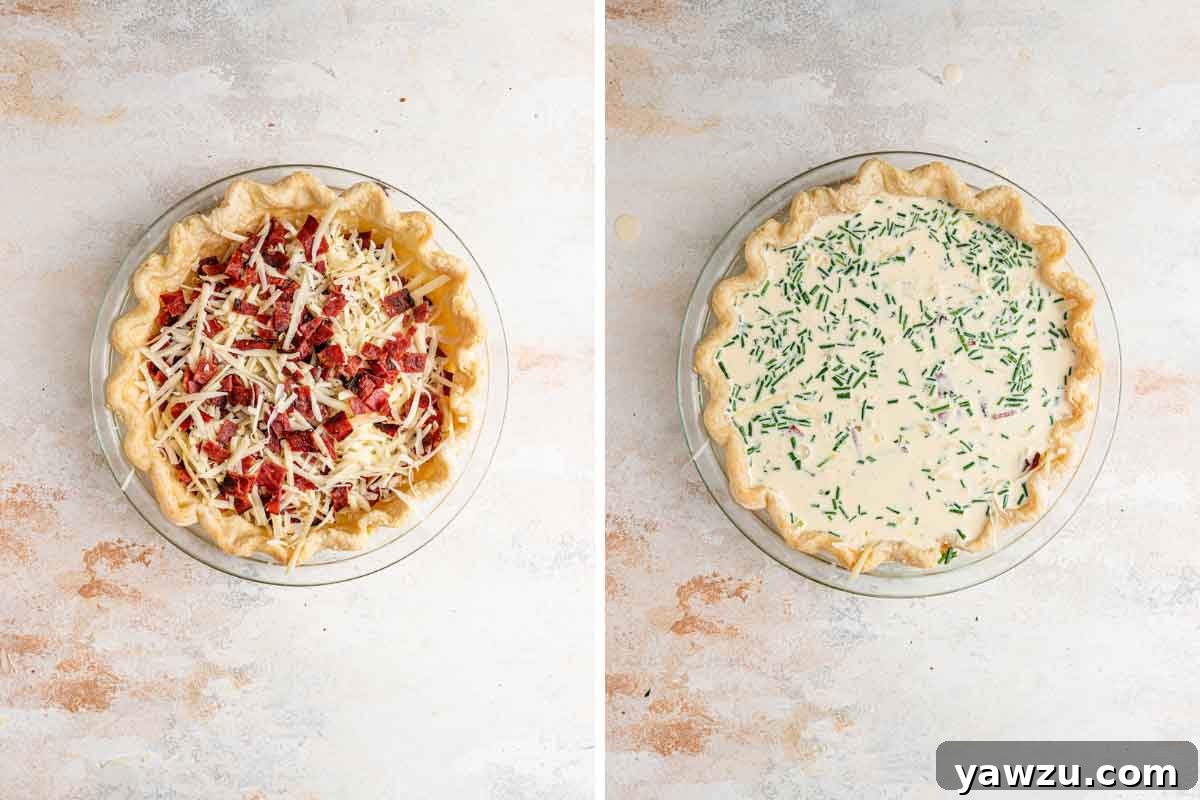
Many traditional Quiche Lorraine recipes call for cooked onions or shallots. However, I sometimes find cooked onion to be a bit overpowering in delicate egg dishes, tending to dominate the other flavors. For this reason, I’ve chosen to use fresh chives in this recipe. Chives provide that perfect, subtle hint of oniony bite without overwhelming the rich custard and other ingredients, ensuring a more balanced and refined flavor profile. Their fresh green color also adds a lovely visual appeal.
Choosing the Right Pan for Your Quiche
The baking vessel you choose can influence the final outcome of your quiche, from its appearance to its baking consistency. Here are the most common options:
- A classic 9-inch glass pie plate is an excellent choice for this Quiche Lorraine recipe. Glass pie plates are generally preferred over metal or ceramic options because they offer superior heat conduction and even browning, particularly for the bottom crust. This helps achieve that desirable crispness and consistent cooking.
- An elegant alternative is a tart pan, typically 9½ or 10 inches in diameter. Tart pans are shallower than traditional pie plates, which means you might have a small amount of leftover custard, and your baking time will likely be slightly reduced. Tart pans, especially those with removable bottoms, are fantastic for presentation, allowing you to effortlessly lift the entire quiche onto a serving platter for a more refined look.
- For an authentic presentation, you might consider dedicated quiche molds. These specialized pans often feature fluted edges, similar to a tart pan, and also come with a removable bottom for easy serving. The key difference is that quiche molds are typically deeper than standard tart pans, designed to hold the entire volume of filling without any issues, while still offering the elegant fluted appearance.
Regardless of which pan you select, the good news is that no special preparation is required. You do not need to grease or line these pans in any particular way when using a pastry crust, as the fat in the crust itself prevents sticking.
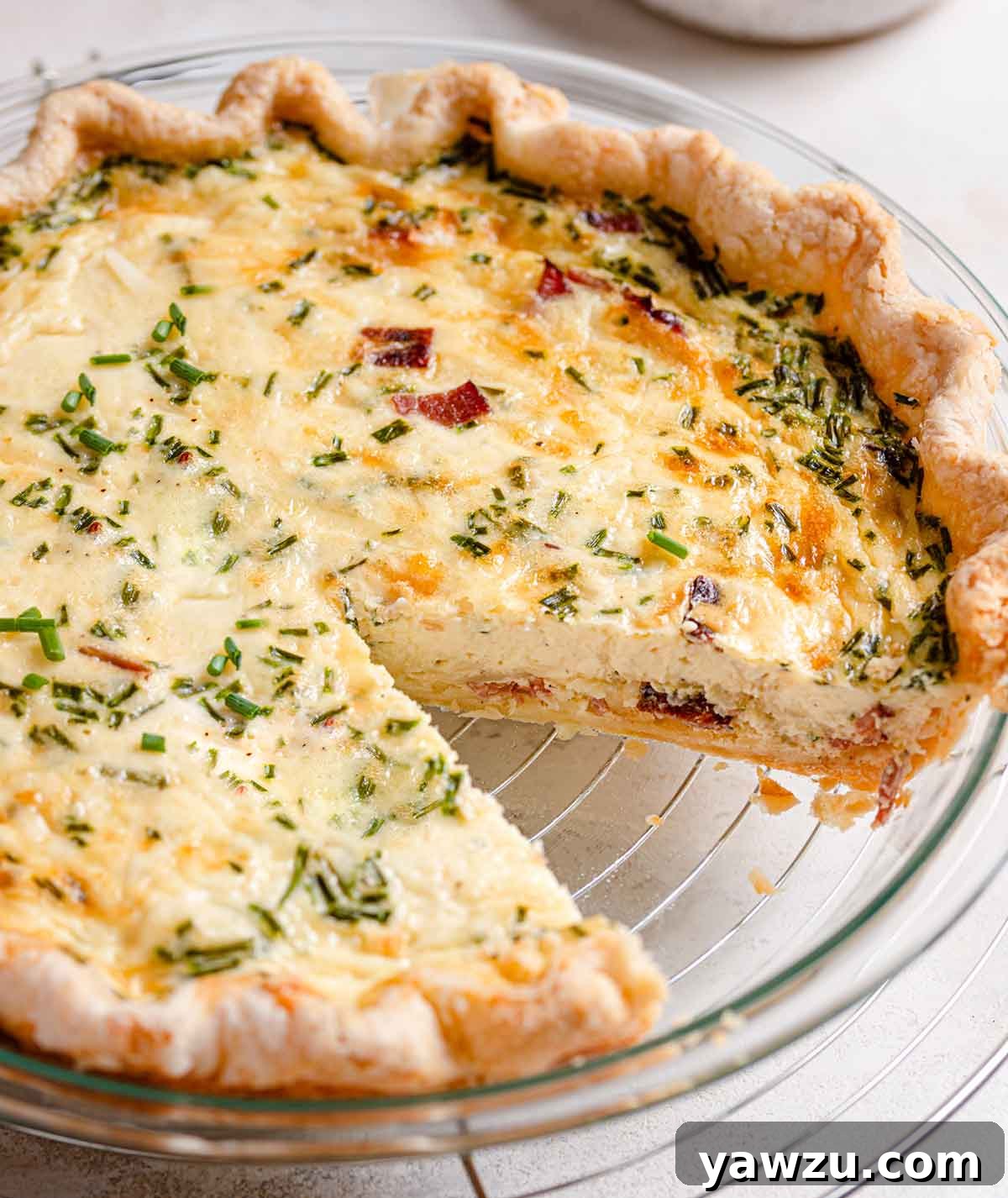
Make-Ahead, Storing, Freezing, and Reheating Your Quiche Lorraine
Quiche Lorraine is an excellent dish for meal planning, as many components can be prepared in advance, and the finished quiche stores and reheats beautifully. This makes it a perfect option for entertaining or for convenient weeknight meals.
- Make-Ahead Pie Crust: The raw pie dough can be prepared up to 5 days in advance and stored tightly wrapped in plastic wrap in the refrigerator. For longer storage, it can be frozen for up to 3 months. Thaw in the refrigerator before rolling out.
- Make-Ahead Par-Baked Pie Crust: You can complete the par-baking instructions (up through step 6 of the recipe) ahead of time. Allow the partially baked crust to cool completely. Once cool, wrap it tightly in plastic wrap and refrigerate for up to 3 days. When ready to bake, you can fill the cold crust directly with the custard mixture – there’s no need to reheat the crust prior to filling.
- Storage of Baked Quiche: To store a fully baked quiche, allow it to cool completely to room temperature. Then, wrap it tightly in plastic wrap or aluminum foil. It will keep well in the refrigerator for up to 4 days.
- Freezing Instructions for Baked Quiche: For longer storage, quiche freezes exceptionally well. After baking, let the quiche cool entirely. Then, cover it tightly with a layer of plastic wrap, followed by a layer of aluminum foil. For extra protection against freezer burn, place the wrapped quiche in a large freezer-safe zip-top bag. It can be frozen for up to 3 months. To reheat, thaw the frozen quiche overnight in the refrigerator. Then, bake it in a preheated oven at 350°F (177°C) for 20-25 minutes, or until thoroughly heated through and the crust is crisp.
What to Serve with a Classic Quiche Lorraine
The versatility of Quiche Lorraine means it pairs beautifully with a range of side dishes, depending on whether you’re serving it for a morning meal or a more substantial dinner. Here are some delightful suggestions that work wonderfully for any occasion:
- Fresh Fruit Salad: A vibrant fruit salad provides a refreshing counterpoint to the rich, savory quiche. Berries, melon, and citrus fruits add sweetness and acidity.
- Roasted Tomatoes: Slow-roasted cherry or grape tomatoes burst with sweet, concentrated flavor, complementing the quiche’s savory notes with a touch of brightness.
- Light Tossed Salad: A simple green salad with a vinaigrette dressing offers a crisp, palate-cleansing element. Use delicate greens like mixed greens or butter lettuce.
- Creamy Cucumber Salad: The cool, tangy creaminess of a cucumber salad provides a refreshing contrast, especially on warmer days.
- Warm Breadsticks or Crusty Bread: Perfect for soaking up any lingering custardy goodness, warm breadsticks or slices of crusty baguette are always a welcome addition.
- Roasted, Sautéed, or Grilled Vegetables: Seasonal vegetables like asparagus, green beans, or broccoli, simply prepared, make a wholesome and delicious side dish.
- Light Soup: A clear broth-based soup, such as a consommé or a delicate vegetable soup, can be a lovely starter, particularly for a dinner service.
More Favorite Breakfast and Brunch Recipes
If you’re looking for more delicious ways to start your day or host a spectacular brunch, explore some of these other cherished recipes:
- Challah French Toast: Thick slices of challah bread soaked and griddled to golden perfection.
- Homemade Croissants: Achieve flaky, buttery perfection with this challenging yet rewarding recipe.
- Fluffy and Crisp Buttermilk Waffles: The ultimate combination of light and crispy, perfect with your favorite toppings.
- Danish Pastries: Sweet, layered pastries filled with fruit or cream cheese.
- Fluffy Buttermilk Pancakes: The classic breakfast staple, made extra fluffy.
Watch the Recipe Video:
(Video player content would typically be embedded here, e.g., using an iframe for a YouTube video.)
If you try this classic Quiche Lorraine recipe and fall in love with its rich flavors, please consider leaving a 5-star rating below. Your feedback helps other home cooks discover and enjoy this wonderful dish!
Classic Quiche Lorraine Recipe
Yield: 8 servings
Prep Time: 2 hours 30 minutes
Cook Time: 1 hour 10 minutes
Total Time: 3 hours 40 minutes
This perfect recipe for the classic French Quiche Lorraine features a buttery pie crust filled with a savory custard studded with bacon, Gruyère cheese, and chives.
Ingredients
For the Crust:
- 1¼ cups (195 g) all-purpose flour
- 1½ teaspoons granulated sugar
- ½ teaspoon salt
- ½ cup (113 g) unsalted butter, cubed and very cold
- 2 to 4 tablespoons ice water
For the Filling:
- 8 ounces bacon, about 8 slices, cooked until crisp and chopped
- 4 ounces Gruyère cheese, shredded (approximately 1 cup)
- 3 large eggs
- ¼ teaspoon salt
- ¼ teaspoon black pepper
- Pinch of nutmeg
- 1 tablespoon minced fresh chives
- 1 cup (240 ml) heavy cream
- ½ cup (120 ml) milk
Instructions
- Prepare the Crust: In a large mixing bowl, whisk together the flour, granulated sugar, and salt until well combined.
- Add the very cold, cubed butter to the flour mixture. Using a pastry blender, two forks, or your fingertips, quickly cut the butter into the flour until the mixture resembles coarse meal with some pea-sized pieces of butter remaining.
- Gradually add 2 tablespoons of ice water to the dough. Use a rubber spatula to gently stir and press the mixture together. If the dough still appears dry and crumbly, add more ice water, one tablespoon at a time, until it just comes together into a cohesive ball. Be careful not to overwork the dough.
- Turn the dough out onto a lightly floured work surface. Briefly bring it together with your hands and gently press it into a 6-inch round disk. Lightly flour the top of the disk and carefully roll it out to a 13-inch circle. To prevent sticking, occasionally lift the dough and give it a quarter turn after every few rolls.
- Carefully transfer the rolled-out dough to a 9-inch pie plate. Gently press it into the bottom and up the sides of the plate, ensuring there are no air bubbles. Trim the excess dough, leaving about 1 inch extending beyond the lip of the pie plate. Tuck this excess dough underneath itself so that the edge is flush with the rim of the plate. Flute the edges decoratively or press them with the tines of a fork. Refrigerate the dough-lined pie plate for at least 2 hours, or up to overnight, to allow the butter to firm up and prevent shrinking.
- Blind Bake Crust: Preheat your oven to 350°F (177°C). Line the chilled pie dough with aluminum foil, pressing it gently into the contours of the crust. Fill the entire lined crust with granulated sugar (this acts as a superior pie weight and can be reused). Bake for 40 minutes. Carefully remove the foil and sugar, and set the partially baked crust aside to cool slightly while you prepare the filling.
- Prepare the Filling: Increase the oven temperature to 375°F (190°C).
- Evenly sprinkle the cooked and chopped bacon and the shredded Gruyère cheese over the bottom of the par-baked pie crust.
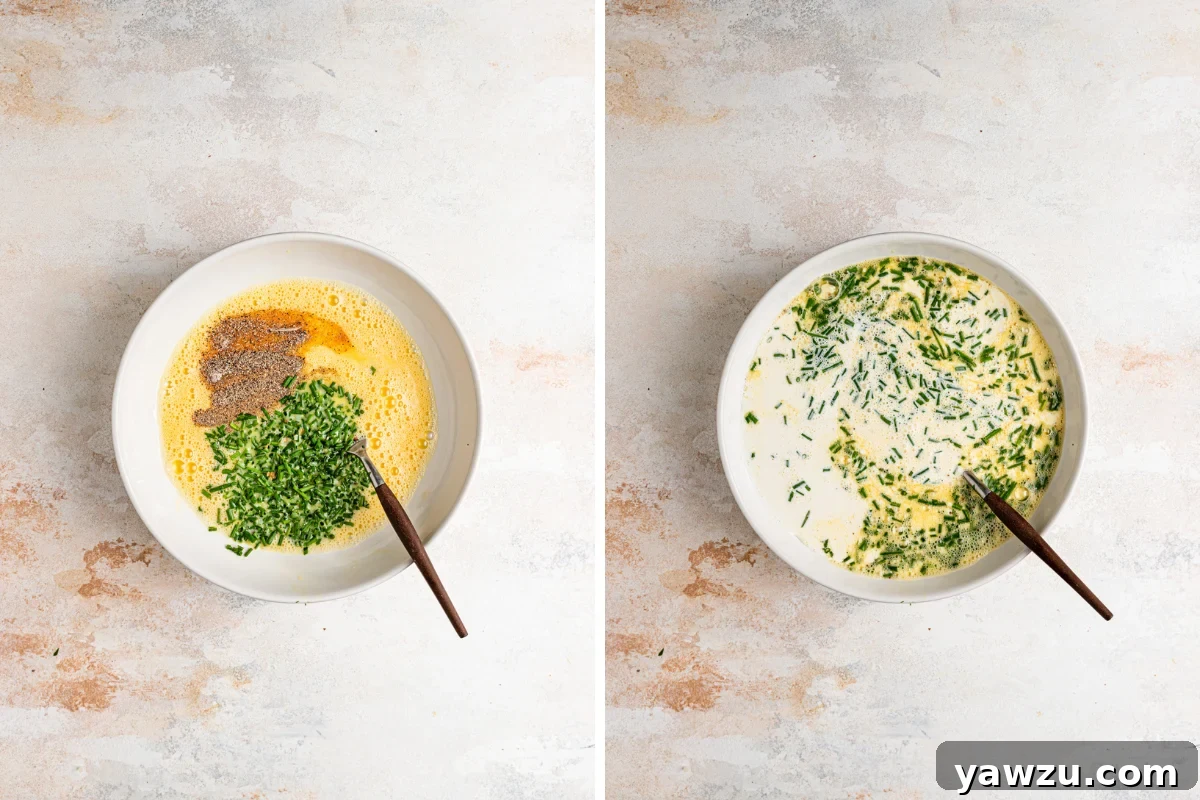
- In a large bowl, whisk the eggs until they are thoroughly broken up and slightly frothy. Add the salt, black pepper, nutmeg, and minced chives, whisking to combine all the seasonings. Pour in the heavy cream and milk, then whisk vigorously for about 15 seconds to ensure everything is well incorporated and the custard is smooth.
- Carefully pour the prepared custard mixture over the bacon and cheese in the pie crust. If the bacon or cheese has settled, use a fork or spoon to gently stir them around a little, ensuring they are evenly distributed throughout the filling.
- Bake the Quiche: Transfer the quiche to the preheated oven and bake for 30 to 40 minutes. To check for doneness, gently wiggle the pie plate; the quiche mixture should jiggle only slightly in the very center, indicating it is mostly set. It will continue to set as it cools.
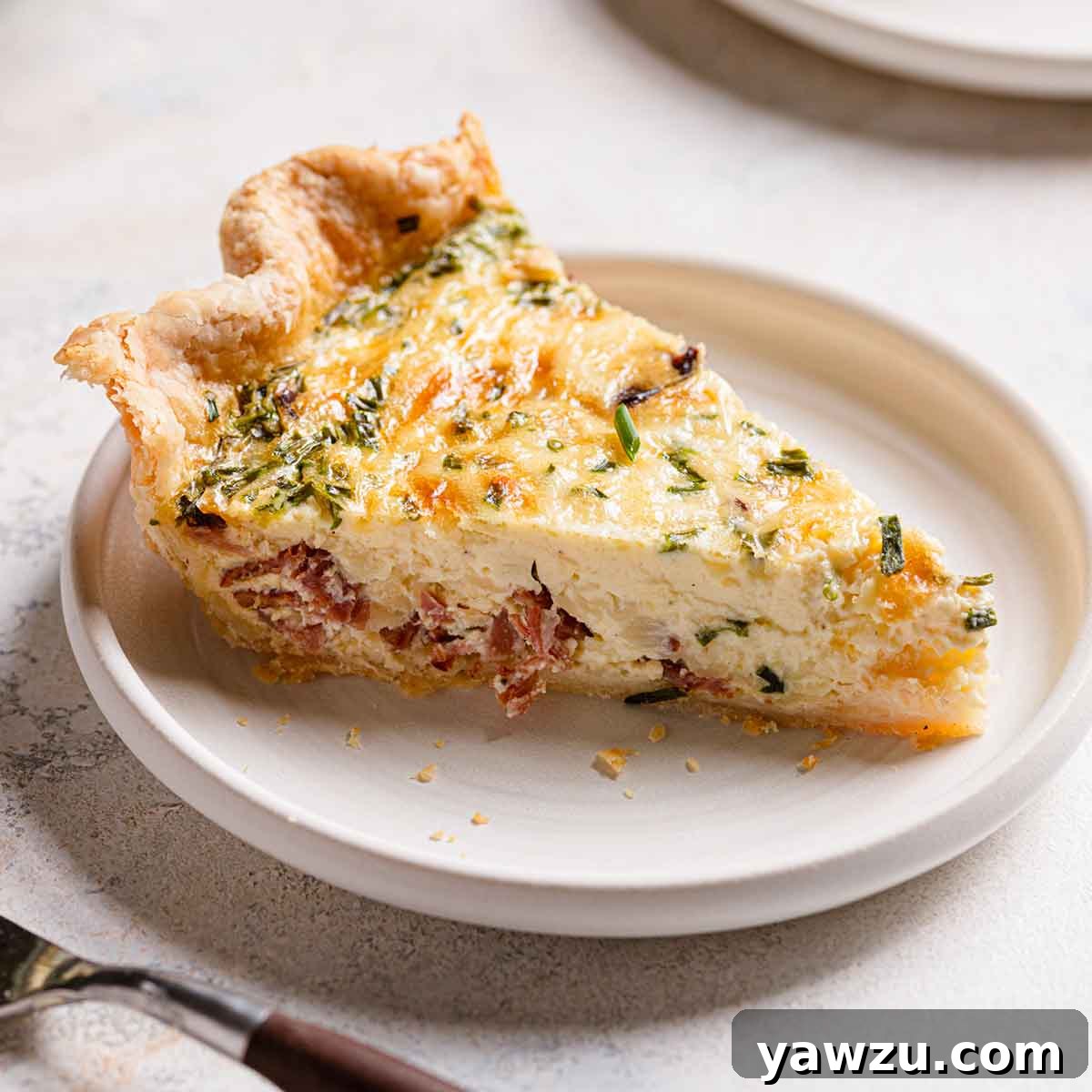
- Remove the quiche from the oven and allow it to rest for 10 to 15 minutes before slicing and serving. This resting period allows the custard to fully set. Quiche Lorraine can be served warm or at room temperature, making it a flexible dish for any meal.
Notes
- Crust: Feel free to use the provided all-butter pie crust recipe, or my butter/shortening crust for a foolproof option.
- Pan: A 9-inch glass pie plate is ideal. Alternatives include a tart pan or a deeper quiche mold for different aesthetics.
- Heavy Cream/Milk Ratios: The proportions of heavy cream and milk can be adjusted based on desired richness, or use all half-and-half for convenience.
- Mix-Ins: Customize your quiche by adding other meats, cheeses, or vegetables. Keep total additions to about 1 cup of cheese and 2 cups of other ingredients. Refer to the detailed suggestions in the main article.
- Make-Ahead Pie Dough: Unbaked pie dough can be refrigerated for up to 5 days or frozen for up to 3 months.
- Make-Ahead Par-Baked Crust: The crust can be par-baked, cooled completely, and refrigerated for up to 3 days before filling and baking.
- Storage: Leftover baked quiche should be wrapped tightly and refrigerated for up to 4 days.
- Freezing & Reheating: Baked quiche can be frozen for up to 3 months. Thaw overnight in the refrigerator, then reheat at 350°F (177°C) for 20-25 minutes.
Nutrition Information (per serving)
Calories: 488 kcal, Carbohydrates: 18 g, Protein: 13 g, Fat: 41 g, Saturated Fat: 21 g, Cholesterol: 168 mg, Sodium: 497 mg, Potassium: 154 mg, Fiber: 1 g, Sugar: 2 g, Vitamin A: 1067 IU, Vitamin C: 1 mg, Calcium: 197 mg, Iron: 1 mg
Did you make this recipe?
Leave a review below and share your creation! Tag @thebrowneyedbaker on Instagram so I can see your delicious Quiche Lorraine!
Author: Michelle Lettrich
Course: Breakfast, Brunch, Main Course
Cuisine: French
[Photography by Dee of One Sarcastic Baker]