


Alton Brown’s “The Chewy” Chocolate Chip Cookies: A Masterclass in Perfect Texture
In the vast universe of chocolate chip cookie recipes, Alton Brown’s “The Chewy” recipe consistently emerges as a top contender for its unique approach and exceptional results. For anyone who dreams of a cookie that’s thick, rich, and wonderfully chewy rather than thin and crisp, this recipe is a revelation. It delves into the science of baking, meticulously selecting ingredients and techniques that guarantee a cookie with an unparalleled texture.
What sets “The Chewy” apart is Alton Brown’s intelligent use of specific ingredients. While many recipes opt for all-purpose flour, this one boldly calls for bread flour. This choice is crucial: bread flour boasts a higher protein content, which in turn leads to a more developed gluten structure, essential for that satisfying chew. This clever trick, combined with a generous ratio of brown sugar to granulated sugar and the addition of an extra egg yolk, ensures your cookies emerge from the oven perfectly thick, moist, and delightfully chewy every single time. Moreover, these cookies are designed to be a more modest size than some other recipes, making them ideally portioned for enjoying more than one without a hint of guilt. Prepare to experience chocolate chip cookies reimagined and perfected.
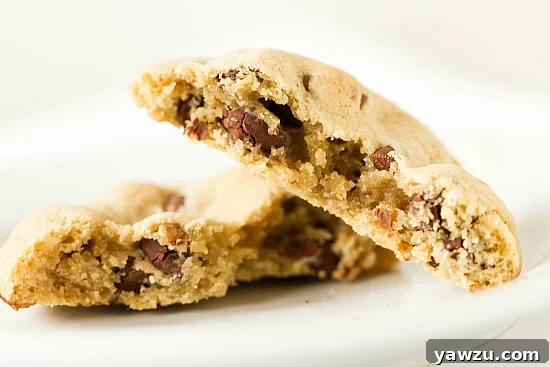
The Definitive Chewy Chocolate Chip Cookie Recipe

Alton Brown’s “The Chewy” Chocolate Chip Cookie
24 cookies
Alton Brown’s famously delicious chocolate chip cookies, perfected for a delightfully chewy texture.
Pin
Ingredients
- 1 cup (227 g) unsalted butter
- 12 ounces (340.2 g) bread flour (about 2¼ cups)
- 1 teaspoon kosher salt
- 1 teaspoon baking soda
- 2 ounces (56.7 g) granulated sugar (¼ cup)
- 8 ounces (226.8 g) light brown sugar (1¼ cup)
- 1 large egg
- 1 egg yolk
- 1 ounce (28.35 ml) whole milk (2 tablespoons)
- 1½ teaspoons vanilla extract
- 2 cups (360 g) semisweet chocolate chips (12 ounces)
Instructions
- Melt the butter in a 2-quart saucepan over low heat. Once melted, set it aside to cool slightly. This step is crucial as slightly cooled butter, rather than hot butter, interacts better with the sugars and eggs, contributing to the ultimate chewy texture.
- In a separate medium bowl, sift together the bread flour, kosher salt, and baking soda. Sifting ensures that these dry ingredients are thoroughly combined and free of lumps, leading to a uniform cookie dough. Set this mixture aside for later.
- Using a stand mixer fitted with the paddle attachment, or a hand mixer, beat together the slightly cooled melted butter and both the granulated sugar and light brown sugar on medium speed for 2 minutes. This creaming action creates a light and airy base for your cookie dough.
- While the butter and sugars are creaming, whisk together the whole egg, the additional egg yolk, whole milk, and vanilla extract in a measuring cup or small bowl until well combined. Once the butter-sugar mixture is ready, reduce the mixer speed to low and slowly incorporate the egg mixture. Mix until everything is thoroughly combined, which should take approximately 30 seconds. The extra egg yolk and milk add richness and moisture, enhancing the chewiness.
- Gradually add the sifted dry ingredients to the wet mixture, mixing on low speed until just combined. Be sure to scrape down the sides of the bowl as needed to ensure all ingredients are incorporated. It’s important not to overmix at this stage, as excessive mixing can develop too much gluten, leading to tough cookies. Once the flour mixture is incorporated, add the semisweet chocolate chips and mix briefly, just until they are evenly distributed throughout the dough.
- Cover the cookie dough and refrigerate it for at least 1 hour. This chilling period is a non-negotiable step for Alton Brown’s “The Chewy” cookies. Chilling allows the flour to fully hydrate, prevents the cookies from spreading excessively in the oven, and deepens the flavors, resulting in a richer, more complex taste and superior chewy texture.
- After the dough has chilled, preheat your oven to 375 degrees F (190 degrees C). Position oven racks in the top third and bottom third of the oven to accommodate two baking sheets simultaneously for even heat distribution.
- Scoop the chilled dough into individual portions, each weighing approximately 1½ ounces (about 2-3 tablespoons). Arrange these dough portions onto parchment-lined half sheet pans, leaving ample space between each cookie (around 6 cookies per sheet) to allow for proper spreading during baking.
- Bake 2 sheets of cookies at a time for 15 minutes. Make sure to rotate the pans halfway through the baking cycle to ensure even browning and consistent results. The cookies should have golden-brown edges but still appear slightly soft in the center when removed from the oven.
- Once baked, carefully remove the sheet pans from the oven. Gently slide the parchment paper with the warm cookies onto a cooling rack. It is crucial to let the cookies cool on the rack for at least 5 minutes before handling or serving. This allows them to set properly and further develop their coveted chewy texture.
- Any leftover cookies can be stored in an airtight container at room temperature. They maintain their delicious chewiness for up to 3-4 days.
Notes
Nutritional values provided are based on one cookie. For the most accurate results, especially with dry ingredients like flour and sugar, it is highly recommended to measure by weight using a kitchen scale rather than by volume.
Nutritional Information (per cookie)
- Calories: 257 kcal
- Carbohydrates: 29g
- Protein: 3g
- Fat: 14g
- Saturated Fat: 8g
- Cholesterol: 36mg
- Sodium: 151mg
- Potassium: 118mg
- Fiber: 1g
- Sugar: 17g
- Vitamin A: 265 IU
- Calcium: 25mg
- Iron: 1.2mg
Did you make this recipe?
We’d love to see your creations! Leave a review below to share your experience, then snap a picture and tag @thebrowneyedbaker on Instagram so we can admire your delicious cookies!
Unpacking the Science of “The Chewy”: Why Alton Brown’s Method Works Wonders
Alton Brown is celebrated for demystifying cooking through a scientific lens, and his “The Chewy” chocolate chip cookie recipe is a prime example of this philosophy in action. Every component, every step, is precisely engineered to yield a cookie that is the epitome of chewiness. Let’s explore the scientific reasons behind the success of this iconic recipe.
1. The Superiority of Bread Flour
The most unconventional yet critical ingredient in this recipe is bread flour. Unlike standard all-purpose flour, bread flour contains a higher percentage of protein (typically 12-14%). When this protein interacts with water and is kneaded (or mixed in this case), it forms long, elastic strands of gluten. This robust gluten network is what gives bread its characteristic chewiness, and in cookies, it provides that desirable resistance and satisfying bite. The increased gluten prevents the cookies from becoming crumbly or overly delicate, instead imparting a springy, resilient texture that defines true chewiness.
2. The Perfect Sugar Balance: Brown vs. Granulated
The strategic ratio of light brown sugar to granulated sugar is another cornerstone of “The Chewy.” Brown sugar, which contains molasses, is hygroscopic, meaning it readily absorbs and retains moisture. This property is vital for keeping cookies soft and moist long after they’ve cooled, preventing them from drying out and becoming hard or brittle. Granulated sugar, conversely, contributes to the cookie’s crisp edges and helps with spreading. By favoring brown sugar, Alton Brown ensures a tender, moist interior that perfectly complements the chewy structure.
3. The Indispensable Extra Egg Yolk
The inclusion of an additional egg yolk may seem like a minor detail, but its impact is profound. Egg yolks are rich in fat and natural emulsifiers. The added fat contributes to a more tender crumb, a richer flavor profile, and a smoother, more cohesive dough. Functionally, the yolk acts as an emulsifier, binding the fat and water in the dough more effectively, which further enhances the cookie’s stability and prevents excessive spreading. More fat also means a softer, more luxurious texture, complementing the gluten structure from the bread flour to create that perfect chew.
4. Melted Butter: The Foundation for Density
Unlike many traditional cookie recipes that call for creaming softened butter and sugar to incorporate air, Alton Brown’s recipe specifies melted butter. Creaming butter and sugar creates air pockets, leading to a lighter, more cake-like texture. Using melted butter, however, results in a denser dough with fewer air pockets. This density is a key contributor to the desired chewiness, as it prevents the cookies from puffing up excessively and becoming airy or brittle. The melted butter also helps distribute fat more evenly, ensuring consistent moisture throughout the cookie.
5. The Magic of Chilling the Dough
The mandatory 1-hour chilling period is not merely a suggestion; it’s a critical step that significantly impacts both the texture and flavor of these cookies. During chilling, several beneficial transformations occur:
- Hydration: The flour has ample time to fully absorb all the liquids in the dough, leading to a more consistent, less sticky, and easier-to-handle texture. This even hydration is essential for a uniform chew.
- Minimized Spreading: Cold butter melts slower in a hot oven. This slower melt rate helps the cookies hold their shape, preventing them from spreading too thin and ensuring they remain thick and chewy.
- Flavor Development: Chilling allows the flavors of all the ingredients, particularly the sugars and vanilla, to meld and intensify. This results in a deeper, more complex, and richer flavor that distinguishes truly exceptional cookies.
Expert Tips for Baking Your Best “The Chewy” Cookies
To ensure your Alton Brown chocolate chip cookies are nothing short of perfect, keep these expert tips in mind:
- Precision is Key: Baking is a science, and precise measurements are paramount. Whenever possible, use a digital kitchen scale to measure your flour, butter, and sugars by weight for the most accurate and consistent results.
- Cool the Butter Properly: After melting the butter, allow it to cool slightly before incorporating it into the sugars. Adding hot butter can partially cook the eggs, leading to an undesirable texture. It should be warm enough to be liquid but cool enough not to scramble eggs.
- Avoid Overmixing: Once you add the dry ingredients to the wet, mix only until they are just combined. Overmixing develops excess gluten, which can make your cookies tough, directly counteracting the desired chewiness.
- Respect the Chill Time: Do not skip or shorten the 1-hour chilling period. This step is fundamental to the cookie’s texture, thickness, and flavor development. For an even more intense flavor, you can chill the dough for up to 24-48 hours.
- Don’t Overbake: These cookies are best when they are slightly underbaked in the center. Look for edges that are golden brown and centers that still appear a little soft. They will continue to set and firm up as they cool on the baking sheet and cooling rack.
- Choose Quality Chocolate: The type and quality of your chocolate chips significantly impact the final taste. Opt for good quality semisweet chocolate chips or even chopped chocolate bars for superior flavor and melt.
- Parchment Paper is Your Friend: Always line your baking sheets with parchment paper. This prevents sticking, ensures even baking, and makes for easy cleanup.
Delicious Variations to Personalize Your “Chewy” Cookies
Once you’ve mastered the classic Alton Brown “The Chewy” recipe, feel free to get creative with these delicious variations:
- Nutty Indulgence: Fold in ½ cup of toasted chopped walnuts, pecans, or almonds along with the chocolate chips for an added layer of crunch and flavor.
- Spiced Delights: A subtle hint of ground cinnamon or a tiny dash of nutmeg added to the dry ingredients can introduce a warm, aromatic complexity to your cookies.
- Double the Chocolate: For true chocolate lovers, consider using a mix of semisweet and dark chocolate chips. You could also experiment with adding 1-2 tablespoons of unsweetened cocoa powder to the dry ingredients for a deeper chocolate dough.
- Toffee Crunch: Stir in a handful of toffee bits or Heath Bar pieces for a sweet, buttery crunch that complements the chewy texture beautifully.
- Zesty Twist: Add the zest of one orange or lemon to the dough for a bright, refreshing flavor that cuts through the richness.
- Oatmeal Chews: Replace ¼ cup of bread flour with finely ground rolled oats for an even more substantial and chewy texture.
Storage and Freezing Guidelines for Maximum Freshness
To ensure your Alton Brown “The Chewy” chocolate chip cookies remain delicious and fresh, follow these storage recommendations:
- Storing Baked Cookies: Once completely cooled, store the cookies in an airtight container at room temperature. They will retain their ideal chewy texture for up to 3-4 days. For an extra touch of softness, place a slice of bread in the container; the cookies will absorb its moisture.
- Freezing Baked Cookies: If you’ve baked a large batch, you can freeze them for longer storage. Allow the cookies to cool completely, then arrange them in a single layer on a baking sheet and freeze until solid. Once frozen, transfer them to a freezer-safe airtight container or heavy-duty freezer bag. They will keep well for up to 2-3 months. Thaw at room temperature or warm gently in the microwave for a quick treat.
- Freezing Cookie Dough: Prepare the dough as directed, then scoop it into individual 1½-ounce portions. Place these dough balls on a parchment-lined baking sheet and freeze until firm. Once frozen, transfer the dough balls to a freezer-safe bag. When ready to bake, simply place the frozen dough balls on a prepared baking sheet and bake as usual, adding an extra 2-4 minutes to the baking time, or until golden brown.
Frequently Asked Questions About Alton Brown’s “The Chewy” Cookies
- What makes these cookies uniquely chewy?
- The primary factors contributing to the exceptional chewiness are the high-protein bread flour, which builds a strong gluten structure; the dominant use of brown sugar, which adds moisture; the extra egg yolk for richness and tenderness; and melted butter for a denser texture. The essential chilling period also prevents spreading, resulting in a thicker, chewier cookie.
- Can I substitute all-purpose flour for bread flour?
- While you can use all-purpose flour, the resulting cookies will not have the signature chewiness that defines Alton Brown’s recipe. All-purpose flour has a lower protein content, which will yield a softer, possibly more cake-like or delicate cookie. For true “Chewy” results, bread flour is indispensable.
- Is the chilling of the dough truly necessary?
- Absolutely! The chilling step is critical. It allows the flour to fully hydrate, prevents the cookies from spreading too thinly during baking, and significantly deepens the flavor profile, leading to a much richer and more satisfying cookie experience.
- My cookies spread too much. What might have gone wrong?
- Excessive spreading can be caused by several factors: insufficient chilling time, using butter that was too warm, inaccurate measurement of flour (too little flour by weight), or an oven temperature that is too low. Ensure your oven thermometer is accurate and that your dough is adequately chilled.
- Can I use dark brown sugar instead of light brown sugar?
- Yes, you can use dark brown sugar. It will impart an even richer, more pronounced molasses flavor and might result in a slightly chewier cookie due to its higher molasses content. However, it will alter the original flavor profile slightly, so light brown sugar is recommended for the classic “Chewy” taste.
- How important is kosher salt, and can I substitute it?
- Kosher salt has larger, flatter flakes compared to table salt, which can dissolve differently and sometimes provide pleasant bursts of salinity. You can substitute fine sea salt measure for measure. If using table salt, reduce the amount by about half, as it is much denser and saltier by volume.
- Can I prepare the cookie dough in advance?
- Yes, this dough is excellent for making ahead! It can be refrigerated for up to 72 hours, which often enhances the flavor even further. You can also scoop the dough into balls and freeze them for up to 2-3 months, baking them directly from frozen with a slight increase in baking time.
Alton Brown’s “The Chewy” chocolate chip cookie recipe is far more than a simple baking guide; it’s a testament to the power of culinary science and precision. By understanding and embracing the specific roles of bread flour, the ideal sugar balance, an extra egg yolk, melted butter, and strategic chilling, you’re not just baking cookies—you’re crafting a truly perfect, chewy masterpiece. So, get ready to preheat your oven, gather your ingredients, and embark on a delightful journey to bake the ultimate chocolate chip cookie you’ll ever taste.