
Embarking on a delightful baking journey requires more than just passion and good recipes; it demands the right set of tools. This comprehensive guide will arm you with everything you need to know to build an indispensable arsenal of essential baking equipment, ensuring you’re always prepared for everyday baking adventures. From foundational items like accurate oven thermometers and precision food scales to versatile mixing bowls, an array of baking pans, and crucial measuring tools, this is your definitive resource for outfitting your kitchen. Whether you’re just starting or looking to enhance your current collection, we’ll help you select the best baking tools for consistent, delicious results every time.
Following up on our guide to essential baking ingredients for a well-stocked pantry, this companion list focuses on the indispensable baking tools that will truly empower your culinary creativity. With these fundamental pieces of equipment at your disposal, you’ll be wonderfully set to whip up anything from a batch of gooey chocolate chip cookies to fudgy brownies, or even an elaborate triple-layer chocolate cake. While my own kitchen boasts an extensive collection of gadgets, I firmly believe that the core items on this list provide the foundation for tackling almost any baking recipe with confidence and ease.
#1: Oven Thermometer – Your Key to Baking Precision
Baking is a science, and temperature is arguably its most critical variable. An oven thermometer is often overlooked, yet it is one of the most critical pieces of baking equipment you can own. Most home ovens, even new ones, notoriously display inaccurate temperatures. They can run hot or cold, fluctuate significantly, or have uneven heating spots, leading to disastrous baking results like burnt edges, raw centers, or flat cookies. I keep one in my oven at all times, religiously checking it to ensure the internal temperature truly matches what the recipe requires. For instance, my oven consistently runs 75 degrees Fahrenheit hotter than its dial indicates, meaning I always have to adjust my settings accordingly. Since adopting this practice, I’ve encountered only one oven that was true to its temperature. Investing in an accurate oven thermometer guarantees that your treats bake evenly and perfectly every time, eliminating guesswork and dramatically improving the consistency of your baking. It’s a small investment that yields immense returns in baking success.
#2: Food Scale – The Secret to Professional Baking Accuracy
For unparalleled accuracy and consistent results in baking, a digital food scale is an absolute game-changer. I have personally relied on my OXO 22-pound capacity kitchen scale for nearly a decade, and it remains one of my most cherished kitchen tools. Weighing ingredients, especially flour and sugar, provides far greater precision than measuring by volume (cups and spoons), which can vary widely depending on how ingredients are scooped and packed. This accuracy is paramount for delicate pastries, sourdough breads, and any recipe where precise ratios are essential. My recommended scale is incredibly easy to use, offering clear readouts in multiple units including ounces, grams, cups, and milliliters, making it versatile for both baking and other household tasks. Beyond baking, it’s invaluable for portion control, preparing ingredients for cooking, or even weighing packages. Once you start weighing your ingredients, you’ll notice a significant improvement in the texture, rise, and overall quality of your baked goods.
🌟 READ: For a deeper dive into why weighing makes such a difference, check out The Importance of Weighing Ingredients When Baking.
#3: Hand Mixer – Versatility and Power in Your Palm
While stand mixers often grab the spotlight for their aesthetics and powerful capabilities, a high-quality hand mixer remains an essential and incredibly versatile tool for any baker. My Cuisinart 7-Speed Hand Mixer has been a dependable workhorse for over 15 years, proving its durability and consistent performance. I particularly love its integrated count-up digital timer, which allows for precise mixing times, a crucial factor in achieving the right consistency for batters, creams, and meringues. For many home bakers, a hand mixer offers the perfect balance of power, portability, and affordability. It excels at tasks like whipping cream, beating egg whites, creaming butter and sugar, and mixing most cake and cookie batters. Despite owning a stand mixer, I find myself reaching for my hand mixer for approximately 95% of my kitchen projects due to its convenience and efficiency for smaller to medium-sized batches. It’s perfect for those quick baking impulses without the hassle of bringing out and cleaning a larger appliance.
#4: Mixing Bowls – The Foundation of Every Recipe
Mixing bowls are the unsung heroes of the kitchen, providing the essential vessel for combining, whisking, and preparing your ingredients. To ensure you’re always equipped, I recommend having a diverse collection on hand. Specifically, I keep both a set of nested glass mixing bowls and a set of nested stainless steel mixing bowls. Each material offers distinct advantages: glass bowls are perfect for microwaving ingredients like butter or chocolate, and their transparency allows you to easily observe the mixing process. Stainless steel bowls, on the other hand, are lightweight, exceptionally durable, and heat-safe, making them ideal for creating a double boiler on the stovetop for tempering chocolate or making delicate custards. Having a variety of sizes in both materials ensures you always have the right bowl for tasks ranging from whisking a single egg white to preparing a large batch of cookie dough or cake batter. Look for bowls with non-slip bases and comfortable rims for easy handling to make your mixing experience even smoother.
#5: Baking Pans – Shaping Your Culinary Creations
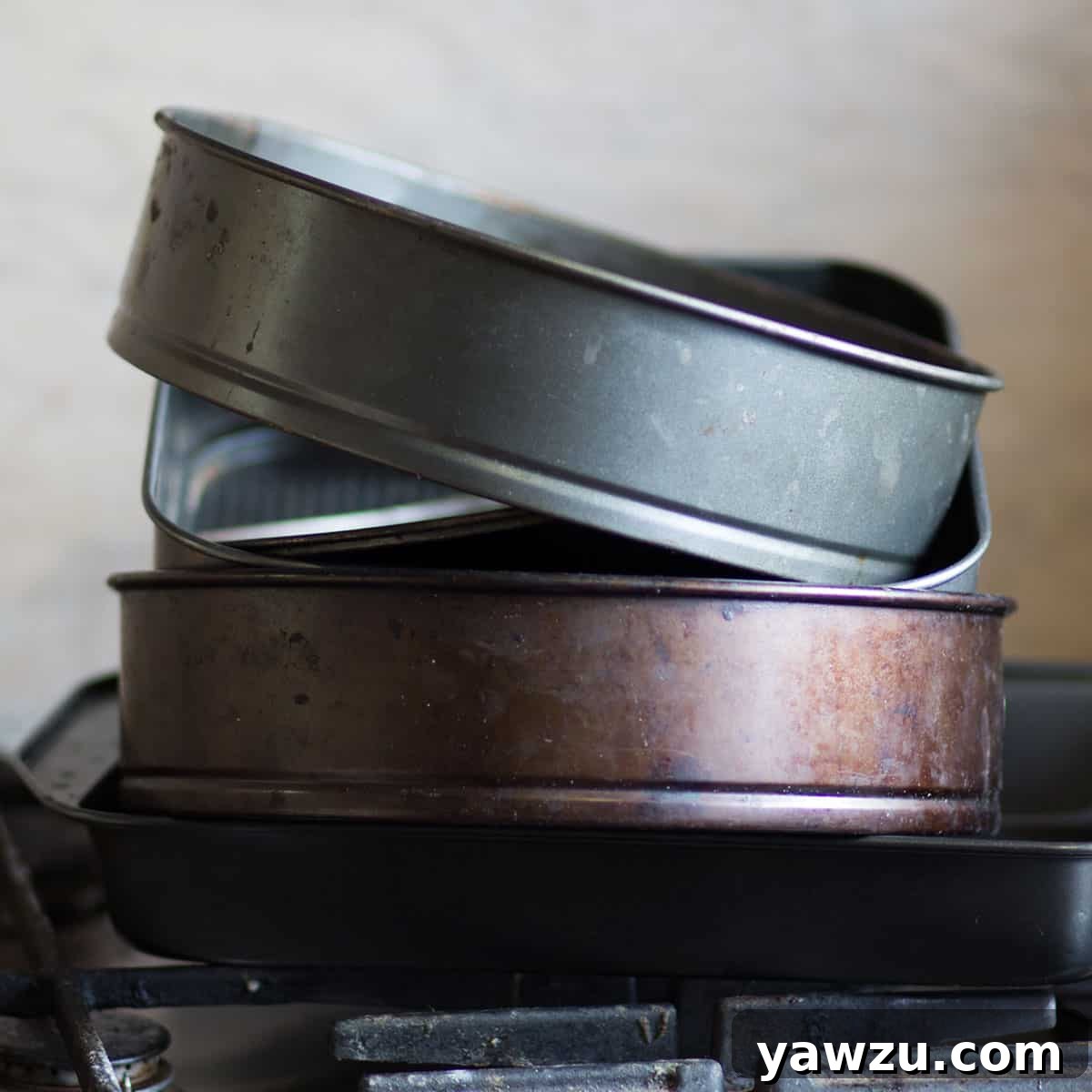
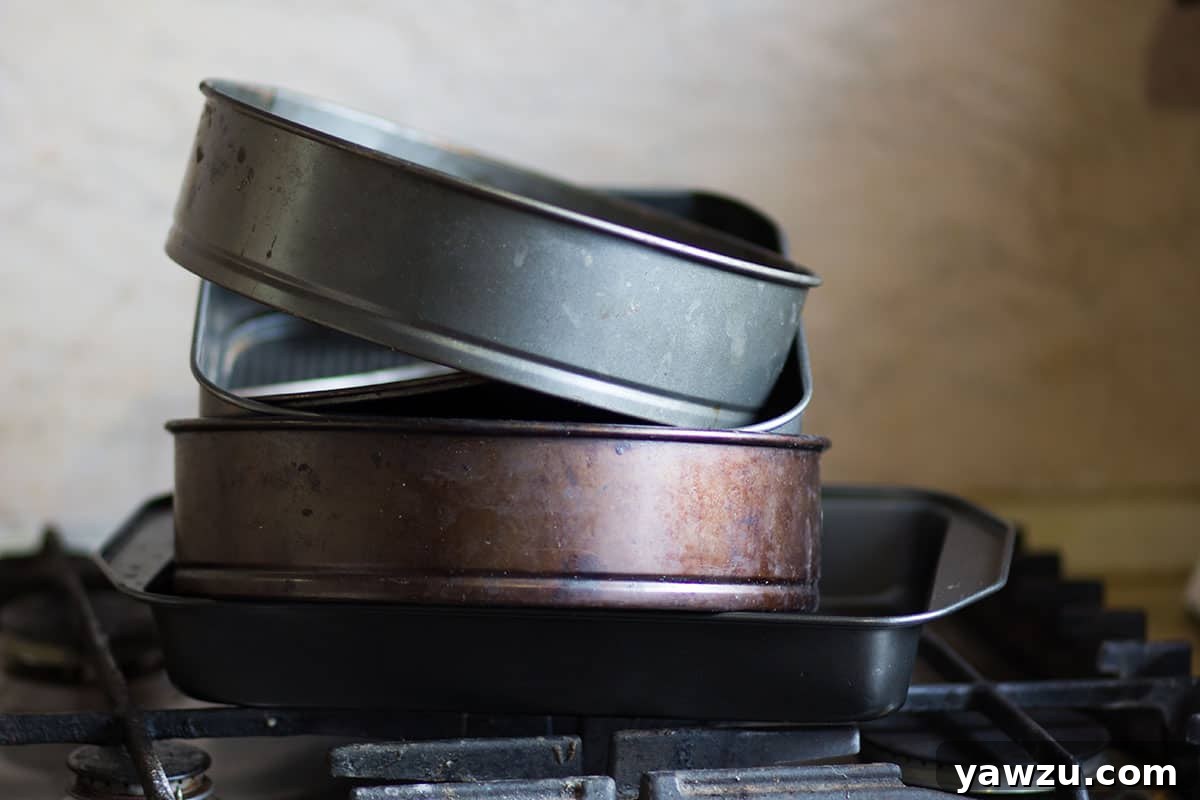
Once your ingredients are perfectly mixed, you need the right vessels to transform them into delectable baked goods. Baking pans come in a vast array of shapes, sizes, and materials, each designed for specific purposes. Having a thoughtful selection is crucial for expanding your baking repertoire and achieving professional-looking results. Different pan materials also affect baking: aluminum pans heat quickly and evenly, producing light, evenly colored baked goods, while glass and ceramic retain heat longer, resulting in crispier crusts and slower overall baking times. Consider the recipes you frequently make and choose your pans accordingly, prioritizing quality for long-lasting performance.
Must-Have Baking Pans for Every Kitchen
If you’re just starting to build your bakeware collection, these foundational pans are your go-to essentials for a wide range of everyday recipes:
- Rectangular Baking Pan (9×13-inch): This is an incredibly versatile pan, perfect for sheet cakes, brownies, casseroles, and even roasting vegetables. A glass rectangular pan is often the most versatile choice due to its ability to retain heat and allow you to see browning, but a metal one with straight sides offers fast, even heating, especially beneficial for fudgier brownies and delicate cakes.
- Square Baking Pan (8×8-inch and 9×9-inch): Ideal for smaller batches of brownies, cornbread, blondies, or small cakes. Start with a glass square pan for its even heat distribution and visual appeal. I highly recommend having both an 8-inch pan and a 9-inch pan, as many recipes specify one or the other, and the slight difference in size can significantly impact baking time and density.
- Round Cake Pans (9-inch): These are the standard for most layer cakes, producing beautiful, evenly baked layers. For aspiring cake decorators or anyone who loves to make impressive desserts, I strongly recommend purchasing three 9-inch round cake pans. This allows you to bake three layers simultaneously, saving time and ensuring consistent results for triple-layer cakes. Look for light-colored aluminum pans for optimal heat distribution and to prevent over-browning.
Nice-to-Have Baking Pans for Expanding Your Repertoire
Once you’ve mastered the basics, these specialized pans will allow you to explore a wider world of baking, adding excitement and variety to your kitchen. Build your collection over time, and you’ll soon be ready to tackle almost any recipe:
- Bundt Pan: Perfect for creating stunning, decorative cakes with minimal effort. The pan’s unique fluted design means the cake itself becomes a work of art, often requiring just a simple glaze or dusting of powdered sugar.
- 8-inch Round Cake Pans: While 9-inch is standard, 8-inch pans are excellent for slightly smaller cakes, reducing baking time or for recipes specifically scaled for this size. Again, having three is ideal for elegant triple-layer cakes.
- Cheesecake (Springform) Pan: An absolute necessity for cheesecakes, delicate quiches, and other desserts that are difficult to remove from a standard pan. The removable sides and base allow for easy release without damaging your beautiful creations.
- Loaf Pans (8½ x 4½-inch and 9×5-inch): Essential for baking quick breads like banana bread or zucchini bread, yeast breads, and even savory meatloaves. Having both the 8½ x 4½-inch and the 9×5-inch sizes ensures you can accommodate various recipe yields.
- Muffin Pans: Expand your muffin and cupcake game with a variety of sizes. A standard size is perfect for everyday muffins and cupcakes, a mini size is great for bite-sized treats or appetizers, and a jumbo size creates bakery-style, generously sized muffins.
- Tart Pan: With its fluted edges and removable bottom, a tart pan is indispensable for creating professional-looking fruit tarts, quiches, and other pastry-based desserts that require easy removal and a beautiful presentation.
#6: Pie Plates – Crafting Perfect Pies and Quiches
No baking arsenal is complete without reliable pie plates, the foundation for countless sweet and savory delights. From classic apple pies to savory quiches, the right pie plate makes all the difference in achieving a perfectly cooked crust. I consistently reach for my 9-inch Pyrex glass pie plates, owning three to handle multiple pies, especially during holiday baking seasons. Glass pie plates are fantastic because they allow you to monitor the browning of the bottom crust, ensuring it’s never soggy. Their even heat distribution also contributes to a uniformly baked filling. For a “nice-to-have” addition, I also recommend a ceramic deep-dish pie plate. Ceramic plates offer beautiful presentation, retain heat exceptionally well for a crispy crust, and are ideal for recipes with generous fillings. The deep-dish style accommodates more filling, making for truly satisfying pies.
#7: Rimmed Baking Sheets – The Versatile Workhorse of Your Kitchen
If there’s one pan that earns its keep day in and day out, it’s the rimmed baking sheet. These flat, rectangular pans with a raised edge on all four sides are incredibly versatile, making them essential for a multitude of baking and cooking tasks. My go-to recommendation is the Vollrath Wear-Ever Half Sheet Pans, measuring 13×18 inches. I own four of these and use them constantly, whether I’m baking Ina Garten’s outrageous brownies, countless batches of cookies, roasting vegetables to perfection, or preparing sheet pan dinners. Their sturdy construction and even heat distribution are key to consistent results. The rim prevents liquids and small ingredients from spilling, containing your messes. In addition to the half-sheet size, I also find immense value in owning two 10×15-inch jellyroll pans. These slightly smaller, rimmed pans are perfect for baking thinner cakes like the classic Texas sheet cake, cookie bars, or for toasting nuts and coconut. Lining your baking sheets with parchment paper or silicone baking mats can further enhance non-stick properties and simplify cleanup.
#8: Cooling Racks – Essential for Perfect Textures
Often underestimated, cooling racks play a pivotal role in achieving the desired texture for your baked goods. As soon as cookies, cakes, or breads come out of the oven, they continue to bake on the hot pan. Transferring them to a cooling rack allows air to circulate freely around all sides, preventing the bottom from becoming soggy due to trapped steam. This also promotes even cooling, which is crucial for maintaining crispness in cookies and preventing dense, gummy textures in cakes and breads. My recommendation is the CIA Masters Wire Cooling Rack, known for its sturdy construction and durable design. If you’re a dedicated baker, especially during holiday seasons or when baking in batches, you truly can’t have too many. I personally own four, which makes it easy to cool multiple batches of cookies or layers of cake simultaneously without waiting. Look for racks that fit comfortably into your rimmed baking sheets for added versatility in tasks like glazing or decorating.
#9: Measuring Cups & Spoons – The Cornerstone of Recipe Accuracy
Accurate measurement is non-negotiable in baking, and having the right tools for this task is paramount. Measuring cups fall into two distinct categories: dry and liquid, and it’s crucial to use them correctly. The methods for measuring capacities differ, so you’ll want to use dry measuring cups for all your dry ingredients (such as flour, sugar, cocoa powder, oats, etc.) and liquid measuring cups for any—you guessed it!—liquids.
Dry Measuring Cups and Spoons: Precision for Solids
What I use and recommend: OXO Stainless Steel Measuring Cups and Spoons. These are designed for “leveling off” ingredients, meaning you fill the cup or spoon to the brim and then use a straight edge (like the back of a knife or a bench scraper) to scrape off any excess, ensuring an exact measure. Can you ever have enough sets? I believe not! You’ll want at least one complete set of each (I personally keep three or four sets on hand for efficiency during busy baking sessions). I highly prefer stainless steel for both cups and spoons due to its durability, resistance to odors and stains, and non-reactive nature, which means they won’t interact with acidic ingredients.
Liquid Measuring Cups: Clear Vision for Fluids
What I use and recommend: Pyrex 1-cup, 2-cup, and 4-cup set. These cups feature a spout for easy pouring and clear markings on the side. When measuring liquids, you should always place the cup on a flat surface and read the measurement at eye level to account for the meniscus (the curved surface of the liquid). While you can certainly manage with a single 1-cup measuring cup, I actually find my 2-cup version much more frequently used for most recipes and would recommend it as a primary choice. The 4-cup one is excellent for melting larger quantities of chocolate, measuring stocks, or preparing large amounts of wet ingredients like buttermilk or milk for yeast doughs. Pyrex is a trusted brand for glass bakeware, known for its heat resistance and durability.
#10: Whisks & Spatulas – The Dynamic Duo of Mixing
These two hand tools are constantly in use in any baker’s kitchen, making them indispensable for everything from gentle folding to vigorous aeration.
Spatulas: Flexible and Efficient
What I use and recommend: DI ORO seamless silicone spatulas. Spatulas are crucial for scraping down bowls, folding delicate ingredients, and transferring batters. What I particularly love about these DI ORO spatulas is their seamless, single-piece silicone construction. This design eliminates the common problem of the head detaching from the handle or accumulating grime in a crease, making them incredibly hygienic and easy to clean. Moreover, they are heat-resistant, so they can handle warm batters or melted ingredients without issue, and their flexibility ensures every last bit of batter is scraped from the bowl, minimizing waste.
Whisks: For Aeration and Blending
For whisks, I rely on OXO wire whisks for their ergonomic handles and effective design. I keep a variety of types on hand to suit different tasks:
- Large Balloon Whisks: I keep two large balloon whisks primarily for incorporating air into ingredients like egg whites or whipping cream, and for thoroughly combining dry ingredients. Their broad shape makes them efficient for larger volumes.
- Small Whisk: A small whisk is perfect for emulsifying vinaigrettes, whisking a single egg, or quickly mixing small amounts of ingredients in a ramekin or small bowl.
- Flat Whisk: While often associated with cooking (sauces and gravies), a flat whisk (also known as a roux whisk) can be surprisingly useful in baking for reaching into the corners of flatter pans or for efficiently blending thinner batters without incorporating too much air.
A good set of whisks ensures your mixtures are lump-free, aerated when needed, and perfectly combined.
#11: Fine-Mesh Sieve – The Versatile Refining Tool
A fine-mesh sieve (or strainer) is a remarkably versatile and indispensable tool that earns its spot in any baking enthusiast’s kitchen. My recommendation is the Rosle Stainless Steel Fine-Mesh Sieve, a true workhorse. Its primary role in baking is for sifting dry ingredients like flour, cocoa powder, or powdered sugar, which helps to remove lumps, aerate them, and ensure a smooth, even consistency in your batters and doughs. Beyond sifting, it’s invaluable for dusting baked goods with a delicate layer of powdered sugar or cocoa, giving them a professional finish. I also use it extensively for straining liquids to achieve silky smooth results, such as for pastry cream, custards, or fruit purees. It can even be used to rinse berries or drain small amounts of liquids. The robust stainless steel construction ensures durability and easy cleaning, making it a long-lasting addition to your essential baking tools.
#12: Rolling Pin – The Baker’s Arm for Perfect Doughs
From flaky pie crusts and delicate sugar cookies to homemade pasta and pizza dough, a reliable rolling pin is a fundamental tool for achieving uniform thickness in your doughs. The rolling pin I cherish was passed down to me by my mother, so its brand is a mystery. However, it’s very similar to this handle-less French-style rolling pin, which I absolutely adore. Its tapered design and lack of handles allow for superior control and sensitivity, preventing you from being too heavy-handed and ensuring a smooth, even roll every time. This style is particularly favored by pastry chefs for its ergonomic feel and precision. If you’re a frequent baker of pies and pastries, you might consider investing in a marble rolling pin. Marble naturally stays cooler than other materials, which is a significant advantage when working with butter-rich pastry doughs, as it helps prevent the butter from melting and sticking, making the dough much easier to handle and resulting in flakier crusts. Whichever style you choose, a good rolling pin will become an extension of your hands, making the art of dough shaping a joy.