
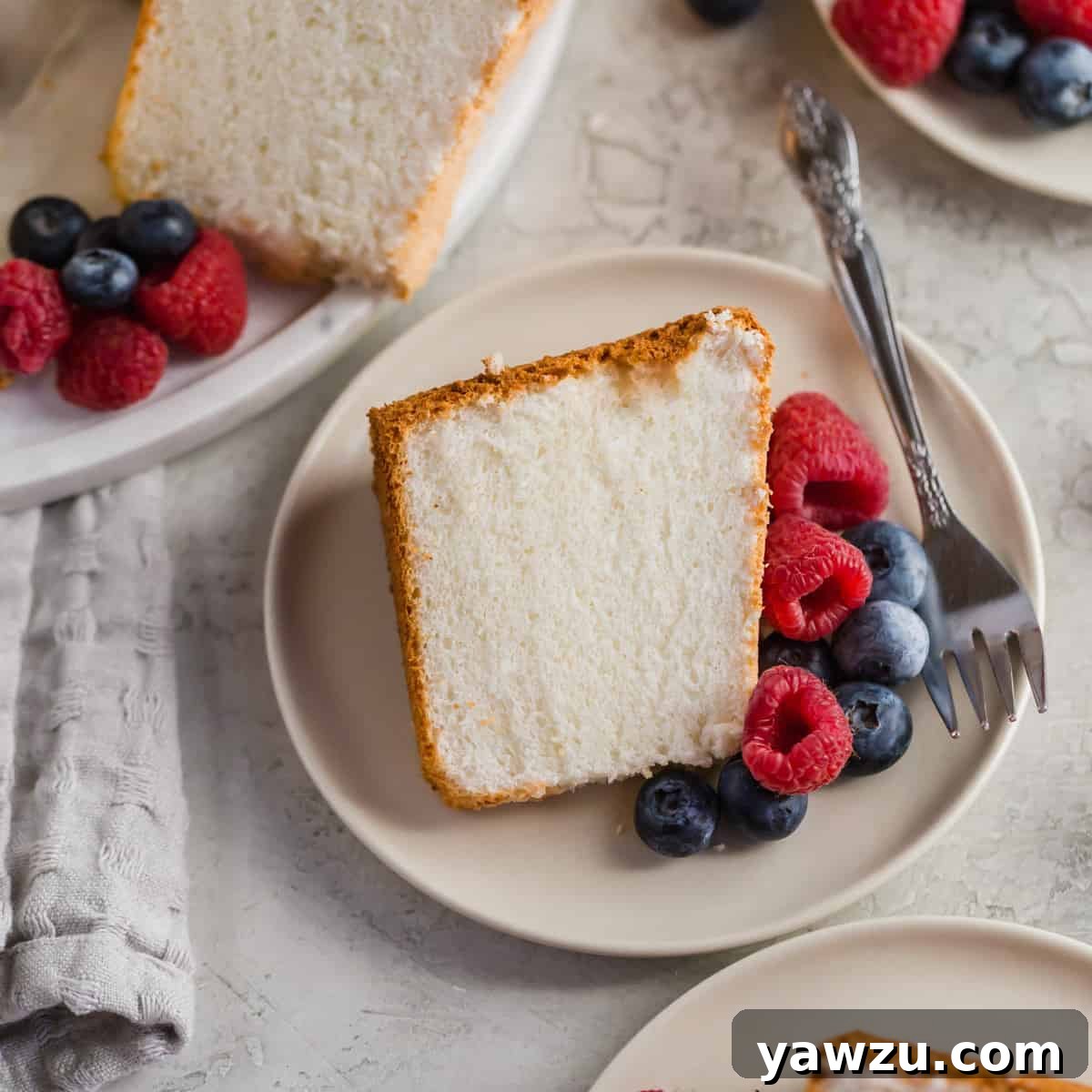
Welcome to the enchanting world of Angel Food Cake, a dessert that truly lives up to its name. With its ethereal lightness, delicate texture, and subtle sweetness, a slice of homemade angel food cake is often heralded as the quintessential treat to celebrate the warmth of summer. Far from being a complex culinary endeavor, this timeless classic requires just a handful of simple ingredients and promises to deliver an unforgettable experience that will earn rave reviews from all who taste it. Imagine serving it adorned with a cloud of freshly whipped cream and a vibrant medley of seasonal berries – a truly timeless dessert that captures the essence of joyous gatherings and sun-kissed days.
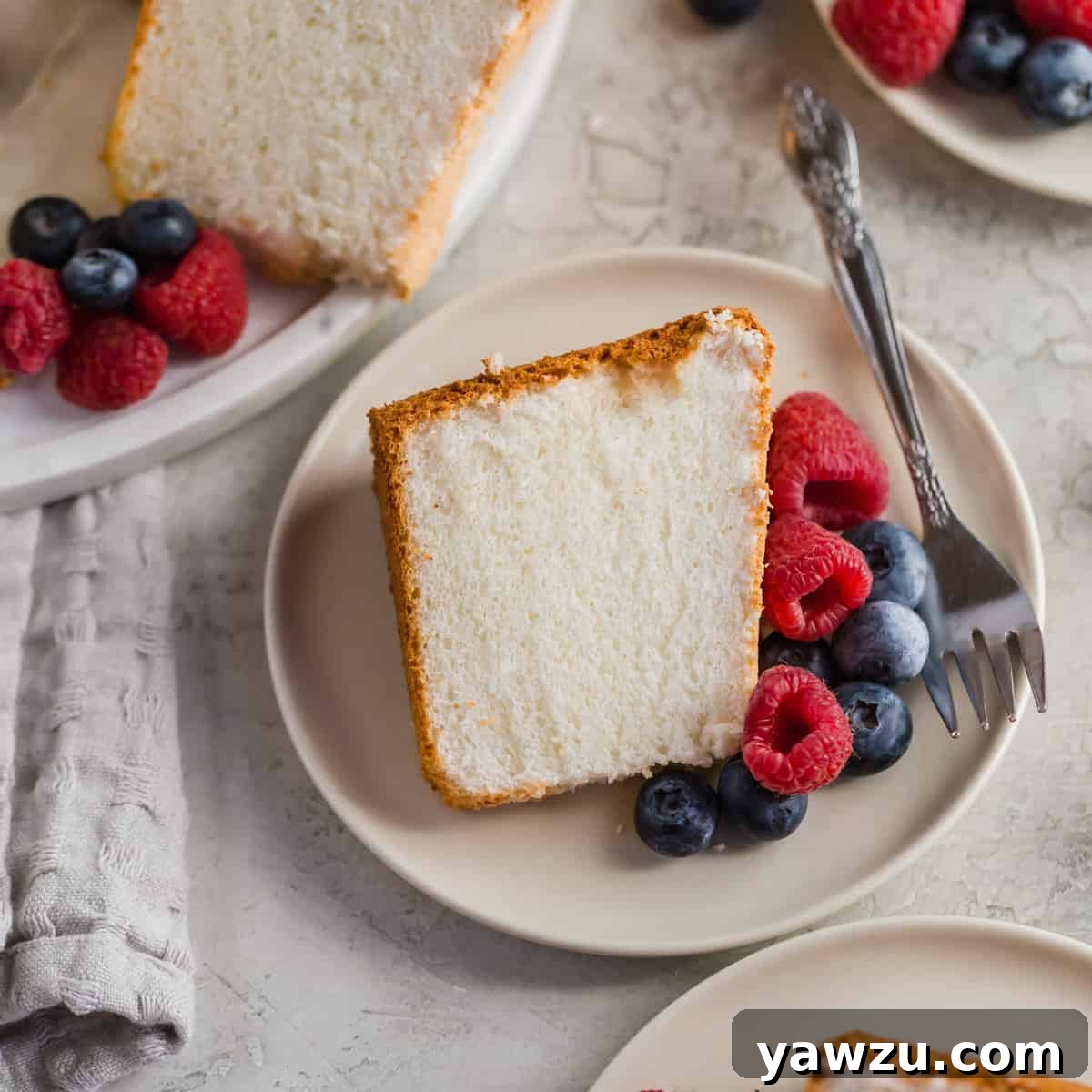
While many dessert enthusiasts might lean towards the rich indulgence of chocolate, there’s an undeniable charm to angel food cake that holds a special place in the heart. For me, it evokes fond memories of childhood summers, specifically the joyful Sunday dinners at my grandma’s house, where a generous slice of this fluffy cake was the perfect culmination to every meal. Today, I’m thrilled to share this cherished, homemade angel food cake recipe with you, allowing you to recreate those magical moments and enjoy a dessert that is as light as air and delightfully sweet.
Simplicity at Its Best: Only 6 Essential Ingredients
The beauty of this angel food cake recipe lies in its elegant simplicity. As summer approaches, we often seek out recipes that are both impressive and easy to execute. You’ll be delighted to find that this cake calls for just six fundamental ingredients, most of which are likely already staples in your pantry. This short list means each component plays a critical role in achieving the cake’s signature structure and flavor.
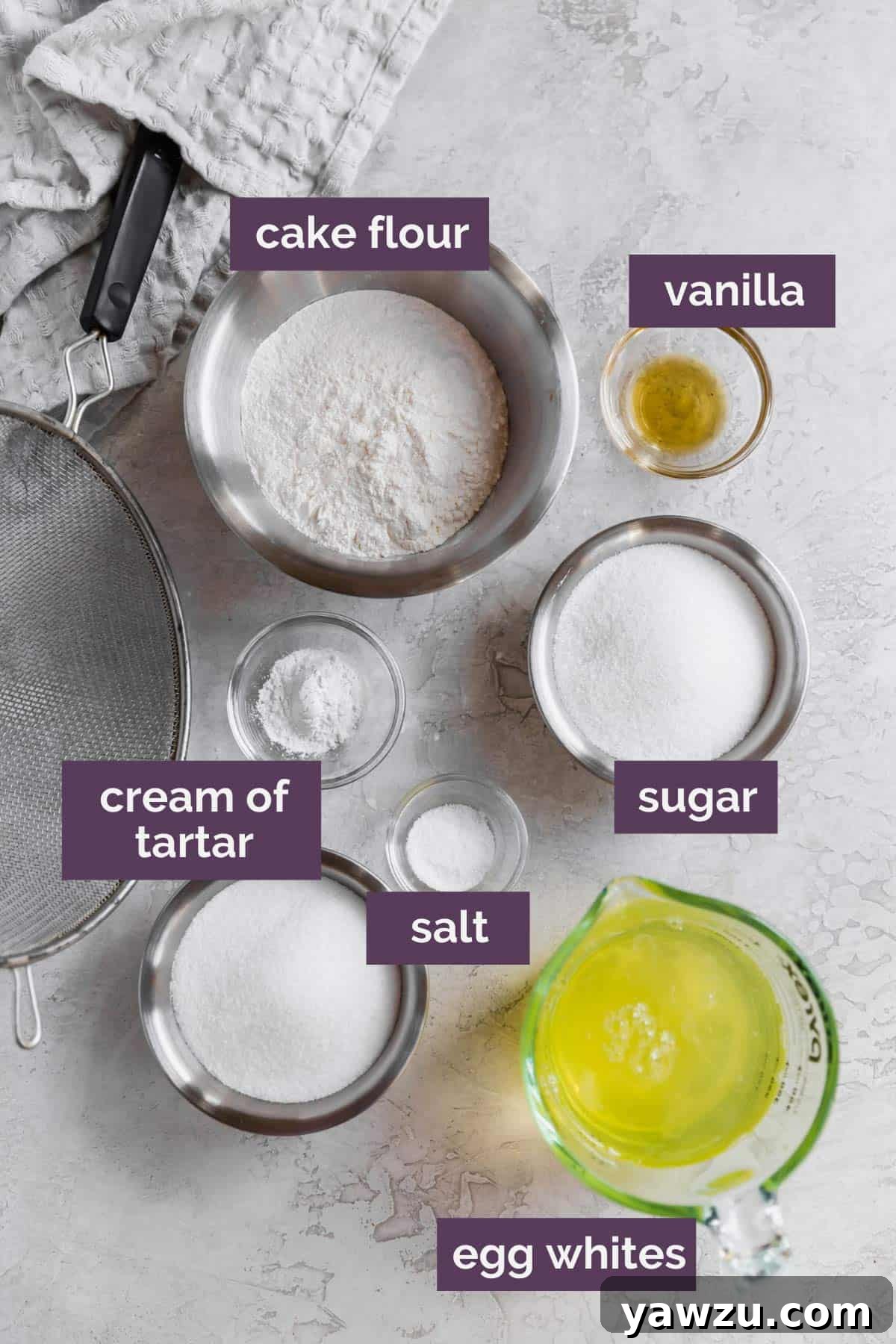
Understanding the function of each ingredient is key to mastering this delicate cake:
- Cake Flour: This ingredient is non-negotiable for an authentic angel food cake. Cake flour boasts a lower protein content compared to all-purpose flour, which is precisely what ensures the cake’s characteristic soft, tender, and delicate crumb. Substituting with all-purpose flour will lead to a dense, chewy texture and a cake that is likely to collapse, losing its angelic volume. If you don’t have cake flour on hand, you can create a simple substitute by combining all-purpose flour with a bit of cornstarch, then sifting multiple times.
- Granulated Sugar: Beyond providing sweetness, sugar plays a vital role in stabilizing the egg whites and contributing to the cake’s delicate structure and golden-brown crust. It’s gradually incorporated to ensure proper dissolution and even distribution throughout the batter.
- Salt: A small pinch of salt is a culinary secret weapon. In sweet recipes, it doesn’t just add flavor; it balances the sweetness of the sugar and enhances the subtle notes of vanilla, making the overall flavor profile more complex and satisfying.
- Egg Whites: The undisputed star of the angel food cake! These are the sole leavening agent, responsible for creating the cake’s incredibly light and airy structure. The absence of egg yolks, which contain fat, is what allows the egg whites to whip into such voluminous, stable peaks. For the best results, always use fresh, large eggs. Liquid egg whites sold in cartons are often pasteurized, which can significantly hinder their ability to whip up to the necessary stiff peaks, leading to a flat cake. Ensure your egg whites are at room temperature for optimal whipping volume.
- Cream of Tartar: This acidic powder is the unsung hero of many meringue-based desserts. When added to egg whites, cream of tartar acts as a stabilizer, preventing the whites from deflating and helping them achieve and hold those crucial stiff peaks. It also contributes to the cake’s bright white color and fine crumb structure, making it extra fluffy.
- Vanilla Extract: Vanilla provides the classic, irresistible aroma and flavor that defines angel food cake. For those who enjoy experimenting, try replacing a portion or all of the vanilla with other extracts like almond, orange, or lemon for delightful variations. However, a crucial tip: always check the label of any flavored extract you use. Some extracts contain oil, which can be detrimental to the whipping process of egg whites, causing them to fail to form stiff peaks.
A Practical Note on Eggs: To yield the 1½ cups of egg whites required for this recipe, you’ll typically need about 10 to 12 large eggs. The exact number can vary depending on the size of the individual eggs and their yolks. For effortless separation, it’s best to separate your eggs when they are cold, as the yolks are firmer and less likely to break. However, once separated, allow the egg whites to come to room temperature before whipping. This subtle temperature change dramatically increases their volume and stability when beaten.
The Indispensable Tool: Choosing the Right Pan
Achieving the perfect angel food cake largely hinges on using the correct baking vessel. A 16-cup tube pan is absolutely essential for this recipe. This specialty pan, characterized by its tall sides and an inner tube, is ingeniously designed to allow the delicate batter to “climb” and cling to the sides as it bakes. This clinging action is critical for the cake’s incredible rise and signature height.
Perhaps even more vital are the small “feet” often found on these pans. These allow you to invert the cake immediately after baking, letting it cool upside down without the top touching the counter or a cooling rack. This upside-down cooling process is paramount; it prevents the cake from collapsing under its own weight as it cools, ensuring it maintains its magnificent volume and airy structure. Without this step, your beautiful cake is likely to deflate.
Crucially, do not grease your tube pan before adding the batter. Any trace of grease will prevent the cake from clinging to the sides, both during baking and cooling, and will inevitably result in a fallen cake. If your tube pan features a removable bottom but lacks feet, you may line only the bottom with parchment paper for easier release, but never grease the sides. Resist the temptation to use a Bundt pan or a traditional cake pan; these pans are not designed for the specific needs of an angel food cake, and your cake will almost certainly fall.
Crafting Perfection: How to Make Homemade Angel Food Cake
Don’t be intimidated by the cake’s delicate reputation! Making angel food cake from scratch is a rewarding process that doesn’t involve complicated layers or intricate steps. Here’s an overview of the process, designed to guide you through each stage with confidence. For detailed measurements and the full step-by-step instructions, refer to the complete recipe card below.
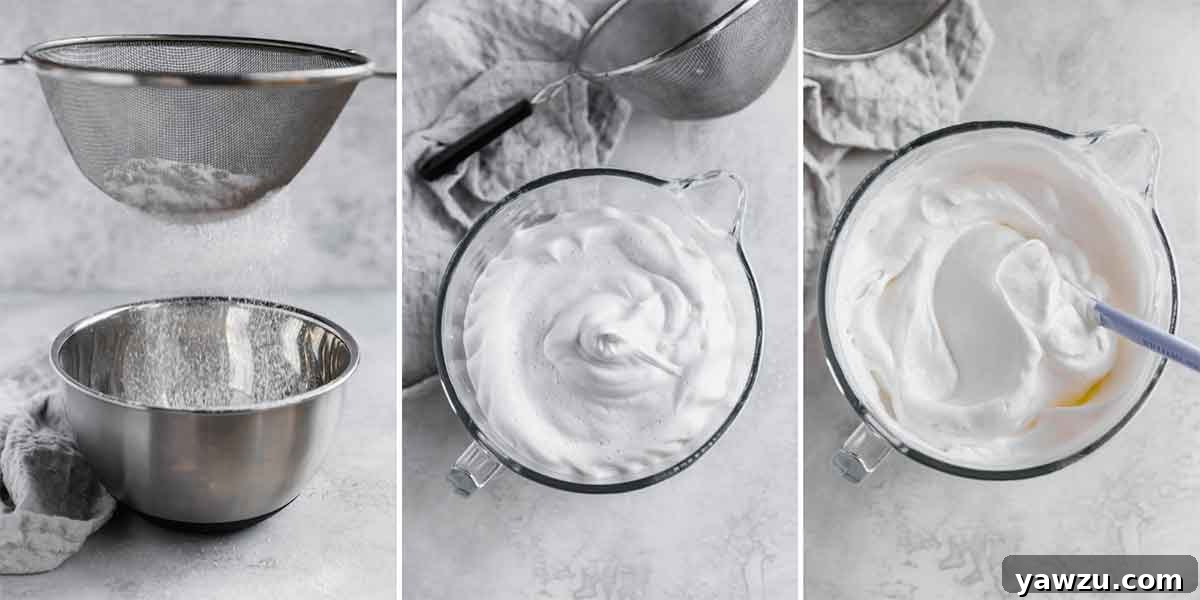
- Prepare for Sifting: Begin by sifting half of your granulated sugar with the cake flour and salt. Then, repeat this sifting process an impressive five times. This repeated sifting is not a mere suggestion; it’s a critical step that aerates the dry ingredients, breaks up any lumps, and ensures they are incredibly fine, contributing significantly to the cake’s airy texture.
- Whip the Whites: In a large, impeccably clean mixing bowl, start beating the room-temperature egg whites on low speed until they become frothy and slightly bubbly. At this stage, incorporate the vanilla extract and cream of tartar. Increase the mixer speed to medium. While a stand mixer fitted with the whisk attachment makes this step easiest, a good quality hand mixer or even a sturdy balloon whisk (requiring considerable elbow grease!) will also work.
- Gradual Sugar Addition: With the mixer continuing on medium speed, gradually add the remaining granulated sugar, one tablespoon at a time. This slow addition allows the sugar to dissolve properly into the egg whites, resulting in a stable and glossy meringue.
- Achieve Stiff, Glossy Peaks: Once all the sugar has been incorporated, increase the mixer speed to medium-high and continue beating until stiff, glossy peaks form. You’ll know they’re ready when you lift the whisk and the peaks stand tall and firm without drooping. Scrape down the sides and bottom of the bowl occasionally to ensure all egg whites are evenly whipped.
- Gentle Folding: This step requires a light touch. Take about 1/4 cup of the sifted flour mixture and gently sift it over the whipped egg whites. Using a large spatula, carefully fold the flour into the egg whites, employing a delicate up-and-over motion until just combined. Repeat this process, adding 1/4 cup of flour mixture at a time, until all the flour is incorporated. Over-mixing here will deflate the precious air from your egg whites, resulting in a dense cake.
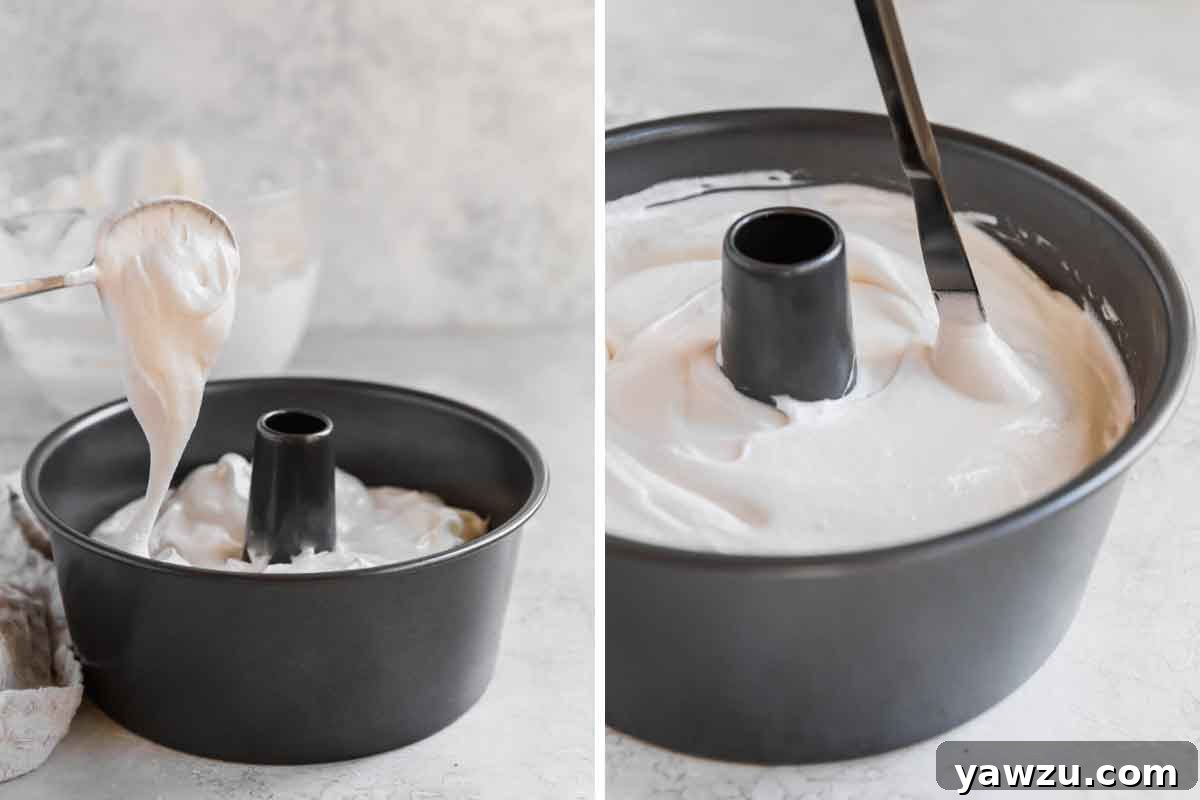
- Fill and Prepare for Baking: Gently spoon the airy angel food cake batter into your ungreased tube pan. Smooth the top surface of the batter with your spatula. Then, take a knife and run it through the batter in a circular motion to break up any large air pockets, ensuring an even crumb.
- Bake to Perfection: Place the cake in a preheated oven and bake for approximately 25 to 40 minutes. The exact timing can vary, so look for a beautiful golden-brown color. To test for doneness, insert a wooden skewer or a thin knife halfway between the edge and the center of the cake; it should come out clean.
The Crucial Cooling Phase: Upside Down
This is arguably one of the most critical steps for a successful angel food cake, and yes, it really works! Once baked, you must cool your angel food cake upside down until it is completely cool. This process typically takes at least an hour, sometimes longer, depending on your environment.
- For Footed Pans: If your specific tube pan is equipped with the small, wire “feet” on its bottom, simply invert the entire pan and rest it on a wire cooling rack. The feet will elevate the cake, allowing air to circulate and preventing collapse.
- For Unfooted Pans: If your tube pan does not have these convenient feet, fear not! You can still achieve the proper cooling. Carefully invert the pan onto the neck of a sturdy glass bottle (like a wine bottle). This method supports the pan while keeping the cake elevated, ensuring it cools without compressing.
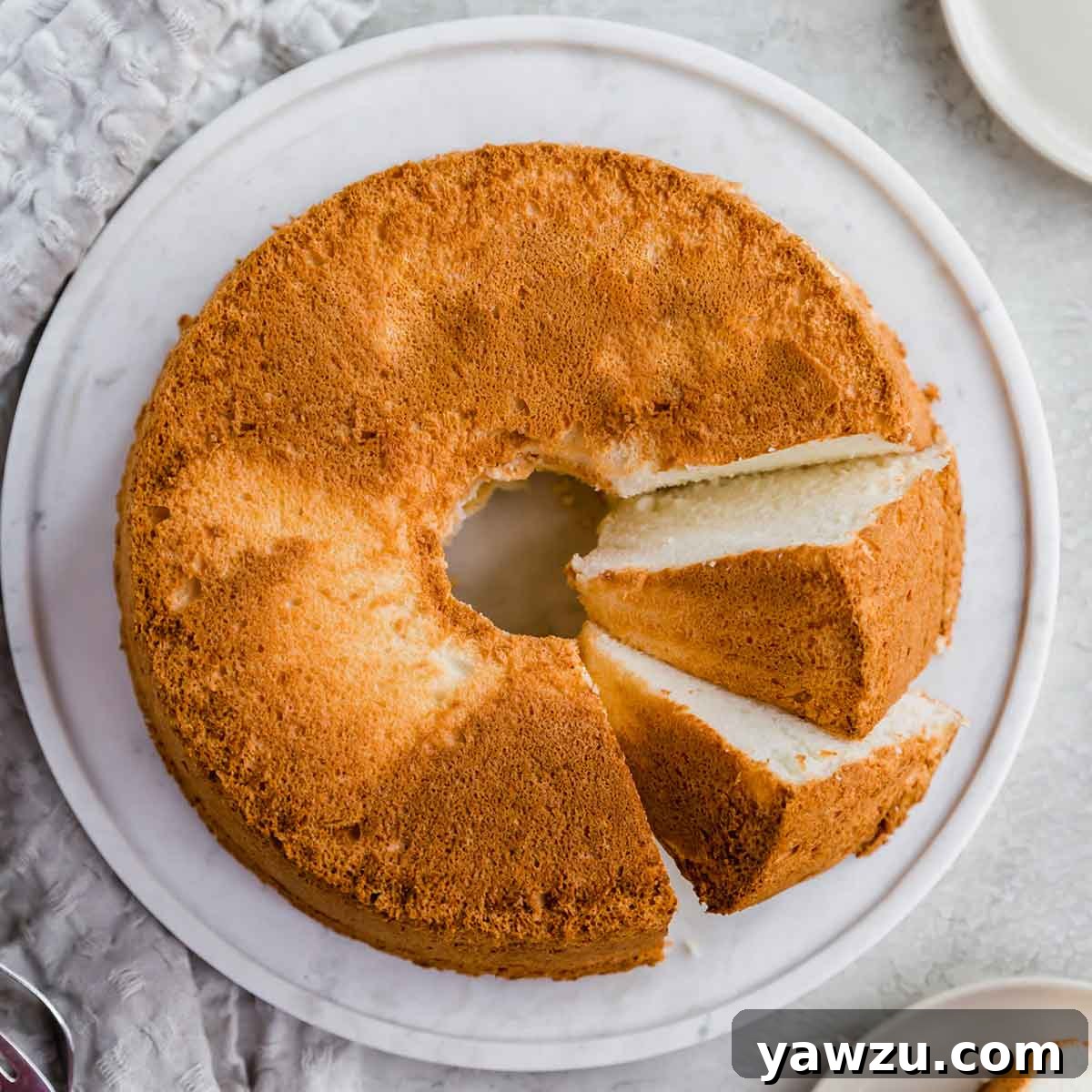
Once the cake is completely cool, it’s ready for removal and serving. First, run a thin knife carefully around the outer edge of the cake and the inner tube to loosen it. Invert the pan onto your desired serving dish or plate. Then, run the knife around the bottom of the cake to fully release it. When it comes to slicing, precision matters. Always use a serrated knife and employ a gentle sawing motion to cut through the delicate structure. A good bread knife or even a sharp tomato knife works wonderfully for this. Attempting to use a straight-edge knife or pressing straight down will inevitably smoosh and compress the light, airy cake.
Elevating Your Slice: Topping & Serving Ideas
One of the many delightful aspects of angel food cake is its versatility. Each cloud-like slice serves as a perfect canvas for an array of toppings, allowing you to customize it to your heart’s content. Here are some of my favorite ways to enhance this already delicious dessert:
- Fluffy homemade whipped cream or a classic, glossy 7-minute frosting.
- A generous serving of fresh fruit or berries. Blueberries, strawberries, and raspberries are particularly fantastic, adding a burst of color and natural sweetness.
- A spoonful of luscious homemade berry jam, offering concentrated fruit flavor.
- A decadent drizzle of rich chocolate ganache or gooey salted caramel sauce.
- Tangy lemon curd, providing a delightful contrast to the cake’s sweetness.
- A whimsical scattering of sprinkles or mini chocolate chips for an added touch of fun.
For entertaining a crowd, consider setting up a charming toppings bar. This allows guests to personalize their angel food cake experience, choosing from a variety of fresh fruits, creams, and sauces. You can also ingeniously use a baked and cooled angel food cake as the base for a show-stopping red, white, and blue berry trifle, making it a truly versatile dessert component.
Planning Ahead: Make-Ahead Tips & Storage
This recipe is perfect for those who like to prepare in advance, ensuring you have a delightful dessert ready when you need it.
- Storage for Leftovers: Any leftover angel food cake should be tightly wrapped in plastic wrap and then placed in an airtight container. Store it at room temperature, where it will remain fresh and delicious for up to 2 days.
- Advance Preparation: You can bake your angel food cake up to 1 day before you plan to serve it. Once the cake has cooled completely (and been removed from the tube pan), wrap it snugly in plastic wrap and keep it at room temperature. This allows you to tackle dessert prep well in advance of your event.
- Freezing for Longer Storage: Angel food cake freezes exceptionally well, making it ideal for enjoying a slice whenever a craving strikes. Wrap the entire cake or individual slices first in plastic wrap, then in aluminum foil. Place the well-wrapped cake in a freezer-safe bag or container and freeze for up to 4 months. When you’re ready to indulge, simply thaw the cake at room temperature.
FAQ and Troubleshooting Tips for Angel Food Cake Success
Even seasoned bakers can encounter challenges with delicate recipes like angel food cake. Here are answers to common questions and solutions to typical issues:
Why is my angel food cake falling or collapsing?
This is a common and undoubtedly frustrating issue. Several factors can contribute to an angel food cake collapsing:
- Opening the Oven Door Prematurely: It’s tempting to peek, but opening the oven door, especially in the early stages of baking, causes a sudden drop in temperature. This thermal shock can cause the delicate, rising structure of the cake to collapse. Resist the urge and wait until at least the minimum baking time has passed before checking for doneness.
- Incorrect Oven Temperature: An oven that is too hot can cause the exterior of the cake to bake and set too quickly, while the interior remains underbaked. As the cake cools, the unsupported interior can then collapse. Conversely, an oven that is too cool will not provide enough lift. Invest in an oven thermometer to ensure your oven maintains the precise temperature of 350 degrees F throughout the baking process.
- Improper Cooling in the Pan: As discussed, cooling the cake upside down is absolutely critical. This unique cooling method allows the cake to gradually stabilize its structure while preventing it from compressing under its own weight. Cooling it right side up in the pan will almost certainly lead to a deflated cake.
Why is my angel food cake tough or chewy?
Angel food cake should be the epitome of light, airy, and fluffy. If your cake has a tough or rubbery texture, the most likely culprit is over-mixing the flour into the egg white mixture. When the flour is folded in with too much force or for too long, it can deflate the carefully whipped egg whites, and overdevelop the gluten in the flour, resulting in a dense, tough crumb. To avoid this, next time, fold the flour mixture into the batter very gently and just until no streaks of flour remain, preserving the airy texture of the whipped egg whites.
Light as air, beautifully simple, and virtually fat-free, homemade angel food cake is truly a dessert dream come true. If you’ve never ventured into baking angel food cake from scratch, I wholeheartedly encourage you to try this recipe. The process is incredibly rewarding, and the results are consistently spectacular. For those looking to try something a little different, consider exploring variations like a delicious strawberries and cream angel food cake roll.
Watch the Angel Food Cake Recipe Video
A video tutorial showcasing the step-by-step process for making this light and airy angel food cake is available. Learn how to achieve the perfect texture and golden finish for your homemade summer dessert.

You can find the full video demonstration by searching for “Angel Food Cake Recipe” on popular video platforms or by visiting the original recipe source.
If you create this delightful angel food cake recipe and find yourself loving every bite, please consider returning to this page to give it a 5-star rating. Your feedback not only brings immense joy but also helps other aspiring bakers discover and enjoy this wonderful recipe! ❤️️
Angel Food Cake Recipe
Yield: 12 servings
Prep Time: 30 mins
Cook Time: 40 mins
Total Time: 1 hr 10 mins
This easy-to-make angel food cake bakes up beautifully for a light and airy dessert, perfect for spring and summer celebrations!
Pin Recipe
Ingredients
- 1 cup (112 g) cake flour, sifted
- 1½ cups (298 g) granulated sugar, divided
- ¼ teaspoon salt
- 1½ cups egg whites, at room temperature
- 1½ teaspoons cream of tartar
- 1 teaspoon vanilla extract
Instructions
- Preheat oven to 350 degrees F (175°C). Have an ungreased 16-cup tube pan ready.
- Sift half of the sugar with the flour and salt. Repeat this sifting process 5 times to thoroughly aerate the dry ingredients.
- Beat the egg whites on low speed until frothy. Then, add the vanilla extract and cream of tartar. Increase the mixer speed to medium, gradually adding the remaining sugar one tablespoon at a time. Continue to beat until stiff, glossy peaks form, scraping the sides and bottom of the bowl once or twice as needed to ensure even whipping.
- Carefully sift about ¼ cup of the flour mixture over the whipped egg whites. Using a large spatula, gently fold to incorporate the flour without deflating the egg whites. Repeat this process until all the flour mixture has been used.
- Spoon the delicate batter into the ungreased tube pan. Smooth the top surface, then run a knife through the batter in a circular motion to release any large air bubbles trapped within.
- Bake the cake for approximately 35 to 40 minutes, or until a wooden skewer inserted halfway between the edge and the center comes out clean. The cake should be beautifully golden brown.
- Immediately invert the pan and cool upside down for at least 1 hour, or until completely cool. If your pan has feet, rest it on them. If not, invert it onto the neck of a glass bottle. Once cool, run a knife around the edge and inner tube of the cake, then turn it out onto a serving dish. Run a knife around the bottom to fully release. Slice with a serrated knife using a gentle sawing motion and serve.
Notes
- Essential Equipment: A 16-cup capacity tube pan is absolutely crucial for this recipe. A good quality pan with “feet” (like this one) will simplify the cooling process.
- Never Grease the Pan: This is a fundamental rule for angel food cake! The batter needs to cling to the sides of the pan to rise properly and maintain its height during baking and cooling. Greasing will prevent this, leading to a fallen cake. If your tube pan has a removable bottom but no feet, line only the bottom with parchment paper for easier release.
- Fresh Egg Whites Are Best: Always use fresh, real eggs for optimal results. Carton egg whites are often pasteurized, which can compromise their ability to whip into stable, stiff peaks.
- Cooling Method is Key: Inverting the pan is non-negotiable. If your pan has built-in feet, simply set it upside down on a wire rack. If it lacks feet, invert the pan onto the neck of a sturdy glass bottle to allow air circulation and prevent collapse.
- Mixer Alternatives: While a stand mixer with a whisk attachment or a hand mixer provides the easiest whipping, you can achieve stiff peaks by hand with a balloon whisk and plenty of consistent effort.
- Egg Quantity Variation: The number of large eggs needed to yield 1½ cups of whites can vary, typically between 10 to 12 eggs, depending on their size.
- Separating & Tempering Eggs: Eggs are easiest to separate when cold, as the yolks are firmer. However, for maximum volume, allow the separated egg whites to come to room temperature before whipping. Ensure no trace of yolk enters the whites, as fat will prevent them from whipping.
- Flavor Variations: Feel free to substitute or combine vanilla with other extracts like almond, orange, or lemon for a different flavor profile. Remember to check extract labels for any oil content, as oil can hinder egg white whipping.
- Precise Slicing: Always use a sharp, serrated knife (like a good bread knife) and a gentle sawing motion to slice angel food cake. A straight-edge knife or pressing down firmly will compress the delicate cake.
- Serving Suggestions: This cake is wonderfully complemented by fresh berries, fluffy whipped cream, creamy vanilla ice cream, light 7-minute frosting, or a luscious chocolate ganache.
- Make-Ahead Instructions: Prepare the cake one day in advance. Once fully cooled and removed from the pan, cover it tightly with plastic wrap and store at room temperature.
- Freezing for Later: For longer storage, wrap the entire cake or individual slices securely in plastic wrap, then in aluminum foil. Place in a freezer-safe container and freeze for up to 4 months. Thaw at room temperature before serving.
Nutrition Information (per serving)
Calories: 152kcal, Carbohydrates: 33g, Protein: 5g, Fat: 1g, Saturated Fat: 1g, Sodium: 100mg, Potassium: 123mg, Fiber: 1g, Sugar: 25g, Vitamin A: 1IU, Calcium: 4mg, Iron: 1mg
Did you make this recipe?
Leave a review below, then snap a picture and tag @thebrowneyedbaker on Instagram so I can see it!
Author: Michelle Lettrich
Course: Dessert
Cuisine: American
Photography by Ari Laing.