
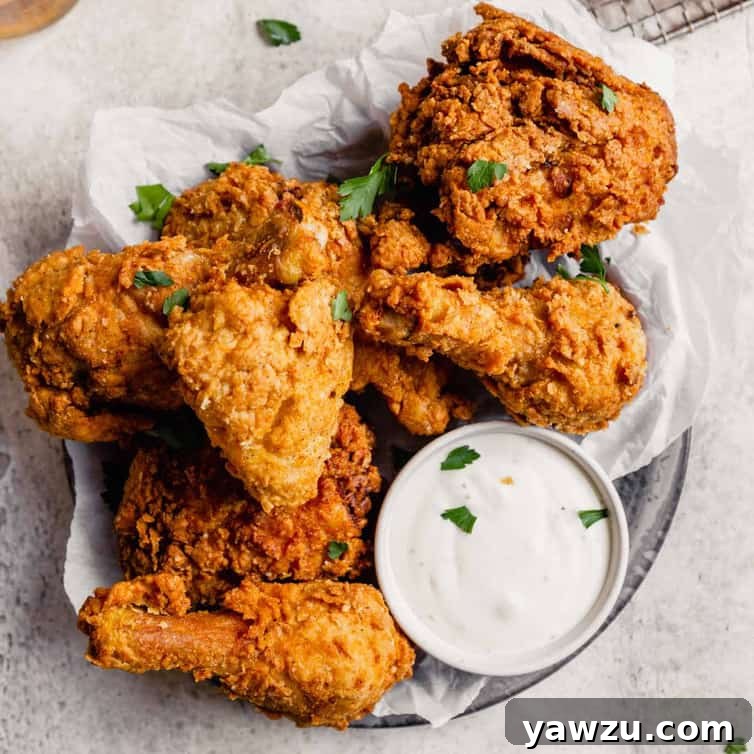
Welcome to the ultimate guide for crafting the crispiest, juiciest buttermilk fried chicken you’ll ever taste. This isn’t just another recipe; it’s a culinary journey designed to deliver unparalleled flavor and texture, transforming simple chicken into a golden, crunchy masterpiece. With a secret overnight marinade, a luxurious buttermilk bath, and a unique “shaggy” dredging technique, this recipe ensures every bite is a symphony of crispy exterior and unbelievably tender, moist interior. Prepare to impress your family and friends with fried chicken that rivals the best restaurant versions, all made in the comfort of your own kitchen.
Whether you’re planning to assemble a mouth-watering fried chicken sandwich, prepare a batch of irresistible fried chicken fingers for a crowd, or toss some succulent fried chicken wings in your favorite sauce, this versatile recipe is your go-to. It’s perfect for casual weeknight dinners, celebratory gatherings, or simply satisfying that craving for truly exceptional comfort food. This recipe is designed to be loved by both kids and adults, promising to become a cherished staple in your culinary repertoire.
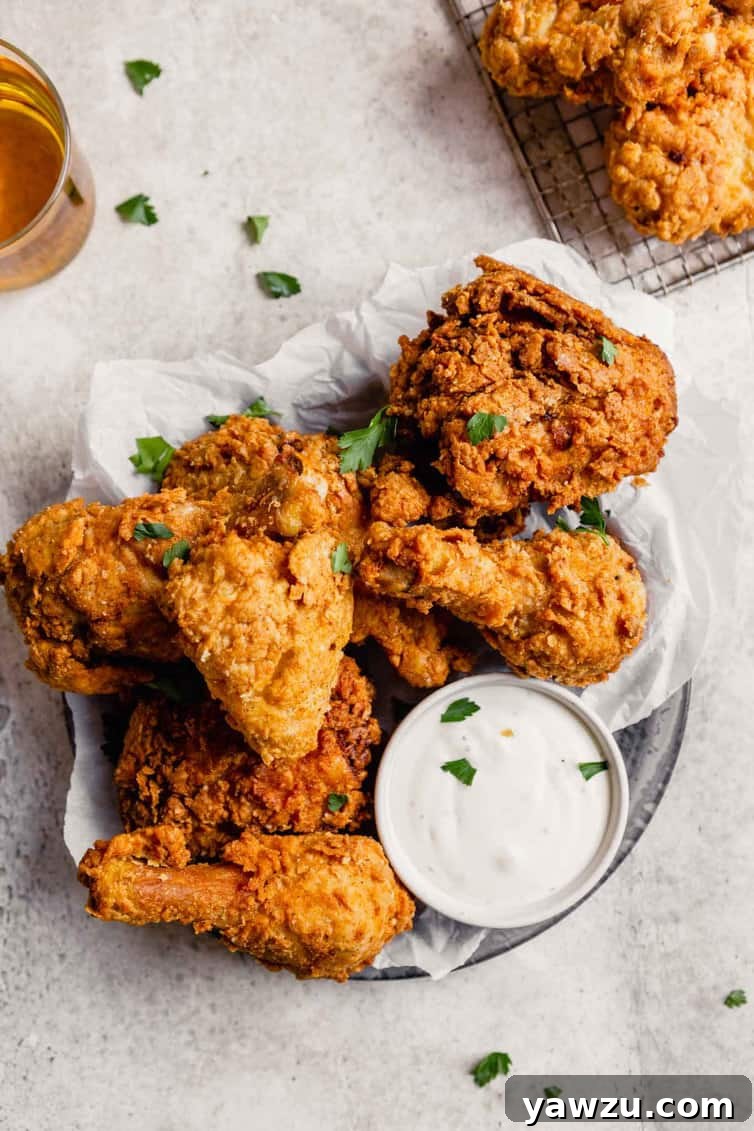
The Enduring Allure of Fried Chicken: A Nostalgic Journey
For me, the taste of perfectly fried chicken conjures vivid memories of my freshman year in college. A girl on my floor worked at a local Kentucky Fried Chicken, and on her late shifts, she’d return around midnight with a bounty of leftover food. Six of us would gather in the hallway, sharing whispers, laughter, and an indulgent feast of fried chicken, crispy potato wedges, fluffy biscuits, and rich chocolate chip cake. It’s been over two decades since those late-night dorm room gatherings, but a single bite of crispy fried chicken instantly transports me back to those carefree days, a powerful reminder of simple joys and good company.
This enduring power of fried chicken – its ability to evoke comfort, nostalgia, and pure culinary bliss – is what inspired me to perfect a homemade version. I wanted to capture that same magic, that ideal balance of textures and flavors, in a recipe that anyone could master. After countless experiments and adjustments, I am thrilled to share the techniques that consistently produce truly great fried chicken.
What Elevates Fried Chicken from Good to Great?
We can all agree that truly exceptional fried chicken boasts two non-negotiable qualities: an incredibly crispy, flavorful exterior and a tender, juicy, perfectly cooked interior. Over the years, I’ve had my share of outstanding fried chicken, but sadly, I’ve encountered far more disappointing pieces – dry, bland meat encased in soggy, uninspired breading. When I embarked on creating my ultimate homemade fried chicken recipe, my mission was clear: to consistently achieve the former, never the latter. So, how do we unlock the secrets to perfect fried chicken right in your own kitchen?
The Dynamic Duo: Brining & The Shaggy Dredging Technique
The journey to superior fried chicken begins with two fundamental techniques that transform ordinary chicken into extraordinary:
1. The Art of Brining
Brining is a crucial first step, involving an 8 to 12-hour soak for your chicken pieces in a carefully balanced saltwater mixture infused with aromatic ingredients. My initial encounter with this transformative process came from Thomas Keller’s renowned recipe in “Ad Hoc at Home.” This extended overnight marinade works wonders in two key ways:
- Tenderization: The salt in the brine penetrates the chicken meat, breaking down some of its muscle fibers. This process results in incredibly tender chicken that practically melts in your mouth, preventing the common issue of tough, chewy fried chicken.
- Moisture and Flavor Infusion: Beyond tenderizing, brining allows the chicken to absorb additional moisture and deep flavors from the aromatic mixture. This extra hydration is critical, ensuring the chicken remains succulent and juicy throughout the frying process, resisting dryness even when cooked to a perfectly crisp golden brown. The infused herbs, spices, and citrus add a subtle layer of complexity to the chicken’s natural taste, making it flavorful from the inside out.
2. Mastering the “Shaggy” Dredging Technique
The second game-changing tip for creating truly magnificent fried chicken is to develop what I affectionately call a “shaggy” dredging. This method ensures the breading on your chicken is remarkably thick, robust, and extraordinarily crunchy – precisely how I believe fried chicken should be. Similar to the irresistible coating on my General Tso’s chicken and sesame chicken recipes, the magic here lies in a simple addition: incorporating a small amount of buttermilk directly into the dry flour mixture. This creates irregular clumps and flakes in the coating, which, when fried, expand into an incredibly textured, extra-crisp crust that adheres beautifully to the chicken, forming those coveted craggy bits that are the hallmark of perfectly fried chicken.
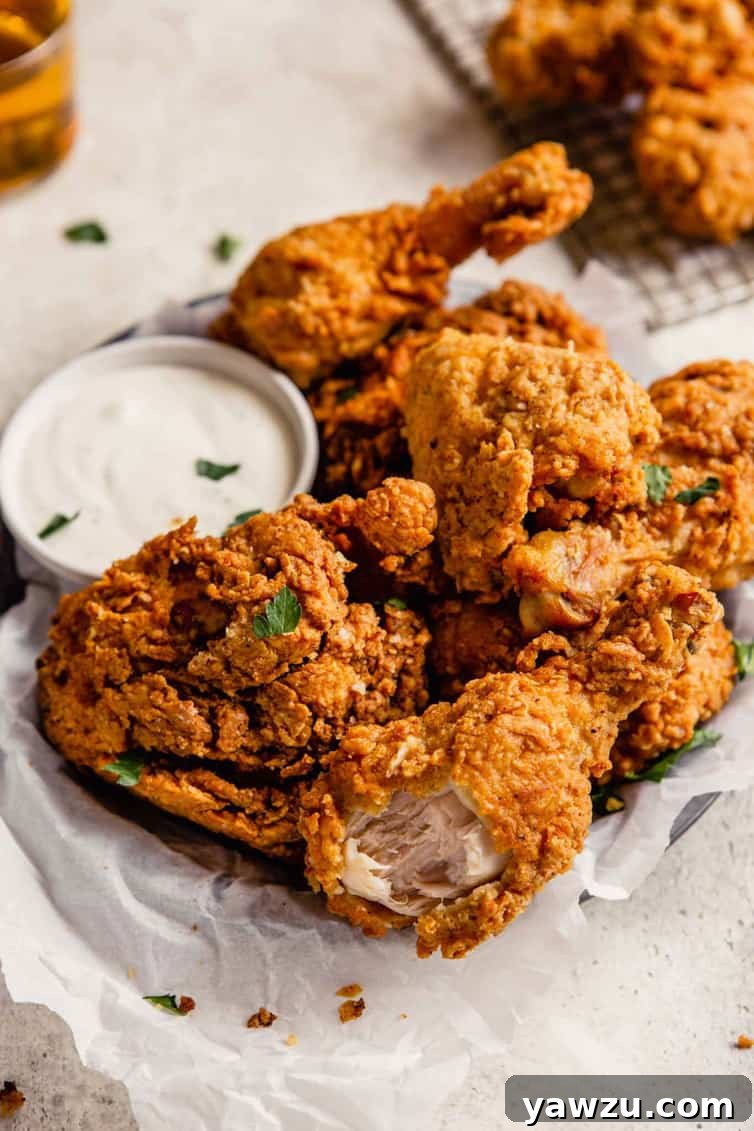
The Essential Ingredients for Buttermilk Fried Chicken
Selecting the right ingredients is paramount to achieving the best buttermilk fried chicken. Each component plays a vital role in creating the perfect balance of flavor, tenderness, and crispiness:
- Chicken: For this recipe, I recommend using a whole chicken, bone-in, that has been expertly chopped into individual pieces (breasts, thighs, drumsticks, and wings). While you can certainly chop a whole chicken yourself, buying it pre-cut can be a fantastic time-saver and reduce mess in the kitchen. Bone-in pieces tend to stay juicier during frying and offer more flavor.
- Brine: This essential pre-treatment consists of water, salt, lemon, bay leaf, fresh parsley, fresh thyme, honey, garlic, and black peppercorns. This aromatic mixture is what tenderizes the chicken and infuses it with profound flavor and moisture during its overnight soak, setting the stage for an incredibly juicy final product.
- Buttermilk: Buttermilk is truly indispensable in this recipe. Its natural acidity helps further tenderize the chicken, and more importantly, it acts as the perfect binding agent, ensuring the seasoned flour coating adheres beautifully to each piece of chicken, contributing to both texture and flavor.
- Coating (Seasoned Flour): The exterior crunch and flavor come from a well-balanced blend of all-purpose flour seasoned generously with garlic powder, onion powder, paprika (for color and mild sweetness), a touch of cayenne pepper (for a subtle kick), salt, and freshly ground black pepper. This seasoned flour is key to developing that extra-crispy, flavorful crust.
- Frying Oil: For deep frying, choosing an oil with a high smoke point is critical. Peanut oil or canola oil are excellent choices. They can reach the necessary high temperatures without breaking down or smoking excessively, ensuring a clean fry and preventing your kitchen from becoming smoky.
Crafting Your Masterpiece: How to Make Buttermilk Fried Chicken
Achieving fried chicken that is crispy, tender, juicy, and utterly perfect involves a few distinct yet straightforward stages. Follow these steps diligently, and you’ll be rewarded with sensational results.
Phase 1: Prepare and Brine the Chicken
- Combine Brine Ingredients: In a large stockpot, combine water, kosher salt, halved lemons, bay leaves, fresh parsley, fresh thyme, honey, a halved head of garlic, and black peppercorns. Cover the pot and bring the mixture to a rolling boil.
- Dissolve Salt: Boil the mixture for 1 minute, stirring continuously to ensure all the salt has completely dissolved.
- Cool and Chill: Remove the pot from the heat and allow the brine to cool completely to room temperature. Once cool, thoroughly chill the brine in the refrigerator until it is very cold. (Note: The prepared brine can be refrigerated for up to 3 days if you’re planning ahead.)
- Brine the Chicken: Pour the chilled brine into a large container or a sturdy resealable bag. Add all the chicken pieces, ensuring they are fully submerged. Refrigerate for 8 to 12 hours. It’s important not to exceed 12 hours, as brining for too long can result in overly salty chicken or, in some cases, a mushy texture.
- Rinse and Dry: After brining, remove the chicken from the solution and rinse each piece thoroughly under cold running water. This washes off any excess salt and brine particles.
- Bring to Room Temperature: Pat the chicken pieces completely dry with paper towels. Arrange them on a wire rack set over a baking sheet and let them sit at room temperature for approximately 1½ hours, or until the chicken reaches room temperature. Starting with room temperature chicken promotes more even cooking.
Phase 2: Set Up Your Frying Station
- Heat the Oil: Fill a large, heavy-bottomed pot (such as a Dutch oven or cast-iron pot) with at least 2 inches of your chosen frying oil (peanut or canola). Place the pot over medium heat and allow the oil to heat gradually to 320°F (160°C). Use a reliable thermometer (like a candy thermometer or digital probe thermometer) to monitor the temperature accurately.
- Prepare Draining Rack: Set up a wire cooling rack over a baking sheet lined with paper towels or parchment paper. Position this next to your pot of oil; this will be where you drain your freshly fried chicken.
Phase 3: Prepare the Dredging Station
- Season the Flour: In a large, shallow bowl, whisk together the all-purpose flour, garlic powder, onion powder, paprika, cayenne pepper, kosher salt, and freshly ground black pepper until well combined.
- Divide Flour Mixture: Divide this seasoned flour mixture evenly between two separate shallow bowls.
- Buttermilk Station: Pour 1 quart (approximately 4 cups) of buttermilk into a third shallow bowl.
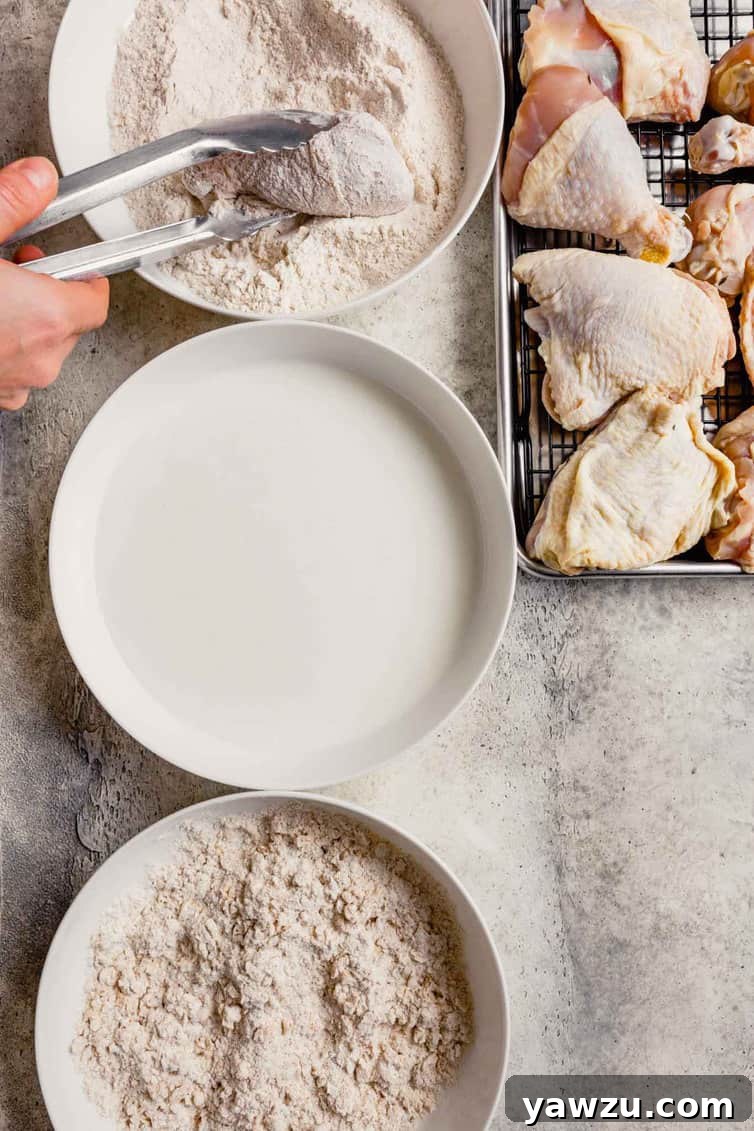
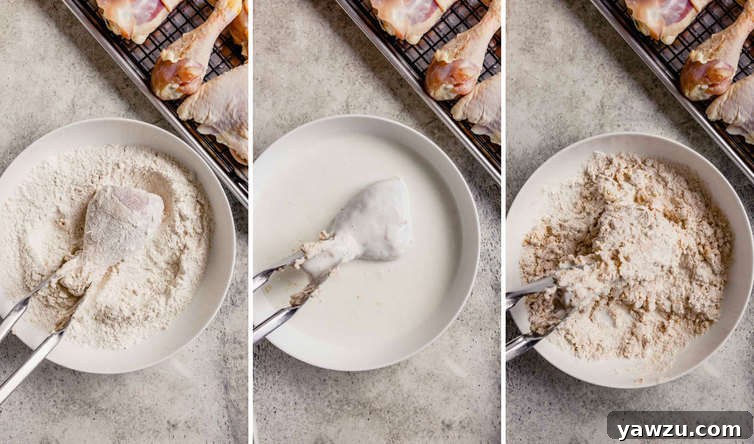
- Create the Shaggy Dredge: Take one of the bowls containing the seasoned flour mixture. Add 6 tablespoons of buttermilk to it. Using a fork or your fingertips, gently toss and mix the flour and buttermilk together. The goal is for the buttermilk to be completely absorbed, creating irregular clumps and a “shaggy” texture in the flour. This is your special crunchy coating!
- Assemble the Station: Arrange your dredging station in the following order for an efficient workflow: 1) the room-temperature chicken pieces, 2) the first bowl of dry seasoned flour mixture, 3) the bowl of buttermilk, 4) the second bowl with the “shaggy” flour mixture, and finally, 5) your parchment-lined baking sheet for coated chicken awaiting the fryer.
Phase 4: Fry the Chicken to Golden Perfection
To ensure each piece of chicken is perfectly cooked, I highly recommend frying in batches, prioritizing based on the thickness of the chicken parts. This prevents overcrowding and helps maintain consistent oil temperature.
Frying Chicken Thighs (and other large pieces):
- Coat the Thighs: Just before frying, take a chicken thigh and dip it first into the plain dry seasoned flour, turning to coat completely and gently patting off any excess. Next, dip it into the buttermilk, allowing any excess to drip back into the bowl. Finally, dredge it thoroughly in the “shaggy” flour mixture, pressing gently to ensure a thick, even coating. Transfer the coated thigh to the parchment-lined pan. Repeat for a few pieces, ensuring not to overcrowd the pan for frying.
- Careful Immersion: Gently and carefully lower the coated chicken thighs into the preheated 320°F (160°C) oil. Adjust the heat as necessary to bring the oil back to the optimal temperature, as adding chicken will temporarily lower it.
- Fry and Turn: Fry the thighs for 2 minutes undisturbed. Then, carefully move the chicken pieces around in the oil to prevent sticking and promote even cooking. Continue to fry, diligently monitoring the oil temperature and turning the pieces as needed, for a total of 11 to 12 minutes. The chicken should achieve a deep golden brown color, be very crisp, and register an internal temperature of 170°F (77°C) on an instant-read thermometer.
- Drain and Rest: Once cooked, carefully remove the thighs from the oil and transfer them to the wire cooling rack, skin-side-up, to drain excess oil. Allow them to rest while you proceed with the remaining chicken.
Frying Drumsticks:
- Coat Drumsticks: Follow the identical dredging method used for the thighs to coat your drumsticks. Place them on the parchment-lined baking sheet.
- Fry Drumsticks: Ensure the oil temperature returns to 320°F (160°C). Carefully lower the coated drumsticks into the hot oil. Cook for approximately 8 minutes, checking for doneness and internal temperature (170°F / 77°C) as you did with the thighs.
- Drain and Rest: Transfer the cooked drumsticks to the cooling rack, skin-side-up, to drain.
Phase 5: Finish with Chicken Breasts and Wings
- Adjust Oil Temperature: Slightly increase the heat and bring the oil temperature up to 340°F (170°C).
- Coat Remaining Chicken: Coat the chicken breasts and wings using the same three-step dredging method you applied for the thighs and drumsticks.
- Fry Chicken Breasts: Once the oil reaches 340°F (170°C), carefully lower the coated chicken breasts into the hot oil. Fry for about 7 minutes, or until they are beautifully golden brown, crisp, and register an internal temperature of 165°F (74°C).
- Drain Breasts: Transfer the cooked chicken breasts to the cooling rack, skin-side-up.
- Fry Chicken Wings: Cook the coated wings for approximately 6 minutes, or until they are golden brown and thoroughly cooked through.
- Final Rest: Transfer the wings to the cooling rack. Turn off the heat under the oil. Allow all the fried chicken to rest on the rack for about 10 minutes before serving. This resting period allows the juices to redistribute, ensuring maximum tenderness and flavor.
Recipe Notes and Variations: Elevating Your Fried Chicken Experience
Here are some additional tips and creative variations to help you master and personalize your buttermilk fried chicken:
Buttermilk Substitutions: Can I Use Heavy Cream?
Absolutely! If you find yourself without buttermilk, you can easily create a suitable substitute using heavy cream, much like in my buttermilk scones recipe. For every 1 cup of heavy cream, simply add 1 tablespoon of white vinegar or lemon juice. Stir gently and let it sit for 5-10 minutes until it slightly thickens and curdles. This “souring” process mimics the acidic quality of buttermilk, which is crucial for tenderizing and binding the coating.
Brining Duration: How Long is Too Long?
For optimal results, I strongly recommend brining your chicken for 8 to 12 hours. This timeframe allows the chicken to absorb maximum flavor and moisture without over-salting or compromising its texture. Brining for significantly longer than 12 hours risks making the chicken excessively salty and can even lead to a mushy texture as the proteins break down too much. Stick to the recommended window for perfect tenderness and seasoning.
Smart Prep-Ahead Strategies for Stress-Free Fried Chicken
Given the overnight brining requirement, planning ahead can significantly simplify the process of making this incredible fried chicken:
- Opt for Pre-Cut Chicken: While cutting a whole chicken yourself can be more economical, purchasing pre-cut chicken pieces is a fantastic time-saver and minimizes kitchen mess. The slight extra cost is often worth the convenience, especially on busy days.
- Prepare the Brine in Advance: The brine can be made up to 3 days before you plan to fry the chicken. Simply prepare it as instructed, cool it completely, and store it in an airtight container in the refrigerator. This allows you to spread out the prep work.
- Reheating Fried Chicken: If you have delicious leftovers or wish to make a batch in advance, reheating is easy. Preheat your oven to 400°F (200°C) and place the fried chicken on a wire rack set over a baking sheet. Heat for approximately 15 minutes, or until warmed through and the crust is crisp again. Avoid the microwave, which can make it soggy.
- Buttermilk-Only Soak (Time-Saving Alternative): If you’re truly short on time and cannot accommodate the full brine, you can opt for a simpler buttermilk soak. Place 1 quart of buttermilk and the chicken pieces in a resealable plastic bag and refrigerate overnight. While this won’t impart the same depth of flavor as the full brine, it still helps tenderize the chicken and provides a good base for the coating. Proceed with the rest of the recipe as written.
Essential Frying Safety Measures
Deep-frying, whether for fried chicken or classic fish and chips, requires careful attention to safety. Always keep these precautions in mind when working with hot oil:
- Monitor Oil Temperature Religiously: Maintaining the correct oil temperature is crucial for both safety and achieving perfectly cooked chicken. If the oil is too cool, the chicken will be greasy; if it’s too hot, the outside will burn before the inside cooks. Continuously monitor the temperature with a reliable thermometer. While a basic candy thermometer works, I highly recommend a digital probe thermometer for its accuracy and ease of use. Adjust the heat as needed to keep it within the recommended range.
- Lower Chicken Carefully: Always lower chicken pieces into hot oil slowly and gently, using tongs. Dropping them in can cause the oil to splash, leading to burns. Using a splatter screen over your pot can also significantly reduce oil splattering and help keep your kitchen cleaner and safer.
- Proper Oil Disposal: Never pour hot oil down the drain. After frying, allow the oil to cool completely to room temperature. Once cooled, pour the used oil into a non-recyclable container with a lid (like an old milk carton or glass jar) and dispose of it in the trash.
Serving Suggestions: The Perfect Accompaniments
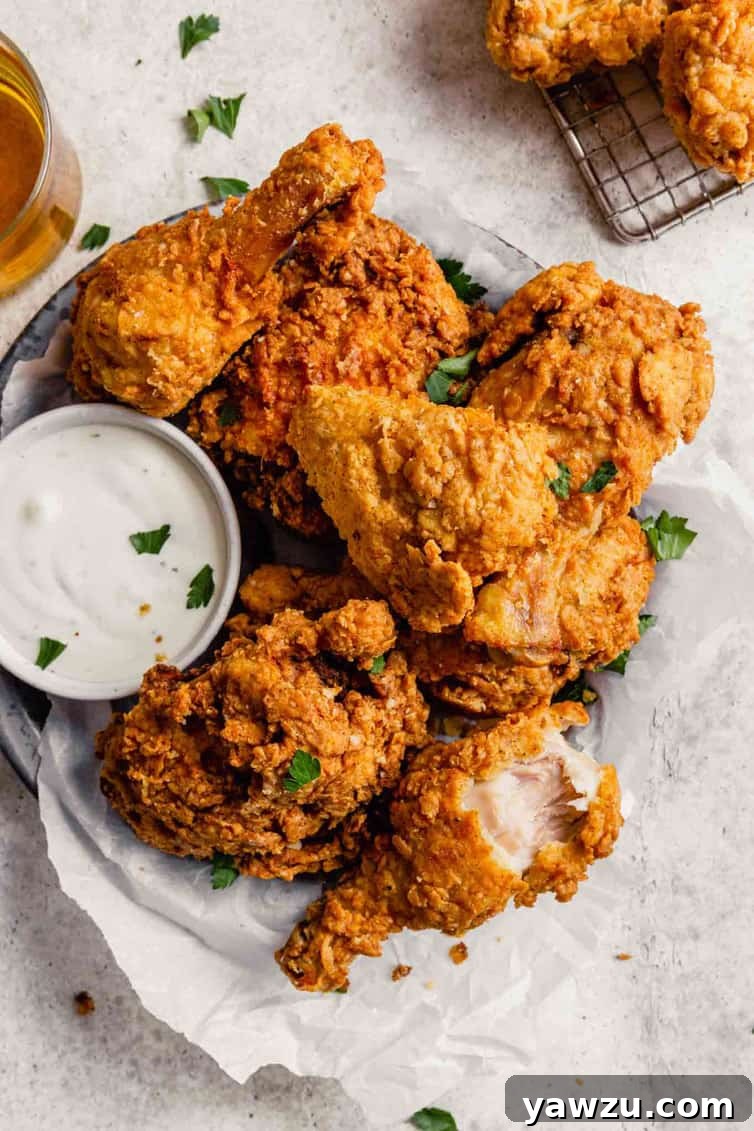
This crispy buttermilk fried chicken pairs beautifully with a variety of classic side dishes. Here are some of my favorite accompaniments to complete your meal:
- Bloomin’ Onion Dipping Sauce: A flavorful sauce to complement the chicken.
- Crock Pot Mac and Cheese: Creamy, comforting macaroni and cheese is always a hit.
- The Best Mashed Potatoes: Fluffy, rich mashed potatoes are a classic pairing.
- Green Bean Casserole: A savory and satisfying vegetable side.
Got extra buttermilk? Don’t let it go to waste! Use it to make my Buttermilk Waffles. Then, for an indulgent brunch, serve them alongside any leftover fried chicken for a truly delicious and satisfying chicken and waffles experience!
If you try this recipe and absolutely love it, please consider coming back to leave a 5-star rating. Your feedback helps others discover and enjoy this fantastic recipe!

Buttermilk Fried Chicken
Yield: 8 to 10 servings
Prep Time: 1 hr
Cook Time: 30 mins
Resting time: 13 hrs 30 mins
Total Time: 15 hrs
Crispy on the outside, tender and juicy on the inside this buttermilk fried chicken is out of this world!
Ingredients
- 2 chickens, 2½ to 3 pounds each, cut into breasts, thighs, drumsticks, and wings
For the Brine:
- 5 lemons, halved
- 24 bay leaves
- 1 bunch fresh parsley, 4 ounces
- 1 bunch fresh thyme, 1 ounce
- ½ cup (169.5 ml) honey
- 1 head garlic, halved horizontally
- ¾ cup (0.08 g) black peppercorns
- 2 cups (584 g) kosher salt
- 2 gallons (7.57 l) water
For the Coating and Dredging:
- 6 cups (750 g) all-purpose flour
- ¼ cup (0.03 g) garlic powder
- ¼ cup (27.5 g) onion powder
- 4 teaspoons paprika
- 4 teaspoons cayenne pepper
- 4 teaspoons kosher salt
- 1 teaspoon freshly ground black pepper
- 1 quart (0.95 l) + 6 tablespoons buttermilk, divided
For Frying:
- 2 to 3 quarts (1.9 to 2.85 l) peanut or canola oil
Instructions
- Prepare the Brine: Combine all brine ingredients in a large stockpot, cover, and bring to a boil. Boil for 1 minute, stirring to dissolve the salt. Remove from heat, cool completely, then chill thoroughly in the refrigerator. (Brine can be refrigerated for up to 3 days). Pour brine into a large container, add chicken pieces, and refrigerate for 8 to 12 hours (do not refrigerate longer, or chicken will be too salty).
- Prepare the Chicken: Remove chicken from brine and rinse under cold water to wash off any particles. Pat dry with paper towels and let sit at room temperature for 1½ hours, or until it reaches room temperature.
- Prepare the Frying and Dredging Stations: Fill a large pot with at least 2 inches of frying oil, place over medium heat, and heat to 320°F (160°C). Place a wire cooling rack on a baking sheet next to the pot to drain cooked chicken.
- Prepare Coating: Whisk together flour, garlic powder, onion powder, paprika, cayenne, salt, and pepper in a large bowl. Divide mixture between two shallow bowls. Pour 1 quart of buttermilk into a third shallow bowl. Add the 6 tablespoons of buttermilk to one of the flour bowls and use a fork or fingers to toss, creating a “shaggy” mixture. Set up the station: chicken pieces, dry flour, buttermilk, shaggy flour, then a parchment-lined baking sheet.
- Coat Thighs: Just before frying, dip chicken thighs into the first dry coating, pat off excess; dip into buttermilk, letting excess drip; then dip into the shaggy coating. Transfer to the parchment-lined pan.
- Fry Thighs: Carefully lower thighs into the hot oil. Adjust heat to maintain temperature. Fry for 2 minutes, then move pieces and continue frying for 11-12 minutes until deep golden brown, crisp, and cooked through (170°F / 77°C). Meanwhile, coat drumsticks.
- Drain Thighs & Fry Drumsticks: Transfer cooked thighs to the cooling rack, skin-side-up, to rest. Ensure oil returns to 320°F (160°C). Cook drumsticks for about 8 minutes, checking for doneness. Transfer to cooling rack, skin-side-up.
- Fry Breasts & Wings: Increase oil heat to 340°F (170°C). Coat chicken breasts and wings. Carefully lower breasts into oil; fry for 7 minutes, or until golden brown, crisp, and cooked through (165°F / 74°C). Transfer to rack, skin-side-up. Cook wings for 6 minutes, or until golden brown and cooked through. Transfer wings to rack and turn off heat. Allow chicken to rest for about 10 minutes before serving. (If made ahead, reheat in a 400°F (200°C) oven for a few minutes).
Notes
- Brine Alternative: If time is short for the full brine, soak chicken in 1 quart of buttermilk in a resealable bag overnight. This saves time but will yield slightly less intense flavor.
- Advance Brine Prep: The brine can be made up to 3 days in advance and stored chilled in the refrigerator.
- Chicken Prep: Buying pre-cut chicken saves time and mess compared to cutting a whole chicken.
- Reheating: Reheat leftovers or pre-made fried chicken in a 400°F (200°C) oven for about 15 minutes to restore crispiness.
- Recipe adapted from Ad Hoc at Home.
Nutritional values are based on one serving.
Calories: 874kcal, Carbohydrates: 107g, Protein: 40g, Fat: 43g, Saturated Fat: 9g, Cholesterol: 115mg, Sodium: 1738mg, Potassium: 804mg, Fiber: 6g, Sugar: 25g, Vitamin A: 2690IU, Vitamin C: 64.4mg, Calcium: 283mg, Iron: 8.4mg
Did you make this recipe?
Leave a review below, then snap a picture and tag @thebrowneyedbaker on Instagram so I can see it!
Author: Michelle Lettrich
Course: Main Course
Cuisine: American