
Homemade Vanilla Cream-Filled Doughnuts: A Recipe for Sweet Indulgence
For many, the mention of doughnuts evokes nostalgic memories of weekend treats, perhaps a post-church ritual or a special Sunday morning indulgence. Yet, for me, growing up, doughnuts were never a staple. Our household wasn’t particularly fond of them, and I’m still not entirely sure if it was a matter of preference or a deliberate effort by my parents to steer us away from fried dough. Whatever the reason, these delightful pastries rarely graced our kitchen counter, and consequently, I developed a rather indifferent attitude towards them. Offered a doughnut, I could take it or leave it, and most often, I left it.
There was, however, one glorious exception: the cream-filled doughnut. Not the ones filled with overly sweet icing, but those rich, decadent treats bursting with genuine, luscious cream. A Boston cream doughnut was always a welcome sight, but any variety of truly cream-filled pastry that crossed my path would be happily devoured. It was this singular love affair with creamy centers that eventually led me on a culinary quest. I knew, with absolute certainty, that it was only a matter of time before these irresistible creations would manifest right in my own kitchen.
From Doughnut Skeptic to Enthusiast: My Journey into Homemade Baking
My foray into making doughnuts at home began almost as a personal challenge. I was determined to cultivate a love for these fried delights, hoping that perhaps the homemade version would capture my heart in a way store-bought ones never had. And indeed, as with so many things in the culinary world, I discovered that the doughnuts I painstakingly prepared and fried in my own kitchen tasted infinitely superior to those I had encountered as a child. This revelation spurred me on, transforming a lukewarm interest into a genuine passion for doughnut making.
I started my journey with simpler recipes, first mastering easy buttermilk doughnuts. The sugar-coated varieties quickly became a favorite, offering a delightful crunch and satisfying sweetness. From there, I ventured into the delightful world of beignets, experiencing the cloud-like texture of freshly fried dough dusted generously with powdered sugar. My next conquest was the apple fritter doughnuts, which marked my first serious dive into the category of yeasted doughs. The light, airy, and incredibly fluffy texture of their interior was a game-changer, demonstrating the distinct advantages of working with yeast. This experience was crucial, as it set the stage for my ultimate goal: creating the perfect yeast-based, cream-filled doughnut. The moment I realized my long-desired cream-filled doughnuts were also yeast-based, I was absolutely elated, knowing I was on the right path to achieving my doughnut dreams.
Unveiling the Ultimate Vanilla Cream-Filled Doughnut Experience
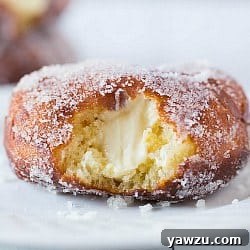
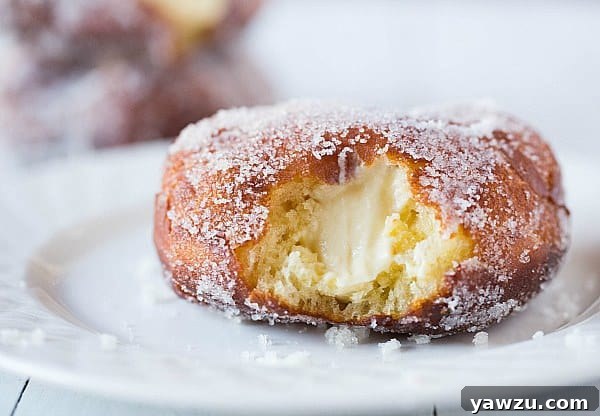
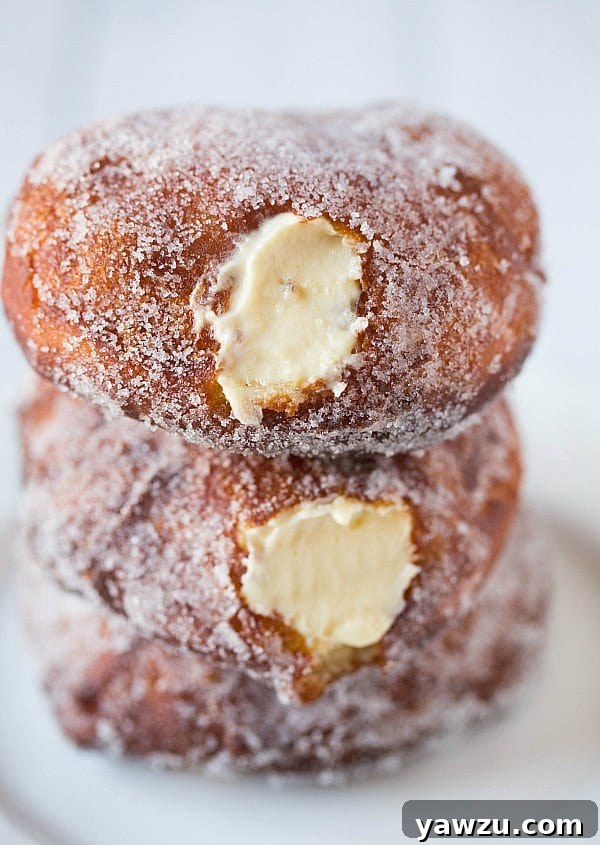
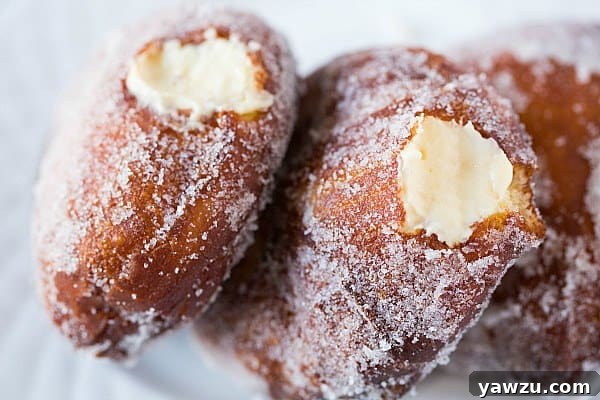
The journey culminated in a creation that surpassed all my hopes and expectations. These vanilla cream-filled doughnuts are nothing short of perfection. Each bite begins with a delicate, crisp exterior, lightly golden and inviting. This gives way to an incredibly airy and tender interior, a testament to the beautifully risen yeast dough. But the true magic lies within: a generous filling of velvety pastry cream, lightened to a cloud-like consistency with the gentle incorporation of whipped cream. It’s a symphony of textures and flavors that dances on the palate.
As soon as the doughnuts emerge warm from the fryer, they are lovingly rolled in a coating of granulated sugar. The residual heat from the freshly fried dough causes the sugar to just barely melt onto the surface, creating a subtle, sweet glaze that adheres perfectly. This coating adds a delightful, slightly crunchy texture that contrasts beautifully with the softness of the doughnut and the smoothness of the cream. When you sink your teeth into one, you experience the initial crispness, the gentle crunch of sugar, followed by the pillowy softness of the dough, and finally, the cool, luscious, and creamy vanilla filling. It’s an exquisite balance of rich flavor and delightful mouthfeel.
While making these doughnuts is undeniably a labor of love, requiring a bit of time and planning, most of it accounts for inactive preparation, such as chilling and rising. The reward, however, far outweighs the effort. These are not merely doughnuts; they are a homemade culinary triumph, a sweet escape that promises pure bliss with every bite. So, be sure to schedule your baking adventure accordingly, because trust me, these vanilla cream-filled doughnuts are absolutely, unequivocally worth every single moment spent crafting them.
What’s next on my baking list? The delightful challenge of cake doughnuts awaits!
Discover More Delicious Recipes from Our Kitchen
While a video guide for these specific cream-filled doughnuts would be wonderful, we encourage you to explore the detailed written instructions below. Perfecting the art of doughnut making is a truly rewarding experience.
For more baking inspiration, take a look at some of our past favorites:
- One year ago: Texas Sheet Cake and Peanut Butter and Jelly Cupcakes
- Two years ago: Moon Pies
- Three years ago: Asiago Bagels
Vanilla Cream-Filled Doughnuts: The Ultimate Recipe
This recipe guides you through creating sweet, yeasted doughnuts, generously coated in sugar and filled with a decadent, light vanilla cream. Prepare to enjoy a treat far superior to any you’ll find at a commercial doughnut shop!
Recipe Overview
- Yield: 9 doughnuts
- Prep Time: 40 minutes
- Cook Time: 20 minutes
- Chilling Time: 11 hours (essential for flavor and texture development)
- Total Time: Approximately 12 hours (includes inactive chilling/rising time)
- Course: Dessert
- Cuisine: American
- Author: Michelle Lettrich
- Rating: Rated 4.46 out of 5 stars by 110 bakers
Ingredients
For the Dough:
- 2½ teaspoons active dry yeast
- ⅔ cup whole milk, at room temperature (approximately 160 ml)
- 3½ cups all-purpose flour (approximately 438 g)
- ⅓ cup granulated sugar (approximately 67 g)
- 2 teaspoons kosher salt
- 3 large eggs
- 7 tablespoons unsalted butter, at room temperature, cut into 8 pieces (3½ ounces or about 100 g)
For the Pastry Cream:
- 1½ cups whole milk (approximately 360 ml)
- ½ cup granulated sugar (approximately 100 g)
- ¼ cup cake flour (approximately 31 g)
- ½ teaspoon kosher salt
- 4 large egg yolks
- 1 teaspoon vanilla extract
- 6 tablespoons heavy cream
For Frying:
- 1 gallon canola oil (approximately 3.8 liters) or other neutral frying oil
For the Coating:
- 1 cup granulated sugar (approximately 200 g)
Instructions
- Prepare the Dough: In the bowl of your electric stand mixer fitted with the dough hook, combine the active dry yeast and room temperature milk. Allow this mixture to sit for about 1 minute until the yeast dissolves and begins to activate. Next, add the flour, sugar, salt, and eggs to the bowl. Mix on low speed for approximately 3 minutes until all ingredients are well combined and a shaggy dough forms. Gradually add the softened unsalted butter, two pieces at a time, ensuring each addition is fully incorporated before adding more. Continue mixing until the dough is smooth, soft, and elastic, which should take an additional 5 to 6 minutes. Remove the dough from the bowl, wrap it tightly with plastic wrap, and refrigerate for a minimum of 6 hours, or ideally overnight (up to 15 hours). This long chill develops flavor and makes the dough easier to handle.
- Make the Pastry Cream: While your doughnut dough is chilling, prepare the rich pastry cream. In a small bowl, whisk together the sugar, cake flour, and salt until thoroughly combined. In a separate medium bowl, whisk the egg yolks vigorously for about 30 seconds until they are light and uniformly colored. Slowly whisk the flour mixture into the egg yolks until you have a thick, pasty consistency. In a medium saucepan, gently warm the whole milk over medium heat. Watch carefully and remove from heat just as small bubbles begin to form around the edges – do not let the milk boil rapidly.
- Once the milk is warm, carefully temper the egg mixture by slowly drizzling the hot milk into the egg yolk mixture while continuously whisking. This prevents the eggs from scrambling. Scrape the tempered egg mixture back into the saucepan and return it to medium heat, whisking constantly. Continue whisking as the mixture thickens and comes to a boil, which typically takes about 3 minutes. Once boiling, continue whisking for precisely 10 seconds; the cream will become visibly thick and glossy, with no foam on the surface. Immediately remove it from the heat.
- To achieve the smoothest possible texture, pour the hot pastry cream through a fine-mesh sieve into a small clean bowl, pressing any lumps through. Stir in the vanilla extract. Immediately cover the surface of the pastry cream with plastic wrap, pressing it directly onto the cream to prevent a “skin” from forming as it cools. Refrigerate until thoroughly chilled, at least 4 hours, or up to 3 days.
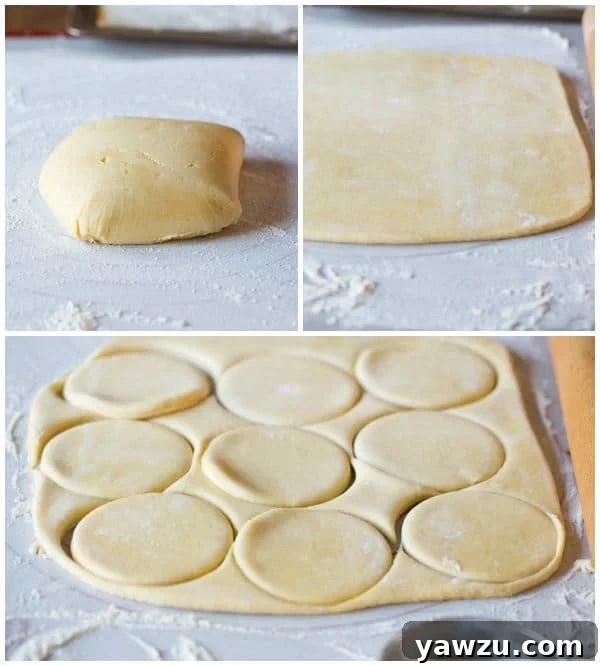
- Prepare the Doughnuts for Frying: Line a large baking sheet with parchment paper and lightly spray it with non-stick cooking spray; set this aside. Remove the chilled dough from the refrigerator and place it on a well-floured work surface. Gently roll the dough into an even 12-inch square, aiming for a thickness of about ½-inch. Using a 3½-inch round cutter, cut out 9 individual doughnuts. Carefully transfer these cut doughnuts to your prepared baking sheet. Loosely cover them with a piece of plastic wrap that has also been lightly sprayed with non-stick cooking spray to prevent sticking. Place the baking sheet in a warm spot, allowing the doughnuts to rise until they have doubled in height and feel noticeably poufy and pillowy, a process that usually takes 2 to 3 hours.
- Fry the Doughnuts: In a large, heavy-bottomed pot, pour about 3 inches of canola oil. Place the pot over medium-high heat and heat the oil until it reaches a consistent temperature of 350 degrees F (175 degrees C) on a deep-fry thermometer. While the oil is heating, prepare a landing spot for your fried doughnuts: line another baking sheet with a double layer of paper towels for draining. In a small, shallow bowl, place the granulated sugar for coating and set it aside.
- Once the oil is at the correct temperature, carefully lower three doughnuts at a time into the hot oil. Fry them until they are a beautiful golden brown on the underside, approximately 2 to 3 minutes. Using a slotted spoon or a spider strainer, carefully turn the doughnuts over and continue frying for an additional 2 to 3 minutes, or until the other side is also evenly golden brown. Remove the fried doughnuts to the paper towel-lined baking sheet to drain excess oil. Repeat this process with the remaining doughnuts, ensuring the oil temperature stays consistent between batches.
- Coat the Doughnuts: As soon as the fried doughnuts are cool enough to handle without burning yourself, but still warm, gently toss them one at a time in the bowl of granulated sugar, ensuring they are evenly coated on all sides. The warmth helps the sugar adhere and melt slightly, forming a delicate crust. Return the coated doughnuts to the paper towel-lined pan and allow them to cool completely for about 30 to 40 minutes. This cooling time is crucial before filling.
- Fill the Doughnuts: While the doughnuts are cooling, prepare the cream filling. In a clean bowl, beat the 6 tablespoons of heavy cream on medium-high speed until firm peaks form. Remove the chilled pastry cream from the refrigerator and whisk it gently to loosen its texture. Carefully fold about one-third of the whipped cream into the pastry cream. Continue folding in the remaining whipped cream in two more additions until no white streaks remain and the filling is light, airy, and uniformly creamy.
- Transfer the prepared cream filling to a pastry bag fitted with a small round decorating tip (a Wilton #12 tip works wonderfully for this). Gently poke a hole into the side of each cooled doughnut. Insert the pastry tip into the hole and pipe in the vanilla cream filling until the doughnut feels plump and noticeably heavier. These freshly filled doughnuts are best served immediately after filling to enjoy them at their peak freshness and texture. They are truly at their most delicious on the same day they are made.
Notes
Nutritional values provided are based on one serving. Please note that these are estimates and can vary based on specific ingredient brands and preparation methods. For precise dietary information, it is recommended to use a comprehensive nutritional calculator.
Estimated Nutritional Information (per doughnut)
- Calories: 678 kcal
- Carbohydrates: 85g
- Protein: 12g
- Fat: 32g
- Saturated Fat: 11g
- Cholesterol: 184mg
- Sodium: 704mg
- Potassium: 197mg
- Fiber: 2g
- Sugar: 43g
- Vitamin A: 710 IU
- Calcium: 101mg
- Iron: 2.8mg
Loved This Recipe? Share Your Experience!
We’d be absolutely thrilled to hear about your homemade vanilla cream-filled doughnuts! Your feedback helps us and other bakers in our community. Please leave a review below to share your thoughts, tips, or any variations you tried. And don’t forget the best part – snap a picture of your delicious creations and tag @thebrowneyedbaker on Instagram so we can admire your culinary masterpieces!