
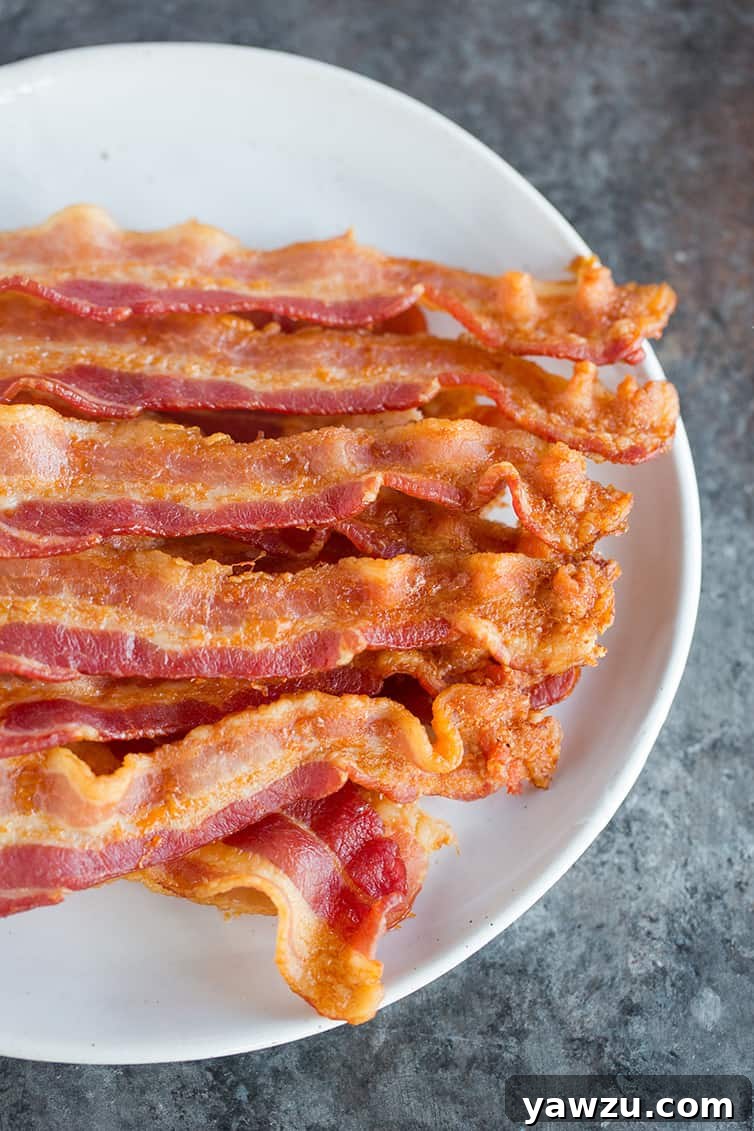
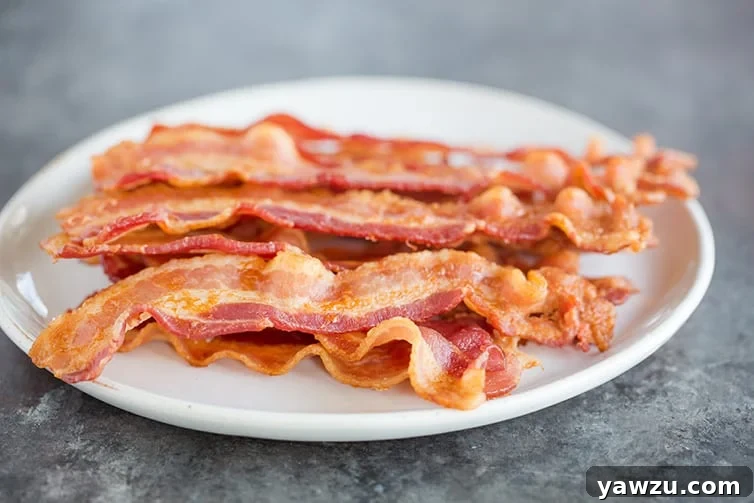
Welcome to the definitive guide on making oven baked bacon – a method so simple and effective, it promises perfectly crispy bacon every single time. Say goodbye to greasy stovetops, endless flipping, and unevenly cooked strips. Once you master baking bacon in the oven, you’ll wonder how you ever lived without it!
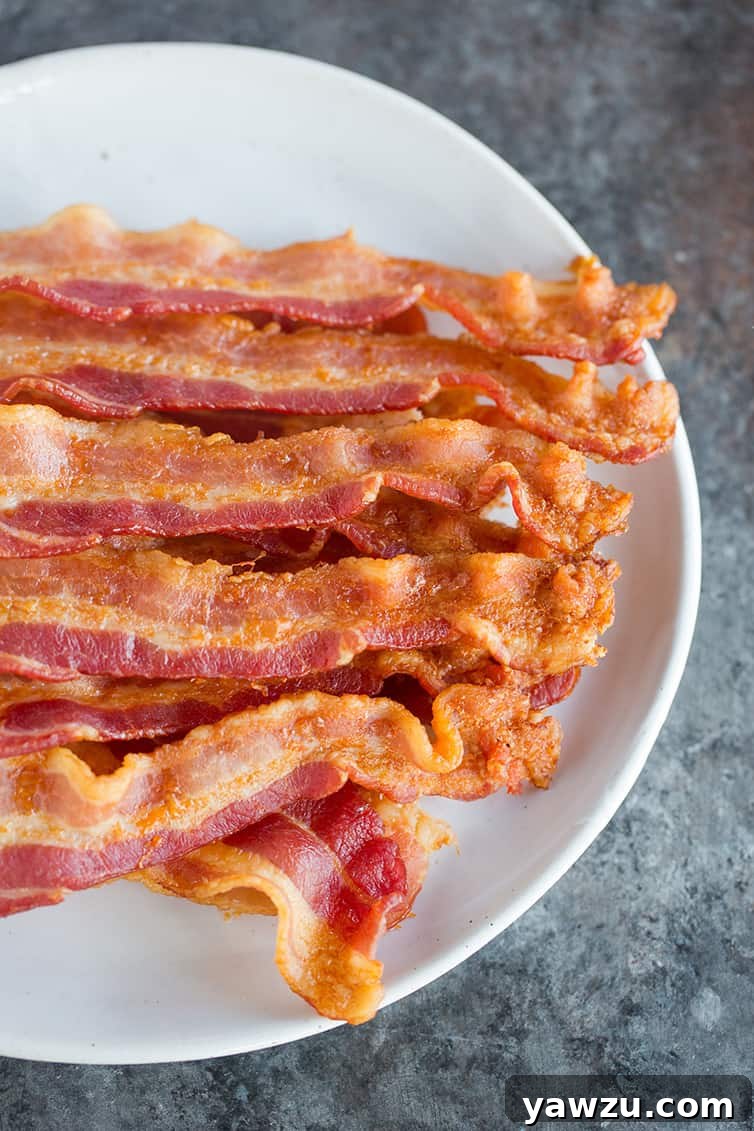
The Ultimate Guide to Perfect Oven Baked Bacon: Crispy, Flavorful, and Hands-Off
For many years, my journey to perfect bacon was fraught with culinary challenges. Growing up, the microwave was my mom’s chosen method, and while it delivered consistently crispy results, it was a time-consuming affair when cooking for a crowd. Later, I ventured into stovetop cooking, hoping for a more traditional and perhaps superior outcome. However, this often led to a smoky kitchen, persistent grease splatter, and the frustrating reality of unevenly cooked bacon – some parts burnt to a crisp, others stubbornly undercooked.
My quest for a better way led me to experiment with oven-baked bacon over five years ago, and it was a revelation. This method transformed my bacon-making routine, proving to be not just simpler, but superior in every measurable way. Since then, I’ve never looked back. The oven consistently delivers bacon that is uniformly cooked, delightfully crispy, and utterly delicious, all with minimal fuss and mess. It’s a game-changer for breakfast, brunch, or whenever a craving for savory, perfectly rendered bacon strikes.
Why Oven Baked Bacon is the Best Method for Crispy Results
If you’re still battling a splattering skillet or wrestling with rubbery microwave bacon, it’s time to discover the undeniable advantages of oven baking. This technique isn’t just a trend; it’s a superior cooking method that resolves many common bacon-making frustrations. Here’s why oven baking stands head and shoulders above other approaches:
- Unmatched Evenness: The consistent heat circulation within an oven ensures that every slice of bacon cooks at the same rate. This means no more burnt edges and raw centers. You get beautifully uniform crispiness from end to end, making for a much more enjoyable bite.
- Hands-Off Cooking: Perhaps the biggest perk is the minimal effort required. Once the bacon is in the oven, your hands are free. There’s no constant standing over a hot stove, no flipping, and no dodging grease splatters. This allows you to focus on other breakfast preparations or simply relax while your bacon cooks itself to perfection.
- Significantly Less Mess: A major drawback of stovetop bacon is the pervasive grease splatter that covers your cooktop, backsplash, and even nearby counters. Baking bacon on a parchment-lined sheet pan effectively contains the grease, making cleanup incredibly easy. A quick toss of the parchment paper, and your pan is virtually spotless.
- Ideal for Large Batches: Whether you’re feeding a family or hosting a brunch, the oven is perfect for cooking large quantities of bacon simultaneously. You can easily fit a full pound (or more!) of bacon on a standard half-sheet pan, eliminating the need for multiple small batches that prolong cooking time.
- Superior Texture and Flavor: The slower, more gentle cooking process in the oven allows the bacon fat to render out gradually and evenly. This results in bacon that is not just crispy, but also deeply flavorful, with a pleasant chew that isn’t overly dry or brittle. The edges caramelize beautifully, enhancing the taste.
Making oven baked bacon is not just about convenience; it’s about achieving a consistently high-quality product that enhances any meal. It’s truly the only way I’ve prepared bacon for years, and I’m confident it will become your preferred method too.
Mastering the Art of Oven Baked Bacon: A Step-by-Step Guide
When I first embarked on my oven bacon journey over five years ago, I meticulously experimented with a myriad of techniques. I tried baking on aluminum foil, on various wire racks, in preheated ovens, and even in cold ovens. Trust me, I cooked an astronomical amount of bacon to pinpoint the optimal method! What follows is the foolproof technique that consistently yields the most outstanding oven baked bacon you’ll ever taste.
Essential Equipment for Success
Before you begin, gather these simple tools to ensure a smooth and successful bacon-baking experience:
- Half Sheet Pan: A sturdy, rimmed baking sheet is crucial to contain the rendering fat. Standard 13×18 inch half-sheet pans are ideal.
- Parchment Paper: This is your secret weapon for non-stick cooking and effortless cleanup. Do not skip this!
- Tongs: Essential for safely transferring hot bacon from the pan to a draining plate.
- Paper Towels: For draining excess fat after cooking, ensuring maximum crispiness.
The Perfect Oven Baked Bacon Method Revealed
- Choose Parchment Paper Over Foil or Wire Racks: My extensive trials conclusively showed that baking bacon on parchment paper on a flat sheet pan is the superior choice. Aluminum foil tended to stick a bit, and while it helped with cleanup, parchment was simply better. Wire racks, though often recommended for drainage, caused the bacon ends to burn more readily due to increased air circulation and contact with the hot metal. Furthermore, cleaning bacon grease from a wire rack proved to be a major hassle – a task I now happily avoid with parchment paper. Parchment ensures easy release and makes discarding the cooled grease a breeze.
- Always Start Your Bacon in a COLD OVEN: This might sound counterintuitive, especially for seasoned bakers who are trained to always preheat. However, this step is absolutely critical for achieving the most evenly cooked and perfectly rendered bacon. Placing bacon in a cold oven allows the fat to render slowly and gradually as the oven heats up. This slow rendering prevents the bacon from seizing up and ensures uniform cooking, whether you prefer it on the softer side or super crispy. Baking in a preheated oven often resulted in inconsistent doneness and uneven cooking for me, making the cold oven method a true game-changer.
- Set Your Oven Temperature to 400 degrees F (200 degrees C): I experimented with a temperature range from 325°F to 425°F. Through this rigorous testing, 400°F emerged as the sweet spot. This temperature provides enough heat to crisp the bacon beautifully without cooking it too quickly, which can lead to burning, or too slowly, which can result in less-than-crispy results. It strikes the perfect balance for a deliciously slow-cooked, perfectly rendered texture.
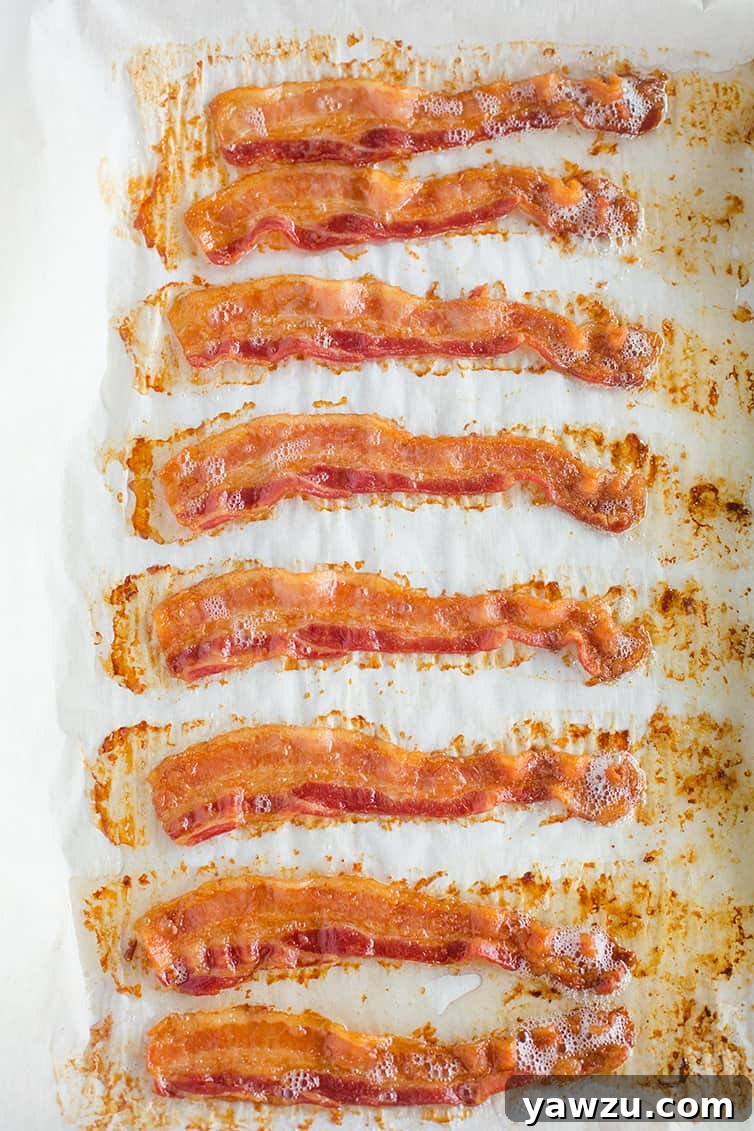
- Bake for 25 to 35 Minutes, Depending on Your Preference: The exact cooking time will largely depend on your desired level of crispiness. In our household, we are firm believers in super crispy bacon, so I typically lean towards the higher end of the cooking time, sometimes even pushing it to 35-38 minutes for a truly brittle crunch. If you prefer your bacon cooked through but still a little soft and chewy, aim for the 25-minute mark. For a happy medium of tender-crisp, 30 minutes is usually ideal. Always keep an eye on your bacon, especially during the last few minutes, as ovens can vary. You’ll know it’s done when it reaches your preferred golden-brown hue and level of crispness.
Expert Tips and Tricks for Next-Level Oven Bacon
Once you’ve mastered the basic technique, these additional tips and notes will help you customize your oven-baked bacon and maximize your culinary enjoyment.
Customize Your Bacon
- Adjusting for Bacon Thickness: This recipe is optimized for “regular cut” bacon. If you’re using thinner-sliced bacon, start checking for doneness around 18-20 minutes, as it will cook faster and can burn quickly. Conversely, if you opt for thick-sliced bacon, you’ll need to increase the baking time. Expect thick-cut bacon to take anywhere from 35 to 45 minutes, depending on its thickness and your desired crispiness. The key is to watch for visual cues and adjust accordingly.
- Elevate Flavor with Specialty Bacons & Seasonings: Don’t limit yourself to plain bacon! My personal favorite is Applegate Sunday Bacon. It’s uncured and boasts a fantastic flavor profile that truly elevates any dish. Exploring different brands and types of bacon – from hickory smoked to applewood smoked – can significantly impact the final taste. For an extra layer of flavor, consider sprinkling your bacon with a pinch of brown sugar or a generous grind of black pepper before baking. This adds a delightful caramelization or a subtle spicy kick.
Maximizing Your Bacon Experience
- Smart Batch Cooking & Storage Solutions: One of the greatest advantages of oven baking is the ability to cook large quantities at once. This makes it perfect for meal prepping. Once your bacon has cooled completely, you can store it in an airtight container in the refrigerator for up to 4-5 days. For longer storage, arrange the cooled bacon in a single layer on a parchment-lined baking sheet and freeze until firm (about 30 minutes). Then, transfer the frozen bacon to a freezer-safe zip-top bag and store it for up to 1 month. To reheat, a quick 15-second blast in the microwave is usually sufficient for a single slice.
- Don’t Discard That Bacon Grease! Bacon grease is a culinary treasure trove. After removing your cooked bacon from the parchment paper, carefully pour the cooled, rendered bacon fat into a heat-proof jar or airtight container. Once solidified, refrigerate it for up to 1 month. This flavorful fat can be used to impart incredible depth to various dishes. Try using it to fry eggs for an extra savory breakfast, elevate your grilled cheese sandwiches, or pop popcorn with it for a truly gourmet snack. It also makes an exceptional base for savory baked goods, like a homemade nuts and bolts snack mix.
Frequently Asked Questions About Oven Baked Bacon
Here are answers to some common questions that arise when cooking bacon in the oven:
- Why is my bacon not getting crispy? Ensure your oven temperature is accurate (a separate oven thermometer can help). Also, make sure you’re not overcrowding the pan, as this can steam the bacon instead of crisping it. Give each slice a little breathing room. If using thick-cut bacon, allow for extended cooking time.
- How do I prevent smoking? While oven baking significantly reduces mess, some smoke is natural. Using a cold oven helps. If you’re experiencing excessive smoke, it might be due to residual grease in your oven or cooking at too high a temperature. Ensure your pan is clean and the parchment paper covers the entire surface to minimize direct fat contact with the pan.
- Can I use aluminum foil instead of parchment paper? While foil can work in a pinch, bacon tends to stick to it more readily than to parchment. This can make cleanup slightly less effortless and sometimes result in tearing the bacon. For best results and easiest cleanup, parchment paper is highly recommended.
- What if my bacon is still chewy? If you prefer very crispy bacon and it’s coming out chewy, simply extend the baking time by a few minutes, checking frequently. Remember that bacon will crisp up a bit more as it cools.
Beyond Breakfast: Delicious Ways to Use Your Perfect Bacon
While oven-baked bacon is undeniably a breakfast star, its versatility extends far beyond the morning meal. Its savory, smoky crispness can enhance a multitude of dishes, transforming everyday recipes into extraordinary culinary experiences. Here are some fantastic ways to incorporate your perfectly cooked bacon:
Recipes Featuring Bacon as a Star Ingredient
- Bourbon-Brown Sugar Bacon: Elevate your bacon with a sweet and savory glaze perfect for an appetizer or gourmet breakfast.
- Bacon Jam: A condiment so rich and flavorful, it turns any burger, sandwich, or cheese board into a masterpiece.
- Jalapeño Poppers: The smoky crunch of bacon perfectly complements the spicy kick of jalapeños and creamy cheese.
- Cheesy Bacon-Wrapped Dates: An irresistible appetizer balancing sweet, salty, and savory flavors.
- Brown Sugar Bacon Buttermilk Waffles: A truly indulgent breakfast that combines crispy bacon directly into fluffy waffles.
Classic Breakfast Pairings for Your Oven Bacon
Of course, nothing beats a classic breakfast spread. Here are some ideal companions for your perfectly crispy oven-baked bacon:
- Fluffy Buttermilk Waffles: A timeless combination that’s always a crowd-pleaser.
- Best Ever Buttermilk Pancakes: Light, airy pancakes served with a side of savory bacon.
- Seasonal Pumpkin Pancakes: A comforting autumn twist to your breakfast feast.
- Homemade Cinnamon Rolls: The sweetness of a warm cinnamon roll is perfectly balanced by salty bacon.
- Classic French Toast: A delightful pairing that makes for a hearty and satisfying meal.
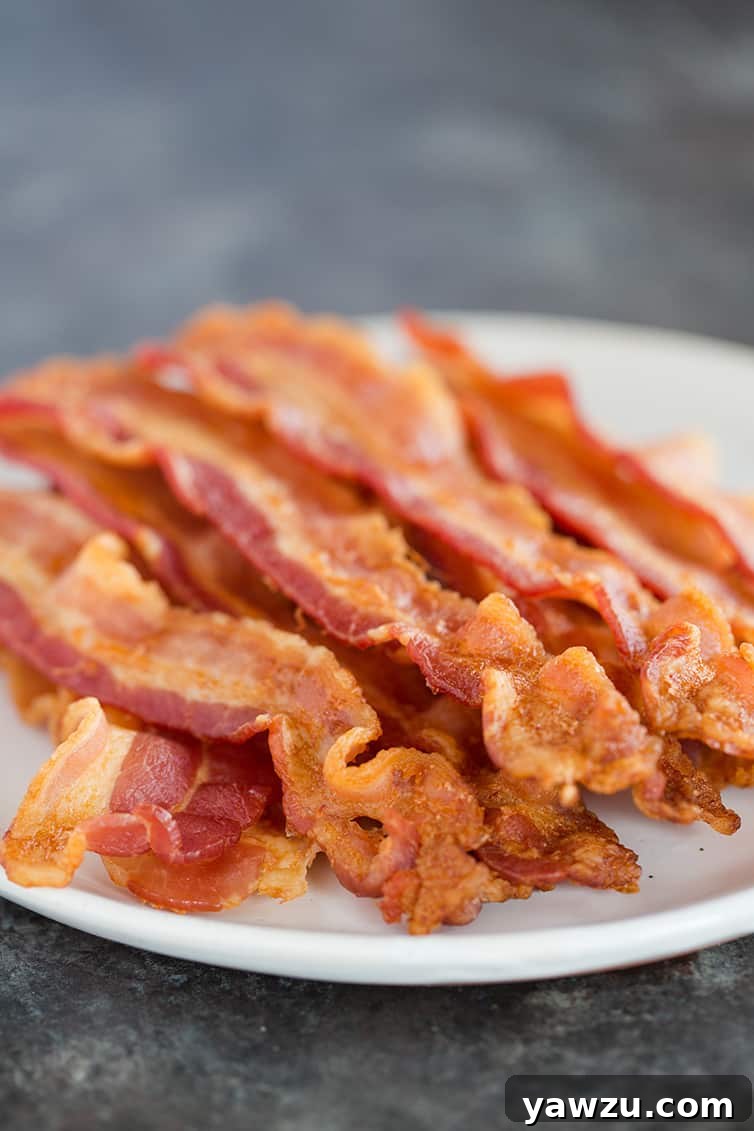
If you’re a long-time adherent of the microwave or skillet for your bacon, I implore you to give the oven method a try. It’s entirely hands-off, the cleanup is incredibly easy, and the result is perfect, crispy bacon every. single. time. Plus, the ability to cook a massive batch at once means you can always have a stash ready in the refrigerator or freezer for any sudden bacon emergencies or meal prep needs!
QUESTION: What’s your favorite way to eat bacon? Share your ideas in the comments below!
Oven Baked Bacon
Pin
Rate
Ingredients
- 8 to 12 slices bacon
Instructions
-
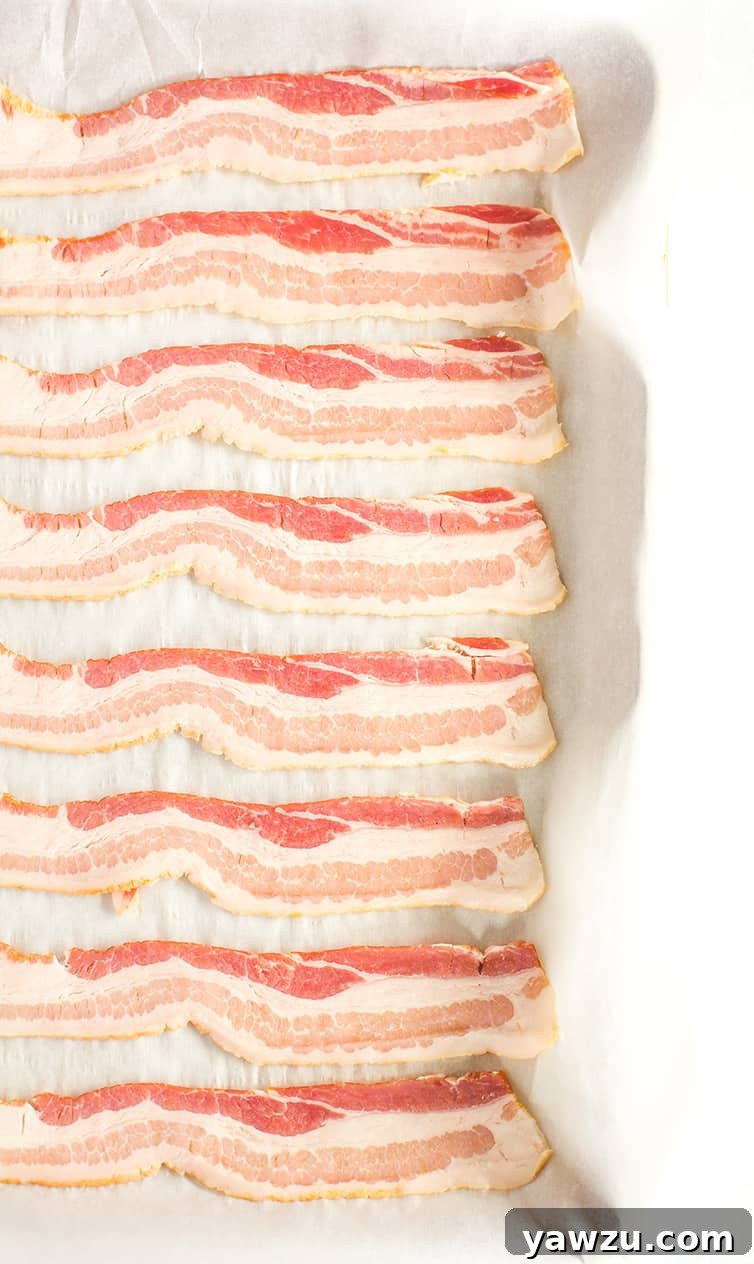
Line a half sheet pan with parchment paper.
-
Lay bacon slices in a single layer without overlapping on the parchment paper.
-
Place in a cold oven, then turn oven on to 400 degrees F (200 degrees C). Bake until desired degree of doneness, usually around 25 minutes for done and soft, closer to 30-35 minutes for done and crispy. Using kitchen tongs, remove bacon from pan and place on paper towel-lined plate to drain. Leftover bacon can be kept in an airtight container in the refrigerator for up to 4 days. The bacon can also be frozen for up to 1 month.
Notes
- This recipe is made using “regular cut” bacon. If you use thin-sliced bacon, you will need to decrease the baking time slightly, and if you use thick-sliced bacon, you will need to increase the baking time slightly.
- My favorite brand/type of bacon is Applegate Sunday Bacon. It’s uncured and since we found it and started buying it regularly, it’s totally taken our bacon to the next level. If you have another go-to brand or type, I’d love to hear about it!
- After removing the bacon from the parchment paper, you can pour the bacon grease into a jar or airtight container and refrigerate for up to 1 month. Use it to make nuts and bolts snack mix, fry eggs, make grilled cheese sandwiches, or use it to pop popcorn!
- Once the bacon has cooled, you can place it in an even layer on a clean, parchment paper-lined baking sheet and freeze until firm, about 30 minutes. Place the frozen bacon in a freezer-safe zip-top bag and store in the freezer for up to 1 month. To reheat, simply microwave for 15 seconds.
Nutritional values are based on one slice of bacon
Did you make this recipe?
Leave a review below, then snap a picture and tag @thebrowneyedbaker on Instagram so I can see it!
Update Notes: This comprehensive guide to oven baked bacon was originally published in October 2013. It was significantly refreshed in October 2018 with an updated recipe method, new photos, and expanded recipe tips to provide even greater value and clarity. We continue to refine and update our content to ensure it remains the best resource for your culinary needs.