

The Ultimate Guide to Crafting Authentic New England Clam Chowder
Few dishes evoke the cozy comfort and rustic charm of New England quite like a steaming bowl of homemade clam chowder. Often referred to simply as “Boston clam chowder,” this iconic soup is a culinary masterpiece, featuring tender chunks of red potatoes, succulent minced clams, and a rich, creamy broth infused with the savory depth of thick-cut bacon and aromatic herbs. It’s a luxurious, soul-warming dish that promises to delight everyone at your table, especially on a chilly evening.

For many, New England clam chowder is more than just a soup; it’s a cherished childhood memory. I vividly recall the comforting aroma filling my grandmother’s kitchen, where she always kept cans of this delightful soup in her pantry, ready for a quick and satisfying lunch. It was my absolute favorite choice. However, the true revelation came when I discovered just how incredibly simple it is to prepare from scratch at home. Since that day, I’ve never looked back, embracing the joy of crafting this beloved dish in my own kitchen.
One of the many virtues of a truly great soup recipe is its adaptability and economic efficiency. This New England clam chowder is a prime example. While fresh clams offer an undeniable appeal, they aren’t always readily accessible or affordable for everyone. That’s precisely why this recipe shines: it brilliantly utilizes both canned minced clams and bottled clam juice, delivering an authentic, robust flavor profile that rivals any made with fresh seafood, without the hassle or expense. It’s a testament to how simple, everyday ingredients can come together to create something truly extraordinary.
Beyond its delightful taste, this homemade clam chowder offers a heartwarming experience that transcends mere sustenance. It’s about gathering loved ones, sharing stories, and savoring a dish that’s rich in flavor and tradition. The process itself is surprisingly straightforward, making it an ideal candidate for weeknight dinners or leisurely weekend meals. Let’s delve into the magic that brings this comforting classic to life.
Key Ingredients and Essential Tips for the Perfect Chowder
Crafting an exceptional New England clam chowder relies on understanding the role each ingredient plays and employing a few clever techniques. Here’s a deeper dive into the core components of this recipe:
- Clams: As previously mentioned, this recipe intentionally bypasses fresh clams for convenience and consistent results. We opt for high-quality canned minced clams, ensuring to reserve their natural juice, and supplement with an additional bottle of clam juice. This combination provides a powerful burst of authentic clam flavor that forms the heart of our chowder. Both are readily available at most grocery stores for a modest price. If you are fortunate enough to have access to fresh, live clams, you can certainly substitute them. Steam them open, finely mince the meat, and use the strained clam liquor in place of some of the bottled clam juice, adjusting to your preferred level of saltiness. Remember, the goal is a concentrated clam essence, regardless of the form.
- Heavy Cream: The luxurious, velvety texture of New England clam chowder is largely thanks to heavy cream. It creates the rich base in which the tender potatoes and delicate clams float. However, cream can be a bit finicky. Adding cold cream directly to a hot soup base too quickly can cause it to curdle, resulting in a less-than-desirable grainy texture. To prevent this, always ensure your heavy cream is at room temperature before incorporating it. Pour it in slowly, while continuously stirring, allowing it to gradually warm and integrate smoothly into the chowder base. This simple step guarantees a consistently creamy and luscious finish.
- Potatoes: While some variations of New England clam chowder call for Yukon Gold potatoes, which can become quite soft, we highly recommend using red potatoes for their superior texture. Red potatoes hold their shape beautifully even after simmering, providing delightful bite and structure to the chowder without disintegrating. They also tend to absorb less salt than their starchier counterparts, allowing the other flavors to shine. After a thorough scrub, cut them into 1½-inch cubes to ensure even cooking and a substantial presence in each spoonful. No need to peel them; the skins add a rustic touch and some additional nutrients.
- Onions: Spanish onions, often simply known as yellow onions, are the star of our aromatic base. When sautéed, they caramelize beautifully, releasing a sweet, savory depth that forms the foundation of the chowder’s complex flavor. Their mild pungency mellows into a sweet, rich note during cooking. Don’t rush this step; proper caramelization is crucial for building flavor. You can even set aside a small portion of finely diced raw onion to sprinkle on top of the finished chowder for a fresh, piquant garnish that contrasts wonderfully with the creamy soup.
- Bacon: Thick-cut bacon isn’t just a garnish here; it’s an essential flavor builder. Frying the bacon renders out its fat, which then becomes the medium for sautéing the onions, imparting an undeniable smokiness and richness to the entire dish. The crispy bacon bits themselves are then folded back into the chowder or used as a garnish, adding a delightful textural contrast and an extra layer of savory goodness. Choose a good quality, smoky bacon for the best results.
- Herbs: Bay leaf and dried thyme contribute subtle, earthy notes that round out the savory profile of the chowder. They infuse the broth with a classic warmth, enhancing the overall comfort factor without overpowering the delicate clam flavor. Fresh parsley added at the end brightens the dish with a vibrant, herbaceous finish and a pop of color.
Bringing Your Delicious Clam Chowder to Life
This fantastic New England clam chowder recipe is not only incredibly flavorful but also remarkably quick to prepare, taking less than an hour from start to finish. This makes it a coveted addition to your repertoire of weeknight-worthy meals! Here’s how you’ll create this comforting masterpiece:
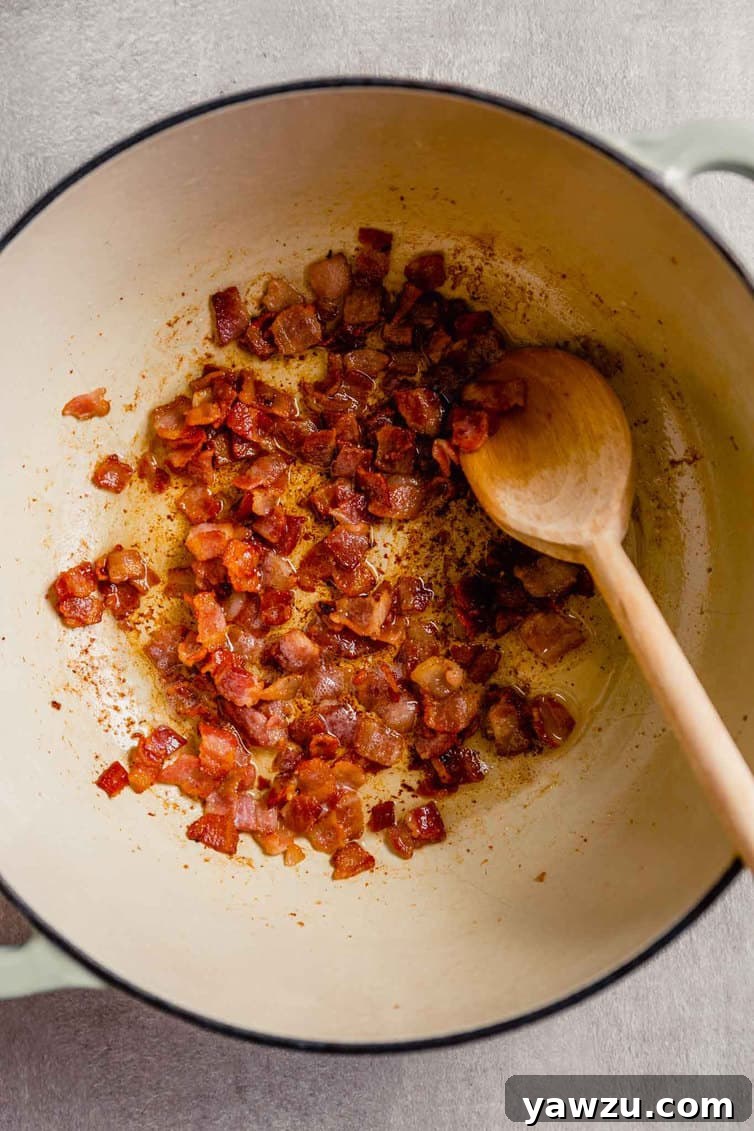
- Render the Bacon: Begin by dicing your thick-cut bacon into ¼-inch pieces. In a large, heavy-bottomed stockpot or Dutch oven, cook the bacon over medium-low heat. The key here is patience; you want the fat to slowly render out and the bacon to become beautifully crisp. This typically takes about 5 to 7 minutes. Once crisp, remove the bacon with a slotted spoon, reserving the rendered fat in the pot. Set the crispy bacon aside for later.
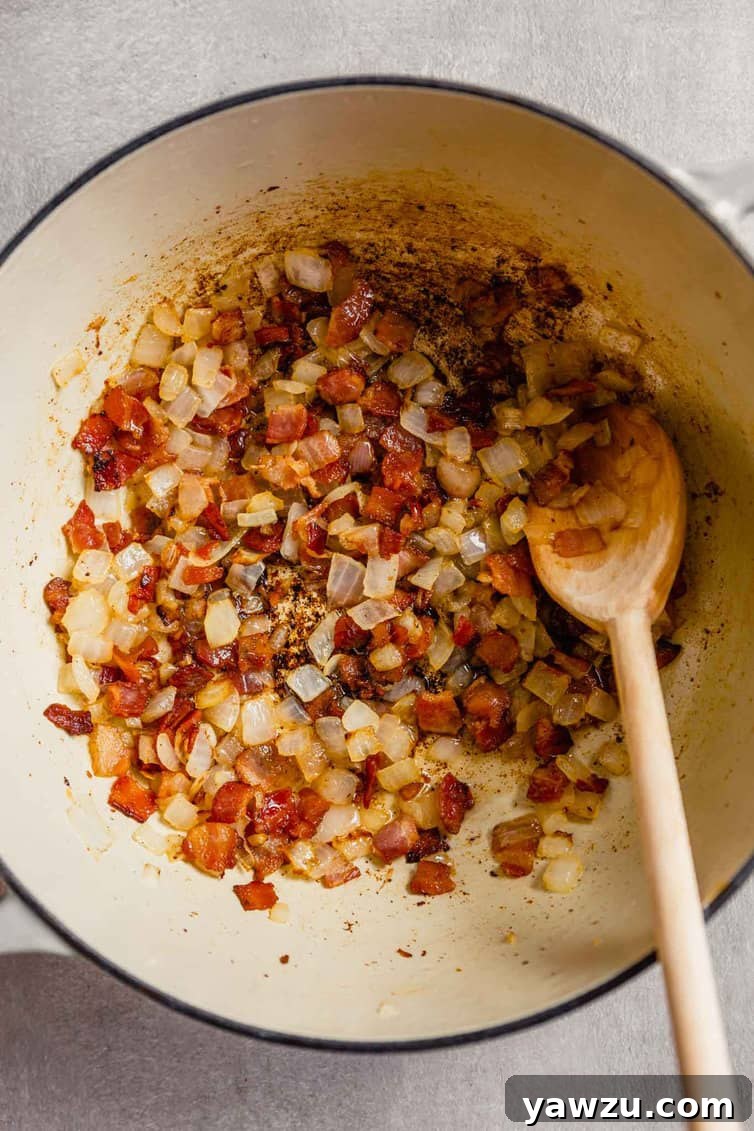
- Sauté the Onions: Add the chopped Spanish onion to the bacon fat remaining in the pot. Cook over medium heat, stirring occasionally, until the onions soften and become translucent, about 5 minutes. They should be fragrant and lightly caramelized, contributing a sweet depth to the broth.
- Create the Roux: Sprinkle the all-purpose flour over the softened onions and bacon fat. Stir continuously for about 1 minute, allowing the flour to cook out and create a light roux. This step is crucial for thickening the chowder and giving it its characteristic body. The flour should achieve a pale, golden color.
- Build the Liquid Base: Gradually whisk in the reserved clam juice from the canned clams, followed by the bottled clam juice, and finally, the water. Whisk continuously to prevent lumps and ensure a smooth, uniform liquid base. Bring this mixture to a gentle simmer.
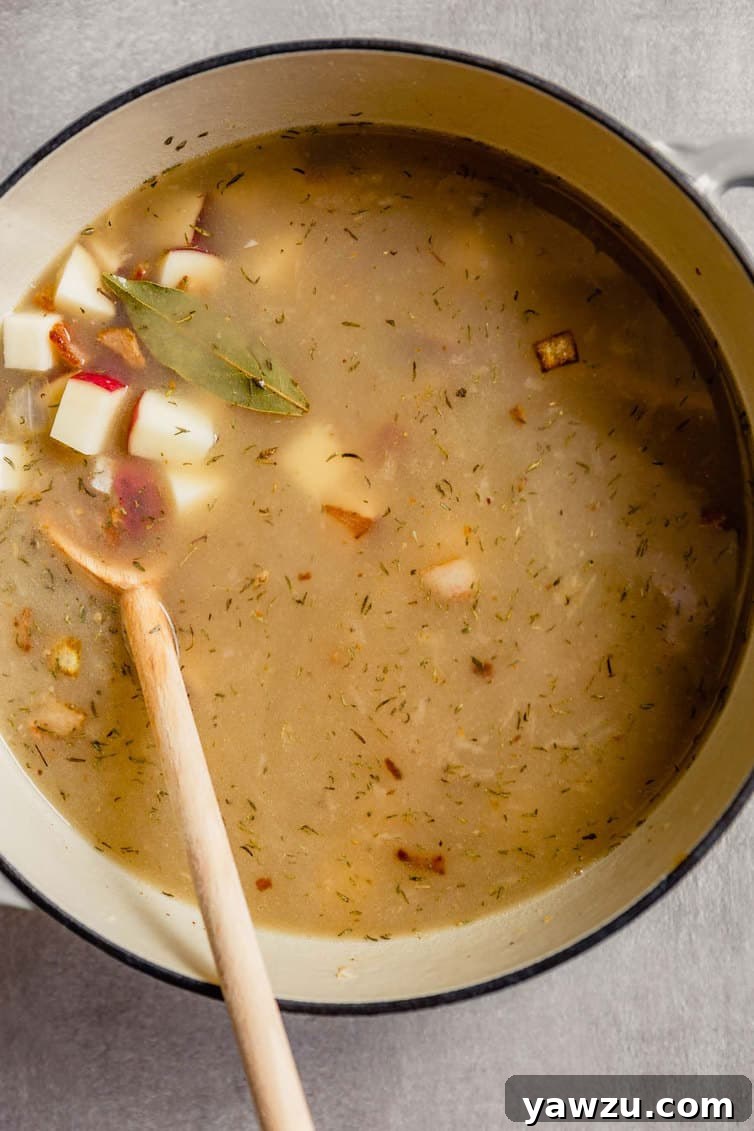
- Simmer the Potatoes and Herbs: Carefully add the diced red potatoes, the bay leaf, and the dried thyme to the simmering liquid. Reduce the heat to low and continue to simmer, uncovered, until the potatoes are tender when pierced with a fork. This usually takes about 10 to 15 minutes, depending on the size of your potato chunks.
- Finish with Clams and Cream: Once the potatoes are tender, stir in the minced clams, the room-temperature heavy cream, and the fresh minced parsley. Bring the chowder back to a gentle simmer, but do not allow it to boil, as this can cause the cream to separate. Season generously with salt and freshly ground black pepper to taste, adjusting until the flavors are perfectly balanced.
- Serve: Remove the pot from the heat and carefully discard the bay leaf. Ladle the hot New England clam chowder into bowls. Garnish with the reserved crispy bacon bits and a sprinkle of extra fresh parsley. Serve immediately and enjoy this comforting classic!
Serving, Storing, and Reheating Your Hearty New England Clam Chowder
While I personally find New England clam chowder absolutely irresistible straight from the pot, some enthusiasts prefer to let their soup sit for a little while longer, allowing the flavors to meld even further. If you choose this route, ensure you keep it on very low heat and stir occasionally to prevent the potatoes from becoming too soft or falling apart.
This robust chowder makes a fantastic main dish on its own. It pairs beautifully with a side of oyster crackers or a thick slice of warm, crusty bread, perfect for soaking up every last drop of the creamy broth. For a complete and balanced meal, consider serving it alongside a simple green salad with a light vinaigrette to cut through the richness. And for those who truly want to elevate the experience, my copycat Red Lobster Cheddar Bay Biscuits are an unbelievably good accompaniment – a truly indulgent pairing that will leave everyone craving more!
Storing Your Leftovers: After allowing the soup to cool completely to room temperature, transfer it to an airtight container. It can be safely stored in the refrigerator for up to 4 days. The flavors often deepen overnight, making leftovers a real treat!
Freezing for Later: Freezing cream-based soups can sometimes result in a slightly grainy texture upon reheating due to the fat content separating. However, it is absolutely possible to freeze this chowder successfully! Pour the completely cooled soup into freezer-safe bags or containers, leaving about an inch of headspace for expansion. Freeze for up to 3 months. To minimize graininess, ensure the soup is very cold before freezing and reheat slowly.
Reheating Instructions: To reheat, gently warm the soup in the microwave on a medium setting, stirring every minute or so, until heated through. Alternatively, you can reheat it on the stovetop over low heat, stirring frequently, until it reaches your desired temperature. If the soup appears too thick after refrigeration or freezing, you can thin it out with a splash of milk or clam juice while reheating. Once it’s piping hot, break out those crackers, settle in, and savor every spoonful of this delightful homemade chowder!
Embrace Soup Season with More Delicious Recipes!
As the weather turns cooler and the desire for warm, comforting meals grows, there’s no better time to dive into the wonderful world of soups. If you’ve enjoyed this New England Clam Chowder, I highly recommend exploring these other fantastic recipes from my kitchen. Each one promises to bring warmth and flavor to your table, perfect for any occasion:
- Classic French Onion Soup
- Velvety Creamy Potato Leek Soup
- Rich Cream of Mushroom Soup
- Hearty Cheddar Cheese Soup with Potato, Ale, and Bacon

I am absolutely confident that you will fall in love with this homemade New England Clam Chowder recipe. It’s a timeless classic, brought to life with simple, accessible ingredients and straightforward steps. If you give it a try, I would be absolutely thrilled if you returned here to leave a rating and share your thoughts. Your feedback means the world! Enjoy every comforting bite!
New England Clam Chowder Recipe
Yield: 6 servings
Prep Time: 15 mins
Cook Time: 30 mins
Total Time: 45 mins
This simple New England clam chowder (sometimes called Boston clam chowder) features chunks of red potatoes and minced clams. Thick-cut bacon and herbs join the cream to make a luxurious, comforting dish that everyone will love!
Ingredients
- 4 slices center-cut thick-cut bacon, (about 4 ounces), cut into ¼-inch pieces
- 1 large Spanish onion, chopped
- 2 tablespoons all-purpose flour
- 26 ounces (737.09 g) minced clams, drained and juice reserved
- 16 ounces (453.59 ml) clam juice (bottled)
- 1 cup (250 ml) water
- 1½ pounds (680.39 g) red potatoes, about 4 medium, scrubbed and cut into ½-inch dice
- 1 bay leaf
- ¼ teaspoon (0.25 teaspoon) dried thyme
- 1 cup (238 ml) heavy cream (room temperature)
- 2 tablespoons minced fresh parsley leaves
- Salt and fresh ground pepper, to taste
Instructions
- Fry the bacon in a large stockpot or Dutch oven over medium-low heat until the fat renders and the bacon crisps, 5 to 7 minutes. Remove bacon with a slotted spoon and set aside.
- Add the onion to the remaining bacon fat and cook, stirring occasionally, until softened, about 5 minutes.
- Add the flour and stir until lightly colored, about 1 minute. Gradually whisk in the reserved clam juice (from the cans), the bottled clam juice, and the water.
- Add the potatoes, bay leaf, and thyme and simmer until the potatoes are tender, about 10 to 15 minutes.
- Add the clams, room-temperature cream, parsley, salt, and pepper to taste; bring to a gentle simmer (do not boil). Remove from the heat, discard the bay leaf, and serve immediately, garnished with reserved crispy bacon.
Notes
- Clams: You can substitute fresh minced clams in place of the canned variety; adjust the clam juice based on your salt preference.
- Serving: Add crackers, a simple salad, or cheddar bay biscuits to make it a complete meal.
- Storing: The soup can be kept in an airtight container in the refrigerator for up to 4 days.
- Freezing: The soup can be frozen in an airtight container for up to 3 months. Reheat slowly to prevent graininess.
- Reheating: The soup can be reheated in the microwave or on the stovetop over low heat, stirring occasionally.
- Recipe adapted from The Best Soups and Stews.
Nutrition Information (per serving, approximate)
Calories: 385kcal, Carbohydrates: 32g, Protein: 9g, Fat: 24g, Saturated Fat: 12g, Cholesterol: 75mg, Sodium: 587mg, Potassium: 703mg, Fiber: 2g, Sugar: 4g, Vitamin A: 870IU, Vitamin C: 16.9mg, Calcium: 56mg, Iron: 1.6mg
Did you make this recipe?
Leave a review below, then snap a picture and tag @thebrowneyedbaker on Instagram so I can see it!
Author: Michelle Lettrich
Course: Soup
Cuisine: American
Photography by Lauren Grant.