
Mastering Caramel-Topped Flan: From Skepticism to Culinary Success
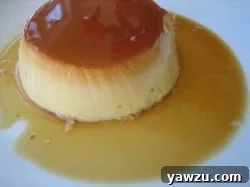
Flan. The name itself evokes images of glistening caramel and smooth, creamy custard. Before embarking on this week’s culinary adventure, I must confess, I had never truly experienced flan. My first encounter with this classic dessert was not just about following a recipe; it was a journey into an unknown flavor profile, one that many describe as a love-it-or-hate-it affair. I confess, my initial reaction leaned towards the latter.
My expectations were high. As a lover of puddings, custards, and crème brûlée, I fully anticipated falling head over heels for flan. Yet, when I finally tasted my homemade creation, I found myself grappling with its distinct texture and the cool temperature at which it’s served. There was also a subtle, eggy note that, to my palate, felt more pronounced because of its chilled nature. It was a beautiful, elegant dessert to look at, but my taste buds needed convincing.
What is Flan? A Global Custard Phenomenon
Flan, at its heart, is a rich custard dessert, typically made with eggs, milk (or cream), sugar, and vanilla, baked in a caramel-lined mold. While often associated with Spanish and Latin American cuisine, its origins can be traced back to ancient Roman times, where similar savory and sweet custards were enjoyed. Over centuries, it evolved, taking on different forms and names across the globe—from France’s delicate crème caramel to Portugal’s rich pudim and the vast array of flan variations found throughout Mexico, the Caribbean, and beyond.
The beauty of flan lies in its simplicity and the contrasting elements it brings together: the slight bitterness and sweetness of the caramelized sugar, the silky smoothness of the custard, and the often-wobbly, yet firm, texture. Each region has imparted its own unique twist, incorporating ingredients like condensed milk, cream cheese, or various flavorings to create distinct versions of this beloved treat. Despite these variations, the core essence of flan remains constant: a celebration of eggs, dairy, and sugar transformed into something truly special.
Decoding Flan: Texture, Temperature, and Taste
My initial struggle with flan’s texture and cool serving temperature is a common sentiment among newcomers to the dessert. Unlike a warm bread pudding or a freshly baked cake, flan is intentionally served chilled, allowing its delicate structure to set and its flavors to fully meld. This cooling period is crucial, as it transforms the custard from a warm, pourable mixture into the iconic, jiggly delight that defines flan.
The “eggy” taste I noted is also part of flan’s character. Made predominantly with eggs and egg yolks, a subtle eggy flavor is inherent. For those unaccustomed to it, or when served at the wrong temperature, it can be off-putting. However, when prepared correctly and chilled thoroughly, this eggy nuance becomes a rich, creamy undertone that complements the sweet caramel. It’s a testament to the dessert’s rustic charm and its honest ingredients. Understanding these characteristics helped me appreciate the dessert, even if it didn’t instantly become my favorite.
A Culinary Conquest: Embracing New Flavors and Techniques
Despite my personal taste preferences, I am incredibly grateful to Steph from A Whisk and a Spoon for choosing this week’s recipe. It pushed me out of my comfort zone and allowed me to conquer another “first” in my kitchen. Successfully making flan, a dessert that requires precision in caramelization and a gentle hand with custard, was a rewarding experience in itself. It’s a valuable reminder that not every dish we create will be a personal favorite, but every attempt offers an opportunity to learn and grow as a home baker.
The true joy of baking often lies in the process, the exploration of new ingredients, and the mastery of different techniques. This flan recipe certainly delivered on that front. From carefully whisking the eggs to tempering the hot cream and milk, and finally creating a perfect water bath for even baking, each step was a lesson. It’s a dance of heat and patience, resulting in a dessert that, while not my personal go-to, undeniably possesses an elegant charm and a place of honor in the world of sweets.
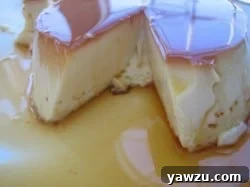
Next on our baking list: Gooey Chocolate Cakes. And last week, we savored delicious Brioche Raisin Snails.
Classic Caramel-Topped Flan Recipe
This classic caramel-topped flan is a showstopper, offering a perfect blend of sweet caramel and silky smooth custard that is sure to impress your guests and elevate any meal.
Pin Recipe
Ingredients
For the Caramel:
- ⅓ cup (66.67 g) sugar
- 3 tablespoons water
- A squirt of fresh lemon juice
For the Flan Custard:
- 1 ½ cups (357 ml) heavy cream
- 1 ¼ cups (305 ml) whole milk
- 3 large eggs
- 2 large egg yolks
- ½ cup (100 g) sugar
- 1 teaspoon pure vanilla extract
Instructions
- Center a rack in the oven and preheat the oven to 350ºF (175°C). Line a roasting pan or a 9″x13″ baking pan with a double thickness of paper towels. Fill a teakettle with water and bring it to a boil; once boiling, turn off the heat but keep the hot water ready.
- Place a metal 8″x2″ round cake pan (ensure it’s not nonstick) into the oven to heat while you prepare the caramel. If you’re using small individual molds or ramekins, skip this step. For smaller flans, use six 6-ounce or seven to eight 4-ounce ramekins or containers. (Note: The original baker halved this recipe and used one 16-ounce ramekin.)
- To Make the Caramel: In a small, heavy-bottomed saucepan, stir together the sugar, water, and lemon juice. Place the pan over medium-high heat and cook without stirring until the sugar transforms into a rich amber-colored caramel, which should take about 5 minutes. As soon as you catch the first whiff of smoke, immediately remove the pan from the heat to prevent burning.
- Carefully remove the hot cake pan from the oven using oven mitts. Pour the freshly made caramel into the hot pan and immediately tilt and rotate the pan to evenly coat the entire bottom surface with the shimmering caramel. Set the coated pan aside to cool slightly.
- To Make the Flan Custard: In a separate saucepan, gently bring the heavy cream and whole milk to just a boil, then remove from heat. Meanwhile, in a 2-quart glass measuring cup or a mixing bowl, vigorously whisk together the eggs, egg yolks, and ½ cup sugar for about one to two minutes until well combined. Stir in the pure vanilla extract.
- While continuously whisking, slowly drizzle in approximately one-quarter of the hot milk mixture into the egg mixture. This crucial step, known as tempering, gradually raises the temperature of the eggs and prevents them from scrambling. Continue whisking as you slowly pour in the remaining hot liquid. Using a large spoon, skim off any foam or bubbles that have formed on the surface of the custard mixture for a smoother finish.
- Carefully place your caramel-lined cake pan into the prepared roasting pan (lined with paper towels). Gently pour the prepared custard mixture into the cake pan. Carefully slide the entire roasting pan setup into the preheated oven.
- Very carefully pour enough hot water from your teakettle into the roasting pan to reach halfway up the sides of the cake pan, creating a bain-marie (water bath). Don’t worry if the cake pan seems to float slightly.
- Bake the flan for approximately 35 minutes. Cooking time can vary depending on your oven and chosen mold size; smaller individual molds will require less time (start checking around the 25-minute mark). The flan is done when the top puffs slightly and shows hints of golden color, and a knife inserted into the center comes out clean.
- Remove the roasting pan from the oven. Carefully transfer the cake pan containing the flan to a wire cooling rack. Immediately run a thin knife around the edge of the flan, between the custard and the pan sides, to loosen it. Allow the flan to cool completely to room temperature on the rack. Once cooled, loosely cover it with plastic wrap and refrigerate for at least 4 hours, or ideally overnight, to allow it to set fully.
- Serving Your Flan: When ready to serve, once more run a thin knife around the perimeter of the flan to ensure it is completely loosened. Choose a serving platter with a slight rim to catch the caramel sauce. Place the platter over the cake pan, then quickly and confidently flip the platter and pan over. The flan will gently release and shimmy out, with the glorious caramel sauce cascading over the creamy custard.
- Storing Your Flan: If stored covered with plastic wrap in its baking pan, the flan will keep well in the refrigerator for up to 2 days. However, for the best taste and texture, it is recommended to enjoy it the same day it is unmolded.
- Serving Suggestion: Bring the beautifully unmolded flan to the table and cut it into elegant wedges. Spoon any extra caramel syrup from the platter onto each serving plate for an extra touch of sweetness.
- Playing Around – Caramel-Topped Coconut Flan: For a delightful tropical twist and a slightly lighter texture, you can replace the heavy cream with one 15-ounce can of unsweetened coconut milk and reduce the amount of whole milk to 1 cup.
Nutrition Information (Approximate per Serving)
Calories: 396 kcal,
Carbohydrates: 32 g,
Protein: 6 g,
Fat: 27 g,
Saturated Fat: 15 g,
Cholesterol: 233 mg,
Sodium: 79 mg,
Potassium: 148 mg,
Sugar: 30 g,
Vitamin A: 1160 IU,
Vitamin C: 0.5 mg,
Calcium: 116 mg,
Iron: 0.5 mg
*Nutritional values are estimates and may vary based on ingredients and preparation methods.
Did you make this recipe?
We’d love to hear about your experience! Leave a review below to share your thoughts. Don’t forget to snap a picture of your beautiful creation and tag @thebrowneyedbaker on Instagram so we can see it!