
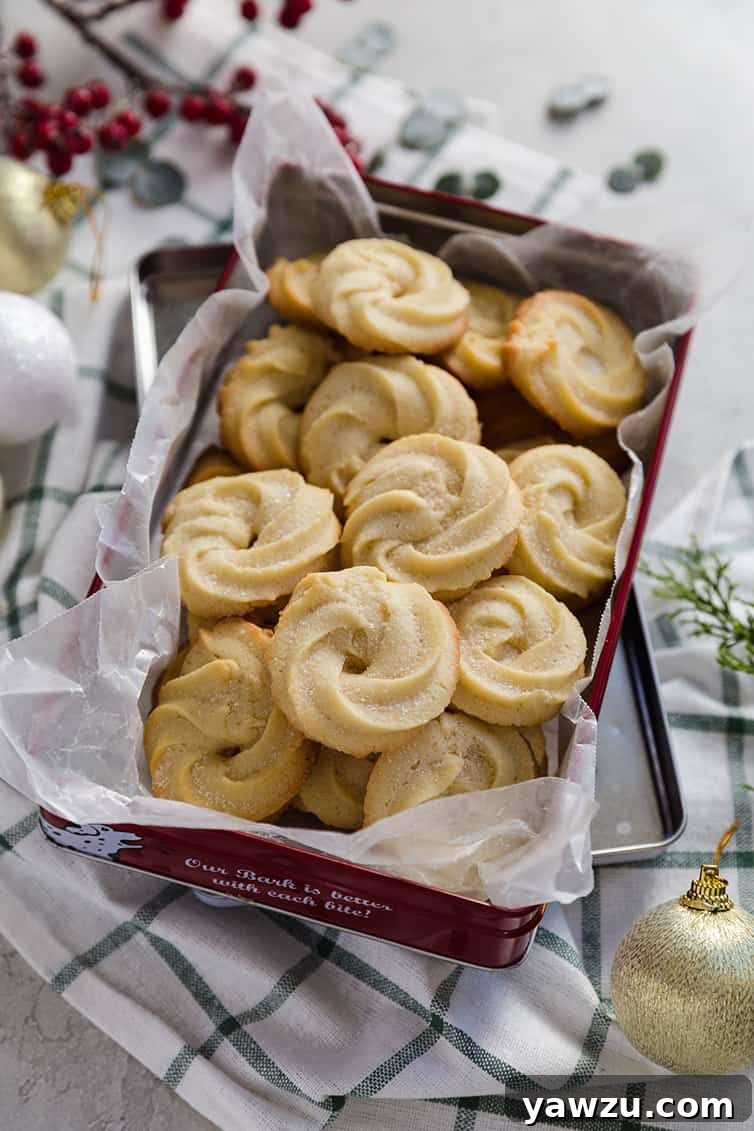
Homemade Danish Butter Cookies: Recreate the Iconic Blue Tin Flavor
Step into a world of sweet nostalgia with these incredible homemade Danish Butter Cookies. If you have fond memories of that iconic blue tin, a staple at holiday gatherings and a comforting treat throughout the year, then get ready to fall in love with this recipe. These Danish Butter Cookies are meticulously crafted to taste just like the ones from the legendary Royal Dansk blue tin, bringing that familiar, melt-in-your-mouth buttery goodness right into your home. This straightforward recipe guides you through creating the best-piped butter cookies, instantly filling your kitchen with warmth and stirring up cherished holiday feelings.
There’s something truly special about classic butter cookies. Their simplicity is their strength, allowing the pure, rich flavor of butter to shine through. While store-bought versions hold a nostalgic charm, the experience of baking them yourself is unparalleled. The aroma alone is enough to transport you back to simpler times, making these cookies perfect for sharing with loved ones or simply enjoying with a cup of tea or coffee.
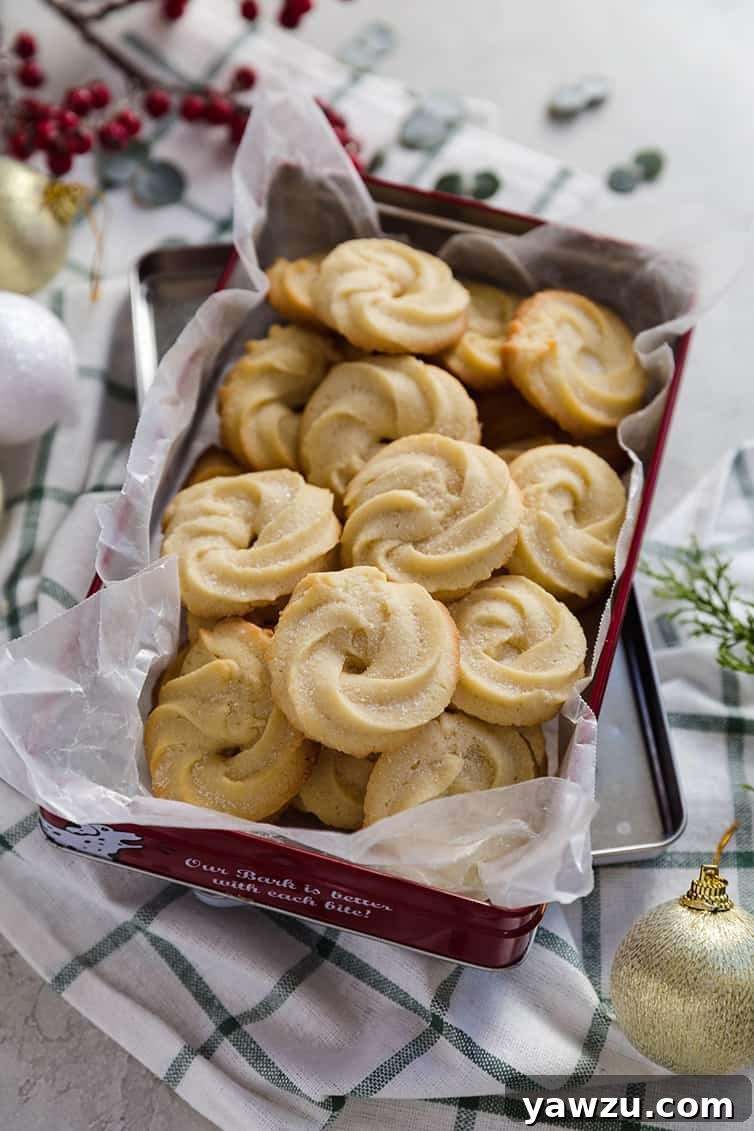
The Inspiration: A Trip Down Memory Lane with Danish Butter Cookies
This journey to perfect the classic Danish butter cookie began with a thoughtful request from a reader. Back in September, which now feels like a lifetime ago, I reached out to my wonderful community for holiday recipe suggestions. Among the many delightful ideas, Susan’s request for a recipe replicating the beloved Danish butter cookies from the blue tin immediately resonated with me. It was a delightful spark that ignited a forgotten memory – that very blue tin of assorted butter cookies was an absolute constant at my grandma’s house during every holiday season. The moment she mentioned it, a wave of warmth washed over me, and I knew I had to recreate that magic.
The quest began almost immediately. I eagerly added it to my baking list and started experimenting with various combinations of butter, sugar, egg, and flour. The goal was clear: to achieve that distinct flavor and tender-crisp texture that defines the traditional Danish butter cookie. After several delightful rounds of testing and tweaking, I was positively elated when I finally landed on the perfect balance. The result was a cookie that tastes exactly like those popular Danish butter cookies, delivering the authentic taste and texture that generations have come to adore. This recipe isn’t just about baking; it’s about reviving a cherished tradition and creating new memories with a timeless classic.
Essential Ingredients for Authentic Danish Butter Cookies
The beauty of these classic Danish butter cookies lies in their simplicity. With just a handful of staple ingredients, you can achieve a truly remarkable flavor and texture. It’s not just about what you use, but how you combine them to create that ultra-buttery, tender, and slightly firm consistency we all know and love. Let’s delve into the six key components that make these cookies shine:
- Butter: The Star of the Show
As the name suggests, butter is undeniably the most crucial ingredient. It provides the dominant flavor and contributes significantly to the cookie’s tender texture. For the best results, always opt for a high-quality unsalted butter. European-style butters, known for their higher fat content and rich flavor, work exceptionally well. My personal favorite is Kerrygold, which imparts an unparalleled depth of buttery goodness. Ensure your butter is at room temperature for optimal creaming with sugar. - Granulated Sugar: For Sweetness and Structure
Sugar doesn’t just sweeten these cookies; it also plays a vital role in their texture. I experimented with both powdered sugar and granulated sugar, and I found that regular granulated sugar delivered a superior flavor profile and a more desirable texture – a delightful slight crispness on the exterior with a tender interior. A light sprinkle of granulated sugar on top of the unbaked cookies before baking also adds an extra layer of sparkle and a pleasant crunch. - Egg: The Essential Binder for Tenderness
While some butter cookie recipes omit eggs, I found that including a single egg is essential for achieving the perfect consistency. The egg acts as a crucial binder, preventing the cookies from becoming overly crumbly and ensuring they remain beautifully tender. Recipes without an egg often resulted in a doughy taste and a texture that was too fragile and fell apart easily. - All-Purpose Flour: Holding it All Together
Flour is necessary to give the cookies their structure and ensure they hold their intricate piped shape during baking. It provides the body for the dough without overpowering the delicate butter flavor. Make sure to measure your flour accurately, preferably by weight, to avoid a dense or dry cookie. - Vanilla Extract: A Touch of Aromatic Sweetness
Vanilla extract enhances the overall flavor profile, adding a warm, aromatic note that complements the richness of the butter. Use a good quality pure vanilla extract for the best results. For an extra gourmet touch and beautiful little flecks of vanilla throughout your cookies, you can substitute an equal amount of vanilla bean paste. - Salt: Balancing the Flavors
A pinch of salt is vital for balancing the sweetness and enhancing all the other flavors in the cookie. It brings out the richness of the butter and prevents the cookies from tasting one-dimensional. Don’t skip this small but impactful ingredient!
Mastering the Art of Making Danish Butter Cookies
This recipe for Danish butter cookies is remarkably easy to assemble, and the most satisfying part is watching the dough transform into those characteristic elegant swirls as you pipe them. Let’s walk through each step to ensure your homemade butter cookies are nothing short of perfect.
1. Preparing Your Workspace
Before you begin mixing, preheat your oven to 350°F (175°C). Prepare two baking sheets by lining them with parchment paper or silicone baking mats. This ensures even baking and prevents sticking, making cleanup a breeze. Having everything ready beforehand makes the baking process smooth and enjoyable.
2. Crafting the Perfect Cookie Dough
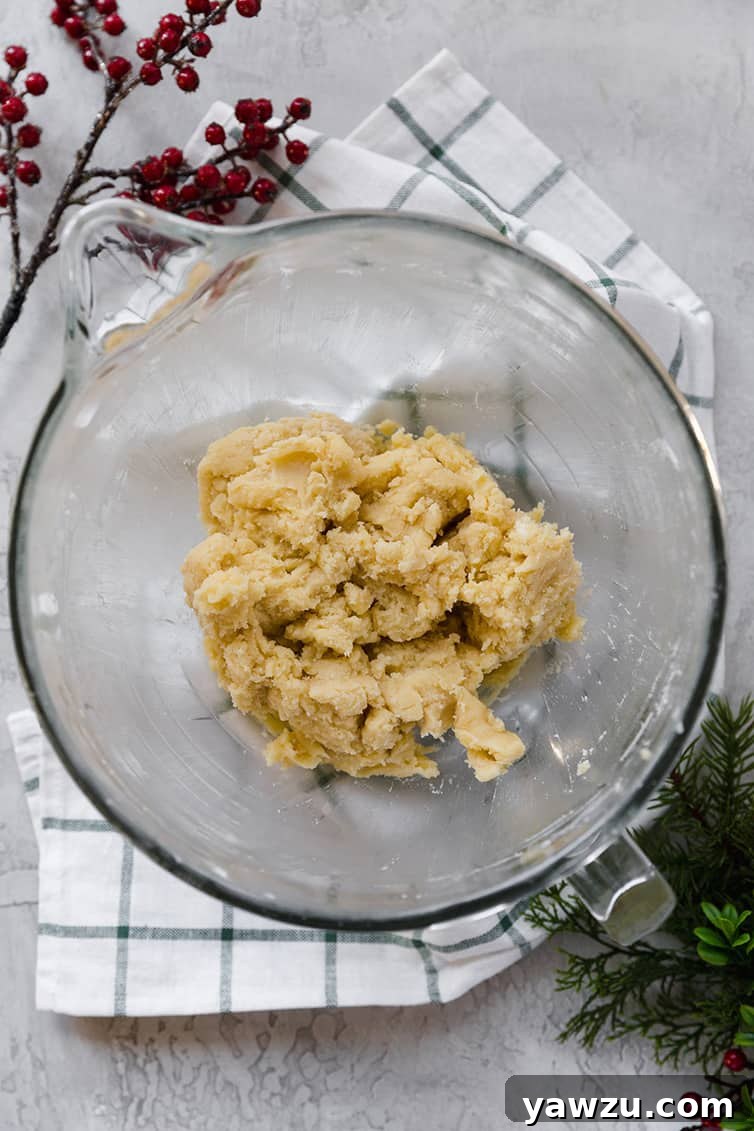
The foundation of these delightful cookies is a rich and thick dough. The mixing process follows a classic creaming method. Start by beating the softened, room-temperature butter with granulated sugar on medium speed until the mixture is light, fluffy, and well combined. This can take 1 to 2 minutes. The creaming process incorporates air into the butter, contributing to the cookies’ delicate texture. Next, beat in the salt, vanilla extract, and the egg, continuing to mix until everything is fully incorporated, which typically takes about a minute. Finally, reduce your mixer’s speed to low and gradually add the all-purpose flour. Mix until the flour is mostly combined, then switch to a rubber spatula for a final few stirs. This ensures all the flour is fully incorporated without overmixing, which can lead to tough cookies. The resulting dough will be wonderfully thick and dense – precisely the consistency we’re aiming for.
3. The Magic of Piping: Achieving Those Signature Swirls
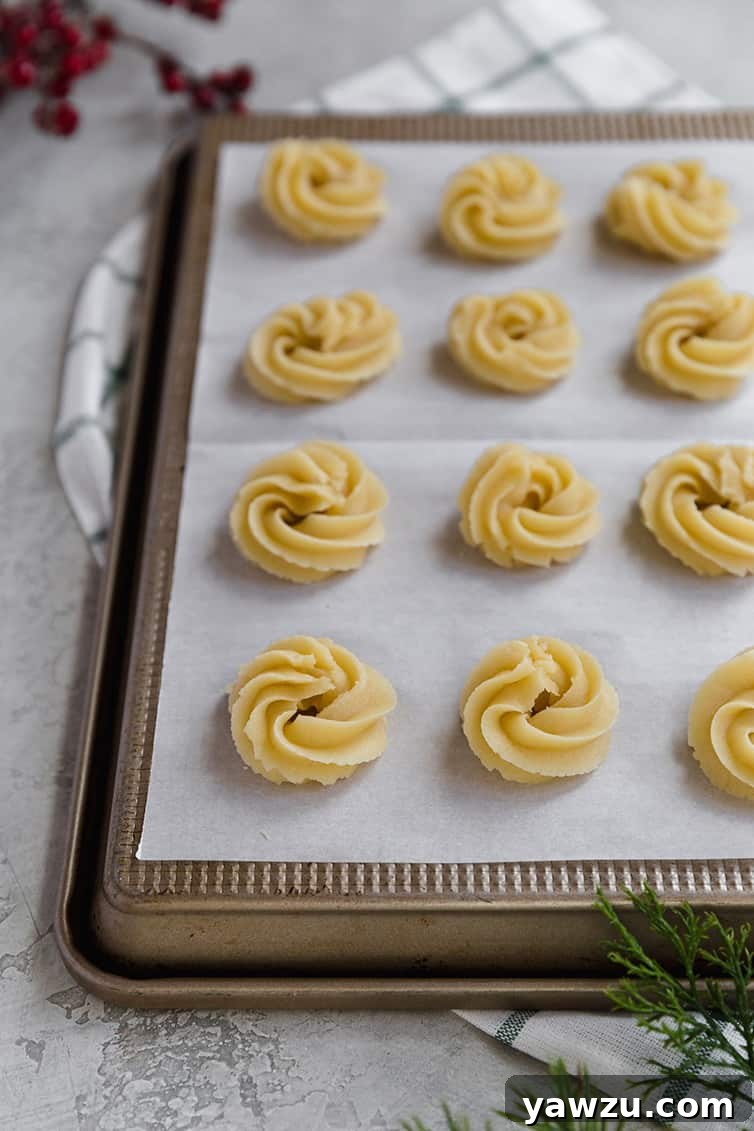
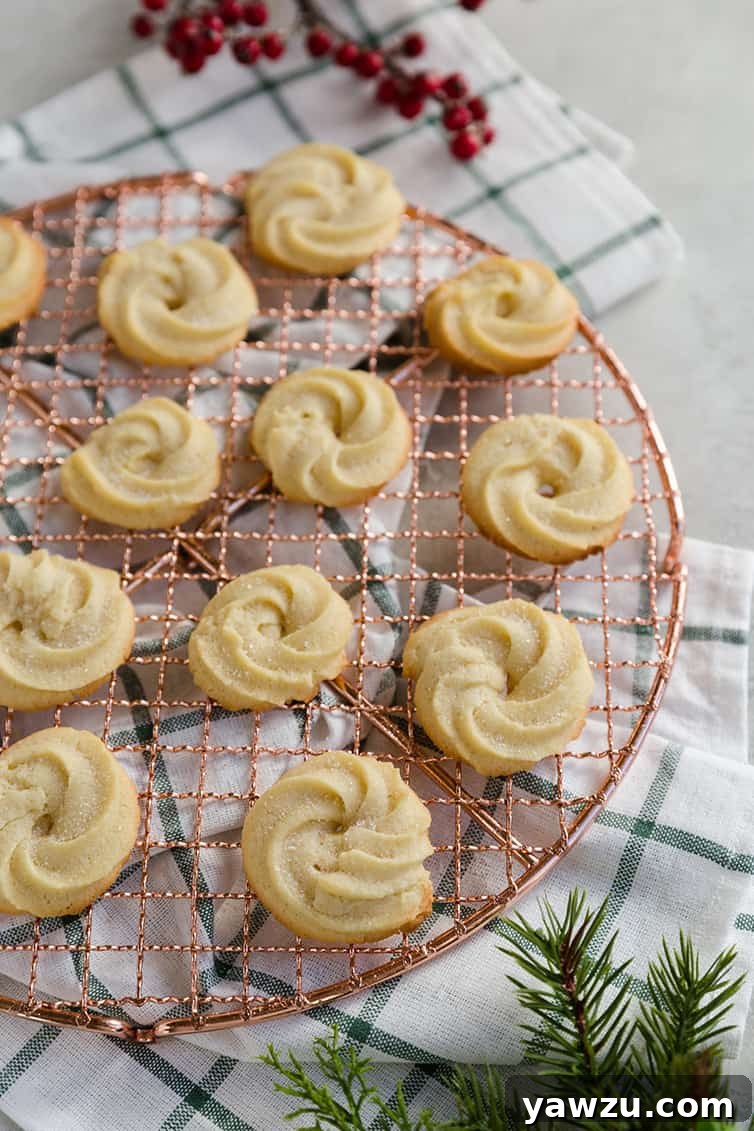
This is where the visual charm of these Danish butter cookies truly comes to life! To get that iconic swirl, piping the dough is essential. You’ll need a decorating bag fitted with a large open-star piping tip. My go-to tip for these cookies is the Ateco #827, but the Wilton 1M also works beautifully to create those elegant, ridged patterns. Carefully pipe the thick dough into 2-inch circles on your prepared baking sheets. Take your time to create consistent shapes for even baking. If you don’t have piping tips, don’t worry! You can simply place the dough into a sturdy plastic baggie and snip off one corner. While it won’t produce the exact same intricate swirl, you’ll still get lovely circular cookies. Another fantastic alternative is using a cookie press, which allows you to create various charming shapes with ease, adding a fun twist to your butter cookies.
4. Baking and Cooling to Perfection
Before placing your piped cookies into the oven, I highly recommend a final sprinkle of granulated sugar. This little touch adds a lovely sparkle and an extra bit of delightful crunch to the finished cookie. Bake one pan at a time to ensure consistent heat distribution and even baking. The key to perfectly tender Danish butter cookies is to bake them just until they are light golden brown around the edges, typically 15 to 17 minutes. Avoid overbaking, as this will result in crisp rather than tender cookies. Once baked, remove the cookies from the oven and transfer them to a wire rack. Allow them to cool completely before eating or storing. This cooling period is crucial; the cookies will continue to set and firm up as they cool, achieving that wonderfully tender and slightly crisp consistency that defines a classic Danish butter cookie.
Expert Tips and Variations for Your Homemade Danish Butter Cookies
Making delicious Danish butter cookies is a rewarding experience, and with a few insider tips, you can elevate your baking to professional levels. Here’s a quick recap and some additional advice to ensure your homemade butter cookies are absolutely perfect every time:
- Quality Butter Makes a Difference: Always use good-quality unsalted butter. As mentioned, Kerrygold is an excellent choice due to its high butterfat content and rich flavor, which truly shines in these simple cookies.
- Flavor Enhancements: For an enhanced vanilla flavor and beautiful visual appeal, consider substituting an equal amount of vanilla bean paste for the vanilla extract. The tiny flecks of vanilla bean will add an extra touch of elegance.
- Piping Perfection: The right piping tip is key for the classic swirl. The Ateco #827 is my top recommendation for its defined star shape, but the Wilton 1M also works wonderfully to create similar attractive patterns. Practice piping a few test circles on a spare piece of parchment paper to get a feel for the dough’s consistency and your desired size before piping onto your main baking sheets.
- Alternative Shaping Methods: If you don’t have piping equipment, don’t let that deter you! A cookie press is a fantastic tool for creating uniformly shaped cookies with various designs. Alternatively, you can roll the dough into a log, chill it, and then slice it into rounds, or simply drop spoonfuls of dough onto the baking sheet for a rustic look. While they won’t have the piped swirl, they will still taste divine.
- Chilling for Stability: If your kitchen is particularly warm or you find the dough becoming too soft to pipe cleanly, pop the piping bag (or even the entire dough) into the refrigerator for 10-15 minutes. This will firm up the butter, making the dough easier to handle and ensuring sharper piped designs.
- Even Baking is Key: Bake one pan at a time and rotate it halfway through baking for even browning. Keep a close eye on the cookies during the last few minutes; they can go from perfectly golden to overbaked quite quickly. The goal is a barely golden edge and a pale center.
- Cool Completely: Patience is a virtue when it comes to cooling. Allow the cookies to cool entirely on a wire rack before handling, stacking, or storing. This allows them to firm up properly and achieve their ideal tender-crisp texture.
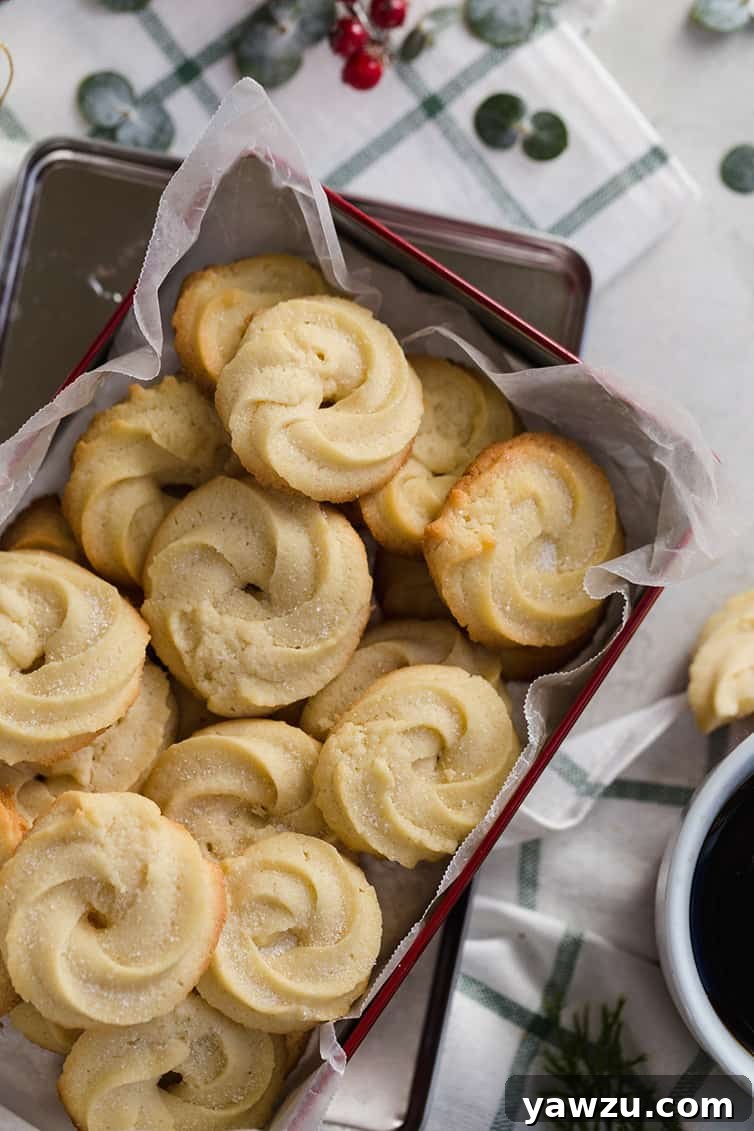
- Storage: Store your homemade Danish butter cookies in an airtight container at room temperature for up to 1 week. For longer storage, they freeze beautifully for up to 3 months. To freeze, arrange cooled cookies in a single layer on a baking sheet until solid, then transfer them to a freezer-safe bag or container, separating layers with parchment paper. Thaw at room temperature when ready to enjoy.
- Creative Decorations: While delicious plain, these cookies are also a blank canvas for creativity! You can dip half of a cooled cookie in melted dark or white chocolate, sprinkle with nonpareils, or add a simple drizzle of icing for an extra touch of festivity.
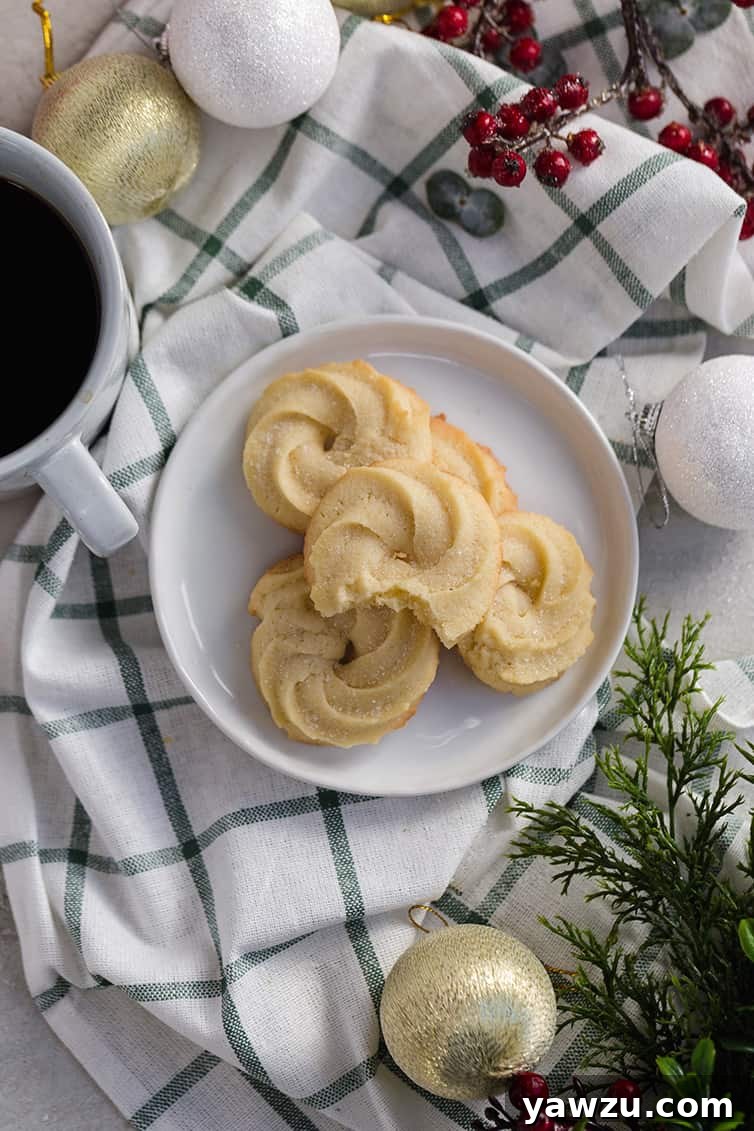
Receiving recipe requests from readers is one of the most fulfilling aspects of sharing my passion for baking. These requests often spark a forgotten memory or inspire me to recreate something I might never have attempted otherwise. This Danish butter cookie recipe is a perfect example, born from a reader’s nostalgic longing, and now it’s a new favorite in my repertoire!
I genuinely hope everyone enjoys these wonderfully tender and flavorful butter cookies, especially as the holiday season approaches. Those beautiful buttery swirls and their unmistakable taste will undoubtedly add a little extra charm and a lot of deliciousness to your Christmas cookie platters or any special occasion. Happy baking!
Danish Butter Cookies Recipe
Danish Butter Cookies
Yield: 36 cookies
Prep Time: 30 mins
Cook Time: 15 mins
Total Time: 45 mins
These Danish Butter Cookies taste just like the ones in the iconic Royal Dansk blue tin; this simple recipe makes the best piped butter cookies!
Ingredients
- 1 cup (227 g) unsalted butter, room temperature
- ½ cup (100 g) granulated sugar
- ¼ teaspoon salt
- 1 ½ teaspoons vanilla extract (or vanilla bean paste)
- 1 large egg
- 2 cups (284 g) all-purpose flour
- Granulated sugar, for sprinkling
Instructions
- Preheat oven to 350°F (175°C). Line two baking sheets with parchment paper or silicone baking mats.
- In a large bowl, beat the softened butter and granulated sugar on medium speed until combined and fluffy, about 1 to 2 minutes. Add the salt, vanilla, and egg, and beat until fully combined, about 1 minute.
- Reduce the mixer speed to low and gradually add the all-purpose flour until mostly combined. Finish mixing with a rubber spatula to ensure all flour is incorporated, scraping down the sides of the bowl. The dough will be thick.
- Transfer the thick dough to a decorating bag fitted with a large open star tip (such as Ateco #827 or Wilton 1M). Pipe the dough into 2-inch circles onto the prepared parchment paper or silicone baking mats. Lightly sprinkle the piped cookies with additional granulated sugar.
- Bake, one pan at a time, for 15 to 17 minutes, or until the edges are barely light golden brown.
- Allow the cookies to cool completely on the baking sheets or a wire rack before transferring, serving, or storing.
Notes
- Always use good-quality unsalted butter for the best flavor (Kerrygold is recommended).
- For an enhanced vanilla flavor and appearance, you can substitute an equal amount of vanilla bean paste for the vanilla extract.
- The preferred piping tips for the classic swirl are Ateco #827 or Wilton 1M.
- If you don’t have piping equipment, a cookie press can be used to create various shapes, or you can simply scoop the dough into rounds.
- Ensure cookies are completely cool before eating or storing to allow them to set properly.
- Store Danish butter cookies in an airtight container at room temperature for up to 1 week, or freeze for up to 3 months.
Nutrition Information (per cookie)
Calories: 83kcal, Carbohydrates: 8g, Fat: 5g, Saturated Fat: 3g, Cholesterol: 18mg, Sodium: 18mg, Potassium: 10mg, Sugar: 2g, Vitamin A: 165IU, Calcium: 3mg, Iron: 0.3mg
Did you make this recipe?
We’d love to see your creations! Share a picture and tag us on Instagram @thebrowneyedbaker.
Author: Michelle Lettrich
Course: Dessert
Cuisine: American (Inspired by Danish tradition)
More Delightful Cookie Recipes to Explore:
- The Best Snickerdoodle Recipe
- Chocolate Chip Tea Cookies
- Snowball Cookies
- Soft and Chewy Sugar Cookies
- Chocolate-Dipped Shortbread Cookies
[Original photography by Ari of Well Seasoned]