
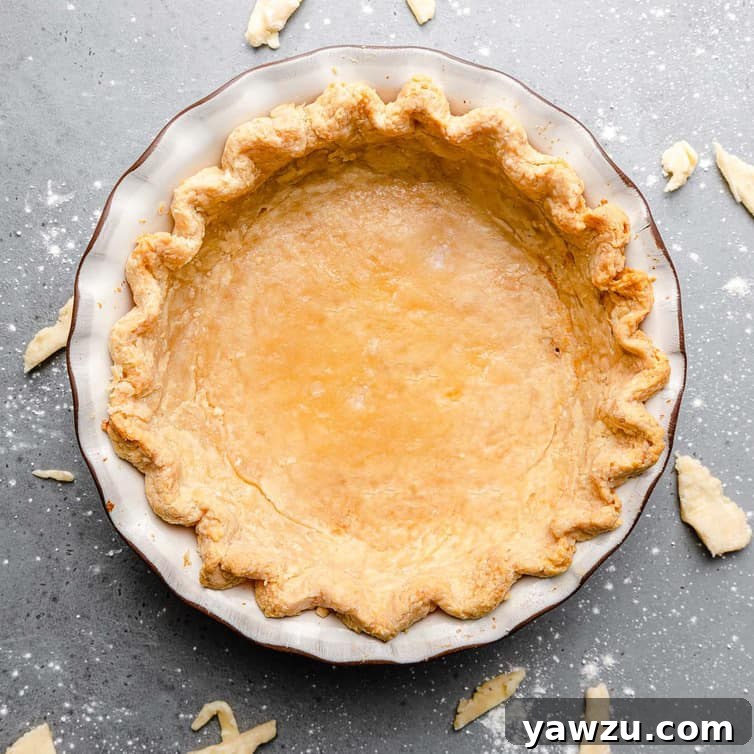
Making a perfect pie is a delightful culinary pursuit, and for many, the journey begins and ends with the crust. While the thought of creating a flawless pie crust, especially the technique known as blind baking, can seem daunting, it is arguably the most crucial step for achieving consistently impeccable results. Imagine sinking your teeth into a pie with a crisp, flaky bottom, free from the dreaded “soggy bottom” syndrome – that’s the magic blind baking delivers. This comprehensive guide aims to demystify blind baking, also known as parbaking, transforming it from an intimidating task into a straightforward process that will empower you to create stunning pies every single time.
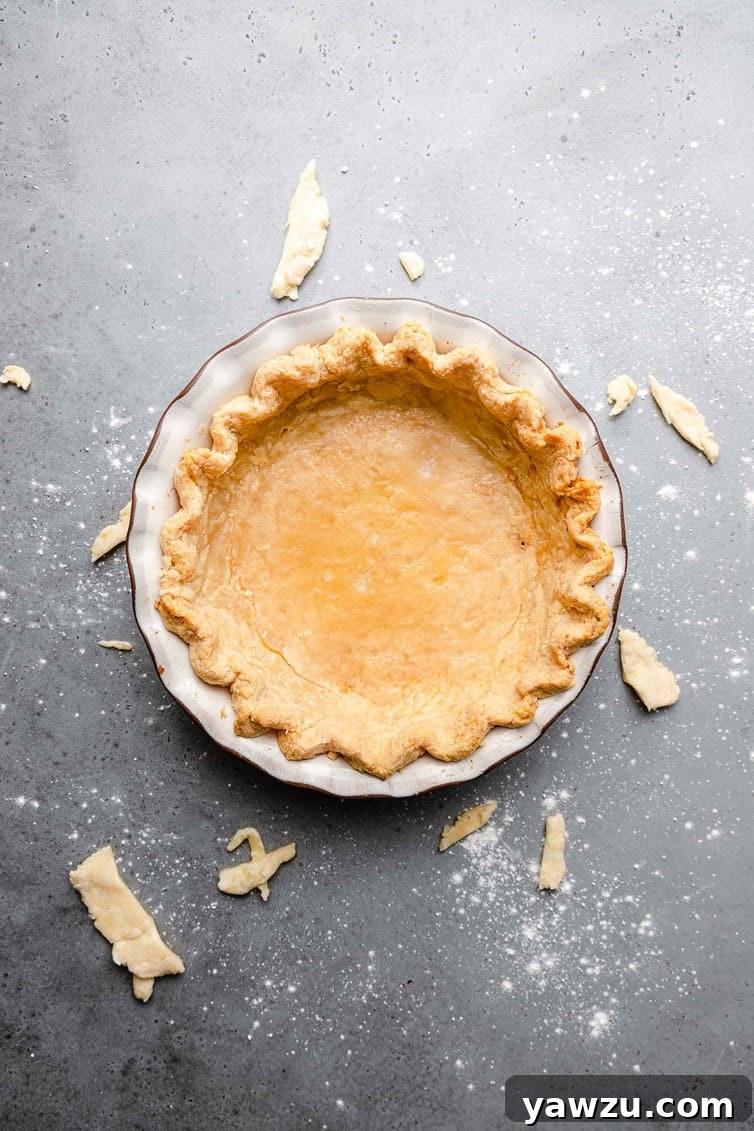
Pie holds a special place in the hearts of dessert lovers worldwide, yet mastering the art of the pie crust often remains an elusive dream for many home bakers. From mixing the dough to rolling it out, and finally, to the crucial stage of blind baking, each step presents its own set of challenges. My goal is to equip you with the knowledge and confidence to overcome these hurdles, ensuring your pie crusts are always golden, crisp, and robust enough to hold any filling you desire. As we approach seasons filled with heartwarming gatherings and festive feasts, there’s no better time to perfect this fundamental technique. Once you unlock the secrets of blind baking, a world of pie possibilities will open up before you, from creamy custards to fresh fruit tarts.
Having experimented with countless methods and various types of pie weights over the years, I’ve discovered a truly foolproof approach, heavily inspired by the brilliant techniques outlined by culinary experts like Stella Parks. This method consistently yields a perfectly crisp and stable crust, setting the stage for any delicious pie filling.
Understanding Blind Baking: Your Ultimate Guide to a Perfect Pie Crust
Blind Baking FAQs: Unraveling the Mystery
- What Exactly is Blind Baking or Parbaking?
Blind baking, or parbaking, is simply the process of partially or fully baking a pie crust before adding its filling. This crucial step ensures the crust is firm, crisp, and cooked through, preventing it from becoming soggy when filled with moist ingredients. During this process, we typically place pie weights or a suitable substitute, such as granulated sugar, into the crust to maintain its shape as it bakes. - When is Blind Baking a Pie Crust Necessary?
Blind baking is essential for several types of pies and tarts. You absolutely need to blind bake your pie crust when using a liquid or custard-based filling (like pumpkin, quiche, or lemon meringue) to prevent a soggy bottom. It’s also vital for fillings that are not cooked at all (such as fresh fruit pies that simply set in the refrigerator) or those that require a very short baking time (where the crust might not have enough time to cook through with the filling). - Why Do I Need to Use Pie Weights?
As pie dough bakes, the butter and moisture in the dough create steam, causing the crust to puff up, bubble, and shrink. While this can contribute to flakiness, it becomes problematic when you need a perfectly flat and stable base for your filling. Pie weights provide even pressure across the bottom and up the sides of the dough, preventing the crust from shrinking, sagging, or bubbling excessively. Without them, the sides of your pie crust could collapse, and the bottom could puff up, leading to an unsightly and difficult-to-fill pie. The goal is a beautifully structured shell ready for your delicious creations. - Where Can I Find Effective Pie Weights?
Look no further than your pantry! While specialty ceramic pie weights are available, I’ve found that everyday granulated sugar is an exceptional, often superior, choice. Its fine granules allow it to distribute weight incredibly evenly across the entire surface of the crust and up the sides, ensuring uniform baking and preventing any uneven puffing. Plus, granulated sugar is fantastic because it can be reused for future blind baking sessions (once cooled, simply store it in an airtight container) or even incorporated into recipes where a slightly toasted sugar flavor would be welcome. If sugar isn’t your preference, dried beans, lentils, or uncooked rice also work effectively as reusable pie weights. - How Far in Advance Can I Blind Bake My Pie Crust?
Blind baking pie crusts in advance is a fantastic time-saver, especially during busy holiday seasons or when you’re preparing for a large gathering. Once your pie crust has been blind-baked and allowed to cool completely, you can store it. For optimal freshness and crispness, keep the cooled crust covered loosely with plastic wrap or aluminum foil at room temperature for up to 24 hours. If you need more time, a blind-baked crust can be refrigerated for up to three days, though some recipes suggest up to five. Ensure it’s well-wrapped to prevent it from absorbing refrigerator odors. Before filling, you might want to refresh it with a quick 5-minute bake in a hot oven to restore its crispness.
Step-by-Step Guide to Perfectly Blind-Baked Pie Crust
The foundation of a great blind-baked crust starts with the dough itself. Any reliable pie crust recipe will work, but for truly exceptional results, I highly recommend using a recipe that yields a tender, flaky dough. My personal favorites include variations of the classic butter/shortening vodka crust for its unparalleled flakiness and ease of handling, or a rich all-butter pie crust for its incredible flavor. Regardless of your chosen recipe, precision in preparation is key.
Preparing Your Pie Dough for Blind Baking
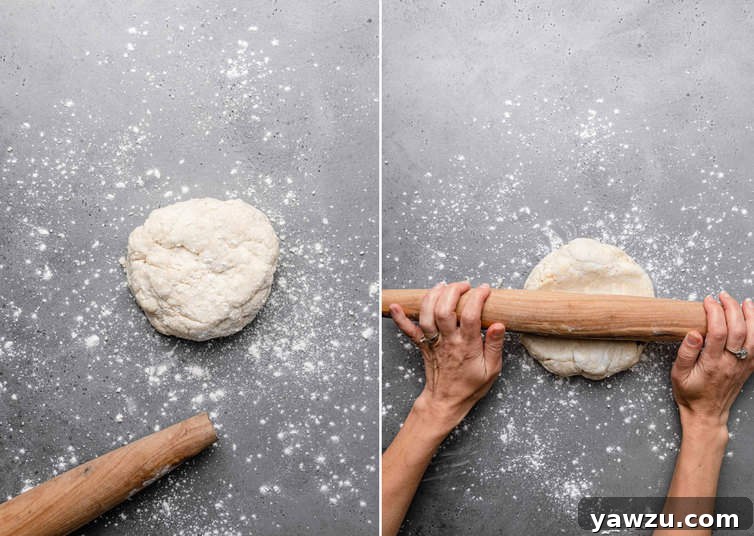
- Begin by ensuring your pie dough is thoroughly chilled. Cold dough is easier to handle and less prone to shrinking during baking. Turn the dough out onto a lightly floured work surface. Gently press and shape it into a 6-inch round, which helps achieve an even thickness when rolling.
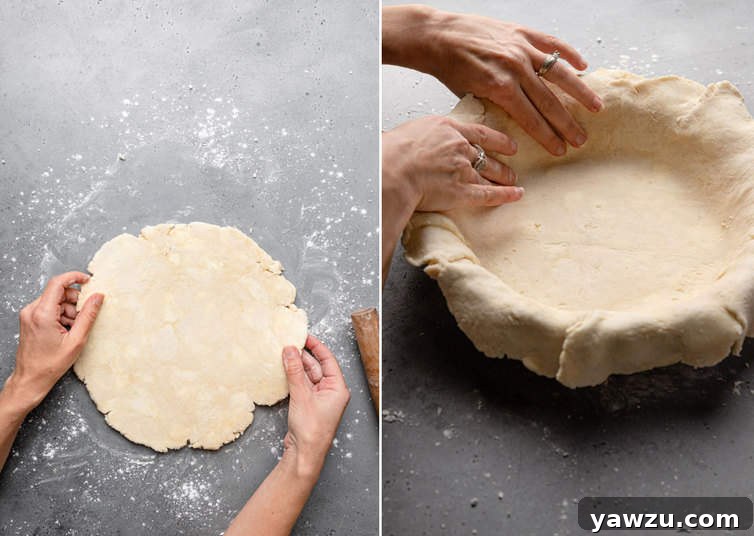
- Lightly flour the top of the dough and your rolling pin. Roll the dough out gently and quickly, working from the center outwards, rotating the dough a quarter turn after every couple of rolls. This technique prevents the dough from sticking to the surface and helps create a uniform 13-inch circle, large enough to fit a standard 9-inch pie plate with some overhang.
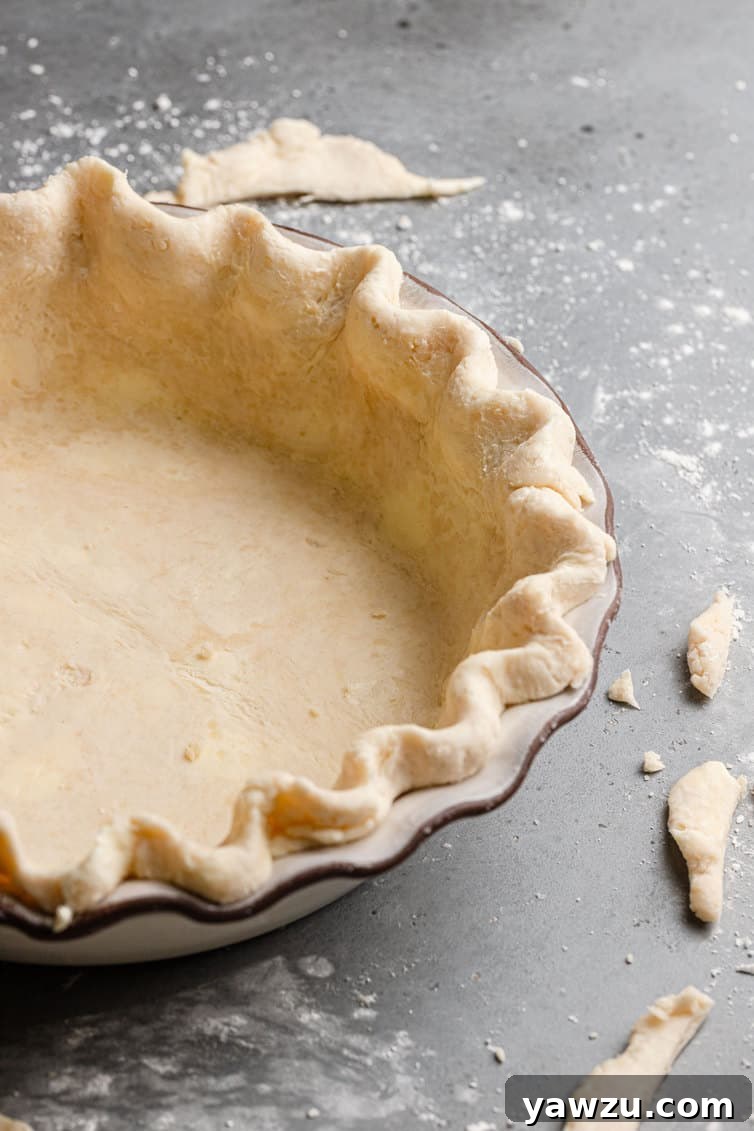
- Carefully transfer the rolled dough to your 9-inch pie plate. Ease it into the bottom and up the sides of the plate without stretching, which can cause shrinkage. Trim the excess dough, leaving about a 1-inch overhang. Then, tuck this overhang under itself, creating a neat, slightly thicker edge that is flush with the rim of the pie plate.
- Finish by fluting or crimping the edges as desired to create a decorative and secure crust. This not only adds aesthetic appeal but also reinforces the edge. Most importantly, refrigerate the dough-lined pie plate for at least 2 hours, or ideally, up to 24 hours. This crucial chilling period relaxes the gluten, preventing significant shrinkage during baking, and ensures the butter remains very cold, leading to maximum flakiness.
The Blind Baking Process: From Chill to Crisp
Once your dough has had its vital chilling time, we are ready to blind bake! This is where your perfectly prepared crust transforms into a golden, stable foundation.
- Preheat your oven to 350 degrees F (175 degrees C). An adequately preheated oven is essential for even baking and proper crust development.
- Line the chilled pie dough with a sheet of aluminum foil. Ensure the foil covers the bottom and extends up the sides, reaching just over the fluted edge. This protects the delicate crust from direct heat and helps contain the pie weights.
- Carefully fill the foil-lined pie plate completely with granulated sugar (or your chosen pie weights). The sugar should fill the crust right up to the crimped edge, providing ample support to prevent the sides from collapsing.
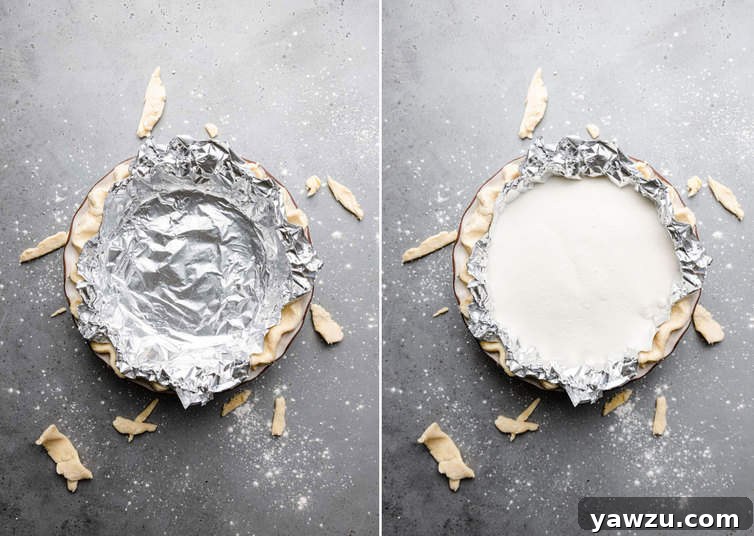
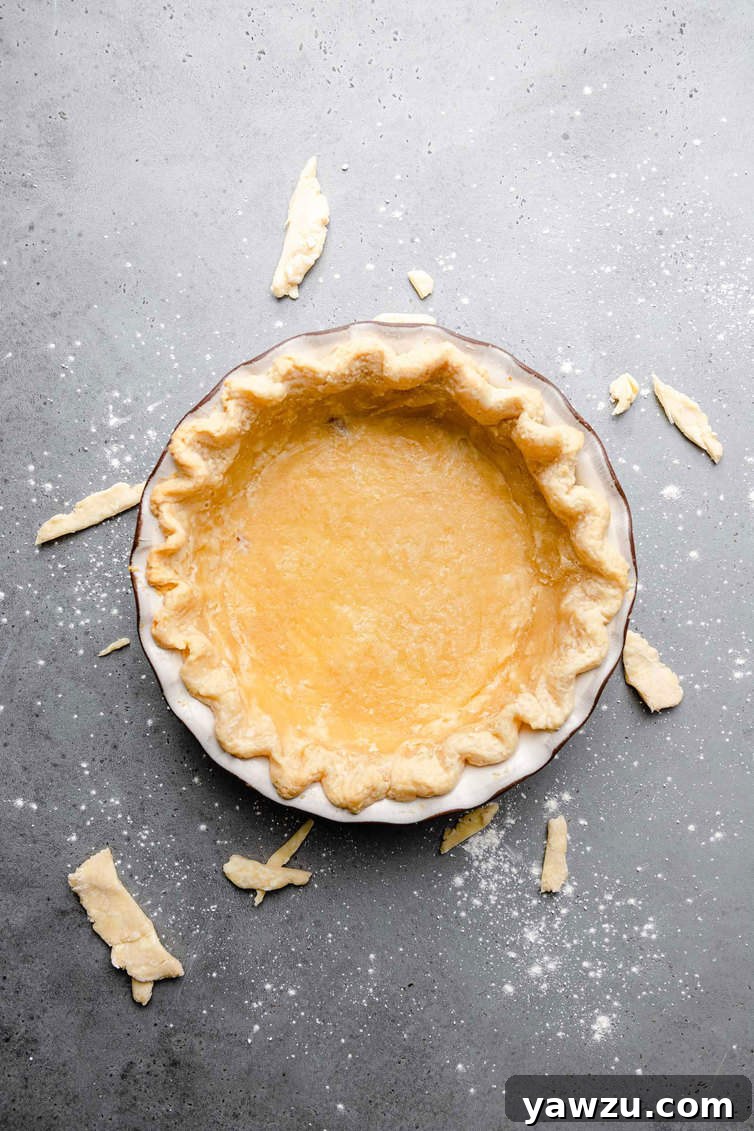
- For a Partially Baked Crust (Parbaking): If your pie crust will undergo a second baking with its filling (typical for custard pies, quiches, or fruit pies that need to bake), bake it for 40 minutes with the foil and sugar. After 40 minutes, carefully remove the pie plate from the oven, lift out the foil and sugar, and set the crust aside to cool slightly while you prepare your filling. The crust should appear lightly golden and firm.
- For a Fully Baked Crust: If your recipe calls for a completely cooked crust (common for no-bake fillings like French silk, fresh fruit tarts, or specific types of cream pies), bake the crust with the foil and sugar for 40 minutes. Then, remove the foil and sugar, and continue baking the crust for an additional 15 to 20 minutes, or until it achieves a deep golden brown color and feels completely dry and crisp to the touch. This ensures optimal crispness and prevents any hint of sogginess.
This is what your pie crust will look like if you are only partially baking it:
For a visual reference of a fully baked pie crust, refer to the overhead photo at the very top of this article. Notice the rich, even golden-brown hue and solid structure, indicating it’s ready for any decadent filling.
Troubleshooting Common Blind Baking Problems
- Crust Shrinks: This usually happens if the dough wasn’t chilled long enough before baking, or if it was stretched when placed in the pie plate. Always give your dough ample chilling time after fitting it into the plate.
- Crust Bubbles or Puffs Up (Even with Weights): If weights aren’t adequately covering the entire surface or if the foil shifts, you might get some bubbling. Ensure the weights fill the crust completely. For small bubbles, gently prick them with a fork (docking) before baking, though careful use of weights usually makes this unnecessary.
- Edges Burn Too Quickly: If your crust edges are browning too fast, you can cover them loosely with aluminum foil for the remaining bake time. Silicon pie shields are also excellent for this purpose.
- Crust Still Looks Pale or Feels Soft: Don’t be afraid to bake it a little longer, especially for a fully baked crust. A truly well blind-baked crust should be deeply golden and very firm. Oven temperatures can vary, so adjust baking times as needed.
Ready to Create Culinary Masterpieces?
Now that you’ve mastered the art of blind baking, the possibilities for your pie creations are limitless. This essential technique opens the door to a vast array of pies and tarts that demand a perfectly pre-baked crust for their success. Here are some of my all-time favorite recipes that truly shine when paired with a flawlessly blind-baked pie shell:
- French Silk Pie: A rich, creamy, no-bake filling that relies entirely on a crisp, fully baked crust.
- Strawberry Pie: Often features fresh, uncooked fruit, making a pre-baked crust essential for texture.
- Sweet Potato Pie: A smooth, custardy filling that needs a parbaked crust to prevent sogginess.
- Pumpkin Pie: The quintessential holiday pie, whose creamy texture benefits greatly from a parbaked base.
- Lemon Meringue Pie: The vibrant lemon custard and fluffy meringue sit atop a beautifully crisp crust.
- Perfect Quiche Lorraine: A savory classic, where a blind-baked crust prevents the eggy filling from making the bottom soggy.
I genuinely hope this detailed guide empowers you in all your future pie-baking endeavors. Mastering blind baking is a game-changer that will elevate your pies from good to absolutely spectacular. Give this method a try, and you’ll soon be enjoying perfectly crisp, flaky pie crusts every time. If you do use these tips, please come back and leave a rating or comment below to let me know how it went! Happy baking, and ENJOY! Your journey to perfect pie crust starts now. 😍
How to Blind Bake a Pie Crust
8
servings
2
1
3
Ingredients
-
1
recipe
single 9-inch pie crust
Instructions
-
Prepare the dough as directed by your chosen pie crust recipe. Ensure it is well-chilled before rolling.
-
Turn the cold dough out onto a lightly floured work surface. Gently press it into a 6-inch round. Lightly flour the top of the dough and your rolling pin, then roll the dough out to a 13-inch circle, lifting and rotating it a quarter turn after every few rolls to prevent sticking and ensure even thickness.
-
Carefully transfer the rolled dough to a 9-inch pie plate. Gently press it into the bottom and up the sides without stretching. Trim the dough to a 1-inch overhang beyond the rim of the pie plate, then tuck it under itself to be flush with the edge. Flute the edges decoratively or press with a fork. Refrigerate the dough-lined plate for at least 2 hours.
-
Blind Bake Crust: Preheat oven to 350 degrees F (175 degrees C). Line the chilled pie dough with aluminum foil, ensuring it covers the bottom and sides. Fill the entire pie plate with granulated sugar (or other pie weights) up to the fluted edge.
-
For a partially baked crust: Bake for 40 minutes. Carefully remove the foil and sugar. The crust should be lightly golden and firm. Proceed with your recipe by adding the filling and continuing to bake as directed.
-
For a fully baked crust: Bake for 40 minutes with foil and sugar. Then, remove the foil and sugar, and continue baking for another 15 to 20 minutes, or until the crust is deeply golden brown and completely crisp. Allow to cool before filling with no-bake preparations.
Did you make this recipe?
Leave a review below, then snap a picture and tag @thebrowneyedbaker on Instagram so I can see it!
Michelle Lettrich
Dessert
American
[Photography by Dee Frances]