
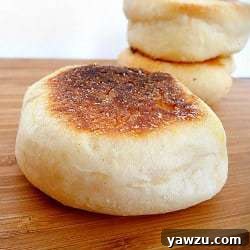
Homemade English Muffins: Your Ultimate Guide to Perfect Nooks and Crannies
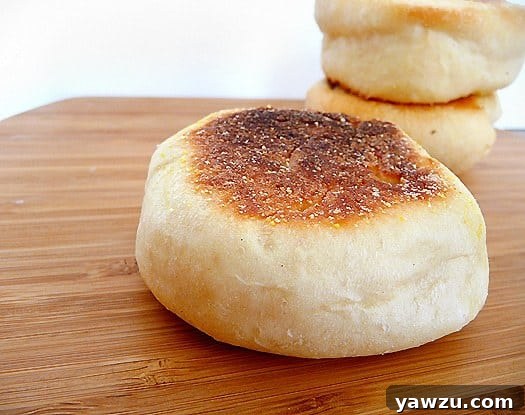
For many home bakers, certain foods reside firmly in the “store-bought” category. English muffins often top this list. With their distinct, perfectly split appearance, the characteristic dusting of cornmeal, and those magical “nooks and crannies” that lovingly cradle butter and jam, they seem like a product of specialized bakeries rather than a humble home kitchen. I certainly felt this way for a long time. My baking repertoire included various breads – from rustic sourdough loaves to richer brioche, beautifully braided challah, and satisfyingly chewy bagels – yet the idea of crafting English muffins from scratch never crossed my mind. They felt like a culinary enigma, a food that appeared in its packaging as if by magic, never touched by human hands. Imagine my utter delight and surprise when I finally decided to embark on the journey of making English muffins from scratch and discovered just how incredibly easy they are! Seriously, the process is no more complicated than preparing a simple loaf of white bread.
The aroma that fills your kitchen as these golden rounds cook is intoxicating, and the taste is unparalleled. These homemade beauties offer a texture far superior to anything you’ll find pre-packaged, complete with those irresistible little swimming pools just begging to be filled with sweet, creamy butter or your favorite preserves. This guide will walk you through every step, ensuring you achieve English muffin perfection right in your own kitchen. It’s time to bid farewell to ordinary store-bought English muffins – once you experience the joy and flavor of homemade, there’s truly no turning back!
The Irresistible Appeal of Homemade English Muffins
There’s a profound satisfaction that comes with baking bread at home, and English muffins are no exception. Beyond the sheer joy of creating something delicious from basic ingredients, homemade English muffins offer several distinct advantages that elevate them beyond their commercial counterparts. Firstly, the flavor and texture are simply superior. Store-bought versions, while convenient, often lack the depth of flavor, the tender chewiness, and the airy crumb that characterize truly excellent English muffins. When you bake them yourself, you control the quality of ingredients, opting for premium flour, fresh yeast, and real butter or milk, which significantly enhances the final taste and nutritional profile by avoiding unnecessary additives found in many commercial products.
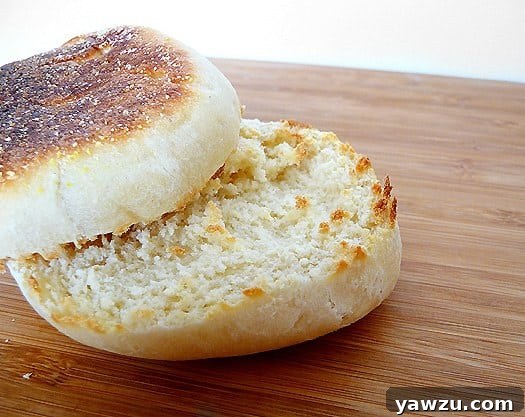
The most iconic feature of an English muffin, of course, is its unique interior structure: the famous “nooks and crannies.” These aren’t just a charming aesthetic; they are functional pockets designed to absorb and hold generous amounts of butter, jam, honey, or any topping you desire. While many assume these are difficult to achieve, they are actually a natural outcome of the dough’s specific hydration level and the unique two-stage cooking process. A perfect homemade English muffin will split effortlessly with a fork, revealing a beautiful network of these delightful crevices, ready to elevate your breakfast, brunch, or even your sandwich experience. Once you’ve tasted a warm, freshly baked English muffin, toasted to perfection and dripping with melted butter, you’ll understand why making them from scratch is such a rewarding endeavor.
A Journey Through Time: The Origins of the English Muffin
While commonly enjoyed worldwide, the English muffin as we recognize it today has an interesting lineage, popularized in America despite its “English” name. Its story begins in 19th-century England, where similar griddle-baked breads, often called “crumpets,” were a staple. However, it was Samuel Bath Thomas, an English immigrant, who brought and adapted this concept to the United States. In 1880, Thomas began selling his “toaster crumpets” in New York City, marketing them as a delicious alternative to plain toast. He utilized a specific griddle-baking technique that gave them their distinctive flat shape and signature texture, differentiating them from more traditional, holey crumpets.
These round, yeast-leavened bread products quickly became a breakfast sensation across America, valued for their ability to be easily split with a fork and toasted to golden perfection. The term “English muffin” emerged in the United States to distinguish them from other types of muffins, particularly the sweeter, cake-like American muffins. Thomas’s ingenuity made these delightful griddle cakes a household name, and his legacy continues to influence the way we enjoy these unique bread products even today. Understanding their history adds another layer of appreciation to each delicious bite of your homemade creations.
Demystifying the Simple Process: Bringing English Muffins to Life
The true beauty of making English muffins lies in their straightforward method, which closely mirrors that of basic yeast bread baking, yet culminates in a uniquely textured product. The process typically involves a few key, manageable stages: mixing the dough, allowing it to undergo a bulk fermentation (the first rise), gently shaping the individual muffins, a second, shorter proofing, and finally, the distinctive two-stage cooking method. Far from being intimidating, each step is approachable and rewarding, even for novice bakers.
You begin by combining your dry ingredients, including bread flour, sugar, salt, and instant yeast, with liquid (milk or buttermilk) and a touch of fat (shortening or butter) to form a soft, pliable dough. Unlike some very dense breads, English muffin dough is relatively high in hydration, which is crucial for achieving its tender crumb and contributing to the formation of those coveted nooks and crannies. After a thorough kneading – either by hand, developing the gluten with vigorous strokes, or with the effortless efficiency of a stand mixer – the dough enters its first resting period. This bulk fermentation allows the yeast to work its magic, developing complex flavors and significantly increasing the dough’s volume.
Once sufficiently risen, the dough is gently transferred to a counter, being careful not to deflate it completely, and then accurately divided into individual portions, typically six equal pieces. Each piece is then carefully shaped into a neat, round ball, often referred to as a “boule.” These shaped rounds are then generously dusted with cornmeal. This cornmeal serves a dual purpose: it not only prevents the muffins from sticking to your baking surface but also imparts that characteristic slightly gritty texture and a subtle, earthy flavor to the exterior that English muffin aficionados adore. A second proofing period allows these individual dough balls to rise again, ensuring they are light and airy and perfectly primed for their transformation.
The most distinctive and crucial part of baking English muffins is the dual cooking approach. Unlike most bread that is solely baked in an oven, English muffins begin their journey on a heated griddle or in a cast-iron skillet. This initial stovetop cooking is essential for developing that beautiful golden-brown crust on both sides and setting their unique flat-bottomed shape. The relatively low, consistent heat of the griddle allows the interior to begin cooking gently while the exterior develops its distinct texture. After achieving a perfect brown on both sides, the muffins are then carefully transferred to a preheated oven to finish baking through completely. This ensures the center is fully cooked and fluffy without over-browning or burning the delicate crust. The entire cooking process, from skillet to oven, takes less than 25 minutes, making them a surprisingly quick-to-finish baked good. Because they are individual portions, they also cool down quite rapidly, meaning you’ll be enjoying warm, butter-drenched homemade English muffins in no time at all! The entire experience, from mixing to the first bite, is deeply satisfying and guarantees a superior breakfast treat.

Key Ingredients for Flawless Homemade English Muffins
Achieving the perfect English muffin relies on a handful of simple, readily available ingredients, each playing a vital role in creating that signature flavor and texture:
- Unbleached Bread Flour: The higher protein content in bread flour is absolutely essential. It helps develop strong gluten networks, which are responsible for giving the muffins their characteristic chewiness and, most importantly, for creating and holding the structure of those coveted nooks and crannies. All-purpose flour can work in a pinch, but bread flour yields superior results.
- Granulated Sugar: A small amount of sugar serves multiple purposes. It acts as food for the yeast, helping it activate and produce carbon dioxide for the rise. It also contributes to the beautiful golden-brown color during cooking and adds a subtle, balanced sweetness to the dough.
- Salt: Salt is crucial not only for enhancing the overall flavor of the bread but also for regulating yeast activity. It slows down the fermentation process, allowing for a more controlled rise and better flavor development.
- Instant Yeast: This modern convenience means you can add the yeast directly to your dry ingredients without the need for prior proofing in liquid. Instant yeast is the powerhouse behind the muffin’s leavening, creating the airy pockets and contributing to its light texture.
- Shortening or Unsalted Butter: A small amount of fat in the dough contributes significantly to the tenderness and richness of the muffins. Butter imparts a lovely flavor, while shortening can provide a slightly softer, more consistent crumb. Using unsalted butter allows you to control the exact salt content.
- Milk or Buttermilk (at room temperature): The liquid component adds richness and helps create a tender, moist crumb. Using milk at room temperature is important for optimal yeast activity. Buttermilk, with its slight acidity, can also add a subtle tang and enhance tenderness, even in yeast-leavened doughs.
- Cornmeal for Dusting: This ingredient is much more than just a garnish. Cornmeal is dusted onto the baking surface and the dough itself. It prevents the muffins from sticking to the sheet pan and the griddle, and crucially, it adds that distinct, slightly coarse and gritty texture to the exterior that is so characteristic of traditional English muffins.
Essential Tools for Your English Muffin Baking Adventure
While homemade English muffins are surprisingly simple, having a few key tools on hand will make the baking process even smoother and more enjoyable, ensuring consistently excellent results:
- Large Mixing Bowl: You’ll need a spacious bowl for combining your ingredients and for the initial bulk fermentation (first rise) of the dough. If you own a stand mixer, its large bowl fitted with a dough hook attachment is ideal for efficient kneading.
- Sheet Pan: A standard baking sheet is essential for the second proofing of your shaped muffins and for transferring them to the oven during the final baking stage.
- Baking Parchment Paper: Lining your sheet pan with parchment paper is highly recommended. It prevents the dough from sticking during the second proof, ensures easy transfer, and significantly simplifies cleanup.
- Heavy-Bottomed Skillet or Flat Griddle: This is a crucial piece of equipment for the stovetop cooking stage. A well-seasoned cast iron skillet or a flat electric griddle ensures even heat distribution and consistent browning, which is vital for the muffins’ crust and texture.
- Metal Spatula: A sturdy, thin metal spatula is indispensable for carefully flipping the muffins on the griddle without deflating them and for transferring the cooked muffins to and from the oven.
- Plastic Wrap or Damp Kitchen Towel: These are used to cover the dough during both proofing stages, preventing it from drying out and forming a skin, which could impede a proper rise.
- Kitchen Scale (Optional but Highly Recommended): For the most precise and consistent results, especially when measuring flour and dividing dough portions, a digital kitchen scale is invaluable. It ensures each muffin is uniform in size and bakes evenly.
- Instant-Read Thermometer (Optional): While not strictly necessary, an instant-read thermometer can be useful for checking the dough temperature during kneading to ensure it’s within the optimal range for yeast activity and for gauging the surface temperature of your griddle.
Expert Tips for English Muffin Perfection & Troubleshooting Common Issues
Even though making English muffins is straightforward, a few key tips can elevate your results from good to absolutely perfect. Keep these pointers in mind for a smooth baking experience:
- Dough Consistency is Key: Pay close attention to your dough. It should be soft and pliable, with a slight tackiness, but it should not be overly sticky or wet. If it feels too dry, add a tiny bit more milk, one teaspoon at a time. If it’s too wet and difficult to handle, incorporate a small sprinkle of flour. The goal is a dough that is manageable but still well-hydrated.
- Embrace the Kneading Process: Do not skimp on kneading time. Proper gluten development is vital for achieving the strong, elastic structure necessary for those signature nooks and crannies. The “windowpane test” is a great indicator: pinch off a small piece of dough and gently stretch it. If you can stretch it thin enough to see light through without it tearing, your gluten is sufficiently developed.
- Optimal Proofing Environment: Yeast thrives in warm, draft-free conditions. Find a cozy spot in your kitchen for the dough to rise. Be mindful of proofing times; over-proofing can lead to a dense, yeasty flavor and a less airy texture, while under-proofing will result in a heavy muffin with less rise.
- Handle with Care: After the second rise, the dough will be filled with delicate air bubbles. Handle the shaped dough balls very gently when transferring them to the griddle. You want to preserve as much of that trapped air as possible to ensure a light, airy crumb.
- Master the Griddle Temperature: Medium heat is crucial for the stovetop cooking stage. If the griddle is too hot, the outside of the muffins will burn before the inside has a chance to cook, or even set its structure. If it’s too low, they won’t develop that beautiful golden-brown crust. A well-seasoned cast-iron skillet is excellent for maintaining consistent heat.
- Patience While Griddling: Resist the urge to flip the muffins prematurely. Allow them to develop a good, firm golden-brown crust on the first side before turning. Flipping them too soon can cause them to deflate and lose their shape.
- Proper Storage for Freshness: Once your delicious English muffins have cooled completely on a wire rack, store them in an airtight container at room temperature for up to 3-4 days. For longer storage, they freeze exceptionally well. Simply place them in a freezer-safe bag, and when you’re ready to enjoy, thaw and toast as needed.
- Beyond Butter and Jam: While butter and jam are classic pairings, don’t limit yourself! English muffins are incredibly versatile. Use them as the perfect base for Eggs Benedict, craft hearty breakfast sandwiches with egg, cheese, and bacon, create quick mini pizzas, or top them with savory spreads like avocado and everything bagel seasoning.
More Homemade Bread Delights from Peter Reinhart
If you’ve enjoyed mastering English muffins and found inspiration in the art of bread baking, consider exploring more fantastic recipes that will further enrich your culinary journey. Peter Reinhart, a celebrated baker and author, has a wealth of knowledge and inspiring recipes that are renowned for their quality and detailed instructions. Here are some favorites from his extensive collection that you might love to try next:
- Soft Cheese and Pepperoni Bread
- Egg Bagels, Cinnamon-Raisin Bagels and Original Bagels
- Potato Rosemary Bread
- Greek Celebration Bread
- Anadama Bread

English Muffins Recipe
6
English muffins
40
24
2
3
5
Pin
Rate
Ingredients
- 2¼ cups (281.25 g) unbleached bread flour, (10 ounces)
- ½ tablespoon (0.5 tablespoon) granulated sugar, (.25 ounce )
- ¾ teaspoon (0.75 teaspoon) salt, (.19 ounce )
- 1¼ teaspoons (1.25 teaspoons) instant yeast, (.14 ounce )
- 1 tablespoon shortening or unsalted butter, at room temperature, (.5 ounce )
- ¾ to 1 cup (177 to 236 ml) milk or buttermilk, at room temperature, (6 to 8 ounces )
- Cornmeal for dusting
Instructions
-
1. In a large mixing bowl (or the bowl of an electric stand mixer fitted with the paddle attachment), combine the unbleached bread flour, granulated sugar, salt, and instant yeast. Stir these dry ingredients thoroughly to ensure they are well-distributed. Next, add the shortening or softened unsalted butter and ¾ cup of the milk (or buttermilk). Mix on low speed, or stir by hand, until the ingredients start to come together and form a cohesive ball of dough. If you notice any loose flour remaining in the bowl, gradually drizzle in small amounts of the remaining ¼ cup of milk, adding just enough until all the flour is incorporated and the dough is soft and pliable, yet not overly sticky or stiff.
-
2. Lightly flour a clean counter surface and transfer the dough onto it. Begin kneading the dough by hand for approximately 10 minutes, or if using a stand mixer with a dough hook, mix on medium speed for about 8 minutes. During kneading, sprinkle in additional flour sparingly if the dough becomes too sticky, aiming for a texture that is tacky to the touch but no longer adheres excessively to your hands or the counter. The dough should become smooth, elastic, and pass the “windowpane test” (where a small piece can be stretched thinly enough to see light through it without tearing). Ideally, the dough’s temperature should be between 77°F to 81°F (25°C to 27°C). Lightly grease a large clean bowl with oil, then transfer the kneaded dough to this bowl, turning it once to coat the entire surface with a thin layer of oil. Cover the bowl securely with plastic wrap or a damp kitchen towel to prevent the dough from drying out.
-
3. Allow the dough to ferment (first rise) at room temperature, ideally in a warm, draft-free spot, for 60 to 90 minutes. The dough is ready when it has visibly doubled in size and feels light and airy.
-
4. Gently wipe your counter surface with a damp cloth to remove any residual flour, then carefully transfer the risen dough onto the clean surface. Using a kitchen scale for precision, divide the dough into 6 equal pieces, each weighing approximately 3 ounces (about 85 grams). Gently shape each piece into a smooth, round ball (boule). Prepare a baking sheet by lining it with baking parchment paper, lightly misting the parchment with spray oil, and then generously dusting it with cornmeal. Arrange the shaped dough balls on the prepared sheet pan, ensuring they are spaced about 3 inches apart to allow for expansion. Lightly mist the tops of the dough balls with spray oil, then sprinkle them loosely with additional cornmeal. Cover the pan loosely with plastic wrap or a clean kitchen towel.
-
5. Allow the shaped muffins to proof (second rise) at room temperature for another 60 to 90 minutes. They are ready when they have nearly doubled in size again, appearing noticeably swollen and puffed both upwards and outwards.
-
6. While the muffins are completing their second proof, prepare for baking. Heat a heavy-bottomed skillet or a flat griddle over medium heat. If your griddle has a thermometer setting, aim for approximately 350°F (175°C). Simultaneously, preheat your oven to 350°F (175°C), positioning an oven rack on the middle shelf.
-
7. Lightly brush the heated skillet or griddle with vegetable oil, or mist it with cooking spray. Carefully uncover the proofed muffin rounds and, using a metal spatula, gently lift and transfer them to the hot pan. Arrange them so that each muffin has at least 1 inch of space around it; avoid overcrowding. Keep the remaining uncooked dough on the sheet pan covered with plastic wrap or a towel to prevent a skin from forming. The dough on the griddle will slightly flatten and spread as it begins to cook, then gradually puff up. Cook for 5 to 8 minutes per side, or until the bottom surface develops a rich, golden-brown crust. It’s important to resist the urge to turn them too early, as this can cause them to deflate. Once nicely browned on the first side, carefully flip each muffin with the metal spatula and cook for another 5 to 8 minutes on the second side until it, too, is golden brown. Both sides should now appear flat. As each batch of muffins finishes browning on the griddle, immediately transfer them to a clean sheet pan and place them into the preheated oven. This oven stage, lasting 5 to 8 minutes, ensures the muffins are thoroughly baked through in the center. Continue this process with any remaining uncooked muffins on the sheet pan.
-
8. Once all the English muffins have been griddled and oven-baked, transfer them to a wire cooling rack. Allow them to cool completely for at least 30 minutes before attempting to slice or serve them. This cooling period is crucial for the internal structure to set, enhancing those characteristic nooks and crannies. To serve, traditionally split them with a fork to fully appreciate their texture, then toast and slather with butter and your favorite jam!
Carbohydrates: 37g,
Protein: 7g,
Fat: 3g,
Saturated Fat: 1g,
Cholesterol: 8mg,
Sodium: 306mg,
Potassium: 111mg,
Fiber: 1g,
Sugar: 2g,
Vitamin A: 110IU,
Calcium: 41mg,
Iron: 0.5mg
Share Your Homemade English Muffins!
We’d love to see your perfect English muffins! Leave a review below with your thoughts and results. Then, don’t forget to snap a picture and tag @thebrowneyedbaker on Instagram so we can share in your baking success!
Michelle Lettrich
Bread
British