
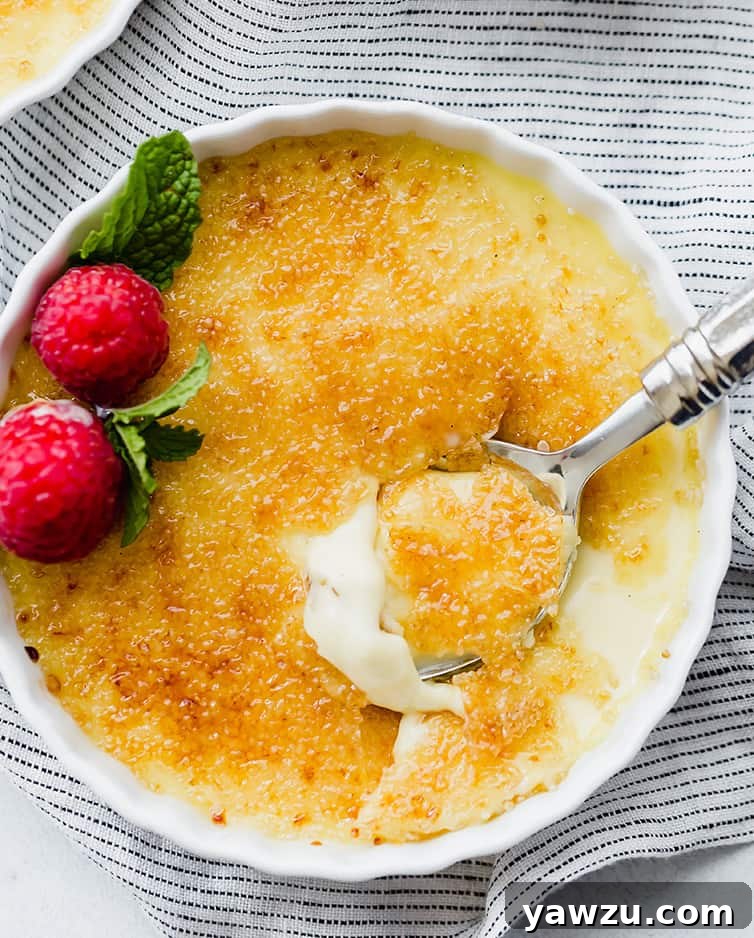
Imagine the elegant snap of caramelized sugar giving way to a luxuriously smooth vanilla custard – a symphony of textures and flavors in every spoonful. Homemade Crème Brûlée has never been easier to achieve, transforming your kitchen into a Parisian patisserie with just a handful of pantry staples. This comprehensive guide walks you through creating this classic French dessert, from a rich, silky vanilla bean base to that iconic, crackling sugar crust. Best of all, you can prepare this show-stopping dessert up to four days in advance, making it perfect for entertaining or a special weeknight treat!
Why You’ll Adore This Easy Crème Brûlée Recipe
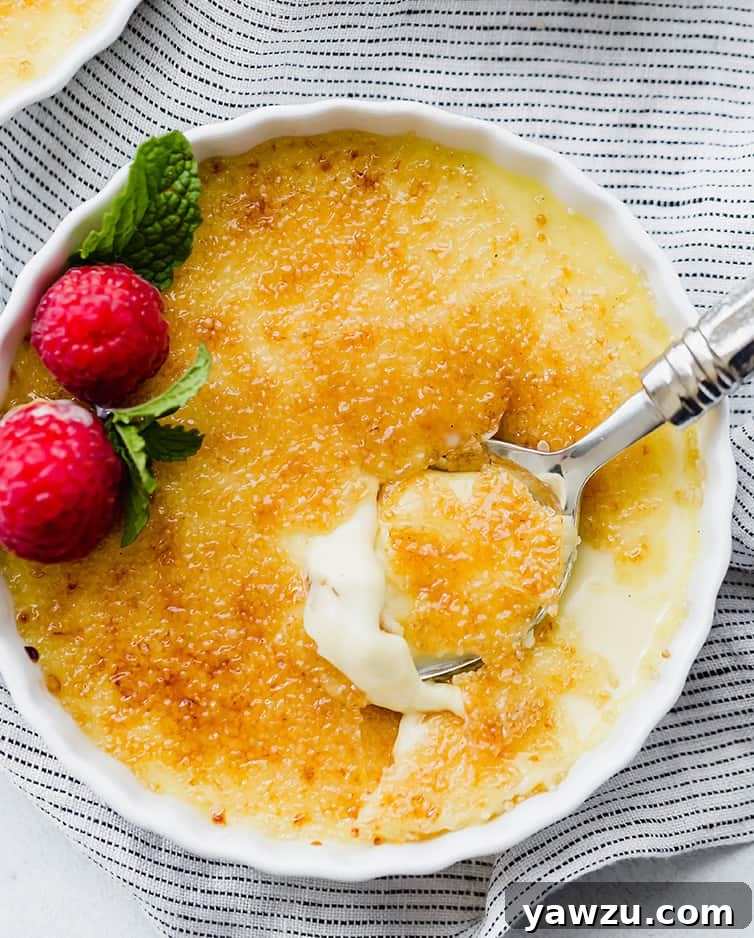
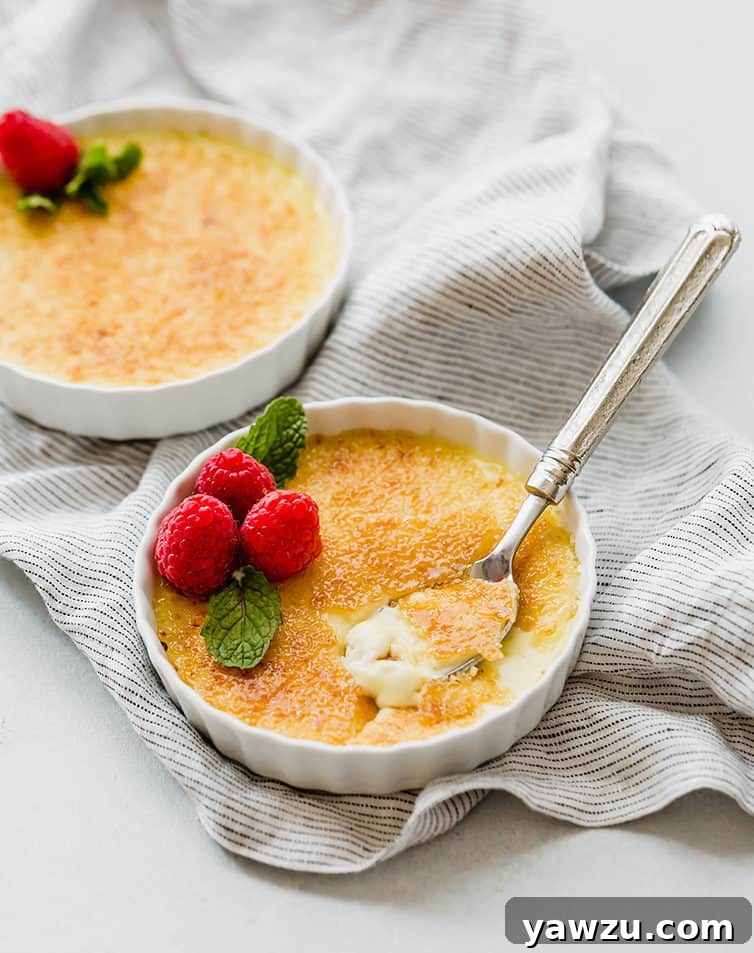
Crème Brûlée, literally translating to “burnt cream,” is a quintessential French dessert celebrated globally for its delicate balance of creamy texture and crunchy sweetness. This recipe simplifies the art of making this seemingly complex dish, proving that elegance can indeed be effortless. The magic truly happens the moment your spoon breaks through that thin, brittle layer of golden caramelized sugar, revealing the cool, velvety custard beneath. It’s a multi-sensory experience that delights the palate, contrasting the crisp sweetness with the smooth, rich vanilla-infused cream.
Many home cooks might shy away from Crème Brûlée, considering it too challenging. However, this recipe demystifies the process, making it surprisingly straightforward. Beyond its ease, one of the greatest advantages of this indulgent dessert is its adaptability as a make-ahead treat. You can prepare the custards days in advance, chilling them to perfection, and then simply torch the sugar topping right before serving. This flexibility makes it an ideal choice for dinner parties, romantic date nights, or any occasion where you want to impress without the last-minute stress.
Essential Ingredients for Perfect Crème Brûlée
Crafting this exquisite dessert requires only a few high-quality ingredients, each playing a crucial role in achieving the signature taste and texture:
- Heavy Cream: This is the backbone of our luscious custard, providing its signature richness and creamy consistency. You can use heavy cream, heavy whipping cream, or even double cream, all of which boast a high-fat content essential for a decadent Crème Brûlée.
- Granulated Sugar & Salt: Sugar sweetens the custard to perfection, while a tiny pinch of salt enhances all the flavors, creating a beautifully balanced profile that prevents the dessert from being overly sweet.
- Vanilla Bean: For an unparalleled depth of flavor and beautiful speckles, a real vanilla bean is highly recommended. Scrape the aromatic seeds directly into the cream mixture and steep the pod to infuse maximum vanilla essence. If a vanilla bean is unavailable, you can substitute 1 tablespoon of high-quality vanilla extract or vanilla bean paste, adding it to the egg yolks in the tempering step.
- Egg Yolks: These are the primary thickening agent for the custard, giving it that characteristic smooth, set texture. Using only yolks results in a richer, silkier custard compared to recipes that include whole eggs. Don’t worry about the leftover whites – we’ll share ideas to use them up!
- Turbinado Sugar: This coarse, raw cane sugar (also known as Demerara sugar) is ideal for the caramelized topping. Its larger crystals melt and caramelize beautifully under a torch, forming a strong, distinct crust. If you only have regular granulated sugar, you can use it, but apply a scant teaspoon per ramekin and watch it very carefully as it caramelizes faster.
Expert Tips for Separating Eggs
Precise egg separation is key for a flawless custard. It’s best to separate your eggs after the cream mixture has steeped and cooled slightly, just before you’re ready to whisk the yolks. If egg yolks sit exposed to air for too long, their surface can dry out and form an undesirable film. Here are a few reliable techniques to ensure clean separation:
- The Eggshell Method: Gently crack the egg in half over a medium bowl. Carefully pour the yolk back and forth between the two halves of the eggshell, allowing the whites to drip into the bowl below. Once all the white has separated, transfer the intact yolk to a separate bowl. Repeat for the remaining eggs.
- The Hand Method: Crack an egg over a medium bowl and pour the entire contents into the palm of your clean hand, fingers slightly splayed. Allow the egg white to slip through your fingers into the bowl while gently cupping the yolk to keep it whole. Transfer the yolk to a separate bowl and continue with the rest of the eggs.
- Using an Egg Separator: For a fool-proof method, crack the egg directly into an egg separator placed over a bowl. This handy gadget is designed to catch the yolk while letting the white pass through. It’s quick, clean, and minimizes the risk of yolk breakage.
Creative Ways to Use Up Leftover Egg Whites
Never let those precious egg whites go to waste! They are incredibly versatile and can be transformed into a variety of delicious treats or savory dishes. Beyond a simple breakfast omelet, consider these delightful options:
- Pavlova Layer Cake with Whipped Cream and Berries: A stunning dessert featuring crisp meringue layers, soft cream, and fresh fruit.
- Chocolate Pavlova with Mascarpone and Raspberries: A rich twist on the classic, perfect for chocolate lovers.
- Traditional Pavlova: Light, airy, and a fantastic canvas for various toppings.
- Chocolate Chip Meringue Cookies: Delicate, melt-in-your-mouth cookies with a delightful crunch.
- Homemade Marshmallow Creme: A fluffy, sweet spread perfect for hot chocolate or desserts.
Mastering Crème Brûlée: A Step-by-Step Guide
While Crème Brûlée might appear daunting at first glance, breaking it down into simple steps reveals just how approachable this elegant dessert truly is. Follow these instructions carefully, and you’ll be enjoying your homemade masterpiece in no time!
Step #1: Infuse and Prepare the Custard Base
- Preheat Oven & Prepare Ramekins: Adjust your oven rack to the lower-middle position and preheat the oven to 300°F (150°C). This low, slow heat is crucial for a perfectly set custard. Next, line the bottom of a large baking dish or roasting pan with a kitchen towel. This prevents the ramekins from sliding around and helps insulate them. Arrange eight 4- to 5-ounce ramekins (or shallow fluted dishes) on the towel.
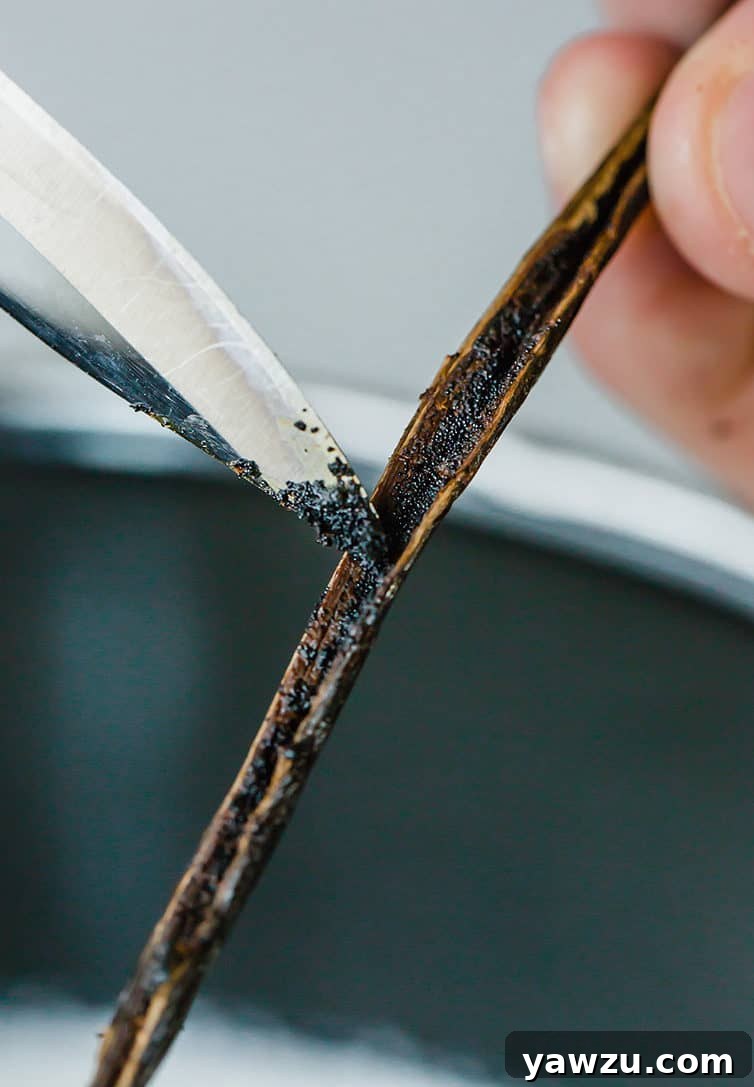
- Begin the Infusion: In a medium saucepan, combine 2 cups of the heavy cream, the granulated sugar, and the pinch of salt. Using a paring knife, carefully split a vanilla bean lengthwise and scrape the fragrant seeds directly into the saucepan. Drop the scraped vanilla bean pod into the cream as well, to maximize flavor extraction.
- Gently Heat & Steep: Bring the cream mixture to a gentle boil over medium heat, stirring occasionally to ensure the sugar fully dissolves. As soon as it reaches a boil, remove the pan from the heat. Let the mixture steep for a full 15 minutes. This crucial step allows the vanilla bean to deeply infuse its aromatic flavor into the cream, creating a rich and fragrant base.
- Prepare the Water Bath: While the cream steeps, bring a kettle or a large saucepan of water to a rolling boil over high heat. This boiling water will be used for the water bath (bain-marie) in which the custards will bake.
Step #2: Assemble the Silky Custard
- Cool the Cream Mixture: After the cream has steeped for 15 minutes, stir in the remaining 2 cups of chilled heavy cream. This helps to quickly cool down the hot mixture, making it safe to combine with the egg yolks without scrambling them.
- Whisk the Yolks: In a large, separate bowl, whisk the 12 egg yolks until they are thoroughly broken up and uniformly combined. You want them smooth but not frothy.
- Temper the Eggs: This is a critical step to prevent the eggs from cooking prematurely. Slowly whisk about 1 cup of the cooled cream mixture into the egg yolks. This gently raises the temperature of the yolks. Repeat with another 1 cup of cream mixture, whisking continuously until the yolks are fully loosened and well combined with the cream. Finally, add the remaining cream mixture and whisk until the entire custard base is evenly colored and perfectly smooth.
- Strain for Perfection: For an impeccably smooth, lump-free custard, pour the entire mixture through a fine-mesh strainer into a 2-quart measuring cup or pitcher (or a clean medium bowl). Discard any solids caught in the strainer, such as vanilla bean remnants or small bits of cooked egg.
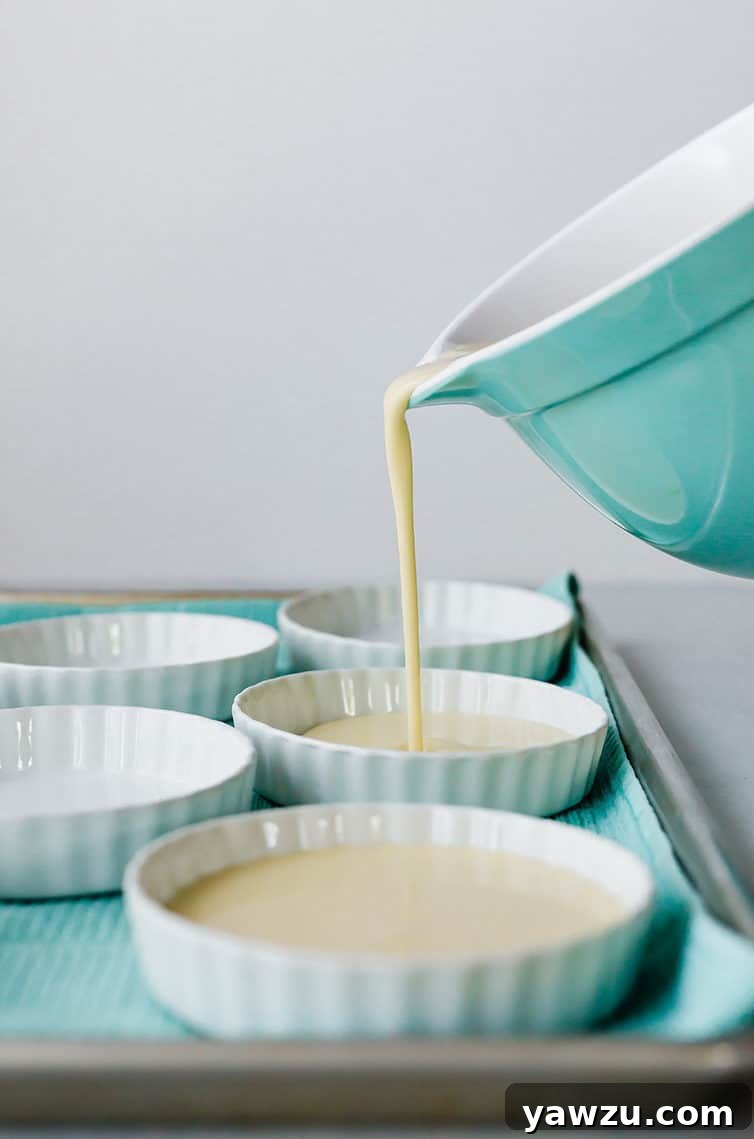
- Fill the Ramekins: Carefully pour or ladle the strained custard mixture into the prepared ramekins, dividing it evenly among them. Each ramekin should be filled almost to the top.
Step #3: Bake to Velvety Perfection
- Create the Water Bath: Carefully place the baking dish containing the ramekins onto the preheated oven rack. Then, slowly and gently pour the previously boiled hot water into the baking dish, taking extreme care not to splash any water into the ramekins themselves. The water should reach approximately two-thirds up the sides of the ramekins. The water bath ensures even, gentle cooking, preventing the custards from curdling or developing cracks.
- Bake Until Set: Bake the custards for about 30 to 35 minutes (or 25 to 30 minutes for shallower fluted dishes). The custards are ready when their centers are just barely set – they should jiggle slightly in the middle but no longer appear sloshy.
- Check Internal Temperature: For precise doneness, begin checking the temperature about 5 minutes before the recommended baking time ends. Insert an instant-read thermometer into the center of a custard; it should register between 170°F (77°C) and 175°F (79°C).
- Cool & Chill: Once baked, carefully remove the ramekins from the hot water bath and transfer them to a wire rack. Allow them to cool completely to room temperature, which typically takes about 2 hours. This gradual cooling prevents condensation. Once cooled, place the ramekins on a rimmed baking sheet, cover them tightly with plastic wrap, and refrigerate for at least 4 hours, or ideally, overnight. The longer they chill, the better they will set and develop flavor. They can be refrigerated for up to 4 days, making them an excellent make-ahead dessert.
Step #4: Achieve the Signature Caramelized Crust
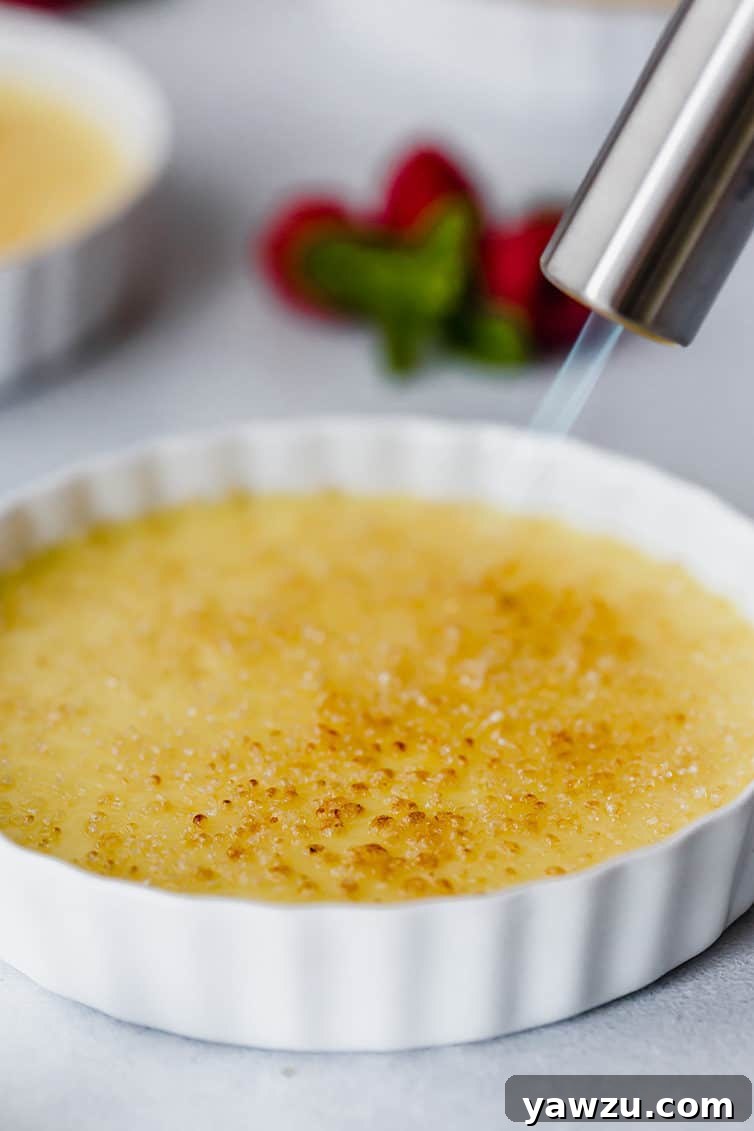
- Prepare for Torching: Uncover the chilled ramekins. If any condensation has collected on the surface of the custards, gently blot it away with a paper towel. A dry surface is crucial for an even caramelization.
- Apply Sugar Topping: Generously sprinkle about 1 teaspoon of turbinado sugar over the surface of each custard (use 1½ teaspoons for shallow fluted dishes). Gently tilt and tap the ramekin to ensure an even, thin layer of sugar covers the entire surface.
- Caramelize with a Torch: Carefully ignite your kitchen torch. Hold the flame a few inches above the sugar, moving it constantly in small circles. Watch closely as the sugar melts, bubbles, and transforms into a beautiful amber crust. Continue until the entire surface is uniformly caramelized and golden brown, being careful not to burn it.
- Chill and Serve: Immediately after torching, place the ramekins back in the refrigerator, uncovered, for another 30 to 45 minutes to allow the caramelized sugar to harden and cool. This re-chilling step is important to ensure a perfect, brittle snap. Do not chill for too long, however, as condensation can soften the crust. Serve promptly and enjoy the delightful contrast of textures and temperatures!
Creative Flavor Variations for Your Crème Brûlée
While classic vanilla bean Crème Brûlée is undeniably exquisite, this versatile dessert offers a wonderful canvas for culinary creativity. Experiment with different flavorings to craft an unforgettable treat tailored to your taste:
- Zesty Lemon Crème Brûlée: For a bright and refreshing twist, omit the vanilla bean. Instead, add 1½ teaspoons of finely grated lemon zest to the cream mixture during the steeping process. Once the cream is cooled and combined with the egg yolks, stir in 1 teaspoon of pure vanilla extract to round out the flavor. The citrus notes will beautifully cut through the richness of the custard.
- Warm Cinnamon Crème Brûlée: Infuse your custard with a comforting warmth by adding 1 teaspoon of ground cinnamon to the cream base alongside the sugar and salt. You can also add a cinnamon stick to steep with the vanilla pod. After torching the sugar topping, dust each Crème Brûlée with a tiny pinch more of ground cinnamon for an aromatic finish. This is particularly delightful during cooler months.
- Rich Coffee Crème Brûlée: Add 2 tablespoons of instant espresso powder or finely ground coffee to the cream mixture during steeping. Strain well before combining with egg yolks.
- Decadent Chocolate Crème Brûlée: Whisk 2 ounces of finely chopped good-quality dark chocolate into the hot cream mixture after steeping, stirring until completely melted before tempering the egg yolks.
- Fragrant Lavender Crème Brûlée: Add 1-2 teaspoons of culinary lavender buds to the cream mixture during steeping. Strain thoroughly before proceeding.
Frequently Asked Questions About Crème Brûlée
Is Crème Brûlée served hot or cold?
Crème Brûlée is traditionally served chilled, with the caramelized sugar topping still cool and crisp. This recipe recommends re-chilling the custards after torching to achieve that perfect contrast of cool, smooth custard and a cold, shattering crust. However, some prefer to serve it immediately after torching when the topping is still warm and slightly gooey. The choice is entirely yours and depends on your preference!
What is the difference between Crème Brûlée and Flan?
While both are beloved custard-based desserts, Crème Brûlée and Flan have distinct characteristics. Crème Brûlée features a rich, creamy custard made primarily with heavy cream, sugar, and egg yolks, baked in a water bath, and then topped with a thin layer of granulated sugar that is caramelized with a torch to form a hard, glass-like crust. Flan, on the other hand, is also a custard (often made with a combination of milk, cream, sugar, and egg yolks) but it is baked in a caramel-lined ramekin. It is then inverted out of its mold before serving, allowing the golden caramel sauce to cascade over the silky custard. The primary difference lies in the topping: a hard, torched sugar crust for Crème Brûlée versus a soft caramel sauce for Flan.
Can you make Crème Brûlée without a kitchen torch?
Absolutely! If you don’t own a kitchen torch, you can achieve a beautifully caramelized topping using your oven’s broiler. Ensure your custards are thoroughly chilled – ideally overnight – as this prevents them from getting too warm under the broiler. Place the ramekins on a baking sheet on a rack positioned directly below the broiler. Keep a very close eye on them, as the sugar can go from perfectly caramelized to burnt in a matter of seconds. It typically takes only a minute or two. Remove as soon as the sugar is golden brown and bubbly.
What can I use in place of ramekins?
Ramekins are undeniably ideal for Crème Brûlée, designed for individual portions and offering a wide surface area for the caramelized sugar crust. Wide, shallow ramekins are generally preferred over deeper ones, as they allow the custard to cook more evenly and maximize the ratio of crunchy topping to creamy custard. However, if you don’t have ramekins, you can use a large, wide, oven-safe pan, preferably ceramic or glass. Just ensure that the pan can comfortably fit within a larger baking dish for the water bath. Be aware that using a single large dish may require you to adjust the baking time, as it will likely take longer to set compared to individual ramekins.
Storage and Freezing Instructions for Crème Brûlée
One of the many benefits of this homemade Crème Brûlée recipe is its excellent make-ahead potential:
This crème brûlée recipe can be prepared up to 4 days in advance. Follow all steps through baking the custards and chilling them in the refrigerator. Do not caramelize the sugar topping until just before you plan to serve, as the crust will soften over time in the refrigerator.
You can also freeze crème brûlée to enjoy later. Simply make the recipe as directed, baking and chilling the custard-filled ramekins. Once they have cooled to room temperature and been thoroughly chilled, cover each ramekin tightly with plastic wrap (and foil for extra protection if desired) and freeze for up to 1 month. To serve, thaw the frozen custards in the refrigerator overnight. Once thawed, proceed with sprinkling them with turbinado sugar and torching the top as usual.
Storage for Leftovers: While Crème Brûlée is best enjoyed shortly after the sugar has been torched, any leftovers can be stored, uncovered, in the refrigerator for up to 2 days. The sugar crust will likely soften, but the custard will remain delicious.
Watch How to Make Crème Brûlée:
For a visual guide to mastering this dessert, a video tutorial demonstrating each step of this Crème Brûlée recipe is available. It shows you how to achieve the silky-smooth vanilla bean custard and the perfect caramelized sugar topping, making this classic recipe even easier to follow for special occasions.
If You Savor This Crème Brûlée Recipe, You’ll Love These:
- Mashed Sweet Potato Brulee: A creative savory-sweet take on the brûlée technique.
- Caramel Topped Flan: Explore another delightful custard dessert with a rich caramel sauce.
- Vanilla Cream-Filled Doughnuts: Indulge in soft doughnuts bursting with creamy vanilla goodness.
- How to Make Pastry Cream: Learn the versatile foundation for many French pastries and desserts.
- Fresh Fruit Tart with Pastry Cream: A vibrant and elegant dessert featuring homemade pastry cream and seasonal fruits.
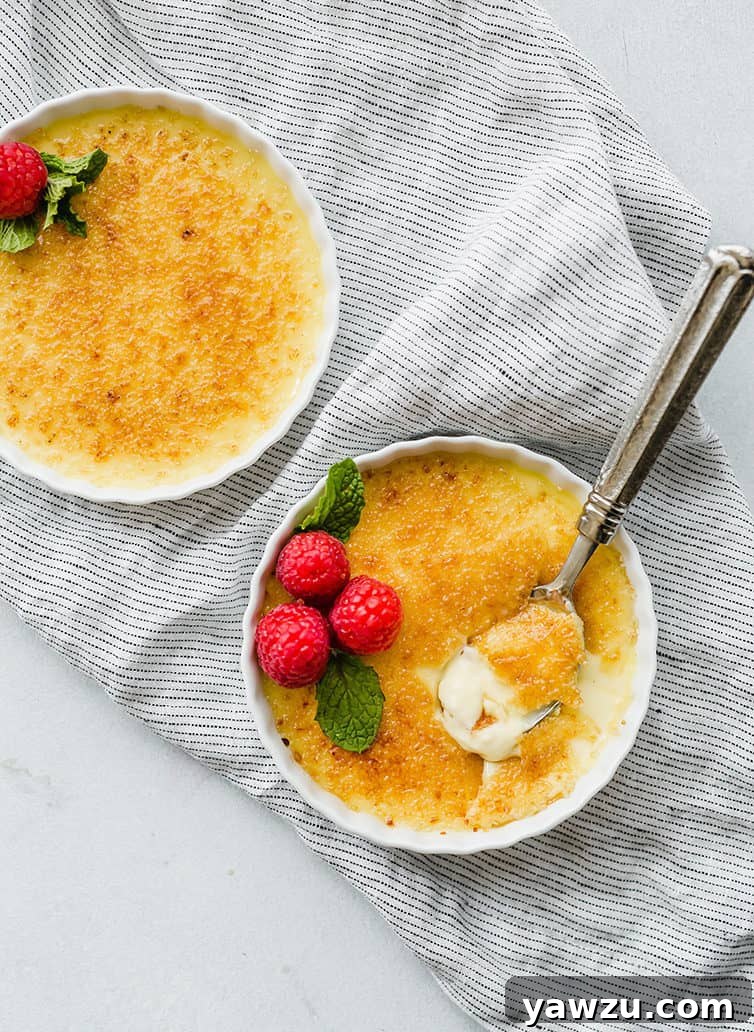
Delight your guests and your own palate with this incredibly easy, homemade Crème Brûlée recipe! Crafted with just 6 essential ingredients, this silky-smooth vanilla custard, crowned with a crisp caramelized sugar topping, can be prepared and baked up to four days in advance. It’s the quintessential dessert for romantic date nights, elegant dinner parties, or simply to elevate any ordinary evening into something extraordinary.
If you create this recipe and fall in love with it, please consider returning to leave a 5-star rating and a review. Your feedback helps others discover and enjoy this wonderful dessert! ❤️️
Crème Brûlée Recipe
Yield: 8 servings
Prep Time: 45 mins
Cook Time: 35 mins
Resting time: 6 hrs 55 mins
Total Time: 8 hrs 55 mins
This easy to make Crème Brûlée recipe comes together with 6 pantry-staple ingredients for a decadent dessert that everyone is sure to enjoy!

Pin Recipe
Ingredients
- 4 cups (952 ml) heavy cream, chilled
- ⅔ cup (133.33 g) granulated sugar
- Pinch of table salt
- 1 vanilla bean, halved lengthwise (or 1 tbsp vanilla extract/paste)
- 12 egg yolks
- 8-12 teaspoons (8 teaspoons) turbinado or Demerara sugar, for topping
Special Equipment
- Kitchen torch
- Ramekins (eight 4- to 5-ounce)
- Instant-read thermometer
Instructions
- Adjust oven rack to lower-middle position and heat oven to 300°F (150°C).
- Combine 2 cups of the cream, the sugar, and salt in a medium saucepan. With a paring knife, scrape seeds from the vanilla bean into the pan, submerge the pod in cream, and bring the mixture to a boil over medium heat, stirring occasionally to ensure that sugar dissolves. Take the pan off heat and let steep for 15 minutes to infuse flavors.
- Meanwhile, place a kitchen towel in the bottom of a large baking dish or roasting pan and arrange eight 4- to 5-ounce ramekins (or shallow fluted dishes) on the towel. Bring a kettle or large saucepan of water to boil over high heat.
- After the cream has steeped, stir in the remaining 2 cups of chilled cream to cool down the mixture. Whisk yolks in a large bowl until broken up and combined. Whisk about 1 cup of cream mixture into the yolks until loosened and combined; repeat with another 1 cup of cream. Add the remaining cream and whisk until evenly colored and thoroughly combined. Strain through a fine-mesh strainer into a 2-quart measuring cup or pitcher (or clean medium bowl); discard any solids in the strainer. Pour or ladle the mixture into the ramekins, dividing it evenly among them.
- Carefully place the baking dish with ramekins on the oven rack; pour boiling water into the dish, taking care not to splash water into the ramekins, until the water reaches two-thirds height of the ramekins. Bake until the centers of the custards are just barely set and are no longer sloshy and a digital instant-read thermometer inserted in the centers registers 170°F to 175°F (77°C-79°C), about 30 to 35 minutes (25 to 30 minutes for shallow fluted dishes). Begin checking temperature about 5 minutes before the recommended time.
- Transfer ramekins to a wire rack; cool to room temperature, about 2 hours. Set ramekins on a rimmed baking sheet, cover tightly with plastic wrap, and refrigerate until cold, at least 4 hours or up to 4 days.
- Uncover ramekins; if condensation has collected on the custards, place a paper towel on the surface to soak up moisture. Sprinkle each with about 1 teaspoon turbinado sugar (1½ teaspoons for shallow fluted dishes); tilt and tap the ramekin for even coverage. Ignite a kitchen torch and caramelize the sugar. Refrigerate ramekins, uncovered, to re-chill, 30 to 45 minutes (but no longer); serve immediately.
Notes
- Equipment: You will need Ramekins, a Kitchen torch, and an Instant-read thermometer.
- Vanilla Bean: You can substitute 2 teaspoons of high-quality vanilla extract or vanilla bean paste for the vanilla bean. If substituting, whisk it into the egg yolks during step 4.
- Egg Yolks: Always separate the eggs and whisk the yolks after the cream has steeped and cooled slightly. If left to sit, the surface of the yolks can dry and form an undesirable film.
- Turbinado Sugar: Also known as raw cane sugar or Demerara sugar, it creates the best crust. If substituting regular granulated sugar, use only 1 scant teaspoon on each ramekin as it caramelizes faster.
- Kitchen Torch Alternative: If you don’t have a kitchen torch, use your oven’s broiler. Ensure the custard is thoroughly chilled (overnight is best). Place ramekins on a baking sheet on a rack directly below the broiler. Watch constantly, as sugar caramelizes in about a minute; remove immediately to prevent burning.
- Ramekin Alternative: While ramekins are ideal, a large, wide ceramic or glass oven-safe pan can be used. Ensure it fits in a water bath. Baking time may need adjustment for larger pans.
- Make-Ahead: This recipe is perfect for making in advance. Prepare and chill the custards for up to 4 days. Torch the sugar just before serving.
- Freezing Instructions: Baked and chilled custards can be covered tightly and frozen for up to 1 month. Thaw overnight in the refrigerator, then top with sugar and torch.
- Storage: Best eaten shortly after torching. Leftovers with a torched top can be refrigerated for up to 2 days, though the crust will soften.
Nutritional values are based on one serving.
Calories: 579kcal, Carbohydrates: 25g, Protein: 6g, Fat: 51g, Saturated Fat: 29g, Cholesterol: 455mg, Sodium: 62mg, Potassium: 118mg, Sugar: 20g, Vitamin A: 2140IU, Vitamin C: 0.7mg, Calcium: 112mg, Iron: 0.8mg
Did you make this recipe?
Leave a review below, then snap a picture and tag @thebrowneyedbaker on Instagram so I can see it!
Author: Michelle Lettrich
Course: Dessert
Cuisine: French
Photography by Whitney Wright