

Have you ever dreamt of biting into a perfectly golden, shatteringly crisp, and impossibly flaky croissant, fresh from your own oven? This dream is closer than you think! If you’ve always wanted to try your hand at crafting those famously delicious, buttery, and delicate French pastries, you’ve come to the right place. Our comprehensive, step-by-step tutorial, complete with abundant photos and a guiding video, will meticulously walk you through every single stage of the process. While these classic pastries are often perceived as challenging, they are far from difficult – they simply require a dash of patience and a little advance planning. Once you experience the unparalleled joy and superior taste of homemade croissants, you’ll undoubtedly find yourself saying goodbye to store-bought versions forever!

Unlocking the Secret to Perfect Homemade Croissants
My journey into the world of croissant making began nearly 12 years ago, and I vividly remember the immense sense of accomplishment that washed over me after pulling that first batch from the oven. It was truly an astonishing moment; I couldn’t believe that I, in my own home kitchen, was able to produce pastries so incredibly flaky and buttery, rivaling those I had savored at the finest bakeries.
The original recipe that guided my initial attempt hailed from the esteemed Tartine cookbook. While the result was undeniably delicious, that particular recipe included a preferment step. Through years of dedicated learning and experimentation with numerous croissant recipes, I’ve discovered that this extra step, while traditional in some contexts, isn’t always essential for achieving exceptional results. The current iteration of this recipe, which I proudly present today, meticulously combines the best ratios, techniques, and insights gleaned from that original Tartine recipe, a slightly different Tartine version thoughtfully published in Saveur, and the invaluable resources found at Weekend Bakery. This fusion of expertise ensures a streamlined yet authentic process.
Embarking on this kitchen project is an experience that promises to make you feel like an absolute culinary superhero at the finish line! The effort, though spread over a couple of days, culminates in a reward beyond measure: the most amazing, ultra-flaky French croissants that you simply won’t be able to stop eating. Trust me, I speak from very delicious experience!

The Art of Croissant Making: A Step-by-Step Journey
You’ll often hear the phrase “a labor of love” when discussing croissants, and it’s a fitting description not because the process itself is inherently difficult, but because it demands foresight and a structured approach, typically spread across a few days. This multi-day schedule is crucial for allowing the dough to properly develop flavor and for the butter layers to chill and firm up between each lamination step, ensuring that signature flaky texture.
Let’s meticulously walk through each essential step to demystify the process and guide you toward croissant perfection!
1. Crafting the Perfect Croissant Dough
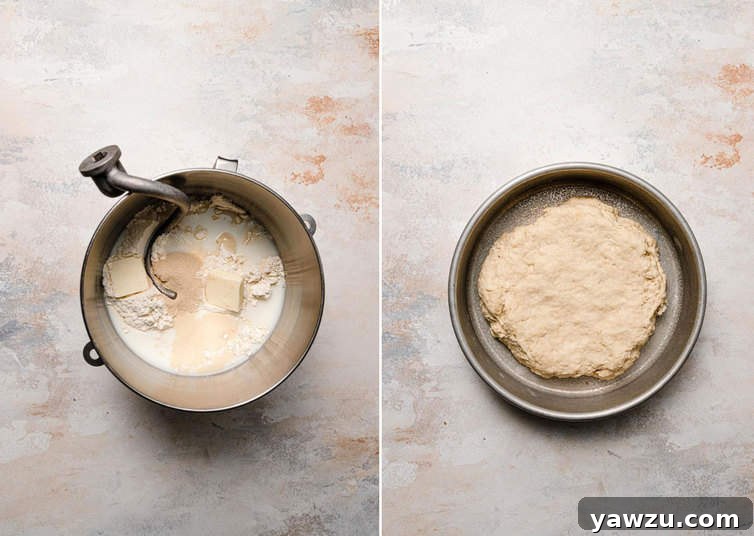
This initial stage is surprisingly swift, requiring only about 10 to 15 minutes of active preparation. You’ll combine all the specified dough ingredients into a stand mixer fitted with a dough hook. A few minutes of kneading on a low speed is all it takes to bring the dough together, initiating the development of gluten – the structural network that gives croissants their chewiness and elasticity. It’s important not to over-knead at this stage; we’re aiming for a cohesive, shaggy mass, not a fully developed bread dough. Once mixed, the dough is gently shaped into a disc, covered tightly with plastic wrap, and refrigerated overnight. This long, cold rest is vital for two reasons: it allows the yeast to slowly ferment, deepening the dough’s flavor, and it firms up the dough, making it significantly easier to handle during the delicate lamination process that follows.
2. Preparing the Essential Butter Block
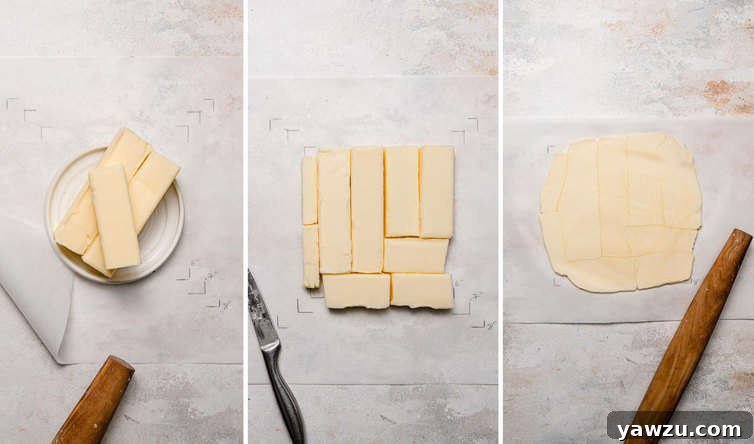
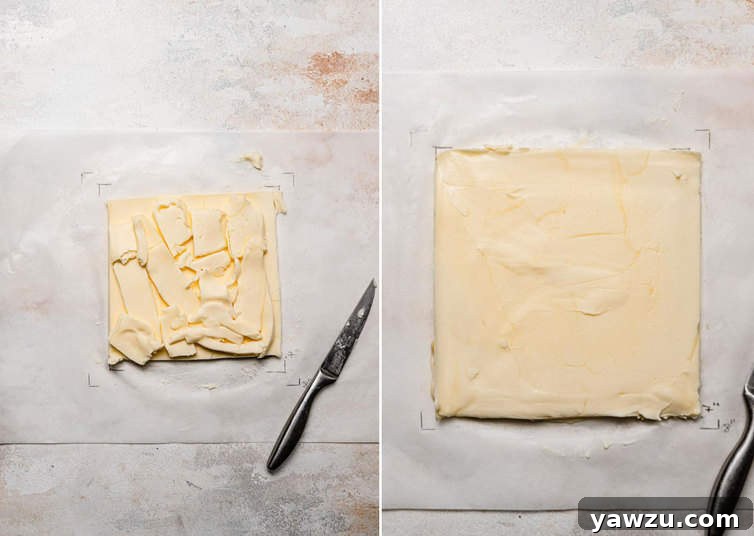
The butter block is the absolute heart of your croissant’s flakiness and flavor. To create it, we gently but firmly pound out cold sticks of high-quality butter into a precise square, typically using two sheets of parchment paper. This method, rather than simply beating softened butter and spreading it, yields a butter block that is significantly more cohesive, uniformly textured, and pliable, yet perfectly firm. This specific consistency is paramount because it ensures the butter remains distinct from the dough layers during rolling, preventing it from melting prematurely or integrating too thoroughly. A well-prepared butter block will be easier to chill and will hold its structure perfectly as you laminate, directly contributing to those distinct, airy, and buttery layers. After shaping, it’s briefly refrigerated to firm up just enough while you prepare the dough for its first encounter.
3. Mastering the Lamination Process: Creating Hundreds of Flaky Layers
Lamination is the signature technique behind all flaky pastries, including croissants, and it’s where the magic truly happens. It’s the meticulous process where the butter block is repeatedly folded into the dough, creating hundreds of ultrathin, alternating layers of butter and dough. These delicate layers are what expand dramatically in the hot oven, producing the characteristic airy, crisp, and incredibly flaky texture that defines a perfect croissant. Each complete folding sequence is commonly referred to as a “turn.”
The process begins by encasing the firm butter block completely within the chilled dough, ensuring absolutely no butter is exposed. This forms a neat, sealed package, ready for rolling.
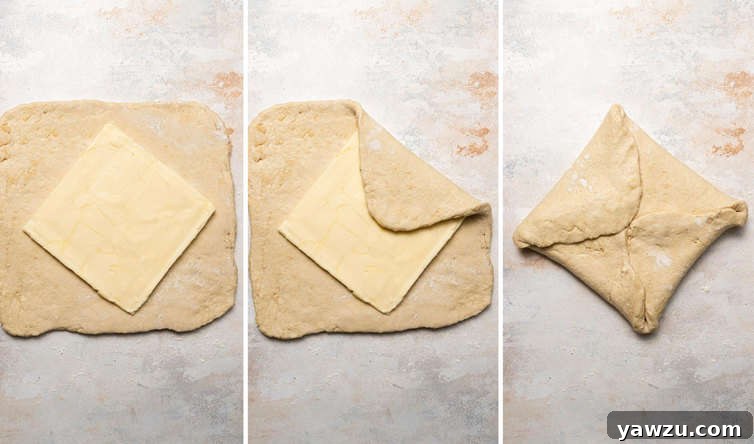
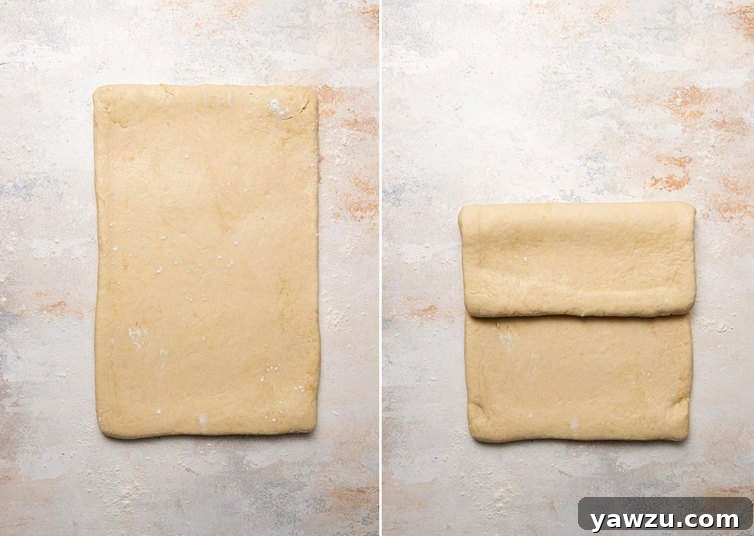
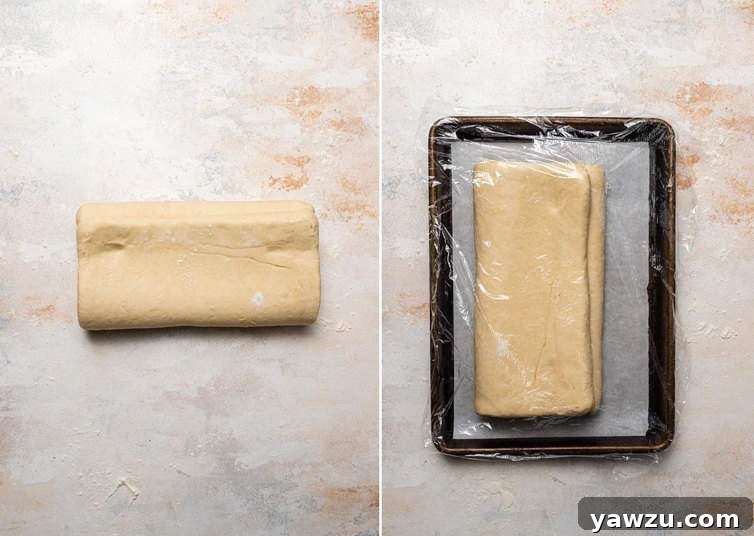
Next, this butter-encased dough is gently and carefully rolled out into a long, even rectangle. The critical step is then folding this rectangle into thirds, much like folding a business letter. This completes one “turn.” After each turn, the dough must be rested in the refrigerator. This resting period is absolutely crucial: it allows the gluten in the dough to relax, making it easier to roll without tearing, and it crucially chills the butter, preventing it from melting into the dough (a process called “butter bleed”). We repeat this precise rolling and folding process twice more, with adequate refrigeration between each turn, to build up the necessary multitude of delicate layers. After the third turn, the dough receives its final, longer rest, typically overnight in the refrigerator, allowing all components to fully integrate, relax, and for flavors to develop before the final shaping stage.
4. Cutting and Expertly Shaping Your Croissants
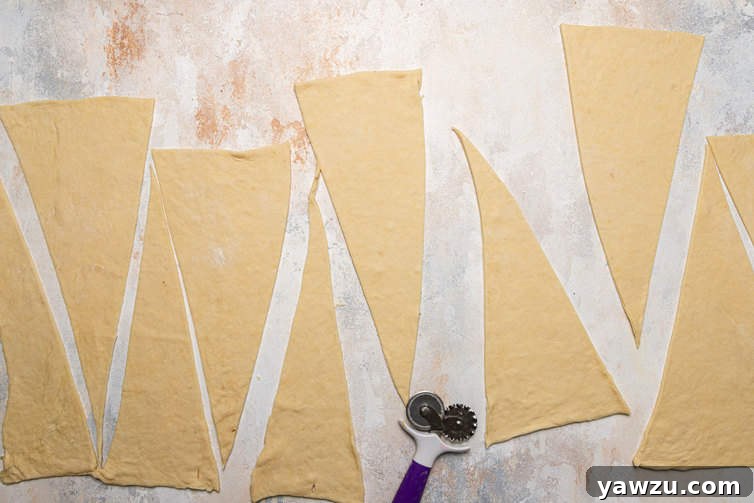
The highly anticipated day has arrived! After its overnight rest, the beautifully laminated dough, now rich with layers, is ready for its transformation into individual croissants. The chilled dough is rolled out into a large, thin rectangle, typically about 12×40 inches. From this meticulously rolled sheet, it is precisely cut into long triangles. For classic, uniformly sized croissants, aim for triangles with a base of approximately 4 inches and a length of 10-12 inches. Precision here helps ensure consistent baking.
Now comes the artistic part: shaping your croissants. You have two primary methods to choose from, each yielding a slightly different classic appearance:
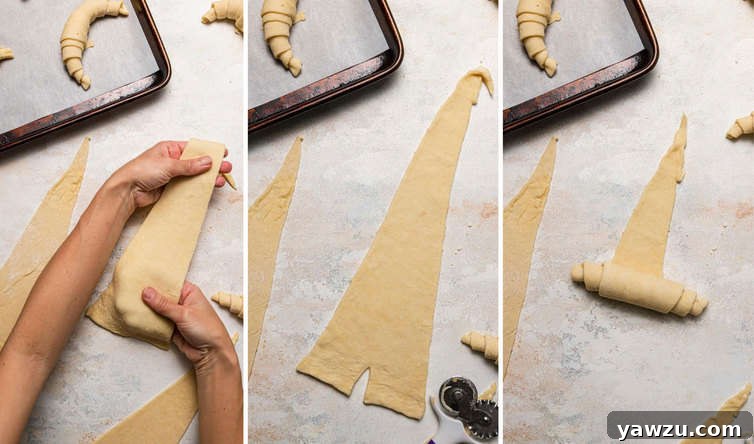
- The Iconic Crescent: For the instantly recognizable moon-shaped croissant, begin by making a small slit (about ¾ to 1 inch deep) in the center of the wide base of each triangle. Then, starting from this wide base, gently but firmly roll the dough upwards towards the tip. As you roll, slightly curve the edges outwards to create that distinctive crescent shape. This method results in the croissant most people picture.
- The Traditional Straight Roll: If you prefer the more traditional, authentic French-style croissant, you simply roll the triangle straight up from the base to the tip without making a slit or intentionally curving the edges. This yields a straighter, often larger, and equally delicious croissant that is common in Parisian bakeries.
Whichever method you choose, ensure the rolling is tight enough to create internal structure and prevent gaping layers, but not so tight that it prevents proper rising during proofing. The pointed tip of the triangle should always be tucked neatly underneath the bottom of the croissant to prevent it from unfurling unattractively during baking. Handle the dough gently to maintain those delicate layers.
5. The Critical Proofing Stage for Optimal Texture
Once your croissants are beautifully shaped, they embark on their final, crucial journey: proofing. This is where the yeast works its magic, causing the shaped pastries to rise significantly. Arrange them on baking sheets, ensuring ample space between each croissant to allow for expansion, and cover loosely with plastic wrap to prevent a skin from forming. They are then left in a warm, ideally slightly humid, spot to rise until they become wonderfully puffy, visibly increased in size, and noticeably delicate to the touch. This process can take a good couple of hours, heavily influenced by the ambient air temperature and humidity level in your kitchen. Patience here is absolutely paramount; do not rush this step. If croissants are baked before they are fully proofed, they will result in a denser texture, lacking the desired airiness, internal honeycomb structure, and signature flakiness. A perfectly proofed croissant will jiggle slightly and feel remarkably light when you gently shake the baking sheet, indicating a light, airy internal structure ready for baking.
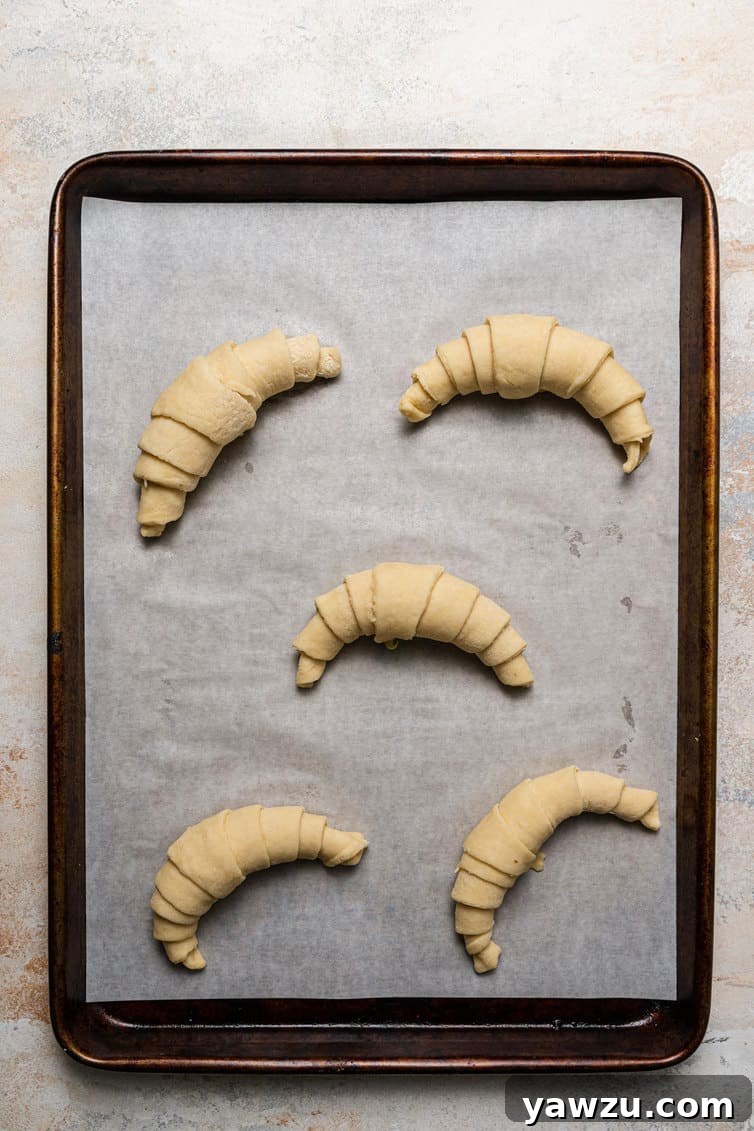
6. Baking Your Golden Croissants to Perfection
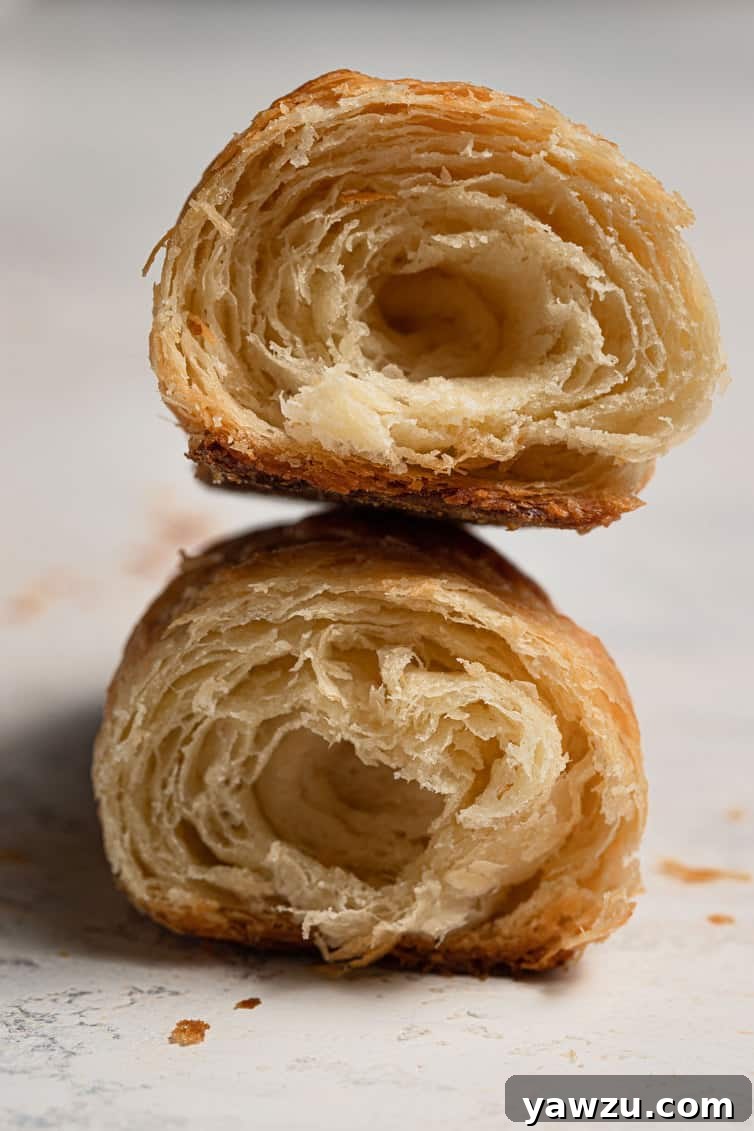
Hallelujah! The moment you’ve been patiently waiting for has arrived. Your perfectly proofed croissants are ready for the oven. Before baking, they receive a gentle brush of a prepared egg wash, which contributes significantly to their gorgeous golden-brown color and irresistible sheen. Baking takes approximately 20 minutes, during which they’ll puff up further, their layers will separate and crisp, and they’ll achieve that beautiful, rich hue. A key indicator of optimal doneness is their weight: when you carefully pick up a baked croissant, it should feel remarkably light in your hand. This lightness signals that the interior is fully cooked, airy, and light, ensuring that delightful melt-in-your-mouth texture when you finally bite into one. Don’t underbake, or they’ll be doughy inside; don’t overbake, or they’ll be dry.
The Secret Ingredient: Choosing the Best Butter for Your Croissants
The quality of your butter is not just important for croissants; it is absolutely paramount and cannot be overstated. To achieve the absolute flakiest, most luxurious, and best-tasting croissants you can possibly make at home, investing in a high-quality, high-fat, European-style unsalted butter is non-negotiable. These premium butters typically boast a higher butterfat content (around 82-84%) compared to standard American butter (which usually hovers around 80%). This crucial difference in fat content, coupled with less water, makes the butter more pliable and elastic at colder temperatures, easier to work with during the delicate lamination process, and significantly less prone to melting prematurely or integrating too thoroughly into the dough. This results in clearer, more distinct separation between the dough and butter layers, which translates directly into superior flakiness, a more open crumb structure, and a richer, more pronounced buttery flavor in the final product.
I highly recommend using one of these exceptional brands, which are generally easy to find in the dairy section of most well-stocked grocery stores:
- Kerrygold (my absolute favorite for its rich, grassy flavor and excellent workability!)
- Plugra
- Presidente
Don’t be tempted to substitute with lower-fat butter or butter alternatives; it simply won’t yield the same incredible layers, texture, or authentic taste that makes a croissant truly special.

Planning for Perfection: Your Croissant-Making Schedule
While the mystique surrounding croissants might suggest endless hours of labor, the reality is that they require surprisingly little active hands-on time. The secret lies in strategic scheduling, allowing for crucial chilling and resting steps. These prolonged rest periods are absolutely essential for ensuring the dough is properly laminated with the butter, facilitating the creation of those hundreds of beautiful, distinct, and ultimately flaky layers. Rushing these steps will compromise the delicate texture, open crumb, and overall quality of your croissants.
Here is an ideal, stress-free schedule to get your croissant baking journey perfectly underway, fitting seamlessly into a weekend or a few evenings:
- Day 1: Mix the Dough (approx. 15 minutes hands-on time)
On your first day, your only task is to simply mix together all the ingredients for the croissant dough. This active step takes very little time. Once mixed into a cohesive ball, the dough is covered and left to ferment slowly in the refrigerator overnight. This long, cold fermentation develops a complex, nuanced flavor profile, making your croissants taste even better and providing a sturdy structure for lamination. - Day 2: Prepare the Butter Block & Laminate the Dough (approx. 45-60 minutes hands-on time, spread out over 3-4 hours)
Day two is dedicated to the essential lamination process. You’ll start by preparing your chilled butter block, ensuring it’s pliable yet firm. Then, you’ll proceed with the first turn of folding the butter into the dough, followed by a necessary chill in the refrigerator. After this rest, you’ll complete the second turn, again followed by another critical resting period. Finally, the third turn is completed, and the laminated dough goes back into the refrigerator for its final, extended overnight rest. The chilling periods are non-negotiable here, allowing the gluten to relax after rolling and, crucially, preventing the butter from becoming too soft and merging with the dough. - Day 3: Shape, Proof, and Bake the Croissants! (approx. 3-4 hours hands-on and proofing time)
This is the exciting culmination of your efforts! On day three, you’ll retrieve the perfectly rested dough, roll it out, precisely cut it into triangles, and expertly shape your individual croissants. These shaped pastries then undergo their final, slow proofing, where they double in size and become wonderfully puffy and delicate. Once perfectly proofed, they’re brushed with a rich egg wash and finally baked to a glorious golden perfection, revealing all those beautiful layers you painstakingly created.
I genuinely appreciate how this process is elegantly broken up into manageable “nuggets” of time. This thoughtful segmentation allows for incredible flexibility; for instance, if you begin shaping your croissants first thing in the morning on Day 3, you can easily have a batch of irresistibly fresh, warm croissants ready to grace your brunch table or elevate a leisurely lunch by late morning or early afternoon. It’s a deeply rewarding baking project that fits beautifully into a weekend schedule, making it accessible even for busy home bakers.
Expert Tips for Croissant Success
Achieving croissant perfection involves understanding and adhering to a few key principles. Keep these expert tips in mind for the best possible results, ensuring your efforts lead to bakery-quality pastries:
- Maintain the Cold Chain! The absolute cornerstone of working with laminated dough is diligently keeping everything as cold as humanly possible. Not just the butter, but the dough itself, and ideally even your working surface and rolling pin, should remain cool. If you are fortunate enough to own a marble slab or a marble rolling pin, these are invaluable tools as they naturally stay colder than wood or metal. If, at any point during rolling or folding, you notice the dough becoming too warm, sticky, or if butter starts to visibly squeeze out from the edges (known as “butter bleed”), immediately transfer the dough back to the refrigerator. Allow it to chill thoroughly (15-30 minutes, or even longer if needed) before resuming your work. This vigilance prevents the butter from melting into the dough, which would irrevocably destroy those precious, distinct flaky layers.
- Make-Ahead Instructions for Convenience: Croissants are wonderfully suited for advance preparation, perfectly aligning with the multi-day schedule outlined above. However, there are specific points where you can pause the process and freeze the dough for even greater convenience. After completing all three lamination turns on Day 2, you can tightly wrap the entire dough block with several layers of plastic wrap, then place it in a freezer-safe bag or airtight container. This can be frozen for up to 3 months without compromising quality. When you’re ready to bake, simply thaw the dough in the refrigerator overnight. Once fully thawed, you can then proceed directly with the shaping, proofing, and baking steps as directed in the recipe.
- Freezing Shaped Croissants (Unbaked): To enjoy freshly baked croissants whenever a craving strikes, you have the excellent option of freezing them unbaked. After shaping the individual croissants, arrange them on baking sheets and place them in the freezer until they are completely solid (this usually takes at least 2 hours). Once frozen solid, transfer the croissants to an airtight container or a heavy-duty freezer-safe bag. They will keep well in the freezer for up to 3 months. To bake from frozen, thaw them in the refrigerator overnight. Once thawed, remove them from the refrigerator and proceed directly to the proofing and baking steps (specifically step #10 in the instructions). Keep in mind that proofing time might be slightly longer as they will be starting from a colder temperature.
- Freezing Baked Croissants: If you find yourself with leftover baked croissants or if you wish to prepare a large batch for future enjoyment, you can also freeze them after baking. Allow the croissants to cool completely to room temperature first. Then, place them in an airtight container or freezer-safe bag and freeze for up to 3 months. To thaw, simply leave them on the countertop at room temperature for a few hours, or in the refrigerator overnight. For the absolute best texture and flavor, reheat them as described below before serving.
- Optimal Shelf Life: Croissants are, without a doubt, at their absolute peak of perfection on the very day they are freshly baked. Nothing quite compares to the delicate, shatteringly crisp exterior and the airy, flaky interior of a warm, fresh croissant, especially moments after it comes out of the oven. While their pristine texture is best enjoyed immediately, they can still be stored at room temperature in an airtight container for up to 3 days, or in the refrigerator for up to 1 week (though they will gradually lose some of their initial crispness and become softer).
- Reheating Leftover Croissants: While it’s tempting to pop a leftover croissant into the microwave for a quick warm-up, for the best possible experience and to recapture that glorious fresh croissant flavor and texture, I highly recommend reheating them in an oven or toaster oven. Preheat your oven to 350 degrees F (175 degrees C) and warm the croissants for 5 to 10 minutes. This method helps to re-crisp the exterior and gently warm through the interior without making them soggy or rubbery, as a microwave often does to delicate pastries.
Expand Your Baking Repertoire!
If you’ve enjoyed the delightful challenge and rewarding outcome of making croissants, you might love exploring these other equally delicious and impressive pastry recipes:
- Danish Pastries
- Kouign-Amann
- Sticky Buns
- Homemade Pop-Tarts
- Morning Buns
Watch Our Croissant-Making Video Tutorial:
For a visual guide to every step of this rewarding process, watch our detailed video tutorial on how to make perfect homemade croissants. Seeing the techniques in action can be incredibly helpful for building your confidence and ensuring success!
Video: Homemade Croissants Recipe – Learn how to make croissants with this step-by-step tutorial! You’ll be a pro at making buttery, flaky French pastries in no time!
If you follow this recipe and absolutely love your homemade croissants, please remember to come back and give it a 5-star rating! Your valuable feedback helps other aspiring bakers discover and enjoy this wonderful recipe. ❤️️

Homemade Croissants Recipe
Yield: 10 croissants
Prep Time: 1 hr
Cook Time: 20 mins
Resting Time: 10 hrs
Total Time: 11 hrs 20 mins
If you’ve always wanted to learn how to make croissants, this step-by-step tutorial loaded with tons of pictures and a video, will walk you through exactly how to do it.
Average Rating: 4.50 (36 ratings)
Pin Recipe
Rate This Recipe
Ingredients
Dough
- 4¾ cups (570 g) all-purpose flour
- ⅔ cup (160 ml) water
- ⅔ cup (160 ml) whole milk
- ⅓ cup (66 g) sugar
- 3 tablespoons (43 g) unsalted butter, at room temperature
- 4 teaspoons instant yeast
- 2½ teaspoons salt
Butter Block
- 11 ounces (312 g) unsalted butter, cold
Egg wash:
- 1 egg
- 2 teaspoons heavy cream
Instructions
- Make the Dough: Place all of the ingredients for the dough in the bowl of a stand mixer fitted with the dough hook. Mix and knead on low for 3 minutes, until the dough has just come together. Shape the dough into a disc and place on a plate or small baking dish and cover with plastic wrap. Refrigerate overnight.
- Make the Butter Block: Cut the cold butter lengthwise and arrange in a rough 6-inch square on a piece of parchment paper. Cover with an additional piece of parchment paper and use a rolling pin to pound the butter into an 8-inch square. Trim and straighten the edges, and place the trimmings on the top of the square. Pound lightly into a cohesive 7-inch square. Wrap in the parchment paper and place in the refrigerator for at least 30 minutes before using.
- Laminate the Dough – First Turn: Roll the dough from the refrigerator into a 10-inch square. Arrange the square so that a straight side is facing you. Place the chilled butter block on top of the dough at a 45-degree angle (like a diamond), with a point of the butter block facing you. Fold a flap of dough over the butter so the point of the dough reaches the center. Repeat with the other three flaps to fully enclose the butter. You may need to gently stretch the dough a bit to completely cover all of the butter; lightly press the edges to seal the seams together.
- On a lightly floured surface with a lightly floured rolling pin, gently roll the dough out evenly into an 8×14-inch rectangle. Fold the dough into thirds, letter-style. Place it on a baking sheet, cover with plastic wrap, and refrigerate for 30 minutes.
- Laminate the Dough – Second Turn: Remove the dough and repeat the rolling process, gently rolling it out into another 8×14-inch rectangle. Fold the dough into thirds letter-style again. Place on a baking sheet, cover with plastic wrap, and refrigerate for another 30 minutes.
- Laminate the Dough – Third Turn & Overnight Rest: For the final turn, once again, roll the dough out into an 8×14-inch rectangle. Fold the dough into thirds letter-style, place on a baking sheet, and cover tightly with plastic wrap. Refrigerate overnight (at least 8 hours, up to 12).
- Shape the Croissants: Line two large baking sheets with parchment paper and set aside.
- Remove the rested dough from the refrigerator. On a lightly floured surface, carefully roll it out into a large, thin 12×40-inch rectangle. Using a pizza wheel or a sharp chef’s knife, cut the dough into long triangles that measure approximately 10 to 12 inches along the side and 4 inches along the base.
- Working with one triangle at a time, gently stretch the dough triangle from the base to elongate it by about an inch or so. If desired for crescent shape, cut a small slit (about ¾-inch) at the wide base of the triangle. Starting from the base, tightly yet gently roll each triangle all the way up, ensuring the pointed tip is securely tucked underneath the bottom of the croissant to prevent unrolling during baking. Arrange the shaped croissants evenly spaced on the prepared baking sheets.
- Proof the Croissants: Cover the baking sheets loosely with plastic wrap. Place them in a warm and humid spot (like a slightly warm oven with the light on, or a warm room). Allow them to rise until they have nearly doubled in size, look wonderfully puffy, and jiggle slightly if you carefully shake the baking sheet. This can take about 2 to 3 hours, depending on your kitchen’s temperature and humidity. Do not rush this step!
- Preheat your oven to 400 degrees F (200 degrees C) while the croissants are finishing their proofing.
- Make the Egg Wash: In a small bowl, whisk together the egg and heavy cream until well combined.
- Once the oven is preheated and the croissants are fully proofed, gently brush the tops of each croissant with the egg wash. Let them sit for 10 minutes to allow the wash to set slightly.
- Bake the Croissants: Bake the croissants, one pan at a time, in the preheated oven for 10 minutes. Then, reduce the oven temperature to 350 degrees F (175 degrees C) and continue to bake for an additional 5 to 10 minutes, or until they are evenly deep golden brown and feel very light when gently lifted.
- Remove the baked croissants from the oven and transfer them to a wire rack to cool slightly before serving. Enjoy your magnificent homemade croissants!
Recipe Notes
- Butter: For the best results, always use a high-fat, European-style unsalted butter such as Kerrygold, Plugra, or Presidente. Its higher butterfat content contributes significantly to flakiness and flavor.
- Cold, Cold, Cold! The success of laminated dough hinges on keeping it and the butter as cold as possible throughout the process. A marble slab or rolling pin can be helpful. If the dough ever feels too warm or butter starts to seep, refrigerate immediately until firm before continuing.
- Make-Ahead Dough: After completing the three lamination turns on Day 2, you can tightly wrap the dough and freeze it for up to 3 months. Thaw overnight in the refrigerator before proceeding with shaping.
- Freezing Unbaked Croissants: Shape croissants, then freeze solid on baking sheets. Transfer to an airtight container and freeze for up to 3 months. Thaw overnight in the refrigerator, then proof and bake as directed.
- Freezing Baked Croissants: Allow baked croissants to cool completely, then freeze for up to 3 months in an airtight container. Thaw at room temperature or in the refrigerator overnight. Reheat in an oven for best results.
- Shelf Life: Croissants are unparalleled when eaten fresh on the day they are baked. They can be stored at room temperature for up to 3 days or in the refrigerator for up to 1 week, though they will lose some crispness.
- Reheating Leftovers: To best revive their fresh taste and texture, reheat leftover croissants in a 350°F (175°C) oven or toaster oven for 5 to 10 minutes. Avoid microwaving, which can make them soggy.
Nutrition Information (per croissant)
Calories: 531 kcal, Carbohydrates: 55g, Protein: 9g, Fat: 31g, Saturated Fat: 19g, Cholesterol: 95mg, Sodium: 603mg, Potassium: 144mg, Fiber: 3g, Sugar: 8g, Vitamin A: 949IU, Calcium: 40mg, Iron: 3mg
Did you make this recipe?
Leave a review below, then snap a picture and tag @thebrowneyedbaker on Instagram so I can see it!
Author: Michelle Lettrich
Course: Breakfast, Brunch, Snack
Cuisine: French
[Photography by Dee of One Sarcastic Baker]