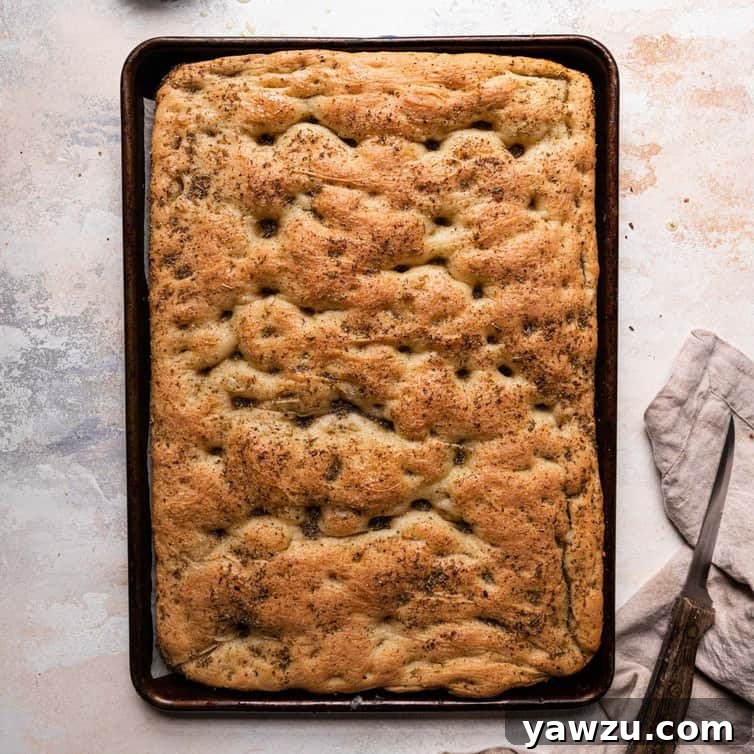
Perfect Homemade Focaccia Bread: Your Guide to Crispy, Fluffy Italian Flatbread
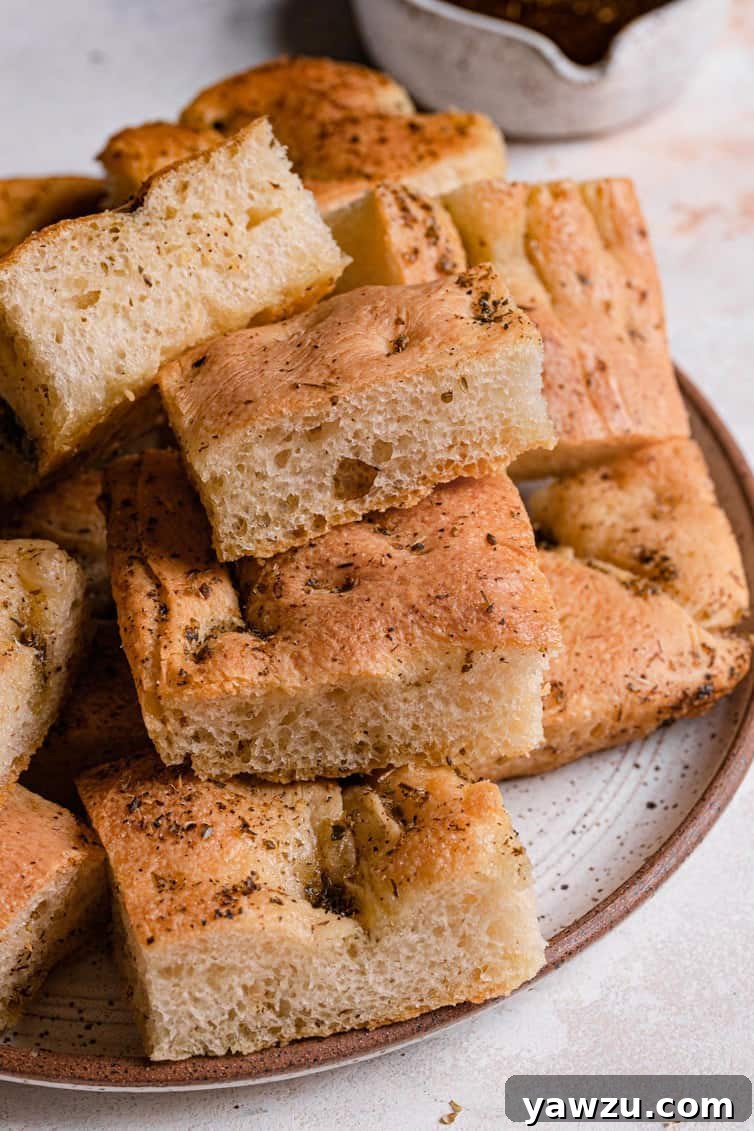
There’s nothing quite as satisfying as the aroma and taste of freshly baked bread filling your home. While many bread varieties offer unique charms, a traditional focaccia stands out with its invitingly crisp exterior, delightfully soft and airy interior, and rich infusion of olive oil and aromatic herbs. This versatile Italian flatbread, easily customizable with an array of toppings, transitions effortlessly from a simple side for hearty soups and stews to a robust base for gourmet sandwiches.
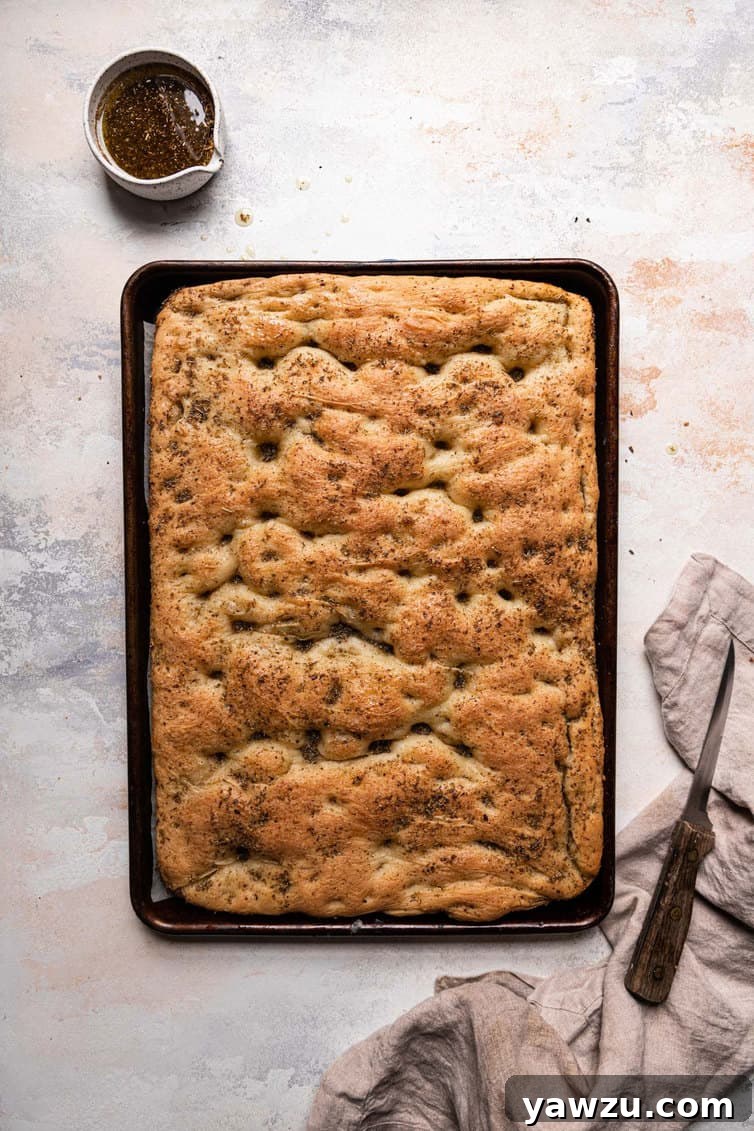
From a warm slice of homemade white bread to a classic Italian loaf, an airy ciabatta, or a cheesy garlic bread, the joy of baking is unparalleled. Among these cherished recipes, traditional focaccia holds a special place, particularly during colder months when comfort food is most craved. Its unique texture – a golden, crusty surface yielding to a tender, flavorful crumb – makes it a consistent favorite. Infused with herbs and garlic, each bite is a taste of Italian culinary heaven. Beyond being an exceptional appetizer or side dish for salads and soups, focaccia can also serve as a delicious foundation for flatbread pizzas or inventive sandwiches, making it a true kitchen hero.
What is Focaccia: An Italian Culinary Delight
Focaccia is a cherished flat, oven-baked Italian bread, often known as Italian flatbread or “pizza bianca.” It’s characterized by its distinctive dimpled surface, generously brushed with olive oil, and adorned with various seasonings and toppings. Originating from ancient Rome, where it was known as “panis focacius” (bread baked on the hearth), focaccia has evolved into a staple across Italy, with regional variations showcasing unique ingredients and styles.
While often compared to pizza dough due to their flat, oven-baked nature and inclusion of toppings, focaccia possesses its own distinct identity. Both breads share a similar ingredient base, but key differences in preparation result in vastly different textures. Focaccia typically has a higher hydration level, contributing to its soft, airy interior. Crucially, focaccia undergoes an extended fermentation and proofing process, including an extra rise after being flattened and dimpled, allowing for deeper flavor development and a more irregular, open crumb. Pizza dough, in contrast, is usually baked immediately after being flattened, resulting in a thinner, crispier crust that’s distinct from focaccia’s plush chewiness.
The Secret to Perfect Focaccia: A Masterful Recipe
After experimenting with countless recipes, this classic method from Peter Reinhart’s acclaimed book, The Bread Baker’s Apprentice, consistently delivers flawless results. It yields a focaccia with an exquisitely crisp exterior, thanks to the ample olive oil, while maintaining an incredibly soft and fluffy interior. This recipe is celebrated for its robust flavor and perfect texture, making it a benchmark for homemade focaccia.
At first glance, the recipe might appear daunting due to its extensive timeline. However, it’s essential to understand that the majority of this duration is dedicated to passive rest and fermentation, requiring very little active “hands-on” work. This extended rest time is crucial for developing the complex flavors and signature airy texture that define exceptional focaccia. By allowing the dough to slowly develop, we achieve a depth of taste and an unparalleled crumb structure that hurried methods simply cannot replicate. Let’s delve into the components and process that make this recipe a consistent triumph.
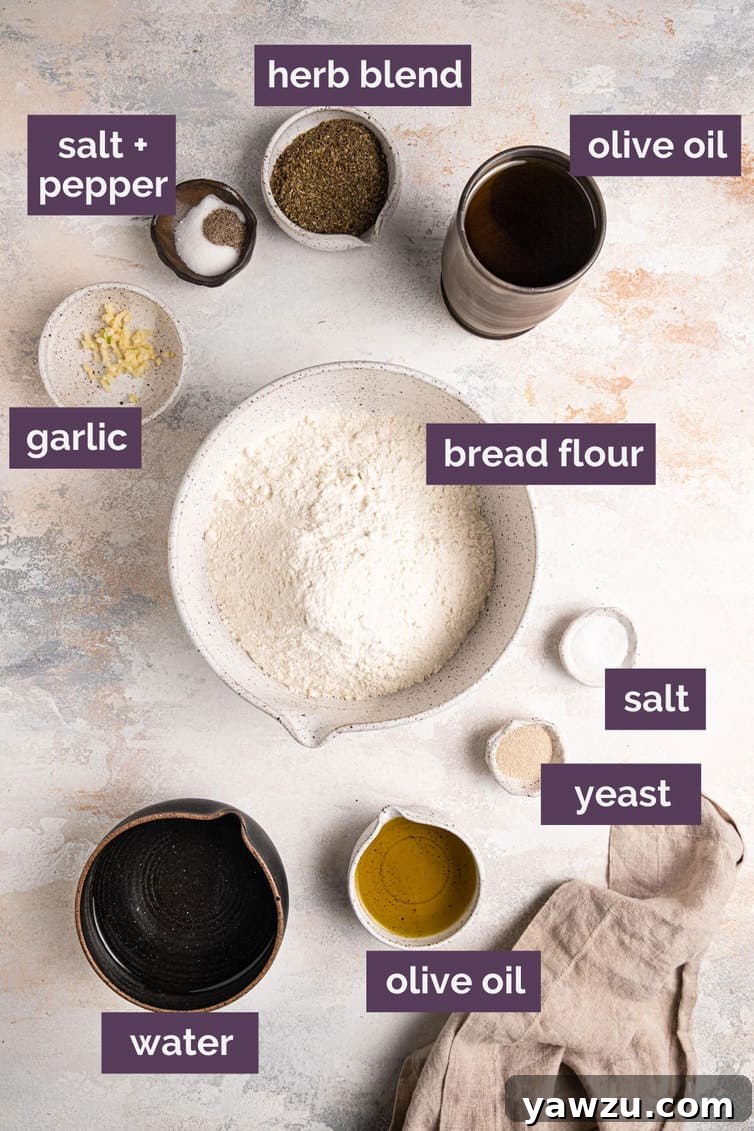
Essential Ingredients for Flavorful Focaccia
- Herb Oil: The heart of focaccia’s flavor. Crafted from high-quality olive oil, a medley of fresh or dried herbs, kosher salt, black pepper, and freshly minced garlic, this oil infuses every part of the bread with aromatic goodness. It also contributes significantly to the crispness of the crust and serves as the perfect binder for toppings.
- Bread Flour: The choice of flour is paramount for focaccia. Bread flour, with its higher protein content, develops more gluten, which is essential for achieving the characteristic chewy texture and structural integrity of the bread. While all-purpose flour can be substituted, it will result in a lighter bread with a less pronounced chew, altering the classic focaccia experience.
- Salt: Far more than just a seasoning, salt plays a critical role in bread making. It enhances the flavor of the dough, balances the sweetness of the flour, and also helps to regulate yeast activity, contributing to a more controlled and even rise.
- Instant Yeast: This leavening agent is responsible for the dough’s rise. Instant yeast feeds on the sugars present in the flour, producing carbon dioxide that creates air pockets, giving focaccia its signature airy and light texture.
- Olive Oil (in the Dough): Beyond its role in the herb oil and on the surface, olive oil incorporated directly into the dough serves to tenderize the bread, making it soft and supple. It also enriches the flavor profile, contributing to the focaccia’s distinctive taste.
- Water: The liquid component that activates the yeast and brings all the dry ingredients together to form a cohesive dough. The exact amount of water influences the dough’s hydration and ultimately the bread’s texture.
Crafting the Aromatic Herb Oil
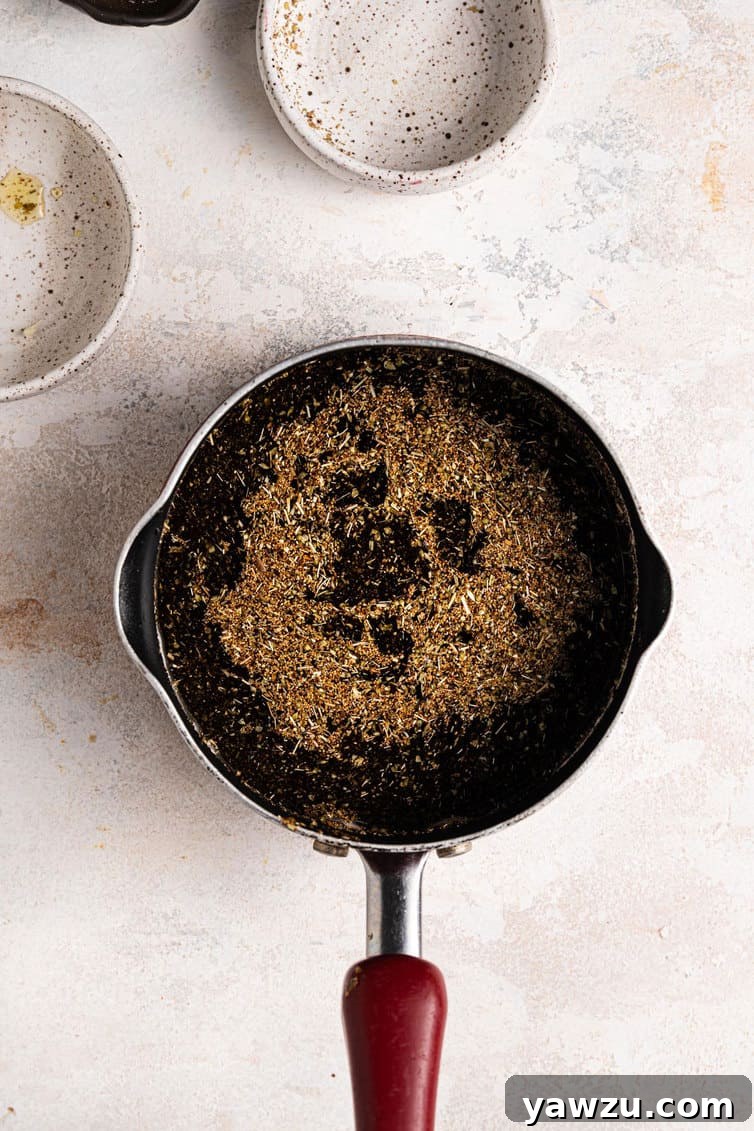
The herb oil is a cornerstone of this focaccia recipe, responsible for infusing the bread with layers of flavor and contributing to its unique texture. The beauty of this component lies in its adaptability; you can easily modify the herbs and additions to align with your personal taste preferences. Here’s how to prepare this fragrant oil:
- Gently Heat Olive Oil: Pour 2 cups of your chosen olive oil into a small saucepan. Warm it over low heat until it reaches approximately 100°F (38°C). This process typically takes only a few minutes. The gentle warmth helps to awaken the aromas of the herbs without cooking them.
- Infuse with Seasonings: Once the olive oil is warmed, add your selected fresh or dried herbs, kosher salt, black pepper, and minced garlic to the saucepan. Stir the mixture well to ensure all components are thoroughly combined and begin to release their flavors into the oil.
- Steep for Maximum Flavor: Remove the saucepan from the heat immediately after mixing. Allow the herb oil to steep undisturbed while you proceed with preparing the focaccia dough. This steeping period is vital for the herbs and garlic to fully impart their essences into the oil, creating a deeply flavorful infusion that will enrich your focaccia.
Herb Oil Customization and Storage Tips
- Choosing Your Herbs: For fresh herbs, consider combinations of basil, parsley, oregano, tarragon, rosemary, thyme, cilantro, or sage. If using dried herbs, any of these individual herbs or a pre-made blend like herbes de Provence will work beautifully. For convenience, 1 tablespoon of granulated garlic can be used in place of fresh minced garlic.
- Flavorful Extras: Elevate your herb oil with additional spices. Try adding 1 teaspoon of paprika for warmth, 1 teaspoon of cayenne pepper for a subtle kick, 1 tablespoon of fennel seeds for a hint of anise, 1 teaspoon of onion powder, or 1 tablespoon of dried, minced onions for an extra layer of savory depth.
- Storage: Any leftover herb oil can be stored in an airtight container in the refrigerator for up to 2 weeks. It makes a fantastic dipping oil for other breads or a flavorful drizzle over salads and roasted vegetables.
Mastering the Focaccia Dough Preparation
The dough is the foundation of your perfect focaccia. While the process involves several steps and rest periods, the actual hands-on time is minimal, allowing the ingredients to develop flavor and structure over time.
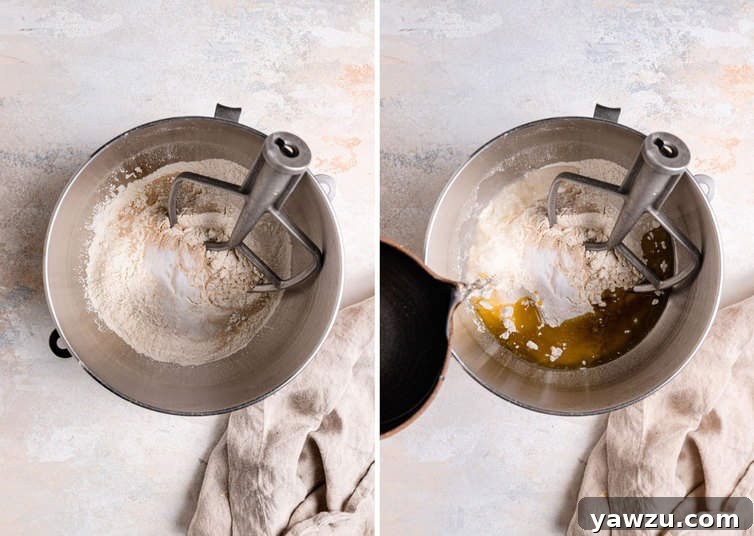
- Mixing the Dough: In the bowl of an electric mixer, combine the bread flour, salt, and instant yeast. Give them a quick stir to distribute evenly. Next, add the 6 tablespoons of olive oil and water. Using the paddle attachment, mix on low speed until all the ingredients come together to form a wet, sticky ball. This initial mixing ensures proper hydration and incorporation of ingredients.
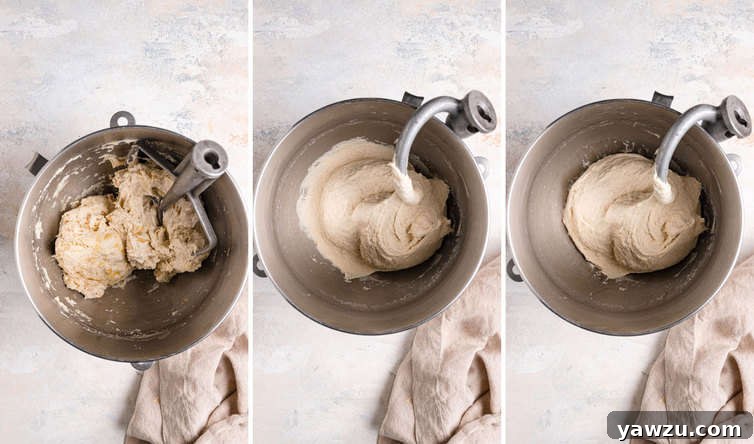
- Kneading for Smoothness: Switch from the paddle attachment to the dough hook. Knead the dough on medium speed for 5 to 7 minutes. The goal is to develop the gluten sufficiently to create a smooth, yet still sticky, dough. It should pull away from the sides of the bowl but still adhere to the bottom. If the dough seems too loose to clear the sides, you may add a small amount of additional flour, but remember, focaccia dough is meant to be quite soft and sticky to achieve its characteristic texture.
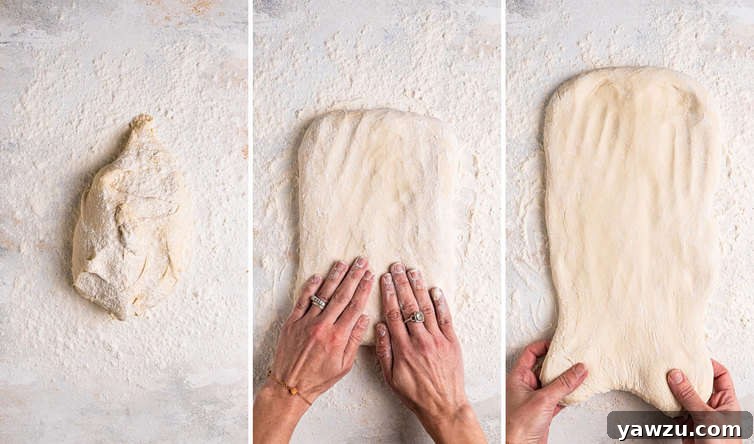
- First Stretch and Rest: Lightly sprinkle your clean workspace with flour, creating a bed approximately 6 inches square. Using a dough spatula or bench scraper dipped in water (to prevent sticking), carefully transfer the sticky dough onto the floured surface. Dust the dough liberally with flour and gently pat it into a rectangular shape. Allow the dough to rest for 5 minutes; this brief pause helps relax the gluten, making it easier to handle. Then, lightly flour your hands and gently stretch the dough from each end, aiming to double its size.
- Shaping and First Fold: After stretching, fold the dough in a “letter style” (folding one-third over the middle, then the other third over that) to return it to a rectangular shape. Lightly mist the top of the dough with olive oil spray or a non-stick cooking spray, dust it again with flour, and then loosely cover it with plastic wrap. Let the dough rest for 30 minutes. This series of stretches and folds, interspersed with rest periods, is crucial for developing gluten strength and structure without excessive kneading.
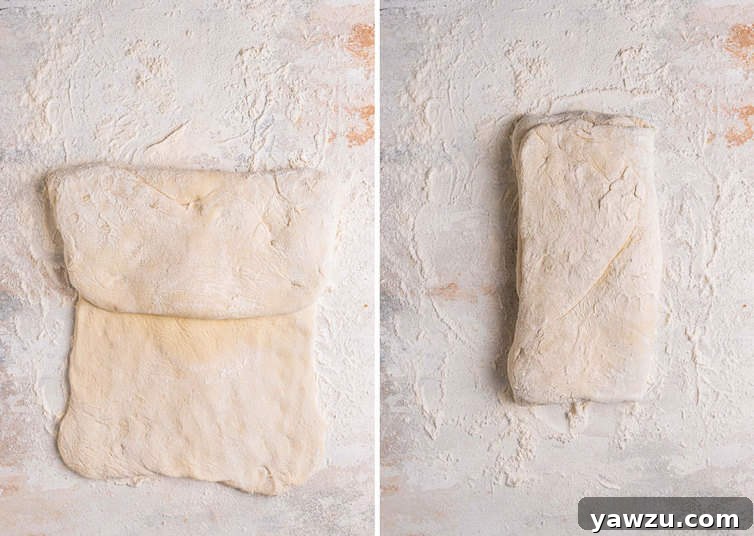
- Second Stretch and Fold: Repeat the previous step: stretch the dough to twice its size, fold it letter style back into a rectangle. Mist with oil, dust with flour, and cover loosely with plastic wrap. Allow the dough another 30-minute rest. Each fold strengthens the dough and creates layers, contributing to the focaccia’s airy crumb.
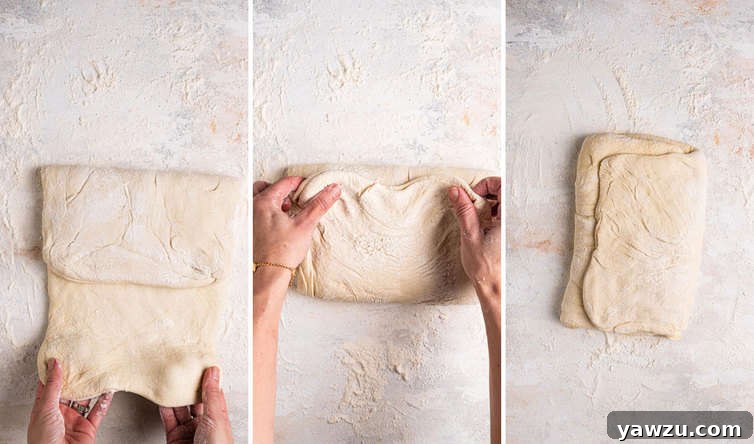
- The Final Stretch and Fermentation: For the last time, stretch and fold the dough. Once folded, cover it loosely with plastic wrap and allow it to ferment on your work surface for 1 hour at room temperature. During this period, the dough should noticeably swell, though it might not necessarily double in size. This primary fermentation step further develops flavor and gas pockets.
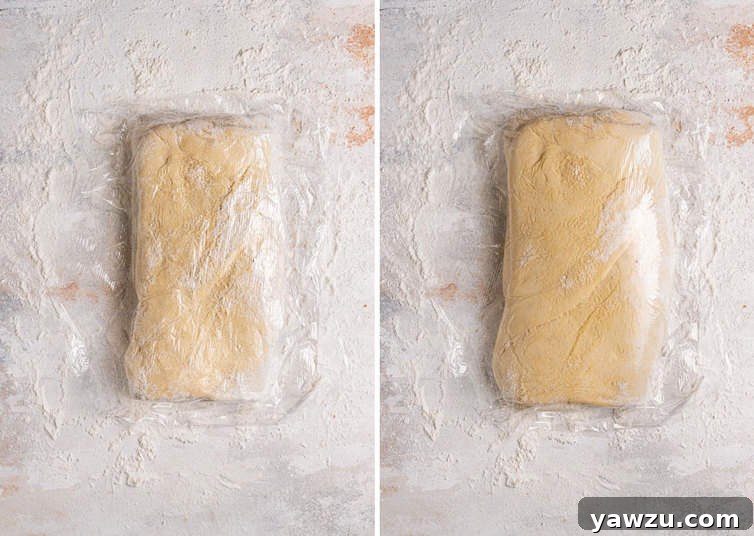
- Preparing for the Pan: Line a half sheet pan with parchment paper, ensuring it covers the entire surface. Drizzle approximately 1/4 cup of olive oil over the parchment and spread it evenly with your hands or a brush. Lightly oil your hands to prevent sticking. Using a plastic dough spatula or bench scraper, gently transfer the dough to the prepared sheet pan, trying to maintain its rectangular shape as much as possible. Spoon about half of your prepared herb oil over the dough.
- Dimpling the Dough: This is a signature step for focaccia. Use your fingertips to gently dimple the dough all over, pressing down to create small indentations. As you dimple, gently spread the dough to fit the entire pan. If the dough resists and becomes too springy, simply let it rest for 15 minutes to allow the gluten to relax, then continue dimpling. Don’t stress if you can’t perfectly fill the corners initially. Add more herb oil as needed to ensure the entire surface remains well-coated, which will contribute to the crust’s texture and flavor.
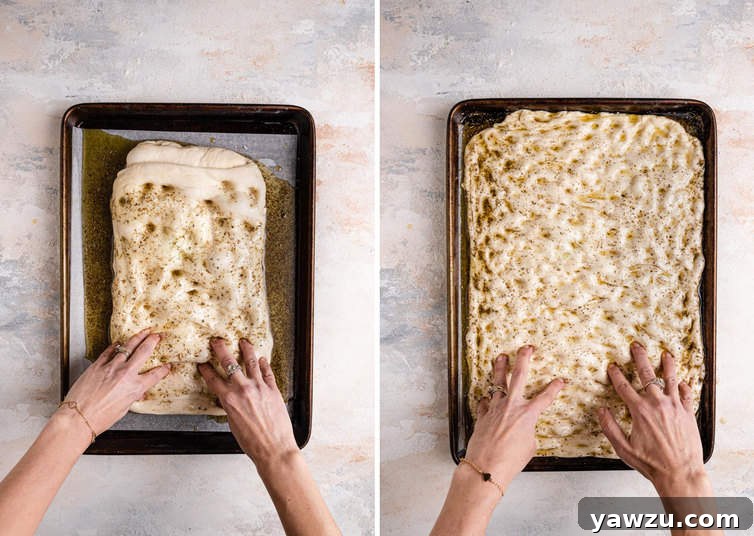
- Overnight Refrigeration (Cold Fermentation): Loosely cover the pan with plastic wrap and refrigerate it overnight, or for up to 3 days. This slow, cold fermentation is a game-changer. It significantly enhances the flavor development, resulting in a more complex and nuanced bread, and also makes the dough easier to handle.
Baking Your Beautiful Focaccia
The final steps transform your carefully prepared dough into golden, aromatic focaccia.
- Bringing to Room Temperature: On baking day, remove the pan from the refrigerator at least 3 hours before you plan to bake. This allows the dough to slowly warm up and begin its final proofing phase.
- Final Proofing and Toppings: Drizzle additional herb oil over the dough and gently dimple it in. This is also the stage to add any desired “pre-proof” toppings (see suggestions below) by gently pressing them into the dough. Cover the pan loosely with plastic wrap and let it proof at room temperature for approximately 3 hours. During this time, the dough should significantly double in size, reaching a thickness of about 1 inch.
- Preheating and Pre-bake Toppings: Preheat your oven to a high temperature of 500°F (260°C). While the oven preheats, gently place any “pre-bake” toppings onto the focaccia surface.
- Baking Process: Carefully place the sheet pan into the preheated oven. Immediately reduce the oven temperature to 450°F (230°C) and bake for 10 minutes. After 10 minutes, rotate the pan 180° for even baking and continue baking for another 5-10 minutes, or until the focaccia develops a beautiful golden-brown color. If incorporating “during-bake” toppings, sprinkle them on at this point and return the focaccia to the oven for an additional 5 minutes or until they are warmed through and the bread is fully cooked. The internal temperature of the focaccia should register at least 200°F (93°C) with an instant-read thermometer.
- Cooling and Serving: Once baked, carefully remove the pan from the oven. Immediately transfer the hot focaccia out of the pan and onto a wire cooling rack. Allow it to cool for at least 20 minutes before slicing and serving. This cooling period is crucial for the internal structure to set, resulting in the best texture.
Focaccia Bread Success Tips for a Perfect Loaf
Achieving a truly remarkable focaccia requires attention to a few key details. These tips will help you navigate the baking process and ensure a consistently delicious result:
- Hand-Mixing the Dough: A stand mixer simplifies the process, but you can absolutely make this dough by hand. Instead of kneading with a dough hook, use a large metal spoon to vigorously mix the dough for 3 to 5 minutes, or until it becomes smooth and all ingredients are evenly distributed. The dough will be sticky, so embrace the mess!
- Gentle Dimpling is Key: When creating those signature dimples, always use only your fingertips. Avoid using the flat of your hands, as this can tear or rip the delicate dough structure. Gentle dimpling helps to release some of the air from the dough, preventing it from rising too rapidly and creating those beautiful, oil-filled pockets.
- Selecting the Right Olive Oil: The quality of your olive oil significantly impacts the flavor of your focaccia. Opt for a good quality extra virgin olive oil that is suitable for both cooking and baking. Avoid using a “finishing oil” within the dough or during the baking process, as these are typically meant for raw applications and can have a more intense flavor that might not be ideal for baking. A robust, fruity olive oil works best.
- Understanding Fermentation: The long, cold fermentation in the refrigerator is a secret weapon for amazing flavor. Don’t rush this step. It allows enzymes to break down starches into sugars, feeding the yeast slowly and developing complex aromas and a more tender crumb.
- Don’t Be Afraid of Stickiness: Focaccia dough is inherently sticky and wet. This high hydration is what contributes to its open, airy texture. Resist the urge to add too much extra flour beyond what is needed to manage stickiness on your hands and work surface.
Endless Topping Ideas for Customizing Your Focaccia
One of the most exciting aspects of making focaccia is the opportunity to customize it with a vast array of toppings. The timing of when you add these toppings can dramatically affect their texture and flavor. Here are some inspiring ideas, categorized by when to apply them:
Pre-Proof Topping Ideas:
These toppings are added before the final room temperature proof, allowing them to meld with the dough and deepen their flavors.
- Sun-dried tomatoes (chopped)
- Olives (pitted and halved, such as Kalamata or Castelvetrano)
- Roasted garlic cloves (whole or sliced)
- Fresh herbs (heartier varieties like rosemary, thyme, or oregano)
- Walnuts, pine nuts, or other nuts (lightly toasted for extra flavor)
- Sautéed mushrooms, bell peppers, or onions (ensure they are cooled and excess moisture is removed)
Pre-Bake Topping Ideas:
These toppings are added just before the focaccia goes into the hot oven, allowing them to melt or crisp up beautifully.
- Soft cheeses (crumbled blue cheese, fresh mozzarella pearls, crumbled feta)
- Cooked ground meat (sausage, seasoned beef, or lamb)
- Strips of deli meat (prosciutto, salami, or coppa)
- Coarse salt (flaky sea salt adds a lovely crunch and visual appeal)
- Coarse sugar (for a sweet focaccia, perfect with fruit toppings)
During-Bake Topping Ideas:
These toppings are best added partway through baking to prevent them from burning or becoming overly dry.
- Dry or semi-hard cheeses (grated Parmesan, Romano, shredded regular mozzarella, Monterey Jack, Cheddar, or Swiss)
- Thinly sliced vegetables that cook quickly (e.g., zucchini or cherry tomato halves)
Serving Suggestions for Your Homemade Focaccia
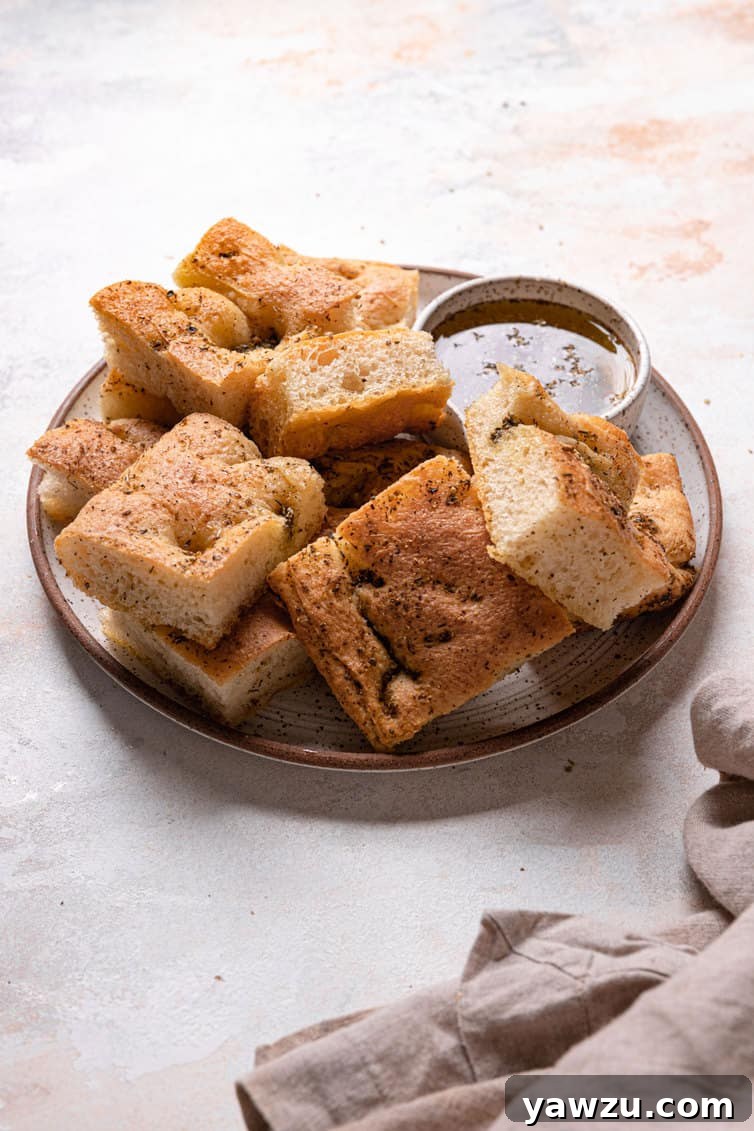
No matter how you choose to adorn it, I can confidently promise that homemade focaccia is infinitely superior to any store-bought version. The fresh aroma, the perfect balance of crisp and soft, and the ability to tailor it to your exact preferences make it a truly special treat. It pairs beautifully with virtually any meal. Try serving this versatile bread alongside your favorite soup or chili recipe for a comforting and satisfying meal. I also particularly love to serve my focaccia with:
- Hearty Pasta Fagioli
- Easy Baked Ziti with Sausage
- Cheesy Baked Tortellini
- As a base for incredible sandwiches with cold cuts, cheese, and fresh greens.
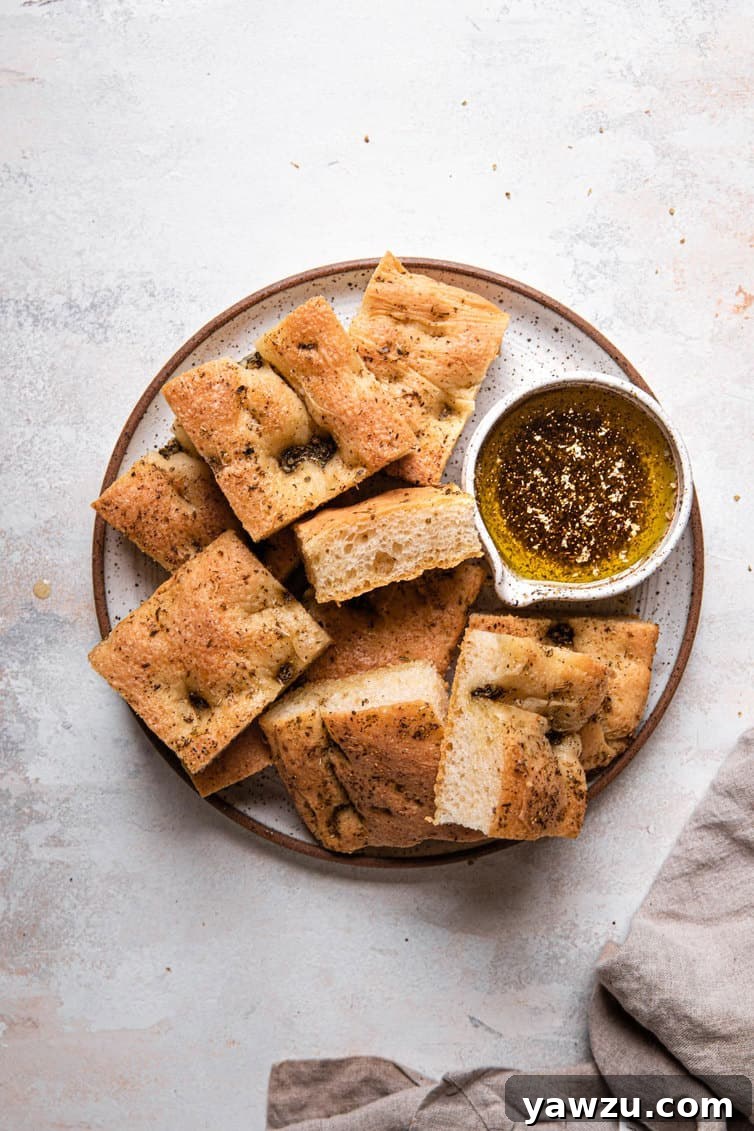
- Dipped simply in extra virgin olive oil or the leftover herb oil.
- Alongside a fresh green salad for a light yet satisfying lunch.
Freezing, Storing, and Reheating Focaccia Tips
Proper storage ensures you can enjoy your delicious homemade focaccia for longer. Here’s how to preserve its freshness:
- Freezing Dough Before Baking: If you wish to prepare the dough in advance, complete the dough-making steps (through step 7 – the 1-hour fermentation on the work surface). After this rise, wrap the dough tightly in plastic wrap, then place it into a freezer-safe bag. It can be frozen for up to 3 months. To use, thaw the dough overnight in the refrigerator, then allow it to come to room temperature for the final proofing before proceeding with the remaining steps of the recipe.
- Freezing Baked Focaccia: For already baked focaccia, slice it into individual portions. Wrap each slice tightly in plastic wrap, then wrap again in aluminum foil, and place them into a freezer-safe bag. Freeze for up to 1 month. To enjoy, thaw at room temperature. If desired, you can reheat the slices in a 325°F (160°C) oven for about 5 minutes, or until warmed through and the crust regains some crispness.
- Short-Term Storage: Focaccia is undoubtedly best enjoyed on the day it’s baked. However, any leftovers can be stored at room temperature, tightly covered, for up to 2 days. To maintain its softness, you might consider wrapping it in foil before placing it in an airtight container.
- Reheating Baked Focaccia: While freshly baked is ideal, you can easily revive leftover focaccia. Place it in a preheated oven at 350°F (175°C) for approximately 8-10 minutes, or until it is warmed through and the crust becomes crisp again. This method works wonders to bring back its original charm.
Explore More Bread Recipes
If you enjoyed making this focaccia, you might be inspired to try other delightful bread recipes:
- Basic Pizza Dough
- Homemade Pita Bread
- Classic Italian Bread
- Potato Rosemary Bread
- 10 Best Yeast Bread Recipes
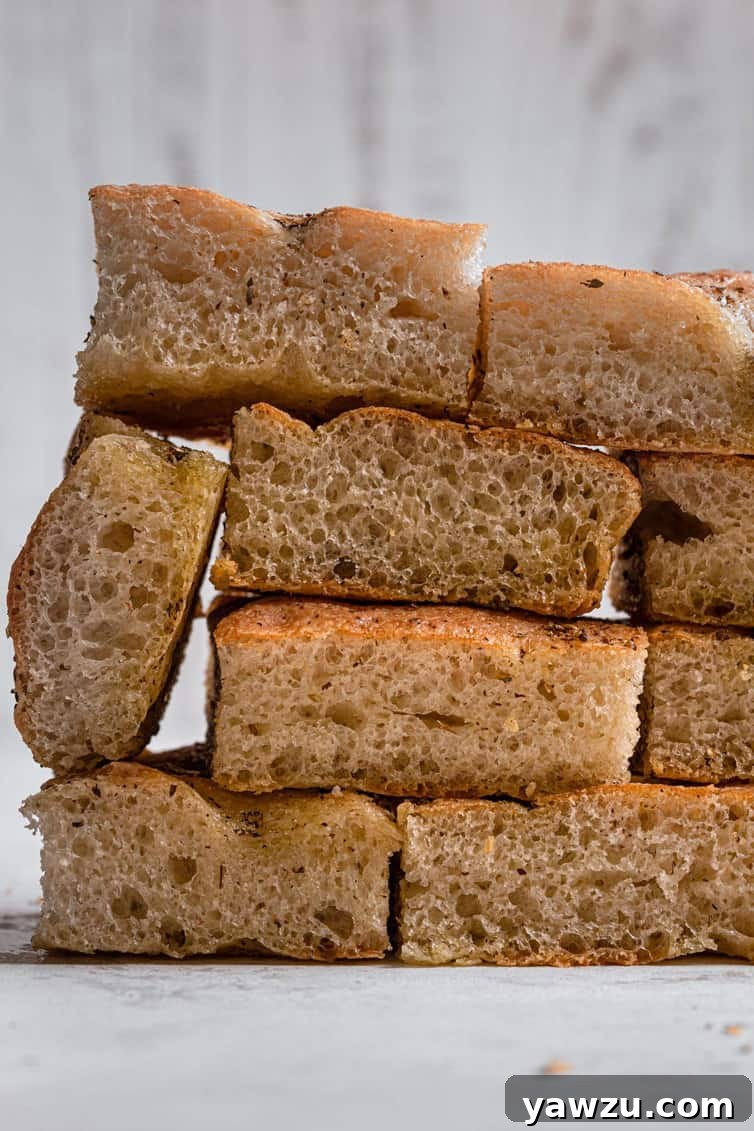
With its golden, dimpled crust and soft, tender interior, this homemade focaccia bread is the perfect accompaniment to your favorite soups, stews, or hearty pasta dishes. Slice it thick, serve it with a drizzle of extra virgin olive oil or your homemade herb oil, and savor the simple pleasure of traditional Italian baking. You truly can’t go wrong with this irresistible treat!
Watch How to Make This Classic Focaccia Bread:
For a visual guide to perfecting this recipe, watch our detailed video demonstration. It covers every step from mixing the dough to the final bake, ensuring you achieve a beautiful, delicious focaccia every time.
If you make this recipe and love it, remember to stop back and give it a 5-star rating – it helps others find the recipe! ❤️️
Focaccia Bread Recipe
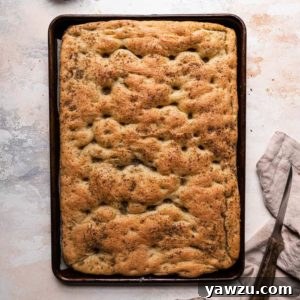
A traditional focaccia bread recipe with tons of topping ideas that bakes up crisp on the outside and warm and soft on the inside. Perfect for serving with soups and stews, or even for making sandwiches.
Yield: 24 servings
Prep Time: 40 mins
Cook Time: 20 mins
Resting time: 12 hrs
Total Time: 13 hrs
Ingredients
For the Herb Oil:
- 2 cups olive oil
- 1 cup chopped fresh herbs, OR 1/3 cup dried herbs
- 1 tablespoon kosher salt
- 1 teaspoon ground black pepper
- 6 cloves garlic, minced
For the Dough:
- 5 cups (638 g) high-gluten or bread flour
- 2 teaspoons salt
- 2 teaspoons instant yeast
- 6 tablespoons olive oil
- 2 cups (480 ml) water, at room temperature
For Preparation:
- ¼ cup olive oil
- Pre-proof toppings, optional
- Pre-bake toppings, optional
- During-bake toppings, optional
Instructions
- Make the Herb Oil: Warm 2 cups olive oil in a small saucepan over low heat to 100 degrees F (this only takes a few minutes). Add the herbs, salt, pepper, and garlic; stir together, remove from the heat and allow to steep while you prepare the dough.
- Make the Dough: Stir together the flour, salt, and yeast in the bowl of an electric mixer. Add the oil and water and mix on low speed with the paddle attachment until all of the ingredients form a wet, sticky ball.
- Switch to the dough hook and mix on medium speed for 5 to 7 minutes, or as long as it takes to create a smooth, sticky dough. The dough should clear the sides of the bowl but stick to the bottom of the bowl. You may need to add additional flour to firm up the dough enough to clear the sides of the bowl, but the dough should still be quite soft and sticky.
- Sprinkle enough flour on a clean work surface to make a bed about 6 inches square. Using a dough spatula or bench scraper dipped in water, transfer the sticky dough to the bed of flour and dust liberally with flour, patting the dough into a rectangle. Allow the dough to rest for 5 minutes.
- Coat your hands with flour and stretch the dough from each end to twice its size. Fold it, letter style, over itself to return it to a rectangular shape. Mist the top of the dough with spray oil or nonstick cooking spray, again dust with flour, and loosely cover with plastic wrap. Allow the dough to rest for 30 minutes.
- Stretch and fold the dough again; mist with oil, dust with flour, and cover loosely with plastic wrap. Allow the dough to rest for 30 minutes.
- Once more, stretch and fold the dough. Cover loosely with plastic wrap and allow to ferment on the work surface for 1 hour. It should swell but not necessarily double in size.
- Line a half sheet pan with parchment paper. Drizzle ¼ cup olive oil over the paper, and spread it with your hands or a brush to cover the surface. Lightly oil your hands and, using a plastic dough spatula or bench scraper, lift the dough from the work surface and transfer it to the sheet pan, maintaining the rectangular shape as much as possible. Spoon half of the herb oil over the dough.
- Use your fingertips to dimple the dough and spread it to fill the pan. If the dough becomes too springy, let it rest for 15 minutes and then continue dimpling. Don’t worry if you aren’t able to completely fill the pan, especially the corners. Use more herb oil as needed to ensure that the entire surface is coated with oil.
- Loosely cover the pan with plastic wrap and refrigerate overnight (or up to 3 days).
- Remove the pan from the refrigerator 3 hours before baking.
- Drizzle additional herb oil over the surface and dimple it in (you can use all of the herb oil if you want; the dough will absorb it even though it looks like a lot). The pan should be filled completely with the dough and the dough should have a thickness of about ½-inch. Add any other pre-proof toppings (see notes below). Cover the pan with plastic wrap and proof at room temperature for 3 hours, or until the dough double in size, rising to a thickness of nearly 1 inch.
- Preheat oven to 500 degrees F. Gently place any pre-bake toppings on the dough (see notes below).
- Place the pan in the oven. Immediately lower the oven temperature to 450 degrees F and bake for 10 minutes. Rotate the pan 180 degrees and continue baking for 5 to 10 minutes, or until it begins to turn a light golden brown. If you are using any during-bake toppings (see notes below), sprinkle them on at this point and continue baking an additional 5 minutes or so. The internal temperature of the dough should register at least 200 degrees F on an instant-read thermometer.
- Remove the pan from the oven and immediately transfer the focaccia out of the pan onto a cooling rack. Allow the focaccia to cool for at least 20 minutes before slicing or serving.
Notes
- Herb Oil: If using fresh herbs, use any combination of basil, parsley, oregano, tarragon, rosemary, thyme, cilantro, and sage. If using dried herbs, you can use a combination of any of the previous herbs, or use a blend such as herbes de Provence. You can substitute 1 tablespoon granulated garlic for the fresh garlic.
- Herb Oil Extras: You can also add 1 teaspoon paprika, 1 teaspoon cayenne pepper, 1 tablespoon fennel seeds, 1 teaspoon onion powder, or 1 tablespoon dried, minced onions.
- Herb Oil Storage: Keep any leftover herb oil in the refrigerator for up to 2 weeks (it makes a wonderful dipping oil!).
- Make the Dough By Hand: The dough can be prepared without a stand mixer by mixing the dough with a large metal spoon in lieu of the kneading step. You will need to mix vigorously for about 3 to 5 minutes, or until the dough is smooth and the ingredients are evenly distributed.
- Gentle Dimpling: When dimpling the dough, be sure to use ONLY your fingertips and not the flat of your hands to avoid tearing or ripping the dough.
- Pre-Proof Topping Ideas:
- Sun-dried tomatoes
- Olives
- Roasted garlic
- Fresh herbs
- Walnuts, pine nuts, or other nuts
- Sautéed mushrooms, bell peppers, or onions
- Pre-Bake Topping Ideas:
- Soft cheeses – Blue cheese, fresh mozzarella, and feta
- Cooked ground meat
- Strips of deli meat
- Coarse salt
- Coarse sugar
- During-Bake Topping Ideas:
- Dry or semihard cheeses – Parmesan, Romano, regular mozzarella, Monterey Jack, Cheddar, and Swiss
- Freeze Before Baking: If you wish to prepare the dough in advance, complete steps #1 through 7. After the 1 hour rise, wrap tightly in plastic wrap, place in a freezer-safe bag, and freeze for up to 3 months. Thaw overnight in the refrigerator, then proceed with the rest of the recipe.
- Freeze After Baking: Wrap individual slices of focaccia in plastic wrap, then in foil, and place in a freezer-safe bag. Freeze for up to 1 month. Thaw at room temperature and, if desired, reheat in a 325-degree oven for 5 minutes, or until warmed through and crispy.
- Storage: The focaccia is best the day it is made, but it can be stored, tightly covered, at room temperature for up to 2 days.
- Recipe from The Bread Baker’s Apprentice
Nutrition Information (per serving)
Calories: 147kcal, Carbohydrates: 19g, Protein: 3g, Fat: 6g, Sodium: 487mg, Potassium: 42mg, Fiber: 1g, Vitamin A: 60IU, Vitamin C: 0.2mg, Calcium: 10mg, Iron: 0.6mg
Did you make this recipe?
Leave a review below, then snap a picture and tag @thebrowneyedbaker on Instagram so I can see it!
Author: Michelle Lettrich
Course: Bread
Cuisine: Italian
Photography by Dee Frances