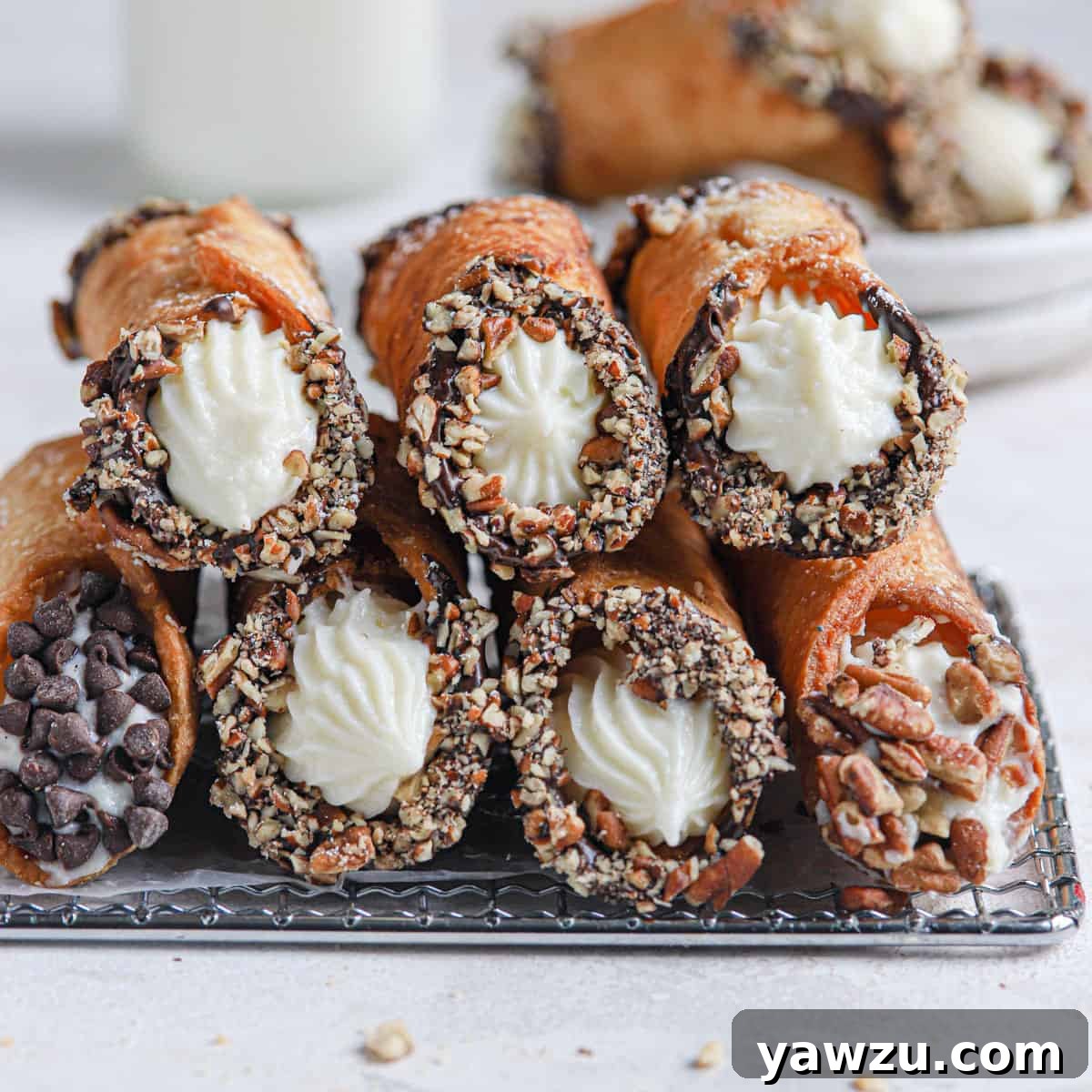
Authentic Homemade Cannoli Recipe: Crispy Shells & Creamy Ricotta Filling
Creating homemade cannoli is a culinary journey that brings the heart of Sicily right into your kitchen. Imagine light, golden, and incredibly crispy cannoli shells, perfectly fried, embracing a luscious, sweet, and creamy ricotta filling. This isn’t just a dessert; it’s an experience, a treat that promises to become a cherished family favorite, made from scratch with love and tradition. Once you master this recipe, from crafting the delicate shells to preparing the velvety filling, you’ll want to recreate this absolute delight again and again.
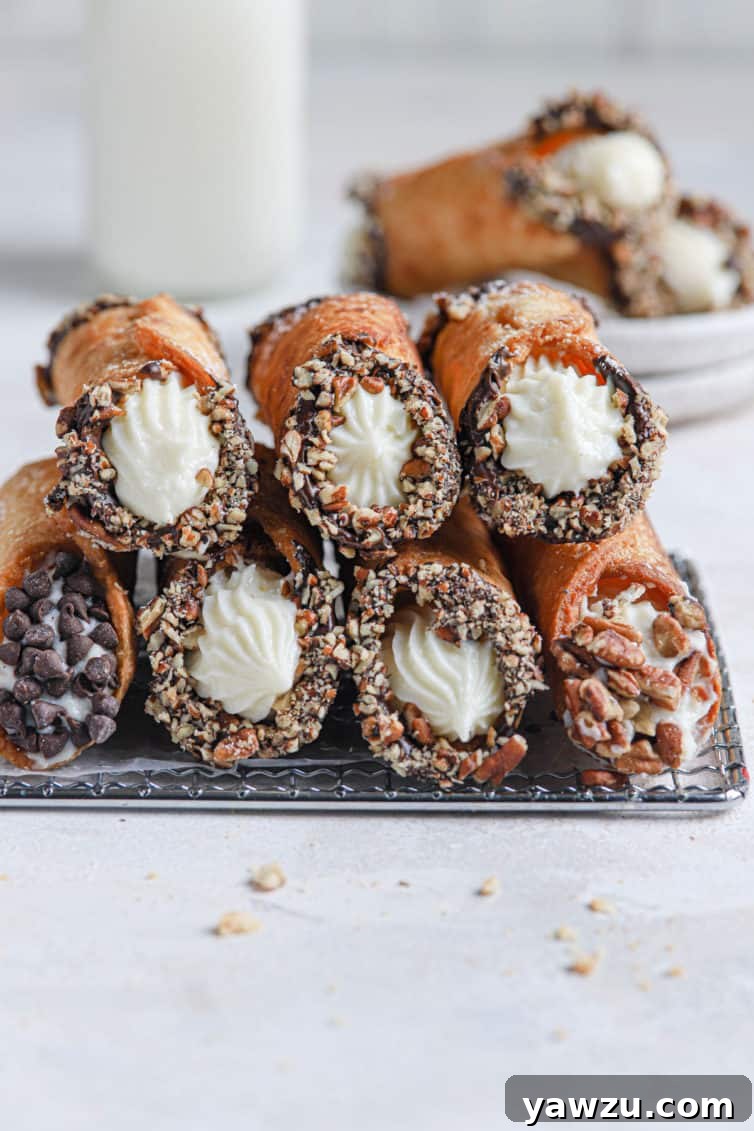
This particular cannoli recipe holds immense sentimental value, having been lovingly passed down through my husband’s family for generations. While I had savored countless cannoli from bakeries and restaurants over the years, I had never encountered anyone who truly undertook the magnificent endeavor of preparing the entire pastry – both the delicate shells and the exquisite filling – entirely from scratch. What made this family tradition even more extraordinary was that my husband’s grandfather, a skilled craftsman who once worked at an aluminum plant, meticulously fashioned the cannoli forms himself, imbuing each pastry with a unique piece of family history.
I vividly recall a New Year’s Eve day over a decade ago when our family gathered at my in-laws’ home, not just to celebrate, but to participate in the sacred ritual of making cannoli. I watched in awe as his Nana, with practiced hands and a serene focus, expertly rolled out the dough, meticulously wrapping it around each custom-made form. Her movements were precise, a testament to years of perfecting the craft. Beside her, my husband’s dad patiently stirred the creamy ricotta filling, ensuring its perfect texture and sweetness. The air was filled with anticipation and the delicious aromas of a kitchen in full swing. Finally, the moment arrived when we could all enjoy the exquisite fruits of their labor – those perfectly fried shells brimming with the rich, sweet filling. It was more than just a dessert; it was a warm embrace of family, heritage, and culinary artistry.
What Are Cannoli? A Taste of Sicilian Tradition
For those unfamiliar with this iconic Italian confection, cannoli are a traditional Sicilian pastry renowned worldwide. The name “cannoli” itself (singular: “cannolo”) is derived from “canna,” meaning “little tube,” referring to the cane-shaped forms originally used to create their distinctive tubular shape. This exquisite dessert is made by rolling out a circular piece of dough, typically enriched with wine or spirits, and then wrapping it around a metal cylinder or “form.” Once secured, these dough-wrapped forms are deep-fried until they achieve a beautifully golden-brown hue and an irresistibly crisp, bubbly texture. The hollow shells are then carefully removed from their forms, ready to be filled.
Once the shells have cooled completely, they are generously filled with a rich, sweetened ricotta cheese mixture. While the basic ricotta filling is a classic in itself, variations abound. Sometimes, a touch of orange or lemon zest is incorporated into the filling, or finely chopped nuts such as pistachios, almonds, or walnuts are added for extra texture and flavor. It’s also common to dip the ends of the filled cannoli into crushed nuts, mini chocolate chips, candied fruit, or even finely chopped maraschino cherries, adding both visual appeal and a delightful contrasting bite. Before serving, a delicate dusting of powdered sugar often provides the perfect finishing touch, enhancing their elegant presentation and adding another layer of sweetness.
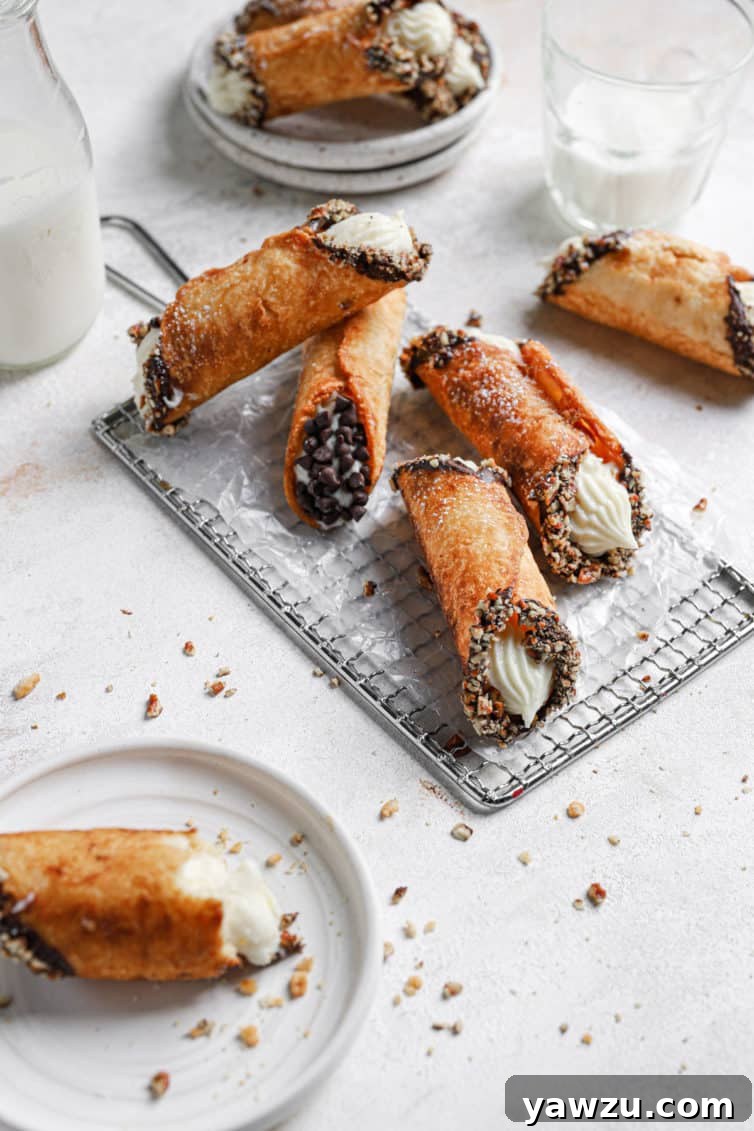
At its core, making cannoli involves two distinct yet equally important components: the crispy shells and the creamy filling. These two elements are prepared separately, allowing each to develop its unique characteristics before coming together in perfect harmony. Once both are ready, the luscious filling is typically piped into the cooled shells using a pastry bag. The aesthetic appeal of cannoli is often enhanced by garnishes. As mentioned, common adornments for the ends include vibrant mini chocolate chips, finely chopped nuts, candied citron, or even a drizzle of chocolate. The entire pastry can then be lightly dusted with powdered sugar, adding a final touch of sweetness and elegance just before they are presented and savored.
Now, let’s delve deeper into each component, exploring the ingredients and techniques that bring these magical pastries to life.
Crafting the Perfect Cannoli Shell: Key Ingredients
The secret to truly outstanding cannoli lies in their shells – a delicate balance of crispiness and flavor. Homemade cannoli shells are crafted from a dough that shares similarities with a classic pie crust but boasts a slightly more stable structure, thanks to the inclusion of egg yolks. These yolks not only act as a binding agent, making the dough easier to handle and roll out, but also contribute to a richer color. To achieve these iconic light and airy shells, you’ll need a precise combination of ingredients:
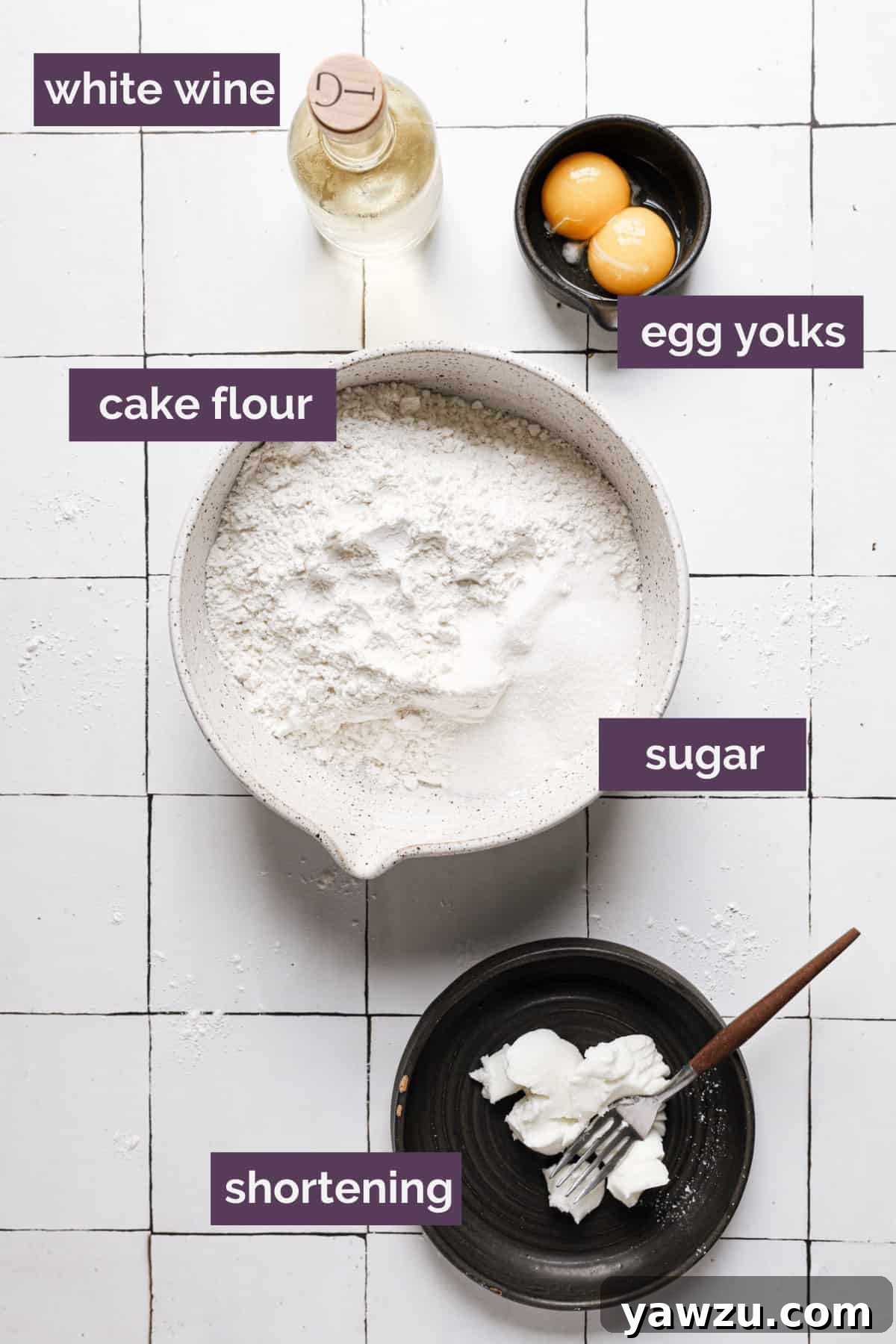
- Cake Flour: This is a crucial ingredient for a truly delicate and light shell. Cake flour has a lower protein content than all-purpose flour, which results in a tender dough that crisps up beautifully during the deep-frying process, preventing a dense or tough texture.
- Granulated Sugar: A small amount of sugar is added to the dough to subtly sweeten the shell itself, providing a delightful contrast to the rich filling and contributing to its golden-brown color during frying.
- Vegetable Shortening: Unlike butter, vegetable shortening has a higher melting point. This property is vital for cannoli shells, as it helps the dough maintain its structural integrity and flakiness during the intense heat of frying, resulting in a crispier, less greasy end product.
- Egg Yolks: Beyond their role in binding the dough and making it more pliable, egg yolks impart a beautiful richness and a subtle golden hue to the shells, enhancing their overall appeal.
- Wine (White or Red): Wine is a traditional ingredient in cannoli dough, serving multiple purposes. Its acidity helps to tenderize the gluten in the flour, resulting in a lighter and more delicate shell. More importantly, it adds a distinctive depth of flavor and contributes to the characteristic crispy, bubbly texture when fried. Pinot Grigio, Sauvignon Blanc, or Marsala are excellent choices, though any dry wine works well. For an alcohol-free alternative, buttermilk can be used.
- Vegetable Oil: A good quality, neutral-flavored vegetable oil with a high smoke point, such as canola, sunflower, or peanut oil, is essential for deep-frying the shells to golden perfection.
The Heart of the Cannoli: Creamy Ricotta Filling Ingredients
The soul of any authentic cannolo lies in its filling – a sweet, creamy, and sometimes surprisingly complex ricotta mixture. While many recipes exist, some traditional fillings call for meticulously draining the ricotta cheese to remove excess moisture or beating it to achieve an incredibly smooth consistency before incorporating sugar and other flavor enhancers. For this particular recipe, which yields a wonderfully rich and cooked ricotta filling, you will need a select few high-quality ingredients:
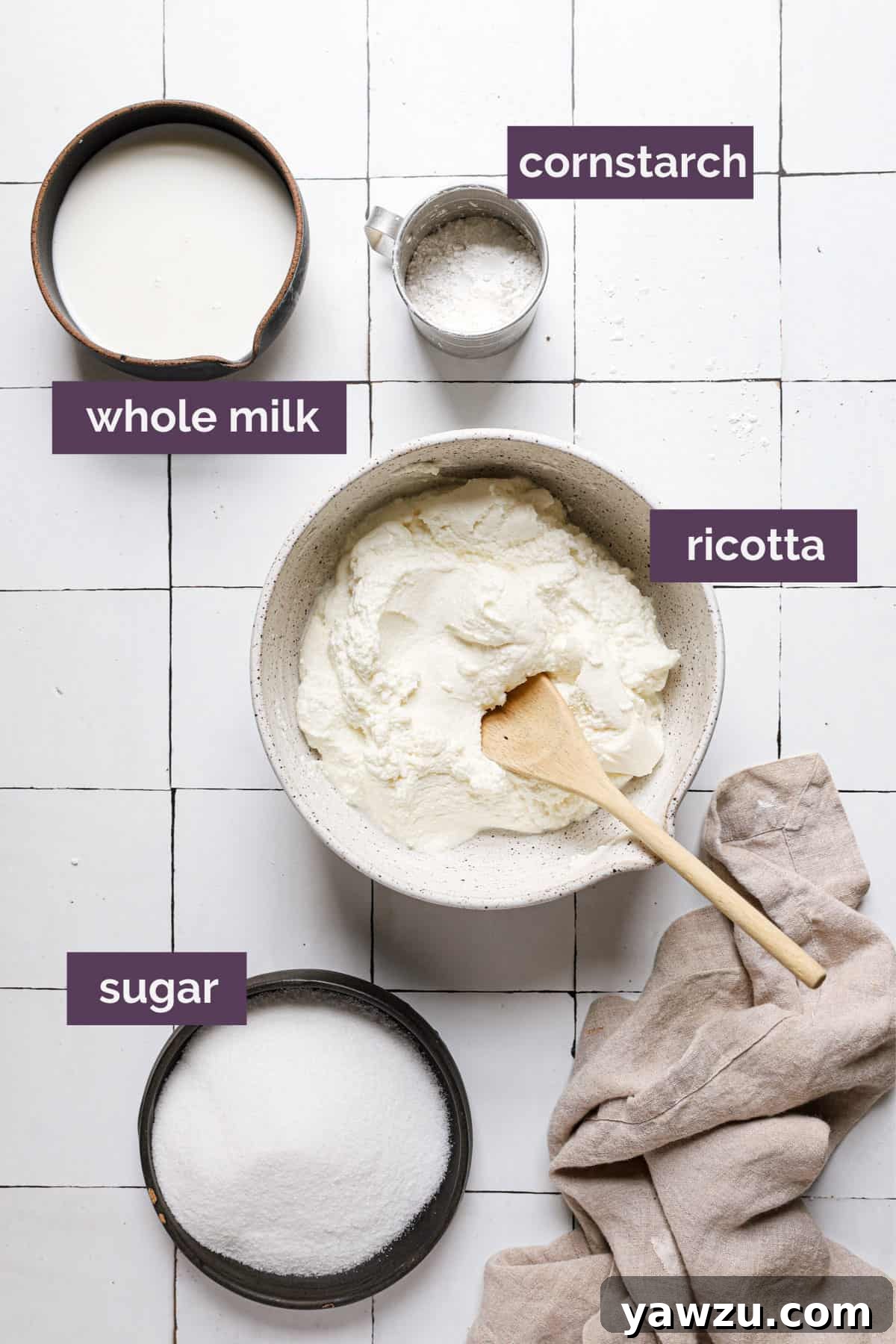
- Ricotta Cheese: The star of the show. High-quality whole milk ricotta cheese is paramount for a creamy, rich texture. It forms the base of the filling, providing its signature flavor and luxurious mouthfeel.
- Whole Milk: Used to thin out the ricotta filling to an ideal consistency while ensuring it remains wonderfully rich and creamy. The fat content in whole milk prevents the filling from becoming watery and enhances its indulgent quality.
- Granulated Sugar: This sweetens the ricotta, balancing its inherent tang and transforming it into a delightful dessert component. The amount can be adjusted slightly to suit your preference.
- Cornstarch: A vital thickening agent in this cooked ricotta filling. Cornstarch helps the filling achieve a stable, pudding-like consistency, ensuring it holds its shape beautifully within the cannoli shell without being runny.
Elevate Your Filling: Creative Mix-In Ideas
While the classic sweetened ricotta filling is exquisite on its own, adding extra elements can introduce new dimensions of flavor and texture. Feel free to customize your cannoli filling with any of these delightful additions before piping it into the shells:
- Orange or Lemon Zest: A vibrant burst of citrus zest provides a fresh, aromatic counterpoint to the richness of the ricotta.
- Finely Chopped Nuts: Pistachios, peanuts, pecans, or almonds add a lovely crunch and nutty depth. Pistachios are a particularly classic Sicilian choice.
- Mini Chocolate Chips: These tiny morsels of chocolate melt slightly in your mouth, adding a popular and universally loved sweetness.
- Crushed Oreos or Other Cookies: For a modern twist, incorporate finely crushed cookies for a unique flavor and texture profile.
- Candied Fruit (Citron or Orange Peel): A very traditional Sicilian addition, candied fruit offers a chewy texture and intense, sweet-tart flavor.
Crafting the Signature Crispy Cannoli Shells
Making homemade cannoli shells is a rewarding process that results in a vastly superior pastry compared to store-bought alternatives. As previously discussed, the dough for these shells is similar to a pie crust, but the inclusion of egg yolks provides additional stability, making it more pliable and easier to work with. The key to achieving that signature delicate crispiness is rolling the dough incredibly thin – think almost translucent. This ensures that when fried, the shells become wonderfully flaky and light, absorbing minimal oil.
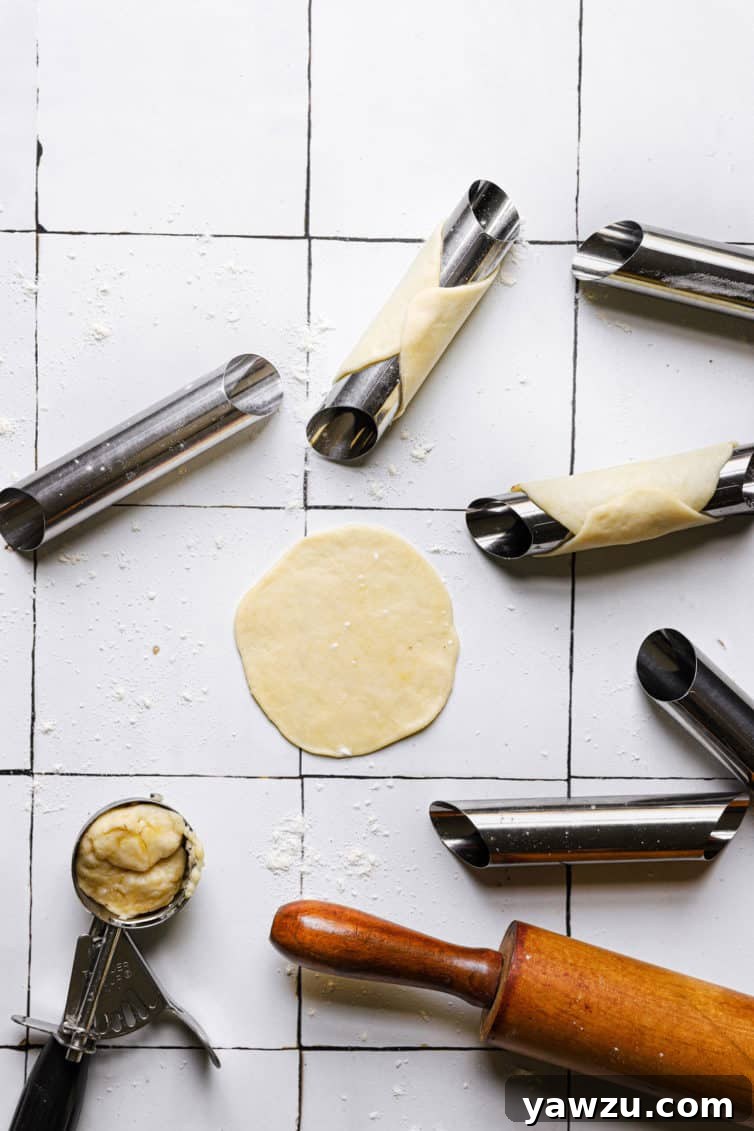
Once your dough is prepared and rested, it’s time to roll and shape. Use a small cookie scoop to portion out individual pieces of dough, then roll each piece into a thin circle, approximately 1/8-inch thick and 4 to 5 inches in diameter. The thinly rolled dough is then carefully wrapped around individual cannoli forms. Ensure the edges of the dough overlap and are firmly pressed together to create a secure seal; this prevents the dough from unraveling during frying. If the dough doesn’t seal easily, a tiny dab of egg white can be used as a “glue.” Repeat this process until all your dough is used, placing the wrapped forms on a baking sheet as you go.
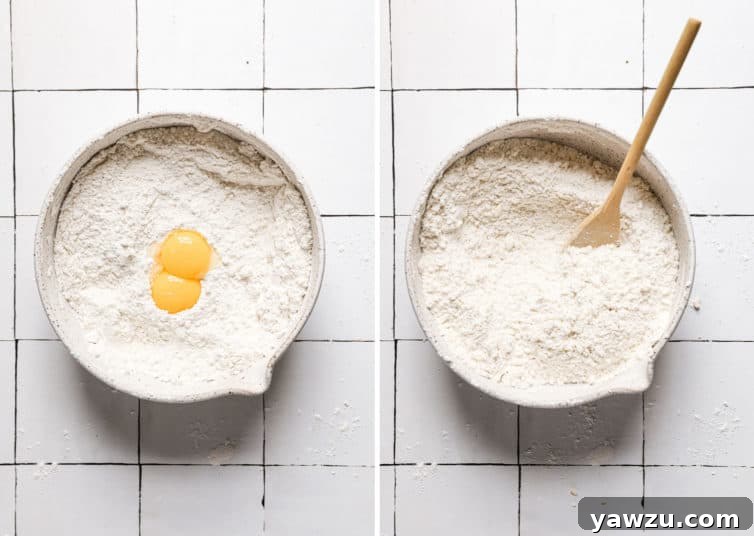
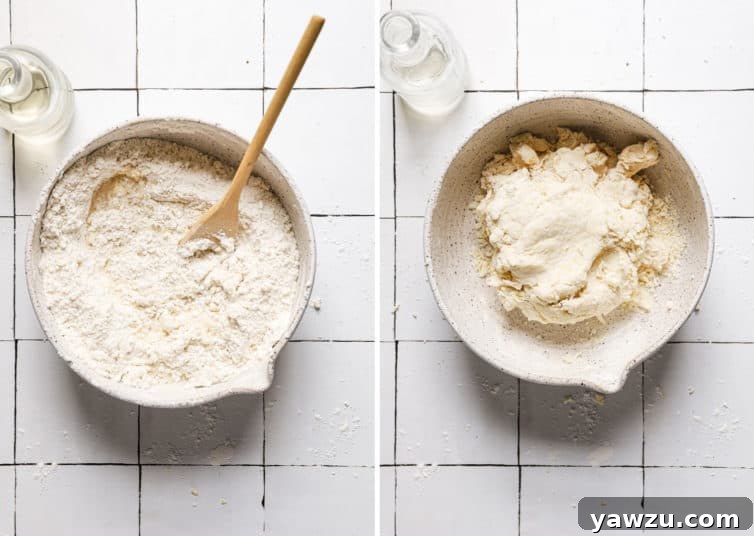
The traditional method for cooking cannoli shells is deep-frying. This technique is essential for achieving their characteristic super light, airy, and flaky consistency, creating those delightful bubbles and irresistible crunch that are the hallmark of an authentic cannolo. Heat your chosen frying vessel (a Dutch oven or deep cast-iron skillet works wonderfully) with at least 1-2 inches of neutral vegetable oil to 375°F (190°C). Fry a few dough-wrapped forms at a time, being careful not to overcrowd the oil, which can lower its temperature and result in greasy shells. Fry for about 3-4 minutes, or until they turn a beautiful light golden brown. Use tongs to gently turn them, ensuring even cooking. Once fried, carefully remove the forms from the oil, allowing any excess oil inside the form to drain, and place them on paper towels to cool slightly. As soon as they are cool enough to handle, gently slide the crispy shell off the metal form, taking care not to break the delicate pastry.
Preparing the Rich and Creamy Ricotta Filling
The filling is undoubtedly the creamy, sweet heart of the cannolo. Traditional cannoli fillings primarily feature sweetened ricotta cheese, and while many recipes involve simply mixing the ricotta with sugar and other add-ins, some call for draining the cheese overnight to remove excess moisture or beating it to achieve an ultra-smooth texture. This particular recipe takes a slightly different, yet equally delicious, approach: it’s a cooked ricotta filling, which results in a wonderfully thick, stable, and pudding-like consistency that is both rich and utterly smooth.
To begin, place your ricotta cheese in a large mixing bowl and beat it on medium speed for about 1 to 2 minutes until it becomes completely smooth and free of any graininess. This initial step is crucial for a velvety filling. In a separate medium saucepan, whisk together the granulated sugar, whole milk, and cornstarch until no lumps remain. Place this mixture over medium heat and cook, stirring occasionally, until the sugar is fully dissolved and the mixture is smooth. Next, gently stir the warmed sugar-milk mixture into the beaten ricotta until thoroughly combined. Return the entire ricotta mixture to the saucepan and continue to cook over medium-low heat, stirring constantly with a wooden spoon or spatula. Consistent stirring is key to prevent scorching and to ensure even thickening. Cook for approximately 20 minutes, or until the mixture visibly thickens, and a few large bubbles gently pop at the surface, indicating it’s ready. Once thickened, remove from heat and allow the filling to cool completely to room temperature. For the best texture and stability, it is imperative to refrigerate the filling for at least 2 hours, or ideally overnight, before using it to fill the cannoli. A thoroughly chilled filling will hold its shape beautifully and offer a delightful contrast to the crispy shell.
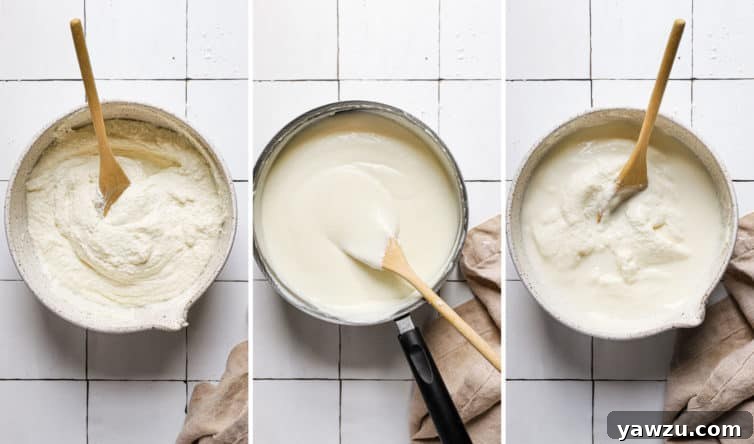
The Art of Filling and Garnishing Cannoli
The final step in creating your homemade cannoli masterpiece is the assembly – filling the crispy shells with the chilled ricotta and adding those delectable finishing touches. This process is simple yet allows for creative expression.
- Prepare Your Piping Bag: When you’re ready to serve your cannoli, retrieve the completely chilled ricotta filling from the refrigerator. Fit a large piping bag with your preferred tip – a large round tip (such as an Ateco #806) creates a smooth, traditional look, while a star tip (like an Ateco #828) yields a decorative, ridged finish. Carefully fill the piping bag with the creamy ricotta mixture.
- Pro Tip (No Piping Bag? No Problem!): If you don’t have a piping bag or specialized tips on hand, don’t worry! You can achieve excellent results by simply using a large ziplock plastic bag. Spoon the filling into the bag, push it down to one corner, and then snip off a small piece of that corner with scissors. This creates a makeshift piping bag that works perfectly well.
- Fill the Shells Evenly: Hold a cannoli shell in one hand. With the other, gently squeeze the piping bag to pipe the filling into one end of the cannoli shell. Continue piping until that side is fully filled, then repeat the process from the other end. Ensure the entire length of the shell is completely filled, with no empty pockets, and a generous amount of filling peeks out from both ends.
- Garnish for Perfection: For a beautiful presentation and an extra layer of flavor and texture, dip the ends of the filled cannoli into your chosen garnishes. Mini chocolate chips are a classic favorite, as are finely chopped nuts like pistachios or almonds. For a truly authentic touch, use candied orange peel or citron. If desired, lightly dust the entire cannolo with a sprinkle of powdered sugar just before serving for an elegant finish. Remember, fill only as many cannoli as you plan to eat immediately to prevent the shells from becoming soggy.
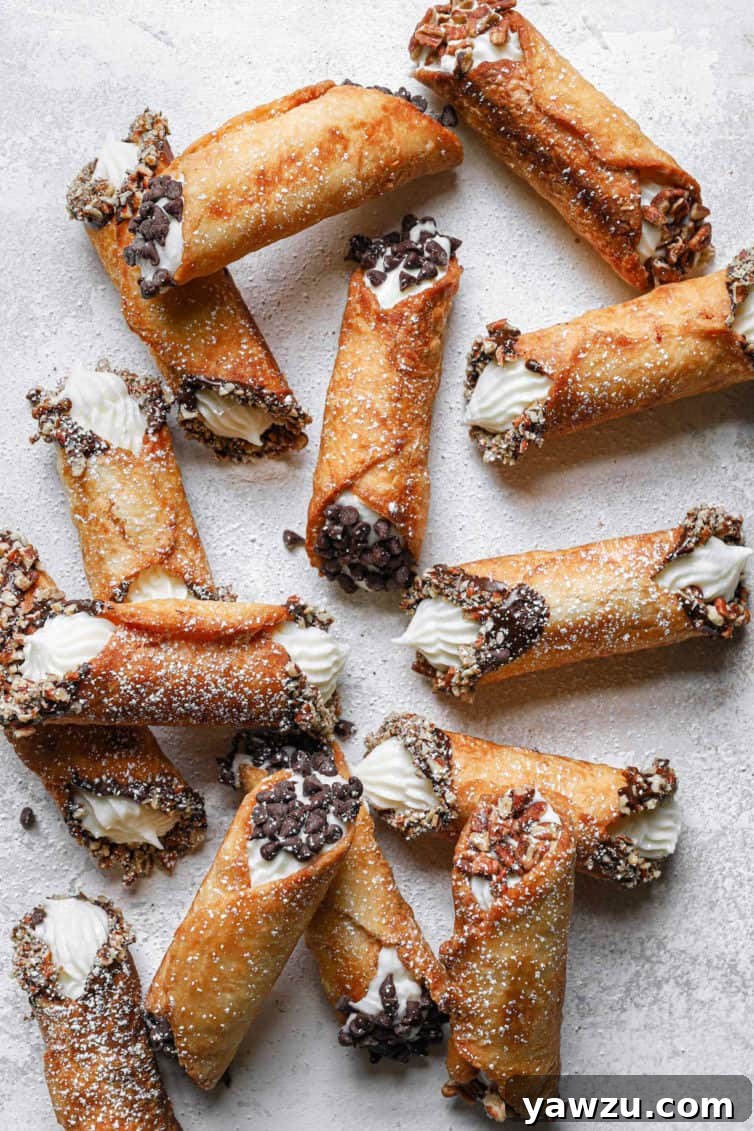
FAQ and Troubleshooting for Perfect Cannoli
Even experienced bakers can encounter questions or minor hiccups when making cannoli. Here are some common queries and their solutions to ensure your homemade cannoli are nothing short of perfect.
Why is my cannoli filling runny or grainy?
A runny or grainy filling is almost always due to the ricotta cheese not being smoothed out sufficiently or containing too much moisture. The initial step of beating the ricotta with a mixer until completely smooth (1-2 minutes) is usually enough to achieve a creamy texture. However, if your ricotta cheese is particularly wet or has a higher water content, it’s highly recommended to drain it first. You can do this by placing the ricotta in a cheesecloth-lined colander over a bowl and refrigerating it overnight to allow excess liquid to drip out. This step will prevent a watery filling and ensure a rich, thick consistency.
Why are my cannoli shells soggy?
The primary reason for soggy cannoli shells is moisture absorption from the filling. Cannoli shells are designed to be crisp, and the moist ricotta filling will inevitably soften them over time. To prevent this, always store the fried shells and the filling separately. Only fill the cannoli right before you plan to serve them – ideally within an hour or two. If you find your *unfilled* shells have lost some crispness (perhaps from humidity or storage), you can re-crisp them. Place them on a baking sheet and bake in a preheated oven at 250°F (120°C) for 5 to 10 minutes until they are firm and crisp again. Allow them to cool completely before filling.
What type of wine should I use for the shells?
For cannoli dough, you can use either red or white wine. White wine, such as Pinot Grigio, Sauvignon Blanc, or Marsala, is generally preferred as it won’t significantly alter the color of the dough, resulting in the classic golden-brown shells. Red wine, while adding similar flavor notes, will impart a slightly reddish tint to the dough, which some people enjoy for its unique visual appeal. Ultimately, use whatever dry wine you have on hand. The most important thing is the acidity and flavor contribution, not the specific varietal. If you prefer not to use alcohol or cannot consume wine, an excellent substitute is buttermilk. Buttermilk provides the necessary acidity to tenderize the gluten, yielding light and crisp shells.
Can you bake cannoli shells instead of frying them?
While traditionally deep-fried to achieve their signature bubbly, ultra-crispy texture, cannoli shells can indeed be baked as a healthier alternative. The texture will be slightly different – typically less airy and with a more uniform crispness rather than the irregular bubbles from frying – but still delicious. To bake them, wrap the dough around your cannoli forms as usual. Place them on a baking sheet and bake in a preheated oven at 350°F (175°C) for approximately 15 minutes, or until they turn a lovely golden brown. Remember to remove them from the forms while still warm enough to handle, but not so hot that they break.
Making Ahead & Storage Tips for Convenience
Planning ahead can make the process of serving fresh cannoli much easier. Here are some smart tips for preparing your components in advance and storing them properly:
- Make-Ahead Shells: The fried cannoli shells are quite stable and can be prepared well in advance. Once fried and completely cooled, store them in an airtight container at room temperature for up to 7 days. Ensure they are fully cooled before sealing the container to prevent condensation, which can lead to sogginess. For longer storage, you can freeze the shells in an airtight container for up to 1 month. Thaw them at room temperature, and if they’ve lost some crispness, you can re-crisp them in a low oven (250°F for 5-10 minutes) before filling.
- Make-Ahead Filling: The creamy ricotta filling is also excellent for advance preparation. Once cooled and thoroughly chilled, transfer the filling to an airtight container and store it in the refrigerator for up to 5 days. It’s crucial that the filling is well-chilled before piping. Freezing the filling is generally not recommended, as the texture of ricotta can change upon thawing, often becoming watery or grainy, which would compromise the luxurious creaminess.
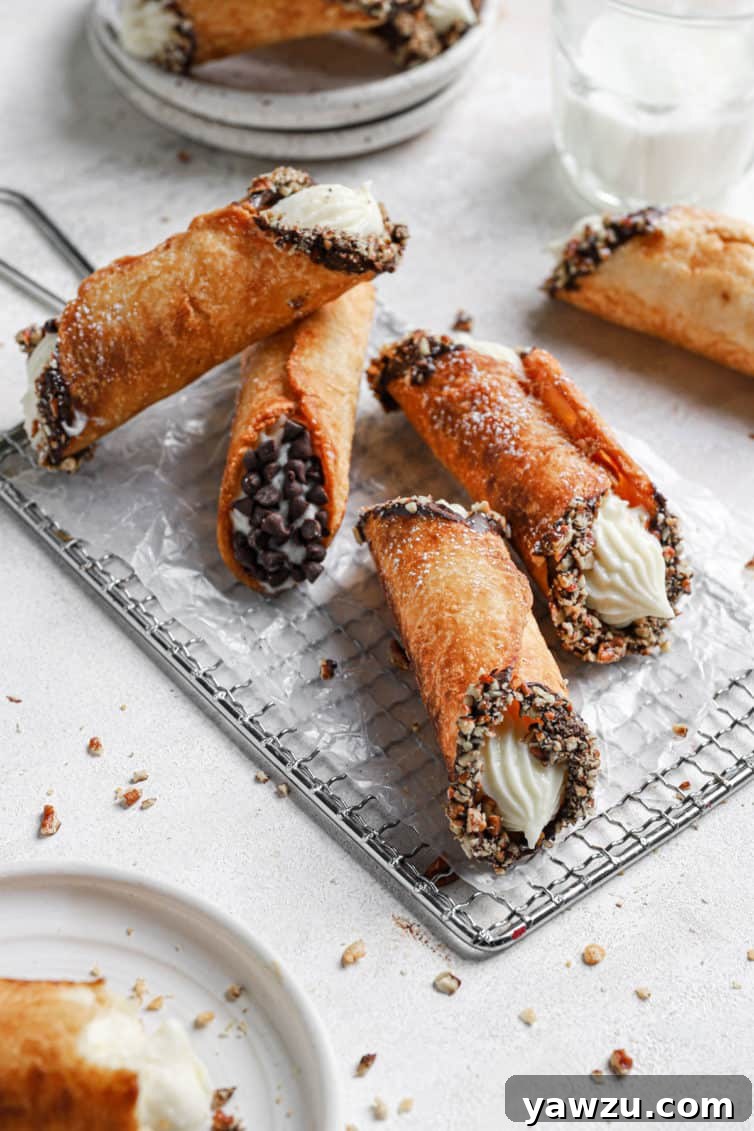
Other Irresistible Italian Desserts to Try Next:
If you’ve fallen in love with the art of Italian baking through these cannoli, there’s a whole world of delightful desserts waiting to be explored. Here are some other Italian treats you might enjoy making:
- Cannoli Dip: All the flavors of cannoli in an easy-to-serve dip format.
- Grandma’s Fried Dough: A simple yet satisfying classic, reminiscent of fair food.
- Cucidati Cookies: Intricate Sicilian fig cookies, perfect for holidays.
- Italian Walnut Pillow Cookies: Delicate and flavorful cookies with a nutty twist.
- Zeppole (Italian Doughnuts): Light, airy fried dough balls, often dusted with powdered sugar.
There is truly nothing that compares to the taste and satisfaction of homemade cannoli. From the meticulously prepared, creamy ricotta filling to the perfectly fried, incredibly crispy shell, you will absolutely adore every single bite of this traditional cannoli recipe. It’s a dessert that encapsulates heritage, flavor, and the joy of sharing something truly special.
If you make this recipe and love it, please remember to stop back and give it a 5-star rating – your feedback helps others discover and enjoy this wonderful recipe! ❤️️
Homemade Cannoli
Yield: 36 cannoli
Prep Time: 30 mins
Cook Time: 30 mins
Resting Time: 6 hrs
Total Time: 7 hrs
Light and crispy shells filled with a sweet, creamy ricotta filling make this homemade cannoli recipe an old family favorite.
Average: 4.67 (30 ratings)
Pin Recipe
Rate Recipe
Ingredients
For the Ricotta Filling
- 32 ounces (907.19 g) ricotta cheese
- 2 cups (488 ml) whole milk
- 2 cups (400 g) granulated sugar
- ½ cup (64 g) cornstarch
For the Shells
- 16 ounces (453.59 g) cake flour
- ¼ cup (50 g) granulated sugar
- 2 ounces (56.7 g) vegetable shortening (5 tablespoons)
- 2 egg yolks
- ¾ – 1 cup (180 – 240 ml) white wine
- Vegetable oil, for frying
Special Equipment
- Cannoli Forms
Instructions
- Prepare the Dough for the Shells: In a large bowl, whisk together the cake flour and granulated sugar. Using a pastry blender or two knives, cut the vegetable shortening into the flour mixture until it resembles coarse meal. Add the egg yolks and stir with a wooden spoon until mostly combined (the dough will appear shaggy). Gradually add 2/3 cup of the white wine and stir and fold using a rubber spatula. You want the dough to come together like a pliable pie dough; if it is still dry and shaggy, add more wine, 1 tablespoon at a time, until the dough holds together when pinched between your fingers. Cover the bowl with plastic wrap and allow the dough to rest at room temperature for at least 4 hours. This resting period allows the gluten to relax, making the dough easier to roll.
- Prepare the Filling: Place the ricotta cheese in a large mixing bowl and beat on medium speed until completely smooth, which should take about 1 to 2 minutes; set aside. In a medium saucepan, whisk together the granulated sugar, whole milk, and cornstarch until no lumps remain. Place the saucepan over medium heat and cook, stirring occasionally, until the mixture is smooth and the sugar is totally dissolved. Gently stir the heated sugar mixture into the beaten ricotta until thoroughly combined. Return the entire mixture to the saucepan and continue to cook over medium-low heat, stirring constantly, until the mixture visibly thickens (a few large bubbles should pop at the surface when it has reached the correct consistency), about 20 minutes. Once thickened, remove from heat. Allow the filling to cool completely to room temperature and then refrigerate for at least 2 hours before using. The filling must be thoroughly chilled when used to fill the cannoli shells to ensure it holds its shape perfectly.
- Form the Cannoli Shells: Using a small cookie scoop, tear off about 1 tablespoon of the rested dough at a time. On a lightly floured surface, roll each piece of dough to an incredibly thin 1/8-inch thickness, aiming for a circle approximately 4 to 5 inches in diameter. Carefully wrap the dough circle around a cannoli form, ensuring the edges of the dough overlap. Press firmly to seal the overlapping dough together; this is crucial to prevent the shell from opening during frying. Repeat this process with the remaining dough.
- Line baking sheets with a double layer of paper towels; this will be used for draining the fried shells.
- Fry the Cannoli Shells: Add vegetable oil to your chosen frying vessel (a Dutch oven or deep cast-iron skillet works best), ensuring you have at least 1 to 2 inches of oil for deep-frying. Heat the oil to 375°F (190°C). Carefully place a few prepared forms into the hot oil at a time, ensuring not to overcrowd the vessel. Fry until the shells are a light golden brown, which typically takes about 3 to 4 minutes. Use tongs to gently move them around as necessary, especially if using a skillet, to ensure even browning. Remove the forms from the oil (being careful to tilt and drain out any oil that may have collected inside the form) and immediately set the shells on the paper towel-lined baking sheets to drain excess oil. Once the shells are cooled enough to handle (but still warm), carefully slide each crispy shell off of its metal form.
- Assemble the Cannoli: When you are ready to serve the cannoli, fit a large piping bag with either a large round tip or a star tip, and fill it with the completely chilled ricotta filling. (If you don’t have piping bags and tips, you can simply put the filling in a large ziplock bag and snip off one corner.) Squeeze the bag to pipe filling into each end of the cannoli shell, ensuring it is completely filled inside from end to end. For a delightful finish, dip the ends of the filled cannoli into mini chocolate chips or finely chopped nuts. If desired, lightly dust with powdered sugar just before serving. Remember to only fill the cannoli right before serving to maintain shell crispness.
Notes
- Wine Substitution: For the shells, you can use either white or red wine. Any dry variety will work, but be aware that red wine will impart a slight tint to the dough, though it won’t alter the taste. If you cannot consume wine, buttermilk is an excellent non-alcoholic substitute, providing similar acidity for tender shells.
- Baked Shells Option: If you prefer to bake your shells instead of frying, wrap the dough around the forms as instructed. Bake them on a baking sheet in a preheated oven at 350°F (175°C) for approximately 15 minutes, or until they are golden brown and crisp.
- Freshness is Key: To prevent the cannoli shells from becoming soggy, it is crucial to fill them only immediately before you plan on serving them. Only fill as many cannoli as you anticipate eating right away. Store unfilled shells and filling separately.
- Make-Ahead Shells: Fried shells can be prepared up to 7 days in advance. Once fully cooled, store them in an airtight container at room temperature. They can also be frozen for up to 1 month in an airtight container. Re-crisp in a low oven if needed after thawing.
- Make-Ahead Filling: The ricotta filling can be made up to 5 days in advance and stored in an airtight container in the refrigerator. Ensure it is completely chilled before use. Freezing the filling is not recommended, as it can separate and become watery upon thawing, affecting its creamy texture.
Nutrition Facts (per cannolo, estimated)
Calories: 173kcal, Carbohydrates: 24g, Protein: 4g, Fat: 5g, Saturated Fat: 2g, Cholesterol: 25mg, Sodium: 28mg, Potassium: 61mg, Sugar: 13g, Vitamin A: 150IU, Calcium: 71mg, Iron: 0.3mg
Did you make this recipe?
Leave a review below, then snap a picture and tag @thebrowneyedbaker on Instagram so I can see it!
Author: Michelle Lettrich
Course: Dessert
Cuisine: Italian
Photography by Dee Frances.