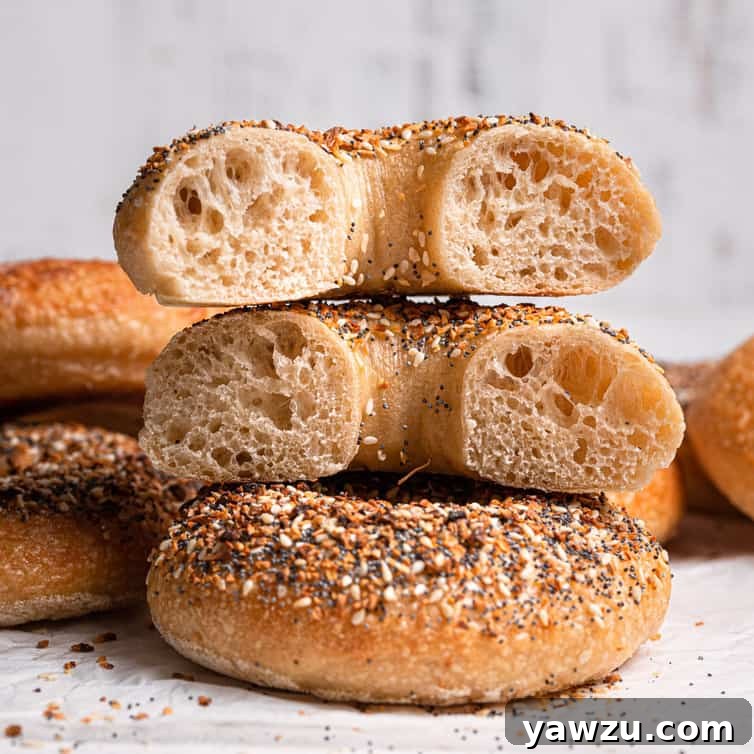
Have you ever dreamed of biting into a perfectly chewy, richly flavored bagel, boasting that unmistakable shiny crust and dense interior, right in your own kitchen? If so, you’ve arrived at the ultimate guide! This traditional bagel recipe isn’t just a set of instructions; it’s a journey into the art of authentic bagel making, complete with expert tips for achieving that classic taste and texture. We’ll cover everything from the crucial overnight refrigeration and the essential boiling process to the perfect baking techniques. While a simple, plain bagel slathered with cream cheese is a heavenly delight, this recipe also serves as an exceptional foundation for countless creative variations. Whether your heart desires a cinnamon-raisin bagel, a vibrant blueberry bagel, or anything in between, you’ll find all the inspiration and information you need right here to elevate your bagel game.
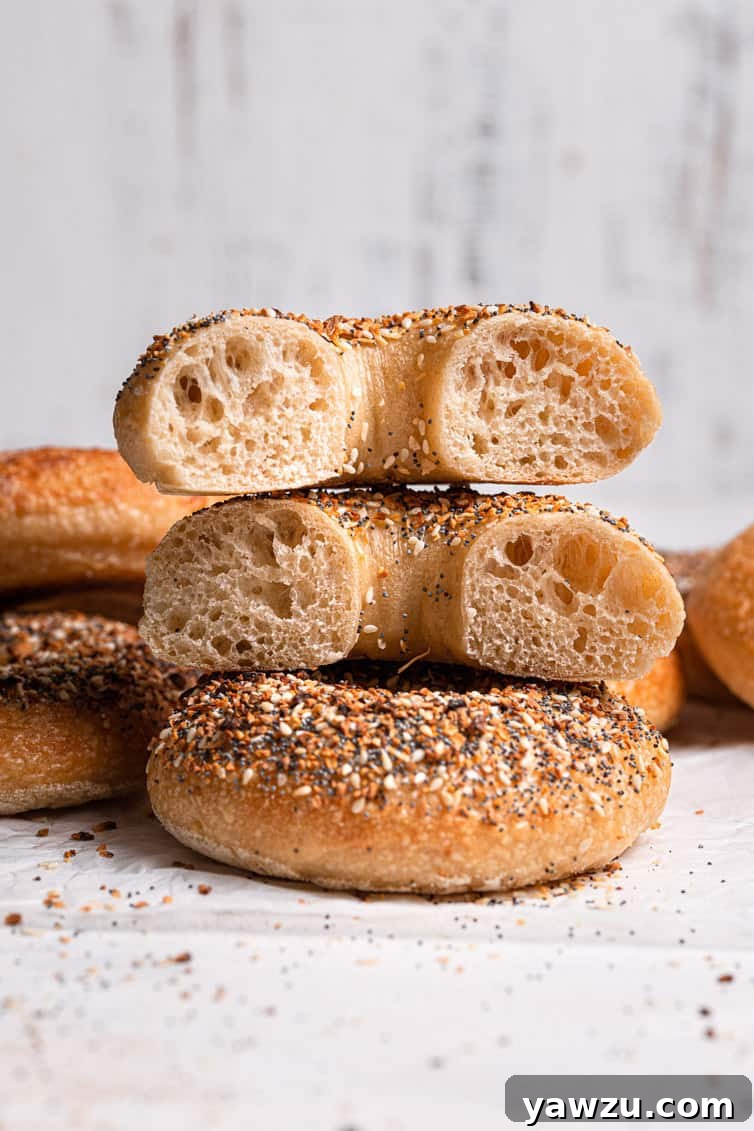
For nearly 15 years, homemade bagels have held a special place in my heart, captivating me with their unique charm. The satisfaction of pulling a fresh batch from the oven remains just as profound today as it was when I first began this culinary adventure. If you consider yourself a true bagel aficionado, prepare to be amazed by the results this recipe delivers. You’ll soon be crafting bagels that rival your favorite bakery’s finest.
My passion for bread baking ignited with Peter Reinhart’s acclaimed cookbook, The Bread Baker’s Apprentice. After experimenting with numerous bread recipes, I finally dove into the challenge of making bagels. The moment I mastered them, there was no turning back. While traditional bagel making involves specific ingredients and time-honored techniques, rest assured, we’ll guide you through every step. You’ll gain the confidence and knowledge to create truly amazing, authentic-tasting bagels in the comfort of your own kitchen.
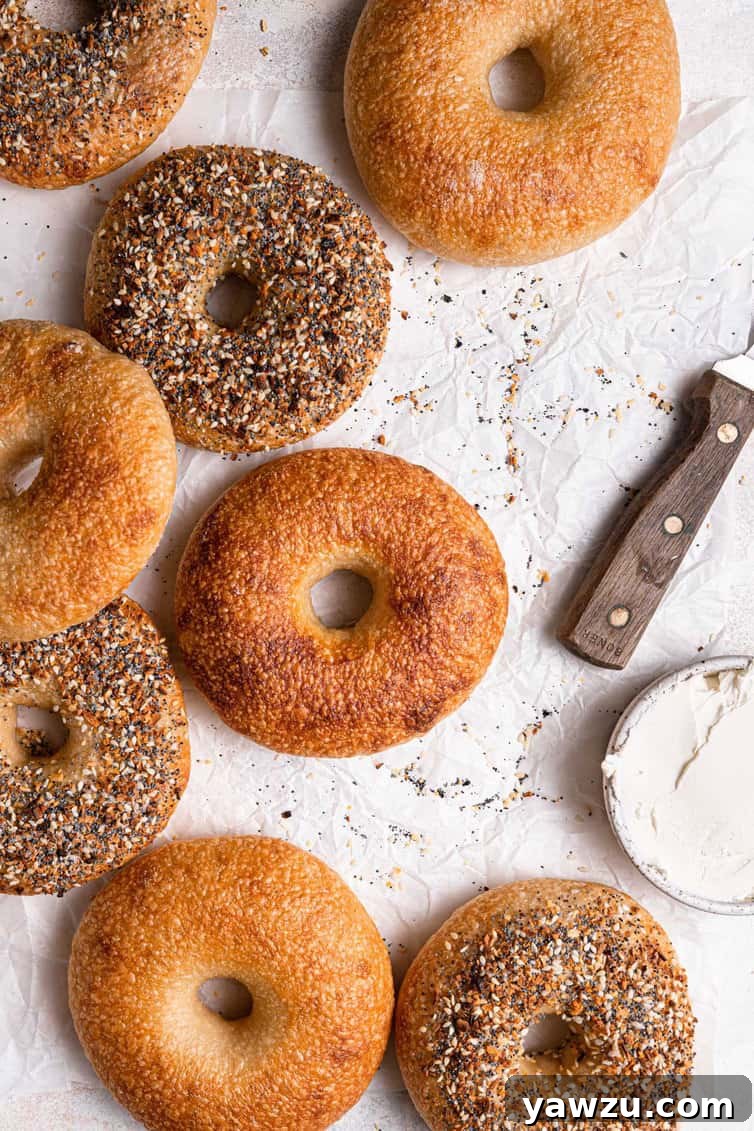
Defining the Perfect Bagel: Characteristics of an Authentic Treat
When you recall the most memorable bagels you’ve ever savored, what sensory details come to mind? Truly exceptional bagels share a distinct set of characteristics that elevate them far beyond mere bread with a hole. Achieving these qualities is the hallmark of traditional bagel making:
- A Distinctive Crust: The ideal bagel boasts a thin, irresistibly shiny, dark golden-brown crust, often with subtle blisters. This crisp exterior is a testament to proper boiling and baking.
- Dense and Chewy Interior: Forget fluffy, airy bread. An authentic bagel’s interior should be remarkably dense and possess a satisfying, resilient chewiness that makes each bite substantial.
- Not Overly Bready: While made from dough, a true bagel should not taste or feel like a simple loaf of bread. Its unique texture is what sets it apart.
- Small Central Hole: The hole in the middle should be relatively small, indicating a well-formed, plump bagel rather than a flat, spread-out dough ring.
- Plump and Substantial: Good bagels are plump and full-bodied, offering a generous bite. They should never appear flat or deflated.
Crafting Authentic Homemade Bagels: The Path to Perfection
Creating genuine, traditional bagels that embody all the desirable characteristics mentioned above is an undertaking that requires dedication and a multi-stage process. It also calls for a few specialized ingredients that distinguish these bagels from the mass-produced, bagel-shaped bread often found in supermarket aisles. If you appreciate the rich heritage and unparalleled taste of old-school bagels, every bit of effort invested in this recipe will be richly rewarded. Let’s delve into the techniques and ingredients that make these bagels truly extraordinary.
Essential Ingredients for Superior Bagels: Understanding Their Role
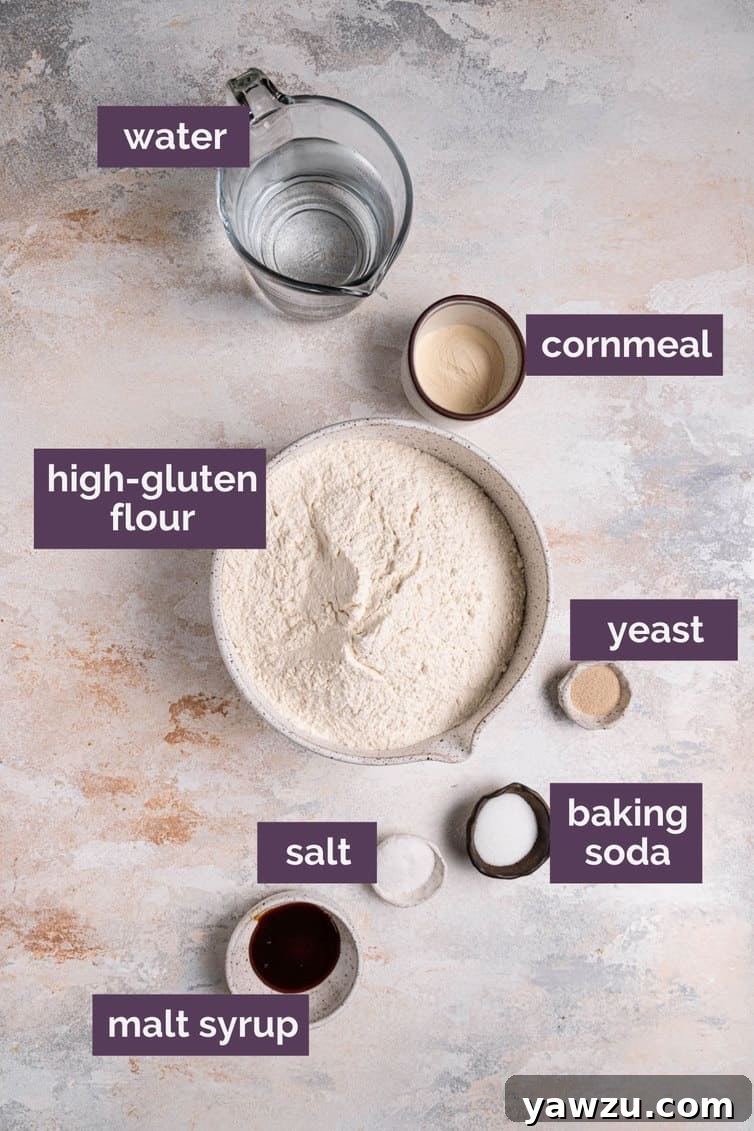
You might notice a few ingredients in this recipe that are less common than typical pantry staples. These are not merely suggestions; they are key players in developing the authentic flavor and texture that define a true bagel. Let’s explore each one, its critical function, and potential substitutes:
- High-Gluten Flour: This is arguably the most crucial ingredient for authentic bagels. High-gluten flour, such as that available from King Arthur Flour, boasts a higher protein content (around 14%) than even bread flour (12%), and significantly more than all-purpose flour (typically 10%). This increased gluten protein is what provides the exceptional elasticity, strength, and dense, tough chewiness that are hallmarks of a classic bagel. While bread flour can be used as a substitute, it will result in a slightly less chewy bagel. All-purpose flour is generally not recommended as it severely compromises the desired texture.
- Barley Malt Syrup: While not strictly essential for structure, barley malt syrup is a game-changer for flavor. It’s strictly for taste, helping to unlock the natural sugars within the flour starches during fermentation and baking. This imparts that signature, subtle sweetness and depth of flavor characteristic of bagels from a traditional shop. You can find it on Amazon or through King Arthur Flour. If unavailable, honey or light brown sugar can be substituted, though they won’t provide the exact same malty depth.
- Non-Diastatic Malt Powder: This ingredient plays a vital role in the water bath. When added to the boiling water, non-diastatic malt powder (also available from King Arthur Flour) contributes to the shiny, blistered exterior of the bagel and significantly aids in its caramelization and browning during baking. It helps create that beautiful dark crust. While you can omit it, doing so will result in a lighter crust with less sheen. If omitting, also remove the sugar from the water bath and instead use 1 tablespoon of baking soda to assist with browning.
Mastering Bagel Dough: Stiffness, Fermentation, and Shaping
Bagel dough stands apart from typical bread doughs due to its exceptionally stiff consistency, achieved by a much lower liquid-to-flour ratio. This stiffness is not accidental; it’s absolutely crucial. It allows the dough to endure the rigors of the boiling water bath without deflating, losing its shape, or becoming waterlogged. To ensure your dough has this essential consistency, employ the “windowpane test” (fully described in the recipe instructions and illustrated below) to gauge its proper hydration and gluten development.
Crafting truly authentic bagels involves a series of distinctive steps rarely found in standard bread-baking. These techniques are designed to build complex flavors and achieve that iconic bagel chew:
- The Sponge Method (Poolish): Beginning with a “sponge” – a pre-ferment made from flour, yeast, and water – is fundamental. This initial fermentation not only enhances the bagels’ flavor and texture, imparting a subtle tang and depth, but also improves their freezing and thawing capabilities due to increased natural acidity. A longer, slower fermentation period invariably leads to superior flavor development and extends the shelf life of the finished bagels.
- Overnight Refrigeration (Cold Fermentation): This step builds directly upon the sponge method, providing the bagels with yet another extended, slow fermentation period. Peter Reinhart, a renowned expert, considers this overnight cold fermentation indispensable for producing a truly remarkable bagel. The prolonged exposure to cold allows naturally occurring enzymes, along with those supplied by the malt, to work slowly, breaking down starches and releasing a rich spectrum of complex flavors that simply cannot be achieved with a quick proof. This slow process is key to the bagel’s signature taste.
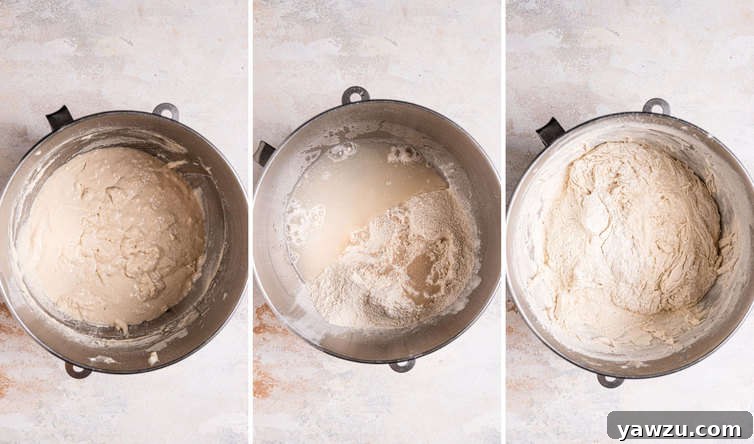
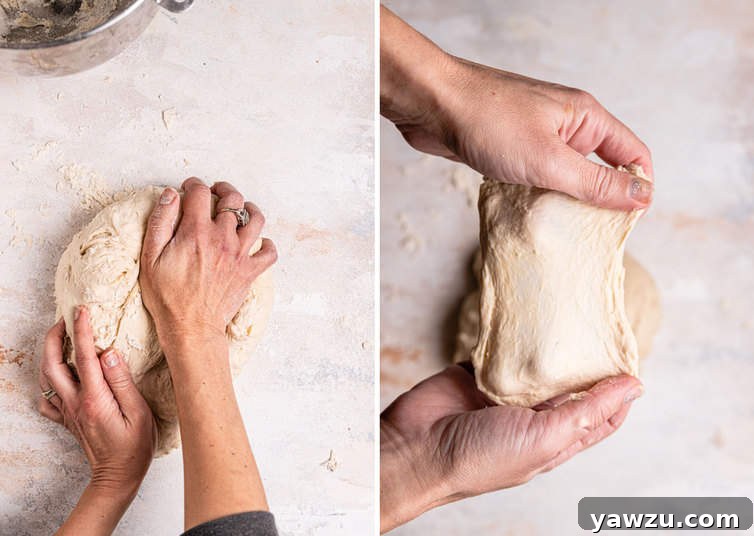
Let’s outline the step-by-step process for preparing the bagel dough:
- Prepare the Sponge: The initial stage involves combining flour, yeast, and water to create a bubbly, foamy sponge. This mixture ferments at room temperature for several hours until it nearly doubles in size.
- Develop the Dough: To the activated sponge, incorporate the remaining dough ingredients: more yeast, flour, salt, and the essential barley malt syrup. Mix until a very stiff dough forms, gradually adding flour until the correct consistency is achieved.
- Portion and Rest: Once kneaded to perfection, divide the stiff dough into individual portions, shaping them into rolls. A brief resting period allows the gluten to relax before final shaping.
- Shape and Refrigerate: The final step before baking involves shaping the individual bagels. Once shaped, they are covered and placed in the refrigerator for their crucial overnight cold fermentation.
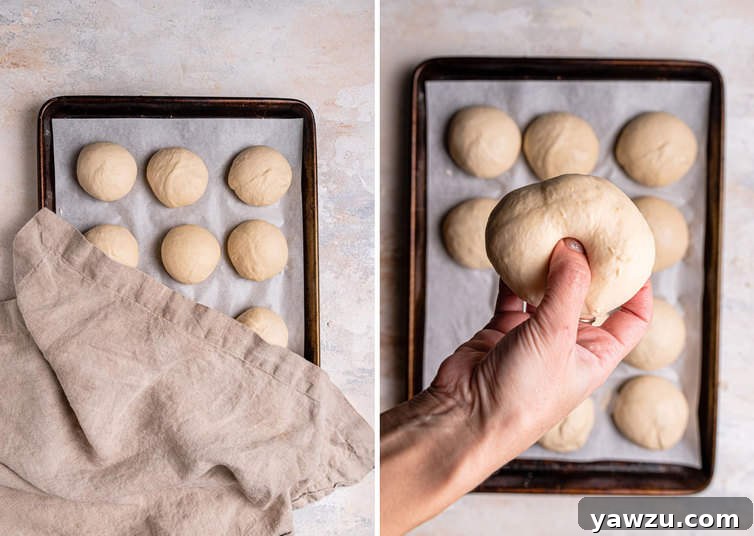
Perfecting the Bagel Shape: Two Proven Methods
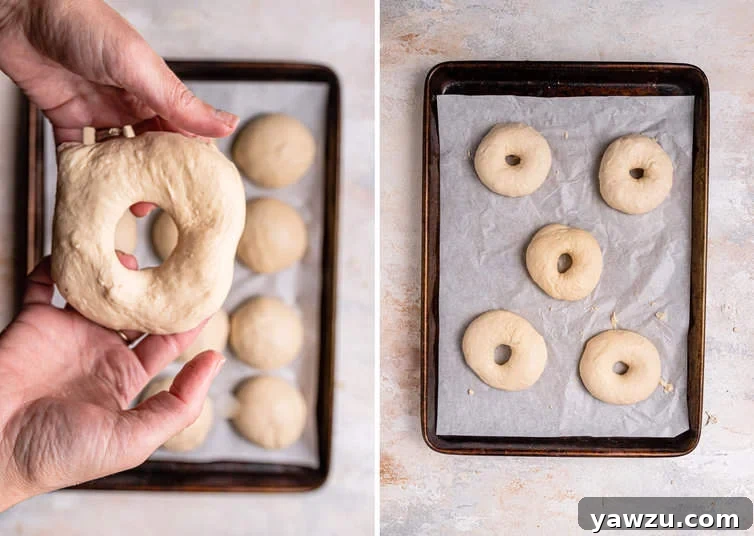
The distinctive ring shape is an integral part of a bagel’s identity. There are a couple of effective methods you can employ to achieve this:
The first method, which is often preferred for its simplicity and consistency, involves: Use your thumb to poke a hole directly through the center of a rounded ball of bagel dough. Gently and evenly stretch the dough outwards from the hole until it measures 1 to 2 inches in diameter. This creates a beautifully plump, evenly shaped bagel.
Alternatively, you can try this traditional technique: Roll a portion of dough into an 8-inch rope. Wrap this rope around the palm and back of your hand, allowing the ends to overlap by several inches. Press the overlapping ends firmly together and then gently roll them back and forth on a clean surface to securely seal the seam. Both methods result in that iconic bagel form, so choose the one that feels most comfortable for you.
The Critical Boiling Step: Achieving the Signature Chew and Crust
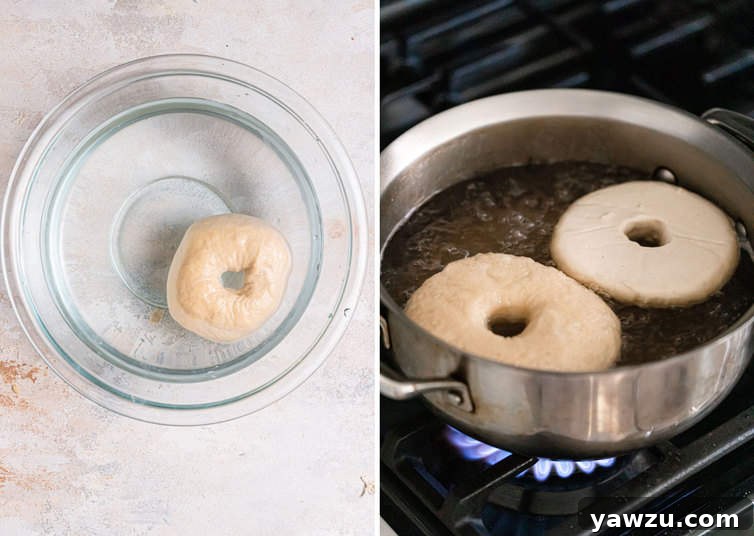
The water bath is far more than a mere preliminary step; it is the cornerstone of traditional bagel making. This brief but crucial boil is precisely what creates the distinctive thick, chewy crust that sets authentic bagels apart. During this process, the starches on the surface of the dough gelatinize, setting the exterior and preventing the bagels from puffing up excessively in the oven, thus maintaining their dense interior.
Enhancing this water bath with a touch of sugar and non-diastatic malt powder further amplifies the results. These additions contribute to “setting” the outer crust, providing a foundation for superior caramelization and a richer, darker color during baking. The day after the bagels have undergone their transformative cold fermentation in the refrigerator, they are plunged into this specially prepared boiling water, then transferred to a fiercely hot oven to complete their journey to perfection.
Optimal Storage, Freezing, and Reheating for Peak Freshness
As with most freshly baked bread products, homemade bagels are undeniably at their absolute best when enjoyed on the day they’re made or the very next day. We highly encourage savoring them while they’re at their peak of flavor and texture!
- Shelf Life and Storage: Should you find yourself with leftover bagels, they can be stored in an airtight container at room temperature for up to 2 days. For slightly longer preservation without freezing, transfer them to the refrigerator, where they will remain fresh for up to 5 days.
- Freezing Instructions: Bagels freeze exceptionally well, making them perfect for meal prep or ensuring you always have a quick breakfast on hand (we frequently keep a stash in our freezer!). To freeze, wrap each bagel individually and tightly in aluminum foil. Then, place the wrapped bagels into a large resealable freezer bag, removing as much air as possible before sealing. They can be frozen for up to 1 month. When ready to enjoy, thaw the bagels at room temperature, keeping them wrapped until they are completely defrosted to retain moisture.
- Make-Ahead Instructions (Pre-Baking): For maximum flexibility, bagels can be prepared partially in advance. Once the bagels have been expertly shaped and have successfully passed the “float test” (a crucial indicator detailed in the recipe below), they can be stored in the refrigerator for up to 2 days before you proceed with boiling and baking. This allows you to spread the baking process over two days.
- Reheating for Freshness: To quickly reheat a bagel, simply slice it in half and toast it in a toaster. If you wish to recapture more of its original, just-baked texture – warm, soft interior with a slightly crisp crust – place the whole bagel in an oven or toaster oven preheated to 375 degrees Fahrenheit for approximately 5 minutes. This method gently warms the bagel through without drying it out.
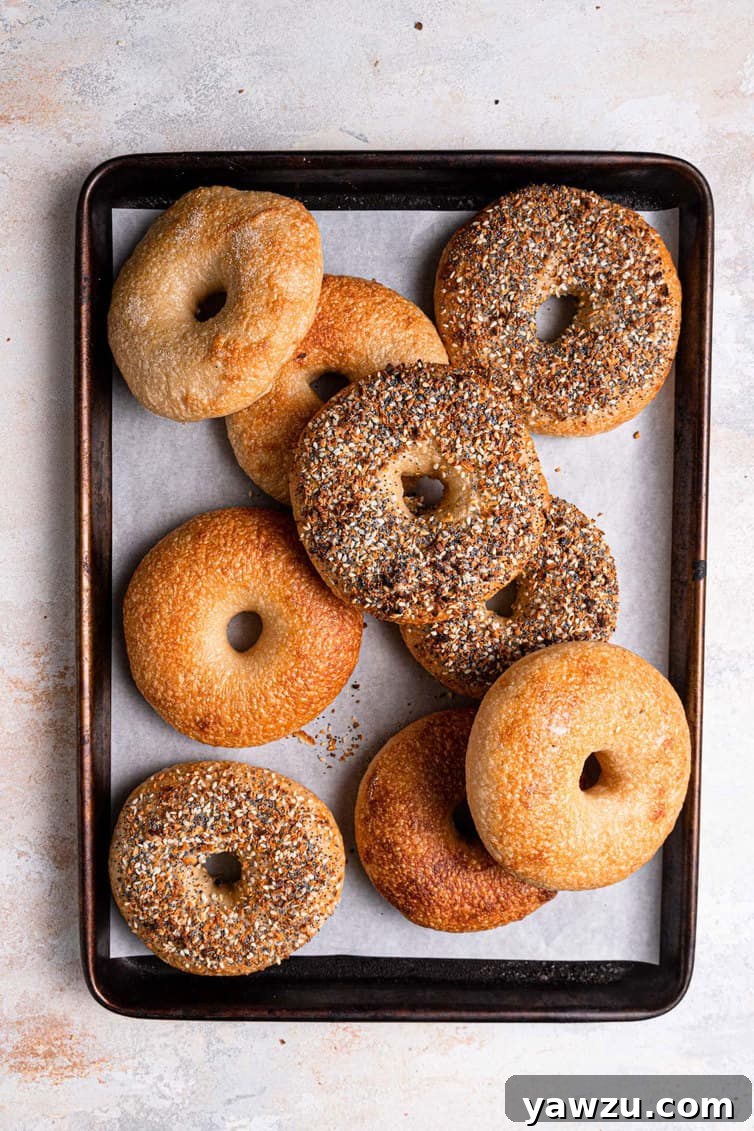
For those who cherish the purist bagel experience – the irresistible contrast of a wonderfully chewy exterior and a tender, beautiful crumb – these homemade bagels will undoubtedly become a new obsession. I consider myself a total bagel minimalist, finding ultimate satisfaction in these beauties with nothing more than a generous smear of cool, creamy cream cheese.
However, the beauty of homemade bagels lies in their versatility! Feel free to customize your creations with your favorite toppings. Sprinkle them generously with sesame seeds, poppy seeds, dried minced onion, or experiment with an everything bagel seasoning blend. The possibilities are endless!
Unleash Your Creativity: More Homemade Bagel Varieties and Topping Ideas
Once you’ve mastered the classic bagel, a world of flavor variations awaits. Use this foundational recipe as a springboard to explore an array of delicious bagel styles:
- Asiago Bagels: Elevate your bagels with sharp, nutty Asiago cheese. Follow my dedicated Asiago bagels recipe for cheesy perfection.
- Blueberry Bagels: Infuse your bagels with bursts of sweet, juicy blueberries. Find the full instructions in my blueberry bagels recipe.
- Cinnamon Raisin Bagels: A timeless classic, perfect for a sweet start to your day. Recreate this beloved flavor with my cinnamon raisin bagels recipe.
- Egg Bagels: Known for their richer flavor and golden hue, egg bagels are a delightful variation. Refer to my egg bagels recipe for details.
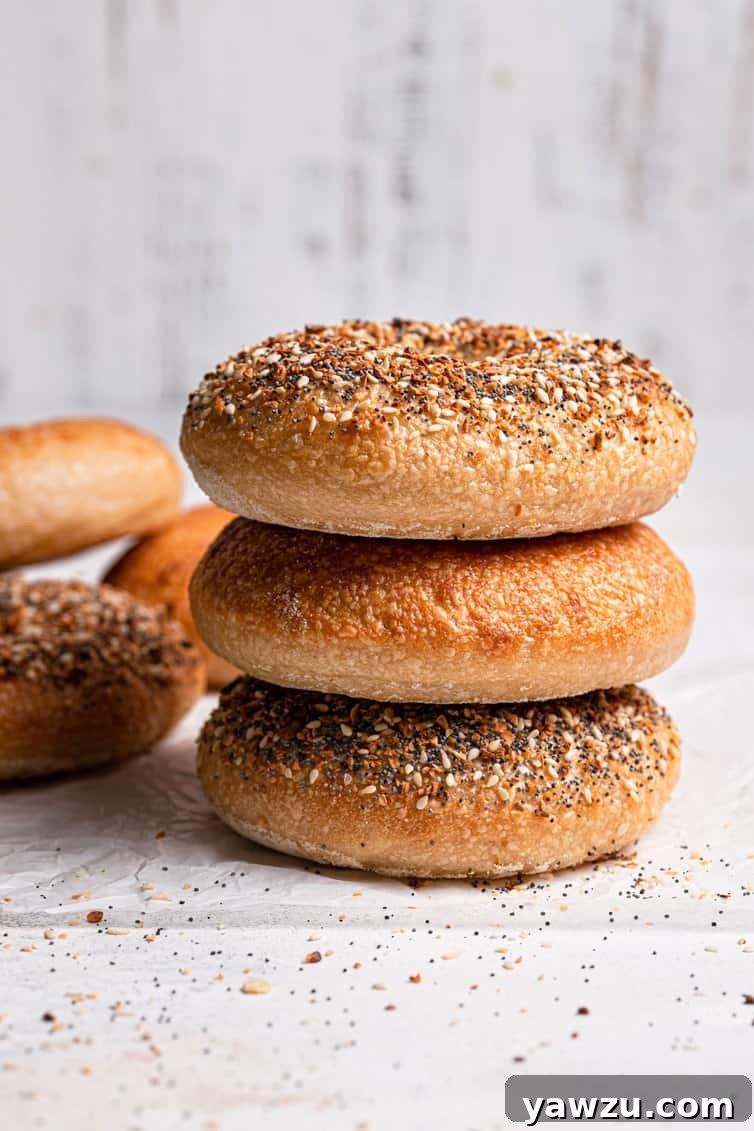
- Everything Bagels: The ultimate savory choice! Get the perfect blend of seeds, garlic, and onion with my everything bagels recipe.
- Jalapeno-Cheddar Bagels: For those who love a bit of heat and savory cheese, these are a must-try. Discover how to make them with my jalapeno-cheddar bagels recipe.
- Poppy Seed or Sesame Seed Bagels: For a simple yet classic topping, generously sprinkle poppy seeds or sesame seeds over the bagels immediately after they emerge from the water bath, while they are still wet. The moisture will help the seeds adhere during baking.
- Sourdough Bagels: For a distinctive tang and chewy texture, transform this recipe into sourdough bagels. Replace the initial sponge with 5 cups (35 ounces) of active barm starter, and increase the instant yeast in the main dough to 1½ teaspoons to account for the slower sourdough fermentation.
Watch the Recipe Video
See the entire bagel-making process in action! A visual guide to help you master each step and ensure your homemade bagels turn out perfectly.
Looking for a hearty complement to your freshly baked bagels? Don’t miss my satisfying slow cooker hashbrown, sausage, and cheddar breakfast casserole!
If you embark on this delicious journey and make these homemade bagels, please consider taking a moment to leave a rating below. Your feedback is greatly appreciated! Thank you so much! ❤️️
Homemade Bagels Recipe
Ingredients
For the Sponge
- 1 teaspoon instant yeast
- 4 cups (500 g) unbleached high-gluten flour
- 2½ cups (625 ml) water, at room temperature
For the Dough
- ½ teaspoon instant yeast
- 3¾ cups (468.75 g) unbleached high-gluten flour
- 2¾ teaspoons salt
- 1 tablespoon barley malt syrup
For Boiling
- 1 tablespoon granulated sugar
- 2 tablespoons non-diastatic malt powder
- Cornmeal or semolina flour, for dusting baking sheets
Instructions
- Make the Sponge: Stir the yeast into the flour in a 4-quart (or larger) mixing bowl. Add the water, whisking or stirring only until it forms a smooth, sticky batter (like pancake batter). Cover the bowl with plastic wrap and leave at room temperature for approximately 2 hours, or until the mixture becomes very foamy and bubbly. It should swell to nearly double in size and collapse when the bowl is tapped on the countertop.
- Make the Dough: In the same mixing bowl (or in the bowl of an electric mixer), add the additional yeast to the sponge and stir. Then add 3 cups of the flour and all of the salt and the barley malt syrup. Stir (or mix on low speed with the dough hook) until the ingredients form a ball, slowly working in the remaining ¾ cup flour to stiffen the dough.
- Transfer the dough to the counter and knead for at least 10 minutes (or for 6 minutes by machine). The dough should be firm, but still pliable and smooth. There should be no raw flour – all the ingredients should be hydrated. Break off a small piece of dough and gently stretch and pull it to see if it will hold a paper-thin, translucent membrane (called the “windowpane test”). If the dough seems dry and rips, add a few drops of water and continue kneading. If the dough seems tacky or sticky, add more flour to achieve the stiffness required. The kneaded dough should feel satiny and pliable but not be tacky.
- Shape the Bagels: Immediately divide the dough into 4½ ounce pieces for standard large bagels, or smaller if desired. Form the pieces into rolls. Cover the rolls with a damp kitchen towel and allow them to rest for 20 minutes.
- Line two baking sheets with silicone baking mats, or parchment paper sprayed lightly with non-stick cooking spray.
- To shape the bagels, use your thumb to poke a hole in a ball of bagel dough and gently stretch evenly until the hole is 1 to 2 inches in diameter. Alternatively, you can roll the dough into an 8-inch rope and wrap the dough around the palm and back of your hand, overlapping the ends by several inches. Press the overlapping ends together and gently roll back and forth to seal.
- Place each of the shaped bagels 2 inches apart on the pans. Mist the bagels very lightly with non-stick cooking spray and cover loosely with plastic wrap. Let the pans sit at room temperature for 20 minutes.
- Check to see if the bagels are ready to be retarded in the refrigerator by using the “float test”. Fill a small bowl with cool or room-temperature water. The bagels are ready to be retarded when they float within 10 seconds of being dropped into the water. Take one bagel and test it. If it floats, immediately return the tester bagel to the pan, pat it dry, cover the pan with plastic wrap, and place it in the refrigerator overnight (it can stay in the refrigerator for up to 2 days). If the bagel does not float, return it to the pan and continue to proof the dough at room temperature, checking back every 10 to 20 minutes or so until a tester floats. The time needed to accomplish the float will vary, depending on the ambient temperature and the stiffness of the dough.
- Boil and Bake the Bagels: The following day (or when you are ready to bake the bagels), preheat the oven to 500 degrees F with the two racks set in the middle of the oven. Bring a large pot of water to a boil (the wider the pot the better – a Dutch oven is perfect!), and add the sugar and non-diastatic malt powder. Have a slotted spoon or skimmer nearby.
- Remove the bagels from the refrigerator and gently drop them into the water, boiling only as many comfortably fit (they should float within 10 seconds). After 1 minute flip them over and boil another minute. If you like very chewy bagels, you can extend the boiling to 2 minutes per side. While the bagels are boiling, sprinkle the same silicone baking mats or parchment-lined sheet pans with cornmeal or semolina flour. If you want to top the bagels with anything, do so as soon as they come out of the water.
- When all the bagels have been boiled, place the pans on the 2 middle shelves in the oven. Bake for approximately 5 minutes, then rotate the pans, switching shelves and giving the pans a 180-degree rotation. (If you are baking only 1 pan, keep it on the center shelf but still rotate 180 degrees.) After the rotation, lower the oven setting to 450 degrees F and continue baking for about 5 minutes, or until the bagels turn light golden brown. You may bake them darker if you prefer.
- Remove the pans from the oven, transfer the bagels to a wire cooling rack, and let cool for at least 15 minutes before serving. Fresh bagels are best, but these keep well in an airtight container or bag for up to 2 days. If you won’t eat them within that time frame, I recommend wrapping them individually in plastic wrap and placing in a ziploc freezer bag, and storing them in the freezer for up to 1 month.
Notes
- High-Gluten Flour: You can substitute bread flour for the high-gluten flour, but I do not recommend all-purpose flour as it will compromise the authentic chewy texture of the bagels.
- Barley Malt Syrup: Honey or light brown sugar can be substituted for the barley malt syrup in the dough, though the malty flavor will be slightly different.
- Shelf Life and Storage: Leftover bagels can be stored in an airtight container at room temperature for up to 2 days, or in the refrigerator for up to 5 days.
- Freezing Instructions: Bagels freeze exceptionally well! Wrap each individually in aluminum foil, then store them in a resealable freezer bag for up to 1 month. Thaw at room temperature, keeping them wrapped until fully defrosted.
- Make-Ahead Instructions: Once the bagels are shaped and pass the float test (as described in the instructions), they can be refrigerated for up to 2 days before the boiling and baking steps.
- Reheating: To reheat, simply slice in half and toast. For a more “freshly baked” texture, warm whole bagels in an oven or toaster oven at 375°F for about 5 minutes.
Nutrition Information (per serving): Calories: 301kcal, Carbohydrates: 57g, Protein: 11g, Sodium: 541mg, Potassium: 21mg, Fiber: 2g, Sugar: 2g, Calcium: 5mg, Iron: 1mg
Did you make this recipe?
Leave a review below, then snap a picture and tag @thebrowneyedbaker on Instagram so I can see it!
[Photography by Dee Frances]