
Master Your Baking: Expert Answers to Common Baking Questions and Solutions
Every baker, from novice to seasoned pro, has faced those frustrating moments in the kitchen: flat cookies that spread too much, a beautiful cake that mysteriously sinks in the middle, or the sudden realization that you’re missing a key ingredient like cake flour. These common baking dilemmas can leave us scratching our heads and wondering what went wrong. Don’t worry, you’re not alone! Many of us have waved both hands frantically in exasperation after a baking mishap.
This comprehensive guide is designed to be your ultimate resource, addressing the most frequently asked questions and problems that bakers encounter. Drawing from years of experience, countless recipe comments, and direct inquiries via email and social media, we’ve compiled a list of common issues that tend to pop up time and time again. Our goal is to equip you with the knowledge and confidence to tackle these challenges head-on, ensuring a more successful and enjoyable baking experience every time. Read on for detailed answers, invaluable tips, and practical solutions that will transform your baking results!
Your Most Pressing Baking Questions Answered
Q: All your recipes call for unsalted butter. Can I use regular salted butter instead?
A: While it might seem like a minor detail, using unsalted butter in baked goods is highly recommended, and for good reason. The primary benefit is precise control over the total salt content in your recipe. Different brands of salted butter contain varying amounts of salt, making it difficult to achieve consistent results and a balanced flavor profile. When you use unsalted butter, you add salt separately, allowing you to fine-tune the seasoning to perfection. This is especially crucial in delicate pastries and desserts where flavor balance is key.
However, if you find yourself without unsalted butter and prefer not to make an extra trip to the store, salted butter can often be substituted. The general rule of thumb is to reduce or completely omit the salt called for in the recipe. As a guideline, for every 1/2 cup (one stick) of salted butter used, reduce the added salt in the recipe by about 1/4 teaspoon. Always taste your dough or batter if possible (before adding eggs or raw flour) to gauge the saltiness. Be aware that the slight variation in water content between unsalted and salted butter can also subtly affect the texture of your final product, but for most home baking, this difference is negligible.
Q: If a recipe calls for espresso powder or freshly brewed coffee and I don’t like coffee, can I leave it out?
A: Many bakers are surprised to learn that coffee or espresso powder is often included in chocolate-based recipes not to impart a coffee flavor, but to enhance and deepen the taste of chocolate. Coffee acts as a flavor amplifier, making chocolate taste richer, darker, and more complex without making the final product taste like coffee itself. You might notice it in brownie, chocolate cake, or cookie recipes.
If you genuinely dislike the idea of any coffee presence, even as an enhancer, you can typically omit espresso powder without significantly impacting the recipe’s success, though you might find the chocolate flavor slightly less vibrant. When a recipe calls for a small amount of freshly brewed coffee (e.g., 1-2 tablespoons), you can usually substitute it with an equal amount of vanilla extract (which also enhances flavor) or hot water. If the recipe calls for a larger quantity of liquid coffee, such as 1/4 cup or more, it plays a more significant role in the overall liquid balance and texture of the batter. In such cases, substituting with hot water, hot milk, or even a non-dairy alternative like almond milk is advisable to maintain the intended consistency and moisture level of the baked good. Avoiding the liquid substitution entirely for larger amounts could lead to a denser or drier final product.
Q: How do I know if my baking powder and baking soda are still fresh and effective?
A: Fresh leavening agents are absolutely essential for successful baking. Old or inactive baking powder and baking soda are common culprits behind dense, flat, or poorly risen baked goods. Fortunately, testing their freshness is quick and easy:
- To test baking powder: Combine 1 teaspoon of baking powder with 1/3 cup of hot tap water in a small bowl. If the mixture immediately bubbles vigorously, your baking powder is still active and good to use. If there are only a few weak bubbles or none at all, it’s time to replace it.
- To test baking soda: Place 2 tablespoons of white vinegar or lemon juice into a small bowl and add 1 teaspoon of baking soda. If the mixture fizzes immediately and enthusiastically, your baking soda is still potent. If the fizzing is minimal or absent, discard it and open a new box.
Both baking powder and baking soda have a limited shelf life once opened, typically around 6-12 months. Store them in a cool, dry place away from direct light and moisture to prolong their effectiveness. Always ensure your containers are tightly sealed.
Q: How do I need to alter a recipe if I am using a convection oven?
A: Convection ovens use a fan to circulate hot air, which results in more even cooking, faster baking times, and often browner crusts compared to conventional ovens. While this can be a great advantage, it means you’ll need to adjust recipes designed for conventional ovens to prevent overcooking or burning.
The general rule of thumb for converting recipes for a convection oven involves one of two main approaches, or a combination:
- Reduce Baking Time: Keep the oven temperature the same as stated in the recipe, but reduce the baking time by approximately 25%. For example, if a recipe calls for baking for 20 minutes in a conventional oven, bake for only about 15 minutes in a convection oven.
- Reduce Oven Temperature: Keep the baking time the same as stated, but reduce the oven temperature by 25 degrees Fahrenheit (about 15 degrees Celsius). So, if a recipe suggests 350°F (175°C), set your convection oven to 325°F (160°C).
Some bakers also opt for a combination of both, slightly reducing the temperature and trimming a bit off the baking time. It’s crucial to start checking for doneness earlier than the recipe suggests, especially the first time you bake a particular item in your convection oven. Always open the oven door as little as possible to maintain consistent temperature. For a helpful starting point, you can utilize an online Convection Oven Temperature Conversion Calculator.
Q: Could you explain the difference between different types of flours – all-purpose, bread, cake, etc. – and how to substitute them?
A: The primary difference between various types of flour lies in their protein content, which directly impacts the gluten development and, consequently, the final texture and structure of your baked goods. Understanding these differences is key to successful baking:
- All-Purpose Flour (10-12% protein): As its name suggests, this is the most versatile flour, suitable for a wide range of baking and cooking applications. Its moderate protein content makes it strong enough for chewy breads but delicate enough for tender cakes and cookies. It’s a staple in most kitchens.
- Cake Flour (6-8% protein): This is a finely milled flour with the lowest protein content. It yields less gluten, resulting in incredibly tender, delicate, and fine-crumbed baked goods like sponges, chiffon cakes, and some pastries. If you don’t have cake flour, you can easily make a substitute: for every 1 cup of cake flour needed, measure 3/4 cup sifted all-purpose flour and 2 tablespoons of cornstarch, then sift them together again. The cornstarch helps to further tenderize the flour.
- Pastry Flour (8-9% protein): Falling between cake and all-purpose flour in protein content, pastry flour is ideal for pie crusts, tarts, and some cookies where a flaky but not overly chewy texture is desired. It creates a tender crumb that still has some structure.
- Bread Flour (12-14% protein): This high-protein flour is essential for yeast breads, rolls, and pizza dough. Its high protein content means more gluten can be developed, which gives bread its characteristic chewy texture, elasticity, and strong structure, allowing it to rise significantly. Some recipes, like bagels, might even call for high-gluten flour, which has an even higher protein content, for maximum chewiness.
- Self-Rising Flour (8-10% protein, with leavening and salt): This is an all-purpose flour that has baking powder and salt already added. It’s commonly used in Southern baking for biscuits and quick breads. If a recipe calls for self-rising flour and you only have all-purpose, you can create your own: for every 1 cup of self-rising flour, use 1 cup of all-purpose flour, 1 ½ teaspoons of baking powder, and 1/4 teaspoon of salt.
- Whole Wheat Flour (13-14% protein): Made from grinding the entire wheat kernel (bran, germ, and endosperm), whole wheat flour has a higher protein and fiber content than all-purpose flour. This results in a denser, chewier texture and a distinct nutty flavor. It absorbs more liquid than white flour, so recipes may need adjustments.
Q: Can I substitute oil for butter in a recipe? How much should I use?
A: While both butter and oil are fats, they behave very differently in baking and contribute distinct qualities to the final product. As a general rule, it’s always best to stick to the type of fat specified in a recipe because their unique properties are often integral to the recipe’s success.
Butter is solid at room temperature, contains water, and possesses a rich, complex flavor that oil cannot replicate. Its creaming ability is crucial for incorporating air into batters, contributing to lift and tender texture in many cakes and cookies. When butter melts, its fat and water content interact with other ingredients in specific ways, creating flakiness in pastries or spread in cookies.
Oil, being liquid at room temperature and 100% fat (unlike butter’s roughly 80% fat, 20% water), results in baked goods that are typically more moist and tender, but often denser and less structured. It contributes less flavor, allowing other ingredients to shine, and doesn’t offer the same capacity for aeration as creamed butter. Substituting oil for butter can often lead to flat, greasy cookies, cakes with a different crumb structure, and a lack of the signature buttery flavor.
A direct 1:1 substitution is rarely recommended. If you absolutely must substitute, understand that the texture and flavor will change significantly. In some cases, like certain muffins, quick breads, or some dense cakes, a liquid oil might work if you convert the quantity (since oil is 100% fat, you’d use slightly less oil than butter, generally 3/4 cup oil for every 1 cup of butter, though this is a very rough guideline and not always applicable). However, for recipes relying on butter’s structure (like flaky pie crusts, delicate cookies, or light cakes), oil is simply not a suitable replacement. It’s always best to find a recipe specifically designed for oil if that’s your preferred fat.
Q: Why does my cake cave in the middle after it’s baked?
A: A sunken-in cake is one of the most disheartening baking failures, but it’s a common issue with several potential causes. Understanding these can help you troubleshoot and prevent future collapses:
- Incorrect Oven Temperature: This is a frequent culprit. If your oven temperature is too high, the outside of the cake will cook and set too quickly, forming a crust, while the inside remains raw. As the undercooked center continues to rise, it eventually collapses under its own weight because the structure hasn’t properly formed. Conversely, an oven that’s too low can also cause issues, as the cake may struggle to rise adequately or take too long to set, leading to a heavy, dense texture that can also collapse. Always use an oven thermometer to ensure your oven is accurately heating to the set temperature.
- Undercooked Center: Even if your oven temperature is accurate, the cake might simply not have baked long enough. The center of the cake needs sufficient time to cook through and for its internal structure to set. To test for doneness, insert a wooden skewer, toothpick, or thin knife into the very center of the cake. If it comes out clean, the cake is likely done. If there’s wet batter or moist crumbs, it needs more baking time.
- Too Much Leavening Agent: An excessive amount of baking powder or baking soda can cause the cake to rise too quickly and dramatically, creating a fragile structure that can’t support itself and inevitably collapses.
- Opening the Oven Door Too Soon: Resist the urge to peek during the initial stages of baking. Opening the oven door allows cold air to rush in, causing a sudden drop in temperature. This can disrupt the delicate structure of the rising cake, leading it to deflate and sink.
- Too Much Liquid or Sugar: An imbalance in ingredients, such as too much liquid or sugar, can weaken the cake’s structure, making it prone to collapse. Stick to precise measurements.
- High Altitude Baking: At higher altitudes, atmospheric pressure is lower, causing leavening agents to work more efficiently and liquids to evaporate faster. This can lead to cakes rising too quickly and then collapsing. High-altitude baking often requires specific adjustments to ingredients and baking times.
Q: Can I use a Pyrex bowl as a double boiler? Or can I use the microwave when a recipe calls for melting ingredients in a double boiler?
A: A double boiler is a fantastic tool for gently and indirectly melting temperature-sensitive ingredients like chocolate, butter, or cheese, preventing them from seizing, burning, or separating. It typically involves a heat-proof bowl placed over a pot of simmering water, with the bowl’s bottom not touching the water.
While some people successfully use Pyrex or other glass bowls as the top part of a double boiler, it comes with a significant risk of thermal shock. Glass bowls, especially older ones or those not specifically designed for stovetop use, can shatter when subjected to rapid temperature changes or direct heat exposure. It’s a risk that many bakers, myself included after a unfortunate incident with a family member’s bowl, prefer to avoid. If you don’t have stainless steel or dedicated heat-proof ceramic bowls, the safer alternative is often the microwave.
Melting ingredients in the microwave is a quick and efficient method, provided you do it carefully to avoid overheating. For chocolate, microwave on 50% power for 1-minute intervals, stirring thoroughly after each minute. Then, reduce to 30-second increments, stirring well each time, until the chocolate is mostly melted and smooth. The residual heat will continue to melt any small lumps. For butter, microwave on high power in 15-30 second bursts until just melted, stirring in between. Be cautious not to overheat, as this can cause butter to separate. For other ingredients like cream cheese or other soft cheeses, use low power and stir frequently to achieve a smooth, lump-free consistency.
Q: Why do my cookies always turn out flat?
A: Flat, greasy cookies that spread too much are a common and frustrating baking problem. Several factors can contribute to this issue:
- Butter Temperature: This is arguably the most common cause. If your butter is too warm, or even slightly melted, when you add it to the dough, it will cause the cookies to spread excessively in the oven before they have a chance to set. Butter that is too soft or melted loses its ability to trap air when creamed, which is crucial for creating structure and preventing excessive spread. Always ensure your butter is at a cool room temperature (about 67°F or 19°C) – it should be pliable but still firm, not greasy or shiny. If your dough feels too warm or soft, try refrigerating it for at least 30 minutes (or even longer for very warm dough) before baking.
- Old or Inactive Leavening Agents: If your baking powder or baking soda is old or expired, it won’t produce enough carbon dioxide gas to give your cookies lift and structure. This leads to dough that can’t hold its shape and spreads thinly. Always check the freshness of your leavening agents as described earlier.
- Inaccurate Oven Temperature: An oven that is too cool will cause the butter in your cookies to melt and spread before the flour and other ingredients have time to set, resulting in flat cookies. Conversely, an oven that is too hot can cause the edges to set too quickly, preventing proper spread, or even burning. Again, an oven thermometer is your best friend here.
- Too Much Grease on the Baking Sheet: While some recipes call for greasing a baking sheet, excessive grease (from butter or shortening) can act as an additional lubricant for the cookie dough, causing it to slide and spread out more than desired. Using parchment paper or a silicone baking mat is often a better alternative for preventing sticking and promoting even baking without contributing to spread.
- Too Much Sugar or Liquid: An imbalance in the ratio of ingredients, particularly too much sugar or liquid relative to the flour, can weaken the dough’s structure and make it prone to spreading. Sugar melts and caramelizes, and too much can contribute to an overly soft dough.
- Not Enough Flour: Similar to too much liquid or sugar, not enough flour means there isn’t enough dry structure to hold the cookie’s shape, leading to excessive spreading. Always measure flour accurately, preferably by weight if possible.
Q: Most of your recipes call for lining a baking sheet with parchment paper or a silicone baking mat. Can I just grease the sheet instead?
A: While greasing a baking sheet is an option in many scenarios, lining it with parchment paper or a silicone baking mat offers several significant advantages, especially for cookies and delicate baked goods:
- Prevents Excessive Spreading (for cookies): As discussed with flat cookies, excessive grease on a baking sheet can contribute to your cookies spreading out too much. Parchment paper and silicone mats provide a non-stick surface without adding extra fat to the equation, helping cookies maintain their shape and thickness.
- Non-Stick and Easy Release: Both parchment paper and silicone mats create an excellent non-stick surface, ensuring that your baked goods release cleanly and easily without breaking or leaving residue. This is invaluable for delicate items like meringues, tuiles, or even just regular cookies that might otherwise stick.
- Even Baking: Parchment paper and silicone mats help to distribute heat more evenly across the bottom of your baked goods, reducing the chances of burnt bottoms and promoting consistent browning. Silicone mats, in particular, can offer a slight insulating effect.
- Easy Cleanup: One of the greatest benefits is the drastically reduced cleanup time. Baked-on messes are contained to the liner, leaving your baking sheets pristine.
- Versatility: Parchment paper can be cut to fit any pan shape, and silicone mats come in standard baking sheet sizes. They are reusable (silicone mats many times, parchment often once) and a worthwhile investment for frequent bakers.
While you certainly *could* grease a sheet instead, understand that for many recipes, particularly those sensitive to texture and spread, using parchment or a silicone mat will yield superior, more consistent results. If you bake frequently, investing in one or two good quality silicone baking mats (often sold as Silpats) or purchasing pre-cut parchment sheets (available at baking supply stores or online) is highly recommended. For other applications like certain cakes, loaf pans, or brownies, greasing and flouring might be the preferred method to create a clean release and a nice crust.
Q: What is different about Dutch-process cocoa than regular cocoa powder, and where can I find it?
A: Dutch-process cocoa powder and natural cocoa powder (often just labeled “cocoa powder”) are both made from roasted cocoa beans, but they undergo different processing methods that result in distinct characteristics and uses in baking. The key difference lies in alkalinity:
- Dutch-Process Cocoa Powder: This cocoa powder has been treated with an alkali (a potassium carbonate solution) to neutralize its natural acidity. This “Dutching” process results in a cocoa powder that is darker in color (ranging from deep reddish-brown to almost black), milder in flavor, and smoother with less bitterness. Its reduced acidity means it does not react with baking soda (which needs an acid to activate). Therefore, recipes calling for Dutch-process cocoa typically rely on baking powder (which contains its own acid) or other acidic ingredients for leavening. It’s often favored for its rich, deep chocolate flavor and color in desserts like brownies, chocolate cakes, and ice cream.
- Natural Cocoa Powder: This cocoa powder is untreated and thus remains acidic. It has a lighter brown color and a stronger, more bitter, and often fruitier chocolate flavor. Because of its acidity, natural cocoa powder reacts with baking soda to create lift in baked goods. Recipes using natural cocoa powder often call for baking soda as the primary or sole leavening agent.
Can they be substituted? It depends on the recipe. If a recipe calls for Dutch-process cocoa and also uses baking soda, substituting natural cocoa could result in too much leavening and an imbalance of flavors. Conversely, using Dutch-process cocoa in a recipe that relies on natural cocoa’s acidity to activate baking soda will lead to flat baked goods. If the recipe uses only baking powder (or no leavening at all, like in some sauces), a substitution is often possible, but expect changes in color and flavor.
Finding Dutch-process cocoa can sometimes be a challenge in standard grocery stores, but it’s becoming more widely available. You can reliably find it at specialty baking stores, health food stores, and online retailers. Reputable brands like Hershey’s Special Dark, Ghirardelli, Droste, and Valrhona all offer Dutch-process options. Many professional bakers and enthusiasts also turn to suppliers like Penzeys, King Arthur Flour, and on Amazon (such as Callebaut Dutch-Processed Cocoa Powder).
Q: A recipe calls for buttermilk but I don’t want to go to the store just for that. Can I make my own?
A: Absolutely! Buttermilk is a fantastic ingredient that adds moisture, tenderness, and a slight tang to baked goods like pancakes, biscuits, cakes, and quick breads. If you find yourself without it, making a homemade substitute is incredibly simple and effective.
To make a quick buttermilk substitute, you’ll need regular milk (dairy or non-dairy) and an acidic ingredient. Here’s how:
- Choose your acid: White vinegar or lemon juice are the most common and effective choices. Apple cider vinegar can also work.
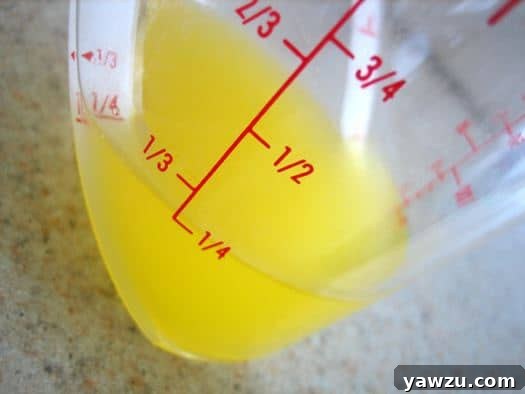
- Measure the acid: For every 1 cup of buttermilk needed, place 1 tablespoon of your chosen acid (white vinegar or lemon juice) into a liquid measuring cup.
- Add milk: Fill the rest of the measuring cup with regular milk (whole milk, 2%, or even non-dairy milk like almond or soy milk work well) up to the 1-cup line.
- Let it sit: Stir gently and let the mixture stand for 5 to 10 minutes. During this time, the acid will curdle the milk, causing it to thicken slightly and develop small clumps, mimicking the texture and acidity of real buttermilk.
- Use as needed: Once it appears slightly curdled, stir again and use the amount called for in your recipe.
While this substitute works wonderfully in most baking applications, it won’t have the exact thickness or complex flavor of commercially produced cultured buttermilk, which is typically thicker and has a more pronounced tang. However, for the chemical reaction it provides with baking soda (which is often the main reason buttermilk is included in recipes), it works perfectly.
Recommended Baking Tools and Ingredients
To ensure your baking ventures are always successful, here are some essential products mentioned in this guide that are worth considering for your kitchen:
- Oven Thermometer: An indispensable tool for accurate oven temperature, preventing under or over-baking.
- Silicone Baking Mat: Provides a reusable, non-stick surface for even baking and easy cleanup.
- Pre-Cut Parchment Sheets: Convenient, non-stick liners that simplify baking and cleanup.
- Dutch-Process Cocoa: For deep, rich chocolate flavor and color. Look for brands like Callebaut or sources such as Penzeys, King Arthur Flour, and on Amazon.
~ ~ ~ ~ ~
This collection of questions and answers aims to tackle some of the most perplexing baking problems and ingredient dilemmas. It’s truly just the beginning, as the world of baking is vast and new questions constantly arise. We hope this resource serves as a valuable companion in your culinary journey, helping you to troubleshoot with confidence and achieve delicious results.
This guide will be regularly updated and expanded with new questions, expert advice, and practical solutions, serving as a permanent reference page. We encourage you to share your baking challenges or questions that weren’t covered here in the comments section below, or feel free to send us an email with your inquiries. Your feedback is invaluable in making this the most comprehensive baking resource possible!
[email_link] | [print_link]