
There’s an undeniable magic in the kitchen when yeast comes alive, transforming simple ingredients into something truly extraordinary. For me, few culinary endeavors offer a greater sense of accomplishment and pure joy than baking with yeast. Whether it’s crafting rustic loaves of bread, fluffy dinner rolls, classic English muffins, delicate pastries, or perfectly chewy bagels, the process is always a delightful adventure. My journey into the world of homemade bagels began almost three years ago, and my fascination with them has only grown stronger. I started with the fundamental plain variety, mastering the basics before venturing into an array of exciting flavor combinations. Since then, I’ve explored delicious variations like the sweet and spiced Cinnamon Raisin (which quickly became a personal favorite!), the savory and cheesy Asiago, and the rich, tender Egg bagels. Each new creation brought its own unique satisfaction, deepening my appreciation for this humble, yet versatile, baked good.
A few weeks ago, a familiar craving for freshly baked bagels struck, prompting me to contemplate a new flavor frontier. Blueberry bagels have always held a special place in my heart – the thought of them lightly toasted, their warm aroma filling the kitchen, and then generously slathered with cool, tangy cream cheese is simply irresistible. It was a flavor I knew I had to conquer in my own kitchen. And so, with a clear vision and a rumbling stomach, I embarked on my quest to create the perfect homemade blueberry bagel.
The Foundation of Flavor: Mastering Bagel Craft with Peter Reinhart
Every successful bagel variation I’ve created stems from a foundational recipe, a classic plain version found in Peter Reinhart’s seminal work, The Bread Baker’s Apprentice. This book is an invaluable resource for any serious baker, and Reinhart’s recipes are consistently excellent, yielding reliable and delicious results. Beyond his published work, Peter Reinhart himself has been incredibly helpful and generous with his time and expertise. Over the years, he has graciously responded to my emails, offering invaluable guidance on how to adapt his core bagel recipe for different flavor profiles, such as Asiago or egg bagels. His insights have been crucial in my baking journey, ensuring that each new variation maintains the authentic texture and taste that define a truly great bagel.
My latest endeavor, the blueberry bagel, was no exception. When I reached out to Peter for advice on incorporating blueberries into the notoriously stiff bagel dough, he once again provided practical and precise tips. His expertise saved me from potential pitfalls and guided me towards creating a blueberry bagel that truly lived up to my expectations. His guidance emphasized key considerations for working with fruit in high-hydration doughs, which proved essential for achieving the perfect balance of flavor and texture.
Expert Tips for Blueberry Bagel Perfection
Peter Reinhart’s advice on creating blueberry bagels was insightful and practical, focusing on the unique challenges fresh fruit can present in a dense dough. He strongly recommended using **dried blueberries** over fresh ones. The reasoning behind this is twofold: fresh blueberries have a high water content, which can “bleed” into the dough during mixing and kneading, potentially altering its precise hydration balance. More importantly, the delicate structure of fresh blueberries means they are prone to breaking down and smearing when kneaded into the very stiff, low-hydration dough characteristic of bagels. This could result in an unevenly colored, purplish dough and a less appealing texture, rather than distinct pockets of fruit.
When it came to quantity, Peter suggested using roughly the same amount of dried blueberries as raisins in the cinnamon raisin bagel recipe. However, recognizing that dried blueberries are typically larger and more intensely flavored than raisins, I decided to slightly reduce the amount by half a cup (from 2 cups to 1.5 cups) to ensure the fruit didn’t overpower the dough. This small adjustment proved to be perfect, allowing the blueberry flavor to shine without making the bagels overly dense or crumbly. Another crucial tip, also borrowed from the cinnamon raisin variation, was to **increase the instant yeast in the final dough from ½ teaspoon to 1 teaspoon**. This increase compensates for the “dead weight” of the dried fruit, which can inhibit yeast activity and slow down fermentation. The additional yeast ensures proper proofing and a good rise, contributing to the bagel’s signature chewy texture.
Finally, given the natural sweetness of dried blueberries, Peter advised against adding any extra sugar to the dough. This was a critical point, as excessive sugar can alter the dough’s structure and affect the caramelization during baking. The inherent sweetness of the dried fruit proved to be ample, creating a beautifully balanced flavor without needing additional sweeteners. These expert modifications were instrumental in my quest, ensuring that the blueberry bagels would have the ideal texture and robust fruit flavor I envisioned.
The Rewarding Outcome: A Symphony of Texture and Taste
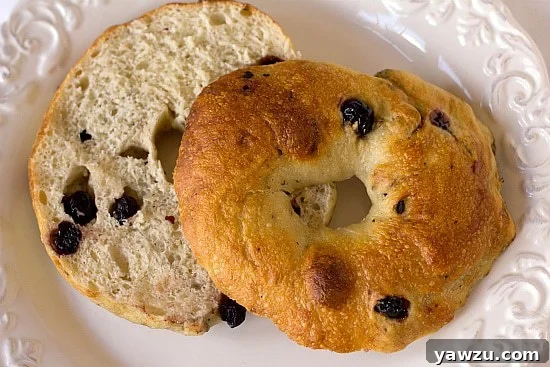
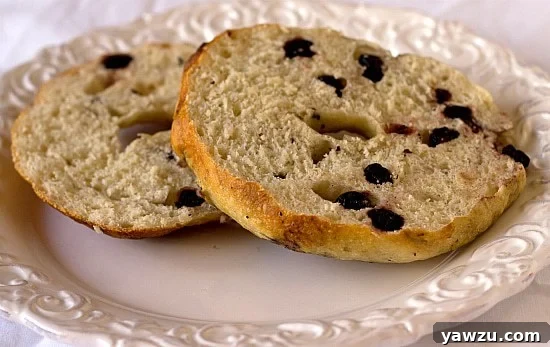
The anticipation during baking was immense, but the result was everything I had envisioned and more. My homemade blueberry bagels emerged from the oven, boasting a truly exceptional character. The exterior was wonderfully chewy, with that distinct slightly crisp crust that bagel aficionados adore, while the interior remained delightfully soft and tender. Each bite delivered an enormous burst of authentic blueberry flavor, distributed perfectly throughout the dough, thanks to the dried fruit. There were no messy, splotchy areas, just clear, sweet pockets of concentrated blueberry goodness.
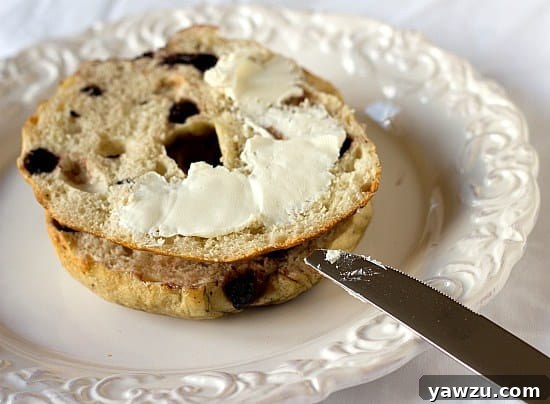
These bagels were truly perfect: lightly toasted, their inherent sweetness awakened, and then generously spread with a thick layer of plain cream cheese. The combination of the warm, chewy bread, the sweet-tart blueberries, and the cool, creamy cheese was nothing short of heavenly. It was a complete success, a mission accomplished with delicious and satisfying results. Sharing these warm, fresh-from-the-oven delights with family and friends was an added joy, reinforcing the belief that some of the best culinary experiences are born in one’s own kitchen.
Why Embrace Homemade Blueberry Bagels?
Baking bagels at home, especially a unique flavor like blueberry, offers a multitude of benefits that far surpass grabbing a store-bought version. Firstly, the unparalleled freshness is a game-changer. There’s simply no comparison to the aroma and taste of a bagel pulled warm from your own oven. You control every ingredient, ensuring high-quality flour, fresh yeast, and real dried blueberries, free from artificial flavors or preservatives often found in commercial products. Moreover, the process itself is incredibly rewarding. The therapeutic rhythm of kneading dough, watching it transform, and finally savoring your handmade creation fosters a deep connection to your food. It’s an edible expression of care and creativity, allowing you to customize the sweetness, the chewiness, and the blueberry distribution to your exact preference. For anyone who loves the distinct satisfaction of baking with yeast, venturing into homemade blueberry bagels is an experience that truly nourishes both body and soul.
Two years ago: For the Love of Peanut Butter and Cinnamon
Four years ago: Homemade Soft Pretzels

Blueberry Bagels: A Sweet & Chewy Homemade Delight
Pin
Rate
Ingredients
For the Sponge:
- 1 teaspoon instant yeast
- 4 cups (500 g) high-gluten or bread flour, (18 ounces)
- 2½ cups (625 ml) water, at room temperature
For the Dough:
- 1 teaspoon instant yeast
- 3¾ cups (468.75 g) high-gluten or bread flour, (17 ounces)
- 2¾ teaspoons (2.75 teaspoons) salt
- 2 teaspoons malt powder or 1 tablespoon dark or light malt syrup, honey or brown sugar
- 1½ cups (240 g) dried blueberries, rinsed
To Finish:
- 1 tablespoon baking soda
- Cornmeal or semolina flour for dusting
Instructions
-
1. Prepare the Sponge: In a large 4-quart mixing bowl, combine the instant yeast with the high-gluten or bread flour. Gradually add the room-temperature water, whisking or stirring until the mixture is smooth and resembles a thick pancake batter. Ensure no dry spots of flour remain. Cover the bowl tightly with plastic wrap to prevent a skin from forming, and let it rest at room temperature for approximately 2 hours. During this time, the sponge will become very foamy and bubbly, swelling to nearly double its original size before slightly collapsing when the bowl is gently tapped. This active fermentation is crucial for flavor development.
-
2. Create the Dough: To the fermented sponge, either in the same bowl or in the bowl of an electric mixer fitted with a dough hook, add the additional teaspoon of instant yeast and stir gently to combine. Next, add 3 cups of the remaining high-gluten or bread flour, along with all of the salt and malt powder (or syrup/sugar). Stir by hand or mix on low speed with the dough hook until the ingredients start to come together into a shaggy ball. Gradually incorporate the remaining ¾ cup of flour, adding it slowly until the dough becomes stiff and cohesive. The goal is a firm dough, which is characteristic of traditional bagels.
-
3. Knead the Dough and Add Blueberries: Transfer the stiff dough onto a lightly floured countertop. Knead the dough vigorously for at least 10 minutes by hand (or for 6-8 minutes using an electric mixer with a dough hook on medium-low speed). During the final 2 minutes of kneading, gradually add the rinsed, dried blueberries, ensuring they are evenly distributed throughout the dough. The finished dough should feel firm yet pliable, smooth, and elastic. All flour should be fully hydrated, and the dough should not feel tacky. If it feels too dry and tears easily, add a few drops of water; if it’s too sticky, incorporate a little more flour until the desired stiffness and satiny texture are achieved. Proper kneading develops the gluten, essential for the chewy bagel texture.
-
4. Divide and Form Rolls: Immediately after kneading, divide the dough into 12 equal pieces. For consistent sizing, you might want to weigh each piece (approximately 3 ounces or 85 grams). Gently form each piece into a tight, smooth ball or roll. This initial shaping helps create a uniform structure for the bagels.
-
5. First Rest: Arrange the dough rolls on a clean surface or a baking sheet. Cover them with a lightly damp kitchen towel to prevent drying, and allow them to rest for approximately 20 minutes. This short rest period relaxes the gluten, making the dough easier to shape in the next step.
-
6. Shape the Bagels: Prepare two large sheet pans by lining them with parchment paper and lightly misting the paper with spray oil. To shape each bagel, take a dough ball and, using your thumb, gently poke a hole through the center. Carefully rotate your thumb around the inside of the hole, gradually widening it to an approximate diameter of 2½ inches. The key is to stretch the dough as evenly as possible around the hole, avoiding thick and thin spots, which can lead to uneven baking.
-
7. Second Rest and Covering: Place each shaped bagel onto the prepared sheet pans, ensuring they are spaced about 2 inches apart to allow for expansion. Lightly mist the bagels themselves with spray oil, then cover the pans loosely with plastic wrap. This prevents the dough from drying out and sticking to the wrap. Let the pans sit at room temperature for another 20 minutes.
-
8. The “Float Test” and Cold Fermentation (Retardation): To determine if your bagels are ready for cold fermentation in the refrigerator, perform the “float test.” Fill a small bowl with cool or room-temperature water. Gently drop one bagel into the water. If the bagel floats to the surface within 10 seconds, it is adequately proofed and ready for retardation. Immediately remove the tester bagel, pat it dry, and return it to the pan. Cover the pan tightly with plastic wrap and place it in the refrigerator overnight. The bagels can be refrigerated for up to 2 days, which enhances their flavor and texture significantly. If the bagel does not float, return it to the pan, cover, and continue proofing at room temperature, retesting every 10 to 20 minutes until a test bagel floats. The time required for this step can vary based on your kitchen’s ambient temperature and the dough’s stiffness.
-
9. Preheat Oven and Prepare Boiling Water: The next day, or whenever you are ready to bake your bagels, preheat your oven to a high 500 degrees F (260 degrees C). Simultaneously, bring a large, wide pot of water to a rolling boil. A wider pot is preferable as it allows more bagels to boil simultaneously without overcrowding. Once boiling, add the tablespoon of baking soda to the water. Have a slotted spoon or skimmer ready for handling the bagels.
-
10. Boil the Bagels: Remove the cold bagels from the refrigerator. Gently drop them into the vigorously boiling water, ensuring not to overcrowd the pot. Boil only as many bagels as can comfortably float without touching each other (they should float within 10 seconds). Boil the bagels for 1 minute on one side, then carefully flip them over with the slotted spoon and boil for another minute on the second side. For an extra chewy bagel, you can extend the boiling time to 2 minutes per side. While the bagels are boiling, sprinkle the same parchment-lined sheet pans (or new ones, lightly sprayed with oil) with a generous amount of cornmeal or semolina flour. This prevents sticking and adds a classic bagel texture to the bottom crust.
-
11. Bake the Bagels: Once all the bagels have been boiled, place the sheet pans on the two middle shelves of your preheated oven. Bake for approximately 5 minutes. Then, carefully rotate the pans, switching their positions (top to bottom, bottom to top) and rotating each pan 180 degrees to ensure even baking. (If baking only one pan, keep it on the center shelf but still rotate 180 degrees.) After the rotation, reduce the oven temperature to 450 degrees F (232 degrees C) and continue baking for about another 5 to 10 minutes, or until the bagels develop a beautiful light golden brown crust. You can bake them darker if you prefer a more robust crust.
-
12. Cool and Serve: Once baked to your desired golden hue, remove the pans from the oven. Immediately transfer the hot bagels to a wire cooling rack. Allow them to cool for at least 15 minutes (or longer) before slicing and serving. Cooling on a rack prevents the bottoms from becoming soggy and allows the crust to set, enhancing the chewy texture. Enjoy your fresh, homemade blueberry bagels!
Did you make this recipe?
Leave a review below, then snap a picture and tag @thebrowneyedbaker on Instagram so I can see it!