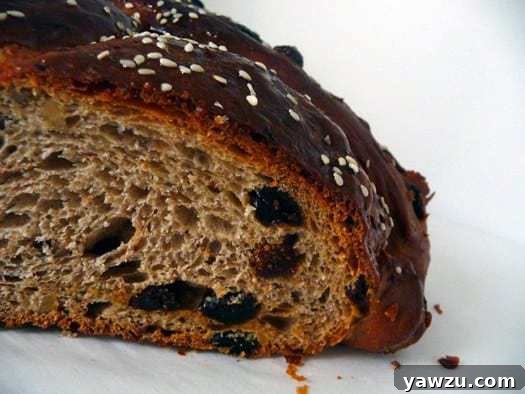
Greek Christmas Bread: Christopsomos – A Timeless Holiday Tradition
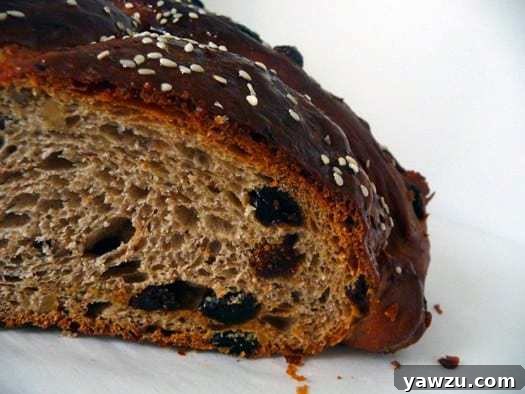
Step into the festive heart of Greek culinary traditions with Christopsomos, a magnificent bread specifically baked to celebrate Christmas. This particular recipe draws inspiration from the broader category of Greek Celebration Breads, known as Artos, which play a significant role in various Orthodox Christian festivities throughout the year. What immediately captivated me about Christopsomos was its striking resemblance to the beloved Cucidati Italian fig cookies I had previously crafted. Both feature a rich, aromatic filling of ground figs, raisins, dates, and walnuts, beautifully complemented by the zesty notes of orange and the warm spice of cinnamon. This culinary kinship between Italy and Greece is not at all surprising, as these neighboring Mediterranean cultures frequently share and evolve traditional recipes, resulting in delicious variations like this festive bread.
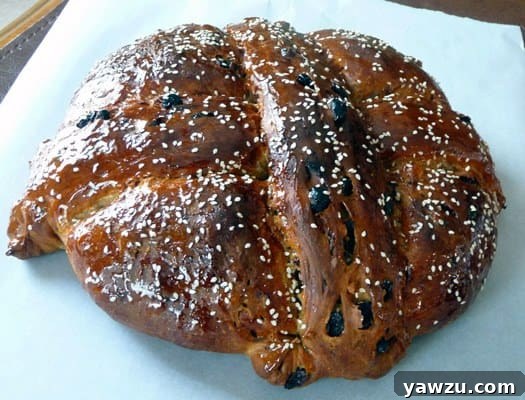
From the moment the ingredients come together, Christopsomos transforms your kitchen into a sanctuary of holiday cheer. The blend of spices releases an enchanting aroma as the dough mixes, subtly hinting at the festive feast that awaits. Once this beautiful loaf enters the oven, the warm, spicy fragrance intensifies, evoking memories of cherished holiday gatherings like Thanksgiving. It’s more than just a bread; it’s a sensory experience that defines the season. This bread has quickly earned a permanent spot on my annual holiday baking list, proving to be an absolute showstopper. It’s perfect for a special Christmas morning breakfast, served alongside coffee or tea, or as a welcoming treat for any guests who might drop by during the festive season. Its comforting flavors and inviting aroma make it an ideal centerpiece for any holiday spread.
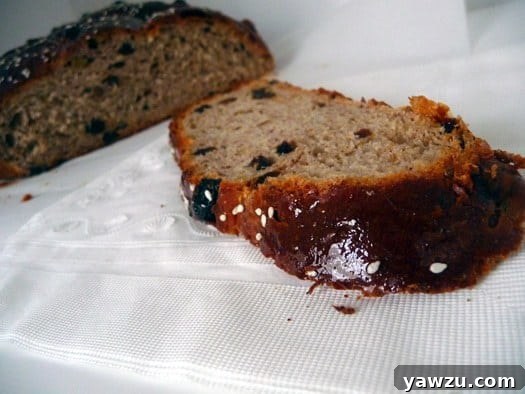
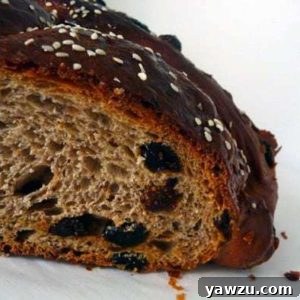
One element that truly elevates this bread, in my opinion, is the exquisite glaze. While often listed as optional in recipes, I firmly believe it’s what truly makes Christopsomos shine. The glaze is a harmonious blend of simple syrup, fragrant honey, delicate almond, and bright orange extracts. This sweet, sticky coating doesn’t merely add shine; it deepens and accentuates the complex flavors woven within the bread’s crumb, creating a multi-layered taste sensation. To finish, a generous sprinkling of sesame seeds provides a delightful textural contrast and a subtly nutty flavor that perfectly complements the rich, spiced bread and its sweet glaze. I initially hesitated about adding the glaze, but at the last minute, decided to proceed, and I am so incredibly glad I did. It truly transforms a wonderful bread into an unforgettable one.
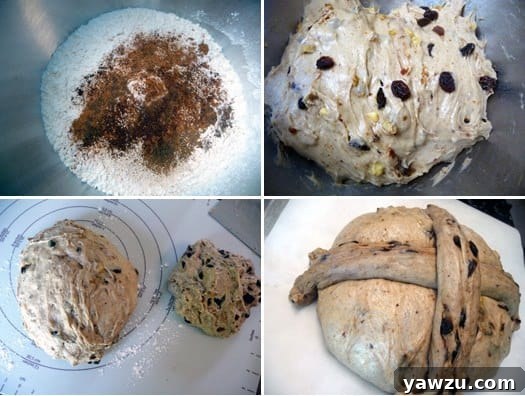
Mastering Your Christopsomos: Essential Baking Notes and Tips
Baking Christopsomos is a rewarding experience, and paying attention to a few key details can make all the difference in achieving a perfect loaf. Here are some insights from my own baking journey:
The Art of Poolish: Building Flavor from the Start
- Poolish Quantity: The recipe for the poolish often yields more than you’ll need for a single loaf of Christopsomos. This is a common practice in artisan bread baking, as a larger batch of starter can be more stable and active. You have two excellent options here: you can make the entire poolish recipe and either save the excess in the refrigerator for up to three days to use in another bread recipe, or you can simply halve the poolish recipe from the start if you know you’ll only be baking one loaf. Using a poolish contributes significantly to the bread’s complex flavor profile and open crumb structure.
- Understanding Poolish: A poolish is a type of pre-ferment, essentially a liquid starter made from flour, water, and a tiny amount of yeast. It’s allowed to ferment for several hours, developing incredible flavors and helping with the dough’s extensibility. Don’t rush this step; allow it to become bubbly and foamy for optimal results.
Achieving the Perfect Dough Consistency
- Hydration and Kneading: When I first began kneading the dough in my Kitchen Aid mixer, it initially appeared quite wet. My instinct was to immediately add more flour, a common mistake for many home bakers. However, I resisted this urge and allowed the mixer to continue working for a full 10 minutes. To my delight, the dough transformed, becoming perfectly supple and tacky, yet no longer overly sticky. The “windowpane test” is your best friend here: gently stretch a small piece of dough; if you can stretch it thin enough to see light through it without tearing, your gluten is well-developed, and the dough is ready. This balance of hydration and gluten development is crucial for Christopsomos’s characteristic texture.
- Incorporating Fruits and Nuts: Adding the raisins, figs, and walnuts during the final two minutes of kneading ensures they are evenly distributed throughout the dough without hindering initial gluten development. This timing is important for the structural integrity of the bread.
Shaping and Proofing for a Beautiful Loaf
- First Rise (Bulk Fermentation): My first rise consistently took approximately 2 hours. However, remember that proofing times can vary based on ambient temperature and humidity. Always observe the dough itself – it should roughly double in size – rather than adhering strictly to a timer. This initial rise is vital for developing flavor and creating a light, airy texture.
- Second Rise (Final Proofing): The second proof, or final proofing, typically takes 60 to 90 minutes. Again, look for the dough to almost double in size, becoming visibly puffy and light. An under-proofed loaf will be dense, while an over-proofed loaf might collapse in the oven.
Crafting the Iconic Decorative Cross
- Symbolism of the Cross: The decorative cross atop Christopsomos is not just for aesthetics; it carries deep religious and cultural significance, symbolizing Christ’s birth and blessings for the household. Each family often has its own traditional methods for decorating, sometimes even embedding a coin for good luck.
- Shaping the Strands: I opted to shape the loaf into the traditional decorative cross. The recipe calls for 10-inch long strands for the cross, but I found that even 12-inch strands weren’t quite long enough to achieve a distinct, elegant coil at the ends after crossing them over the boule. This led to the boule deflating slightly when the strands were placed on top. My tip: don’t be afraid to make your strands slightly longer than recommended, perhaps 13-14 inches, and ensure they are relatively thin so they don’t weigh down the boule. Also, ensure your boule isn’t excessively proofed before applying the cross, as an over-proofed loaf is more susceptible to deflation. Handling the dough gently during this stage is key to maintaining its structure.
Christopsomos Recipe: Your Guide to a Festive Masterpiece
Greek Christmas Bread – Christopsomos
12
servings (1 large loaf)
2 hrs
10 mins
20 mins
7 hrs
9 hrs
30 mins
Pin
Ingredients
Poolish:
- 2½ cups (312.5 g) unbleached bread flour, (11.25 ounces )
- 1½ cups (375 ml) water, at room temperature, (12 ounces )
- ¼ teaspoon (0.25 teaspoon) instant yeast
Dough:
- 1 cup (236.59 g) poolish (recipe follows), (7 ounces )
- 3½ cups (437.5 g) unbleached bread flour, (16 ounces )
- 1 teaspoon salt
- 1½ teaspoons (1.5 teaspoons) instant yeast
- 1 teaspoon ground cinnamon
- ¼ teaspoon (0.25 teaspoon) ground nutmeg
- ¼ teaspoon (0.25 teaspoon) ground allspice
- ¼ teaspoon (0.25 teaspoon) ground cloves
- 1 teaspoon orange extract
- 1 teaspoon almond extract
- 2 large eggs, slightly beaten
- ¼ cup (84.75 ml) honey
- ¼ cup (54 ml) olive oil, (2 ounces )
- ¾ cup (177 ml) whole or low-fat milk, lukewarm, (6 ounces )
- ½ cup (72.5 g) raisins
- ½ cup (74.5 g) chopped dried figs
- ½ cup (58.5 g) chopped walnuts
Glaze:
- 2 tablespoons water
- 2 tablespoons sugar
- 2 tablespoons honey
- 1 teaspoon orange extract
- 1 teaspoon sesame seeds
Instructions
-
To make the poolish, stir together the flour, water, and yeast in a mixing bowl until all of the flour is hydrated. The dough should be soft and sticky and resemble very thick pancake batter. Cover the bowl with plastic wrap and ferment at room temperature for 3 to 4 hours, or until the sponge becomes bubbly and foamy. Immediately refrigerate it. It will keep for up to 3 days in the refrigerator.
-
To make the bread dough, remove the measured amount of poolish from the refrigerator 1 hour before you plan to begin mixing the dough. This allows it to come to room temperature.
-
In a large mixing bowl (or the bowl of an electric mixer), stir together the bread flour, salt, instant yeast, ground cinnamon, nutmeg, allspice, and cloves. Add the prepared poolish, orange extract, almond extract, slightly beaten eggs, honey, olive oil, and lukewarm milk. Stir everything together with a sturdy spoon (or mix on low speed with the paddle attachment) until the dough forms a cohesive ball.
-
Lightly sprinkle flour on a clean counter surface, then transfer the dough onto it. Begin kneading by hand (or switch to the dough hook attachment and mix on medium speed). Add small amounts of additional milk or flour as needed, gradually working it in until the dough forms a soft, pliable, and tacky ball that is not overly sticky. Continue to knead (or mix) for approximately 10 minutes. During the final 2 minutes of kneading, incorporate the raisins, chopped dried figs, and chopped walnuts until evenly distributed. The dough should pass the windowpane test (stretch thin without tearing) and register a temperature of 77° to 81°F (25° to 27°C).
-
Lightly oil a clean bowl and transfer the kneaded dough into it, rolling the dough around to ensure it is evenly coated with oil. Cover the bowl tightly with plastic wrap and allow the dough to ferment (proof) at room temperature for 90 minutes, or until it has visibly doubled in size.
-
Once the first proof is complete, gently remove the dough from the bowl and shape it into a smooth, round boule. Transfer the shaped boule to a sheet pan that has been lined with baking parchment paper. Lightly mist the dough with spray oil and loosely cover it with plastic wrap.
-
Allow the dough to proof at room temperature for another 60 to 90 minutes, or until it has nearly doubled in size again and appears puffy.
-
To make the decorative cross for your Christopsomos, follow these steps before shaping the main dough into a boule: Divide the entire dough into two pieces, one piece being twice as large as the other. Shape the larger piece into a boule and proceed with proofing as described in Step 6. Place the smaller piece of dough in a plastic bag and chill it in the refrigerator. When the larger boule is fully proofed and ready to bake, remove the smaller piece from the refrigerator. Divide this smaller piece in half and roll each half into a 10 to 12-inch-long strand. Carefully cross the two strands of dough over the top of the boule. Using a pastry scraper or a knife, split the ends of each strand and then coil them gently to form a beautiful, decorative cross pattern.
-
Preheat your oven to 350°F (175°C) with the oven rack positioned on the middle shelf.
-
Bake the loaf for 20 minutes. Then, rotate the pan 180 degrees to ensure even baking and continue baking for another 20 to 25 minutes. The bread is done when it is golden brown and an instant-read thermometer inserted into the center registers 190°F (88°C). It should also make a hollow sound when gently thumped on the bottom. If desired, you may apply the glaze as soon as the loaf comes out of the oven.
-
To prepare the glaze, combine the water and sugar in a small saucepan and bring the mixture to a boil, stirring until the sugar is dissolved. Remove from heat and stir in the honey and orange extract. Reheat the glaze gently, if necessary, to ensure it’s fluid before applying it. Generously brush the warm loaf with the prepared glaze and immediately sprinkle with sesame seeds for added flavor and texture.
-
Transfer the freshly baked bread to a wire rack and allow it to cool completely for at least 1 hour before attempting to slice or serve. This cooling time is crucial for the bread’s texture and flavor to set properly.
Nutrition Information
Calories:
241
kcal
,
Carbohydrates:
40
g
,
Protein:
6
g
,
Fat:
6
g
,
Cholesterol:
13
mg
,
Sodium:
109
mg
,
Potassium:
139
mg
,
Fiber:
2
g
,
Sugar:
8
g
,
Vitamin A:
30
IU
,
Vitamin C:
0.3
mg
,
Calcium:
24
mg
,
Iron:
0.8
mg
Did you make this recipe?
We’d love to hear from you! Share your experience by tagging @thebrowneyedbaker on Instagram so we can see your beautiful Christopsomos!
Michelle Lettrich
Bread
Greek
More Festive Bread Inspiration from Peter Reinhart
If you’ve enjoyed baking this Christopsomos, you might be interested in exploring more exceptional bread recipes. Peter Reinhart, a master baker, offers a diverse range of breads that are both challenging and incredibly rewarding. Here are some of his other fantastic creations to inspire your next baking project:
- Bagels (Be sure to check back next week for a new variation of these!)
- Classic White Bread
- Cinnamon Rolls with Cream Cheese Glaze
- Lavash Crackers