
Prepare to be enchanted by the ultimate classic Pavlova recipe, a dessert deeply rooted in the culinary traditions of Australia and New Zealand. This exquisite meringue creation boasts a beautifully crisp shell that gives way to a pillowy-soft, marshmallow-like interior, offering a delightful contrast in every bite. With minimal preparation required, it’s a perfect make-ahead option for effortless entertaining. Elevate your dessert experience by generously piling on a heap of slightly sweetened fresh homemade whipped cream, then adorn it with a vibrant array of your favorite seasonal fresh fruits. The result is a truly light, airy, and stunning dessert that is sure to impress and satisfy!
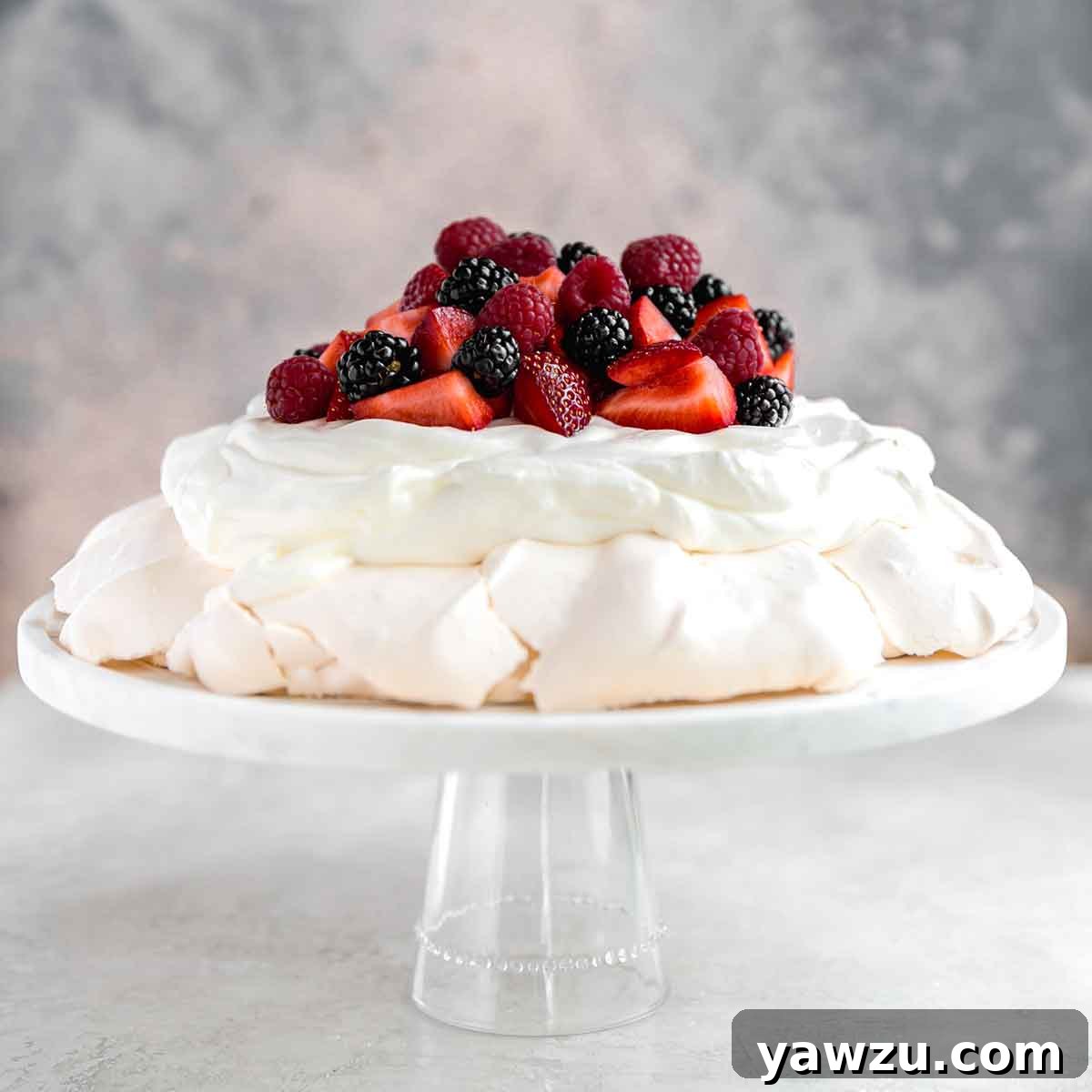
What Exactly is Pavlova? An Iconic Meringue Dessert
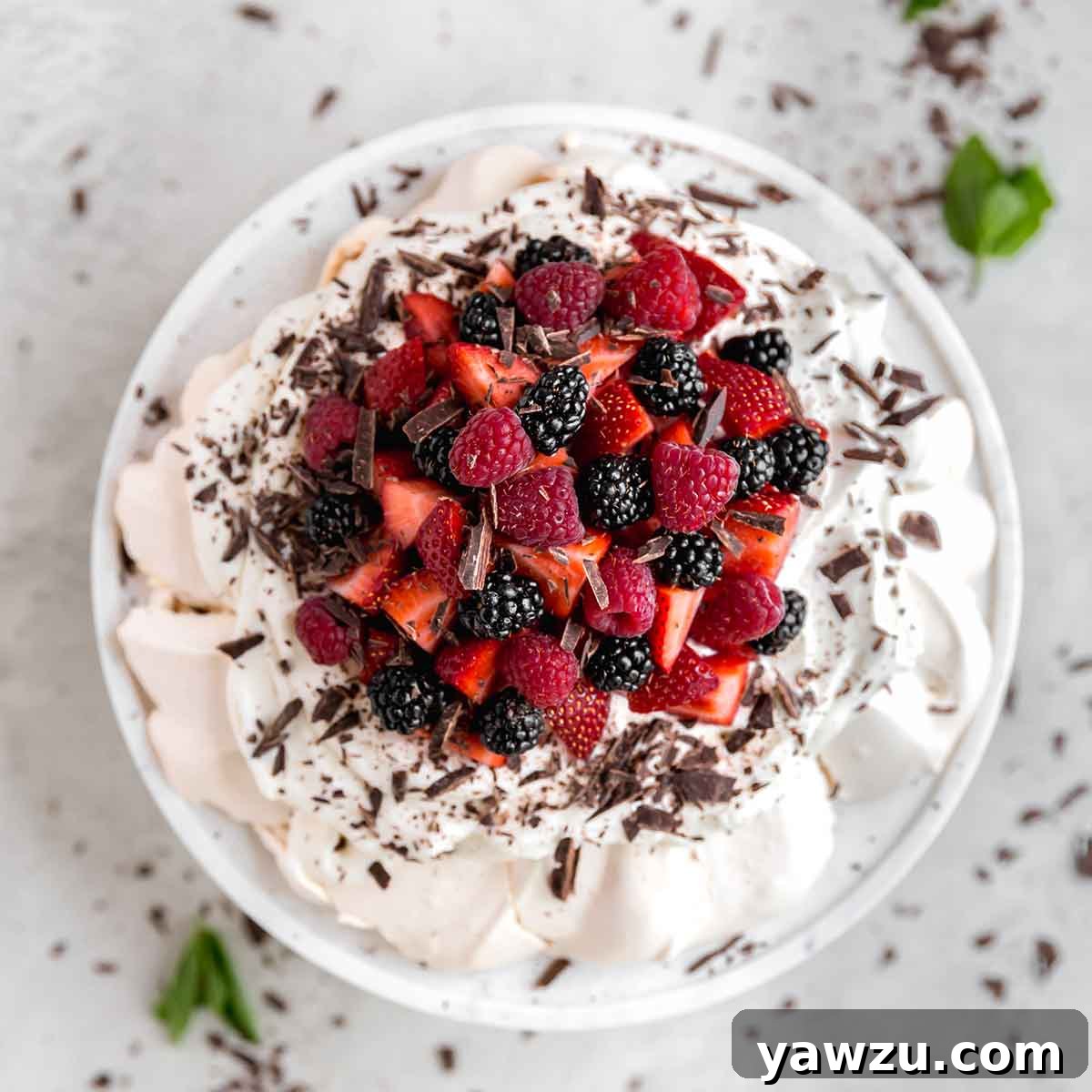
Pavlova is far more than just a dessert; it’s a culinary masterpiece that captivates with its unique textures and delicate flavor. At its heart, Pavlova is a large, ethereal meringue base, carefully spread into a majestic circle and baked to perfection. The magic truly happens during the baking and cooling process, which results in a distinct crisp exterior that audibly cracks when sliced. Beneath this delicate crust lies a wondrously soft, almost cloud-like interior, resembling a homemade marshmallow in both taste and consistency. Once cooled, this magnificent meringue is traditionally crowned with a generous dollop of fresh whipped cream and an abundance of vibrant, fresh fruit, transforming it into a light and refreshing dessert.
The dessert’s enchanting name is said to pay homage to the legendary Russian ballerina Anna Pavlova, commemorating her tours through Australia and New Zealand in the 1920s. Both countries proudly lay claim to its creation, a friendly culinary rivalry that has made the true origin a charming source of contention for decades. Regardless of its exact birthplace, Pavlova has cemented its place as a beloved staple in both nations’ dessert repertoires, particularly popular during festive seasons and warm summer months.
When the sun shines brightly and you crave a sweet, delicious treat that feels effortlessly light yet undeniably special, Pavlova emerges as the undisputed champion. It possesses an innate ability to surprise and intrigue guests, often leading to fervent requests for the recipe. Beyond its traditional adornment of fresh whipped cream and a vibrant mix of berries, Pavlova’s versatility allows for a myriad of creative toppings, making it a dessert that never ceases to delight.
Essential Ingredients for Perfect Pavlova
Creating an exceptional Pavlova requires surprisingly few ingredients, making it an accessible and rewarding baking project. The beauty of this dessert lies in the transformation of simple components into something truly extraordinary. You’ll likely find most of these staples already residing in your kitchen pantry or refrigerator. Precision in measurement and attention to detail during preparation are key to achieving that signature Pavlova perfection.
- Egg Whites: These are the foundation of your meringue. For optimal volume and stability, it is absolutely crucial that your egg whites are at room temperature. Cold egg whites simply won’t whip up as effectively, yielding a less voluminous and stable meringue. A smart tip is to separate the eggs while they are cold (as they are easier to separate cleanly then), and then allow the whites to sit out on the counter for 30 minutes to an hour to reach room temperature before you begin whipping.
- Cream of Tartar: This unsung hero plays a vital role in stabilizing the egg white mixture. It helps the whites achieve firm peaks, prevents them from deflating, and significantly reduces the risk of “weeping” (when liquid seeps out of the meringue). If you find yourself without cream of tartar, don’t despair! You can effectively substitute 1½ teaspoons of fresh lemon juice or white vinegar, both of which serve a similar stabilizing function due to their acidic properties.
- Granulated Sugar: Beyond merely sweetening the Pavlova, granulated sugar is an indispensable structural component. It binds and stabilizes the delicate protein structure of the egg whites, preventing them from collapsing and ensuring a beautifully crisp exterior. Adding the sugar gradually is paramount for its proper incorporation and for achieving that desirable glossy, stiff-peaked meringue.
- Vanilla Extract: For an irresistible aroma and a boost of classic flavor that complements the sweetness of the meringue. Use a high-quality vanilla extract for the best results.
- Pinch of Salt (Optional but Recommended): While not listed in the original, a tiny pinch of fine salt can enhance the flavor of the egg whites and help them whip up more effectively. Add it with the cream of tartar.
Should You Add Cornstarch to Pavlova?
The inclusion of cornstarch in Pavlova recipes is a topic of ongoing debate among bakers. While many traditional recipes, including this cherished family recipe, achieve perfect results without it, some contemporary versions advocate for its addition. Proponents suggest that cornstarch acts as a hygroscopic agent, meaning it helps to absorb any excess moisture within the meringue. This can be particularly beneficial in humid environments, where meringues are more prone to becoming sticky or “weeping.” By absorbing moisture, cornstarch can contribute to an even drier, crisper exterior and a more stable, less prone-to-collapse interior.
If you’re baking in a particularly humid climate, or simply wish to experiment with this technique for added insurance, I recommend stirring 2 teaspoons of cornstarch into your granulated sugar before you begin gradually adding it to the whipped egg whites. This ensures even distribution and prevents lumps, contributing to a smoother, more resilient meringue structure.
Achieving Pavlova Perfection: Essential Baking Tips
The sight of a beautifully crafted Pavlova can often appear daunting, leading many to believe it’s a complicated dessert reserved for seasoned bakers. However, fear not! The process of creating this stunning dessert is remarkably simple, provided you adhere to a few fundamental tips. By following these guidelines, you’ll be well on your way to baking a show-stopping Pavlova right from your very first attempt. Let’s dive into the secrets of success!
- Meringue Basics are Key: If you’re new to meringue making or simply desire a confidence boost, I highly recommend consulting an ultimate guide on how to make meringue. Such guides are invaluable resources, packed with essential troubleshooting tips, techniques, and common pitfalls to avoid. Understanding the science behind meringue will significantly improve your chances of success.
- Choose Your Electric Mixer Wisely: Given the extensive whipping involved in creating a stable meringue, an electric mixer is an absolute necessity. A stand mixer equipped with a whisk attachment is generally the most efficient and hands-free option, allowing you to gradually add sugar while the mixer does the hard work. Alternatively, a powerful hand mixer can also be used, though it requires a bit more arm strength and attention. Attempting to whisk the egg whites by hand is not recommended, as achieving the correct stiff-peak consistency will be incredibly challenging, if not nearly impossible, for most bakers.
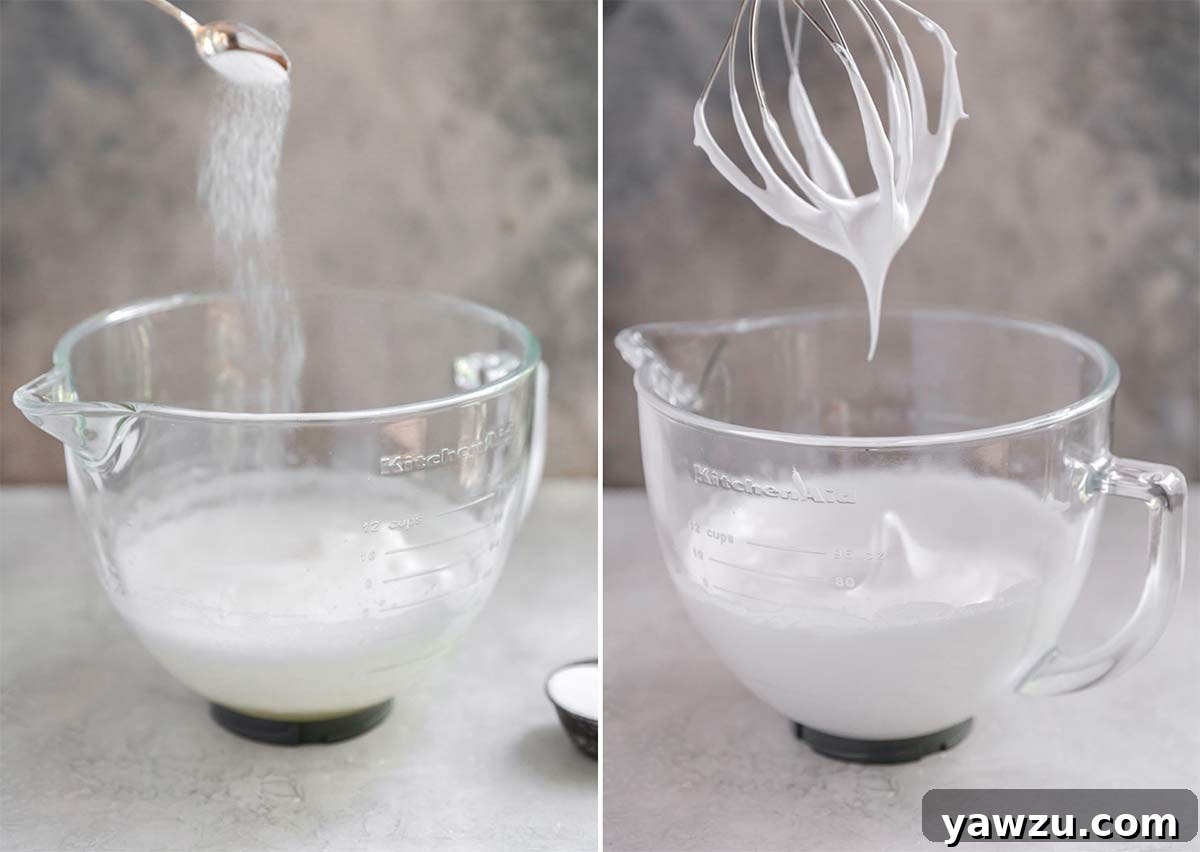
- The Golden Rule: Add Sugar Slowly! This is perhaps the most critical step for a successful Pavlova. Pouring the granulated sugar into the egg whites all at once will almost certainly cause them to deflate, making it exceedingly difficult to whip them back up to stiff, glossy peaks. Instead, once your egg whites have reached soft peaks, gradually stream in the sugar, about a tablespoon at a time, while the mixer continues to run on medium-high speed. Allow each addition to fully dissolve before adding the next. This slow incorporation process allows the sugar to properly bind with the egg proteins, resulting in a stable, shiny, and voluminous meringue.
- The Importance of Cleanliness: Any trace of fat or grease in your mixing bowl or on your whisk attachment can prevent egg whites from whipping up properly. Ensure your equipment is meticulously clean and dry before you begin. Even a tiny speck of yolk can ruin your meringue!
- Perfect Oven Temperature and Environment: Pavlovas require a low and slow baking process to dry out rather than cook. An oven temperature of 250°F (120°C) is ideal. Avoid opening the oven door during the first hour of baking, as sudden temperature drops can cause the meringue to crack or collapse.
- Crafting Mini Pavlovas: For individual servings or a charming presentation, you can easily create mini Pavlovas. Instead of forming one large circle, simply pipe or dollop smaller meringue circles onto the parchment paper. I highly recommend using a Wilton 1M piping tip for beautiful, professional-looking swirls. Keep in mind that these mini meringues will require a shorter baking time, typically around 25 to 30 minutes. Check for doneness by gently touching them; they should feel firm and dry to the touch.
- The Art of Cooling the Pavlova: A gentle and prolonged cool-down period is absolutely essential for developing the ideal texture and preventing significant cracking or collapse. Once the baking time is complete, turn off your oven but leave the Pavlova inside. Prop the oven door slightly ajar (a wooden spoon works perfectly for this) and allow the meringue to cool completely within the gradually cooling oven. This slow, controlled cooling environment helps the exterior to fully dry out and harden without shrinking too rapidly. For best results, I often leave it to cool overnight.
- Embracing Cracks on the Outside: Don’t be alarmed if you observe some cracks forming on the surface of your Pavlova as it dries and cools. This is a perfectly natural occurrence and is part of its rustic charm. While the slow cooling method is designed to minimize excessive cracking and prevent structural collapse, minor fissures are to be expected. They are simply a testament to its delicate, crisp shell and contribute to its handmade appeal.
- Proper Storage for Lasting Freshness: Once your Pavlova has completely cooled, it can be stored. Place the cooled meringue in a large, airtight container and keep it in a cool, dark place (like a pantry cupboard) for a maximum of 2 days. It is crucial NOT to refrigerate the bare Pavlova! The humidity in a refrigerator will cause the meringue to condensate, soften, and eventually fall apart, losing its signature crispness. If you plan to serve it later, store the whipped cream and any garnishes separately, assembling the dessert just before serving to maintain optimal texture.
Preparing Pavlova in Advance: A Time-Saving Guide
One of the many appealing aspects of Pavlova is its adaptability for make-ahead preparation, making it an ideal dessert for entertaining without last-minute stress. The meringue base itself is quite robust when stored correctly, allowing you to focus on other aspects of your meal closer to serving time.
The Pavlova meringue layer can be baked and prepared up to 2 days in advance. Once it has completely cooled inside the oven (as per the cooling instructions above), carefully transfer it to a large, airtight container. Store this container in a cool, dark, and dry place, such as a pantry cupboard, away from any sources of moisture or heat. This method will preserve its crisp texture and structural integrity.
However, it is vitally important to remember that once the Pavlova has been adorned with whipped cream and fresh fruit, its delicate nature changes. The moisture from the cream and fruit will gradually begin to soften the crisp meringue shell. For this reason, for the best eating experience, Pavlova should be served within a few hours of being assembled. If you are preparing for an event, plan to whip your cream and chop your fruit shortly before guests arrive, then assemble the Pavlova as one of your final touches. This ensures every bite delivers that delightful contrast of crisp meringue and creamy, fresh toppings.
Irresistible Pavlova Toppings and Flavor Combinations
While the meringue base itself is a marvel, the true artistry of Pavlova often shines through its toppings. A generous layer of fresh whipped cream is non-negotiable and provides the perfect canvas for a kaleidoscope of flavors and textures. Beyond that, the possibilities for customization are truly endless, allowing you to tailor your Pavlova to seasonal availability, personal preferences, or specific dietary needs. Here are some beloved and creative topping ideas to inspire your next creation:
- Classic Fresh Berries: A timeless favorite, a mix of vibrant fresh berries like juicy strawberries, plump blueberries, tart raspberries, and sweet blackberries creates a beautiful and delicious contrast against the white meringue and cream.
- Tropical Twist: For an exotic flair, consider slices of bright green kiwi, sweet, fragrant mango, or passion fruit pulp with its characteristic tang. These fruits add a wonderful burst of color and a delightful tropical acidity.
- Stone Fruit Delights: During peak season, sliced ripe peaches, succulent nectarines, or dark, juicy plums offer incredible sweetness and a tender texture. A light maceration with a touch of sugar can enhance their flavors.
- Homemade Fruit Sauces: Elevate simple fruits with a drizzle of homemade raspberry sauce, cherry compote, or a tangy passion fruit coulis. These add an extra layer of moisture and intense fruit flavor.
- Tangy Lemon Curd: A luscious lemon curd provides a bright, zesty counterpoint to the sweetness of the meringue. It’s also a fantastic way to utilize any leftover egg yolks from your Pavlova preparation, minimizing waste and maximizing flavor!
- Elegant Wine-Poached Pears: For a sophisticated touch, delicate wine-poached pears, infused with spices like cinnamon and star anise, add warmth and an elevated sweetness, particularly beautiful for autumn or winter presentations.
- Decadent Chocolate Shavings: A sprinkling of fine chocolate shavings, either dark or milk, introduces a rich, bittersweet element that pairs wonderfully with cream and fruit.
- Crunchy Nuts or Coconut: Toasted slivered almonds, chopped pistachios, or shredded coconut can add a delightful crunch and nutty aroma.
- Fresh Herbs for Garnish: A few fresh mint leaves, strategically placed, not only add a pop of color but also a subtle refreshing fragrance that enhances the overall sensory experience.
- Caramel Drizzle: For those with a sweet tooth, a light drizzle of homemade salted caramel sauce can add an extra layer of indulgence and richness.
Explore More Meringue-Based Delights
If you’ve fallen in love with the delicate crispness and airy texture of Pavlova, you’ll be delighted to know that the world of meringue desserts is vast and varied. From elegant layered cakes to delightful bite-sized cookies, meringue offers a unique foundation for countless sweet creations. Here are a few more meringue-inspired recipes that promise to tantalize your taste buds and expand your baking repertoire:
- Pavlova Layer Cake with Whipped Cream and Berries: A grand and impressive dessert that takes the classic Pavlova concept to new heights by stacking multiple meringue layers, each filled with luscious whipped cream and bursting with fresh berries. Perfect for celebrations!
- Decadent Chocolate Pavlova with Mascarpone and Raspberries: For chocolate lovers, this recipe introduces a rich, cocoa-infused meringue base. Paired with creamy mascarpone cheese and tart raspberries, it’s a sophisticated twist on the traditional.
- Classic Meringue Cookies: These delicate, melt-in-your-mouth cookies are a simple yet elegant way to enjoy the crisp sweetness of meringue. Light as air, they are perfect for gifting or a subtle sweet treat.
- Irresistible Chocolate Chip Meringue Cookies: A playful variation on classic meringue cookies, these incorporate mini chocolate chips for an added layer of flavor and texture, making them a favorite for all ages.
Watch the Classic Pavlova Recipe Tutorial
For visual learners or those who appreciate seeing each step in action, a video tutorial can be an incredibly helpful resource. While the original video player has been removed for a clean HTML output, imagine a comprehensive guide to mastering the classic Pavlova, from whipping the perfect meringue to artfully assembling your dessert. This video demonstrates key techniques and offers valuable insights to ensure your Pavlova turns out beautifully every time.
This traditional Pavlova recipe truly delivers a sensational meringue dessert that is light, airy, and melts in your mouth with every bite. It is an exquisite choice for summer gatherings, satisfying the craving for lighter yet undeniably special sweet treats. Moreover, its impressive presentation and sophisticated flavor profile make it striking enough to serve as the grand finale for any holiday meal or special occasion. It’s a dessert that leaves a lasting impression, embodying elegance and delicious simplicity.
If you cherish this Pavlova recipe and find joy in creating it, please take a moment to come back and honor it with a 5-star rating! Your feedback is incredibly valuable and greatly assists other aspiring bakers in discovering and enjoying this wonderful dessert. Thank you for your support! ❤️️
Pavlova Recipe: Classic Meringue with Whipped Cream & Fruit
8
servings
30
mins
1
hr
1
hr
30
mins
Pin
Rate
Ingredients
For the Pavlova
-
6
large egg whites, at room temperature (approx. 30 minutes on counter) -
¾ teaspoon
cream of tartar (or 1½ teaspoons lemon juice/white vinegar) -
1½ cups
(298 g) granulated sugar -
1 teaspoon
pure vanilla extract
For the Whipped Cream Topping
-
1½ cups
(360 ml) heavy cream, very cold -
2 tablespoons
powdered sugar (adjust to taste) -
½ teaspoon
vanilla extract (optional, for extra flavor)
Suggested Garnishes
- Assorted fresh fruit (e.g., berries, kiwi, mango, peaches)
- Shaved chocolate, for a touch of decadence
- Fresh mint leaves, for an elegant finish
Instructions
-
Prepare the Pavlova Base: Preheat your oven to 250°F (120°C). Line a large baking sheet with parchment paper. Using a 9-inch cake pan or plate as a guide, draw a 9-inch circle in the center of the parchment paper. Flip the paper over so the drawing is underneath (to avoid transferring pencil to your meringue). Lightly spray the parchment with a non-stick cooking spray to prevent sticking.
-
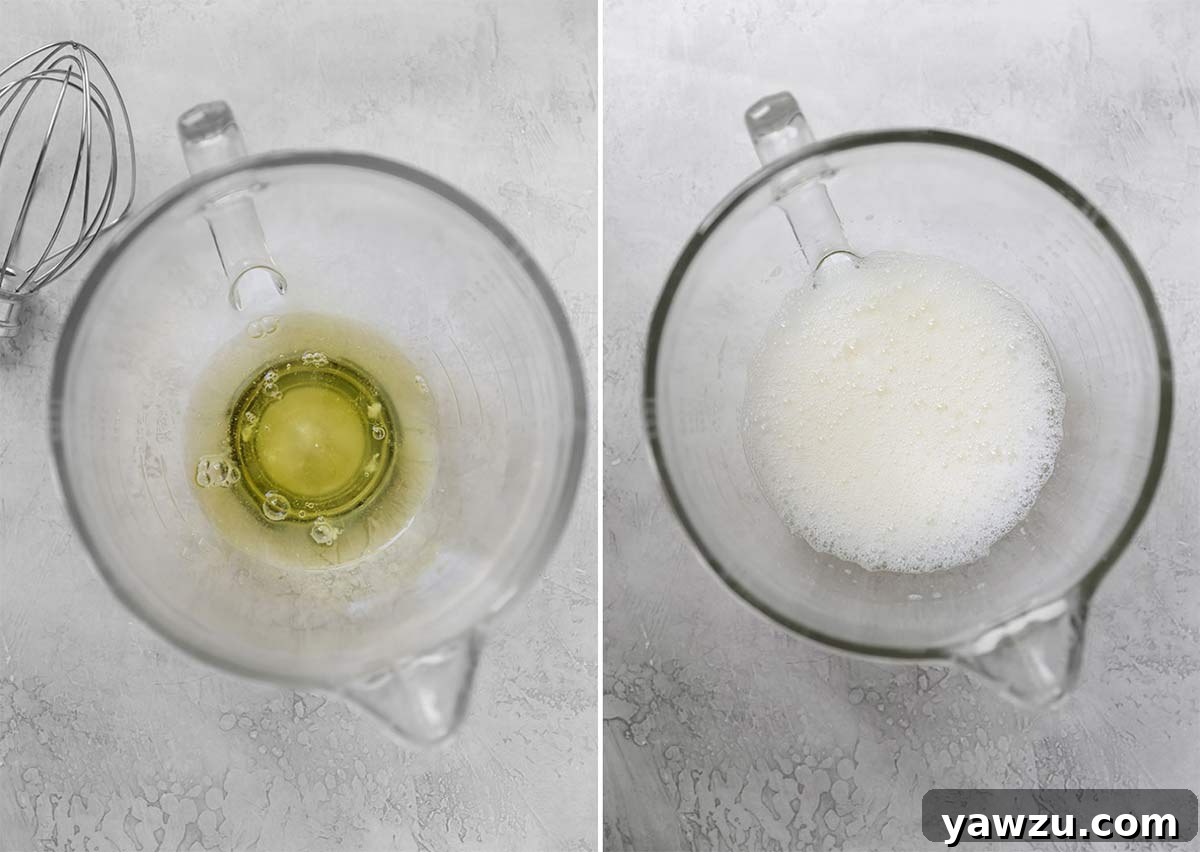
In a very clean glass or metal mixing bowl (ensure no grease), using an electric mixer fitted with the whisk attachment, beat the room-temperature egg whites on medium speed until they become frothy. Add the cream of tartar (or lemon juice/vinegar) at this stage. Increase the mixer speed to medium-high and continue beating until soft peaks form (when you lift the whisk, the peaks gently flop over).
-
While the mixer is still running on medium-high speed, gradually add the granulated sugar, about 1-2 tablespoons at a time, allowing each addition to fully incorporate before adding more. This process should take several minutes. Once all the sugar has been added, beat in the vanilla extract. Continue beating until the meringue is very glossy, thick, and forms stiff peaks (when you lift the whisk, the peaks stand straight up without collapsing). The sugar should be completely dissolved; you can test this by rubbing a small amount of meringue between your fingers – it should feel smooth, not gritty.
-
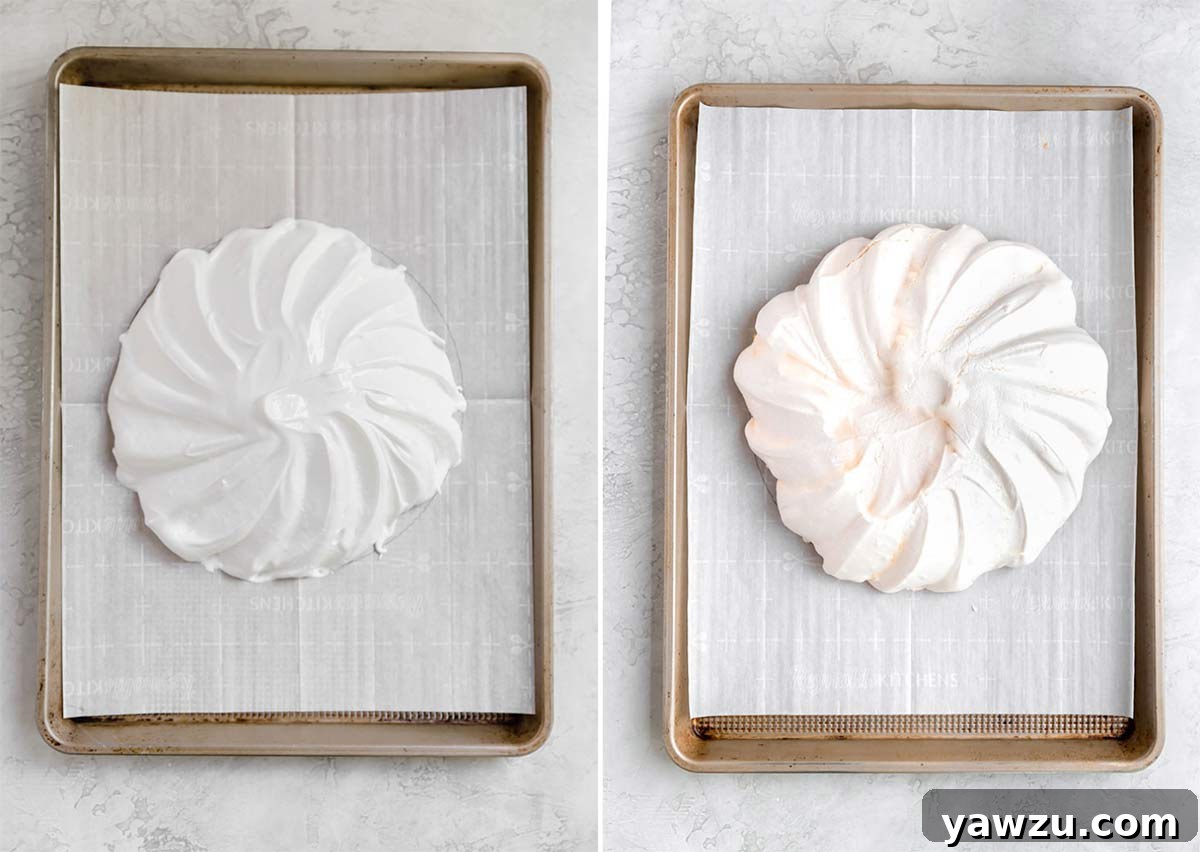
Carefully spoon the meringue mixture onto the drawn circle on your parchment paper. Use a spatula to gently spread the meringue within the circle, creating a disc. You can create decorative swirls or build up the sides slightly to form a shallow well in the center, which will hold the whipped cream and fruit.
-
Bake the Pavlova for 1 hour, or until the exterior feels firm and dry to the touch. It should be lightly golden but primarily white. Once baked, turn off the oven completely. Prop the oven door open slightly with a wooden spoon and allow the Pavlova to cool completely inside the oven. This slow cooling process is vital for achieving the perfect texture and preventing cracking. Ideally, leave it to cool overnight for the best results.
-
Prepare the Whipped Cream Topping: In a large, chilled bowl, combine the very cold heavy cream, powdered sugar, and vanilla extract (if using). Beat on medium-high speed using an electric mixer until the cream holds stiff peaks. Be careful not to overbeat, or it will become grainy.
-
Assemble and Serve: Once the Pavlova base is completely cool, carefully transfer it to your desired serving platter. Gently spoon the prepared whipped cream into the center of the meringue, then artfully arrange your chosen fresh fruits and garnishes on top. Serve your magnificent Pavlova immediately to enjoy its optimal texture and freshness.
Notes & Expert Tips
- Meringue Mastery: For deeper insights into meringue creation and troubleshooting common issues, refer to comprehensive guides on how to make meringue. Patience and attention to detail are your best allies here.
- Cream of Tartar Alternatives: If cream of tartar is unavailable, you can confidently substitute it with 1½ teaspoons of either fresh lemon juice or white vinegar. Both provide the necessary acidity to stabilize the egg whites.
- Consider Cornstarch for Humidity: While optional for this recipe, adding 2 teaspoons of cornstarch (stirred into the granulated sugar before adding to egg whites) can be beneficial, especially in humid climates, to absorb excess moisture and ensure an extra-crisp meringue.
- Crafting Mini Pavlovas: To create individual-sized Pavlovas, pipe or dollop smaller meringue circles onto the parchment. For decorative swirls, a Wilton 1M piping tip works wonderfully. Reduce baking time to approximately 25 to 30 minutes, checking for a firm, dry exterior.
- Garnish Galore: Beyond the classic mixed berries, explore options like sliced kiwi, juicy blood oranges, or even caramelized bananas. For sauces, a homemade raspberry coulis or luscious lemon curd makes excellent additions. Wine-poached pears offer an elegant touch for cooler seasons. Always use fresh, high-quality ingredients for the best flavor.
- Optimal Storage: Store the fully cooled, un-topped Pavlova base in a large, airtight container in a cool, dark pantry for up to 2 days. Never refrigerate the bare meringue, as condensation will cause it to become soggy and collapse. Whipped cream and fruit garnishes should always be stored separately and added just before serving.
- Make-Ahead Strategy: The meringue base is a fantastic component to prepare up to 48 hours in advance. However, Pavlova is at its absolute peak when assembled and served shortly thereafter. It does not store well once topped with moist ingredients, nor is it suitable for freezing.
Calories: 297kcal
,
Carbohydrates: 41g
,
Protein: 3g
,
Fat: 13g
,
Saturated Fat: 8g
,
Cholesterol: 50mg
,
Sodium: 52mg
,
Potassium: 75mg
,
Sugar: 40g
,
Vitamin A: 585IU
,
Vitamin C: 0.5mg
,
Calcium: 26mg
Share Your Pavlova Creation!
Did you try this incredible Pavlova recipe? We’d love to hear about it!
Leave a review below to share your experience and tips with other bakers.
Don’t forget to snap a picture of your beautiful creation and tag @thebrowneyedbaker on Instagram so we can admire your work! Happy baking!
Michelle Lettrich
Dessert
Australian / New Zealander, American
Photography by Ari Laing. Recipe adapted from classic Australian family recipes.