
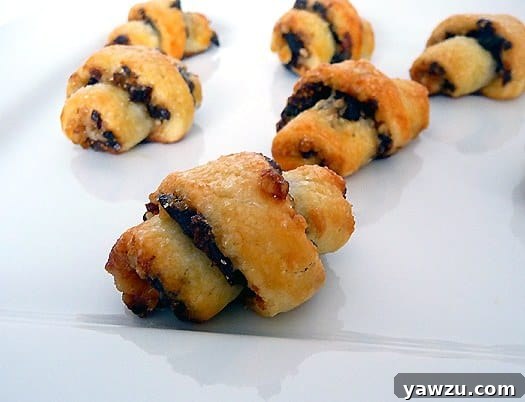
Discover the Delight of Homemade Rugelach: A Flaky Jewish Pastry Tradition
There’s something truly magical about a perfectly baked rugelach. For the longest time, I admired these delicate, crescent-shaped cookies from afar, always savoring them when I found them at bakeries or during special occasions. It wasn’t until recently that I finally embarked on the journey of baking them myself, and I can hardly believe what I was missing! My first homemade batch of rugelach was a revelation, baked on the very same day I tackled Chocolate Babka – a true testament to an inspired Jewish baking extravaganza in my kitchen. The sheer joy of creating these delightful treats from scratch is an experience every baking enthusiast should embrace, especially when the result is so wonderfully tender and flaky.
A Rich Tapestry of History: The Enduring Legacy of Rugelach
Like many cherished culinary traditions, rugelach carries with it a fascinating history, deeply rooted in Eastern European Jewish culture. These charming pastries were first introduced to America by waves of Eastern European immigrants, who brought with them their culinary heritage and unique flavors. Over generations, rugelach became a beloved staple, particularly prominent during Jewish holidays such as Chanukah (Hanukkah), Purim, and Rosh Hashanah. They symbolize warmth, celebration, and community, often shared generously among family and friends during festive gatherings. While its exact origins are debated among food historians, many believe rugelach evolved from similar Central European crescent-shaped pastries, adapted over time with the unique and crucial addition of a cream cheese-enriched dough, which gives it its distinctive texture. This tradition of baking and sharing continues to thrive, making rugelach a timeless comfort food.
The Signature Element: An Unforgettable Cream Cheese Dough
At the core of every exceptional rugelach lies its signature dough – a wonderfully tender, rich, and incredibly flaky cream cheese pastry. This distinct dough is precisely what sets rugelach apart from other cookies and pastries. The cream cheese not only imparts a subtle tang that beautifully balances the sweetness of various fillings, but it also contributes significantly to the pastry’s delicate texture, making it melt-in-your-mouth tender. When baked, the layers of this unique dough separate ever so slightly, creating an irresistible flakiness that adds an exquisite dimension to each bite. It’s this unique interaction of butter, flour, and cream cheese that transforms simple fillings into extraordinary culinary experiences, elevating rugelach from a mere cookie to a sophisticated pastry.
Endless Possibilities: Exploring Diverse Rugelach Fillings
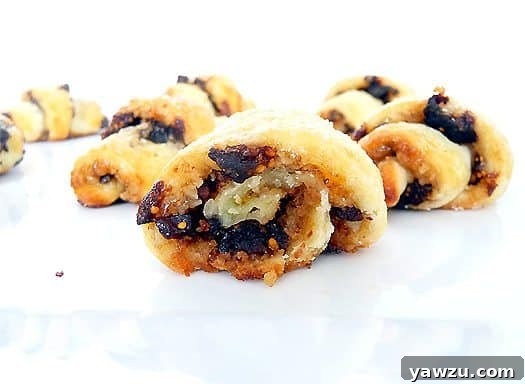
One of the most exciting aspects of baking rugelach is the boundless versatility of its fillings, allowing for endless customization to suit any preference. Traditionally, rugelach is filled with a delightful combination of dried fruits, finely chopped nuts, and a fragrant dusting of cinnamon-sugar. Classic versions often feature plump raisins, which lend a chewy sweetness and a familiar comfort that appeals to many. In my own recent baking adventure, I decided to diversify; I filled half of my rugelach with these traditional raisins and dedicated the other half to the unique sweetness of dried figs. My fondness for figs knows no bounds, and I seize every opportunity to incorporate their distinct, honeyed flavor into my baking, finding them a perfect complement to the rich pastry.
However, the creativity doesn’t stop there. Imagine the lusciousness of rugelach brushed with vibrant raspberry jam, offering a tart counterpoint, and generously filled with chunks of bittersweet chocolate – a heavenly combination of fruity tartness and deep cocoa notes that’s utterly decadent. Other popular and equally delicious variations include the bright zest of apricot preserves, the earthy notes of poppy seed paste, a comforting blend of finely chopped walnuts or pecans mixed with more cinnamon and sugar, or even mini chocolate chips for a universally loved treat that appeals to all ages. Each carefully chosen filling offers a distinct flavor profile and textural contrast, ensuring there’s a rugelach creation to satisfy every palate and enhance any occasion, from a casual coffee break to a festive holiday spread.
Baking Rugelach: A Rewarding Journey, Not a Daunting Task
While the prospect of making homemade pastry might initially seem daunting to some, let me assure you: making rugelach is far from complicated. Yes, the process involves a few distinct steps and requires a bit of patience, particularly for chilling the dough, but every moment invested in its creation is undeniably worth it. The overall process is quite straightforward and incredibly rewarding, culminating in a batch of flaky, golden-brown cookies that will impress everyone who tastes them and likely disappear quickly! It’s a truly hands-on experience that connects you to a rich, historical baking tradition and fills your home with an intoxicating aroma that signals pure comfort and deliciousness. The satisfaction of pulling these golden crescents from the oven, knowing you made them from scratch, is unparalleled.
Essential Tips for Achieving Rugelach Perfection
To ensure your rugelach turn out perfectly tender and flaky every time, keep these crucial tips in mind:
- Room Temperature Ingredients Are Key: Always ensure your unsalted butter and cream cheese are at true room temperature. This allows them to cream together smoothly and evenly, creating a homogeneous dough without lumps. A well-combined dough is crucial for achieving the desired delicate and flaky final texture.
- Embrace the Chill Time: The dough must be thoroughly chilled – at least an hour, or even better, overnight in the refrigerator. This resting period is vital; it allows the gluten to relax, making the dough easier to roll without snapping back, and it firms up the fats, which is essential for creating those wonderfully flaky layers during baking. Don’t skip or shorten this step!
- Roll Evenly for Consistent Baking: When rolling out the dough disks, aim for an even thickness (approximately ¼ inch). Inconsistent thickness can lead to uneven baking, with some parts crisping too quickly while others remain undercooked or doughy in the center. Precision here ensures uniform golden-brown results.
- Be Mindful of the Filling Quantity: While generous fillings are certainly tempting, avoid overfilling your rugelach. Too much filling can make it difficult to roll the pastries tightly, leading to the filling leaking out during baking and potentially burning on your baking sheet. A balanced amount is ideal.
- Roll Tightly for Distinct Layers: When shaping, roll each wedge tightly from the wider outer edge towards the center point. This technique is fundamental for creating those beautiful, distinct flaky layers and the classic crescent shape that are characteristic of well-made rugelach.
- Gentle Pressing of Filling: After sprinkling your chosen filling over the dough round, use your rolling pin to gently roll over the round one more time. This light pressing helps to embed the filling into the dough, ensuring it adheres well and minimizes the chance of it falling out when the pastries are rolled or baked.
- Proper Oven Preheat: Always preheat your oven to the specified temperature with the racks placed in the correct positions (upper and lower thirds, if baking multiple sheets). A consistently hot oven is key for even baking, proper puff, and achieving that perfect golden hue on your rugelach.
Have you had rugelach before, or perhaps tried baking them? If so, what is your favorite flavor combination? Share your thoughts and experiences in the comments below – we’d love to hear from you!
Serving and Storing Your Homemade Rugelach
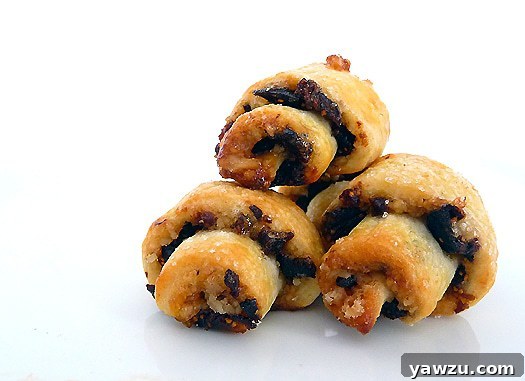
Once your delectable rugelach have cooled completely on a wire rack, they are ready to be devoured! These versatile pastries make a perfect accompaniment to a morning coffee or an afternoon tea, serve as a delightful dessert after any meal, or create a charming addition to a brunch spread. Their portability also makes them excellent for potlucks or as thoughtful homemade gifts.
For optimal freshness and to maintain their delightful flaky texture, store your homemade rugelach in an airtight container at room temperature. They will remain wonderfully fresh and delicious for up to four days. If you’re planning to bake ahead or simply want to enjoy them over a longer period, baked rugelach can be frozen for several weeks. Simply arrange them in a single layer in an airtight freezer-safe container or bag. When ready to enjoy, thaw them at room temperature or gently warm them in a low oven for a few minutes to recapture that fresh-baked warmth and aroma.
More Culinary Adventures: Explore Other Exquisite Ethnic Cookies
If you’ve enjoyed the rewarding journey of making and tasting homemade rugelach, you’re likely to appreciate other exquisite ethnic cookies that offer their own unique flavors, textures, and cultural significance. Broaden your baking horizons and discover new favorites with these delightful recipes:
- Lebkuchen: German Christmas Cookies
- Pizzelle: Italian Waffle Cookies
- Cucidati: Italian Fig Cookies
- Italian Walnut Pillow Cookies

Rugelach Recipe
A classic Jewish pastry, featuring a tender cream cheese dough and versatile fillings, perfect for holidays or any time you crave a sweet, flaky treat.
Pin
Rate
Ingredients
- 2 sticks unsalted butter, room temperature (1 cup)
- 8 ounces (226.8 g) cream cheese, room temperature
- ¾ cup (150 g) granulated sugar
- ¼ teaspoon plus a pinch of salt
- 1 large whole egg, plus 3 large egg yolks
- 2-1/3 cups (approx. 280 g) all-purpose flour, plus more for dusting
- 1 teaspoon pure vanilla extract
- 1¼ cups (146.25 g) walnut halves or pieces (4 ounces)
- Pinch of ground cinnamon
- 1 cup plus 2 tablespoons apricot jelly, melted (12 ounces), or other fruit preserves
- 2 cups (290 g) currants, raisins, chopped dried figs, or mini chocolate chips for filling
- Fine sanding sugar, or granulated sugar, for sprinkling
Instructions
-
1. In the bowl of an electric mixer fitted with the paddle attachment, beat the softened butter and cream cheese on medium speed until light and fluffy, about 3 to 4 minutes. Be sure to scrape down the sides of the bowl occasionally to ensure thorough mixing. Add ½ cup of the granulated sugar and ¼ teaspoon of salt; continue to beat until the mixture is well combined and fluffy, approximately 3 minutes more. Incorporate the egg yolks, adding them one at a time and beating well after each addition until fully combined. With the mixer on low speed, gradually beat in the all-purpose flour until just combined. Finally, mix in the pure vanilla extract.
-
2. Gently turn the prepared dough out onto a lightly floured work surface. Divide the dough into three equal pieces, and then gently shape each piece into a flattened disk. Wrap each disk tightly in plastic wrap to prevent drying. Transfer the wrapped dough disks to the refrigerator and chill for at least 1 hour, or ideally, overnight. This chilling process is crucial for ease of handling and achieving the flaky texture.
-
3. Preheat your oven to 325°F (160°C). Arrange oven racks in the upper and lower thirds of the oven. Line three large baking sheets with parchment paper; set them aside. In a food processor, combine the walnuts, the remaining ¼ cup of granulated sugar, the ground cinnamon, and the pinch of salt. Pulse until the mixture is finely ground but not pasty; set this filling mixture aside. On a lightly floured work surface, roll out one chilled disk of dough into a 10-inch round, about ¼ inch thick. Brush the top surface of the dough evenly with a third of the melted apricot jelly. Sprinkle with a third of the prepared walnut mixture and a third of your chosen dried fruit (currants, raisins, etc.). Using the rolling pin, gently roll over the round one more time to press the filling firmly into the dough.
-
4. Using a pizza cutter or a sharp knife, carefully cut the filled dough round into 16 equal wedges, much like slicing a pie. Starting from the wider outer edge of each wedge, tightly roll it up towards the center to enclose the filling, forming crescent-shaped cookies. Place the rolled rugelach about 1 inch apart on the prepared baking sheets. Repeat this process with the remaining two disks of dough and the rest of the filling ingredients. In a small bowl, lightly beat the whole egg. Brush the tops of the unbaked rugelach with the beaten egg wash, and then sprinkle them generously with fine sanding sugar (or granulated sugar) for a sparkling finish.
-
5. Bake two sheets of rugelach at a time, rotating the baking sheets halfway through the baking time, until the cookies are beautifully golden brown. This should take approximately 20 to 25 minutes. Carefully transfer the baked rugelach to a wire rack to cool completely. Repeat the baking process with the remaining baking sheet of rugelach. Once cooled, rugelach can be stored in an airtight container at room temperature for up to 4 days, or frozen for longer enjoyment.
Nutrition Facts (per cookie, approximate):
- Calories: 126kcal
- Carbohydrates: 14g
- Protein: 1g
- Fat: 7g
- Saturated Fat: 3g
- Cholesterol: 18mg
- Sodium: 31mg
- Potassium: 83mg
- Sugar: 10g
- Vitamin A: 190IU
- Vitamin C: 0.9mg
- Calcium: 16mg
- Iron: 0.4mg
Did you make this delightful Rugelach recipe?
Leave a review below to share your experience! Then, snap a picture of your beautiful creations and tag @thebrowneyedbaker on Instagram so I can admire your delicious results!