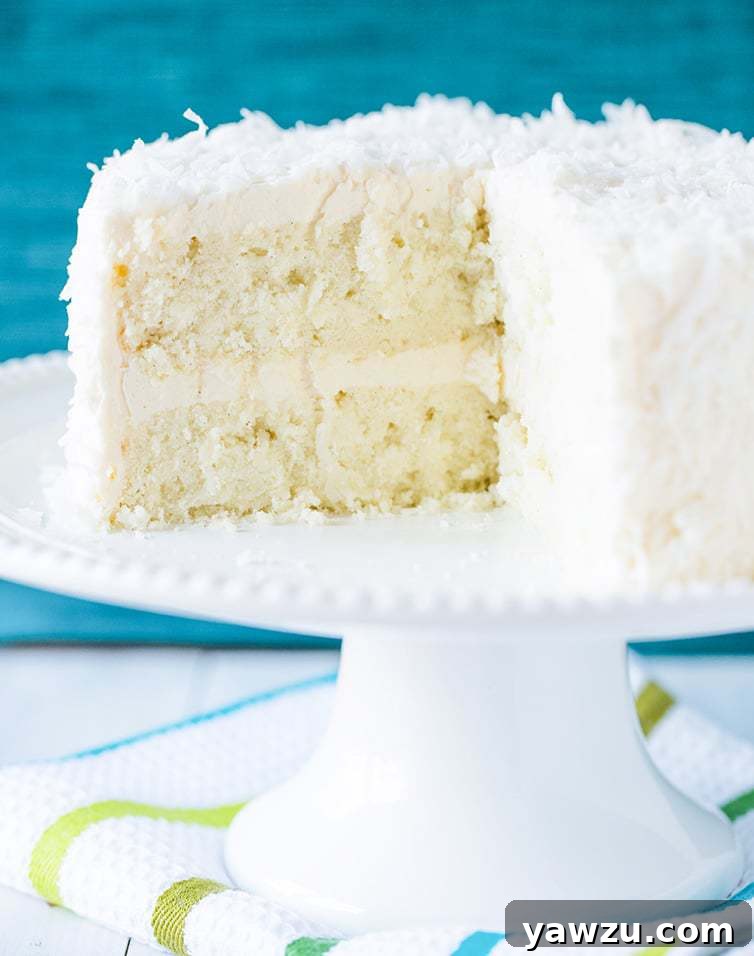
Coconut-Vanilla Bean Layer Cake with Dreamy Coconut Meringue Buttercream
Indulge in the ultimate tropical dessert experience with our exquisite Coconut-Vanilla Bean Cake, generously adorned with luscious Coconut Meringue Buttercream Frosting. This isn’t just a cake; it’s a celebration of rich, authentic coconut flavor, elevated by the aromatic essence of real vanilla beans, all culminating in a truly moist and unforgettable layer cake. Prepare to fall in love with a dessert that’s both comforting and sophisticated, a true dream for any coconut enthusiast.
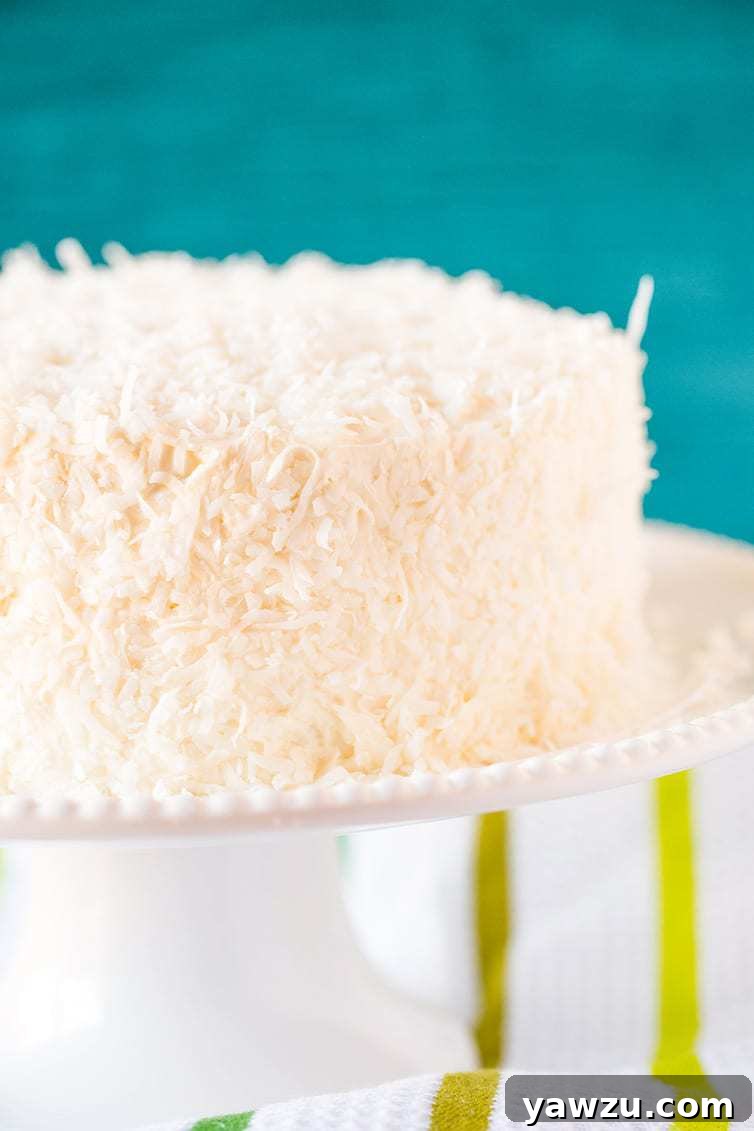
The Story Behind the Perfect Coconut Cake
This beloved coconut cake recipe first graced our family table as an Easter special several years ago, quickly earning its place as a cherished favorite. Over time, however, as memories of its exact texture began to fade, and after some readers reported a denser-than-expected crumb, I decided it was time for a rigorous re-evaluation. Was it truly as outstanding as I remembered? To find out, I baked it again for a recent Sunday dinner, enlisting my family as the toughest critics – a role they always play with delightful honesty.
The verdict was unanimous: this cake is unequivocally fabulous! It bursts with an incredible, authentic coconut flavor. While it is undeniably denser than a traditional, light-as-air cake, my family agreed that this distinctive texture is not a flaw, but rather a unique characteristic that makes it special. The cake’s texture, slightly crumbly yet incredibly moist, is a direct result of being generously packed with real shredded coconut – an intentional feature that ensures every bite is infused with that irresistible tropical taste.
So, there you have it! This Coconut-Vanilla Bean Cake proudly earns two thumbs up from my discerning taste-testers once more. It’s a testament to its enduring appeal and its ability to deliver a truly satisfying coconut experience that sets it apart from the rest.
(However, if your preference leans towards a lighter, fluffier cake that still boasts plenty of coconut flavor without the shredded coconut in the batter, I highly recommend trying my old-fashioned coconut cake recipe – it’s a delightful sheet pan cake that’s equally fantastic!)
A Symphony of Coconut and Vanilla Bean Flavors
This exceptional recipe originates from the renowned Flour cookbook, a culinary treasure trove that also gave us the unforgettable vanilla cream-filled doughnuts that remain incredibly popular to this day. What immediately captivated me about this particular cake recipe was its commitment to layering flavors, promising a coconut experience like no other. It’s not just a hint of coconut; it’s an immersive journey into tropical delight.
The ingenuity of this recipe lies in its multifaceted approach to incorporating coconut. You’ll find delicate shredded coconut woven directly into the cake batter, ensuring a textural richness and flavor distribution throughout. But the coconut journey doesn’t stop there. Velvety coconut milk is used both in the cake itself and, crucially, in the luxurious frosting, providing a deep, creamy coconut essence that binds all the elements together. This strategic layering ensures that every single bite is saturated with authentic coconut goodness.
But wait, there’s more! What truly elevates this creation to a “Coconut-Vanilla Bean” masterpiece is the addition of the scraped seeds from an entire vanilla bean directly into the cake batter. This isn’t a mere dash of extract; it’s the pure, fragrant essence of vanilla, complementing and enriching the coconut notes beautifully. This thoughtful pairing of intense coconut and exquisite vanilla bean makes this cake an unparalleled culinary delight, a decision that proved to be utterly fabulous.
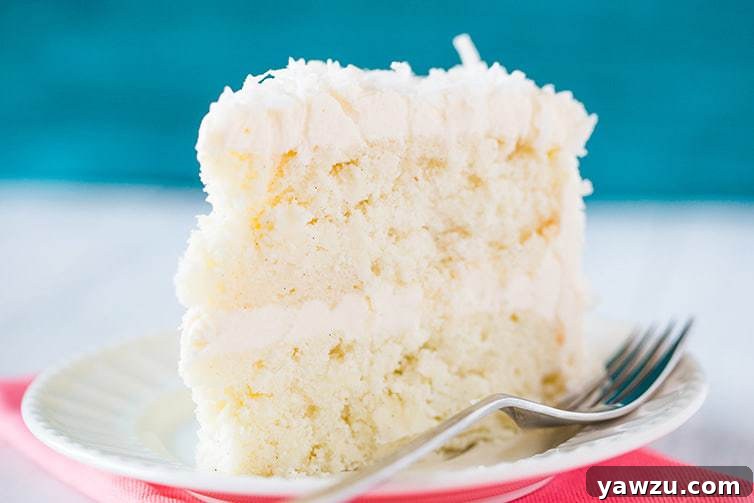
Mastering the Silky Coconut Meringue Buttercream
Beyond the exceptional cake, I was particularly drawn to the frosting: a decadent coconut meringue buttercream. Having only made meringue buttercream once before (for my Strawberry Cupcakes with Strawberry Meringue Buttercream), I knew the effort involved, as it’s certainly not as quick or straightforward as a standard butter and powdered sugar frosting. However, the reward is immeasurable. Meringue buttercream is not just delicious; it’s truly phenomenal.
This coconut version of meringue buttercream lives up to every expectation. Its consistency is nothing short of satin-like—incredibly smooth, light, and far less heavy than traditional frostings. It quite literally melts in your mouth, leaving behind a delicate sweetness and a rich coconut finish. I confess, I found myself indulging in this exquisite frosting by the spoonful (and, indeed, by the finger-ful), unable to resist its ethereal charm. It transforms this cake from merely good to absolutely extraordinary, creating a perfect harmony of texture and flavor.
How to Troubleshoot Swiss Meringue Buttercream
While Swiss meringue buttercream is a truly fantastic frosting, it can sometimes present a few challenges (I’ve certainly experienced them!). Below are the two most common issues bakers encounter and straightforward solutions to help you achieve perfect results every time:
- Frosting is Curdling – This is often a visual issue that can be easily fixed! When the frosting resembles cottage cheese, don’t despair. To rectify it, take about a quarter of the curdled frosting, transfer it to a microwave-safe glass bowl, and heat it in the microwave for approximately 15 seconds until slightly melted but not hot. With your stand mixer running on low speed, slowly stream this warmed portion back into the main bowl of frosting. Increase the mixer speed to medium-high and whip vigorously until the frosting becomes beautifully fluffy and smooth.
- Frosting is Runny – If your frosting has the consistency of thick syrup and won’t hold its shape or form soft peaks, it’s likely too warm. The solution is simple: transfer the entire bowl of frosting to the refrigerator for at least 30 minutes to allow it to chill thoroughly. Once cooled, return it to your stand mixer and beat again on medium-high speed for about 5 minutes. Continue mixing until it transforms into a thick, fluffy, and perfectly smooth consistency, ready for piping or spreading.

The Versatile Delight: Perfect for Any Occasion
The harmonious layering of coconut flavors in this cake is truly spectacular. Each element, from the shredded coconut in the batter to the coconut milk in the frosting, contributes to a cohesive and balanced taste. While the coconut undeniably shines through as the star, it is never overwhelming. Instead, it delivers a remarkably light, fresh-tasting cake that feels both indulgent and refreshing.
This makes our Coconut-Vanilla Bean Cake an ideal choice for any special occasion or holiday gathering. It’s particularly well-suited for celebrations during spring and summer, such as Easter brunches, Mother’s Day, bridal showers, or garden parties. Its bright flavor profile and elegant appearance make it a versatile dessert that can be dressed up or down to suit your event. You can enhance its visual appeal by adding lightly toasted coconut flakes to the top and sides, scattering colorful egg-shaped candies for Easter, or simply leaving it as-is for a classic, sophisticated look. No matter how you choose to decorate it, one thing is certain: you are guaranteed to absolutely devour this cake, savoring every delightful bite.
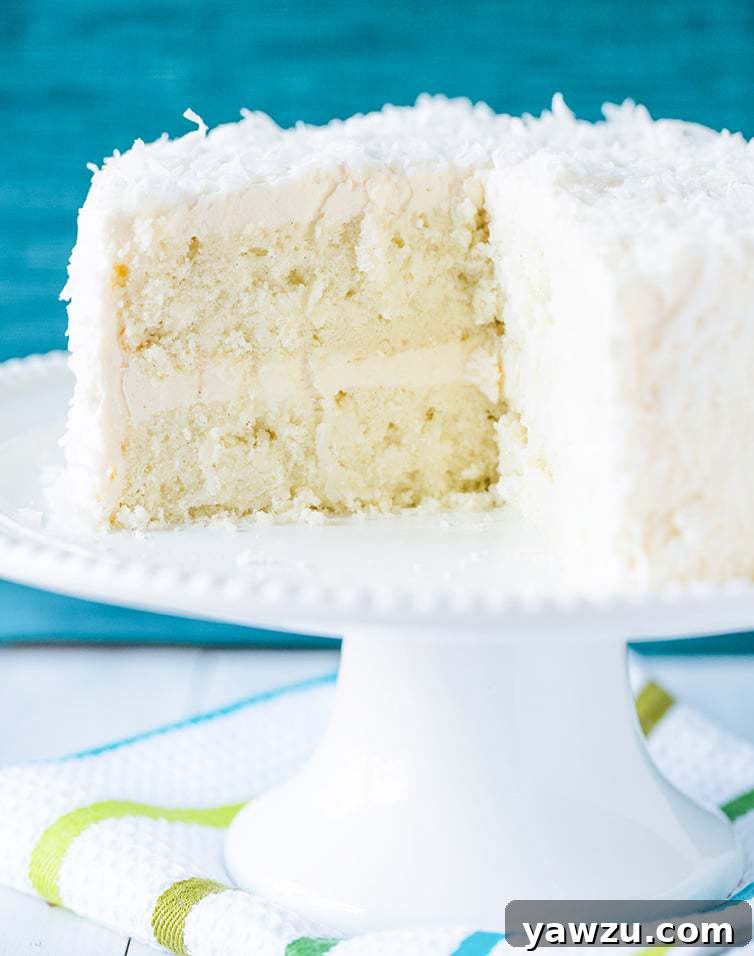
Explore More Irresistible Coconut Creations
If you’re a true coconut aficionado, you’ll love these other delightful recipes that celebrate the incredible versatility of coconut:
- Coconut Cream Pie
- Coconut Bundt Cake
- Chocolate-Dipped Coconut Macaroons
- Coconut Cupcakes with Coconut Buttercream Frosting
Coconut-Vanilla Bean Cake with Coconut Meringue Buttercream Frosting
A fabulous, moist coconut cake studded with vanilla beans is filled and coated with a coconut meringue buttercream frosting, creating a truly unforgettable dessert.
Pin Recipe
Rate Recipe
Ingredients
For the Cake:
- 2¼ cups (281.25 g) cake flour
- 1¼ cups (250 g) granulated sugar
- 2 teaspoons baking powder
- ½ teaspoon (0.5 teaspoon) kosher salt
- ¾ cup (170.25 g) unsalted butter, at room temperature, cut into 2-inch pieces
- 6 egg whites
- 1 cup (226 ml) coconut milk
- 1 cup (90 g) sweetened shredded coconut
- 1 vanilla bean, split in half lengthwise
For the Frosting:
- 1½ cups (300 g) granulated sugar
- 6 egg whites
- 1½ cups (340.5 g) unsalted butter, at room temperature, cut into 2-inch pieces
- 1 teaspoon vanilla extract
- ¼ teaspoon (0.25 teaspoon) kosher salt
- ⅔ cup (150.67 ml) coconut milk
For the Garnish:
- 1 cup (90 g) sweetened shredded coconut
Instructions
- Make the Cake: Preheat oven to 350 degrees F (175°C). Grease and flour two 8-inch round cake pans; set aside.
- Sift the cake flour into the bowl of an electric mixer. Add the sugar, baking powder, and salt and beat on low speed for 15 seconds to combine thoroughly. Add the butter pieces and continue to beat on low speed for 1 minute, or until the mixture achieves a coarse and crumbly texture.
- In a separate medium bowl, whisk together the egg whites, coconut milk, and the 1 cup of shredded coconut until well combined. Carefully scrape the aromatic seeds from the vanilla bean into this mixture and whisk again to ensure the seeds are thoroughly incorporated throughout.
- Add half of the coconut milk mixture to the dry ingredients in the mixer bowl and beat on medium-high speed for 1 minute. Stop the mixer, scrape down the sides and bottom of the bowl, then add the remaining coconut milk mixture. Beat on medium speed for another 30 seconds, or until the batter is uniformly mixed, light, and fluffy.
- Divide the batter evenly between the two prepared cake pans. Bake for 35 to 45 minutes, or until the cake tops are firm, golden brown, and spring back gently when lightly pressed in the center. Allow the baked cakes to cool completely in their pans on a wire rack before proceeding.
- Make the Frosting: In a small, heatproof bowl (preferably a metal one for a double boiler setup), whisk together the granulated sugar and egg whites until just combined. Place this bowl over a saucepan containing about an inch of simmering water, ensuring the bottom of the bowl does not touch the water. Heat the mixture, whisking occasionally, for 6 to 8 minutes, or until the mixture is hot to the touch and all the sugar crystals have completely dissolved.
- Remove the bowl from the heat and carefully transfer the hot mixture into the bowl of an electric mixer. Using the whisk attachment, whip on medium-high speed for 6 to 8 minutes, or until the mixture transforms into a voluminous, light, and white meringue that is cool to the touch. Reduce the mixer speed to low and gradually add the room-temperature butter, a couple of pieces at a time, allowing each addition to incorporate. Once all butter is added, increase the speed to medium and mix for 4 to 5 minutes, or until the butter is thoroughly incorporated and the frosting becomes smooth and glossy. The frosting may initially appear curdled after adding the butter, but continue beating, and it will magically come together, becoming perfectly smooth and creamy.
- Add the vanilla extract, kosher salt, and coconut milk to the frosting. Whip for another few minutes on medium speed, or until the coconut milk is thoroughly incorporated and the frosting is beautifully smooth. Again, the buttercream might look thin or separated initially, but continue mixing until it comes together. The final consistency will be more satin-like and ethereal, a delightful contrast to thick powdered sugar-based frostings. Note: For best results, use the frosting within 30 minutes of making it. If preparing ahead, transfer to an airtight container and store at room temperature for up to 1 day; re-whip with a mixer (using the paddle attachment) until smooth before using. Alternatively, you can store the frosting in an airtight container in the refrigerator for up to 2 weeks; bring to room temperature, then beat with a mixer (using the paddle attachment) for 6 to 8 minutes until smooth and fluffy before use.
- Assemble the Cake: Once the cakes are completely cooled, carefully remove them from their pans. If necessary, use a serrated knife to level the tops of the cake layers for a flat surface. Place one cake layer onto your chosen cake stand or serving plate. Spoon approximately 2 cups of the prepared frosting onto this layer, using an offset spatula to spread it evenly all the way to the edges.
- Place the second cake layer on top, with its top-side facing down (this creates a flatter surface). Spoon about 1 cup of frosting onto the very top of this layer. Using a large offset spatula, spread this frosting thinly over the top and down the sides of the entire cake, creating a light “crumb coat.” This thin layer traps any loose crumbs and provides a smooth base for the final frosting layer. Refrigerate the cake for 20 minutes to set the crumb coat.
- After chilling, use a wooden spoon to gently mix the remaining frosting to re-lighten it, as it may have settled slightly. Spoon this frosting onto the chilled cake and spread it evenly over the top and down the sides, creating a beautiful, smooth finish. For an extra touch of elegance and flavor, gently press the remaining 1 cup of sweetened shredded coconut onto the top and sides of the frosted cake. This cake can be stored in an airtight container at room temperature for up to 3 days, maintaining its moistness and delicious flavor.
Notes
Nutritional values are approximate and based on one serving.
Nutrition Information (per serving)
Calories: 666kcal, Carbohydrates: 85g, Protein: 9g, Fat: 56g, Saturated Fat: 39g, Cholesterol: 109mg, Sodium: 293mg, Potassium: 323mg, Fiber: 1g, Sugar: 63g, Vitamin A: 1275IU, Vitamin C: 0.4mg, Calcium: 63mg, Iron: 1.9mg
Did you make this recipe?
Leave a review below, then snap a picture and tag @thebrowneyedbaker on Instagram so I can see it!
This recipe was originally published on March 28, 2013, and has been updated for clarity and enhanced instructions.