Transform Your Thanksgiving Leftovers: The Ultimate Guide to Homemade Turkey Stock
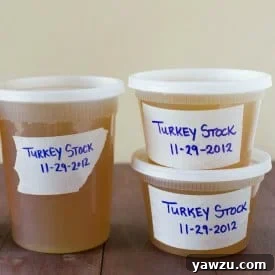
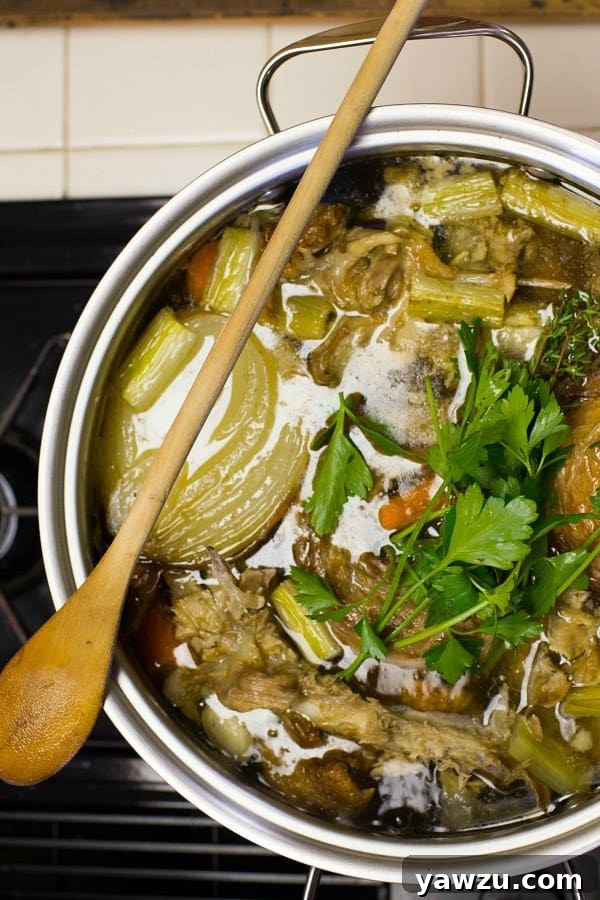
For many years, the delicious aftermath of Thanksgiving dinner presented a recurring dilemma: what to do with the turkey carcass and bones? Despite knowing it was almost sacrilege to discard such a valuable resource, the post-holiday exhaustion often led to the easy, albeit wasteful, solution. After days of meticulous planning and cooking for the big feast, the last thing on my mind was spending more time in the kitchen. However, last year, a quiet resolve led me to finally break this cycle of culinary laziness. I meticulously saved every scrap, bone, and the entire carcass once we finished cleaning up after dinner. A few days later, with renewed energy, I tossed all of it into a large pot along with an assortment of fresh vegetables and fragrant aromatics. What followed was a surprisingly effortless process that yielded about four quarts of the most intensely flavorful homemade turkey stock I’d ever tasted.
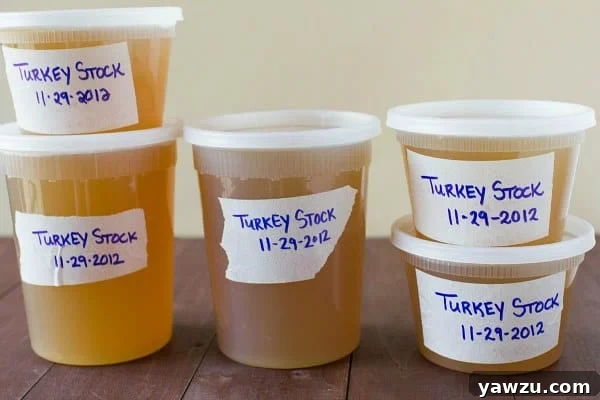
The house filled with an incredible aroma as the stock simmered gently for hours. It was a truly satisfying experience, proving that great flavor doesn’t always demand strenuous effort. In fact, most of the work was passive, allowing me ample time to relax and catch up on my favorite shows while the pot worked its magic. The resulting stock was a culinary revelation – rich, deeply savory, and far superior to any store-bought alternative. I froze a couple of quarts for future use, gifted one to my delighted grandparents, and immediately put the rest to work in various dishes. This simple act transformed what I once considered kitchen waste into a precious ingredient, demonstrating that the best flavors often come from the most humble origins.
The Unrivaled Benefits of Homemade Turkey Stock
Beyond the simple satisfaction of reducing food waste, making your own turkey stock offers a multitude of culinary and health advantages. Firstly, it provides an unparalleled depth of flavor that commercially produced stocks simply cannot replicate. The slow extraction of gelatin, minerals, and rich savory notes from roasted turkey bones creates a complex flavor profile that elevates any dish it graces. This isn’t just about taste; it’s about creating a foundational ingredient that brings a truly authentic and homemade essence to your cooking.
Secondly, homemade stock gives you complete control over the ingredients. You choose the freshest vegetables, herbs, and spices, and most importantly, you control the sodium content. This is a significant health benefit, especially for those managing blood pressure or dietary restrictions, as store-bought options are often laden with excessive salt, artificial flavors, and preservatives. By making it yourself, you ensure a cleaner, healthier product for your family.
Furthermore, turkey stock is rich in collagen and other beneficial compounds extracted from the bones and connective tissues. While not a miracle cure, these elements are believed to support joint health, gut health, and even promote healthier skin and hair. Incorporating homemade stock into your diet is a simple yet effective way to add these valuable nutrients naturally, transforming a leftover into a powerful elixir for well-being. It’s a testament to the idea that some of the most nourishing foods are those we prepare ourselves from scratch.
Don’t Discard: How to Store Your Turkey Carcass for Stock
The key to making turkey stock efficiently is proper preparation and storage of your turkey remains. After the holiday meal, meticulously strip any remaining meat from the bones – this leftover turkey meat can be used in a myriad of delicious dishes! Once the meat is removed, gather all the bones, including the carcass, neck, wings, and any giblets (excluding the liver, which can impart a bitter taste to your stock). Place these turkey components into a large, sturdy zip-top freezer bag or an airtight container.
If you plan to make stock within a couple of days, the bones can be safely stored in the refrigerator. However, for longer storage, freezing is your best option. Turkey bones can be frozen for several weeks, or even up to a few months, without compromising their flavor-yielding potential. This flexibility allows you to tackle the stock-making process when you have the time and energy, rather than feeling rushed right after the holiday. Imagine the ease of pulling out a pre-packaged bag of bones from the freezer, ready to simmer into liquid gold on a leisurely weekend or while you’re decorating the house for Christmas – turning a chore into a relaxing, aromatic experience.
Unlock Culinary Creativity: Uses for Your Homemade Turkey Stock
Once you’ve successfully created a batch of this magnificent homemade turkey stock, your culinary world will expand. Its rich, nuanced flavor can be used interchangeably with chicken stock in nearly any recipe, often providing an even deeper and more complex taste. Here are just a few inspiring ways to incorporate your liquid gold into everyday cooking and special occasions:
- Heartwarming Soups: Elevate any soup recipe, from a simple chicken noodle to a robust lentil soup, by using turkey stock as your base. It’s particularly fantastic for transforming leftover turkey meat into comforting dishes like Turkey, Mushroom & Wild Rice Soup, where its depth complements the other ingredients perfectly.
- Velvety Gravies and Sauces: The backbone of a truly exceptional gravy is a robust stock. Your homemade turkey stock will create gravies with an unparalleled richness and silkiness, perfect for holiday meals or any roast. It also serves as an excellent base for pan sauces to accompany various meats.
- Comforting Pot Pies and Casseroles: For classic comfort food like a Turkey Pot Pie or a creamy Turkey Tetrazzini, homemade stock is a game-changer. It infuses every bite with a deeper, more satisfying flavor that elevates these staples beyond the ordinary.
- Flavorful Grains: Use turkey stock instead of water when cooking rice, quinoa, couscous, or risotto. This simple swap will impart a savory undertone, transforming side dishes into flavorful components of your meal. Risotto, in particular, benefits immensely from the slow absorption of a rich, homemade stock.
- Braising Liquids: Whether you’re braising short ribs, chicken thighs, or even hearty vegetables, turkey stock makes an exceptional braising liquid. It tenderizes ingredients while infusing them with savory goodness, creating fall-apart tender results.
- Deglazing Pans: After searing meats or sautéing vegetables, deglaze the pan with a splash of turkey stock to capture all those flavorful browned bits, forming the base for quick and delicious sauces.
The versatility of homemade turkey stock makes it an indispensable ingredient in any kitchen. It’s a testament to the fact that with a little effort and foresight, you can turn a humble leftover into a powerful flavor enhancer that will delight your palate throughout the year.
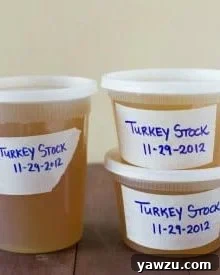
Homemade Turkey Stock
Yield: 4 quarts
Prep Time: 10 mins
Cook Time: 4 hrs
Chilling time: 7 hrs 40 mins
Total Time: 4 hrs 10 mins (excluding chilling)
Don’t throw away that turkey carcass from Thanksgiving! Use it to make a flavorful homemade stock that you can freeze and use for months!
Pin Recipe
Rate This Recipe
Ingredients
- Turkey carcass and bones from a 14-pound turkey
- 1 large yellow onion, halved (unpeeled)
- 1 carrot, peeled and cut into large chunks
- 2 celery stalks, cut into large chunks
- 1 bay leaf
- 1 teaspoon black peppercorns
- 5 sprigs fresh parsley
- 3 sprigs fresh thyme
- Approximately 5-6 quarts cold water
Instructions
- Place the turkey carcass and all saved bones in a very large stockpot (at least 8-quart capacity). Cover the bones with cold water, ensuring they are submerged by at least 1 inch (approximately 5-6 quarts of water). Bring the pot to a rolling boil over medium-high heat. As it heats, use a ladle or large spoon to skim off any foam or impurities that rise to the surface. This step is crucial for a clear stock.
- Once you’ve skimmed off the foam, add the halved onion, large carrot chunks, celery stalks, bay leaf, and black peppercorns to the pot. Reduce the heat significantly to low, allowing the stock to maintain a very slow, gentle simmer. Do not boil vigorously, as this can make the stock cloudy. Simmer, uncovered, for 2 hours.
- After the initial 2 hours of simmering, carefully add the fresh parsley sprigs and thyme sprigs to the pot. Continue to simmer the stock gently, uncovered, for an additional 2 hours. A total simmering time of 4 hours is ideal for extracting maximum flavor and nutrients.
- Once simmering is complete, remove the pot from the heat. Carefully pour the entire contents of the stockpot through a fine-mesh sieve or colander lined with cheesecloth into a large heat-safe bowl or another clean pot. Discard all the solids (bones, vegetables, and herbs). Allow the strained stock to sit at room temperature for about 30 minutes. As it cools slightly, a noticeable layer of fat will likely form on the surface. Use a large spoon or a fat separator to skim off and discard this layer of fat.
- Let the stock cool completely to room temperature. Once cooled, cover the bowl or pot tightly and refrigerate overnight. This overnight chilling allows any remaining fat to solidify on the surface, making it even easier to remove.
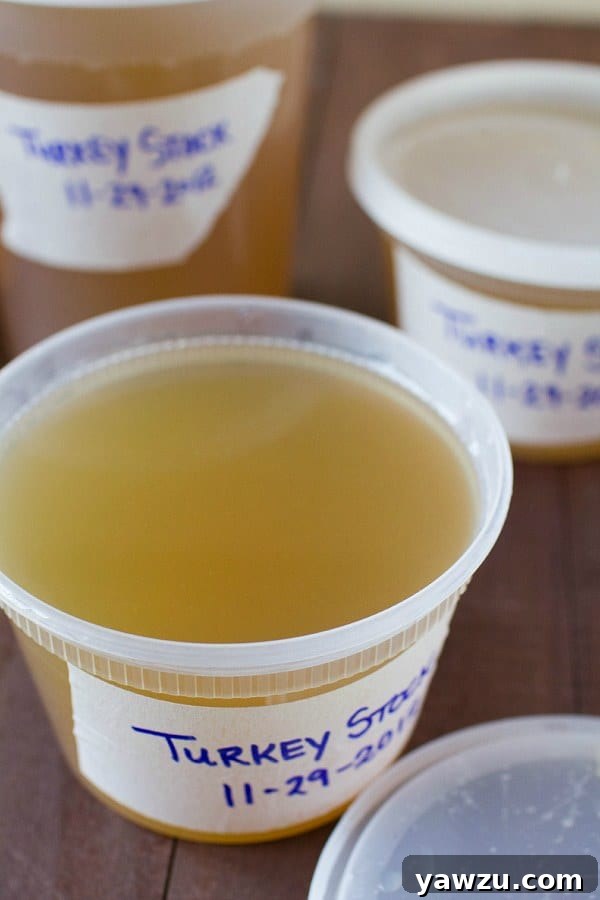
- The next day, remove the solid layer of fat that has collected on the top of the chilled stock. Now your rich, homemade turkey stock is ready! Portion it out into quart-size freezer-safe containers, sturdy zip-top bags (laid flat for efficient freezing), or even ice cube trays for smaller portions. The stock can be refrigerated for up to 3 days or frozen for up to 6 months. Label and date your containers for easy tracking.
Notes
Nutritional values provided are approximate and based on one quart of stock. For a clearer stock, avoid stirring vigorously during simmering and ensure the heat remains at a gentle simmer, not a rolling boil. Roasting your turkey bones for 30-45 minutes before making stock can add an even deeper, more roasted flavor. You can also add a tablespoon of apple cider vinegar at the start to help extract more minerals from the bones.
Nutrition Information
(Approximate values per 1 quart serving. These values are estimates and can vary based on specific ingredients and preparation.)
- Calories: 21kcal
- Carbohydrates: 5g
- Sodium: 14mg
- Potassium: 103mg
- Fiber: 1g
- Sugar: 1g
- Vitamin A: 2690IU
- Vitamin C: 5.8mg
- Calcium: 19mg
- Iron: 0.4mg
Did you make this recipe?
Leave a review below! We love to see your creations. Snap a picture and tag @thebrowneyedbaker on Instagram so we can share in your culinary success!
Author: Michelle Lettrich
Course: Stock
Cuisine: American
Explore More From Our Kitchen
If you’ve enjoyed making this turkey stock and are looking for more delightful recipes, don’t miss these other popular posts from our archives:
- Chocolate Peanut Butter Fudge
- Chubby Hubby Truffles
- Carrot Cake with Cream Cheese Frosting
- Empire Cookies
Share Your Holiday Leftover Secrets!
We’re always eager to discover new ways to make the most of our ingredients! Do you have a favorite recipe for utilizing Thanksgiving leftovers, or perhaps a clever trick for making your stock extra special? Share your insights and culinary wisdom in the comments section below. Your ideas could inspire fellow home cooks and help us all minimize waste while maximizing flavor.