Mastering the Strawberry Mirror Cake: A Daring Baker’s Journey
The journey through the world of baking is often filled with delightful discoveries and challenging triumphs. For many, joining a passionate community of bakers elevates this experience, transforming solitary kitchen moments into shared adventures. My personal baking saga took an exciting turn in September 2007 when I became a member of The Daring Bakers. This incredible group, renowned for its ambitious monthly challenges, had already set a high bar with ten exquisite recipes before I even joined. My ultimate goal, ambitious as it may be, is to conquer every single one of those foundational challenges, along with any I might have initially stumbled upon after becoming a member.
One such missed masterpiece was the elegant Strawberry Mirror Cake, a challenge first unveiled in July 2007 by the talented Culinary Concoctions by Peabody. When my dear friend Annie expressed her keen interest in tackling this very cake, it felt like the perfect opportunity to dive back into the archives and begin my quest. True to the Daring Bakers’ reputation, this recipe proved to be a formidable test of skill and patience. Yet, through perseverance and a deep love for baking, I saw it through. The ultimate reward was twofold: the immense satisfaction of conquering a complex dessert and, of course, the absolutely divine flavor of this magnificent Strawberry Mirror Cake. This isn’t just any cake; it’s a testament to the joy of baking, the beauty of a perfectly executed mirror glaze, and the irresistible freshness of strawberry and cream. It’s a showstopper, ideal for special occasions or simply to impress your loved ones with a stunning homemade treat.
The Initial Setback: Conquering the Bavarian Cream
My first attempt at this intricate Strawberry Mirror Cake recipe began with promising ease. The delicate cake layers baked beautifully, filling the kitchen with a comforting aroma, a hopeful start to what I envisioned as a culinary triumph. The real challenge, however, emerged with the creation of the delicate Strawberry Bavarian Cream. This pivotal component requires a precise touch and impeccable timing, a crucial lesson I learned the hard way in a flurry of gelatin-induced frustration. There exists a critically small window – a fleeting moment, almost imperceptible – between the Bavarian cream reaching the ideal, aerated consistency of “softly whipped cream” and its rapid, unforgiving transformation into an unmanageable, semi-solid “jello.”
I regretfully confess that I lingered perhaps a minute too long, hesitating before attempting to fold the freshly whipped cream into the luscious blend of strawberry puree and gelatin mixture. The consequence was nothing short of a baker’s nightmare: an unappetizing mess of clumpy, almost solid gelatinous chunks, a far cry from the smooth, airy texture required for a successful Bavarian cream. The once-promising mixture now resembled a failed science experiment, refusing to yield to my will. Frustration, as any passionate baker can attest, can quickly escalate into a full-blown kitchen meltdown. I muttered expletives under my breath, my hands instinctively banging various items on the counter, the clatter echoing my internal turmoil. My loyal companion, a curious dog, came trotting into the kitchen, his soft, questioning eyes conveying a silent concern, as if to ask if everything was indeed alright in this chaotic culinary space.
At that point, my patience had worn thin, and the kitchen felt like a battlefield I was losing. Realizing the Bavarian cream was beyond salvage, I decided to cut my losses for the day. It was a strategic retreat. I carefully salvaged the perfectly baked cake layers, wrapping them securely to preserve their freshness, and resolved to approach the challenge with fresh eyes and renewed determination in a few days. Sometimes, the best recipe for success is simply to step away, clear your head, and reset. This initial setback, while disheartening and certainly a test of my baking resolve, only fueled my determination to master this elegant and notoriously tricky dessert. It transformed from a simple recipe into a personal quest.
Second Attempt: Triumph and Essential Tips for Success
A few days later, armed with a fresh batch of ingredients, a renewed sense of purpose, and the invaluable wisdom gleaned from my previous blunder, I metaphorically strapped on my apron and ventured back into the kitchen. This time, I decided to scale down the recipe slightly. Instead of risking a large batch of precious ingredients, I opted for my smaller 4.5-inch springform pan, a strategic move to minimize ingredient waste should I encounter another setback. This precautionary measure allowed me to experiment with less pressure, focusing intently on the critical steps.
I am absolutely thrilled to report that this second attempt was a resounding success! The key learning from my previous experience became my golden rule: when it comes to incorporating the whipped cream into the gelatin mixture for the Bavarian cream, it is absolutely essential to err on the side of folding it in earlier rather than waiting. The moment the gelatin mixture reached that critical “softly whipped cream” consistency – where it was thick but still pourable, just before it started to set – I swiftly and gently folded in the whipped cream. This precision ensured a perfectly airy, smooth, and voluptuous Bavarian cream, exactly what I had initially envisioned and essential for the cake’s delicate texture.
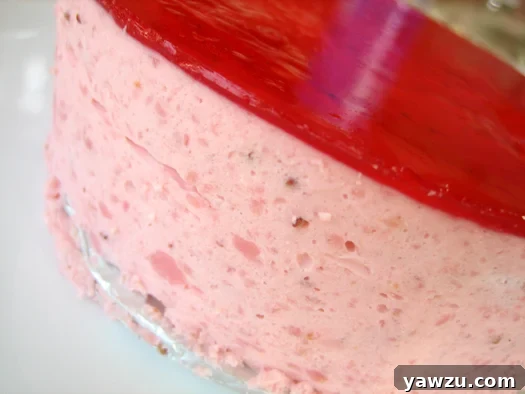
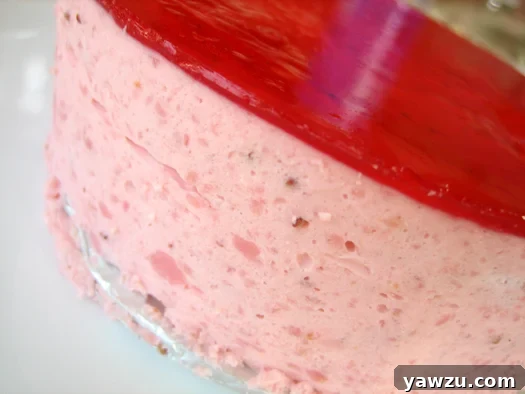
Aside from this crucial timing adjustment, everything else progressed seamlessly. The cake layers and the mirror glaze came together beautifully. Although my scaled-down cake had a slightly less generous layer of Bavarian cream on top than perhaps a full-sized cake would, the overall effect was absolutely perfect. The cake layers, despite being frozen from my first attempt (a factor that might have contributed to a slightly drier texture in the sponge itself), served as a wonderful base, holding up well under the creamy filling. However, it was the vibrant, fresh strawberry flavors permeating both the smooth Bavarian cream and the glistening mirror glaze that truly stole the show. They were utterly fabulous, bursting with summer sweetness and providing a delightful contrast to the subtle cake. And in a surprising, almost comical turn of events, as I admired the perfectly set mirror glaze, I found myself exclaiming with genuine delight, “Hey! I made homemade Jello!” Who would have thought that creating such a sophisticated and elegant dessert would also involve crafting something so reminiscent of a childhood favorite? It just goes to show that baking often presents unexpected delights and moments of simple joy amidst complex processes.
Embracing the Challenge: A Rewarding Baking Experience
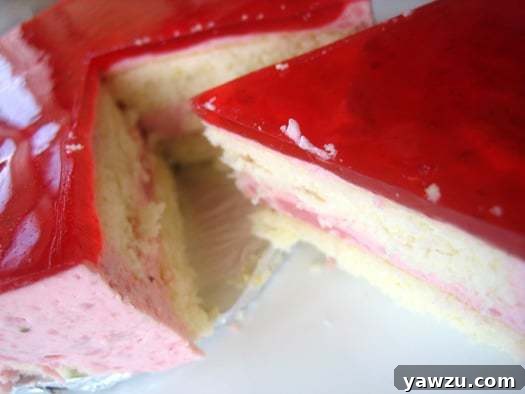
The Strawberry Mirror Cake stands out as one of the more intricate and profoundly rewarding recipes I’ve ever undertaken. It demands a significant amount of attention to detail, precision in execution, and, perhaps most importantly, a willingness to learn from occasional missteps and persist through challenges. However, the journey, even with its moments of doubt and re-dos, culminates in an incredible sense of accomplishment that few other baking projects can match. The sheer beauty of this cake, with its distinct layers of tender sponge, silky strawberry Bavarian cream, and shimmering fruit mirror, makes every effort worthwhile. It’s not just a dessert; it’s a culinary work of art.
I wholeheartedly encourage every aspiring and seasoned baker to give this recipe a try. Don’t be intimidated by its elegant and seemingly complex appearance; the process of creating something so stunning from scratch is an immensely gratifying experience that builds confidence and significantly expands your baking repertoire. This cake is truly a perfect centerpiece for any celebration, promising both unparalleled visual appeal and an unforgettable taste experience that will leave a lasting impression on your guests. Embrace the challenge, savor the meticulous process of layering and setting, and delight in the sweet victory of presenting your homemade masterpiece. The exquisite balance of sweet and tart, combined with the luxurious textures, makes the Strawberry Mirror Cake a dessert that truly shines, proving that with a little daring and persistence, extraordinary results are well within reach.
Strawberry Mirror Cake
Pin
Ingredients
For the cake:
- 3 eggs
- 3 egg yolks
- ¾ cup (150 g) sugar
- 1 tsp. vanilla extract
- 3 egg whites
- ⅛ tsp. (0.13 tsp.) cream of tartar
- 2 tbsp. sugar
- ⅔ cup (83.33 g) cake flour, sifted
For the soaking syrup:
- ½ cup (125 ml) water
- ⅓ cup (66.67 g) sugar
- 2 tbsp. kirsch or strawberry liqueur
For the strawberry Bavarian cream:
- 2 ½ tbsp. (2.5 tbsp.) unflavored gelatin
- 1 ½ cups (348 ml) strained strawberry puree
- 5 egg yolks
- ⅔ cup (133.33 g) sugar
- 1 ½ cups (366 ml) milk
- 1 tbsp. lemon juice
- several drops of red food coloring
- 1 ¾ cups (416.5 ml) whipping cream
For the strawberry juice:
- 1 ½ pints (709.76 ml) strawberries, 18 oz.
- ¾ cup (150 g) sugar
- ¾ cup (187.5 ml) water
For the strawberry mirror:
- 1 ½ cups (372 ml) strawberry juice
- 1 tsp. lemon juice
- 1 tbsp. kirsch
- 1 tbsp. water
- 1 tbsp. unflavored gelatin
- a few drops of red food coloring
Instructions
- To Make the Cake: Preheat oven to 450°F (230°C). Butter and flour the sides of an 11×17-inch sheet pan (rimmed baking sheet). Line the bottom of the pan with a sheet of parchment paper cut to fit exactly.
- Beat eggs, egg yolks, and ¾ cup sugar together in a medium bowl until the mixture is thick and light in color. Gently beat in the vanilla extract. Set this mixture aside. In a separate, clean bowl, beat the egg whites until they become foamy. Add the cream of tartar and continue beating until the whites begin to form soft peaks. Gradually add the 2 tablespoons of sugar and beat until the whites hold stiff, glossy peaks (be careful not to overbeat, as they can become dry). Sift the cake flour over the egg yolk mixture and carefully fold it in. Stir in one fourth of the beaten egg whites to lighten the batter, then gently fold in the remaining whites until just combined, being careful not to deflate the mixture.
- Spread the batter evenly in the prepared pan. Bake until the cake is light brown around the edges and springs back when lightly touched, approximately 7-10 minutes. Cool the cake in the pan for 5 minutes. Run a knife along the edge to loosen it. Carefully cut out two 8¼-inch circles of cake. Wrap the cake layers, separated with wax paper, and set aside. (The cake layers may be frozen at this point for later use.)
- To Make the Soaking Syrup: Combine the water and sugar in a small saucepan. Bring the mixture to a boil, stirring constantly until the sugar completely dissolves. Remove from heat and allow to cool to room temperature. Once cooled, flavor the syrup with the kirsch or strawberry liqueur. Store aside or refrigerate in an airtight container until ready to use.
- To Make the Strawberry Bavarian Cream: In a small bowl, sprinkle the unflavored gelatin evenly over the strained strawberry puree. Let it sit for 5-10 minutes until the gelatin softens and becomes spongy. In a separate bowl, combine the egg yolks and the sugar, beating until the mixture is light in color and creamy. Bring the milk to a gentle boil in a clean saucepan.
- Slowly and gradually pour the warm milk mixture into the egg yolk mixture, whisking constantly to temper the eggs and prevent them from scrambling. Return this entire mixture to the saucepan and cook over medium heat, stirring continuously with a wooden spoon or spatula. Cook until your finger leaves a clear trail in the sauce when drawn across the back of the spoon, indicating it has thickened appropriately. It is crucial NOT to allow the mixture to boil. Immediately remove from heat and stir in the softened gelatin mixture until it is completely dissolved. Pour the mixture into a stainless steel bowl placed over a larger bowl of ice water (an ice bath). Stir in the lemon juice and a few drops of red food coloring to enhance the strawberry hue.
- Continue to cool the mixture over the ice water bath, stirring occasionally, until it thickens to the consistency of softly whipped cream. This is the critical stage; watch closely and do not let it set too much.
- While the gelatin mixture is cooling to the desired consistency, whip the heavy whipping cream in a separate bowl until it holds soft peaks. When the gelatin mixture truly resembles softly whipped cream (it should still be pliable but noticeably thickened), gently fold the whipped cream into the gelatin mixture until thoroughly combined and airy.
- To Make the Strawberry Juice: Wash and hull the fresh strawberries; coarsely chop them. Place the chopped strawberries in a saucepan and lightly crush them with a fork or potato masher to help release their juices. Place the saucepan over low heat, add the sugar and water, and simmer slowly for 10 minutes, allowing the flavors to meld and the juices to extract. Pour the juice and pulp into a fine-mesh sieve placed over a clean bowl. Allow the juice to drain for about 15 minutes. It is important not to press down on the fruit in the sieve, as this can make the juice cloudy.
- To Assemble the Cake: Lightly brush the sides of a 10-inch springform pan with a flavorless salad oil or almond oil. Cut out a cardboard circle that is the exact same size as the bottom of the pan; cover this cardboard in aluminum foil and fit it securely into the bottom of the pan.
- Center one layer of the prepared cake on the bottom of the springform pan. Gently brush the cake with some of the soaking syrup, just enough to moisten the cake without making it soggy. Immediately after preparing the Bavarian cream, pour about half of it evenly over the first cake layer in the pan. Carefully place the second layer of cake on top of the Bavarian cream. Brush this second layer with soaking syrup to moisten it as before. Pour the remaining Bavarian cream over the top cake layer and gently smooth the top with a spatula to create an even surface. Refrigerate the assembled cake until the cream sets firmly, which typically takes 1 to 2 hours.
- To Make the Strawberry Mirror: In a small bowl, combine the lemon juice, 1 tablespoon of water, and the kirsch. Sprinkle the unflavored gelatin over this mixture; let it sit for a few minutes until it becomes spongy and soft.
- Measure 1 ½ cups of the previously prepared strawberry juice into a small saucepan and bring it to a gentle simmer over low heat. Pour the hot strawberry juice over the softened gelatin mixture and stir thoroughly until the gelatin is completely dissolved and the mixture is smooth. Tint the mixture to your desired vibrant red color with a few drops of red food coloring. Place the bowl over an ice water bath and stir occasionally until the mixture becomes syrupy and just begins to thicken, similar to a very thin gel (be careful not to let it jell completely). Remove the bowl from the ice water. When the mixture is perfectly syrupy, carefully pour a thin, approximately 1/16-inch layer over the top of the chilled, assembled cake, ensuring an even coating. Refrigerate the cake again until the mirror glaze is completely set, firm, and glistening.
- To serve this exquisite cake, wrap a hot, damp towel around the outside of the springform pan for a few minutes. This gentle warmth helps to loosen the mirror glaze and the cake from the pan sides. Run a small, sharp knife tip carefully around the very edge of the strawberry mirror to separate it cleanly from the sides of the pan. The mirror may tear if it sticks at any point when the pan is unlatched. Slowly unlatch the springform pan and gently slide it off the cake. Slice the cake into elegant wedges and serve in upright slices to showcase its beautiful layers.
Carbohydrates: 95g,
Protein: 16g,
Fat: 27g,
Saturated Fat: 15g,
Cholesterol: 332mg,
Sodium: 111mg,
Potassium: 461mg,
Fiber: 2g,
Sugar: 80g,
Vitamin A: 1200IU,
Vitamin C: 79mg,
Calcium: 147mg,
Iron: 1.7mg
Did you make this dazzling Strawberry Mirror Cake?
If you’ve taken on this delightful challenge and baked your own version of this beautiful dessert, we’d love to hear from you! Please consider sharing your experience and success by leaving a review below. Your feedback helps fellow bakers and inspires creativity in the kitchen. Once you’ve perfected your cake, don’t forget to snap a gorgeous picture and tag @thebrowneyedbaker on Instagram. We can’t wait to see your stunning creations and celebrate your baking triumphs!