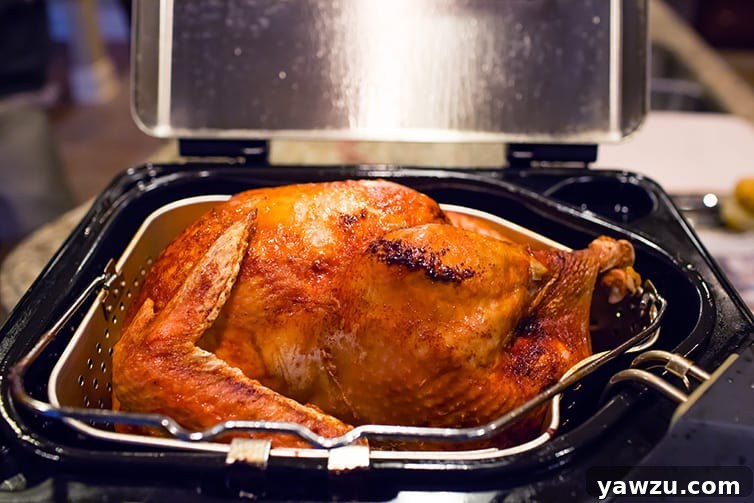
In the realm of Thanksgiving traditions, few culinary debates spark as much passionate discussion as the method of preparing the star of the show: the turkey. For generations, the oven-roasted turkey reigned supreme, a comforting centerpiece steeped in family history. However, a revolutionary technique has emerged, transforming holiday feasts and capturing the hearts of home cooks everywhere: the deep-fried turkey. This comprehensive guide will share everything you need to know about how to deep fry a turkey, from selecting the right equipment and oil to essential safety tips, ensuring your holiday meal is nothing short of spectacular.
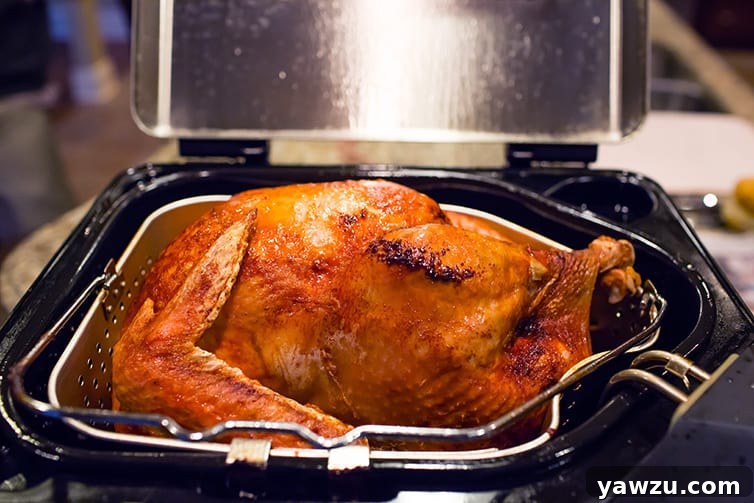
For most of my life, the thought of preparing a turkey in any way other than roasting it in a conventional oven was simply unimaginable. It was the tried-and-true method passed down through my family, a ritual as essential to Thanksgiving as pumpkin pie. Whispers of deep-fried turkeys occasionally drifted my way, but they always felt like an adventurous, perhaps even dangerous, culinary frontier I wasn’t destined to explore.
My perspective shifted dramatically when I began dating my husband. He introduced me to his family’s cherished holiday tradition: deep-frying a turkey at his aunt and uncle’s house. Bundled against the crisp autumn air, the men of the family would gather outside the garage, tending to the turkey as it cooked to golden perfection in an outdoor fryer. The first bite of that deep-fried turkey was an epiphany – incredibly juicy, bursting with flavor, and encased in the most wonderfully crispy skin. It was an experience that forever altered my perception of what a Thanksgiving turkey could be. Despite the awe, the idea of deep-frying a turkey myself still felt like a daunting task, best left to seasoned experts.
Fast forward a few years, and what once seemed an impossible feat has become an integral part of our holiday celebrations. Now, I can’t imagine preparing our Thanksgiving turkey any other way! Deep frying has proven to be a game-changer, offering unmatched flavor, speed, and convenience. If you’ve been curious about venturing into the world of deep-fried turkey, or perhaps even a little intimidated, you’ve come to the right place. We’re about to demystify the process, share our tried-and-true methods, and equip you with all the knowledge to create your most memorable Thanksgiving turkey yet.
Choosing the Right Deep Fryer: Indoor vs. Outdoor Options
One of the first and most critical decisions you’ll make when planning to deep fry a turkey is selecting the right equipment. Back in 2012, my husband and I stumbled upon a morning talk show segment featuring Thanksgiving dinner preparations. The highlight? An INDOOR turkey fryer. This revelation was a true “mind-blown” moment. The traditional image of an outdoor fryer, often associated with propane tanks and the inherent risks of open flames, was instantly replaced with the promise of a safer, more controlled environment. Without hesitation, I scurried over to Amazon and ordered one immediately. That year, Thanksgiving dinner was at my mom’s house, and I gleefully informed her that we would be frying the turkey, much to her surprise and eventual delight!
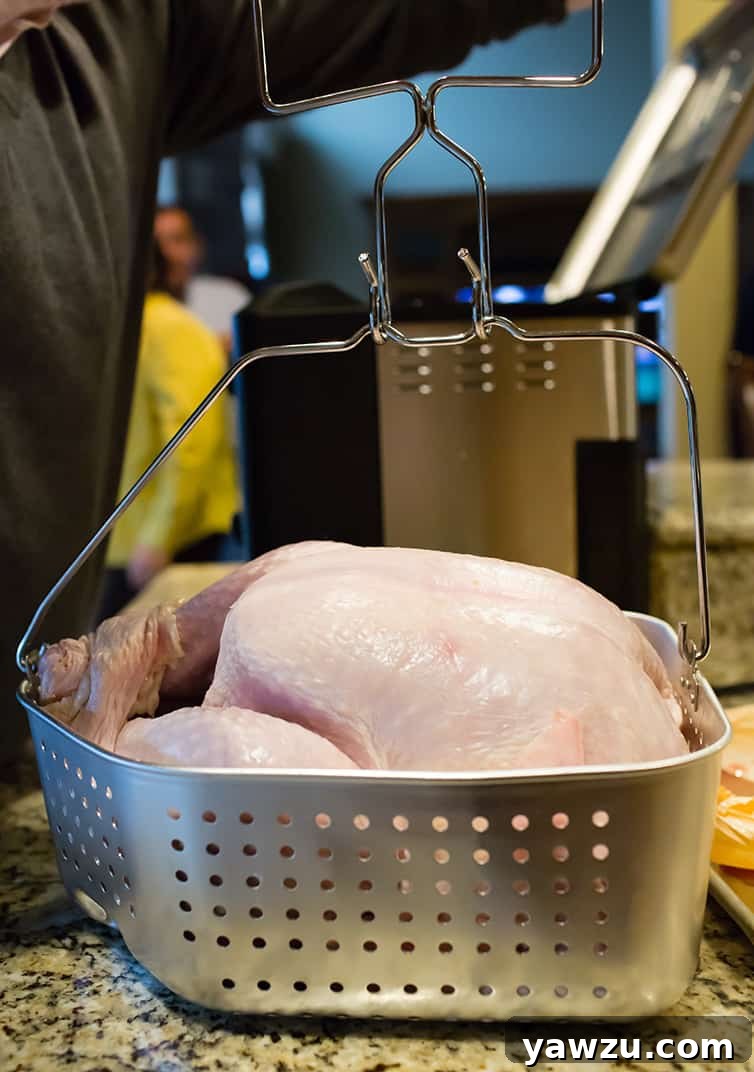
The turkey fryer we proudly use and highly recommend is the: Butterball XL Electric Fryer.
This electric fryer has been a cornerstone of our holiday cooking for over a decade. It’s designed for indoor use, significantly reducing the risks associated with outdoor propane models, such as oil spills or accidental fires. The Butterball XL is incredibly user-friendly, featuring an electric heating element that maintains a consistent oil temperature, crucial for evenly cooked and deliciously crispy turkey. While it’s rated to fry turkeys up to 20 pounds, we’ve successfully pushed its limits with a magnificent 24-pound bird a couple of years ago, proving its robust capability. Its compact design for an indoor unit also makes it a practical choice for most kitchens, offering a safe and efficient way to achieve professional-quality deep-fried turkey without the need for vast outdoor space or constant monitoring of propane levels. When choosing a fryer, prioritize safety features, ease of use, and adequate capacity for the size of turkey you plan to cook.
How Long Does It Take to Deep Fry a Turkey? Unveiling the Time-Saving Secret
If there’s one aspect that consistently converts skeptics into deep-frying enthusiasts, it’s the remarkably short cooking time. This is hands down one of the biggest advantages of deep frying a turkey! Compared to the hours-long commitment of roasting a turkey in the oven, deep frying offers a dramatic reduction in preparation time, freeing you up to enjoy your holiday guests and other culinary tasks. While exact times can vary slightly depending on your specific fryer model and turkey size, a general rule of thumb is three to four minutes per pound.
Let’s put that into perspective: if you have a 20-pound turkey, which has been our go-to size for the past two years, you can expect it to be fully cooked in approximately 1 hour to 1 hour 20 minutes. Contrast this with the typical 4-hour (or more!) roasting time for a similar-sized bird in the oven, and the time-saving benefits become undeniably clear. We always err on the side of caution, checking the turkey’s internal temperature at the earliest recommended time to prevent overcooking and ensure a succulent result. A high-quality meat thermometer is your best friend here, ensuring the turkey reaches a safe internal temperature of 165°F (74°C) in the deepest part of the thigh.
Deep frying transforms the cooking process into a delightful holiday event in itself. Once everyone arrives, we gather around for the ceremonious “dropping of the turkey” into the fryer. It’s a moment of anticipation and excitement, followed by roughly an hour of leisurely munching on appetizers and visiting with loved ones while the turkey works its magic. Another invaluable bonus of this rapid cooking method is that your oven remains completely free. This frees up crucial oven real estate for all those beloved side dishes, from casseroles and roasted vegetables to dinner rolls, eliminating the stressful juggling act often associated with traditional Thanksgiving meal prep. The efficiency and delicious outcome make deep frying a turkey an irresistible choice for a stress-free and memorable holiday feast.
What is the Best Oil for Deep Frying a Turkey? Navigating Your Options
Selecting the right oil is paramount for a successful and flavorful deep-fried turkey. When we first ventured into turkey frying, we dedicated considerable time to researching the optimal oil, and the consensus was clear: peanut oil is pretty much the gold standard. Its high smoke point (around 450°F or 232°C), neutral flavor, and ability to create a beautifully crisp crust without imparting an oily taste make it an ideal choice. The only catch? It can be crazy expensive, though we’ve found it semi-reasonably priced at wholesale clubs like Sam’s Club, especially around the holidays. Peanut oil’s unique properties allow it to heat quickly and maintain temperature efficiently, ensuring an even cook and that signature crispy skin.
However, life often throws us curveballs. We used peanut oil faithfully until two years ago when our son, Joseph, was diagnosed with a peanut allergy. This necessitated an immediate and permanent switch to a safe alternative. After thorough research and testing, we transitioned to canola oil.
We are delighted to report that canola oil has worked exceptionally well for us. It also boasts a relatively high smoke point (around 400°F or 204°C), which is perfectly adequate for deep frying a turkey, and a very neutral flavor profile that won’t compete with your turkey’s seasoning. We haven’t noticed any negative effects or discernible difference in the final product’s taste or texture since making the switch from peanut oil. Other suitable oils for deep frying include vegetable oil, sunflower oil, and grapeseed oil, all of which have high smoke points and mild flavors. When choosing your oil, always consider allergies, smoke point, and overall cost. You’ll need a significant quantity, often 3-5 gallons depending on your fryer and turkey size, so purchasing in bulk is usually the most economical option. After frying, allow the oil to cool completely, then you can strain it to remove any sediment and store it in a cool, dark place for reuse for a few more cooking sessions, making it a more economical choice over time.
Brining vs. Rubs: Enhancing Flavor for Your Deep Fried Turkey
For years, when I prepared turkeys in the oven, brining was an non-negotiable step. I firmly believed it was the secret to a consistently juicy and flavorful bird, and I carried this tradition over to deep frying for at least three years. In the past, I’ve experimented with various brines, including Alton Brown’s renowned brine specifically for deep-fried turkey and a delightful maple bourbon brine shared by Jessica from How Sweet Eats. Brines, which involve soaking the turkey in a salty, seasoned liquid, work by helping the meat absorb moisture and tenderizers, resulting in a more succulent final product. They truly are vital for roasted turkeys, where the prolonged, dry heat of an oven can sometimes lead to a drier bird.
However, a pivotal moment arrived last year. With a 6-week-old infant and recovering from a c-section, lifting a heavy turkey (let alone brining one) was out of the question. I had to do the bare minimum, which meant skipping the brine entirely. And guess what? No one, not a single family member, could tell the difference! This revelation was incredibly liberating. It taught me that while brines are excellent for roasting, the unique cooking method of deep frying inherently produces an incredibly moist turkey. The rapid, high-heat cooking seals in the natural juices, almost guaranteeing a super moist result without the extra step of brining.
Consequently, I’m now cutting myself some slack and eliminating work that doesn’t significantly affect the final product’s quality. While you can certainly brine a deep-fried turkey if you wish, it’s not strictly necessary for achieving a tender and juicy bird. Instead, I’m shifting my focus to rubs. I haven’t used a rub on a deep-fried turkey yet, but I’m excited about trying one this year for a smidge more seasoning and an extra layer of flavor on the crispy skin. A simple rub of salt, pepper, paprika, garlic powder, and dried herbs can create a phenomenal crust. Applied generously to the exterior of the bird (and even gently under the skin of the breast and thighs), a good rub not only enhances flavor but can also contribute to an even crispier, more appealing skin. If I do try a rub this year, rest assured, I’ll be sharing the results and our thoughts on it!
The Gravy Conundrum: Making Delicious Gravy Without Drippings
One of the most common questions that arises when discussing deep-fried turkey is, “But how do you make gravy if there are no drippings?!” It’s a valid concern, as traditional turkey gravy relies heavily on the flavorful pan drippings left behind after roasting. However, fear not, gravy lovers! The solution is remarkably easy and opens up a world of delicious possibilities: I simply use recipes that don’t require drippings.
The beauty of modern cooking is the abundance of fantastic make-ahead gravy recipes. These recipes often utilize rich turkey or chicken stock, aromatics, and sometimes even turkey parts like the neck or giblets to build a deep, complex flavor profile that rivals any drippings-based gravy. In the past, I’ve successfully made Ina Garten’s renowned make-ahead gravy, which is consistently excellent and a huge stress-reducer on Thanksgiving Day. More recently, I’ve fallen in love with Jessica’s cider bourbon gravy from How Sweet Eats, which ingeniously uses the turkey neck to infuse incredible depth of flavor into the stock base. This method ensures you get all the deliciousness without compromising on moisture or texture.
There are countless make-ahead gravy recipes available online, catering to every taste preference – from classic savory options to those with hints of herbs, wine, or even fruit. Many can be prepared days in advance and simply reheated on Thanksgiving, further simplifying your holiday cooking schedule. So, don’t let the absence of pan drippings deter you from enjoying a rich, velvety gravy alongside your perfectly deep-fried turkey. With a little planning, you can easily find a recipe that suits your palate and complements your magnificent bird, ensuring no element of your holiday feast is overlooked.
Additional Essential Tips for Deep Frying a Turkey for Success
Beyond the major questions regarding fryer choice, cooking time, oil type, and brining, there are several crucial tips that will elevate your deep-frying experience and ensure deep-fried turkey success. Safety, preparation, and technique are key to achieving a perfectly crispy, juicy turkey while keeping your kitchen and loved ones safe.
- Thorough Thawing is Non-Negotiable: This is arguably the most critical safety tip. Your turkey MUST be completely thawed before it even thinks about touching that hot oil. A frozen or partially frozen turkey introduced to hot oil can cause a dangerous explosion of oil and steam, leading to severe burns and potential fires. Allow ample time for thawing in the refrigerator (approximately 24 hours per 4-5 pounds of turkey).
- Prepare the Turkey Properly: Before frying, make sure you remove the neck and giblets from both cavities of the turkey. These should be saved for making stock or gravy. Furthermore, do NOT stuff the turkey you’re frying. Stuffing will expand and can absorb oil, making it unsafe and difficult to cook evenly. You’re going to have to make your stuffing separately if you’re accustomed to cooking it inside the bird.
- Achieve Bone-Dry Skin for Ultimate Crispiness: The turkey needs to be absolutely bone dry before you lower it into the oil. Any residual moisture on the turkey’s surface will cause the hot oil to splatter aggressively, which is both messy and dangerous. In the past, I’ve vigorously patted the turkey down with paper towels. However, for an even crispier skin, I now plan to pat it dry the night before, then place the dried-off turkey uncovered in the refrigerator overnight. This air-drying process helps to further dehydrate the skin, resulting in an incredibly crisp and golden exterior that everyone will rave about.
- Choose a Safe Frying Location: Place the fryer on a stable, level, non-combustible surface, far away from anything flammable (curtains, paper towels, etc.). If using an indoor electric fryer, ensure it’s on a sturdy countertop, preferably at the end of a long island as we do, keeping it out of reach of curious little hands and pets. For outdoor propane fryers, always use them on a flat concrete slab or dirt patch, never on a wooden deck or near a structure.
- Ensure Safe Handling: Lowering the turkey into hot oil requires steady hands and caution. This job always goes to my husband, who is meticulous about safety. He wears long oven mitts (I highly recommend these high-quality, heat-resistant gloves) and safety glasses to protect against any unexpected splatters. For larger turkeys, he uses a sturdy step stool to gain leverage, making it easier to slowly and controlledly lift the basket with the turkey. Remember, a 20-pound turkey in a basket can be unwieldy and prone to tilting if the weight isn’t distributed evenly, so a steady stance and slow approach are crucial.
- Lower the Turkey Slowly, Slowly, Slowly: This cannot be emphasized enough. If you drop the turkey in too quickly, you will undoubtedly experience a dangerous surge and splatter of hot oil. The key is to lower the basket and turkey into the oil at a glacial pace, taking at least 30-60 seconds for a full submersion. This gradual immersion significantly reduces the likelihood of oil splashing up, keeping you safe and your cooking area cleaner.
- Maintain Oil Level and Temperature: Before heating, determine the correct oil level by placing the turkey in the empty fryer basket, lowering it into the empty pot, and filling with water until the turkey is just covered. Remove the turkey, mark the water line, then discard the water and dry the pot thoroughly. This prevents overfilling and dangerous oil overflow once the turkey is added. Once frying, monitor your oil temperature. Most fryers have built-in thermometers; aim to maintain the oil at a consistent 325-350°F (163-177°C) for optimal cooking.
- Always Have a Fire Extinguisher Handy: In the rare event of a flare-up or oil fire, a Class B fire extinguisher (suitable for flammable liquids) should be readily accessible. Never use water on an oil fire, as it will only spread the flames.
- Rest the Turkey: Once cooked to 165°F (74°C), carefully remove the turkey from the oil and place it on a cutting board or platter to rest for at least 20-30 minutes before carving. This resting period allows the juices to redistribute throughout the meat, ensuring a more tender and flavorful turkey.
Deep frying a turkey might seem intimidating at first glance, but with the right equipment, proper technique, and a commitment to safety, it’s an incredibly rewarding way to prepare your holiday bird. The unparalleled juiciness and crispy skin will quickly make it a new family favorite. We hope these comprehensive tips and insights empower you to try this fantastic method and create an unforgettable Thanksgiving feast.
Do you deep fry a turkey? If so, we’d love to hear from you! Feel free to share any of your personal tips, tricks, or anything we may have missed in the comments below. Your experiences help our community of home cooks grow and perfect their culinary skills!
Five years ago: Cloverleaf Dinner Rolls
Six years ago: Cranberry Upside-Down Cake