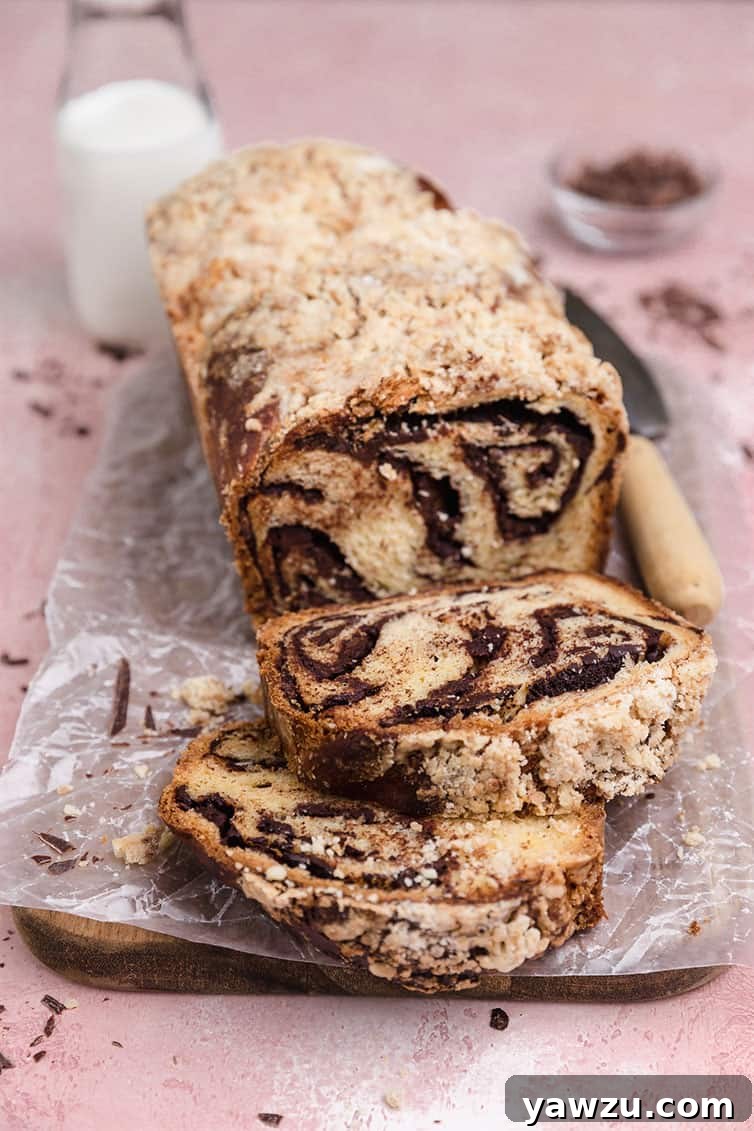
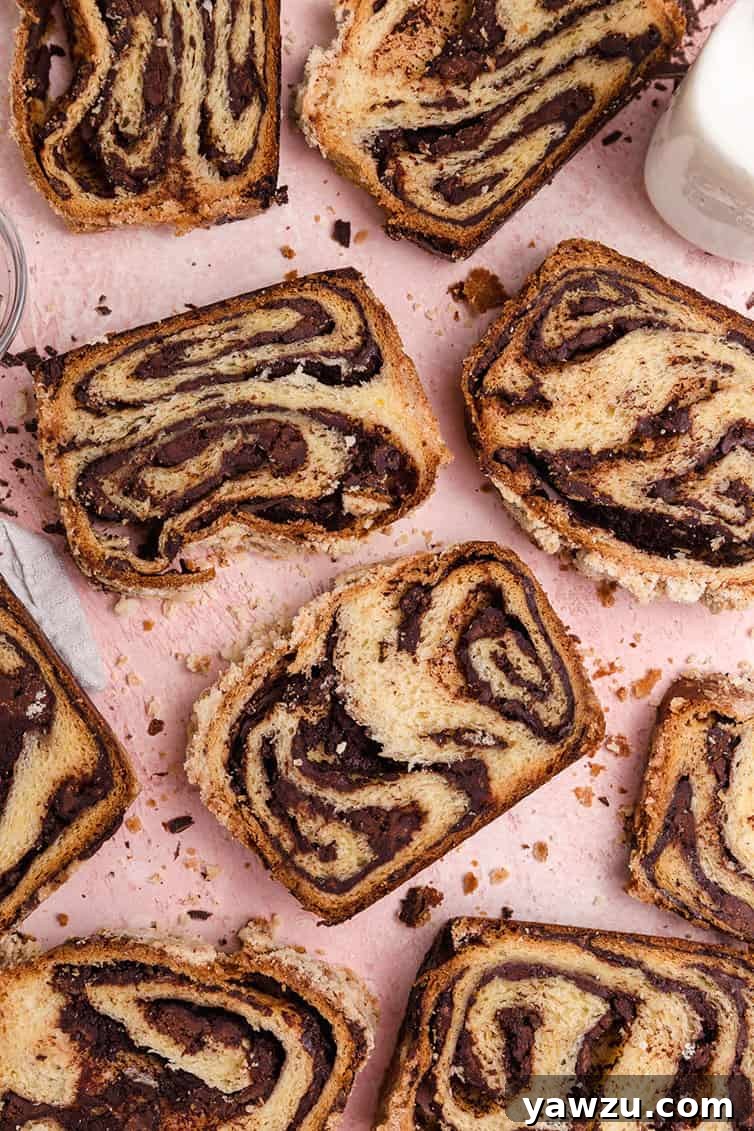
Prepare to elevate your baking game with this exquisitely rich and utterly decadent chocolate babka. Each bite is a symphony of flavors, loaded with a luscious buttery chocolate filling and crowned with a delightful streusel topping. Perfect for any celebration, holiday gathering, or an extra-special breakfast, this recipe promises to impress. If your only encounter with babka has been through classic Seinfeld references, or if the thought of baking this intricate sweet bread has seemed daunting, now is the perfect moment to conquer your fears and bake a couple of loaves for the upcoming festive season.
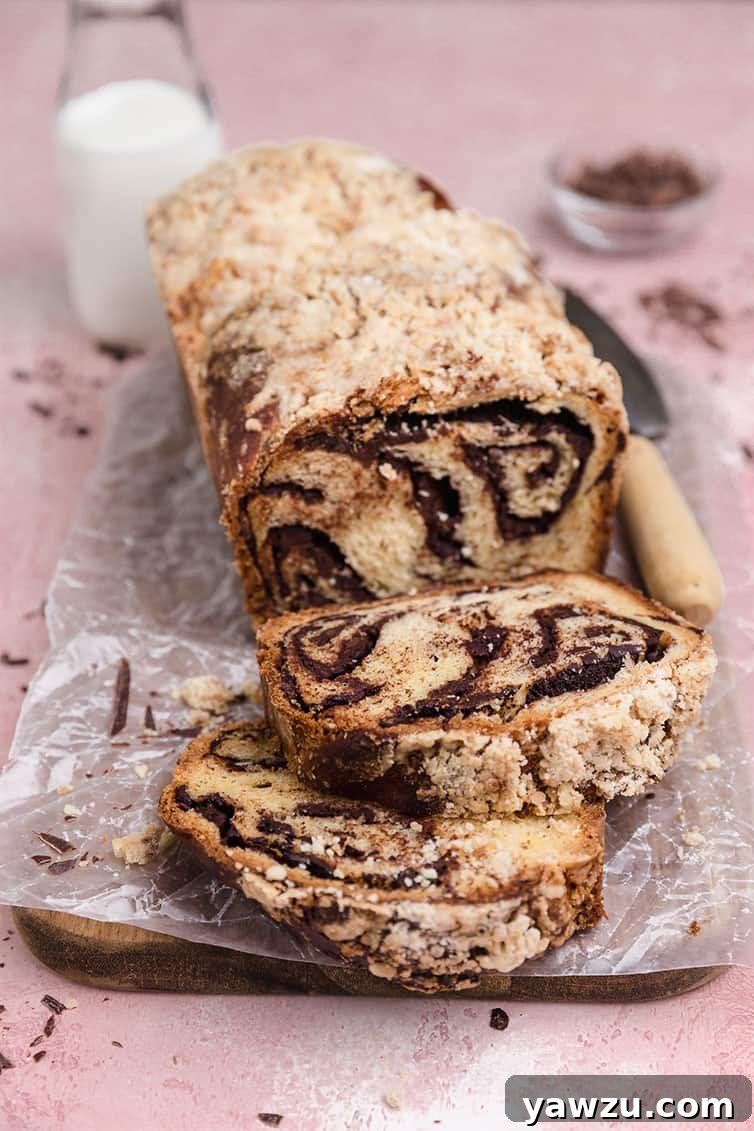
Welcome to a truly special baking adventure! This month, we’re diving into the creation of an incredibly decadent sweet bread, generously laced with chocolate and perfectly suited for the holidays. This recipe isn’t just a treat; it’s a tradition waiting to be born in your kitchen.
The original version of this beloved recipe was first shared almost a decade ago, and over the years, it has been meticulously refined and perfected. What you find here is an updated, polished rendition, complete with comprehensive step-by-step photos and a helpful video guide to ensure your baking success. Throughout the interim, I’ve experimented with numerous other chocolate babka recipes, only to find that none quite captured the magic and richness of this particular formula. So, let’s roll up our sleeves and embark on this delicious journey together!
Years ago, the image of a beautifully braided chocolate babka from Martha Stewart’s Baking Handbook captivated my imagination. I hesitated many times, daunted by the perceived complexity, but eventually, I took the plunge and fell completely in love with the result! However, that original recipe yielded three large loaves, and like many home bakers, I typically only owned two loaf pans. The logistics of managing three loaves simultaneously proved challenging. With convenience in mind, I’ve thoughtfully scaled down the recipe to produce two perfect loaves, making it much more feasible and enjoyable for most home kitchens without compromising on flavor or quality.
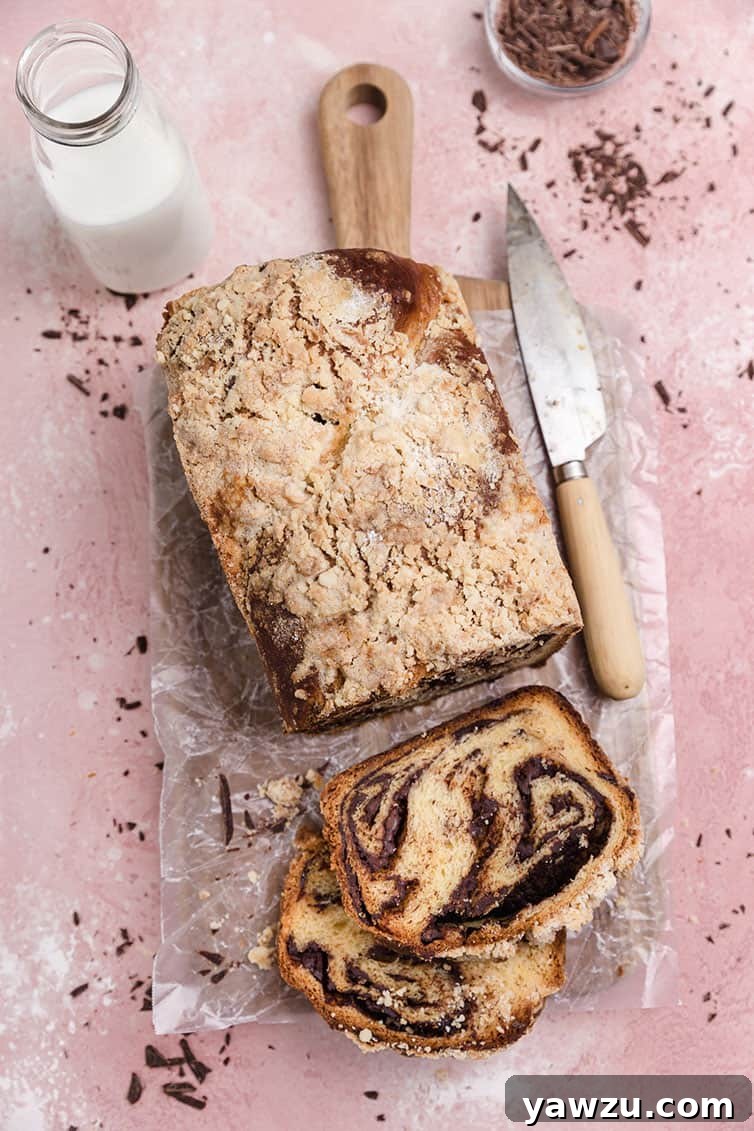
What Exactly is Babka? History and Flavor Explained
For many years, my primary understanding of babka came from that memorable Seinfeld episode where Jerry and Elaine frantically searched for a chocolate babka for a dinner party, only to settle for the “lesser babka” – cinnamon. While the episode humorously highlights the chocolate babka’s prestige, it’s worth noting that a good cinnamon babka is truly delightful in its own right, albeit with a different, perhaps less intensely rich, character. I’ve even explored other fantastic variations like an apricot cream cheese babka, proving that babka’s versatility knows no bounds.
Babka, sometimes affectionately known as “krantz cake,” is a traditional Jewish sweet bread, deeply rooted in Eastern European Jewish communities. Its name derives from the Polish word “babcia” or Yiddish “bobe,” meaning grandmother, reflecting its comforting, home-baked origins. This brioche-like dough is typically enriched with butter, eggs, and sugar, resulting in an incredibly tender crumb. It’s distinctively swirled and twisted with a variety of fillings, creating beautiful marbling patterns throughout the loaf.
While chocolate remains the most popular and coveted filling, babka’s charm lies in its diverse possibilities. Traditional fillings often include:
- Rich Chocolate: Often semi-sweet or dark, finely chopped for a melty, consistent swirl.
- Warm Cinnamon: A comforting classic, sometimes paired with nuts or brown sugar.
- Crunchy Nuts: Walnuts or pecans, often mixed with sugar and cinnamon.
- Sweet Apples: Cooked down with spices for a fruity twist.
- Tangy Cream Cheese: Adding a creamy, decadent layer.
- Dried Fruits: Raisins, cranberries, or apricots for added sweetness and chewiness.
- Nutella: A modern and incredibly popular indulgence, offering a smooth hazelnut chocolate flavor.
Once baked, babka can be finished with a glistening sugar syrup, which adds moisture and shine, or a delightful streusel topping, providing a buttery crunch. For this particular recipe, I’ve chosen to omit the sugar syrup and embrace the irresistible texture of a golden, crumbly streusel instead!
The Decadent Elements: Why This Chocolate Babka Recipe Shines
This chocolate babka recipe spares no expense when it comes to creating a truly celebratory treat. It’s generously endowed with the finest chocolate, farm-fresh eggs, creamy butter, and just the right amount of sugar. Let’s fully embrace the deliciousness and celebration-worthiness of this spectacular sweet bread!
- The Sweet, Enriched Dough: The foundation of our babka is a fabulous, brioche-style dough. It’s enriched with sugar, eggs, and a generous amount of butter, which combine to create an incredibly tender, soft, and rich bread. This dough rises beautifully, offering a light yet substantial base that perfectly complements the decadent filling. Its subtle sweetness ensures it harmonizes with the chocolate rather than competing with it.
- The Rich Chocolate Filling: This isn’t just any chocolate filling. We start with finely chopped semi-sweet chocolate, which is crucial for achieving that perfect melt and distribution throughout the babka. This chocolate is then blended with a touch of sugar and a generous helping of ground cinnamon. The cinnamon might seem unusual in such quantities for a chocolate recipe, but it’s a secret weapon – it doesn’t taste overtly cinnamony; instead, it subtly amplifies and deepens the chocolate flavor, creating a more complex and aromatic profile. Finally, room-temperature butter is cut into this mixture, forming a delightful chocolate crumble. As the babka bakes, this crumble melts beautifully into the dough, creating those iconic, irresistible swirls of molten chocolate.
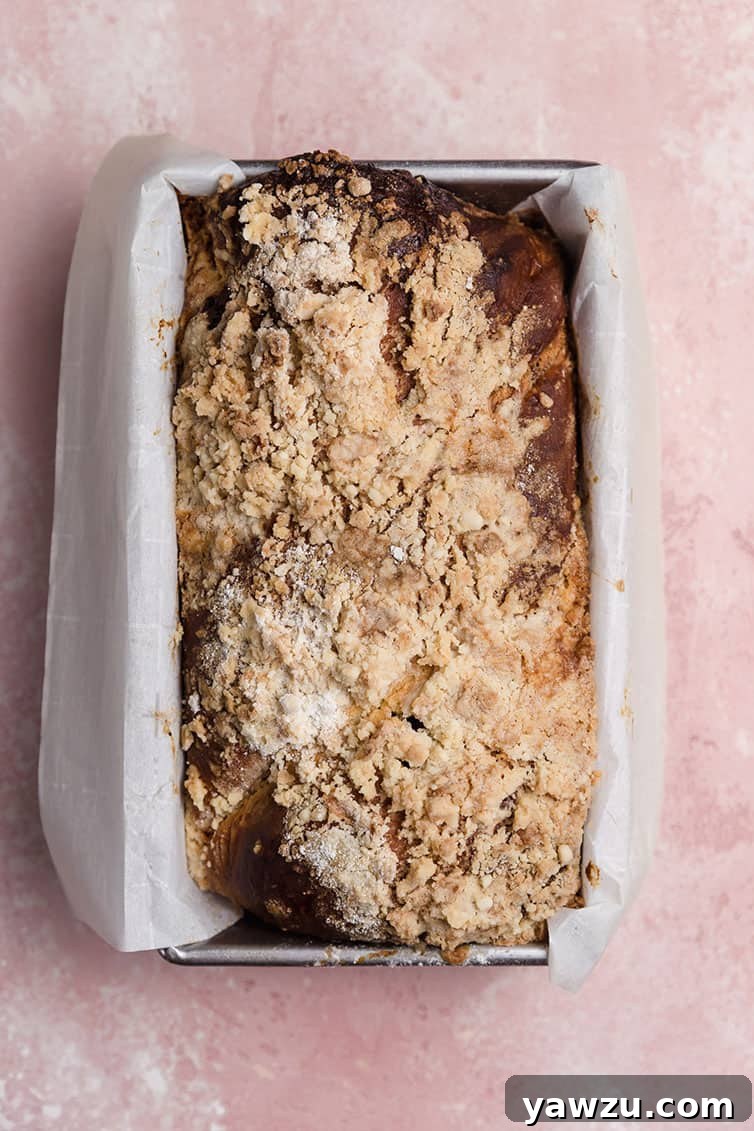
- The Irresistible Streusel Topping: While not every babka recipe includes a streusel, I consider it an absolute must for this version. It adds an extra layer of texture and flavor that truly elevates the experience. This simple yet effective topping is a perfect blend of powdered sugar, all-purpose flour, and cold butter. When baked, it forms a buttery, crunchy crumbly crust on top of the babka, providing a delightful textural contrast to the soft, tender bread and gooey chocolate filling. It’s the crowning glory that adds both visual appeal and a satisfying crunch.
Mastering the Art of Shaping Your Chocolate Babka
For many, the shaping process has historically been one of the trickiest parts of making babka. I’ve taken great care to streamline these instructions, making them clearer and more intuitive. Combined with the detailed photos below and a forthcoming video tutorial, I’m confident you’ll find that shaping babka is far less intimidating than it appears. Once you see the technique in action, you’ll realize it’s quite manageable and incredibly rewarding. All those intricate twists and turns are not just for aesthetics; they are designed to tuck generous amounts of chocolate into every single bite, ensuring a truly decadent experience!
Let’s walk through the transformation step-by-step:
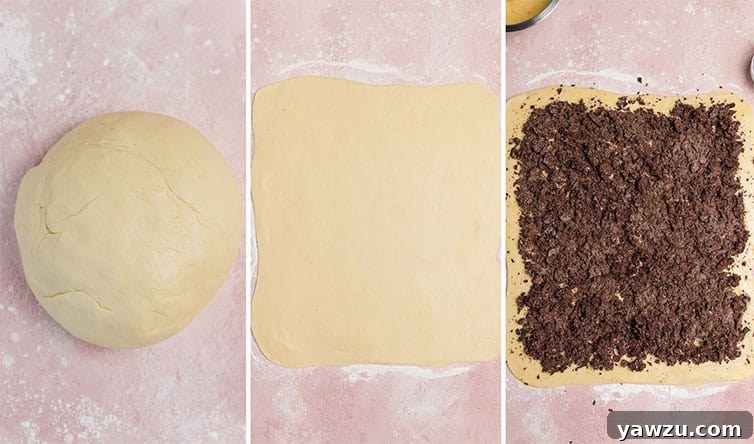
Step 1: Roll Out the Dough and Evenly Spread the Filling
Begin by rolling your enriched babka dough into a precise 16-inch square on a lightly floured surface. This uniform shape is key to achieving consistent layers. Once rolled, evenly spread half of your rich chocolate filling over the entire surface of the dough, making sure to leave a small ½-inch border clear around all the edges. This border will help seal the dough later.
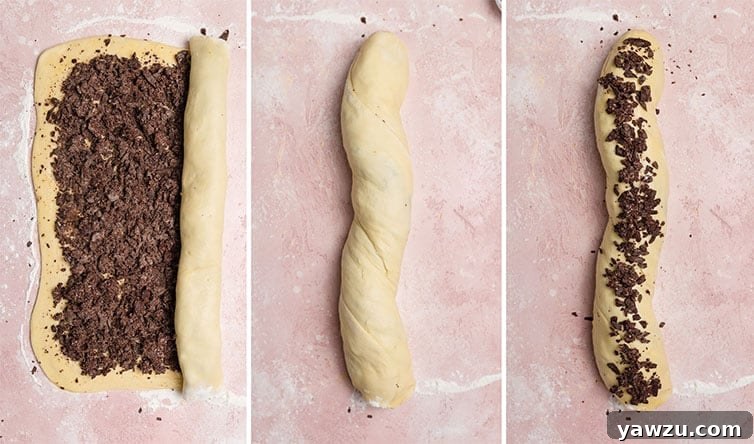
Step 2: Form a Log, Twist, and Add More Chocolate
Carefully roll the dough up tightly from one side into a neat log. Pinch the ends firmly to seal the filling inside. Now, holding one end of the log in each hand, gently twist the dough lengthwise about five or six times. This creates the first set of beautiful swirls. Brush the top of this twisted log with a light layer of egg wash, then generously sprinkle the reserved 2 tablespoons of chocolate filling over the top, pressing it gently into the egg wash to adhere. This ensures an extra burst of chocolate flavor right on the surface.
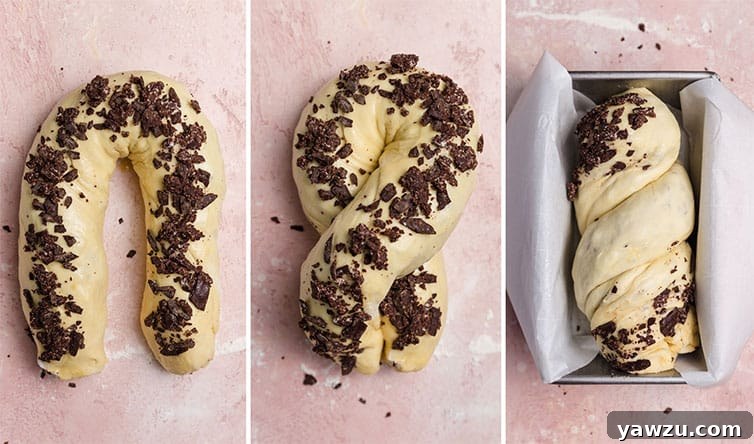
Step 3: Craft the Figure Eight and Place in Pan
Take your twisted chocolate log and fold it in half, forming a horseshoe shape. Next, carefully cross the right half over the left half, creating a rough figure-eight shape. Gently pinch the ends together once more to seal. Now, grasp both ends of the dough and give it two more good twists. This final series of twists enhances the marbled effect and helps the babka fit snugly into your prepared loaf pan. Carefully nestle the shaped dough into the pan.
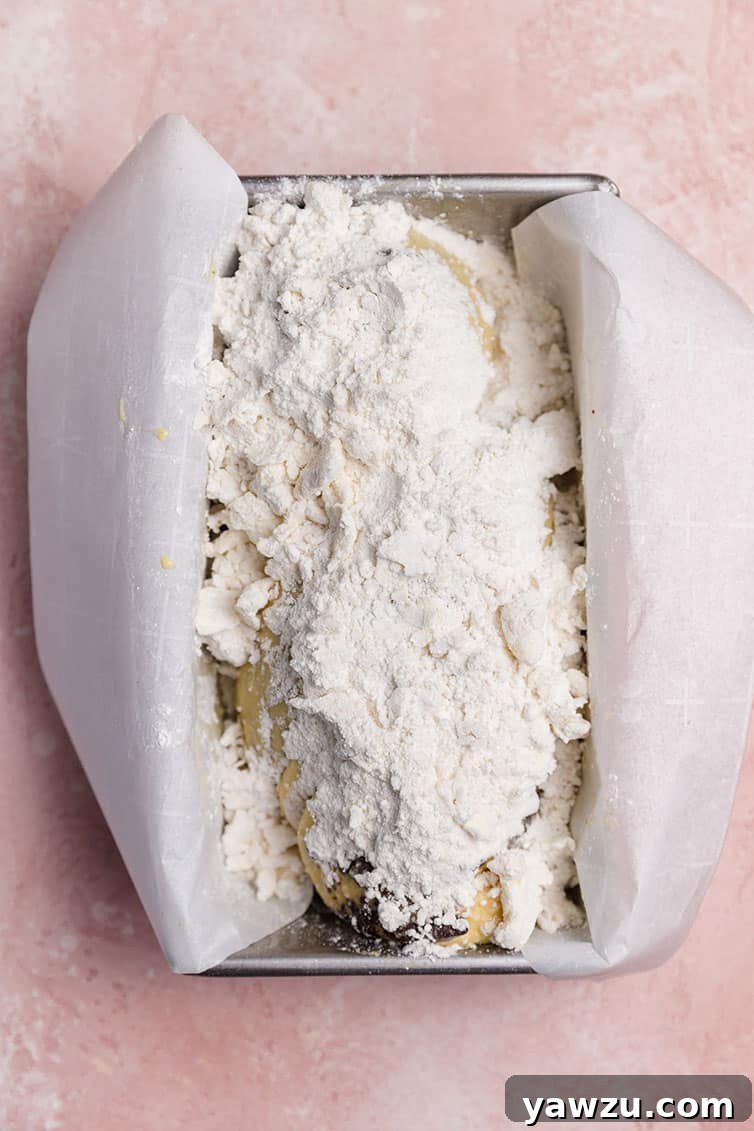
Step 4: Top with Streusel and Prepare for Baking
Finally, brush the top of your babka loaf with the remaining egg wash, and then generously sprinkle it with the streusel topping. Ensure an even distribution for that perfect crunchy crust. Now, your beautiful babka is ready for its final rise and then into the oven! This last step adds incredible texture and a hint of buttery sweetness that truly completes the babka experience.
Mastering Your Chocolate Babka: Expert Tips for Success
Achieving a perfect chocolate babka is within your reach with these essential tips covering ingredients, equipment, alternative mixing methods, and storage solutions. Pay close attention to these details, and you’ll be rewarded with a truly exceptional bake.
- Freezing Instructions – Unbaked: If you love to bake ahead or want to surprise someone with freshly baked babka, you can freeze the unbaked loaves right in their pans for up to one month. To do this, wrap each pan tightly first in plastic wrap, then in a layer of aluminum foil to prevent freezer burn. When you’re ready to bake, transfer the frozen babka from the freezer directly to your countertop and let it thaw and come to room temperature for approximately five hours. Then, bake as directed in the recipe. This method is incredibly convenient for holiday mornings or unexpected guests.
- Freezing Instructions – Baked: For longer storage or to enjoy your babka over time, you can freeze it after baking. Once the babka has completely cooled, wrap it securely in plastic wrap, then in foil, and place it in a large freezer-safe zipper bag. It will keep well in the freezer for up to three months. To thaw, simply transfer it to the refrigerator overnight or let it sit at room temperature for a few hours. For ultimate convenience, you can even slice the cooled loaf before freezing and wrap individual slices, allowing you to grab just one piece for a quick treat.
- Milk Choice: I always opt for whole milk in my baking recipes due to its higher fat content. The extra fat contributes to a richer flavor and a more tender, moist crumb, which is particularly desirable in an enriched dough like babka. However, if whole milk isn’t available, 2% milk can be used as a suitable alternative without significantly compromising the final texture.
- Yeast Type: This recipe calls for instant yeast, which is also commonly referred to as bread machine yeast or rapid-rise yeast. Instant yeast is favored because it can be mixed directly with dry ingredients and generally results in quicker rise times. If you only have active dry yeast on hand, be aware that your dough’s rise times will likely be longer. To use active dry yeast, you’ll typically need to proof it first by dissolving it in the warm milk (along with a pinch of sugar) for 5-10 minutes until foamy, before combining it with the other ingredients.
- Using a Thermometer: While not strictly essential, an instant-read digital thermometer is an invaluable tool for precision baking. I highly recommend a high-quality one, such as the Thermapen MK4. It’s incredibly helpful for accurately checking the temperature of your milk (ensuring it’s perfectly warmed to activate the yeast without killing it) and, more importantly, for confirming the internal temperature of your finished babka. The ideal internal temperature for babka, indicating it’s thoroughly cooked, is 190°F (88°C).
- Choosing the Right Chocolate: For the most luxurious and melty chocolate swirls, I strongly advise using baking bars that you finely chop yourself, rather than pre-made chocolate chips. Chocolate chips are designed to hold their shape during baking and won’t melt as seamlessly into the dough as finely chopped baking chocolate. Brands like Ghirardelli and Guittard offer excellent quality semi-sweet baking bars. You can substitute bittersweet chocolate if you prefer a less sweet, more intense chocolate flavor. However, I would caution against using milk chocolate, as it would likely make the babka overly sweet and potentially overshadow the nuanced flavors of the dough and cinnamon.
- The Magic of Cinnamon: You might initially be surprised by the generous amount of ground cinnamon specified for the chocolate filling. Rest assured, this is intentional! The cinnamon is not meant to be a dominant, pronounced flavor. Instead, it plays a crucial supporting role, acting as a natural flavor enhancer that profoundly elevates the complexity and richness of the chocolate. It adds warmth and a subtle aromatic depth that transforms the filling from merely good to truly exceptional. I highly recommend keeping it in the recipe!
- Loaf Pans: For optimal results and even baking, I rely on high-quality loaf pans. Specifically, I use Williams-Sonoma Goldtouch 1-pound loaf pans for this recipe. Their non-stick properties and even heat distribution contribute significantly to a beautifully golden, perfectly baked babka.
- Making Babka By Hand: Don’t despair if you don’t own a stand mixer! You can absolutely make this babka by hand. Simply follow the dough instructions, mixing the ingredients with a sturdy wooden spoon until they come together. Then, turn the dough out onto a lightly floured surface and knead it by hand. Continue kneading until the dough develops into a smooth, elastic, and slightly sticky texture. This process might take a bit longer but is wonderfully therapeutic. Once the dough reaches the correct consistency, proceed with the rest of the recipe as directed.
- The Original Recipe (3 Loaves): For those who are curious or specifically want to make a larger batch, the measurements for the original recipe that yielded three loaves can be found here. This offers flexibility for experienced bakers looking to scale up.
Watch How to Make Chocolate Babka: A Video Guide
Seeing is believing, especially when it comes to the intricate steps of babka making. A detailed video tutorial is available to guide you through each stage of this recipe, from preparing the dough to achieving those beautiful swirls and twists. Watch the process unfold and gain the confidence to create your own magnificent chocolate babka.
(Video coming soon or link to external video tutorial)
Classic Chocolate Babka Recipe
This recipe yields two loaves of incredibly rich, decadent chocolate babka, perfect for special occasions or indulging your sweet tooth.
Yield: 2 loaves
Prep Time: 45 mins
Cook Time: 1 hr 10 mins
Rise Time: 1 hr 30 mins
Total Time: 3 hrs 25 mins
This chocolate babka is rich, decadent, and can be made at home in only a few hours. Its impressive appearance and unforgettable flavor make it a true showstopper.
Ingredients
For the Dough
- 1 cup (240 ml) warm milk, warmed to 110°F
- 1 tablespoon instant yeast
- ½ cup (99 g) granulated sugar
- 1 large egg, room temperature
- 1 large egg yolk, room temperature
- 4 cups (480 g) all-purpose flour
- ½ teaspoon salt
- ⅔ cup (151 g) unsalted butter, cut into 1-inch pieces, room temperature
For the Chocolate Filling
- 24 ounces semi-sweet chocolate, very finely chopped
- ⅔ cup (132 g) granulated sugar
- 1½ tablespoons ground cinnamon
- ½ cup (113 g) unsalted butter, room temperature
For the Egg Wash
- 1 large egg
- 1 tablespoon heavy cream
For the Streusel Topping
- 1 cup (113 g) powdered sugar
- ¾ cup (90 g) all-purpose flour
- ½ cup (113 g) unsalted butter, room temperature
Instructions
Make the Dough
- In a 4-cup measuring cup or a medium bowl, combine the warm milk and instant yeast. Let this mixture sit for 5 minutes to activate the yeast. After 5 minutes, whisk in the granulated sugar, egg, and egg yolk until well combined.
- In the bowl of an electric mixer fitted with the dough hook attachment, add the all-purpose flour and salt. Mix on low speed for about 1 minute to ensure they are thoroughly combined. Gradually add the yeast mixture to the flour mixture and continue mixing on low speed until most of the flour has been incorporated, which should take approximately 1 minute.
- Add the room-temperature unsalted butter, a few chunks at a time, to the dough mixture. Increase the mixer speed to medium-low and knead until the dough becomes soft, smooth, and just slightly sticky when gently squeezed. This kneading process typically takes about 5 to 10 minutes. Once smooth, turn the dough out onto a lightly floured surface and knead it a few more times by hand until it’s perfectly smooth. Transfer the dough to a lightly greased bowl, turning it once to coat all sides. Cover the bowl tightly with plastic wrap and place it in a warm, draft-free spot. Allow the dough to rise until it has doubled in size, which usually takes about 1 hour.
Make the Chocolate Filling
- In a large bowl, thoroughly combine the very finely chopped semi-sweet chocolate, granulated sugar, and ground cinnamon. Add the room-temperature unsalted butter to the mixture. Using a pastry blender or a fork, cut the butter into the chocolate mixture until it is completely combined and resembles coarse crumbs. This creates the perfect texture for a melty, swirled filling.
Make the Egg Wash
- In a small bowl, whisk together the egg and heavy cream until completely smooth. This will be used to brush the babka for a golden crust and to help the streusel adhere.
Assemble the Babka
- Prepare two 9×5-inch loaf pans by greasing them with butter, then lining them with parchment paper, leaving an overhang on the longer sides to easily lift the loaves out later. Set the prepared pans aside. Gently punch down the risen dough to release the air, then turn it out onto a clean work surface and let it rest for 5 minutes.
- Divide the dough in half. Keep the half you are not currently working with covered with plastic wrap to prevent it from drying out.
- On a well-floured surface, roll one half of the dough into a 16-inch square. Crumble half of the prepared chocolate filling evenly over the surface of the dough, making sure to reserve 2 tablespoons of the filling for later use. Leave a ½-inch border clear around the edges of the dough to assist with sealing.
- Lightly brush the egg wash around the ½-inch border of the dough you left clear. Starting from one side, tightly roll the dough up into a log. Pinch the ends firmly together to seal the filling inside. Holding one end of the dough in each hand, gently twist the dough lengthwise five or six times to create beautiful internal swirls.
- Brush the top of the twisted log with a light coating of the egg wash. Carefully sprinkle the reserved 2 tablespoons of chocolate filling over the top of the log, gently pressing it into the egg wash to ensure it adheres. If any filling falls off the sides, pick it up and press it back onto the top surface.
- Fold the twisted dough log in half, creating a horseshoe shape. Then, cross the right half over the left half, forming a figure eight. Pinch the ends together to seal. Holding one end of the dough in each hand, twist the dough two more times for an enhanced marbled effect. Carefully nestle this shaped babka into one of your prepared loaf pans.
- Repeat steps 9 through 12 with the second half of dough and the remaining chocolate filling to create the second babka loaf.
- Preheat your oven to 350°F (175°C) with an oven rack positioned in the lower third of the oven.
Make the Streusel Topping
- In a medium bowl, whisk together the powdered sugar and all-purpose flour until well combined. Add the room-temperature unsalted butter to this mixture. Using a pastry blender or a fork, cut the butter into the dry ingredients until the mixture resembles coarse crumbs with some larger, buttery chunks throughout.
- Brush the top of each babka loaf in the pans with the remaining egg wash. Evenly sprinkle half of the streusel topping over each loaf, ensuring a good, even layer. Loosely cover the loaves with plastic wrap and place them in a warm, draft-free spot. Allow the dough to puff up slightly, indicating a final short rise, for about 30 minutes.
Bake the Babkas
- Place the loaves in the preheated oven. Bake for approximately 55 minutes, rotating the pans halfway through the baking time to ensure even browning. The babkas should be a light golden brown at this stage. After 55 minutes, reduce the oven temperature to 325°F (160°C) and continue baking for another 15 to 30 minutes, or until the babkas are a deep golden brown and a digital instant-read thermometer inserted into the center of the loaves registers 190°F (88°C).
- Once baked, carefully transfer the loaf pans to wire racks and allow the babkas to cool completely within their pans. This helps them set and prevents them from collapsing. Once cooled, the loaves should be wrapped tightly in plastic wrap and can be stored at room temperature for up to 4 days, maintaining their freshness and delicious flavor. Enjoy your homemade chocolate babka!
Recipe Notes
- Freezing Instructions – Unbaked: For make-ahead convenience, babka can be frozen in its pan for up to 1 month. Wrap tightly in plastic wrap, then foil. Thaw at room temperature for 5 hours before baking as directed.
- Freezing Instructions – Baked: Once baked and cooled, wrap babka in plastic wrap, then foil, and store in a zipper freezer bag for up to 3 months. Thaw in the refrigerator or at room temperature. Slices can also be frozen individually.
- Milk: Whole milk is preferred for its higher fat content, yielding a richer crumb, but 2% milk works well too.
- Yeast: Instant yeast (also known as bread machine or rapid-rise) is used. If using active dry yeast, expect longer rise times; it’s advisable to proof it in warm milk first.
- Thermometer: A Thermapen MK4 instant-read digital thermometer is highly recommended for accurate milk and bread temperature checks.
- Chocolate: Use finely chopped baking bars (e.g., Ghirardelli, Guittard) for best melting and swirl effect, rather than chocolate chips. Bittersweet chocolate can be substituted; avoid milk chocolate due to excessive sweetness.
- Cinnamon: The seemingly large amount of cinnamon enhances chocolate flavor without being overpowering. It’s highly recommended to keep it in the recipe.
- Loaf Pans: Williams-Sonoma Goldtouch 1-pound loaf pans are ideal for this recipe.
- To Make By Hand: If you don’t have a stand mixer, mix dough with a wooden spoon, then knead by hand on a floured surface until smooth and slightly sticky before proceeding.
- The Original Recipe: For those interested in the original three-loaf recipe measurements, they can be found here.
Nutrition Information (Per Serving)
(Estimated per slice, based on 12 slices per loaf, 2 loaves total)
- Calories: 592 kcal
- Carbohydrates: 62g
- Protein: 7g
- Fat: 35g
- Saturated Fat: 21g
- Cholesterol: 75mg
- Sodium: 119mg
- Potassium: 288mg
- Fiber: 4g
- Sugar: 30g
- Vitamin A: 670 IU
- Calcium: 57mg
- Iron: 4.1mg
Please note: Nutritional information is an estimate and may vary based on specific ingredients and preparation methods.
Did you make this recipe?
We’d love to hear about your experience! Leave a review below and don’t forget to snap a picture and tag @thebrowneyedbaker on Instagram so we can admire your delicious creation!
Author: Michelle Lettrich
Course: Dessert
Cuisine: Jewish
Recipe slightly adapted from Martha Stewart’s Baking Handbook.
Update Notes: This recipe was originally published in January 2010. It underwent a significant update in December 2019, featuring a revised formula specifically for two loaves (instead of the original three), all-new photography, a comprehensive recipe video, and expanded success tips to ensure an even better baking experience for everyone.
[Photos by Ari of Well Seasoned]