Decker Cake: A Cherished Family Tradition Passed Down Through Generations
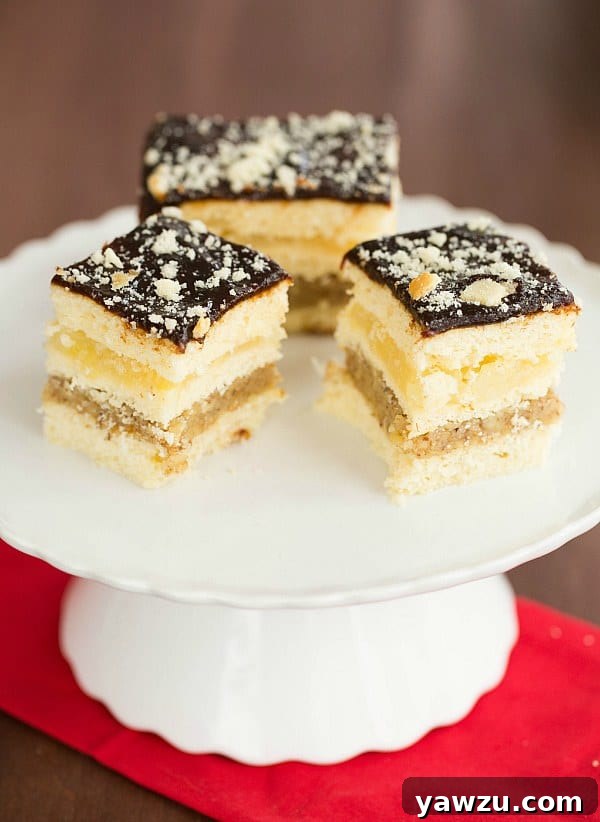
Every family harbors those special recipes that instantly evoke warmth, nostalgia, and the comforting embrace of tradition. For my family, that recipe is the extraordinary Decker Cake. As far back as my memory stretches, this magnificent confection has graced our holiday tables, a beacon of festive cheer meticulously placed on a gleaming platter alongside other cherished homemade delights like creamy fudge and crunchy peanut brittle. It’s more than just a dessert; it’s a culinary heirloom, a testament to generations of love and celebration, making its grand appearance only for the most significant holidays and truly special gatherings – like the reception party after my own wedding, where it took center stage at my special request, underscoring its profound significance.
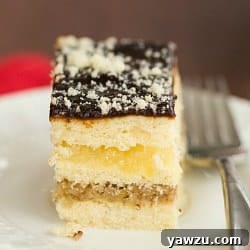
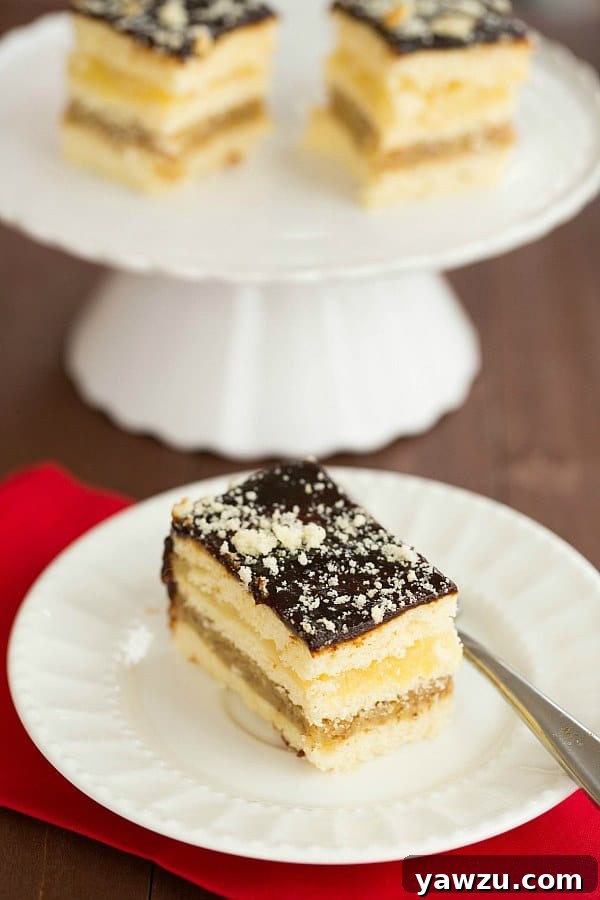
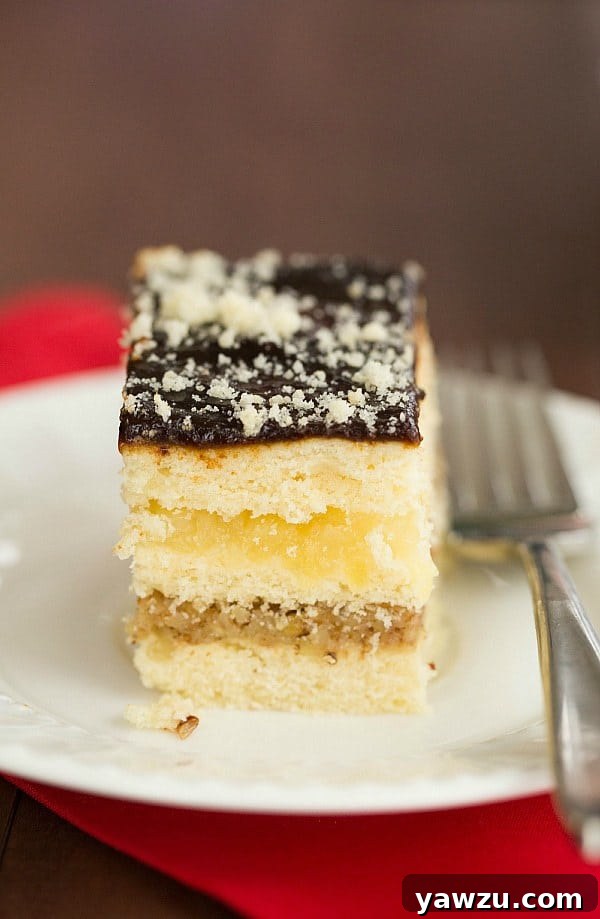
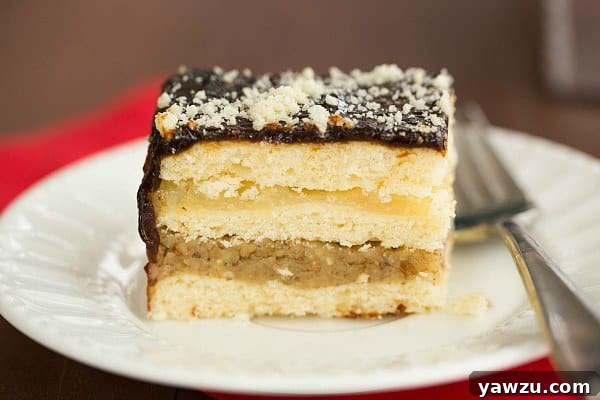
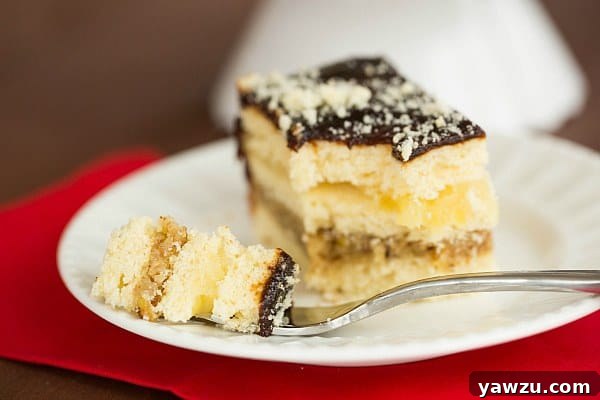
The Decker Cake, often served in elegant bar or square portions, is a symphony of textures and flavors. It comprises delicate layers of moist sponge cake, generously spread with a rich, aromatic walnut filling, followed by a bright, tangy pineapple filling. The entire masterpiece is then crowned with a smooth, dark layer of prune butter, known in some circles as lekvar, and finally sprinkled with a dusting of crumbled cake for an appealing finish. I can already hear some of you thinking, “Prune butter? In a cake?!” And yes, I understand the initial surprise. But please, trust me on this one. The combination might sound unconventional, but each component plays a vital role, harmonizing together to create an utterly amazing and unforgettable taste experience. The prune butter adds a deep, complex sweetness that perfectly balances the nuttiness and fruitiness of the other layers, elevating every bite into a delightful journey for the palate. It’s this intriguing ingredient that truly makes the Decker Cake a standout among holiday desserts, offering a unique profile that sets it apart from more conventional treats.
Unlocking the Secrets of a Beloved Family Recipe
For many years, the Decker Cake remained an enigmatic creation, its preparation a closely guarded secret known only to my grandmother. It was one of those dishes that everyone adored but few dared to attempt replicating. The mystery surrounding it only added to its charm, making its annual appearance even more anticipated. Last December, fueled by a deep desire to continue this precious tradition and perhaps unravel some of its mystique, I gathered my courage and called my grandma to ask for the recipe. True to the spirit of many treasured family recipes, what I received was less of a detailed culinary guide and more of an enigmatic list: a handful of ingredients and a mere ten words, at most, of instruction. It was clear that the true magic lay not just in the components, but in the seasoned hands that brought them together.
Realizing that a written recipe alone wouldn’t suffice for truly capturing the essence of this cake, I called her back and proposed a visit – not just for a chat, but for a hands-on baking session. The idea was to learn directly from the master, to observe her techniques, her intuitive measurements, and the subtle nuances that transformed simple ingredients into this extraordinary cake. That afternoon, we embarked on a wonderful baking adventure together. The kitchen filled with laughter and the comforting aroma of baking as she expertly moved through each step. I diligently scribbled down a page full of notes, capturing every detail, every tip, and every unspoken wisdom she shared. It was more than just learning a recipe; it was an invaluable lesson in tradition, patience, and the profound joy of creating something truly special with family. This immersive experience not only demystified the Decker Cake but also deepened my appreciation for my grandmother’s culinary legacy, highlighting the beauty of oral traditions in cooking.
Tips for Crafting Your Perfect Decker Cake
One characteristic that defines Decker Cake is its inherent richness. A small slice truly goes a long way, making it an ideal dessert for sharing with a crowd without overwhelming anyone. Its substantial nature means you get a burst of flavor in every bite. My grandmother often opts to prepare a half-recipe, assembling it in a more manageable 8-inch or 9-inch square pan, rather than a full recipe in a larger 9×13-inch pan. This adjustability makes it perfect for various occasions, from intimate family dinners to larger holiday gatherings, ensuring you always have the right amount of this delectable treat.
The sponge cake itself is typically baked in two large half-sheet pans. This means that once baked and cooled, you’ll need to strategically cut the large cake sheets to fit them into your chosen assembly pan – usually a 9×13-inch pan for a full recipe. This step can seem a bit daunting at first, but it’s surprisingly straightforward. When I had the privilege of baking with my grandma, she demonstrated a wonderfully practical approach. Instead of agonizing over perfectly sized, intact layers that are difficult to transfer, she simply cut strips and squares that were easy to handle and lift with a spatula. She then pieced them together within the pan, much like solving a delicious, edible game of Tetris. Her wisdom on this point was reassuring: “Getting it in one whole piece isn’t important at all,” she emphasized. Thanks to the abundance of luscious fillings, any seams or irregularities in the cake layers become entirely invisible once assembled, creating a perfectly smooth appearance from the outside. You can follow her lead, cutting larger sections if you have a specialized cake-lifter spatula, or opting for smaller, more manageable pieces if that feels more comfortable. The ultimate goal is simply to create an even base for the fillings.
The unique blend of flavors is what truly sets Decker Cake apart, making it a memorable dessert. The sweet, slightly tart pineapple filling offers a refreshing contrast to the earthy, robust walnut filling, providing a dynamic interplay on the palate. And then there’s the prune butter, or lekvar, which provides a deep, fruity, and subtly spiced note that elegantly ties everything together. While “prune butter” might not sound like the most glamorous ingredient, its rich, dense texture and concentrated flavor are absolutely essential to the cake’s signature profile. It adds a sophisticated layer of sweetness without being overly sugary, enhancing the overall complexity of this multi-layered delight. Don’t be tempted to skip or substitute this unique ingredient, as it truly makes the Decker Cake what it is – a truly unique and delicious holiday staple.
Embracing a Legacy, One Layer at a Time
This year, armed with my grandmother’s invaluable wisdom and my meticulously detailed notes, I bravely tackled the Decker Cake entirely on my own. The kitchen filled with familiar, comforting aromas as I carefully layered each component, recalling the lessons learned by my grandma’s side. Each step felt like a personal connection to her and to the generations who have made this cake before me. The moment of truth arrived as I finished the final topping, and I was absolutely thrilled with the outcome. The cake emerged beautifully, a perfect embodiment of the cherished tradition. It’s now patiently resting in the freezer, awaiting its grand unveiling for the upcoming holiday festivities, destined to be sliced into neat bars and arranged on various Christmas cookie platters, bringing joy and a taste of history to everyone who tries it.
This particular cake holds an even deeper significance for me. It was one of my dad’s absolute favorite holiday treats, a staple he always looked forward to with genuine excitement. Being able to recreate something he loved so dearly, to keep that piece of his memory alive through baking, brings me immense happiness and a sense of profound peace. Even though he’s no longer here to enjoy a slice, the act of making the Decker Cake connects me to him and to the rich tapestry of our family’s history. It’s a powerful reminder that traditions, especially culinary ones, are beautiful ways to honor those we love and to preserve the stories that define us. As I bake and share this cake, I feel a profound sense of continuity, passing on not just a recipe, but a piece of our family’s heart and heritage to the next generation. This holiday season, I encourage you to try this unique recipe and perhaps start your own cherished family tradition.
More Delicious Recipes to Explore
Looking for more delightful treats to add to your baking repertoire? Explore some of our other popular recipes:
- One year ago: Ho Ho (Ho) Cake
- Two years ago: Snickerdoodle Cupcakes
- Six years ago: Chocolate Chip Tea Cookies and Peanut Butter Blossom Cookies
Decker Cake
Yield: 32 servings
Prep Time: 30 mins
Cook Time: 20 mins
Resting Time: 30 mins
Total Time: 50 mins
My grandma’s timeless recipe for layers of delicate sponge cake, rich walnut filling, tangy pineapple filling, and a unique prune butter (lekvar) topping.
Ingredients
For the Walnut Filling:
- 1 pound (453.59 g) walnuts, ground
- 1 cup (200 g) granulated sugar
- ½ cup (125 ml) water
- 2 tablespoons butter
- ¼ teaspoon (0.25 teaspoon) vanilla extract
For the Pineapple Filling:
- 20 ounce (566.99 g) canned crushed pineapple
- ½ cup (100 g) granulated sugar
- 3 tablespoons cornstarch
For the Topping:
- 18 ounce (510.29 g) prune butter (lekvar)
For the Cake:
- 3 cups (375 g) all-purpose flour
- 1 tablespoon baking powder
- 1 cup (205 g) vegetable shortening
- 1 cup (200 g) granulated sugar
- 1 teaspoon vanilla extract
- ¾ cup (183 ml) warm milk
2 eggs
Instructions
- Prepare the Walnut Filling: In a large bowl, place the ground walnuts. In a small saucepan, combine sugar, water, and butter. Cook over medium-high heat, stirring occasionally, until sugar dissolves and the mixture boils. Remove from heat, stir in vanilla extract. Pour the hot syrup over the ground walnuts, reserving about ½ cup of the syrup. Stir well; if the mixture is still too dry, add more reserved syrup gradually until you achieve a moist, spreadable consistency, avoiding a soupy texture. Set aside.
- Prepare the Pineapple Filling: In a small saucepan, combine crushed pineapple (including its liquid), sugar, and cornstarch. Cook over low heat, stirring constantly, for 3 to 5 minutes, or until the mixture thickens. Remove from heat and allow to cool completely.
- Make the Cake: Preheat your oven to 350 degrees F (175 degrees C). Line two half-sheet pans (approximately 13×18 inches) with parchment paper. Set aside. In a medium bowl, whisk together the all-purpose flour and baking powder. Set aside.
- Using an electric mixer, cream together the vegetable shortening and granulated sugar on medium speed until the mixture is light and fluffy, usually around 2 minutes. Beat in the eggs one at a time, then add the vanilla extract, mixing until everything is fully incorporated and smooth. Reduce the mixer speed to low. Gradually add the dry flour mixture in three additions, alternating with two additions of the warm milk. Mix until just combined, being careful not to overmix.
- Divide the cake batter evenly between the two prepared baking sheets. Use an offset spatula to spread the dough into a thin, even layer on each sheet. The dough will be thick, similar to a cookie dough, but it needs to be spread thinly across the pan. Bake for 10 to 15 minutes, or until the cake springs back lightly when pressed. Remove the pans from the oven and transfer them to wire racks to cool completely.
- Assemble the Cake: Take a 9×13-inch pan. Place the first layer of sponge cake into the pan, cutting and fitting pieces as needed to create a uniform base. Spread the walnut filling evenly over this cake layer. Top with a second layer of cake, again cutting and arranging pieces to fit. Spread the pineapple filling over this cake layer. Place the final layer of cake on top, but remember to reserve a small strip of cake for crumbling later. Carefully spread the entire jar of prune butter (lekvar) over the top of the cake. Finally, crumble the reserved strip of cake over the prune butter for garnish. (My grandmother also suggests that if you can’t spare a strip of cake, crushed Nilla wafers make a wonderful substitute for the topping.)
- Storage and Serving: The assembled Decker Cake should be stored in the refrigerator. For optimal flavor and texture, allow the cake to sit at room temperature for about 30 minutes before serving. It will keep well in the refrigerator, tightly covered with plastic wrap and aluminum foil, for up to one week. This cake also freezes exceptionally well; wrap it tightly in plastic wrap and then foil, and it can be stored in the freezer for up to one month, ready to be enjoyed whenever a craving strikes.
Notes
Nutritional values are based on one serving.
Nutritional Information (per serving)
- Calories: 306kcal
- Carbohydrates: 40g
- Protein: 4g
- Fat: 17g
- Saturated Fat: 3g
- Cholesterol: 12mg
- Sodium: 14mg
- Potassium: 262mg
- Fiber: 2g
- Sugar: 24g
- Vitamin A: 180IU
- Vitamin C: 2mg
- Calcium: 50mg
- Iron: 1.2mg
Did you make this recipe?
Share your experience by leaving a review below! Don’t forget to snap a picture and tag @thebrowneyedbaker on Instagram so we can see your beautiful creation!
Author: Michelle Lettrich
Course: Dessert
Cuisine: American