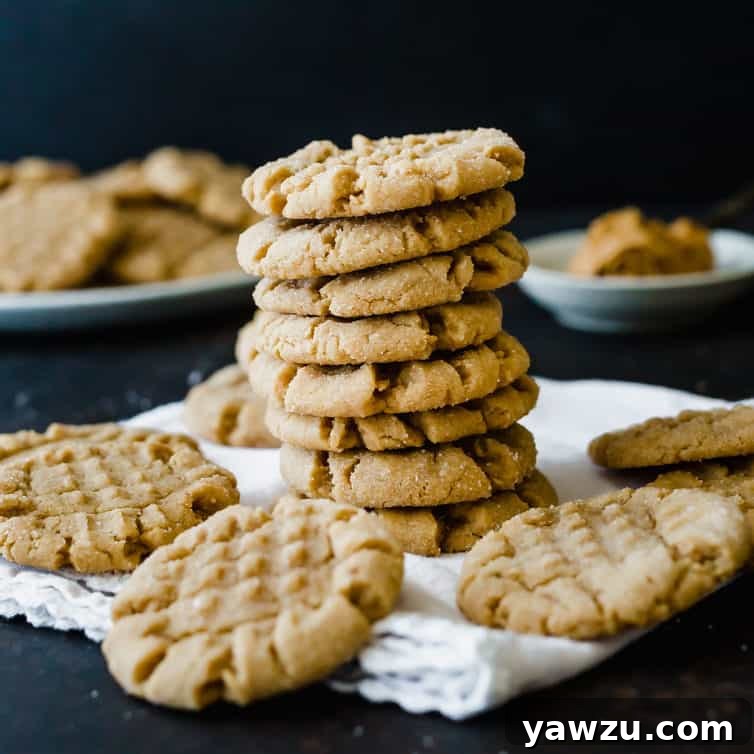
Prepare to bake the ultimate batch of classic peanut butter cookies! This cherished recipe, passed down through generations, ensures perfectly soft, wonderfully chewy cookies bursting with rich peanut butter flavor. Easy to make and universally loved, these homemade delights are more than just a treat; they’re a timeless staple deserving a permanent spot in every baker’s collection. Get ready to create nostalgic memories with every bite!
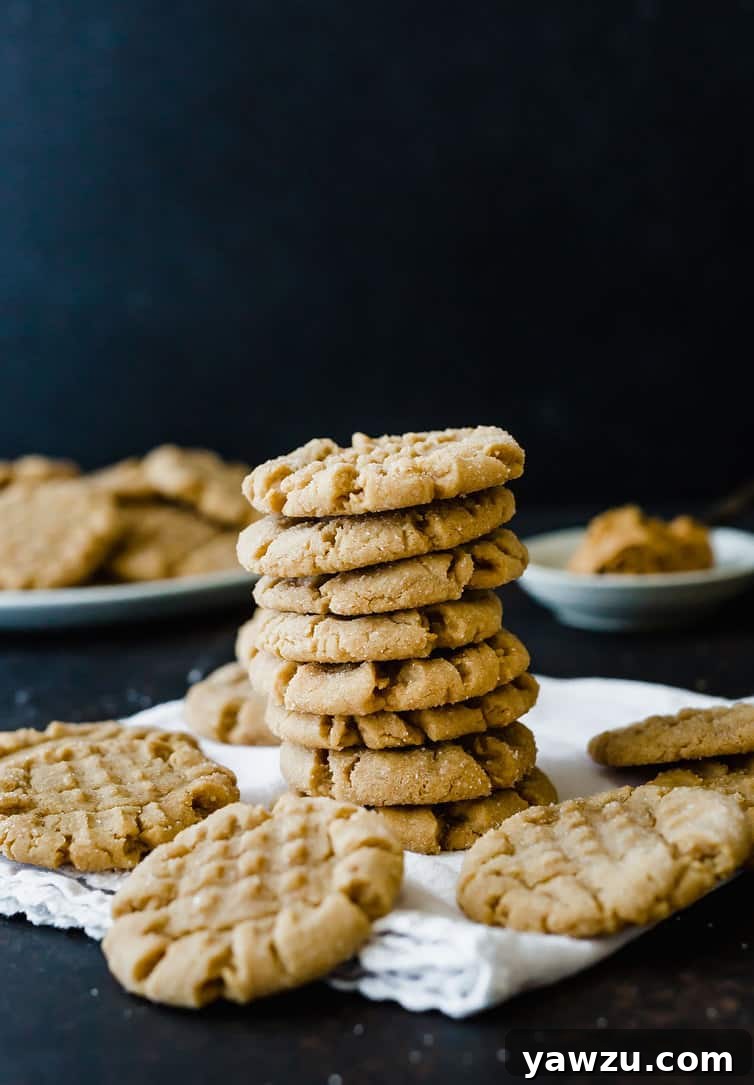
The Ultimate Classic Peanut Butter Cookies: Soft, Chewy, and Irresistibly Delicious
In the vast world of sweets, some treats stand out as true legends. Among them, cookies hold a special place in our hearts and kitchens. Think about the all-star team of cookies – those iconic, universally adored varieties that bring instant comfort and joy. This elite group often includes:
- Irresistible Chocolate Chip Cookies
- Classic Peanut Butter Cookies
- Soft & Chewy Sugar Cookies
- Hearty Oatmeal Raisin Cookies
While the baking universe offers an endless array of amazing options—from delicate shortbread and delightful thumbprint cookies to cinnamon-spiced snickerdoodles, melt-in-your-mouth snowballs, and sweet macaroons—these four pillars are truly the essentials. They’re the cookies that grace every holiday platter, the ones countless families have perfected over generations, easy to prepare, and evoke the warmest, most cherished memories of home baking.
Among these beloved classics, peanut butter cookies have always held a special place in my heart. There’s an undeniable magic in those perfectly formed, crisscross-marked cookies, loaded with creamy peanut butter and often rolled in a sparkling coat of sugar. I can vividly recall sitting in my mom’s bustling kitchen as a child, eagerly licking the beaters, helping her roll the dough into perfect balls, and then carefully pressing the tines of a fork onto each one. These are more than just cookies; they are edible moments of pure nostalgia.
What Makes These the BEST Peanut Butter Cookies?
I may be a little biased, but I firmly believe this recipe yields the absolute BEST peanut butter cookies you’ll ever taste! This isn’t just any recipe; it’s the very one my mom baked with me and my sister when we were growing up. It was the first recipe I begged her for after I moved out, eager to recreate that distinct taste of home. While its exact origin remains a sweet mystery—I suspect it came from the back of a peanut butter jar decades ago—its timeless appeal is undeniable.
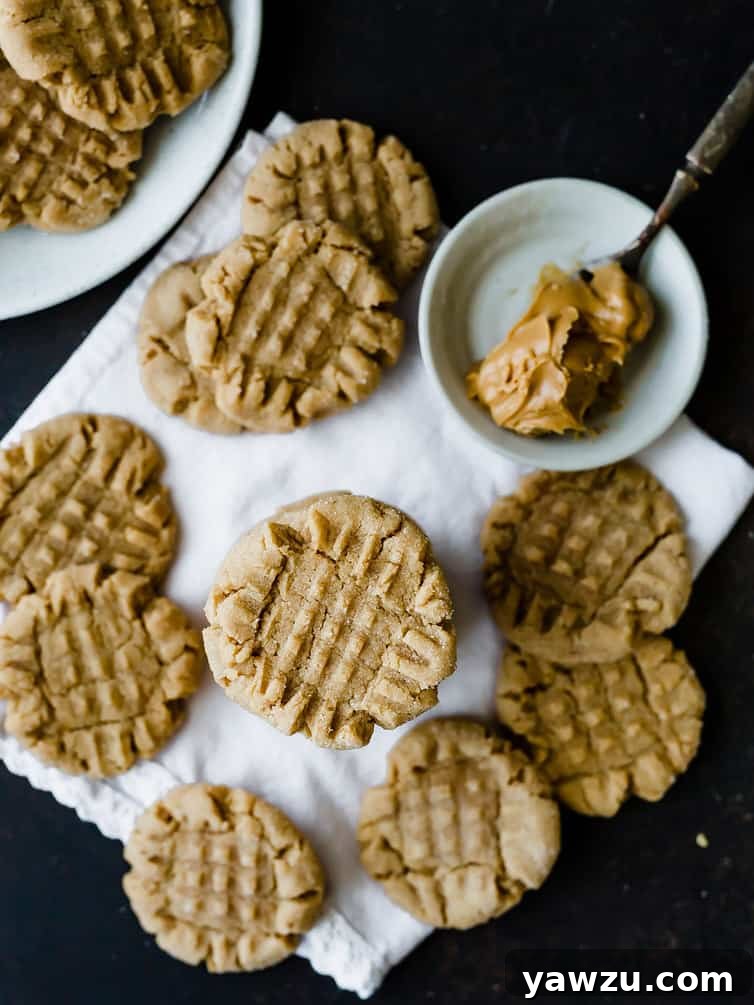
The beauty of this recipe lies in its simplicity. It calls for a straightforward list of pantry staples: all-purpose flour, baking soda, salt, creamy peanut butter, rich brown sugar, vegetable shortening, milk, vanilla extract, and one egg. With just these few ingredients, you can mix up a batch in under five minutes. The process is equally simple: scoop tablespoon-sized balls of dough, roll them in granulated sugar for that delightful crunch, and then create the iconic crisscross pattern with a fork.
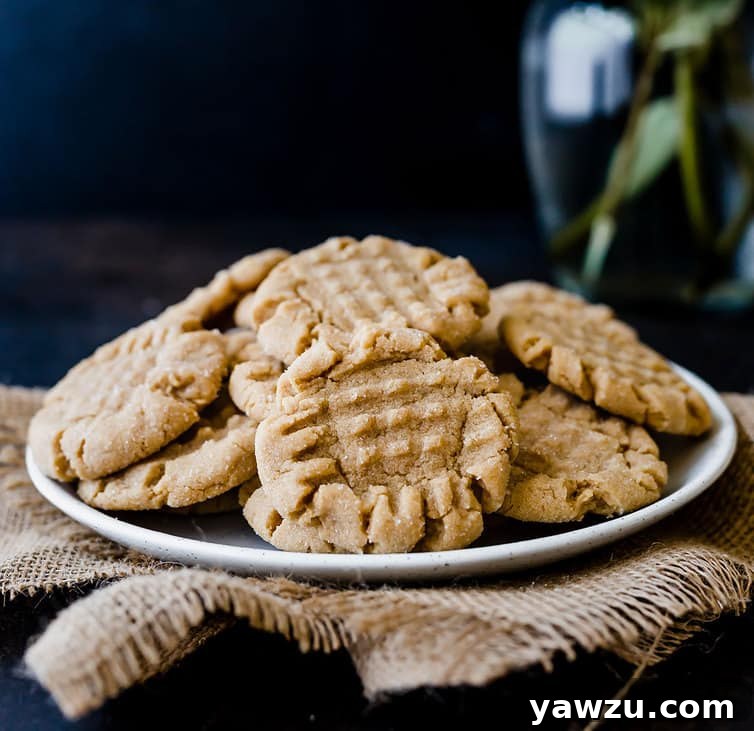
These cookies are not just easy; they are a guaranteed crowd-pleaser, perfect for any occasion. From festive Christmas cookie trays and elegant wedding dessert tables to comforting after-school snacks, these classic soft peanut butter cookies are destined to become a beloved tradition in your household.
Mastering the Crisscross: A Peanut Butter Cookie Signature
One of the most defining characteristics of a classic peanut butter cookie is its distinctive crisscross pattern. But why do we make these marks? It’s a great question with both practical and traditional answers.
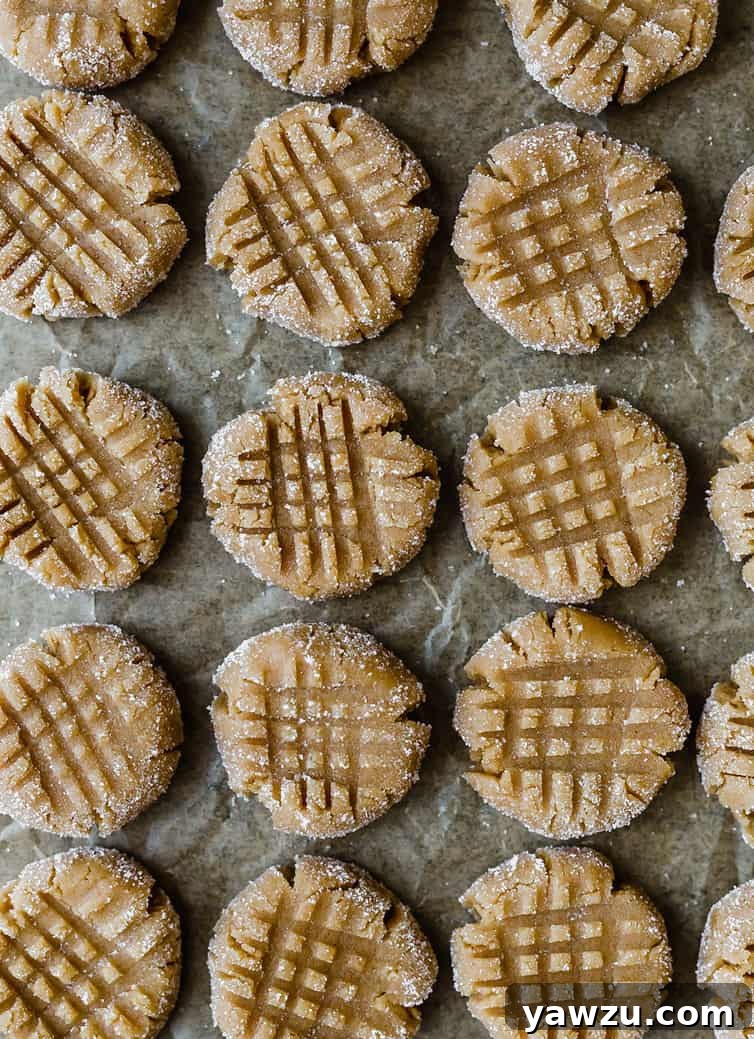
Peanut butter cookie dough tends to be quite dense and rich. Pressing down on the dough balls with a fork serves a crucial purpose: it helps to flatten them slightly, ensuring they bake more evenly throughout. Without this step, the cookies might remain too thick in the center, leading to an underbaked interior and an overbaked exterior. This simple technique promotes a consistent, soft texture from edge to center.
Beyond functionality, the crisscross is an unmistakable hallmark of peanut butter cookies. It’s a traditional characteristic that makes them instantly recognizable on any cookie platter. No need to ask; one glance at those familiar fork marks, and you know exactly what deliciousness awaits!
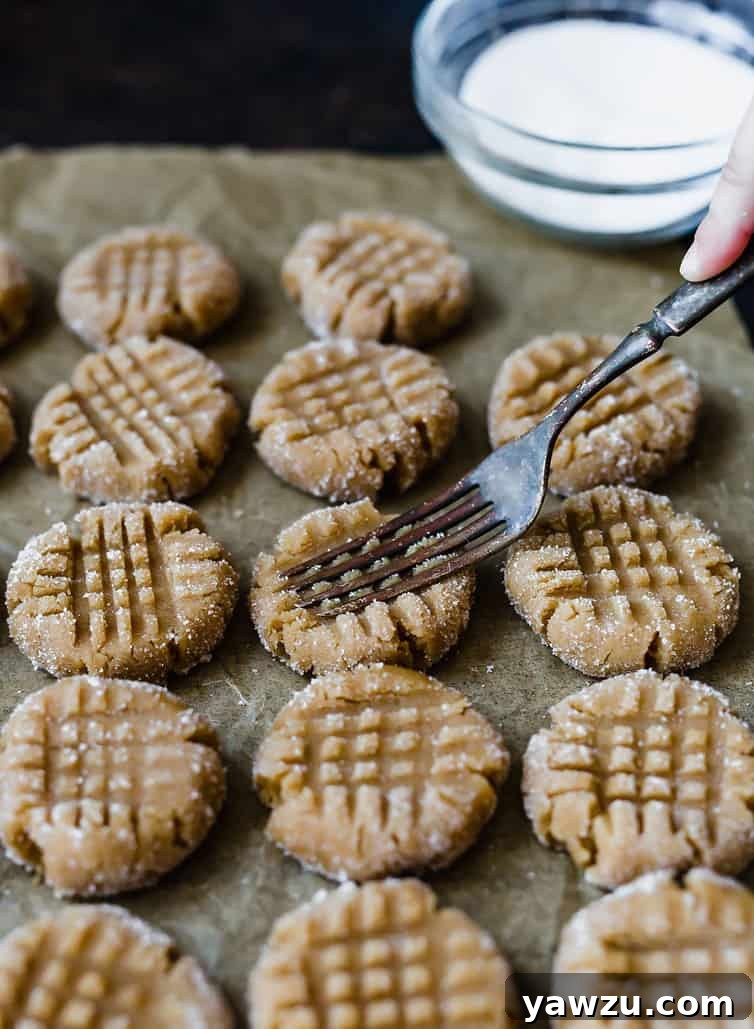
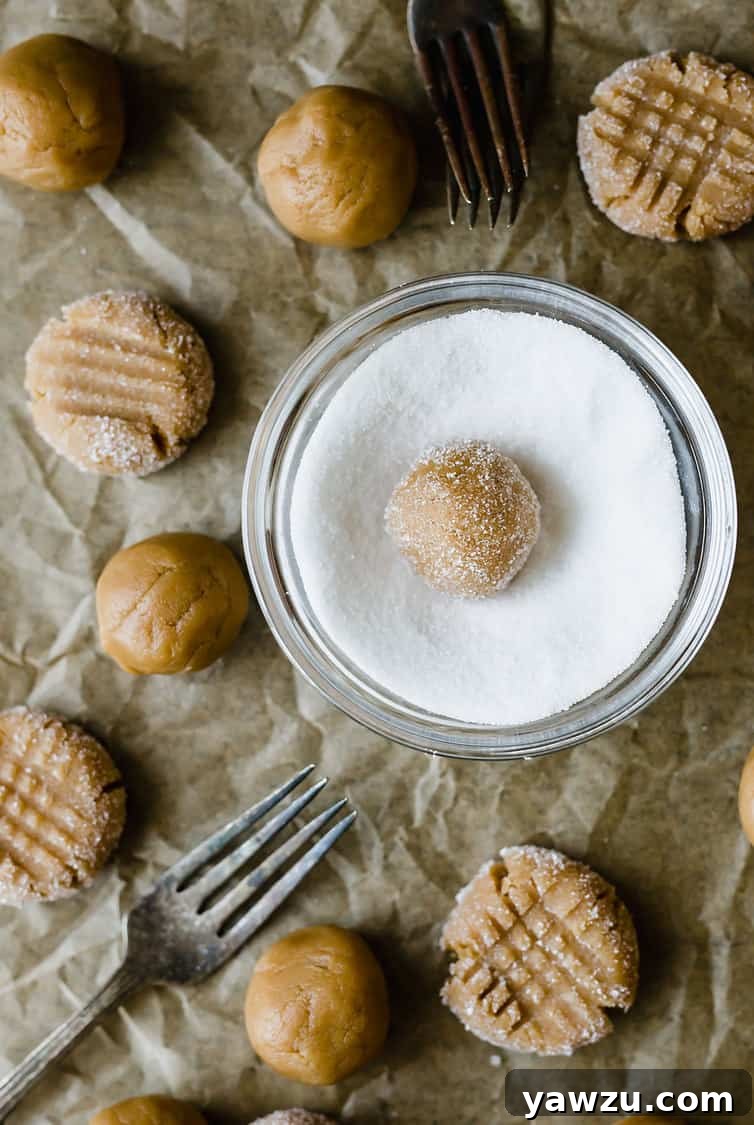
Creating this charming pattern is incredibly easy:
- Dip the tines of a fork into a bowl of granulated sugar. This prevents the dough from sticking to the fork and adds a lovely sugary sparkle to the finished cookie.
- Gently press the sugared fork into the top of a dough ball, flattening it slightly.
- Lift the fork, rotate it 90 degrees, and press down again, making a perpendicular impression to the first.
- And just like that, you’ve created the perfect, iconic crisscross!
Choosing the Right Peanut Butter for Baking Success
The type of peanut butter you use is paramount to achieving the desired texture and flavor in your classic peanut butter cookies. For nearly all baking recipes, I consistently recommend using creamy, processed peanut butter brands like Jif, Skippy, or Peter Pan.
Why processed peanut butter? Natural-style peanut butter, which typically has oil separation, is simply too greasy for most baking applications. Its oil tends to separate and leach out during baking, leading to cookies that spread excessively, lose their shape, and often turn out dry and crumbly. These processed varieties, on the other hand, are formulated with emulsifiers and stabilizers that keep the oils and solids evenly distributed, resulting in a more consistent and reliable dough structure. This ensures your soft peanut butter cookies maintain their shape, bake evenly, and boast that wonderfully chewy texture.
If you’re looking for a nut butter alternative, it’s crucial to select a brand that does not have significant oil separation. Many commercial almond or cashew butters are available in “no-stir” or “processed” versions that mimic the consistency of traditional peanut butter. For instance, Barney Butter is a highly recommended almond butter substitute that performs exceptionally well in baked goods, providing excellent results without compromising texture.
Essential Baking Tips for Perfect Peanut Butter Cookies
Achieving perfectly soft and chewy peanut butter cookies requires attention to a few key details. These tips will help you navigate common baking challenges and ensure your cookies turn out exceptionally delicious every time.
Accurate Ingredient Measurement: The Foundation of Good Baking
Peanut butter, being incredibly sticky, can be notoriously difficult to accurately measure using traditional cups. This is where precision becomes your best friend in baking. I’m a strong advocate for weighing your ingredients, especially for consistent results. If you have a kitchen scale, simply scoop the peanut butter directly from the jar into your mixing bowl until you reach the specified weight. No more wrestling with sticky measuring cups!
If a scale isn’t an option, consider an adjustable measuring cup. These clever tools allow you to set the desired volume, fill, and then easily dispense sticky ingredients like peanut butter, honey, or molasses with a simple push. Alternatively, a quick hack is to lightly grease your measuring cup with a non-stick cooking spray before filling it. This creates a barrier that helps the sticky contents slide out effortlessly.
The Crucial Role of Shortening vs. Butter
In this classic peanut butter cookie recipe, vegetable shortening plays a vital role, and I strongly advise against substituting it with butter. Shortening is a solid fat with a higher melting point than butter, which contributes significantly to the cookie’s texture and structure. It helps prevent the cookies from spreading too much on the baking sheet, ensuring they maintain their shape and thickness. Furthermore, shortening is key to achieving that wonderfully soft and tender crumb, preventing the cookies from becoming dry or crumbly. Replacing it with butter would drastically alter the final texture, leading to a flatter, potentially crispier, and less tender cookie. If you’re concerned about flavor, butter-flavored shortening is an excellent alternative that provides the structural benefits of shortening with a familiar taste.
Preventing Common Cookie Woes: Troubleshooting Tips
- Too Much Flour: Over-measuring flour is a common culprit for dry, crumbly cookies. Always spoon your flour into the measuring cup and level it off, rather than scooping directly from the bag. Better yet, weigh your flour for perfect accuracy.
- Wrong Peanut Butter: As discussed, natural peanut butter with oil separation can make cookies greasy and crumbly. Stick to creamy, processed varieties for best results.
- Overbaking: One of the easiest ways to ruin a soft cookie is to bake it for too long. Peanut butter cookies should be removed from the oven when the edges are set and just beginning to turn golden, but the centers still look slightly soft and underdone. They will continue to set and firm up as they cool on the baking sheet.
- Cookies Spreading Too Much: Ensure your baking sheets are either ungreased or lined with parchment paper or a silicone baking mat. Greasing the pan can cause cookies to spread excessively. Additionally, make sure your shortening is at room temperature but still solid, not melted.
The Easy Peanut Butter Cookie Recipe
Easy Peanut Butter Cookies
36
cookies
22
8
30
Pin Recipe
Ingredients
- 1¾ cups (218.75 g) all-purpose flour
- ¾ teaspoon (0.75 teaspoon) salt
- ¾ teaspoon (0.75 teaspoon) baking soda
- ¾ cup (193.5 g) creamy peanut butter (e.g., Jif, Skippy, Peter Pan)
- ½ cup (102.5 g) vegetable shortening
- 1¼ cups (275 g) packed light brown sugar
- 3 tablespoons milk
- 1 tablespoon vanilla extract
- 1 large egg
- Granulated sugar, for rolling cookies
Instructions
-
Preheat your oven to 375 degrees F (190 degrees C). Line baking sheets with parchment paper or a silicone baking mat. This prevents sticking and ensures even baking.
-
In a small bowl, whisk together the flour, salt, and baking soda. Set aside.
-
In a large mixing bowl, combine the creamy peanut butter, vegetable shortening, packed light brown sugar, milk, and vanilla extract. Beat with an electric mixer at medium speed until the mixture is well blended and creamy, usually about 2 to 3 minutes. Add the egg and beat just until it is fully incorporated into the dough. Reduce the mixer speed to low and gradually add the dry ingredients (flour mixture) to the creamed mixture, mixing just until everything is combined and no streaks of flour remain. Be careful not to overmix.
-
Place granulated sugar in a separate small bowl for rolling. Scoop a tablespoonful of dough and roll it into a smooth ball between the palms of your hands. Roll the dough ball thoroughly in the granulated sugar to coat it, then place it on the prepared baking sheet, spacing cookies about 2 inches apart. Dip the tines of a fork into the sugar (to prevent sticking) and gently press it onto the top of each cookie dough ball, making a crisscross pattern and slightly flattening the cookie.
-
Bake for 7 to 8 minutes, or until the edges are lightly golden and set, but the centers still appear slightly soft. The cookies will continue to cook slightly as they cool. Let the cookies cool on the baking sheet for 2 minutes before transferring them to a wire rack to cool completely.
Notes & Expert Tips
- Preparing Your Pans: Always use ungreased baking sheets or line them with parchment paper or a silicone baking mat. This prevents the cookies from spreading too much and absorbing excess grease, helping them maintain their perfect shape and texture.
- Peanut Butter Choice is Key: For the best results, use traditional, processed creamy peanut butter (such as Jif, Skippy, or Peter Pan). Natural peanut butter, with its tendency for oil separation, is too greasy for this recipe and will lead to cookies that spread excessively and become crumbly.
- Nut Butter Alternatives: If you need to use an alternative nut butter, ensure it’s a “no-stir” variety that doesn’t have oil separation. Brands like Barney Butter (almond butter) are known to work exceptionally well in baked goods.
- Avoiding Crumbly Cookies: The main reasons peanut butter cookies turn out crumbly are too much flour, using the wrong type of peanut butter, or overbaking. Ensure accurate flour measurement (weighing is best!), use processed peanut butter, and remove cookies when their centers still look slightly soft.
- Fun Extras & Customization: Feel free to jazz up these classic cookies! Roll them in colored sugars for a festive touch, or mix in ½ cup of chopped peanuts, mini chocolate chips, peanut butter chips, or butterscotch chips for extra flavor and texture.
- Make-Ahead Dough: The cookie dough can be prepared up to 3 days in advance. Store it covered in the refrigerator. When ready to bake, let it sit on the counter for about 30 minutes to soften slightly before scooping and baking.
- Storage: Baked peanut butter cookies will stay fresh and soft in an airtight container at room temperature for up to 1 week.
- Freezing Instructions (Dough): You can freeze raw cookie dough balls for up to 3 months. Place them in a single layer on a baking sheet to freeze solid, then transfer to a ziptop freezer bag. When ready to bake, remove from the freezer, let sit at room temperature for 30 minutes, roll in sugar, make the crisscross pattern, and bake as directed, adding an extra minute or two to the baking time.
- Freezing Instructions (Baked Cookies): Baked cookies also freeze beautifully! Wrap individual cookies tightly in plastic wrap, then place them in a freezer-safe ziptop bag. Freeze for up to 3 months. Thaw at room temperature before serving.
Nutritional Information (per cookie)
Nutritional values are approximate, based on one cookie:
- Calories: 111 kcal
- Carbohydrates: 13g
- Protein: 2g
- Fat: 5g
- Saturated Fat: 1g
- Cholesterol: 4mg
- Sodium: 100mg
- Potassium: 54mg
- Sugar: 8g
- Vitamin A: 10 IU
- Calcium: 12mg
- Iron: 0.5mg
Did you make this recipe?
We’d love to hear about it! Leave a review below to share your experience, then snap a picture and tag @thebrowneyedbaker on Instagram so we can see your delicious creations!
Elevate Your Peanut Butter Cookies: Fun Extras & Flavor Variations
While the classic soft peanut butter cookies are undeniably fantastic on their own, their versatile nature makes them a perfect base for exciting twists and flavor enhancements. Don’t be afraid to experiment and discover new favorites for your recipe box!
Creative Mix-Ins and Toppings:
- Festive Sugars: Roll your dough balls in colorful sanding sugars before baking for an instant holiday or party upgrade.
- Chopped Nuts: Fold in ½ cup of finely chopped peanuts (or even pecans, cashews) into the dough for added crunch and nutty flavor.
- Chocolate Chips: Mini chocolate chips, milk chocolate chips, or even dark chocolate chunks are a classic pairing with peanut butter.
- Peanut Butter Chips: Double down on the peanut butter flavor by adding a handful of peanut butter chips to the dough.
- Butterscotch Chips: For a delightful caramel-like note, butterscotch chips are an excellent complement to peanut butter.
- Spices: A pinch of cinnamon or nutmeg can add a subtle warmth and complexity to your cookies.
Iconic Peanut Butter Cookie Variations to Try:
- Monster Cookies: A wildly popular choice! These cookies combine peanut butter dough with oats, chocolate chips, colorful M&Ms, and Reese’s Pieces for a truly monstrously good treat.
- Peanut Butter Blossoms: A beloved holiday classic. Prepare the sugared dough balls as usual, bake them until almost done, then press a Hershey’s Kiss (or your favorite chocolate candy) into the center of each warm cookie immediately after they come out of the oven.
- Peanut Butter Cup Cookies: Transform your classic dough into an irresistible bite-sized dessert. Press a ball of dough into a mini muffin pan, and once baked, gently press a mini peanut butter cup into the center of each warm cookie.
- Salted Peanut Butter Cup Chocolate Chip Cookies: A delightful riff on favorite chocolate chip cookies. These feature a rich peanut butter dough base, are wonderfully thick and soft, and are loaded with peanut butter chips, milk chocolate chips, and chopped peanut butter cups, often finished with a sprinkle of sea salt.
Frequently Asked Questions About Classic Peanut Butter Cookies
Can I use crunchy peanut butter instead of creamy?
While creamy peanut butter is recommended for the smoothest texture, you can experiment with crunchy peanut butter. Be aware that the added peanut pieces will alter the cookie’s texture, making it less uniform. Ensure it’s a processed, no-stir crunchy peanut butter to avoid excessive oil separation.
Why are my peanut butter cookies dry and crumbly?
The most common reasons for dry and crumbly cookies are over-measuring flour, using natural peanut butter with oil separation, or overbaking. Ensure you measure flour correctly (preferably by weight), use a processed creamy peanut butter, and remove cookies from the oven when they are just set at the edges and still slightly soft in the center.
How can I make my peanut butter cookies softer?
To ensure soft peanut butter cookies, strictly follow the recipe’s fat (shortening) and sugar measurements. Do not overmix the dough, and most importantly, do not overbake them. Taking them out when the centers are slightly underdone will allow them to finish setting as they cool, resulting in a perfectly soft and chewy cookie.
Can I double the recipe?
Yes, this recipe can easily be doubled. Just ensure you have a large enough mixing bowl and baking sheets to accommodate the increased volume of dough and cookies.
Share Your Baking Success!
We absolutely love seeing your culinary creations! If you’ve baked these classic peanut butter cookies and fallen in love with them, please consider taking a moment to leave a rating and review below. Your feedback helps other bakers in our community discover fantastic recipes.
Don’t forget to snap a picture of your beautiful cookies and share it on Instagram! Tag @thebrowneyedbaker so we can admire your delicious results and celebrate your baking success. Happy baking!
Michelle Lettrich
Dessert, Snack
American
[Photography by Whitney Wright]