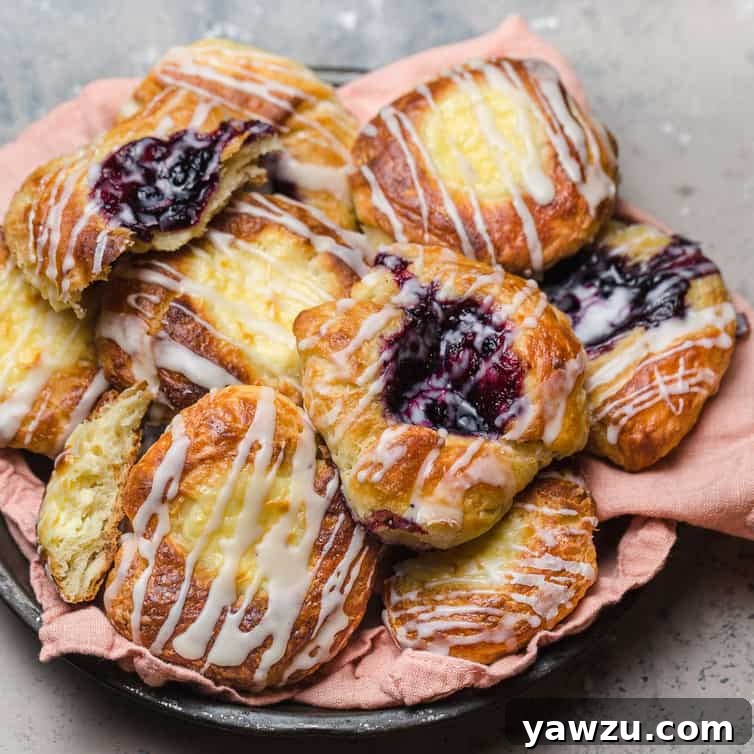
Imagine sinking your teeth into a light, flaky pastry, its delicate layers giving way to a rich, sweet filling. That’s the experience awaiting you with these incredible homemade Danish pastries. Forget store-bought puff pastry – we’re crafting these beauties from scratch, promising a taste that rivals the finest European bakeries. While the idea of making Danish pastries from the ground up might seem daunting, rest assured, it’s a wonderfully rewarding baking project that’s more accessible than you think. This comprehensive guide will demystify the process, breaking down each step to ensure your success in creating the most delicious Danish pastries you’ve ever tasted.
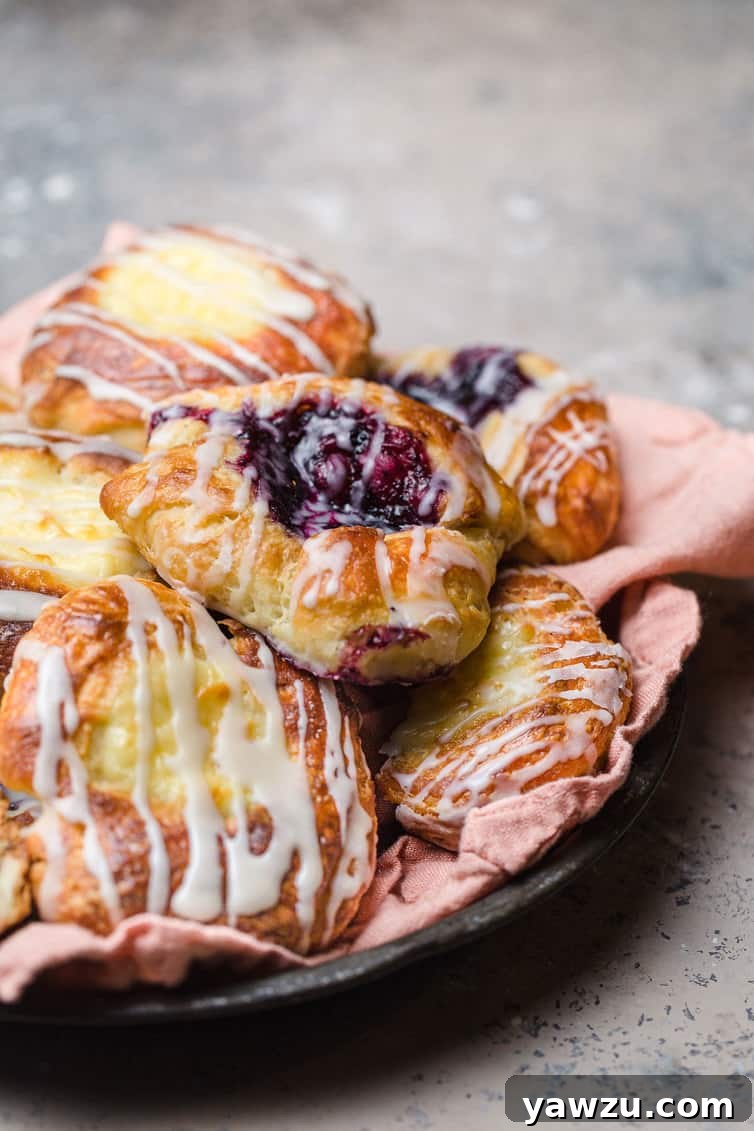
Embark on a culinary journey to create these gorgeous Danish pastries, perfect for special occasions, holiday brunches, or simply elevating your everyday breakfast. Their versatility in toppings, from classic cream cheese to vibrant fruit or decadent chocolate, means there’s a perfect Danish for every palate. Prepare to impress your overnight guests or treat your family to an unforgettable breakfast experience. We’re about to unveil the secrets to achieving those coveted flaky layers and irresistible flavors that define an authentic Danish pastry. The intricate process, often associated with professional bakeries, is entirely achievable in your home kitchen with a little patience and our detailed instructions.
The Secret to Flakiness: Mastering Danish Pastry Lamination
The hallmark of an exceptional Danish pastry lies in its delicate, airy layers. This magical texture is achieved through a technique known as lamination, where a carefully prepared butter block is encased within the dough and then repeatedly folded and rolled. This precise process creates countless thin strata of butter separated by even thinner layers of dough, which puff up beautifully during baking. This expansion of steam between the butter and dough layers is precisely what gives Danish pastries that signature light, crisp, and undeniably flaky texture, along with a rich, buttery flavor that is simply unparalleled.
Crafting the Perfect Butter Block
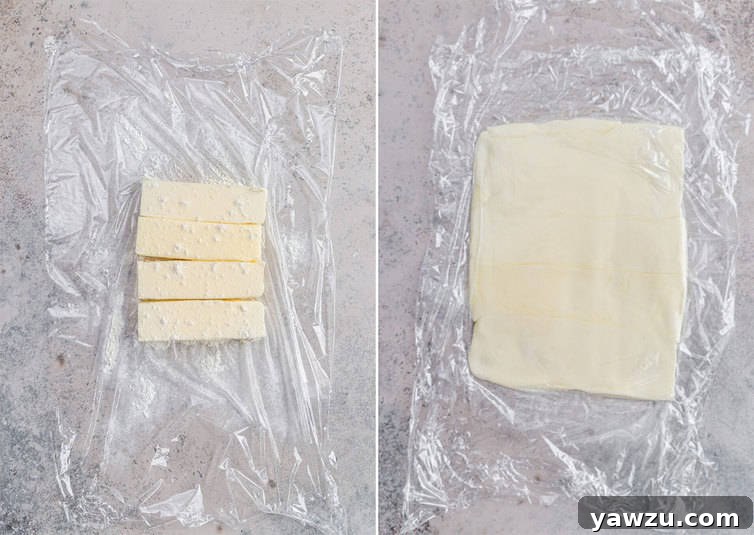
The foundation of successful lamination is a well-made butter block. It’s crucial that your butter is cool but still pliable, allowing it to be rolled out without tearing or becoming too soft. If the butter is too cold, it will crack and break through the dough; if it’s too warm, it will melt into the dough, preventing the formation of distinct layers. You’ll transform cold butter into two even rectangles, precisely sized to integrate seamlessly with your prepared dough. This isn’t just about adding fat; it’s about engineering the structure of your Danish pastry for ultimate flakiness and rich, buttery flavor, setting the stage for the exquisite texture to come.
The Lamination Process: Fold and Roll for Flaky Layers
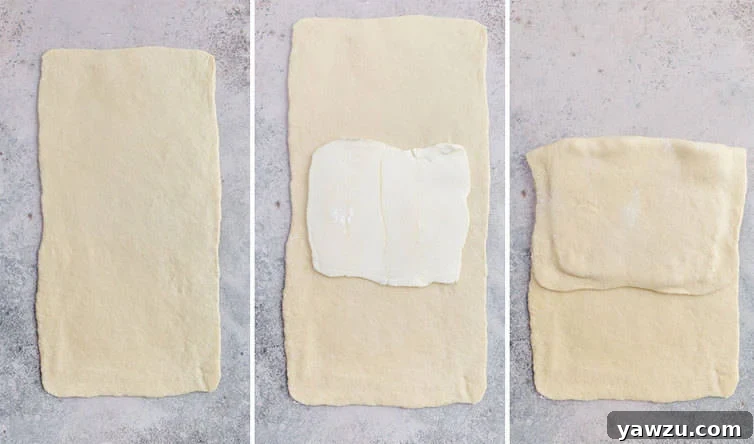
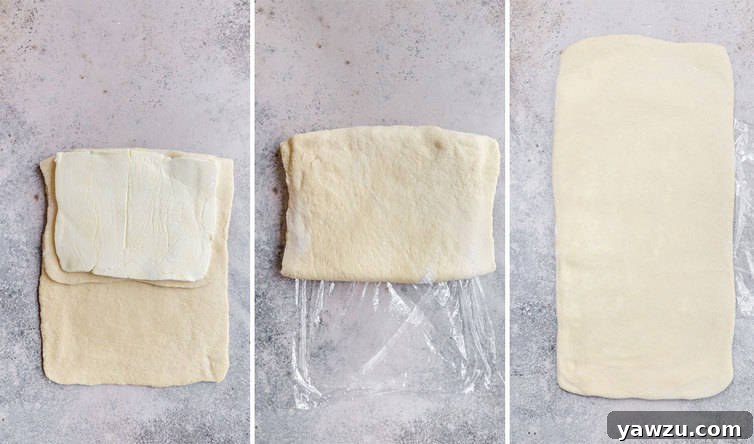
Once your butter blocks are ready, the lamination truly begins. The prepared dough is rolled into a large, thin rectangle, and the butter blocks are strategically placed within. The dough is then folded over, completely enclosing the butter, creating the first set of distinct layers. This initial fold, often called a “turn,” is critical for ensuring even distribution of butter throughout the dough, which is essential for uniform flakiness in the finished pastry.
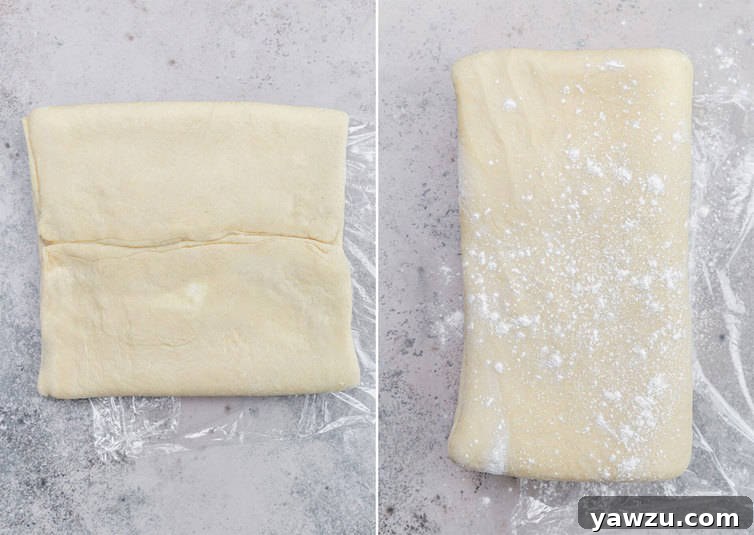
This “turn” isn’t a one-time event. To build up the magnificent number of layers that define a classic Danish, this process of rolling, folding, and chilling is repeated multiple times. Each fold doubles or triples the existing layers, gradually building complexity and ensuring every bite delivers that delightful crisp and tender texture. We’ll guide you through three such folds, with essential chilling periods in between each turn. These chilling periods are vital to allow the butter to firm up and the gluten in the dough to relax, preventing the butter from melting out or integrating too deeply into the dough, which would compromise the desired flakiness. The patience exercised during these stages is directly proportional to the flakiness of your final product.
While the steps of rolling and folding might initially seem intricate, they are surprisingly meditative and straightforward once you establish a rhythm. The payoff is immense: a pastry that is light, airy, and unmistakably buttery, far superior to anything made with store-bought puff pastry. This dedication to the craft transforms simple ingredients into an extraordinary treat, promising a gratifying baking experience and a truly impressive end result. You’ll be amazed at what you can create from your own kitchen!
Assembling Your Masterpiece: Shaping Flaky Danish Pastries
Once your beautifully laminated dough has had its final, crucial chill, it’s ready for the exciting stage of transformation: shaping into individual Danish pastries. This is where your patience pays off, as the cold dough is now pliable and eager to be worked into its final form. While various intricate shapes exist for Danish pastries, from braided logs to elegant squares, we’ve found that the classic circular Danish offers an ideal balance of ease, elegance, and, most importantly, a perfect ratio of tender, flaky pastry to delectable filling. This simple design is not only virtually foolproof for home bakers but also ensures every bite is a harmonious blend of textures and flavors.
Begin by dividing your well-rested dough. It’s best to work with one-third of the dough at a time, keeping the remaining portions chilled to maintain their structure. This approach prevents the butter from warming up too quickly, which is key to preserving those coveted layers. Each section of dough will yield approximately 12 uniform pieces. Gently roll each piece into a smooth, even ball – think of them as little canvases awaiting their delicious adornments. Uniformity in size will help ensure even baking across your batch.
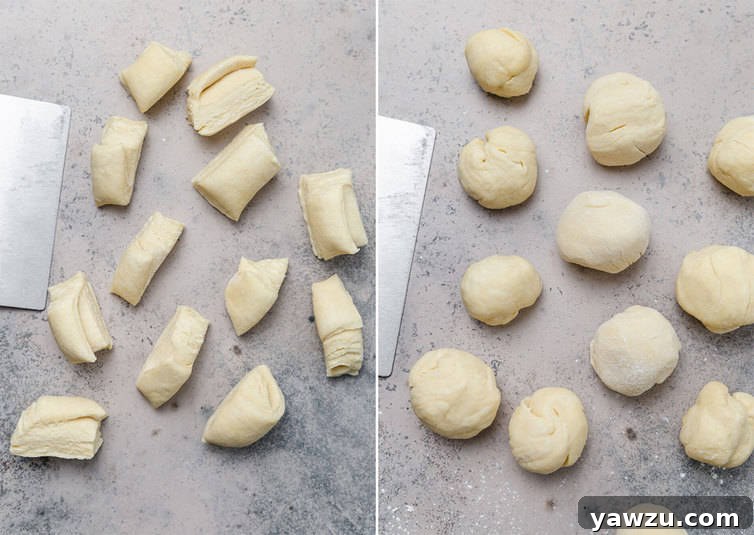
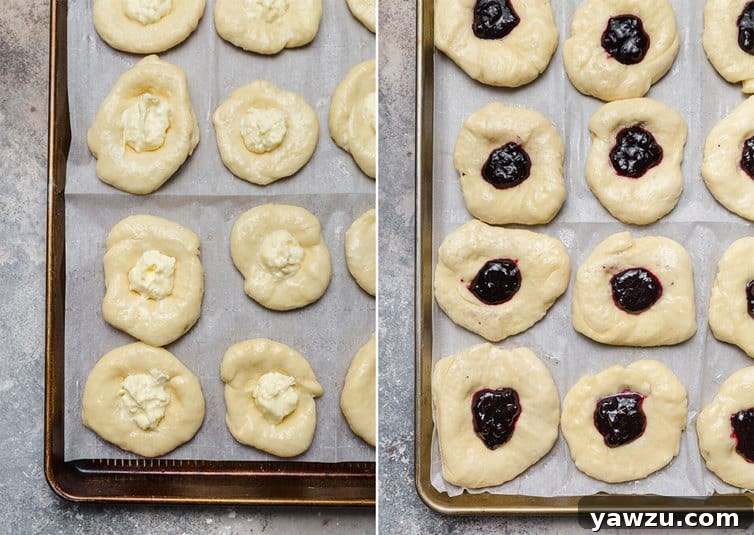
Next, you’ll flatten each ball into a round disc, roughly 3 to 3.5 inches in diameter. The trick here is to create a slightly thinner center while leaving a small, puffed “sidewall” or rim around the circumference. This subtle engineering creates a natural well, perfectly designed to cradle your chosen filling and prevent it from overflowing during baking, keeping your pastries neat and appealing. Arrange these prepared rounds on baking sheets lined with parchment paper or silicone mats, giving them ample space to rise without crowding.
Allow these shaped pastries to undergo a final proofing stage for about an hour. During this time, they will gently puff up, though they won’t quite double in size like a traditional bread dough. This crucial rest allows the yeast to work its magic and the dough to relax, ensuring a lighter, more tender baked good. As they rise, you’ll feel the anticipation building, knowing that the next step is to lavish them with an array of delicious fillings that will transform them into irresistible treats. This final rise contributes significantly to the delicate, open crumb structure of the finished Danish.
Divine Filling Ideas: Personalize Your Danish Pastries
The beauty of homemade Danish pastries lies not just in their exquisite flaky dough, but also in the boundless creativity you can unleash with their fillings. While the classic cream cheese Danish holds a special place in many hearts (and is certainly my personal favorite for its creamy tang!), the possibilities truly are endless. Don’t be afraid to experiment and discover new favorites for your family and guests; tailor them to seasonal fruits or personal cravings.
For those who love a burst of fruity sweetness, cherry remains a timeless choice, bringing a vibrant flavor and beautiful color to the pastry. Beyond these traditional favorites, consider expanding your repertoire with these tempting ideas, each promising to elevate your Danish experience:
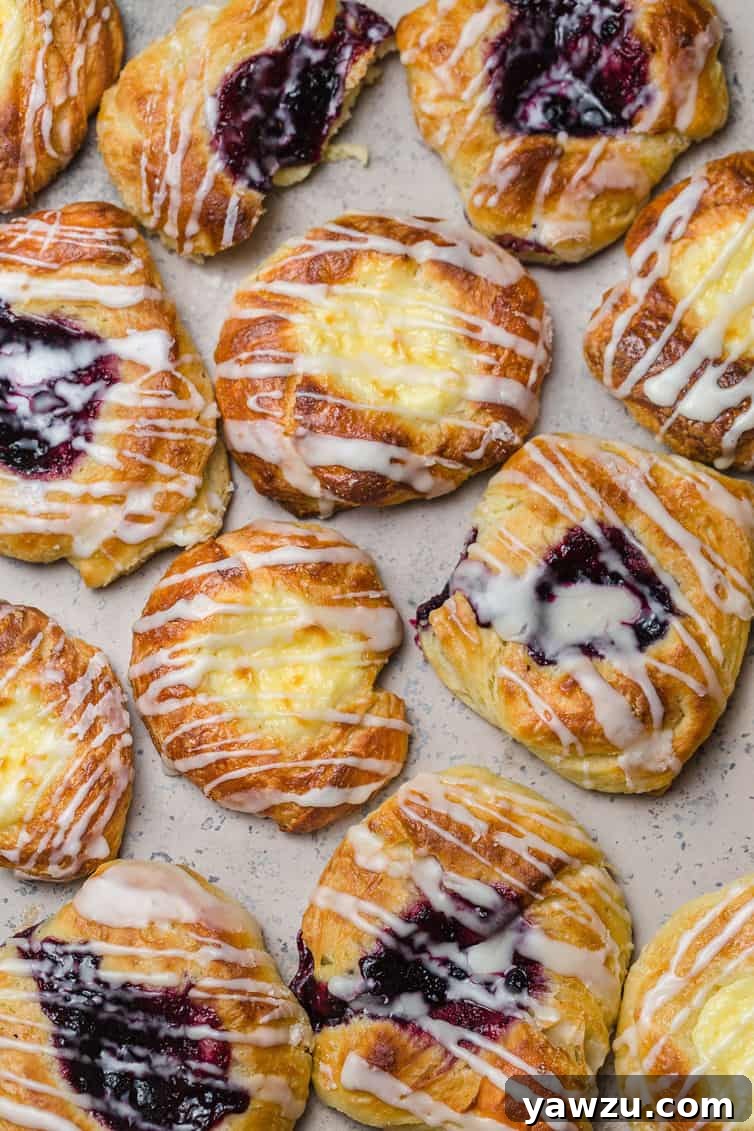
- Classic Cream Cheese: A rich, tangy, and subtly sweet filling that perfectly complements the buttery pastry. Our detailed recipe below provides the perfect balance of creaminess and flavor.
- Fruit Jam or Preserves: Whether it’s a luscious strawberry, tart raspberry, sweet apricot, or juicy blueberry, a good quality jam or preserves adds a delightful fruit essence. For a quicker option, canned pie filling works wonderfully too, offering convenience without compromising flavor.
- Fresh Fruit: During peak season, delicate slices of fresh fruits like strawberries, blueberries, raspberries, or even thinly sliced peaches nestled in a light cream cheese base or simply glazed after baking offer a refreshing and elegant twist.
- Zesty Lemon Curd: For a bright and citrusy kick, lemon curd provides a sophisticated and tangy contrast to the sweet pastry, awakening the palate with its vibrant flavor.
- Indulgent Chocolate Ganache: A luscious, smooth chocolate ganache will satisfy any chocolate craving, making for a truly decadent Danish that feels like a dessert in itself.
- Nutella: The popular hazelnut-chocolate spread is a guaranteed crowd-pleaser, offering a rich, comforting flavor that’s particularly popular with children (and often, adults!).
- Savory Surprises: Danish pastries don’t always have to be sweet! A filling of crumbled feta cheese paired with sweet, caramelized onions creates an unexpectedly delicious savory option, perfect for an appetizer, a unique brunch item, or a light lunch.
Don’t limit yourself to single flavors! Many of these fillings can be combined for an even more complex and satisfying experience. Imagine the creamy tang of cream cheese beautifully paired with a handful of fresh mixed berries for a layered flavor profile, or the rich warmth of chocolate ganache enhanced by a hint of orange zest for an elevated treat. Each combination offers a new adventure for your taste buds, transforming simple pastries into gourmet delights. The only limit is your imagination and what fresh ingredients you have on hand!
The Finishing Touch: A Delicate Glaze for Bakery-Quality Danishes
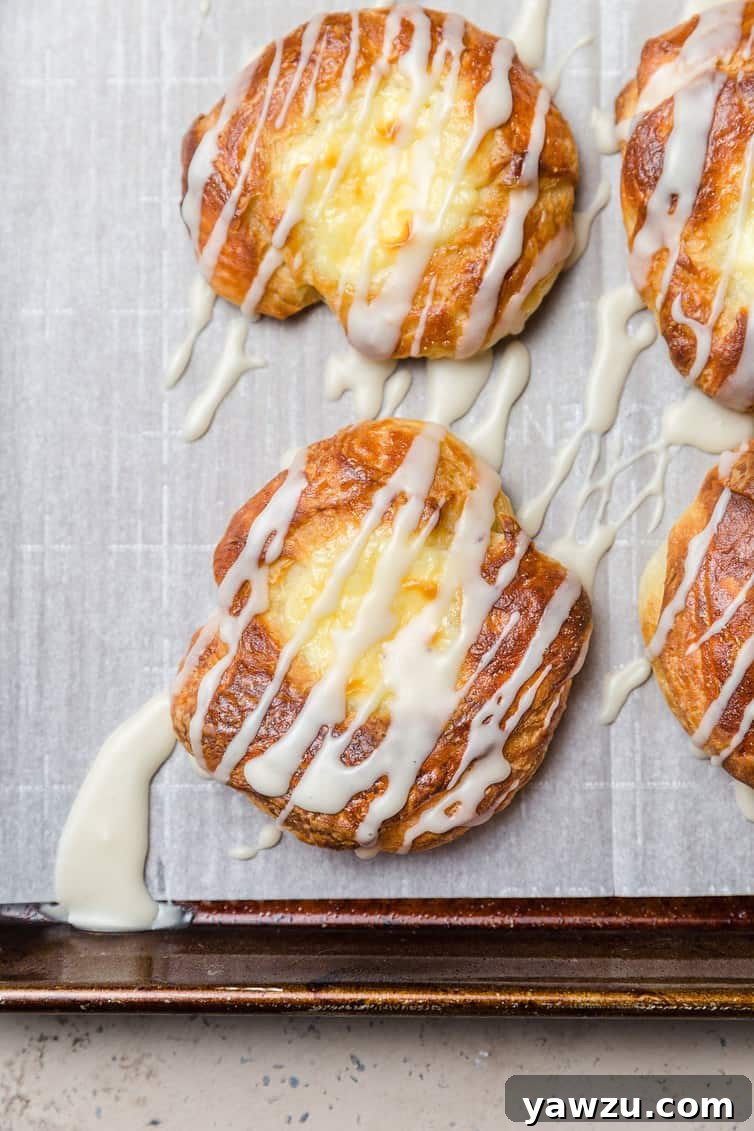
No Danish pastry is truly complete without that signature glossy finish, and a simple powdered sugar glaze is the perfect way to achieve it. This final drizzle not only adds an extra touch of sweetness but also enhances the visual appeal of your pastries, giving them that irresistible, professional bakery-fresh look. It’s the crowning glory that elevates your homemade creations from delicious to truly spectacular, making them worthy of any elegant breakfast spread or dessert platter.
Crafting this glaze is effortlessly simple: a quick whisk of powdered sugar and a splash of milk (or even a touch of lemon juice for an added zest and brighter flavor). The consistency is key – you want it thin enough to drizzle elegantly without being too runny, but thick enough to cling to the pastry without disappearing entirely. This delicate veil of sweetness melts ever so slightly into the warm pastry, creating a soft, sweet top layer that perfectly complements the rich filling and flaky dough, tying all the flavors and textures together harmoniously.
For those who appreciate an extra layer of texture and flavor, consider sprinkling finely chopped nuts – such as toasted almonds, crunchy pecans, or earthy walnuts – over your pastries just before applying the glaze. The nuts add a satisfying crunch and a subtle nutty aroma that contrasts beautifully with the soft pastry and smooth filling, making each bite even more complex and enjoyable. Whether you opt for a plain, elegant glaze or a nutty addition for textural interest, this final step is essential for a truly authentic and visually stunning Danish experience. It’s the little detail that makes all the difference.
Pro Tips for Achieving Danish Pastry Perfection
Creating homemade Danish pastries is an art form, and a few expert tips can make all the difference, ensuring your efforts result in the most beautiful and delicious pastries possible. Pay close attention to these details, and you’ll be baking like a seasoned professional, ready to impress with every flaky bite.
- Temperature is Your Best Friend (and Enemy): The success of your butter block and subsequent lamination hinges entirely on consistent temperature control. Ensure your butter is consistently cool, almost cold, but still flexible enough to roll without cracking or breaking through the dough. If your kitchen is warm or the butter softens too much during handling, don’t hesitate to pop it and the dough back into the refrigerator for 10-15 minutes to firm up. A firm butter block prevents it from merging with the dough prematurely, which is absolutely crucial for those distinct flaky layers. This applies to the dough itself during lamination – consistent chilling between folds is non-negotiable for success.
- Embrace the Two-Day Approach: While it’s certainly possible to make these Danish pastries in a single ambitious day, breaking the process into a two-day project can significantly ease the workload and stress, especially for first-time bakers or those with busy schedules. The laminated dough benefits immensely from an overnight rest in the refrigerator, allowing the gluten to relax completely and flavors to meld and deepen. Simply prepare the laminated dough on day one, chill it overnight, and then proceed with shaping, filling, and baking on day two. This makes the entire experience more enjoyable and manageable, allowing you to savor the process.
- Shaping for Success: While the circular shape described in our assembly section is recommended for its consistent results and ideal filling-to-pastry ratio, don’t shy away from exploring other shapes once you’ve mastered the basics. From elegant pinwheels to simple squares or even braids, varying the form can add a creative and personalized touch to your baking. Just remember to adjust baking times slightly if you opt for significantly different thicknesses or sizes, as smaller or thinner pastries may bake faster.
- Freshness is Key: For the ultimate experience, Danish pastries are undeniably best enjoyed on the day they are baked. The crisp flakiness and fresh aroma are at their absolute peak. However, if you find yourself with leftovers, store them in an airtight container at room temperature for up to two days, or in the refrigerator for up to three days. A quick reheat in a toaster oven or a warm oven can often revive some of their fresh-baked charm, bringing back a touch of that initial crispness.
Freezing for Future Enjoyment: A Danish Pastry Lover’s Guide
One of the most appealing aspects of making homemade Danish pastries is the ability to prepare them in advance and freeze them, ensuring you always have a delightful treat ready to bake or reheat whenever the craving strikes. This flexibility makes them perfect for busy mornings, unexpected guests, or simply stocking your freezer with gourmet goodies. Here’s how to properly freeze your Danish pastries at various stages for optimal results:
- Freezing the Dough (Unbaked and Unshaped): To freeze your Danish pastry dough, follow the recipe through the lamination process (after Step #11). After its final chill (at least 2 hours), wrap the entire dough block (or convenient portions of it) tightly in two layers of plastic wrap to prevent freezer burn, then place it in a freezer-safe zip-top bag. It can be frozen for up to 3 months. When ready to use, simply thaw the dough overnight in the refrigerator, then proceed with shaping and baking as directed in the recipe. This method is ideal for meal prep and ensures fresh pastries on demand.
- Freezing Assembled Pastries (Unbaked and Filled): For maximum convenience, you can freeze the Danish pastries after they’ve been shaped and filled, but before their final rise and baking. Complete the recipe through Step #17 (filling the pastries). Arrange the unbaked, filled pastries in a single layer on a baking sheet and freeze them until they are completely solid, which usually takes at least 3 hours. Once fully frozen, transfer them to an airtight container or a resealable freezer bag, where they can be stored for up to 1 month. When you’re ready to bake, simply place the frozen pastries on a lined baking sheet (don’t forget the egg wash for a beautiful shine!), allow them to thaw slightly while your oven preheats, and then bake, adding an extra 10 to 15 minutes to the recommended bake time. This method allows for fresh-baked Danish with minimal effort on demand!
- Freezing Baked Pastries (Fully Cooked): If you have leftover baked Danish pastries, or simply want to prepare a large batch in advance for future enjoyment, they can be frozen after baking. Allow the pastries to cool completely to room temperature. Then, wrap each individual Danish tightly in plastic wrap to prevent freezer burn and maintain freshness, and place them in an airtight container or a freezer-safe zip-top bag. They can be frozen for up to 3 months. To enjoy, thaw the baked pastries overnight in the refrigerator. For the best texture, reheat them in a 350°F (175°C) oven for 8 to 10 minutes, or until they are warmed through and their delicate flakiness is revived.
Watch Our Danish Pastry Video Guide
To further assist you in mastering these delicate pastries, we’ve prepared a comprehensive video guide. Watch the step-by-step process of making Danish pastry dough, from preparing the butter block to the final lamination, shaping, and filling. Visual instruction can be incredibly helpful for techniques like lamination, ensuring you achieve perfect, flaky results every time. Follow along with our expert baker as they demonstrate each crucial stage, making this seemingly complex recipe approachable and enjoyable for home bakers of all skill levels.

We absolutely love seeing your culinary creations! If you whip up these delicious Danish pastries, please consider sharing your experience and providing feedback. Your comments and ratings below are invaluable and help other aspiring bakers learn and grow. Thank you for being a cherished part of our baking community! ❤️️

Danish Pastry Recipe
Pin
Ingredients
For the Dough
- 2 cups (454 g) unsalted butter, divided
- 5½ cups (663 g) all-purpose flour
- ½ cup (99 g) granulated sugar
- 4½ teaspoons instant yeast
- 2 teaspoons salt
- 2 teaspoons vanilla extract
- 1½ cups (360 ml) milk
- 2 eggs
For the Cheese Filling
- 8 ounces cream cheese, at room temperature
- 3 tablespoons granulated sugar
- 1 egg
- ¼ teaspoon salt
For the Fruit Filling
- 1 cup fruit jam, preserves, or canned pie filling
For the Egg Wash:
- 1 egg white
- 1 tablespoon water
For the Glaze:
- 1½ cups (170 g) powdered sugar
- 2 tablespoons milk
Instructions
- Make the Dough: Cut ½ tablespoon off the ends of each of the four sticks of butter (for a total of 2 tablespoons).
- In the bowl of a stand mixer, whisk together the flour, sugar, yeast, and salt. Add the 2 tablespoons cold butter and work it in with a pastry blender or your fingers until no large lumps remain. Add the vanilla, milk, and eggs.
- Mix with the paddle attachment on low speed until a dough begins to form, then switch to the dough hook and knead until a cohesive, but quite sticky dough forms, about 5 to 7 minutes. The dough won’t completely clean the bowl and will stick a bit at the bottom. (You can also complete this step in a bread machine on the dough cycle.)
- Scrape the dough into a ball, and transfer it to a floured work surface. Cover it with plastic wrap, and let it rest for 10 minutes while you prepare the butter.
- Make the Butter Block: Cut each stick of butter in half lengthwise, to make 8 long rectangles. On a piece of floured parchment or plastic wrap, line up 4 of the butter pieces side by side, to form a rectangle. Sprinkle lightly with flour, and cover with another piece of parchment or plastic wrap.
- Gently pound and roll the butter until it’s about 6″ x 9″. The pieces may or may not meld together.
- Repeat with the remaining 4 pieces of butter. You should now have two butter rectangles, about 6″ x 9″ each.
- Laminate the Dough: Roll the dough into a rectangle 12″ wide x 24″ long. Place one of the butter pieces onto the center third of the dough. Fold one side over the butter to cover it. Place the other butter piece atop the folded-over dough, and fold the remaining dough up over it. Pinch the open ends and side closed.
- Turn the dough so a 12″ side is closest to you. Roll the dough into a 10″ x 24″ rectangle. Fold each side into the center; then fold one side over the other to make a rectangular packet about 6″ x 10″.
- Dust the surface of the dough with flour, wrap it in plastic wrap, and chill in the refrigerator for 20 minutes.
- Remove the dough from the refrigerator, and again roll it into a rectangle about 10″ x 24″. Fold it into a packet as you did in step #9; it’ll be about 7″ x 12″. Roll one final time, fold into a packet, and flour the dough lightly. Wrap loosely (but completely) in plastic, and chill it for at least 2 hours, or up to 16 hours.
- Make the Cheese Filling (if using): Combine all of the ingredients in a medium bowl, stirring until smooth.
- Assemble the Pastries: When you’re ready to make pastries, remove the dough from the refrigerator, unwrap it, and cut off one-third. You’ll work with this piece first; re-wrap and return the remainder to the refrigerator.
- Divide the dough into 12 pieces. Roll each into a smooth ball, then flatten the balls into 3″ to 3 1/2″ rounds, making the center thinner than the edges. You want to build up a slight wall of dough all around the circumference; this will help hold the filling. Place the rounds on a baking sheet lined with parchment paper or a silicone baking mat.
- Working with one-half of the remaining dough at a time, repeat the process; you’ll finish with three baking sheets, each with 12 dough rounds.
- Cover the Danish lightly with greased plastic wrap, and let them rise for about 1 hour; they’ll become slightly puffy. Towards the end of the rising time, preheat the oven to 400°F.
- Use your fingers to press the centers of the dough rounds as flat as possible, leaving the “sidewalls” puffed. Spoon a heaping teaspoon of filling into the well of each round.
- Make the Egg Wash: In a small bowl, whisk together the egg white and water. Brush the exposed edges of the pastries with the egg wash.
- Bake the Pastries: Bake the pastries, one pan at a time, until golden brown, 15 to 18 minutes. Remove them from the oven, and transfer to a wire rack to cool.
- Make the Glaze: In a small bowl, whisk the powdered sugar and milk to make a “drizzlable” glaze. If the glaze is too thick, add just a splash more milk at a time until the correct consistency is reached.
- Drizzle the glaze atop the pastries. Serve warm or at room temperature.
Notes
- Use very cool butter. Make sure the butter is extremely cold when you make the butter block. Even slightly warm butter won’t work into the dough properly. If the butter blocks seem too soft once they’re shaped, pop them into the refrigerator to firm up before continuing with the lamination process.
- This can be a two-day recipe. Don’t feel you need to rush through this recipe in one afternoon. You can tackle this recipe in one day or split it into a more manageable two-day project. Simply leave the laminated dough in the refrigerator overnight and continue assembling and baking the next day.
- Use different shapes. Feel free to experiment with different shapes of dough. As mentioned above, I had the most consistent success with circular Danishes, but trying something new is always fun and can yield beautiful results!
- Enjoy right away. Baked Danish pastries are best enjoyed the same day they are made for optimal flakiness and freshness. However, they keep well in an airtight container at room temperature for up to two days or in the refrigerator for up to 3 days.
- Freeze the Dough: If you’d like to freeze all or part of the Danish pastry dough before assembling and filling, follow the recipe through Step #11. Refrigerate for at least 2 hours, then wrap the portion of dough you want to freeze in two layers of plastic wrap, place in a freezer-safe zip-top bag, and freeze for up to 3 months. Thaw the dough overnight in the refrigerator, then proceed with the recipe as written.
- Freeze Assembled Pastries: To freeze assembled, unbaked pastries, follow the recipe through Step #17 (filling the pastries). Place pastries on a baking sheet in a single layer and freeze until they are completely frozen through, at least 3 hours. Transfer the pastries to an airtight container or freezer-safe zip-top bag and freeze for up to 1 month. Bake from frozen (don’t forget the egg wash!), adding an extra 10 to 15 minutes to the bake time.
- Freeze Baked Danishes: To freeze baked Danish pastries, allow them to cool completely to room temperature, wrap tightly in plastic wrap, and place in an airtight container or freezer-safe zip-top bag and freeze for up to 3 months. Thaw in the refrigerator overnight, then reheat in a 350-degree oven for 8 to 10 minutes, or until warmed through.
Nutritional values are based on one cheese Danish.
Carbohydrates: 25g,
Protein: 4g,
Fat: 13g,
Saturated Fat: 8g,
Cholesterol: 40mg,
Sodium: 176mg,
Potassium: 64mg,
Fiber: 1g,
Sugar: 10g,
Vitamin A: 423IU,
Calcium: 26mg,
Iron: 1mg
Did you make this recipe?
Leave a review below, then snap a picture and tag @thebrowneyedbaker on Instagram so I can see it!
(Recipe adapted from King Arthur Flour)
[photos by Ari of Well Seasoned]