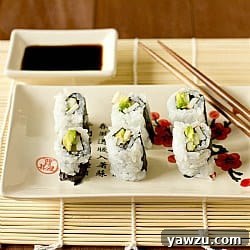
Mastering Homemade Sushi: Your Guide to Perfect California Rolls
For years, my dietary world was constrained by severe food allergies. After five challenging years, a re-test three years ago brought incredible news: I was finally cleared! My body had miraculously outgrown the array of food sensitivities that had developed during my mid-20s. The initial celebration involved a blissful spoonful of peanut butter, followed by my Chief Culinary Consultant surprising me with some decadent Reese’s BIG Cups. But another long-awaited culinary adventure awaited: my first sushi experience. For someone who had diligently avoided seafood for half a decade, the idea of raw fish felt daunting. My consultant wisely suggested easing in with cooked options, specifically shrimp tempura. I took the leap, and it was love at first bite. Who knew I would ever crave sushi? It’s truly astonishing how our taste buds can evolve and surprise us with new delights.
Demystifying Sushi: From Restaurant Perfection to Home Kitchen Fun
The allure of perfectly crafted sushi rolls, elegantly presented in restaurants, often makes the idea of preparing them at home seem incredibly intimidating. For over a year, I dreamed of learning the art of sushi making, envisioning the intricate process as something only master chefs could achieve. However, last Christmas, my sister gave me a gift that would change my perception forever: a sushi-making class. About a year ago, we embarked on this culinary journey, learning the secrets of perfectly seasoned sushi rice and mastering a variety of popular rolls, including the beloved California roll, tuna rolls, and dynamite rolls. My excitement got the better of me, and the California rolls were devoured before I remembered to capture their beauty. Fortunately, I managed to snap a quick photo of the tuna and dynamite rolls from our class:

Despite the invaluable lessons from that class, life got in the way, and I shamefully admit it took me until now to put that knowledge to practice in my own kitchen! Yet, the moment I started preparing everything from scratch – the sticky, glistening sushi rice to the neatly rolled California masterpieces – I was reminded of two crucial things: how surprisingly easy it truly is, and how incredibly fun it is to experiment with your own flavor combinations. My goal with this comprehensive, step-by-step tutorial is to strip away the mystique surrounding sushi. I want you to feel completely comfortable and confident enough to roll your own delicious creations right at home. Imagine the delight of a homemade sushi dinner – perhaps a unique and memorable Valentine’s Day meal!
Why Make Sushi at Home? Benefits Beyond the Bite
Beyond the sheer joy of creation, there are numerous compelling reasons to embrace homemade sushi. Firstly, it offers unparalleled freshness. You control every ingredient, ensuring only the highest quality components make it into your rolls. Secondly, it’s incredibly cost-effective. Regular sushi outings can quickly add up, but preparing it at home significantly reduces the expense, allowing you to enjoy this delicacy more often. Thirdly, customization is key. Whether you have dietary restrictions, a particular craving, or simply want to experiment with unique fillings, homemade sushi gives you complete creative freedom. It’s also a fantastic social activity – gather friends or family, and turn sushi night into a fun, interactive culinary event. Finally, there’s immense satisfaction in learning a new skill and proudly serving something you’ve crafted with your own hands. It’s an edible art form that’s far more accessible than you might think.
Essential Tips Before You Start Your Sushi Journey
Before diving into the recipe for our delightful California Rolls, here are a few critical notes to ensure your homemade sushi success:
- Ingredient Sourcing: I successfully found sushi rice, unseasoned rice wine vinegar, and nori sheets in the Asian aisle of my local large supermarket. If these items prove elusive at your regular grocery store, a specialty Asian grocery store in your area will almost certainly stock them. Investing in quality ingredients, especially the rice, makes a significant difference in the final product.
- Understanding the Rice Recipe: Don’t be deterred by the length of the sushi rice instructions. While thorough, they are designed to guide you to perfection. The entire process, from rinsing the rice to seasoning and cooling, typically takes less than 40 minutes of active time, with some resting periods in between. Each step is crucial for achieving that signature sticky, yet distinct, texture unique to authentic sushi rice.
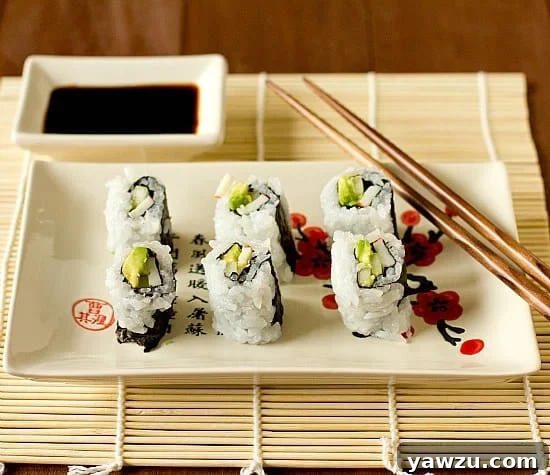
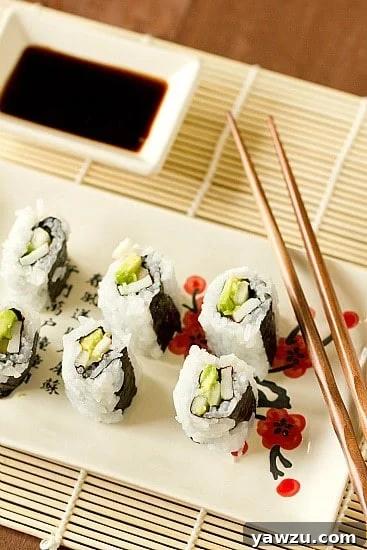
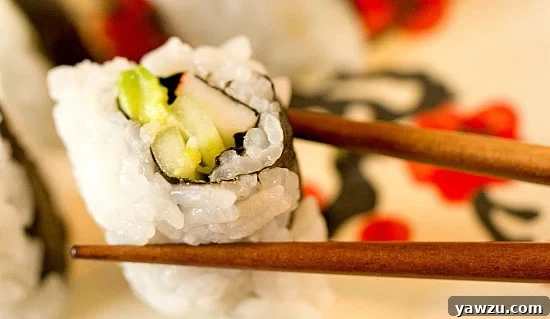
- Practice Makes Perfect: Sushi rolling is a skill that improves with repetition. Your first few rolls might not look as pristine as those from a professional sushi chef, and that’s perfectly normal! The more you practice, the better you’ll become at spreading the rice evenly, arranging the fillings, and rolling tightly and uniformly. I’ve made sushi twice this week, and the difference in appearance between my first and second batches was remarkable. The sushi pictured in this article, for instance, was from my very first attempt – proving that even beginners can achieve beautiful results!
- Necessary Tools: While not extensive, a few key tools will make your sushi-making experience much smoother. A bamboo rolling mat (makisu) is indispensable for forming tight, consistent rolls. A very sharp knife is crucial for clean cuts that don’t tear the nori or squish the rice. A rice paddle or spatula is also helpful for handling and seasoning the delicate sushi rice.
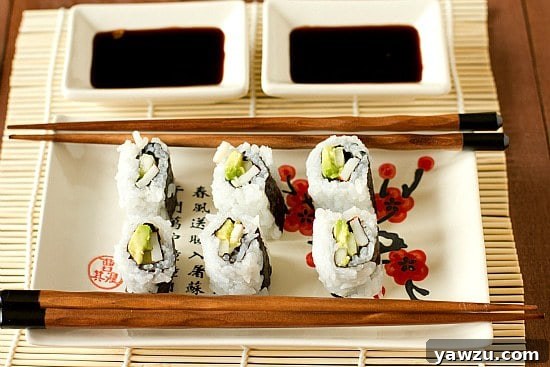
What’s your favorite type of sushi, and have you ever made it at home? Share your thoughts in the comments below!
California Rolls (including Sushi Rice)
Yield: 7 rolls
Prep Time: 45 minutes
Cook Time: 20 minutes
Total Time: 1 hour 10 minutes
A simple and delicious homemade sushi recipe, perfect for beginners.
Rated 5 out of 5 stars (based on 2 ratings)
Pin Recipe
Rate Recipe
Ingredients
For the Sushi Rice:
- 2¼ cups (416.25 g) sushi-grade rice
- 2¼ cups (562.5 ml) water
- 5 tablespoons unseasoned rice vinegar
- 1½ teaspoons sea salt
- 2 tablespoons granulated sugar
For the California Rolls:
- 1½ cups (252 g) crabmeat (7 ounces or 7 sticks faux crabmeat)
- Fourteen ½-inch-square, 4-inch-long cucumber sticks
- ½ (0.5) pitted large avocado, cut into 14 long sticks and peeled
- Toasted white sesame seeds, to garnish
- 7 half-sheets nori
- 6 cups (1.04 kg) prepared sushi rice (the entire yield from the recipe above)
Instructions
- Prepare the Sushi Rice: Pour the sushi-grade rice into a fine-mesh strainer, ensuring it’s large enough for you to freely toss and turn the grains. Prepare a larger bowl into which the strainer can easily fit, and fill it with cold tap water. Submerge the rice-filled strainer into the bowl, allowing the water to cover the rice completely. With both hands, gently rub, turn, and toss the rice grains. Be careful not to press the grains too hard against the strainer or each other, as this can break the fragile rice. The water will immediately turn milky white due to starch release. Remove the strainer, discard the milky water, and refill the bowl with fresh cold water. Return the strainer with rice to the bowl and repeat this rinsing process. On the second rinsing, the water will appear only slightly milky. Continue this process two more times. After the fourth rinse, the water will be nearly clear, though it may not achieve 100% clarity. Drain the rinsed rice thoroughly and let it sit in the strainer for 10 minutes to allow excess water to drip away.
- Cook the Rice: Transfer the drained rice to a heavy-bottomed pot that is deeper than it is wide and has a heavy, tightly fitting lid. Add the measured water, and let the rice soak for 20 minutes. This soaking step ensures even cooking.
- Steaming Process: Place the pot over medium heat and cook, uncovered, until the water has nearly been absorbed by the rice, which typically takes about 10 minutes. As soon as most of the water has absorbed, quickly reduce the heat to very low. Cover the pot with its tightly fitting lid and continue to cook for another 10 minutes, allowing the rice to plump up and cook through completely. The rice grains should now appear entirely transparent. If you observe any dry, very white-looking grains, sprinkle a small amount of warm water over those dry spots, re-cover the pot, and cook for another couple of minutes over very low heat. It’s crucial to never stir the rice during the cooking process to maintain its delicate structure and ensure even steaming.
- Rest the Rice: Once you’ve confirmed that all rice grains are transparent and fully cooked, immediately replace the lid to trap the built-up steam. Turn off the heat and let the rice stand undisturbed for 5 minutes. This resting period allows the rice to finish steaming and become perfectly tender.
- Prepare the Vinegar Dressing: While the rice is cooking and resting, combine the rice vinegar, sea salt, and granulated sugar in a small bowl. Stir with a whisk until the sugar and salt are almost completely dissolved. This seasoned vinegar is essential for giving sushi rice its distinctive flavor.
- Prepare Sushi Tools (Optional but Recommended): If you are using a traditional wooden sushi tub (hangiri) and a wooden paddle, soak them in a bath of cold water for half an hour while the rice cooks. This prevents the wood from absorbing moisture from the rice. After soaking, drain the water and wipe the tub and paddle with a dry kitchen towel. If you don’t have these, bowls made of metal, glass, or porcelain can serve as substitutes, though wood helps absorb excess moisture from the rice.
- Season the Rice: Transfer the steaming hot cooked rice all at once into your prepared bowl (sushi tub or alternative). Using the side of your wooden paddle or spatula, quickly and gently break up the rice with a crisscrossing motion. Pour the prepared vinegar dressing evenly over the rice. With the paddle, gently break up any lumpy clumps and turn the rice over, working on one area at a time. Repeat this turning and mixing process once or twice until you can visually confirm that the vinegar dressing is roughly distributed throughout all the rice.
- Cool and Fan the Rice: Push the seasoned rice toward one side of the tub or bowl. Hold the paddle horizontally and rapidly move it back and forth over the rice with many small, swift strokes. Work on the remaining areas of the rice one at a time in the same manner, until you have moved all of the rice to the other side of the tub. Rotate the tub or bowl 180 degrees and repeat the fanning process. The entire fanning procedure should take approximately 2 minutes. For added cooling, use a hand fan, a magazine, or a folded newspaper to fan the rice for about 30 seconds. The fanning helps cool the rice quickly and gives it a beautiful, glossy finish. Let the sushi rice cool to a temperature of about 104 degrees F (40 degrees C) before using. Once cooled, cover the rice with a moist kitchen cloth to prevent it from drying out while you prepare your rolls.
Make the California Rolls:
- Set Up Your Rolling Station: Arrange all your filling ingredients (crabmeat, cucumber sticks, avocado sticks, and toasted sesame seeds) on a tray. Have the prepared sushi rice and half-sheets of nori readily available, stacked up in a closed sealable plastic bag to keep them fresh. Keep a small bowl containing 1 cup of cold water mixed with 2 tablespoons of rice vinegar nearby for moistening your hands, along with a clean, moistened cloth for wiping your knife. Unfold your bamboo rolling mat and wrap it tightly in plastic wrap – this prevents rice from sticking to the bamboo and makes cleanup much easier. Ensure you have a well-sharpened cutting knife at hand.
- Spread the Rice: Place one half-sheet of nori, shiny side down, on the plastic-wrapped rolling mat with one of the long sides facing you. Lightly moisten your hands with the vinegar water. Scoop up a portion of sushi rice (a little less than a cup, roughly the size of a baseball), forming it into a gently egg-shaped ball without squeezing it too hard. Place the rice ball on the nori, about ½ inch from the upper far-left edge of the nori sheet. Gently and evenly spread the rice to the right, leaving about ½ inch of the far end of the upper edge of the nori uncovered. Then, using your fingers, spread the rice towards you, covering the entire area of the nori except for that initial ½-inch strip at the top. Evenly sprinkle the surface of the rice with about 1 tablespoon of white sesame seeds. This will form the attractive outer coating for your California roll.
- Add the Fillings: Carefully flip the rice-covered nori sheet over onto the rolling mat, ensuring that the bottom edge of the mat and the nori sheet are aligned evenly. The nori sheet will now be on top of the rice. Arrange the crabmeat horizontally across the nori, about one-quarter of the way up from the side nearest to you. Place two sticks of cucumber over the crabmeat, and then two sticks of avocado on top of the cucumber sticks. Distribute the fillings evenly across the width of the roll.
- Roll the Sushi: To begin rolling, lift the edge of the bamboo mat nearest to you, folding it over the fillings. As you roll, and the bamboo mat reaches the surface of the nori, gently pull back the edge of the bamboo mat itself (to prevent it from getting rolled into the sushi). Continue to roll tightly and evenly until the entire roll is completed, ensuring the seam faces downwards. Now, place the bamboo mat over the finished roll and hold it securely, pressing gently to firm up the roll and slightly square off the edges for a neat appearance. Carefully unroll the bamboo mat.
- Cut the Roll: To cut the roll into six equal pieces, first cut across the exact center of the roll with a smooth, sawing motion. Avoid pushing down too hard to prevent crushing the roll. Then, cut each of the resulting half-rolls into thirds. As needed, wipe the blade of your knife with the moistened cloth to remove any sticky rice residue. A clean blade ensures clean cuts.
- Serve and Store: Serve your delicious homemade California rolls immediately with your favorite accompaniments, such as spicy mayonnaise, soy sauce, or wasabi. If you wish to prepare this roll several hours in advance, wrap each uncut roll tightly in plastic wrap, place it in a sealable container, and store it in a cool, dry, dark place. For longer-term storage (up to a day), refrigerate the uncut rolls in the vegetable bin of your refrigerator.
Nutrition Facts (per serving)
- Calories: 296 kcal
- Carbohydrates: 54 g
- Protein: 11 g
- Fat: 2 g
- Cholesterol: 15 mg
- Sodium: 810 mg
- Potassium: 256 mg
- Fiber: 2 g
- Sugar: 4 g
- Vitamin A: 195 IU
- Vitamin C: 6.4 mg
- Calcium: 38 mg
- Iron: 1.4 mg
Did you make this recipe?
Leave a review below, then snap a picture and tag @thebrowneyedbaker on Instagram so I can see it!
Author: Michelle Lettrich
Course: Appetizer
Cuisine: Japanese
Exploring Beyond California Rolls: Your Sushi Adventure Awaits
The California Roll is a fantastic entry point into the world of homemade sushi, offering a delightful balance of flavors and textures. Once you’ve mastered this classic, don’t hesitate to venture into other exciting variations. Experiment with different fillings: try spicy tuna or salmon, add cream cheese for a Philadelphia roll, or incorporate cooked tempura shrimp for a delightful crunch. Vegetables like carrots, bell peppers, or even asparagus can add vibrant color and fresh taste. Don’t forget about various sauces – a drizzle of sriracha mayo, a touch of eel sauce, or a simple soy sauce with a dollop of wasabi can elevate your sushi experience. The beauty of making sushi at home is the endless possibility for creativity and personalization. Each roll becomes a reflection of your own taste and culinary ambition.
Embarking on the journey of homemade sushi can seem daunting at first, much like my own apprehension after years of food allergies. Yet, with a little guidance, practice, and the right ingredients, you’ll discover a rewarding and delicious skill that will impress your family and friends. From the initial rinsing of the rice to the final, elegant slice of a perfect California roll, every step is a testament to the joy of crafting your own food. So, gather your ingredients, prepare your workspace, and get ready to roll! Your homemade sushi adventure starts now, promising fresh flavors, creative freedom, and the sheer satisfaction of culinary achievement.