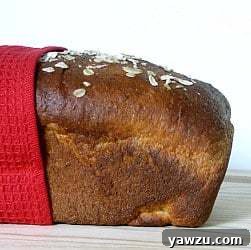
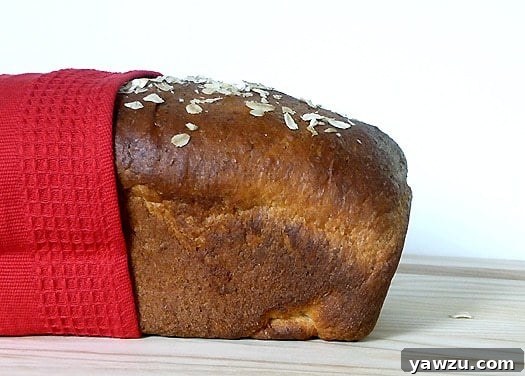
Bake the Perfect Loaf: Irresistible Honey-Oatmeal Sandwich Bread Recipe
There’s something uniquely comforting and deeply satisfying about the aroma of freshly baked bread filling your home. For many, embarking on the journey of homemade bread begins with a simple, beloved recipe. For me, that journey deepened with the discovery of honey-wheat bread, a comforting classic second only to my initial foray into basic white bread. This week, a craving for something with the hearty texture and subtly sweet notes of oats led me on a culinary quest through cookbooks, magazines, and online resources. My search culminated with a truly inspiring find in King Arthur Flour’s “Whole Grain Baking”: a recipe for Honey-Oatmeal Sandwich Bread. And let me tell you, it was love at first bite.
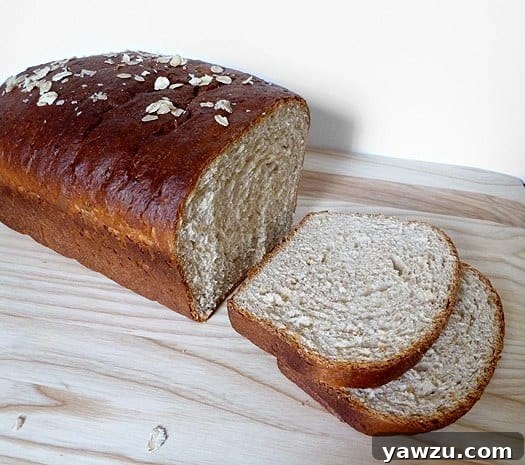
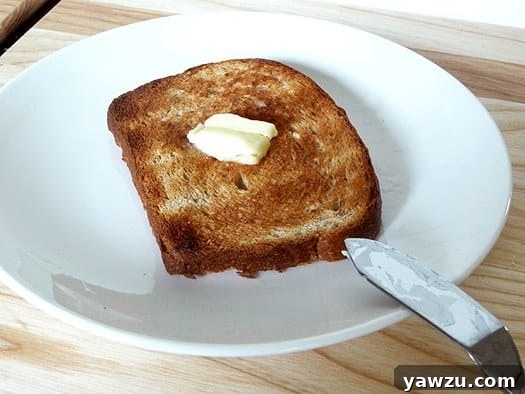
This isn’t just any bread; it’s a testament to how simple ingredients can transform into something truly extraordinary. The addition of wholesome rolled oats introduces a delightful sweetness and a distinct nutty flavor that elevates the already magnificent foundation of a honey-kissed loaf. This bread is crafted to be your go-to sandwich companion. Its crust is invitingly soft, yet the interior boasts a firm texture and a tight, uniform crumb. This robust structure makes it the ideal canvas for even the most generously stacked sandwiches, ensuring your culinary creations hold together beautifully. But its versatility doesn’t end there. Imagine a slice, lightly toasted to golden perfection, then adorned with a generous pat of melting butter and a dollop of your favorite fruit jam, or perhaps a delicate drizzle of golden honey. Pure bliss!
Mastering Yeast Bread: A Beginner-Friendly Journey
If the thought of working with yeast often feels daunting or leaves you intimidated, this Honey-Oatmeal Sandwich Bread recipe is precisely the one you need to try. It’s remarkably straightforward and designed to build confidence in even the most hesitant bread bakers. One of its key advantages is the use of instant yeast, which completely eliminates the need for “blooming” or proofing the yeast separately in warm liquid. You can simply combine it directly with your dry ingredients, making the process much quicker and reducing a common point of anxiety for beginners.
Beyond the simplicity of instant yeast, the dough itself is incredibly forgiving and wonderfully workable. I often find myself opting to knead this dough by hand, even with a stand mixer readily available. It comes together with surprising ease, yielding a soft and pliable mass that responds beautifully to your touch. While it might feel a little sticky initially, a light dusting of a few extra teaspoons of flour will quickly bring it to the perfect consistency. This tactile experience of hand-kneading can be incredibly therapeutic and deeply connecting to the ancient art of bread making. It allows you to feel the dough develop, giving you an intuitive understanding of its texture and elasticity. Embrace the process, and you’ll find yourself with a beautifully elastic dough ready for its first rise.
The Art of Shaping Your Loaf: A Visual Guide (and Detailed Description)
For those new to the delightful world of bread-baking, one of the most significant hurdles can sometimes be the shaping of the dough. Achieving that perfectly symmetrical, well-rounded loaf destined for your loaf pan can seem like a mysterious art. Fear not! While I can’t provide actual photos within this text, I’ve outlined the optimal technique in detail below to help you confidently shape your dough for a professional-looking and evenly baked loaf. Proper shaping not only contributes to the bread’s aesthetic appeal but also ensures an even rise and consistent texture throughout. Follow these steps, and you’ll be shaping loaves like a seasoned baker in no time:
How to Shape a Loaf of Bread:
- Prepare the Dough: Once your dough has completed its first rise and has been gently deflated, turn it out onto a lightly floured surface.
- Form a Rectangle: Using the palms of your hands or a rolling pin, gently pat or roll the dough into a rectangle. Aim for dimensions of approximately 5 inches by 8 inches. The shorter side will become the width of your loaf.
- Begin Rolling Tightly: Starting at one of the short sides of your rectangle, begin to roll the dough into a tight cylinder. Work deliberately, rolling one small section at a time. As you roll, use your thumb or the back of your hand to pinch the crease created with each turn. This pinching action helps to create tension in the dough, ensuring a tight, even roll without large air pockets.
- Seal the Seam: Once you’ve rolled the entire rectangle into a cylinder, firmly pinch the final seam closed along the length of the loaf. This prevents the loaf from unrolling during its final rise or baking.
- Seal the Ends: Next, pinch the ends of the cylinder closed as well. You can tuck them underneath slightly to create a smoother finish.
- Even Out the Shape: Gently rock the cylinder back and forth, using light pressure from your hands, to ensure that the loaf is evenly thick all the way across. The ends should not taper or be significantly thinner than the middle; aim for a uniform thickness that will fit snugly into your loaf pan. This step helps create a balanced loaf that will rise and bake consistently.
With these shaping techniques, you are well on your way to baking a truly beautiful and delicious loaf of Honey-Oatmeal Sandwich Bread. Enjoy the process and the wonderful results!
Honey-Oatmeal Sandwich Bread Recipe
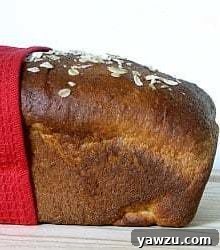
Honey-Oatmeal Sandwich Bread
Yield: 9 servings (One 9×5-inch loaf)
Prep Time: 25 minutes
Cook Time: 45 minutes
Total Time: 1 hour 10 minutes
This delightful honey-oatmeal bread will bring warmth and incredible flavor to your sandwiches and breakfast table.
Ingredients
- 1¼ cups (312.5 ml) boiling water (10 ounces)
- 1 cup (81 g) old-fashioned rolled oats (3½ ounces)
- 2 tablespoons unsalted butter, cut into 3 pieces (1 ounce)
- 1½ teaspoons salt
- ¼ cup (84.75 ml) honey (3 ounces)
- 1 cup (120 g) whole wheat flour (4 ounces)
- 1 ⅔ cups (208.33 g) all-purpose flour (7 ounces)
- ¼ cup (61.25 g) nonfat dry milk (1 ounce)
- 2 teaspoons instant yeast
Instructions
- Prepare Oat Mixture: In a medium bowl, combine the boiling water, rolled oats, unsalted butter (cut into pieces), salt, and honey. Stir everything together until well combined. Allow this mixture to cool down until it is lukewarm. This step is crucial as hot liquid can kill the yeast, preventing your bread from rising.
- Mix and Knead Dough: Once the oat mixture is lukewarm, add the remaining dough ingredients (whole wheat flour, all-purpose flour, nonfat dry milk, and instant yeast) to the bowl. Mix everything thoroughly until a shaggy dough forms. Transfer the dough to a lightly floured surface or use a stand mixer with a dough hook attachment. Knead the dough – either by hand or machine – until it becomes soft, smooth, and elastic. This typically takes about 8-10 minutes by hand or 6-8 minutes in a mixer. The dough should pass the windowpane test (stretch a small piece thinly enough to see light through it without tearing). If the dough is too sticky, sprinkle a few extra teaspoons of all-purpose flour, one at a time, until it becomes manageable.
- First Rise: Lightly grease a large bowl with a little oil. Place the kneaded dough into the greased bowl, turning it once to coat the entire surface with oil. Cover the bowl tightly with plastic wrap or a clean kitchen towel. Let the dough rise in a warm, draft-free place for approximately 1 hour, or until it has doubled significantly in bulk. The exact time will depend on the warmth of your environment.
- Shape and Second Rise: Lightly grease a 9×5-inch loaf pan. Gently deflate the risen dough by pressing out the air. The dough might be sticky, so it’s helpful to lightly oil your hands before handling it. Shape the dough into a 9-inch log using the technique described in the “Art of Shaping Your Loaf” section above, ensuring a tight, even cylinder. Place the shaped dough into the prepared loaf pan. Cover the pan gently with lightly greased plastic wrap (to prevent sticking) and allow it to rise again in a warm place. This second rise should take about 1 to 1½ hours, or until the dough has crowned about 1½ inches over the rim of the pan. About 15-20 minutes before the end of the second rise, preheat your oven to 350°F (175°C).
- Bake the Bread: Once the dough has sufficiently risen, carefully uncover the loaf pan. Place it into the preheated oven and bake for approximately 45 minutes. To prevent the top of the bread from over-browning too quickly, loosely tent the loaf with aluminum foil after the first 20 minutes of baking. The bread is fully cooked when its crust is a rich golden brown and an instant-read thermometer inserted into the center of the loaf registers an internal temperature of 190°F (88°C).
- Cool and Finish: Remove the baked bread from the oven. After letting it rest in the pan for just a minute or two, carefully turn the loaf out onto a wire cooling rack. While still warm, you can brush the top with a little melted butter for a softer crust and sprinkle with additional rolled oats for an attractive finish. It is essential to cool the bread completely on the rack before slicing and serving. Cooling ensures the internal structure sets properly and prevents the bread from becoming gummy.
Nutrition Facts (per serving)
Calories: 236kcal, Carbohydrates: 44g, Protein: 7g, Fat: 3g, Saturated Fat: 1g, Cholesterol: 7mg, Sodium: 411mg, Potassium: 199mg, Fiber: 3g, Sugar: 9g, Vitamin A: 155IU, Vitamin C: 0.2mg, Calcium: 57mg, Iron: 2mg
(Nutritional values are approximate and may vary based on specific ingredients and preparation methods.)
Have You Baked This Delicious Recipe?
We’d love to hear about your experience! Please leave a review below to share your thoughts. Don’t forget to snap a picture of your beautiful loaf and tag @thebrowneyedbaker on Instagram so we can admire your culinary creation!
Author: Michelle Lettrich
Course: Bread
Cuisine: American