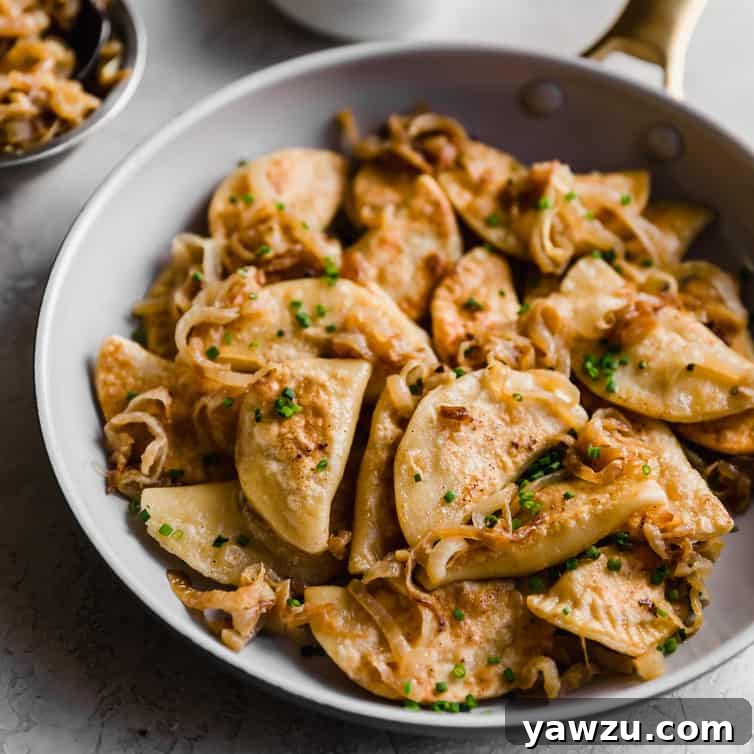
Indulge in the heartwarming embrace of homemade potato and cheese pierogi, a timeless comfort food that promises a delightful culinary experience. These delectable dumplings feature a smooth, savory potato and cheese filling encased in a wonderfully pliable dough that’s a joy to work with. Once prepared, simply sauté them in butter and serve alongside sweet, caramelized onions for a truly satisfying meal. This recipe is not only incredibly delicious but also naturally vegetarian, making it a perfect choice for meat-free Fridays, Lent, or anyone looking for a hearty, plant-based dish. Prepare to elevate your comfort food game with this authentic and irresistible pierogi recipe.
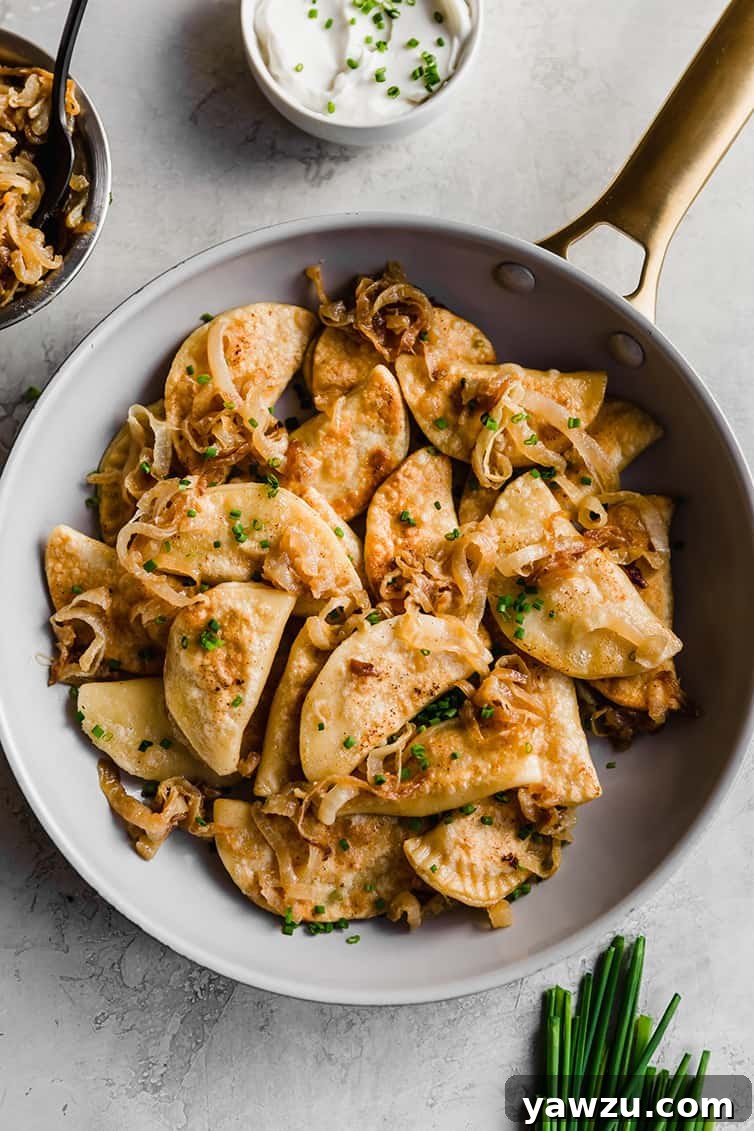
For me, pierogi evoke strong memories of Friday night meals, especially during Lent. Growing up, our church hosted a weekly fish fry, and my parents always volunteered their time to help. This meant countless Friday evenings were spent with friends, running through the school hallways while the adults prepared and served food for the community. During those years, my culinary palate wasn’t quite ready for the diverse seafood offerings of the fish fry; my appreciation for fish extended only to the humble, freezer-box fish stick.
Instead, my consistent order was pierogi. These delightful, savory dumplings quickly became my go-to comfort food, securing a firm and cherished place in my memory and on my plate. Many years later, driven by nostalgia, I first attempted to make pierogi from scratch. While the result was acceptable, it wasn’t quite the revelation I had hoped for, leaving me skeptical about tackling them again. However, about five years ago, a renewed craving spurred me to revisit the challenge. This time, after extensive research and experimentation, I discovered a truly exceptional recipe that yields the most tender dough and a supremely flavorful filling. This recipe is the culmination of that search, and I’m thrilled to share it with you.
What are Pierogies? Tracing Their Rich History and Origin
At their core, pierogies are classic Central and Eastern European dumplings, typically made from an unleavened dough and filled with a variety of savory or sweet ingredients. The most traditional fillings include mashed potatoes and cheese, often complemented by caramelized onions, or even tangy sauerkraut. After being boiled until tender, they are commonly pan-fried in butter, sometimes with additional onions, until golden and slightly crispy, enhancing their flavor and texture profile significantly.
The exact origin of pierogies has been a subject of long-standing debate, with both Polish and German culinary traditions laying claim to these beloved dumplings. The truth is, their precise birthplace remains a delightful mystery! What historians and food enthusiasts do agree upon, however, is that these delicious parcels of comfort food have been enjoyed across Central and Eastern Europe since as early as the 13th century. Over the centuries, pierogies have become an integral part of the regional food culture, adapting to local tastes and available ingredients, cementing their status as a beloved staple in homes and at festive gatherings. Whether served as a main course, a side dish, or even a dessert (with sweet fruit fillings), pierogies continue to captivate palates with their simple yet profound flavors.
Mastering Homemade Potato and Cheese Pierogies: A Step-by-Step Guide
The thought of making pierogi from scratch might seem a bit daunting at first. Many assume it’s an incredibly time-consuming and unnecessary endeavor, given the availability of frozen options. However, I assure you, the difference between store-bought pierogi and these homemade delights is absolutely monumental. Once you taste the fresh, tender dough and the rich, perfectly seasoned filling, you’ll understand why it’s worth every bit of effort. Forget intimidation! Let’s demystify the process by breaking down the two primary components: the dough and the filling, each crucial for achieving pierogi perfection.
Crafting the Perfect Homemade Pierogi Dough
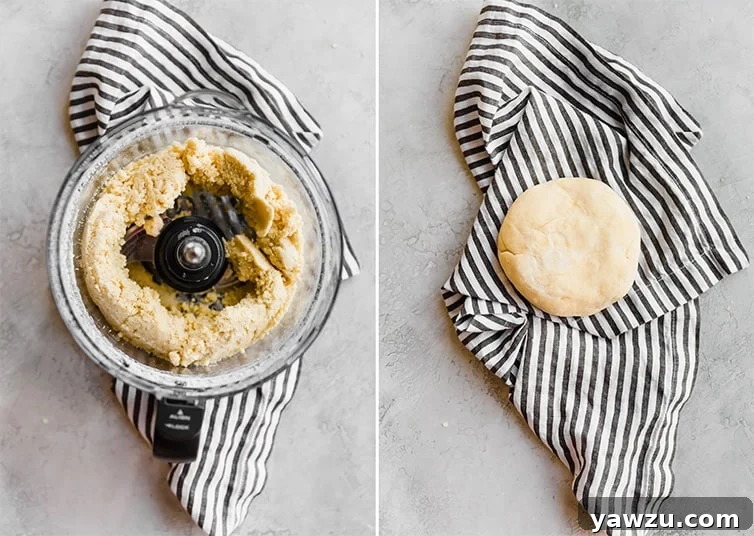
The foundation of an exquisite pierogi lies in its dough, and this particular recipe delivers a dough that is truly a dream to work with. It’s incredibly soft, pliable, and resilient, making it effortless to roll out thinly, cut into perfect circles, and seal around the filling. Unlike traditional pasta doughs that can sometimes be stiff or brittle, this pierogi dough incorporates an egg, an extra egg yolk, and a touch of vegetable oil. These additions are key to its superior texture, contributing to its wonderful elasticity and tenderness, which prevents cracking and tearing during assembly and cooking. While a food processor makes quick work of mixing, achieving a smooth, cohesive dough in just a few pulses, you can certainly prepare it by hand if you prefer (detailed instructions for hand-mixing are provided in the recipe notes below). The result is a dough that’s easy to handle, ensuring beautifully shaped and delightfully tender pierogi every time.
Creating the Rich and Flavorful Potato and Cheese Pierogi Filling
When it comes to pierogi fillings, your imagination truly is the only limit! While potato and cheese, along with sauerkraut, are undeniably the most traditional and beloved choices, the world of pierogi offers an incredible array of possibilities. You can find countless recipes for innovative fillings featuring everything from savory mushrooms and various meats to delicate salmon, and even sweet fruit options for dessert pierogi. A quick search online for “pierogi fillings” will unveil dozens of wonderfully unique and creative ideas to inspire your culinary adventures.
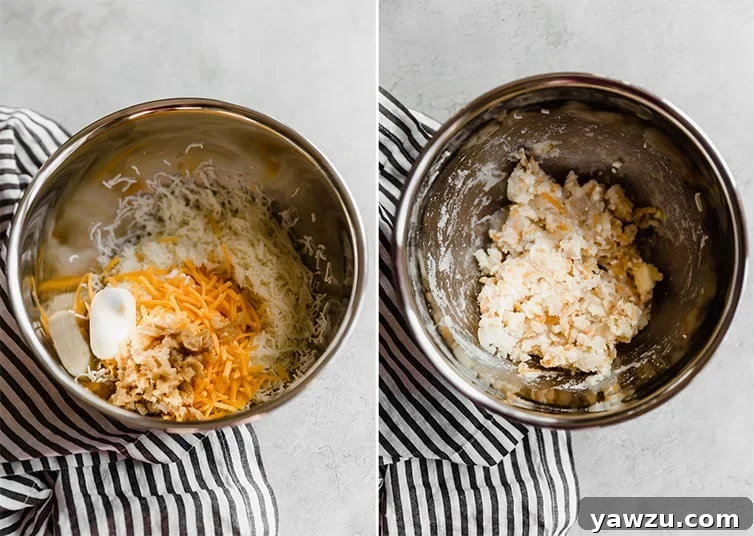
However, today we’re focusing on my absolute favorite: the classic potato and cheese filling. This is the flavor combination I grew up with, and its nostalgic appeal makes it simply the best in my book. It’s pure comfort, elevated. Here’s a closer look at what makes this filling so special:
- Potatoes: We use russet potatoes, boiled until perfectly tender, then processed through a ricer or food mill. This crucial step ensures the potatoes remain incredibly light, fluffy, and free of lumps, creating a smooth base for our filling.
- Cheese: A thoughtful blend of farmer’s cheese and sharp cheddar cheese is employed. Farmer’s cheese contributes a distinct, subtly tangy flavor and creamy texture traditional to pierogi, while cheddar adds a familiar savory depth and irresistible meltiness.
- Caramelized Onions: These are a secret weapon, providing a concentrated punch of sweet, savory, and umami flavor that perfectly complements the potato and cheese. Their slow-cooked richness adds a layer of complexity that elevates the entire dish.
- Butter: Just a touch of unsalted butter is incorporated to bind all the ingredients together, adding a velvety richness and ensuring the filling is moist and incredibly flavorful.
At this point, you might be wondering about one specific ingredient:
What is Farmer’s Cheese?
Farmer’s cheese is a fresh, unripened cheese, traditionally made from cottage cheese that has been pressed to remove most of its whey, resulting in a firm, crumbly, yet creamy texture. It possesses a mildly tangy and fresh flavor that is characteristic of authentic pierogi. If farmer’s cheese is not readily available in your local grocery store, an equal amount of well-drained ricotta cheese makes an excellent substitute, offering a similar texture and a mild, creamy base.
Assembling the Pierogi: A Labor of Love (or a Party!)
This stage of the pierogi-making process is arguably the most time-consuming, but rest assured, it is far from difficult. In fact, many find it quite therapeutic! If your goal is to stock your freezer with a generous supply of these delicious dumplings, consider scaling up the recipe and inviting family or friends over for an assembly party. This communal approach is a cherished tradition for many, especially around holidays like Christmas, turning a culinary task into a fun, memorable gathering.
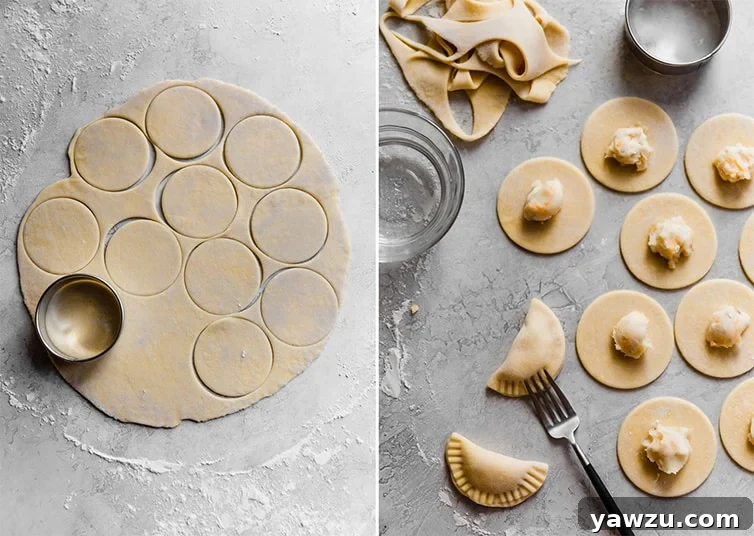
The process involves rolling out the prepared dough quite thinly to ensure a delicate wrapper that doesn’t overpower the filling. Using a round biscuit cutter (typically 3 inches in diameter), you’ll cut out numerous dough circles. A small spoonful of the potato and cheese filling is then placed precisely in the center of each circle. The edges of the dough are lightly moistened with water to create a secure seal, and the dough is folded over to form a classic half-moon shape. The seam is then firmly pinched to seal, often followed by crimping with the tines of a fork, which not only looks appealing but also helps ensure a tight seal. Once assembled, the pierogi can be cooked immediately within the next four hours, or they can be frozen for later enjoyment, offering incredible convenience.
You’ve successfully assembled your homemade pierogi – a true culinary achievement!
Cooking the Pierogi: The Traditional Two-Step Method
Pierogies are traditionally cooked using a simple yet effective two-step method that ensures they are perfectly tender on the inside and beautifully golden and slightly crispy on the outside. This dual cooking process brings out the best in both the dough and the filling, transforming them into the ultimate comfort food:
- Boil: The first step involves gently dropping the freshly made or frozen pierogi into a pot of salted boiling water. They are cooked until they float to the surface and are al dente, meaning they are tender but still retain a slight firmness. This initial boiling cooks the dough through and softens the filling.
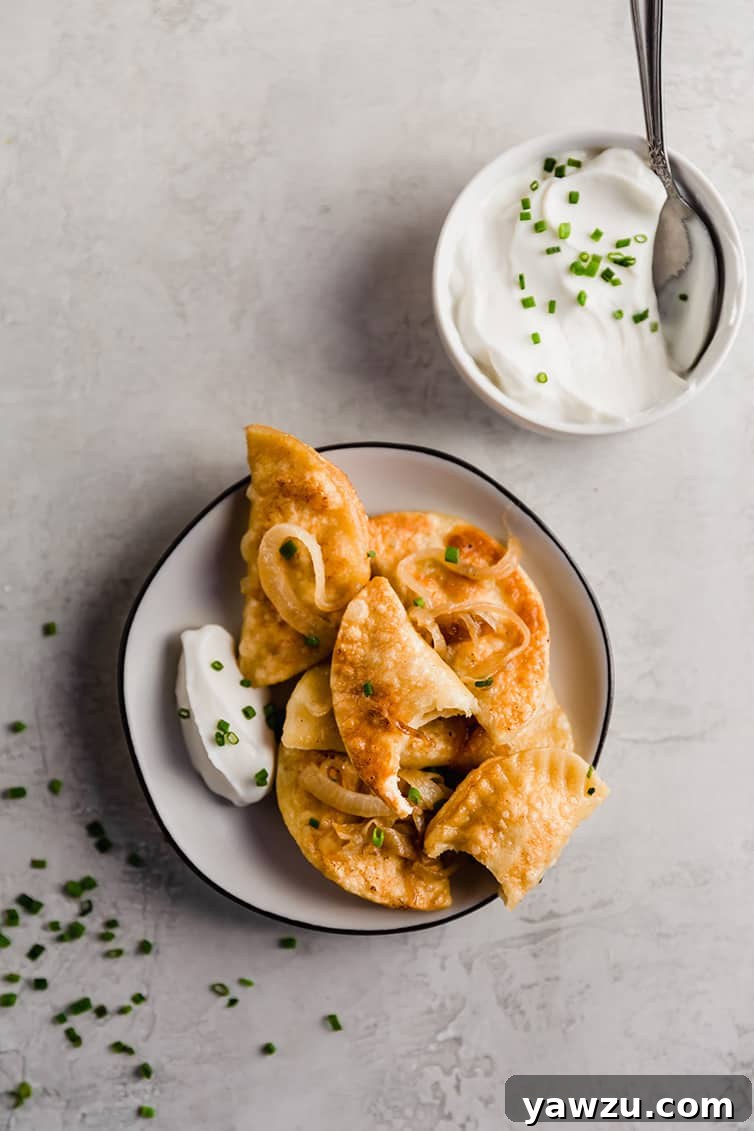
- Pan-fry: Once boiled and thoroughly drained, the pierogi are transferred to a hot frying pan with melted butter. They are then pan-fried until they develop a beautiful golden-brown crust and become slightly crispy. This step adds an incredible depth of flavor and textural contrast that is absolutely essential for classic pierogi. Often, thinly sliced onions are added to the pan during this stage, caramelizing alongside the pierogi and adding an extra layer of sweetness and savory aroma.
Delicious Accompaniments: What to Serve with Pierogi
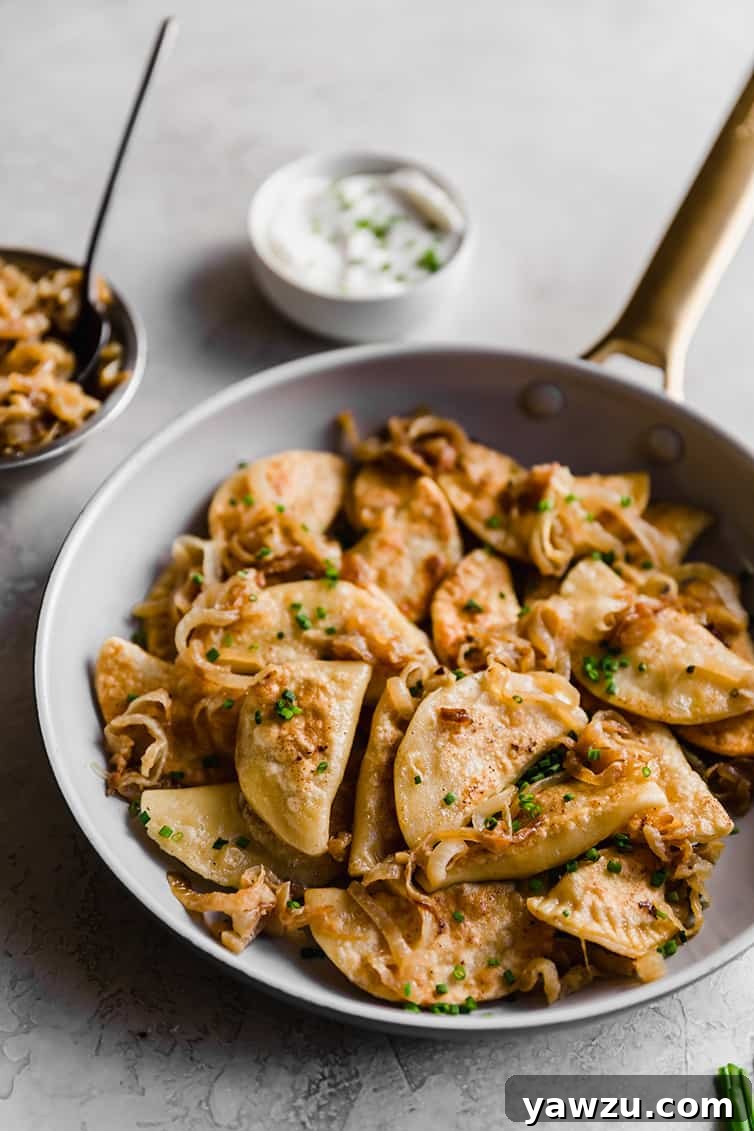
My cherished memories of pierogi always involve them prepared exactly as my mom and grandma made them: first boiled until tender, then tossed into a sizzling frying pan with plenty of butter and onions to finish. This method creates an irresistible combination of soft dough, savory filling, and crisp, caramelized edges – truly my absolute favorite way to enjoy them. While that classic preparation is hard to beat, there are many wonderful ways to serve pierogi, each adding its own unique touch. Here are some popular and incredibly tasty ideas to complement your homemade pierogi:
- Sour Cream: A dollop of cool, tangy sour cream is perhaps the most iconic and universally loved accompaniment, providing a perfect counterpoint to the rich, savory pierogi.
- Applesauce: For a surprisingly delightful sweet and savory contrast, serve pierogi with a side of smooth, slightly tart applesauce.
- Fried and Crumbled Bacon: Crispy bacon bits add a salty crunch and smoky depth that pairs wonderfully with potato and cheese pierogi, especially if you’re not keeping the meal strictly vegetarian.
- Sautéed Mushrooms: Earthy, savory sautéed mushrooms, perhaps with a hint of garlic and fresh herbs, make an elegant and flavorful addition.
- Sauerkraut: For an extra layer of authentic Eastern European flavor, a spoonful of warm, tangy sauerkraut offers a fantastic bite and traditional pairing.
Essential Pierogies Recipe Notes and Expert Tips
To ensure your homemade pierogi turn out absolutely perfect, here are a few quick tips and tricks that will guide you to culinary success:
- Farmer’s Cheese Substitute: If farmer’s cheese is unavailable, you can confidently substitute an equal amount of well-drained ricotta cheese in the filling. While the flavor will be slightly different, it provides a similar creamy texture.
- Making the Dough by Hand: No food processor? No problem! In a large bowl, whisk together the flour and salt. Then, use a sturdy rubber spatula to gradually incorporate the whole egg, egg yolk, oil, and cold water until a shaggy, somewhat crumbly dough begins to form. Transfer the mixture to a lightly floured surface and knead briefly, just until the dough comes together into a soft, smooth, and cohesive ball. This usually takes only a couple of minutes.
- Utilizing Dough Scraps: Don’t let those precious dough scraps go to waste! Many pierogi enthusiasts gather them, gently knead them back together, roll them out, and cut out additional pierogi. Even small, irregularly shaped pieces can be boiled and pan-fried alongside the others – they taste just as delicious and ensure nothing is wasted.
Make-Ahead and Freezing Instructions for Ultimate Convenience
Homemade pierogi are excellent for make-ahead meal prep, allowing you to enjoy them fresh or freeze them for quick and easy future meals. Here’s how to best prepare and store them:
- Make-Ahead Dough: Once your pierogi dough is prepared, you have a couple of options for storing it. You can wrap it tightly in plastic wrap and refrigerate it for up to 2 hours, allowing it to relax before rolling. For longer storage, place the wrapped dough in a freezer bag and freeze it for up to 1 month. When ready to use, thaw it in the refrigerator overnight before rolling.
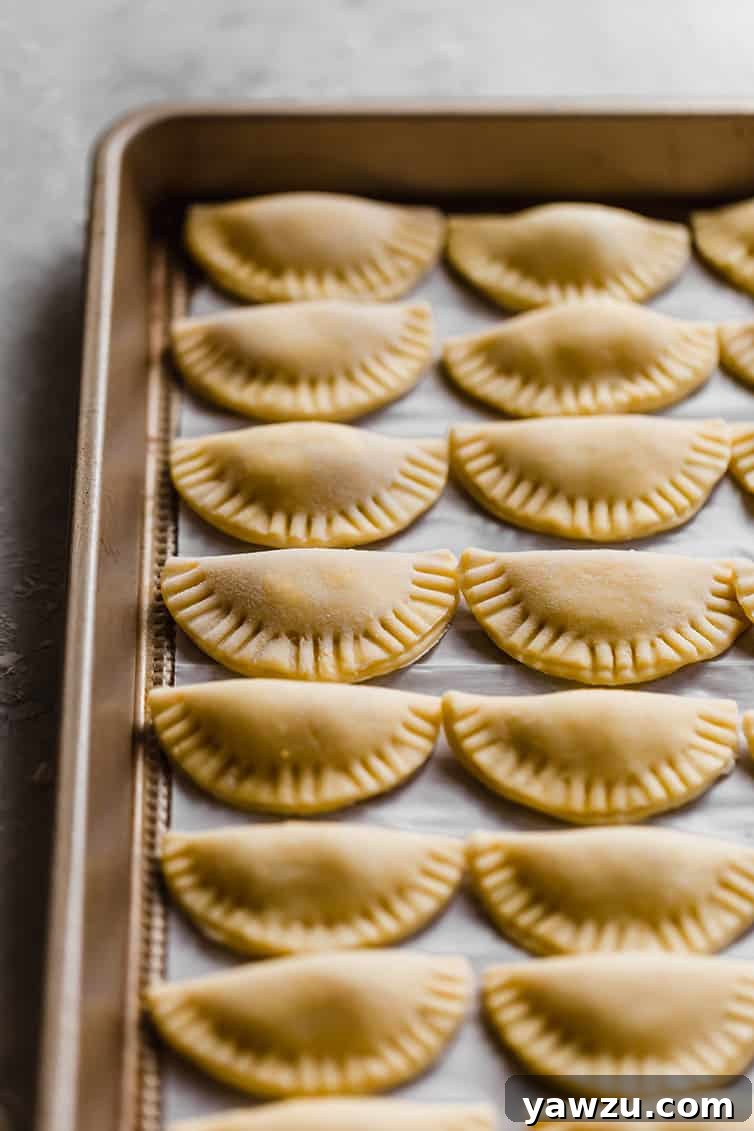
- How to Freeze Assembled Pierogi: Freezing assembled pierogi is straightforward and incredibly convenient. After you’ve formed the pierogi, arrange them in a single layer on a baking sheet lined with parchment paper, ensuring they don’t touch each other. Place the baking sheet in the freezer until the pierogi are completely frozen solid, which typically takes about 2 hours. Once frozen, transfer the individual pierogi to a freezer-safe zipper-lock bag or an airtight container. They can be stored in the freezer for up to 1 month. The best part? There’s no need to thaw them before cooking! You can drop them directly into boiling water straight from the freezer, simply adding a few extra minutes to the boiling time.
More Delicious Lent-Worthy Dishes to Explore:
If you’re looking for more satisfying, meat-free meals suitable for Lent or any occasion, here are some other fantastic recipes to add to your culinary repertoire:
- Homemade Fish Sticks with Tartar Sauce
- Crispy Beer Battered Cod
- Hearty Tuna Noodle Casserole (Made From Scratch!)
- Creamy Crock Pot Mac and Cheese
- Spicy Cajun Shrimp Macaroni and Cheese
Homemade Potato and Cheese Pierogies Recipe

Homemade Potato and Cheese Pierogies
Yield: 36 pierogi
Prep Time: 2 hours
Cook Time: 50 minutes
Total Time: 2 hours 50 minutes
These homemade pierogies are made with a delightful potato and cheese filling, all encased in a tender, easy-to-handle dough. Simply sauté them in butter and serve with savory caramelized onions for a truly authentic taste of comfort food.
Ingredients
For the Dough:
- 2 cups (250 g) unbleached all-purpose flour, plus extra for the work surface
- ½ teaspoon salt
- 1 egg
- 1 egg yolk
- 1 tablespoon vegetable oil
- 4 to 6 tablespoons cold water
For the Caramelized Onions:
- 4 tablespoons unsalted butter
- 3 large onions, halved and thinly sliced
- ¼ teaspoon salt
For the Potato and Cheese Filling:
- 1 medium russet potato, about 9 ounces, peeled and sliced ¾ inch thick
- 1 tablespoon salt
- ¼ cup (59 g) reserved chopped caramelized onions
- 1½ ounces (42.52 g) cheddar cheese, shredded (about ⅓ cup)
- 1½ ounces (42.52 g) farmer’s cheese, cut into small pieces (about ¼ cup)
- 1 tablespoon unsalted butter
- Salt and freshly ground black pepper, to taste
For Cooking and Serving:
- 1 tablespoon salt (for boiling water)
- 4 tablespoons unsalted butter, for sautéing
- Sour cream, for serving
Instructions
- Make the Pierogi Dough: In a food processor, pulse the flour and salt together until combined (about 4 pulses). With the machine running, slowly add the whole egg, egg yolk, and vegetable oil through the feed tube until the mixture resembles wet sand (about 30 seconds). While the machine is still running, slowly add 4 tablespoons of the cold water until the dough forms a ball. If the dough doesn’t come together, add the remaining water, 1 tablespoon at a time, with the processor running until a cohesive dough ball forms (you may not need all the water).
- Transfer the dough to a lightly floured work surface and knead by hand until it firms slightly and becomes smooth, approximately 2 minutes. Cover the dough tightly with plastic wrap and set it aside to relax for at least 15 minutes, or up to 2 hours.
- Make the Caramelized Onions: Meanwhile, melt the butter in a 12-inch nonstick skillet over medium heat. Add the thinly sliced onions and salt, stirring occasionally, and cook until they are very soft and deeply browned, which will take about 15 to 20 minutes. Measure out ¼ cup of these caramelized onions, finely chop them, and reserve this portion for the pierogi filling. Cover the remaining caramelized onions to keep them warm for serving.
- Make the Potato and Cheese Filling: Place the peeled and sliced potatoes in a large saucepan and cover them with water by 1 inch. Add 1 tablespoon of salt. Bring the water to a boil, then reduce the heat to a simmer and cook until the potatoes are tender and a fork can easily slip into the center, typically 10 to 12 minutes. Drain the cooked potatoes thoroughly in a colander.
- Set a food mill or ricer over a medium bowl and process the drained potatoes into the bowl, ensuring they are light and fluffy. Add the reserved chopped caramelized onions to the bowl. Stir in both the cheddar cheese and farmer’s cheese (or ricotta), along with 1 tablespoon of unsalted butter, until all ingredients are well incorporated and the filling is smooth. Season the filling with additional salt and ground black pepper to taste. Allow the filling to cool slightly before assembling the pierogi. Alternatively, cover the bowl with plastic wrap and refrigerate the filling for up to 2 days until needed.
- Assemble the Pierogi: Liberally dust a clean baking sheet with flour and set it aside. Divide the prepared dough into 2 equal pieces and cover one piece with plastic wrap to prevent it from drying out. Working with one piece of dough at a time, unwrap it and roll it out on a lightly floured work surface into a 15-inch circle, aiming for a thickness of about 1/16-inch. Using a 3-inch round biscuit cutter, cut out as many dough rounds as possible. Carefully gather the dough scraps, wrap them in plastic wrap, and set them aside.
- Place 1 teaspoon of the potato and cheese filling in the center of each dough round. Lightly moisten the edge of each dough round with water using your finger or a pastry brush. Fold the dough in half over the filling, creating a half-moon shape. Firmly pinch the curved seam along the edge to secure it. For an extra seal and decorative touch, crimp the seam using the tines of a fork. Transfer the assembled pierogi to the prepared, floured baking sheet and cover them with a damp kitchen towel to prevent drying. Repeat this process with the remaining dough and filling.
- Gently knead all the reserved dough scraps together into a ball and let it relax for 5 to 10 minutes. Roll it out, cut, and assemble additional pierogi until all the filling or dough is used. Discard any tiny remaining dough scraps.
[MAKE-AHEAD NOTE: The towel-covered baking sheet of assembled pierogi can be wrapped with plastic wrap and refrigerated for up to 4 hours. Alternatively, the pierogi can be frozen for up to 1 month. To freeze, place them in a single layer on a baking sheet until completely frozen (about 2 hours), then transfer them to a zipper-lock freezer bag. No need to thaw before boiling.] - Cook the Pierogi: Bring 4 quarts of water to a rolling boil in a large pot. Add 1 tablespoon of salt. Carefully add half of the pierogi to the boiling water. Cook, stirring gently and often, until the pierogi float to the surface and their edges feel al dente, about 5 to 6 minutes (if cooking from frozen, allow 8 to 10 minutes). Using a wire spider or slotted spoon, transfer the cooked pierogi to a colander to drain thoroughly and set them aside. Bring the water back to a boil and cook the remaining pierogi.
- While the second batch of pierogi is boiling, melt 2 tablespoons of unsalted butter in a 12-inch nonstick skillet over medium-high heat. Add the first batch of boiled and drained pierogi to the skillet and sauté them until they are beautifully golden-brown on both sides, typically 1 to 2 minutes per side. Transfer the browned pierogi to a serving platter and cover to keep them warm. Drain and sauté the remaining pierogi using the remaining 2 tablespoons of butter. Sprinkle the warm caramelized onions over the top of all the sautéed pierogi and serve immediately with a generous dollop of sour cream on the side.
Notes
- Farmer’s Cheese: You can substitute an equal amount of ricotta cheese for the farmer’s cheese in the filling if needed.
- Make the Dough by Hand: Whisk the flour and salt, then use a rubber spatula to incorporate the egg, yolk, oil, and water until a shaggy dough forms. Knead briefly by hand to bring it together into a soft, smooth dough.
- Make-Ahead Dough: Once the dough is made, wrap it tightly in plastic wrap and either refrigerate for up to 2 hours or place in a freezer bag and freeze for up to 1 month. Thaw in the refrigerator before using.
- How to Freeze Pierogi: Assemble the pierogi and place them in a single layer on a baking sheet. Freeze until completely solid (about 2 hours), then transfer to a freezer bag. Freeze for up to 1 month. Cook directly from frozen by boiling.
- Recipe adapted from Cook’s Illustrated.
Nutritional Information (per pierogi, approximate)
Calories: 67kcal, Carbohydrates: 6g, Protein: 2g, Fat: 4g, Saturated Fat: 3g, Trans Fat: 1g, Cholesterol: 19mg, Sodium: 451mg, Potassium: 25mg, Fiber: 1g, Sugar: 1g, Vitamin A: 113IU, Vitamin C: 1mg, Calcium: 14mg, Iron: 1mg
Did you make this delicious recipe?
I would love to hear from you! Please consider leaving a review below to share your experience. And don’t forget to snap a picture of your amazing creation and tag @thebrowneyedbaker on Instagram so I can see it!
Author: Michelle Lettrich
Course: Snack, Main Course
Cuisine: American, Polish, Eastern European
Photography by Ari Laing.